Motorcycle Chrome Pitting Acworth — How to Fix It
Those little brown freckles on your pipes have a cause, and a fix. Here's how we sort them out.
Plus, the quote came back, and it just didn’t sit right. Meanwhile, a rider we know took his cruiser somewhere, watched a guy glance at the little brown freckles creeping up his exhaust, and heard a number steep enough that he rode home without agreeing to a thing. He wasn’t trying to be cheap. Of course, he just had a feeling nobody had really looked at the problem. If you’ve been squinting at the motorcycle chrome pitting Acworth weather loves to start, that gut feeling is worth trusting, because the fix depends entirely on what’s actually going on under that shine.
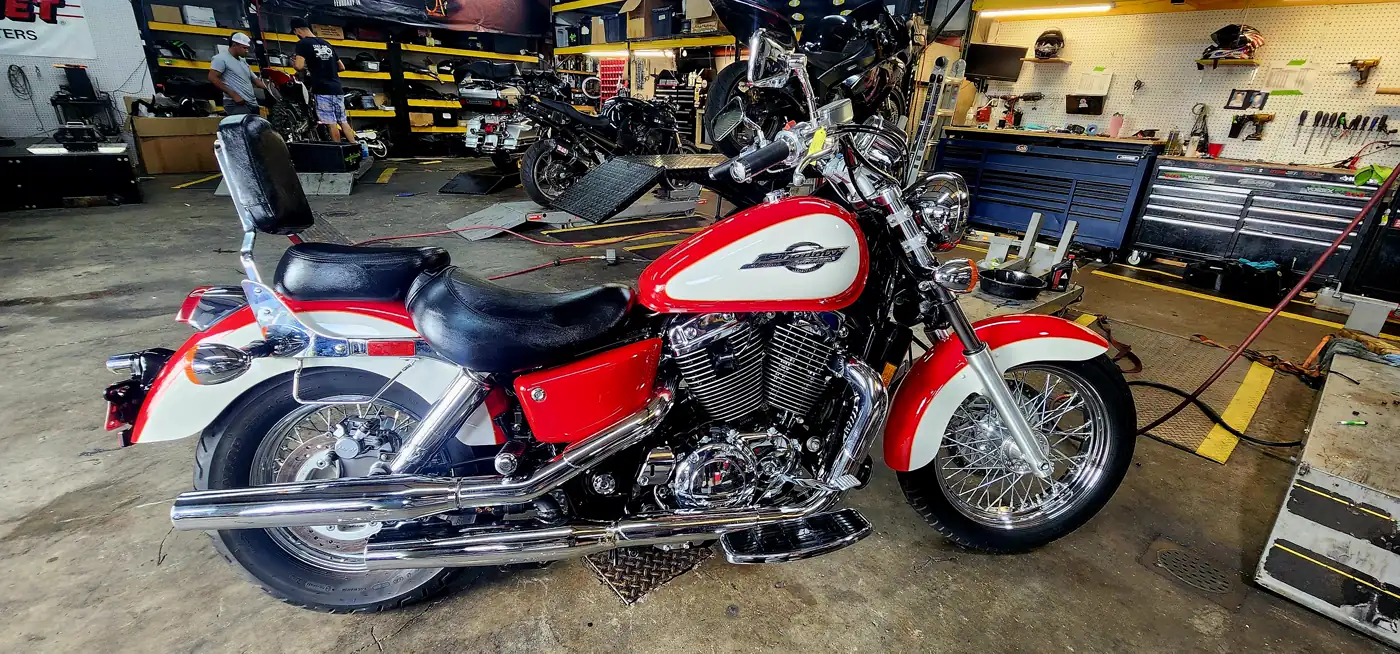
So let’s slow down and name what you’re seeing before anyone reads you a price. Chrome pitting starts small. In fact, You’ll spot a scatter of tiny brown or orange dots on your pipes, your fender struts, maybe the base of your handlebars where your hands never reach. For example, run a fingertip across it and the smooth mirror turns a little rough, like fine sandpaper caught the light. Even so, In dim garage light you might miss it completely. What’s more, Roll the bike out into the Georgia sun, though, and those freckles jump right out at you.
After that, Chrome tends to freckle first in the same handful of places on almost every bike. Once you know where to look, a two-minute check every few weeks can catch it early, while it’s still easy to beat. Also here’s where it usually turns up first:
- Instead Exhaust pipes and heat shields, where hot-then-cold cycles pull in moisture
- Besides Fender struts and rails that sit low and catch road spray
- Actually the base of handlebars and risers, right where your hands never wipe
- That’s why Bolt heads, fasteners, and any spot with a nick or stone chip
- Either way Wheel rims and spokes that take the worst of the grime
In short here’s the part most folks don’t realize. At the same time Left alone, the dots don’t stay dots. As a result they grow, they join up into cloudy patches, and the chrome loses that wet, liquid shine until it goes dull and grey. On the other hand Down deep, each pit is a tiny crater where rust has pushed up from underneath the plating. That means pitting isn’t dirt sitting on top of your chrome. It’s corrosion that already broke through from below. Knowing that one fact is the difference between a quick polish and a much bigger job, so it’s the first thing we sort out.
Why chrome pits in the first place
So why does good chrome go bad? Most of the time, the answer is water that never got a chance to leave. Chrome plating is thin, thinner than a sheet of paper in a lot of spots. Under it sits plain steel, and steel starts to rust the second moisture finds a way in. Georgia hands moisture plenty of ways in. Our summers run hot and sticky, that damp air settles on cool metal overnight as condensation, and by morning your pipes are wearing a thin film of water they can’t shake off on their own.
Then there’s the yellow stuff. Tree pollen blankets everything around here from late February into May, and it’s mildly acidic. Let it cake onto chrome, add a coat of morning dew, and you’ve basically got a weak acid soak sitting on your pipes for weeks at a time. Hard water leaves its own mark too. Rinse the bike, let it drip-dry in the sun, and the minerals bake right on as chalky white spots that trap even more moisture against the metal. None of it is dramatic on any single day. It just adds up, quietly, week after week.
A scratch or a stone chip speeds the whole thing up, because it opens a door straight down to the steel. Thin or worn factory plating pits faster too, which is why some bikes freckle before others that live the same life. And a bike put away a little damp, covered before it fully dried, traps humidity right against the chrome for months. It’s the same story one county over, and it’s worth seeing how this plays out in Alpharetta if your rides take you that direction. The causes travel; the metal doesn’t care about county lines.
How we figure out what's really going on
Here’s where it gets interesting, and where most advice online falls apart. A lot of internet wisdom treats every brown spot the same, reaching for the same jar of polish no matter what. It isn’t the same. When your bike rolls in, the very first thing we do is figure out whether you’ve got true pitting or something that only looks like it from three feet away. That one call changes everything about the fix, the timeline, and the honest price.
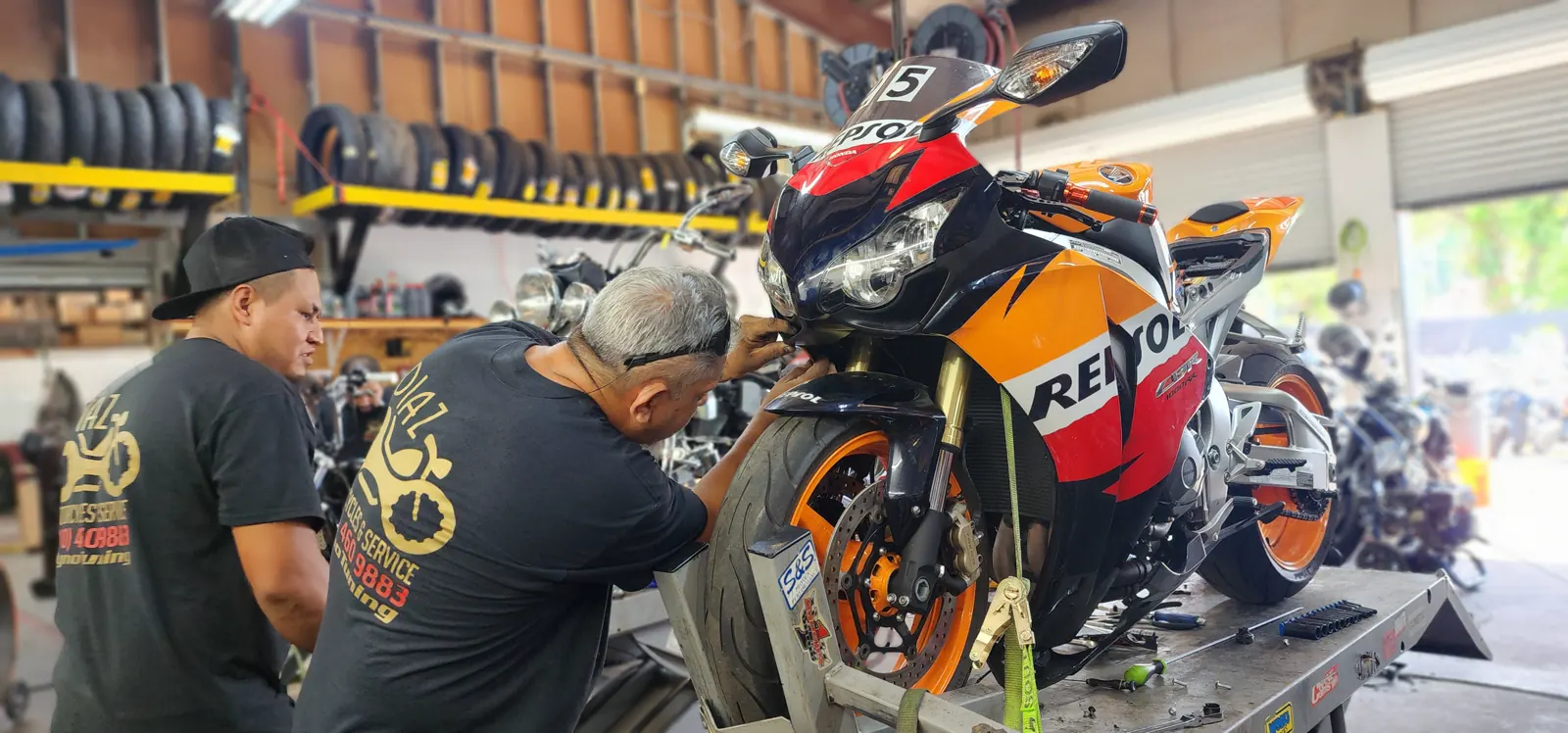
So we look under strong, raking light, and then we feel the surface with a clean hand. Surface stains, meaning light rust film, baked-on water spots, or bug guts gone acidic, sit on top of the chrome and come off with the right cleaner and some patient polishing. True pitting has already broken the plating, and you can feel those little craters catch your fingertip. On top of that, we check whether the steel underneath is actively rusting or just discolored from an old stain. We tell the two apart honestly, because polishing won’t cure a real pit, and no amount of elbow grease turns bare steel back into chrome.
WHY THE DIAGNOSIS COMES FIRST
Surface staining and true pitting can look identical in a phone photo. One is a quick polish. The other may need a part re-plated. Guessing wrong is how riders end up overpaying, so we always feel the metal before we quote.
What fixing it actually involves
Good news first, because there usually is some. A lot of what looks scary turns out to be only surface deep. For light staining and early spotting, real detailing does the trick, meaning careful cleaning, chrome-safe polishing, oxidation removal, and then sealing the metal so it stops drinking in moisture. That’s what we take care of here nearly every week, and if you want the full walk-through, here’s what that service actually involves from start to finish.
True pitting is a different job, and we’ll never pretend otherwise. Once rust has eaten a crater clean through the plating, you cannot polish it back, no matter what a video promises. The honest options are to stabilize and blend the spot so it stops spreading, or to re-plate the part or swap it out entirely when it’s too far gone. We’ll tell you straight which camp your chrome falls into. Nobody enjoys hearing that a part needs replacing, but you will never hear us pad a job to make a simple polish sound like open-heart surgery.
Once your chrome is clean and stable, the whole game becomes keeping it that way. A good sealant or coating puts a slick barrier between your metal and Georgia’s damp air, so water beads up and rolls off instead of parking there overnight. Coatings and old-school wax both protect the finish, though they behave differently, and it helps to understand the tradeoffs between them before you commit to one. Either way, protected chrome wipes clean in half the time, which means you spend Saturday riding instead of scrubbing.
For the bikes that only need a surface refresh, the work follows a simple, patient order. There’s no magic to it, just the right products used in the right sequence and a hand that doesn’t rush. Done well, it brings the metal back without wearing away the thin plating you’re trying to save. The steps look like this:
- Wash off pollen, road film, and grime so nothing grinds into the finish
- Clean the chrome with a metal-safe product that lifts light rust and stain
- Polish out oxidation and haze until the mirror comes back
- Wipe clean and inspect under strong light for any true pits hiding
- Seal or coat the metal so moisture beads and rolls off from now on
Polish cures a stain. It never cures a pit. Knowing which one you have is the whole job.
The Acworth angle
Acworth earns its Lake City nickname, and that’s exactly why chrome takes a beating out here. Lake Acworth sits right in town with its public beach, while Lake Allatoona spreads out to the north near Red Top Mountain State Park. Two big bodies of water mean humid air, heavy morning fog, and dew that just hangs around long after the sun’s up. Your chrome doesn’t know it lives in a nice place. It only knows the air is wet.
Ride Lake Acworth Drive on an early morning and you’ll roll straight through fog off the water, past wet leaves and boat-ramp sand that flick up onto your pipes. Most bikes around here do live indoors, which genuinely helps, since the garages in Governors Towne Club, Brookstone, and the streets around Historic Downtown Acworth keep them out of the rain. Still, a garage isn’t magic. Park a bike still damp from a ride, and trapped humidity does its slow, quiet work against the chrome all week long while you’re at your desk.
Weekends are for riding, not fussing. Plenty of folks run GA-92 / Cedarcrest Road west toward Dallas and Hiram, then roll home dusted in pollen and back-road grime. Keeping your riding skills sharp with something like MSF rider courses matters a whole lot more than your chrome, of course. That said, a bike you’re proud to park at the Acworth Art Fest is a pretty nice bonus, and nobody wants freckled pipes on show day next to somebody’s spotless tank.
You’ve got help nearby for the quick stuff, and we’re glad it’s there. Mini Boss Mobile Mechanic covers Acworth by appointment for basic work, which is handy when you just need a hand. For chrome that’s genuinely pitting, though, you want strong lights, real polishing gear, and a straight read on whether it’s surface or structural. We’re about twenty miles south, and if hauling the bike feels like a hassle, we’ll simply come get it. Distance is normal around here anyway, and a shop that shows up to grab your bike is just plain easier.
What changes once it's sorted
Here’s what changes once it’s actually sorted. Your chrome goes right back to mirror-bright, and I mean the kind where you can see your own grin looking back out of the tank. Run your hand down a cleaned, sealed pipe and it feels slick and cool, no grit dragging under your fingers, no rough patches. Water beads up and slides away instead of soaking in. Best of all, the freckles stop spreading, because the little door they came marching through is finally shut for good.
That’s the real payoff, and it’s a big one. A bike wearing tight, glossy chrome looks cared for, holds its resale value, and turns a head or two at every stoplight from here to town. Catching the motorcycle chrome pitting Acworth throws at your bike early keeps a simple afternoon polish from snowballing into a re-plate job a couple summers down the road. Handle it while it’s small, and you protect the shine and your wallet in the same visit, which is about as good as maintenance gets.
One last thing worth saying plainly, because riders always ask. Cosmetic chrome pitting is safe to ride on. It’s ugly, not dangerous, and those surface freckles won’t leave you stranded on Cedarcrest Road. The time to stop and call is when corrosion reaches a part that does an actual job, like a fastener, a fender strut, or a mount that’s flaking or gone weak. If you honestly can’t tell which one you’re looking at, that’s the easy part for us to check. Bring it by, and we’ll give it to you straight, every time.
Questions Acworth riders ask us
How do you find the cause of chrome pitting?
We start under strong, raking light and then feel the metal with a clean hand. Surface stains sit on top and lift off with the right cleaner, while true pits catch your fingertip like tiny craters. We also check whether the steel underneath is actively rusting or just discolored, so the fix matches the real problem instead of a guess.
Could it be something other than pitting?
Often, yes, and that’s good news. Baked-on hard-water spots, acidic pollen film, and dried bug guts all mimic pitting from a few feet away. Those are surface issues that clean and polish right off. We tell them apart before we quote anything, because a stain and a real pit are two very different jobs.
Is it safe to ride with pitted chrome?
Cosmetic pitting on pipes or trim is safe to ride on. It looks rough, but it won’t leave you stuck on the side of the road. The moment to pause is when corrosion reaches a part that does a job, like a strut, fastener, or mount that’s flaking or weak. Not sure which you’ve got? That’s a quick check for us.
What actually causes chrome to pit?
Trapped moisture is the main culprit, since Georgia’s humid air, morning dew, and lingering lake fog give water plenty of time to sit on cool metal. Acidic pollen from late winter into spring and mineral-heavy hard water make it worse. Scratches, stone chips, and thin factory plating all speed things along by opening a path to the steel.
Can I fix chrome pitting myself?
Light staining and early spots respond well to careful cleaning, a chrome-safe polish, and a good sealant, so a patient owner can handle those at home. True pitting that’s broken through the plating can’t be polished away, and it needs stabilizing, re-plating, or a replacement part. When you hit that wall, that’s exactly when to call us.
We take care of riders all across the northwest metro, not just in Acworth. That means friends in Kennesaw and Woodstock, out to Cartersville and down into Marietta, plus Dallas, Canton, and Emerson when the ride runs long. We also cover Powder Springs, Adairsville, Euharlee, Taylorsville, and White, and if hauling a pitted bike sounds like a chore from any of them, just ask and we’ll come get it.
LET'S SAVE THAT SHINE
If chrome pitting has your Acworth bike looking older than it is, don’t guess and don’t overpay on a mystery quote. Text us a photo of the spots and we’ll tell you straight whether it’s a quick polish or a bigger fix. We’ll even come grab the bike so you never leave the driveway. A clean, protected finish is closer than you think, and we’d love to bring it back for you.
470-460-9883Diaz Motorcycles and Service, LLC · 847 Barnes Mill Road, Marietta, GA 30062