Motorcycle Chrome Pitting Roswell — What to Check
Those tiny dark specks eating into your shine have a cause, a fix, and a clear answer on whether you can still ride.
You’ve got more than one bike in the garage. Maybe a touring rig for weekend runs, a commuter for the GA 400 slog, and something older you just can’t part with. Each one seems to want a different shop, so you end up driving all over North Fulton just to keep them all happy. Then one morning you lean in over the older bike and notice tiny dark specks eating into the chrome on the exhaust. That rough, cratered look is what we call motorcycle chrome pitting Roswell riders bring us all year, and it’s probably the reason you’re reading this right now.
Here’s the honest thing, though. When you spot pitting, you’re not really asking what pitting is. You’re asking three quieter questions. Did I mess up my bike? Is this going to spread to the rest of my chrome? And can I still ride it this weekend? Those are all fair questions, and every single one has a good answer. Let’s walk through them the same way we would if you rolled into the shop and pointed at the spot yourself.
What Pitting Actually Looks Like To A Rider
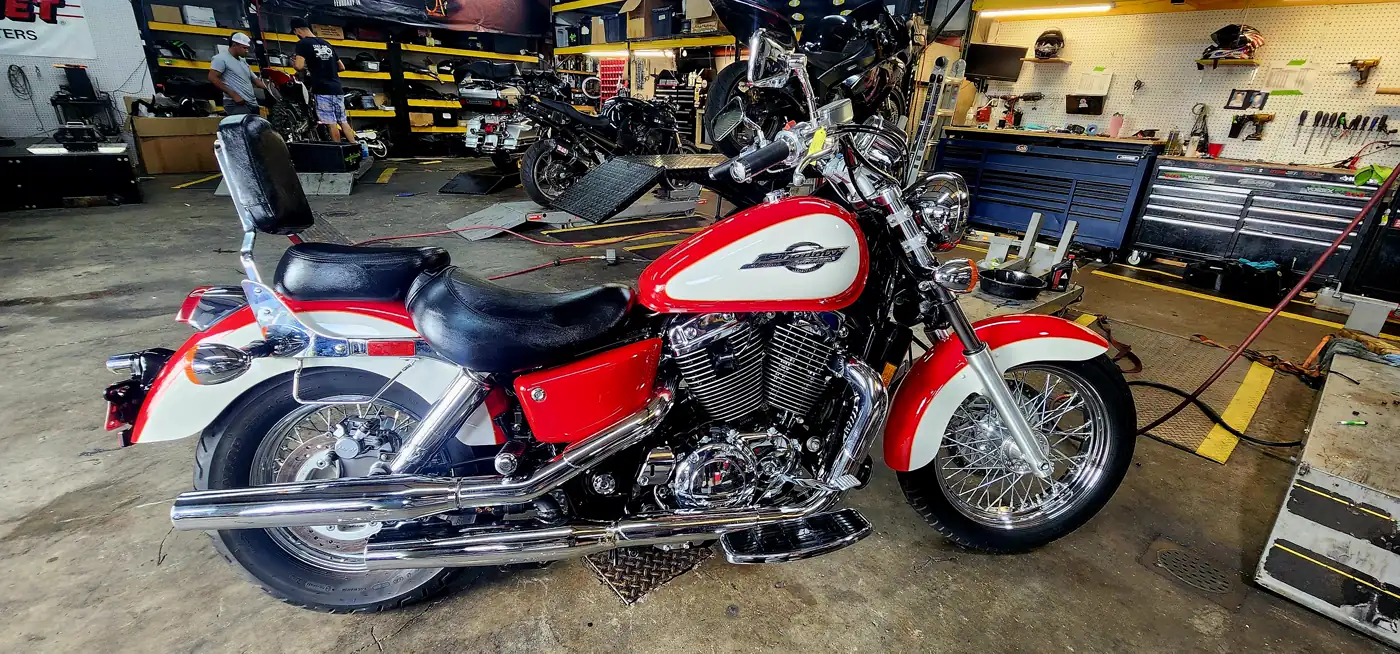
Chrome pitting sneaks up on you. First the chrome loses its mirror. You lean in to catch your reflection in the pipe and it’s a little cloudy, like breath on glass. After that come the freckles — tiny dark or brown dots scattered across the shine. Run a fingertip over them and they feel rough, almost like fine sandpaper. Leave them alone and those dots grow into little craters, and the steel underneath starts to show orange. That’s usually the moment a rider snaps a blurry photo and sends it our way.
It shows up first in the places where water likes to sit. The bottom of the exhaust. Even so, the spokes down near the hub. The underside of a fender or a chrome bracket you never think about. On a bike that sleeps outside under a cover, it can bloom across a single humid summer, and you’d swear it happened overnight.
The Honest Answer About What's Happening
Chrome isn’t a solid metal you can polish forever. It’s a thin, shiny layer plated over steel — and we mean thin. When that layer picks up a scratch, a stone chip, or a weak spot, moisture slips underneath and goes to work on the steel below. The rust expands, pushes up, and pops through the surface as a pit. So a pit isn’t dirt sitting on top of your chrome. It’s damage coming up from underneath it, which is why scrubbing harder never seems to help.
The causes line up in a pretty predictable order, and most of them come down to water getting left alone. Trapped moisture is number one — our Georgia humidity, a bike put away wet, or condensation forming under a cover overnight. Bug guts and road grime come next, because they’re mildly acidic and slowly eat the finish if they bake on in the sun. Hard water spots are a sneaky third, since our tap water leaves mineral deposits that the summer heat cooks right into the shine. Old or thin factory plating rounds out the list, especially on bikes that have already lived a few decades. And every spring, that yellow Georgia pollen coats everything and holds moisture against the metal like a damp blanket.
GEORGIA'S FOUR ENEMIES
Heat, humidity, pollen, and hard water. Our long wet summers keep metal damp for hours, spring pollen traps that moisture, and mineral-heavy tap water bakes spots into the finish. Chrome takes a beating here that it never would in a dry climate.
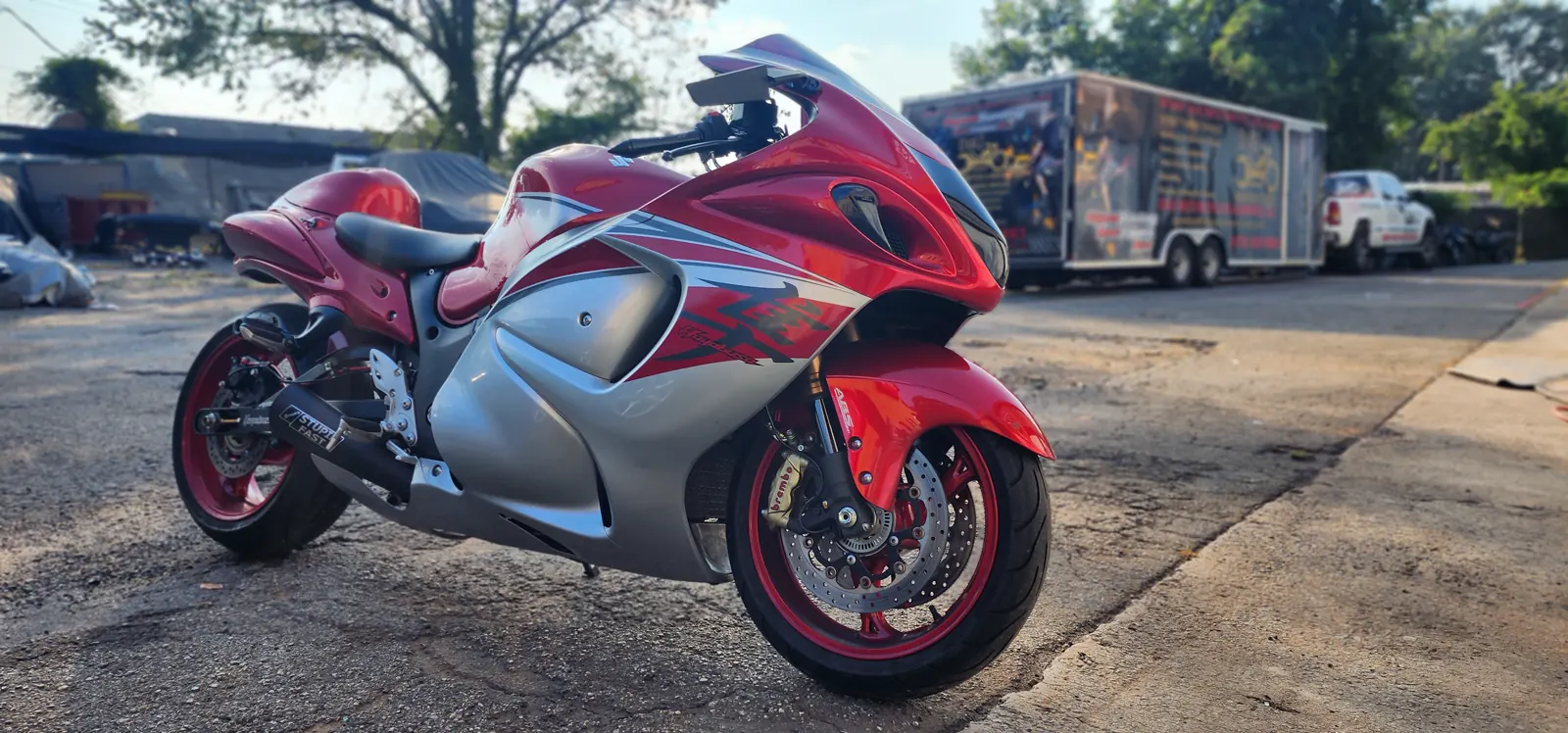
Now for the question you actually came here for — can you ride it? In almost every case, yes. Pitting on your exhaust tips, a fender, or a chrome cover is cosmetic. It looks rough, sure, but it doesn’t stop the bike from doing its job. Cruise Canton Street, roll out to Alive in Roswell on a third Thursday, no problem at all. There’s one exception worth naming out loud. If rust has moved past the chrome and into something that carries a load — a spoke, a wheel rim, a fastener holding a bracket in place — that’s not a looks problem anymore, that’s a check-it-now problem. When you can’t tell which kind you’ve got, that’s exactly what a trained set of eyes is for.
Why Catching It Early Beats Everything
The timing on this matters more than the fix does. Chrome damage is a one-way street. A pit that’s only skin-deep can often be polished out and sealed so it stops growing. Wait a season, though, and that same pit tunnels down to bare steel — and now you’re not polishing anymore, you’re looking at re-plating or a fresh piece. Same spot on the same bike, two very different jobs, and the only thing that changed between them was time.
Here’s the good news, though. You are almost never too late to make things better. Even heavy pitting can be knocked back to something clean and protected. Act early and you keep more of your original chrome, with far less fuss. But even a neglected old pipe has a real path forward, so don’t write it off before we’ve seen it.
What Makes Chrome Pitting Worse
A handful of things decide how fast motorcycle chrome pitting Roswell bikes suffer from shows up and how fast it spreads. Most of them are pure Georgia.
- Heat and humidity — our long, wet summers keep metal damp for hours, and damp metal is happy metal for rust.
- Pollen — that spring coating traps moisture against every surface it lands on and holds it there.
- Hard water — rinsing with a hose and letting the bike air-dry bakes mineral spots straight into the shine.
- Storage — a bike under a cover on a driveway breathes moist air all night, while one in a dry garage fares far better.
Storage is a big one around here. Most Roswell bikes live in a garage, which helps a lot, but those are usually older two-car spaces shared with the family car — plenty of room to park, not much room to work. So the bike gets stored well and wrenched on rarely. Over in the Canton Street and East Roswell townhome pockets, bikes more often sit under covers on a driveway, and those are the bikes that see the most weather and the most pitting. How you wash matters just as much. A quick hose-down that dries in the sun is actually worse than no wash at all, because it leaves those hard-water minerals behind to bake in. A proper wash, dry, and seal is the real thing that keeps chrome bright, and that gap — a rinse versus real care — is a big part of what separates what separates a good shop from a guy with a bucket and a hose.
How We Handle Chrome Pitting
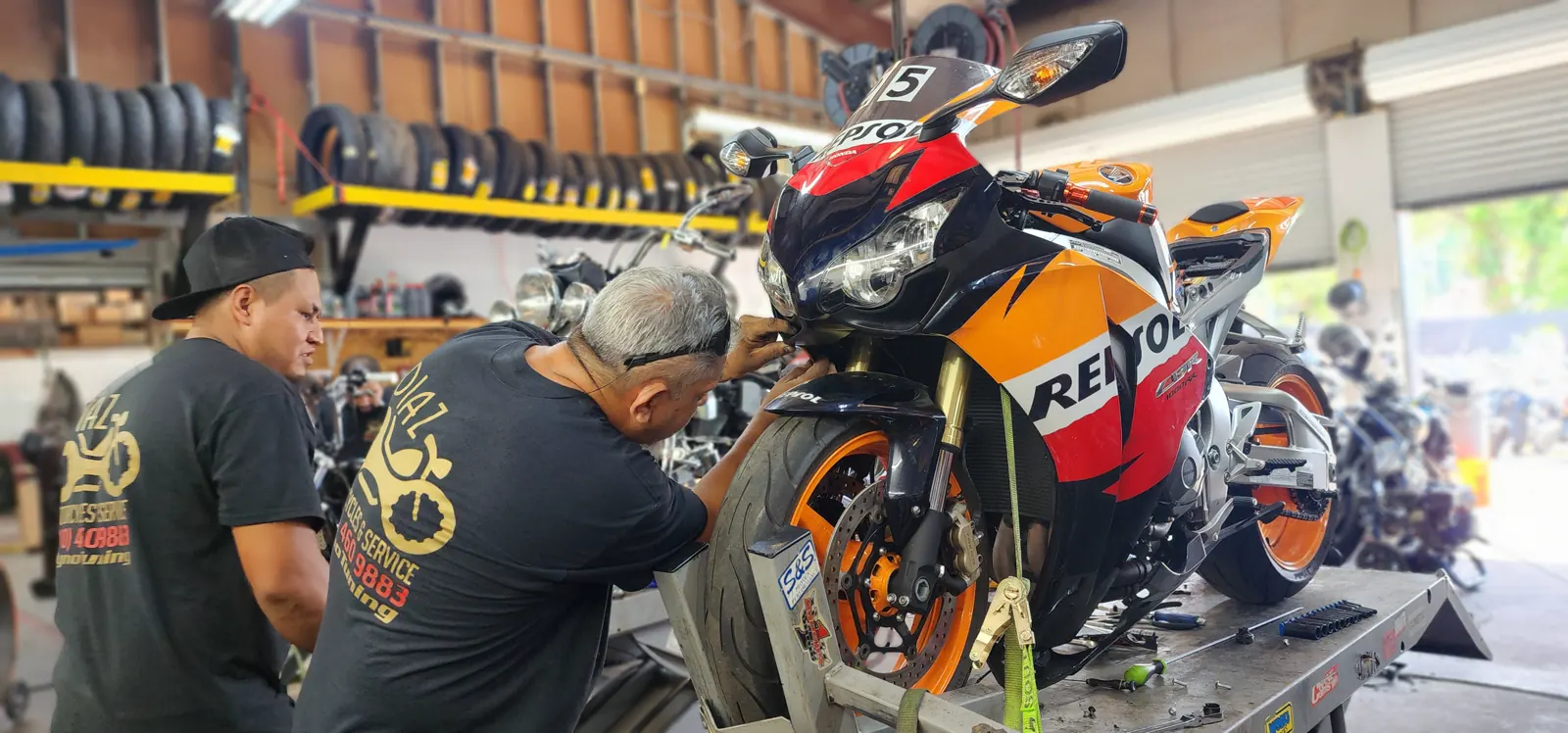
So here’s how our crew tackles it, and we don’t guess. We look at each pit, feel how deep it runs, and figure out whether the damage is still living in the chrome or has already reached the steel. If you want the full rundown on our detailing side, how our crew approaches it lays it all out. For light pitting, we clean the area, work it with the right polish and a fine abrasive, and coax the shine back up. Then we seal it, so moisture can’t sneak back under and start the whole cycle over again.
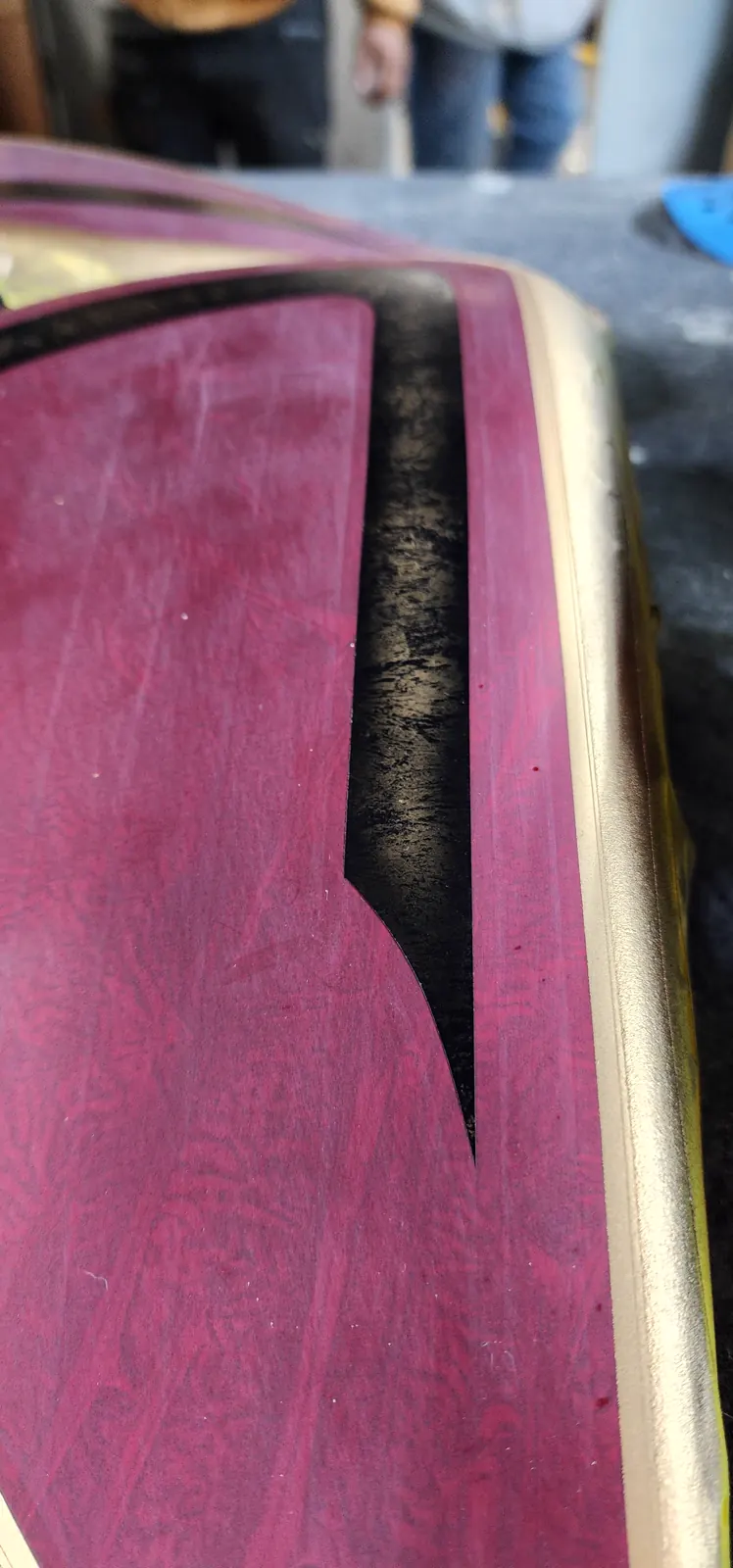
For deeper damage, honesty matters most. Once steel is exposed and the pit is a genuine crater, polishing alone won’t cut it — the chrome is simply gone in that spot. At that point you’ve got two roads to choose from. One is re-plating the piece so it’s chrome again. The other is going a completely different direction with custom finish work. Some riders decide they’d rather turn a tired chrome part into a bold painted one, and if that’s the way you lean, how we handle that job in the paint booth is worth a look before you decide.
One more thing to check while you’re at it. If the pitting is down on a wheel and the tire’s getting long in the tooth anyway, it’s a smart time to think about both together — Michelin’s motorcycle tire resources are a solid read on that front. And because Roswell has miles of resurfacing and utility-cut seams on the schedule this year — Bulloch Avenue, Canton Street, Riverside Road, and Old Roswell Road are all named targets — rough pavement flings grit and water up onto your chrome more than you’d think. You can keep tabs on the road work through Georgia DOT.
A Roswell Bike We Fixed
A bike came in from Martin’s Landing with exactly this. The owner had one of those classic setups — a 1970s cruiser that had spent most of its life under a cover near the neighborhood’s 53-acre lake, where the air stays damp year-round. The front fender and the lower pipes were freckled with pits, and he was sure the whole bike was ruined. It wasn’t, not even close. Most of the pitting polished right out, and the two deepest spots we sealed and told him to keep an eye on. He rode it to the next event grinning like he’d bought it new.
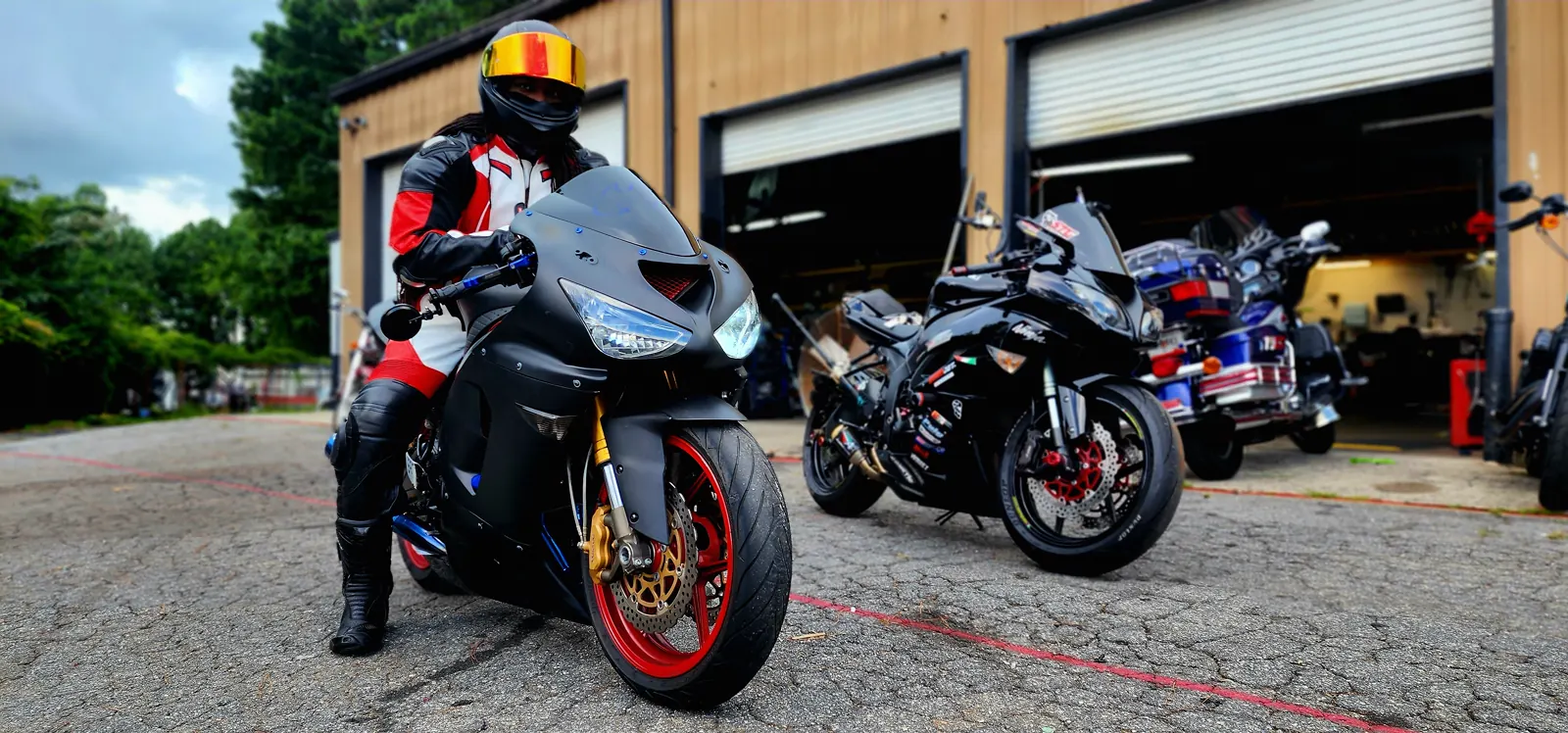
Roswell riders tend to know their stuff. Between the established streets of Country Park and River Falls and the family blocks of Huntington Park, we help friends all over the city, and plenty of them have already priced out the dealers on Alpharetta Highway — Roswell’s own motorcycle row, where Killer Creek Harley-Davidson anchors a cluster of shops sitting within about half a mile of each other. There’s no shortage of places to buy a bike out here, even big used-bike dealers like WOW Motorcycles over in Marietta. A chrome problem, though, needs a shop that fixes and finishes rather than just sells. If you split your riding time north toward the lake country, by the way, the Gainesville side of things covers this same fight from up that direction.
Getting to us is simple. From Historic Roswell it’s basically one road west on Roswell Road across the Chattahoochee into East Cobb, roughly fifteen to twenty minutes on a good day. Coming from the GA 400 side instead? GA 92 — that’s Holcomb Bridge Road, which becomes Woodstock Road — feeds you right over. These bikes get used hard, too, on weekend runs up to the Suches loop along US-19 and GA-180, Georgia’s Dragon, plus GA 60. Real miles mean real grime, and grime is what feeds pitting. Because these neighborhoods sit a little farther out, we run pickup and delivery, so you never have to load a pitted bike onto a trailer by yourself.
What You Get On The Other Side
Chrome you can see your face in again — and a bike that outshines the day it left the showroom.
Here’s the payoff, and it’s a good one. Chrome you can see your reflection in. That deep, wet-looking shine that makes people slow down in a parking lot to stare. A finish that’s slick to the touch and photographs like the day the bike left the showroom — honestly, better than that, because now it’s protected against the next humid summer instead of just barely surviving it. And when the day finally comes to sell or trade, bright chrome and a cared-for finish speak for themselves. A buyer trusts a bike that’s obviously been loved, and that trust holds its value.
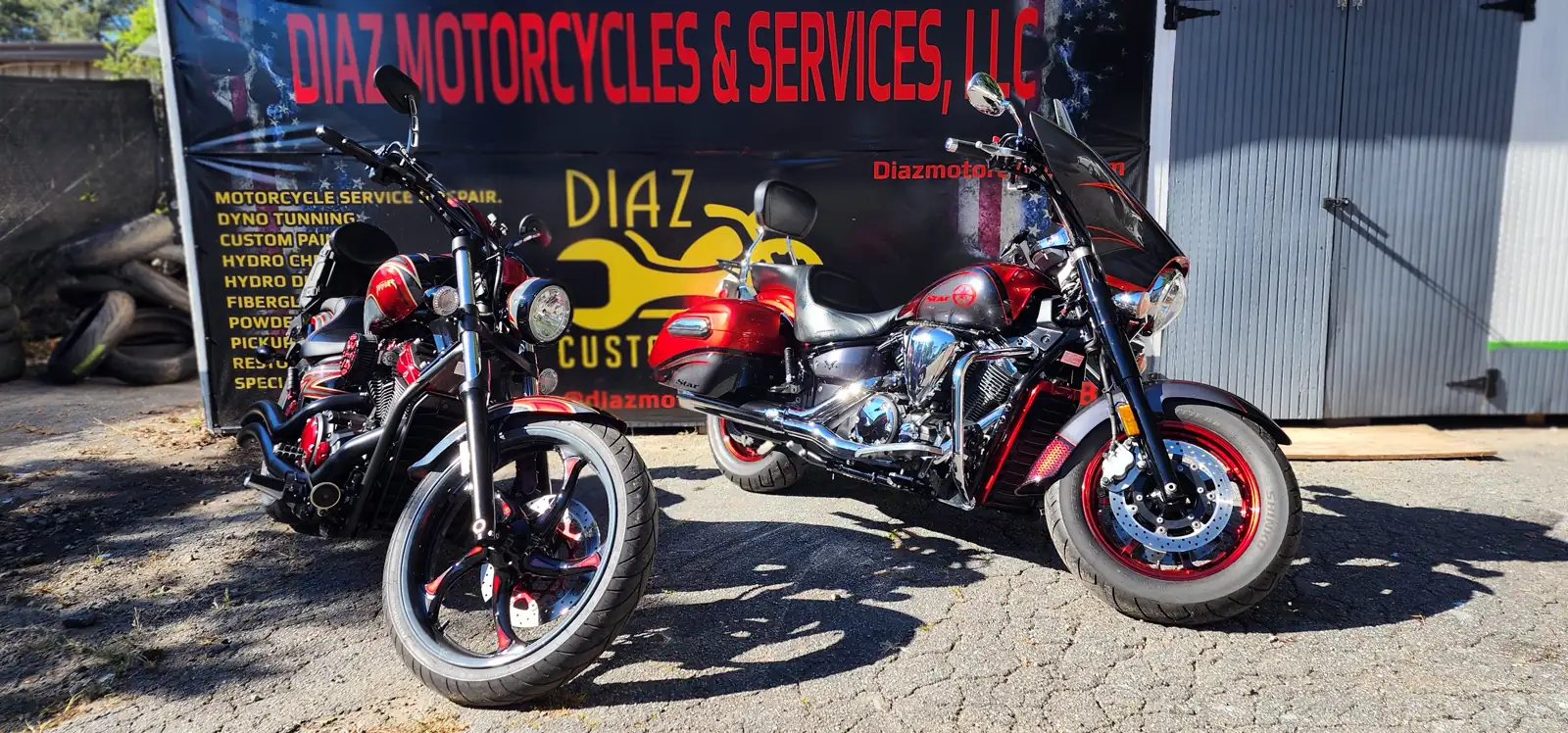
So take a breath. That spot on your pipe isn’t the end of anything. You caught it, you understand what it is now, and you know for a fact it has a fix. That’s really the whole point here — you’re the one in control of this, not the rust. Send us a photo whenever you’re ready, and we’ll tell you straight whether it’s a polish, a seal, or a bigger job. Either way, you’ll leave knowing the plan.
Questions Roswell riders ask us
What actually causes chrome pitting?
Trapped moisture is the biggest culprit, and Georgia gives it plenty to work with — humidity, spring pollen, and hard water spots that bake into the finish. Once moisture gets under the thin chrome layer, it rusts the steel beneath and pushes up as a pit. Bug guts and road grime that sit too long speed it up.
Can I fix chrome pitting myself?
Very light pitting sometimes responds to careful polishing and a good sealant, so it’s worth a gentle try. The catch is telling shallow from deep, and stopping before you thin the chrome further. If the metal underneath is already showing orange, that’s a job for someone with the right tools and a plan to keep it from coming back.
Will the pitting keep spreading?
It can, and that’s why timing matters. Left uncovered, a pit tunnels deeper into the steel and can seed new spots nearby, especially through a wet summer. Cleaning and sealing it early is what stops the spread. The sooner it’s handled, the more of your original chrome you get to keep.
How urgent is this — do I need to come in right away?
For most cosmetic pitting on pipes, fenders, or covers, there’s no emergency. You can ride and plan your visit. It becomes more urgent when rust reaches something structural like a spoke or a rim, or when a pit is clearly deepening. When in doubt, send a photo and we’ll tell you which camp it’s in.
Is my bike safe to ride with pitted chrome?
In almost every case, yes. Pitting on decorative chrome is a looks issue, not a safety one, so ride it and enjoy it. The one time to pause is if rust has moved into a load-bearing part — a wheel, a spoke, or a fastener holding a bracket. That’s worth checking before your next long run.
What happens if I ignore it?
The pit keeps eating downward, the shine keeps dulling, and a small polish job slowly becomes a re-plating or replacement job. It also chips away at resale, since buyers read neglected chrome as a neglected bike. None of that is scary today, but it’s the reason we’d rather see it sooner than later.
We take care of riders all across North Fulton and East Cobb, so wherever you keep your bike, we’ve probably already helped a friend nearby. That includes Alpharetta, Milton, Johns Creek, and Crabapple to the north, plus Sandy Springs, Dunwoody, and the city of Atlanta as you head in. Right around the shop we look after Marietta, East Cobb, Kennesaw, and Woodstock, along with the smaller pockets like Mountain Park. If you’re in Roswell and don’t feel like trailering a pitted bike, our pickup and delivery brings the shop to your driveway.
LET'S SAVE THAT CHROME
That spot on your pipe is fixable, and we’d love to show you how good it can look again. Text us a quick photo of the pitting and we’ll tell you straight whether it’s a polish, a seal, or a bigger job. Roswell riders, ask about pickup and delivery — we’ll grab the bike, do the work, and bring back a finish you can see your face in. No trailer required.
470-460-9883Diaz Motorcycles and Service, LLC · 847 Barnes Mill Road, Marietta, GA 30062