Motorcycle Dyno Tuning Newnan — What to Expect
A plain-words look at what a dyno measures, why bikes run lean or rich, and how a real tune changes the way yours feels.
You know the ride. Instead the sun is barely up, and you are already rolling onto I-85 with half of Coweta County, pointed north toward Atlanta or the airport. Traffic packs in tight. You crawl, then gun it, then crawl again. Your bike gets hot sitting still, and the engine never settles into a steady rhythm. Besides Day after day, that stop-and-go grind teaches you exactly how your bike feels when it is happy and when it is not. Actually that gut sense is where motorcycle dyno tuning Newnan riders ask about really starts.
That’s why most of us learn our bikes by feel. You notice the little hesitation off idle. You notice when it runs hotter than it used to, or when the fuel gauge drops faster on your normal loop. Those small signals are real, and they are almost always fixable. So let us walk through what a tune actually is, in words that make sense whether you turn wrenches or just love to ride. By the end, you will know exactly what to expect from motorcycle dyno tuning Newnan shops should be doing, and how to tell a real one from a shortcut.
What motorcycle dyno tuning really means
A dyno is a machine that lets your bike run hard while it stays in one spot. We strap the rear wheel down onto a big steel roller. Then you hold a gear and roll the throttle on, and the bike thinks it is flying down an open road. The whole time, the dyno reads what the engine is doing turn by turn. Meanwhile, a sensor sits in the exhaust and tells us how the air and fuel are mixing together. That mix is the heart of the entire job.
Here is the simple version. Your engine wants a certain amount of fuel for every gulp of air it takes in. Give it too little fuel and it runs lean. Give it too much and it runs rich. Lean can feel hot and snappy, but it also runs rough, coughs on a steady throttle, and puts extra heat into the motor. Rich feels lazy and heavy, fouls the spark plugs, and drinks gas you paid for. A good tune walks that balance across the whole rev range, not just at one lucky spot. If you want the full rundown, that is exactly the work we do in house.
IN PLAIN WORDS
Lean means not enough fuel. Rich means too much. The dyno lets us see the mix at every rpm, so we can dial it in where you actually ride, not just at redline.
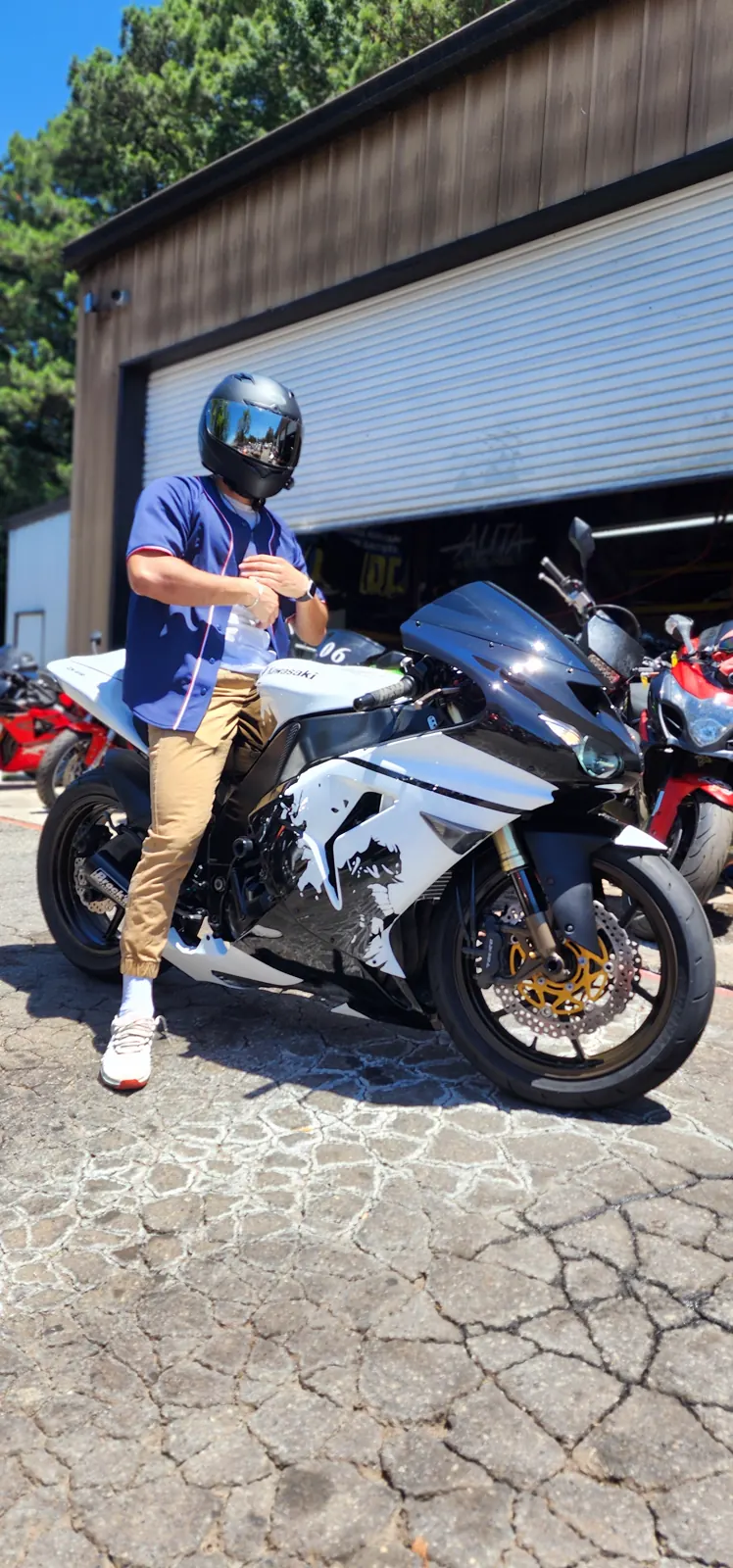
Why your bike drifts out of tune here
Bikes do not stay perfectly tuned forever, and that is normal. Your commute is a big reason why. I-85 through Coweta is the spine that runs northeast to Atlanta and southwest toward LaGrange, and it is one of the busiest freight corridors in the whole Southeast. That means constant stop-and-go, long stretches of engine heat, and the kind of slow crawl that no factory map was ever perfectly built for. Add a Georgia summer, and your engine is fighting hot, thin air more often than you think.
Parts change things too. Slap on a new exhaust or a free-flowing air filter, and suddenly your engine breathes differently. More air comes in, but the factory computer still meters fuel like the stock parts are bolted on. So the bike runs lean, gets hot, and pops on decel. It is not broken. It just needs its brain updated to match its new lungs. That is the whole point of the tune.
Even fuel plays a part. Pump gas changes with the seasons and with the ethanol blend, and your bike feels those swings. None of this is cause for worry. Every one of these things is something a dyno session reads clearly and sorts out in an afternoon.
Something changes once you know what to look for.
Once you understand lean and rich, you stop guessing and start listening. That surge at a steady 45 mph is not in your head. That extra heat on your right leg in traffic is telling you something real. When you can name the problem, you stop dreading it and start fixing it. And honestly, that is a better place to ride from.
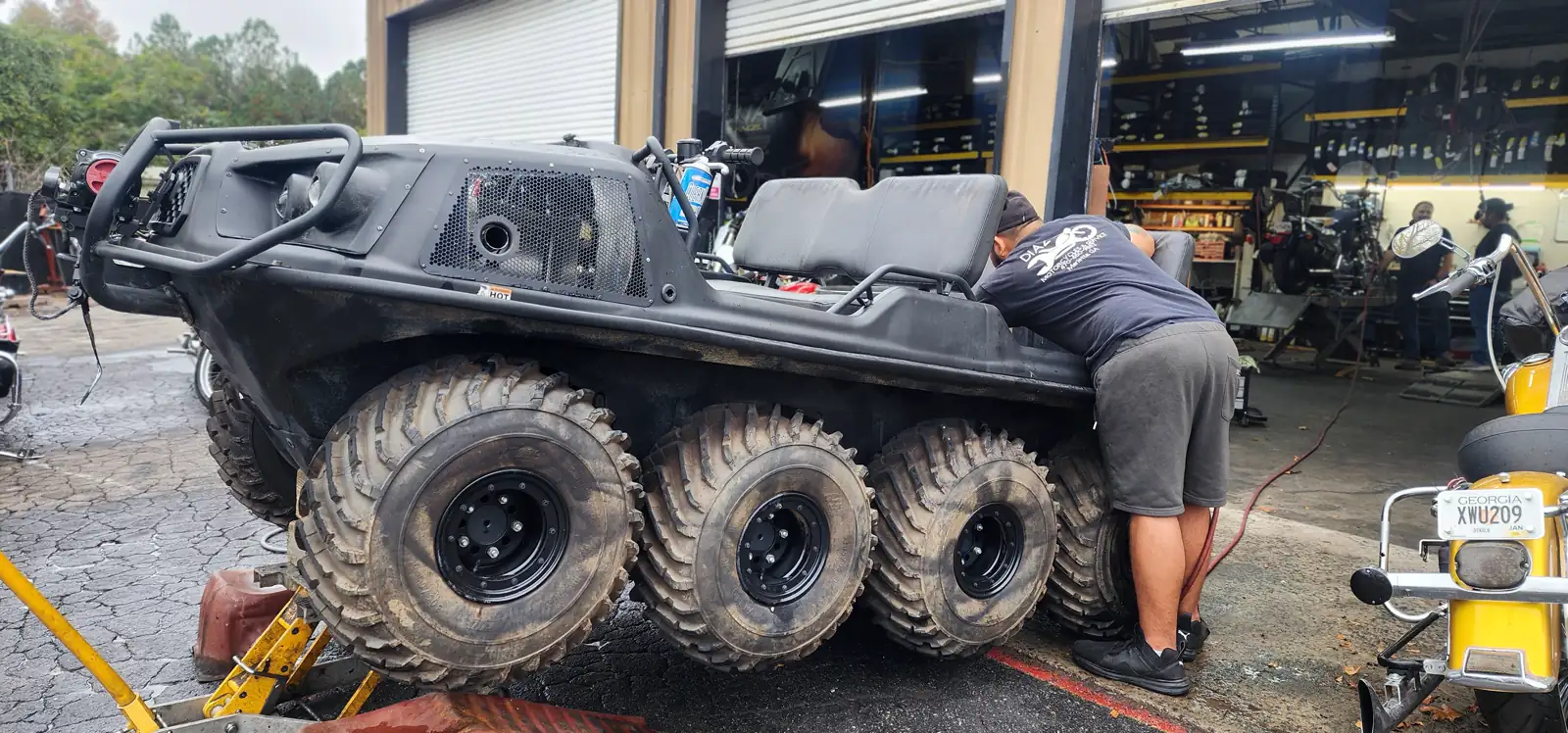
How we figure out what your bike needs
We never guess and hand you a number. That is the fastest way to waste your money and our time. Instead, we start with a baseline pull on the dyno so we can see where your bike stands right now. Then we read the air-fuel numbers, check the spark plugs, and listen for anything that sounds off. Only after we know what is really going on do we talk about the work and the cost. This is what real motorcycle dyno tuning looks like from the inside.
From there, the fix depends on your bike. Some machines get an ECU flash, where we rewrite the factory computer directly. Others run better with a Power Commander, a small add-on box that fine-tunes the fuel on top of the stock brain. Both get checked and re-checked on the dyno, pull after pull, until the mix is right everywhere you ride. If you want to compare shops before you commit, this piece on what separates a good shop is a fair place to start.
- Baseline pull, so we see your bike’s real numbers before we touch anything.
- Read the air-fuel mix across the whole rev range, then check plugs and connections.
- Pick the right tool for your bike, an ECU flash or a Power Commander.
- Tune, pull, adjust, and repeat until the low, mid, and top all run clean.
- Final pull and a plain-English walkthrough of what changed and why.
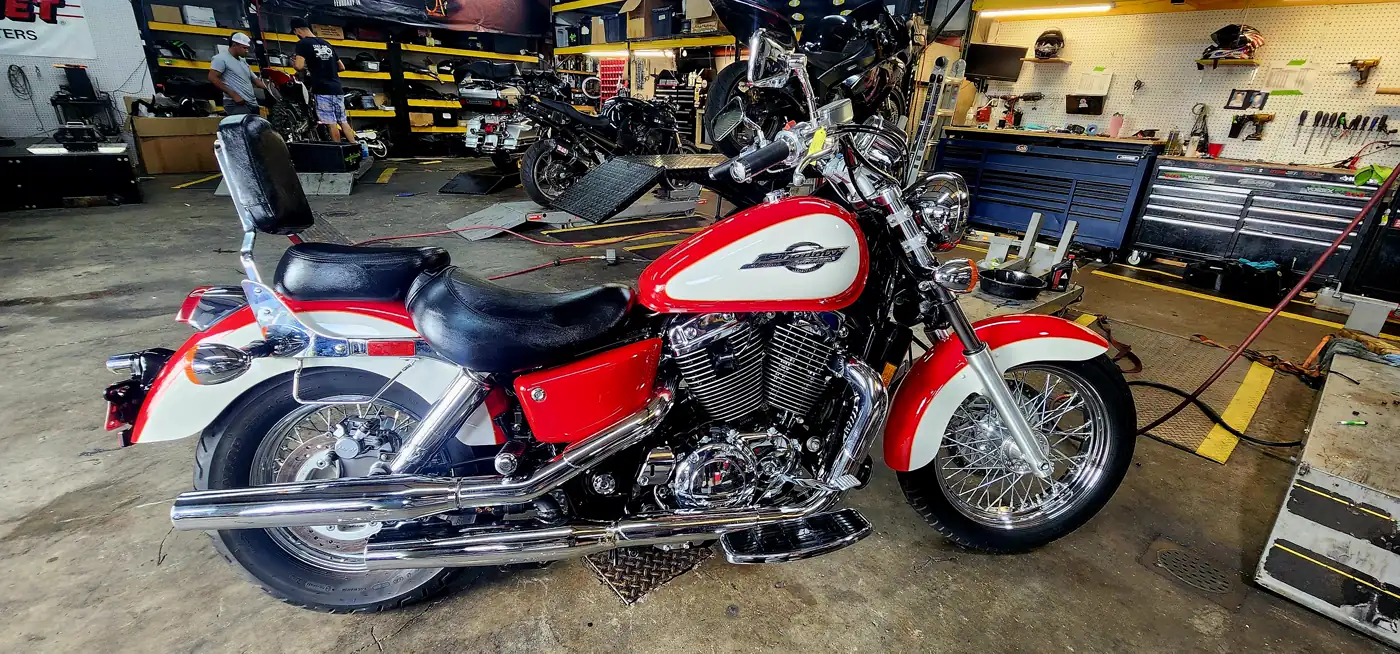
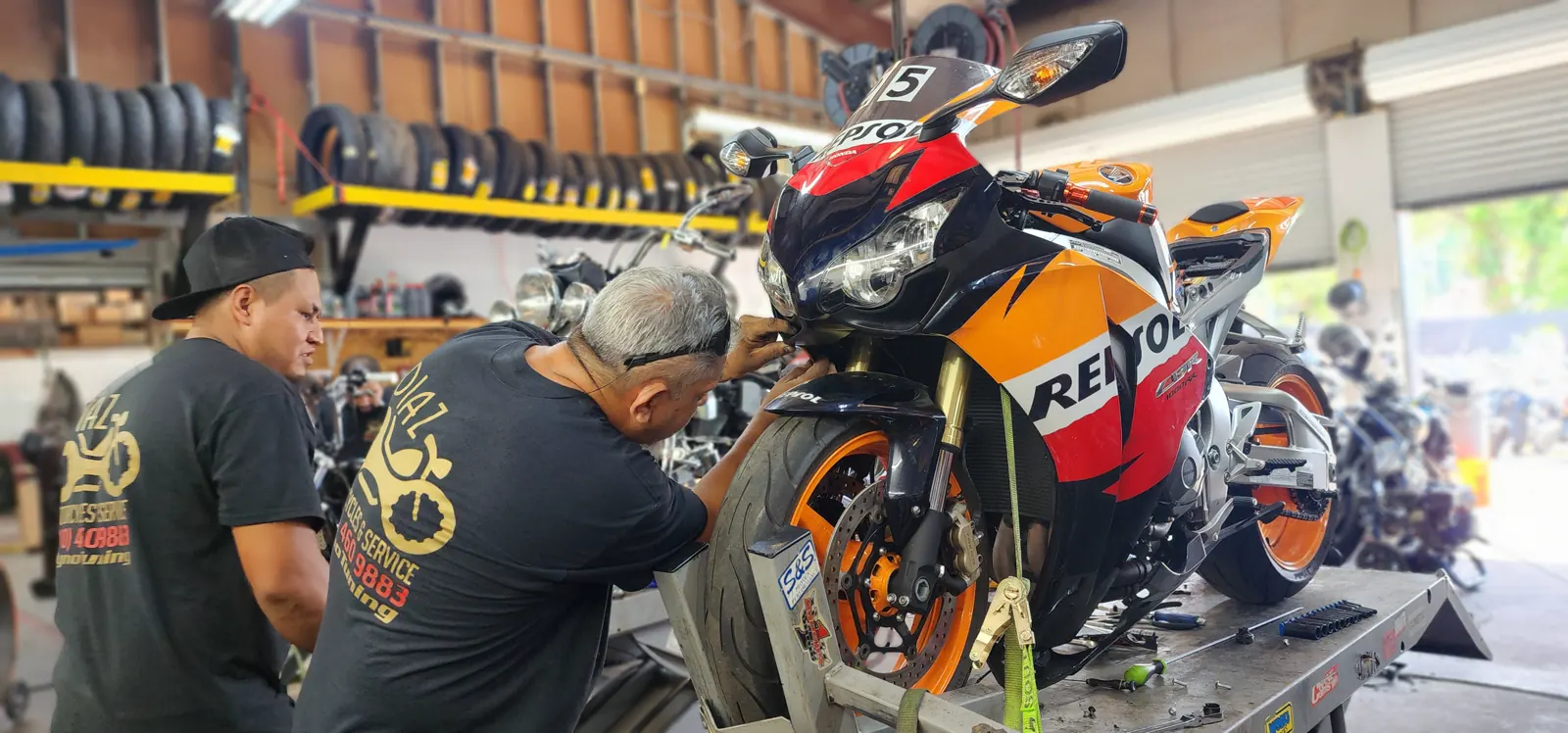
Sport bikes get a little extra attention because they rev so high and react so fast. That job asks for a careful hand and a lot of small steps. If you ride one, here is how we handle that job. Baggers and cruisers get the same care, just tuned for grunt down low instead of scream up top.
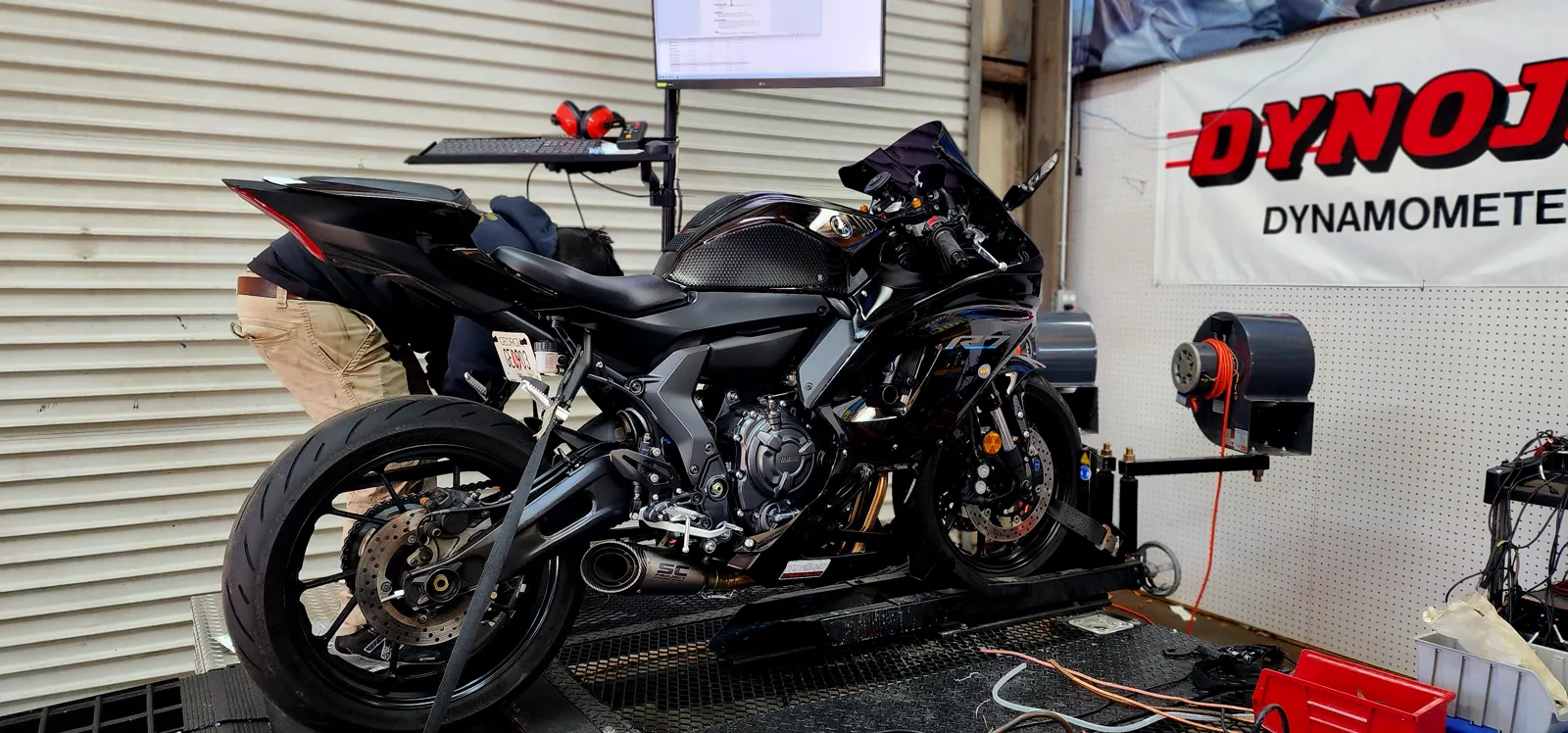
Mistakes that cost riders good power
The biggest trap is chasing one big peak number. A shop can make your dyno chart spike at the top and leave the low and mid feeling flat and mean. That looks great on paper and stinks on I-85. A real tune makes the whole road usable, from the crawl in traffic to the pull out of a corner. Groups like the Motorcycle Industry Council track how riders actually use their bikes, and it is almost never at redline.
- Buying a cheap canned map off the internet and hoping it fits your exact bike and parts.
- Skipping the dyno and tuning by feel alone, which leaves lean spots you cannot see.
- Only caring about top-end power while the part you ride every day stays rough.
- Ignoring heat, when a lean tune is often the real reason a bike runs hot in traffic.
None of these are the end of the world, and every one is easy to avoid. A canned map is a guess printed on a screen. Your bike deserves a fitting, not a hand-me-down. For the deeper why behind good calibration, RevZilla’s Common Tread covers it in rider-friendly terms too. And if you ride the north side, here is the East Cobb side of things.
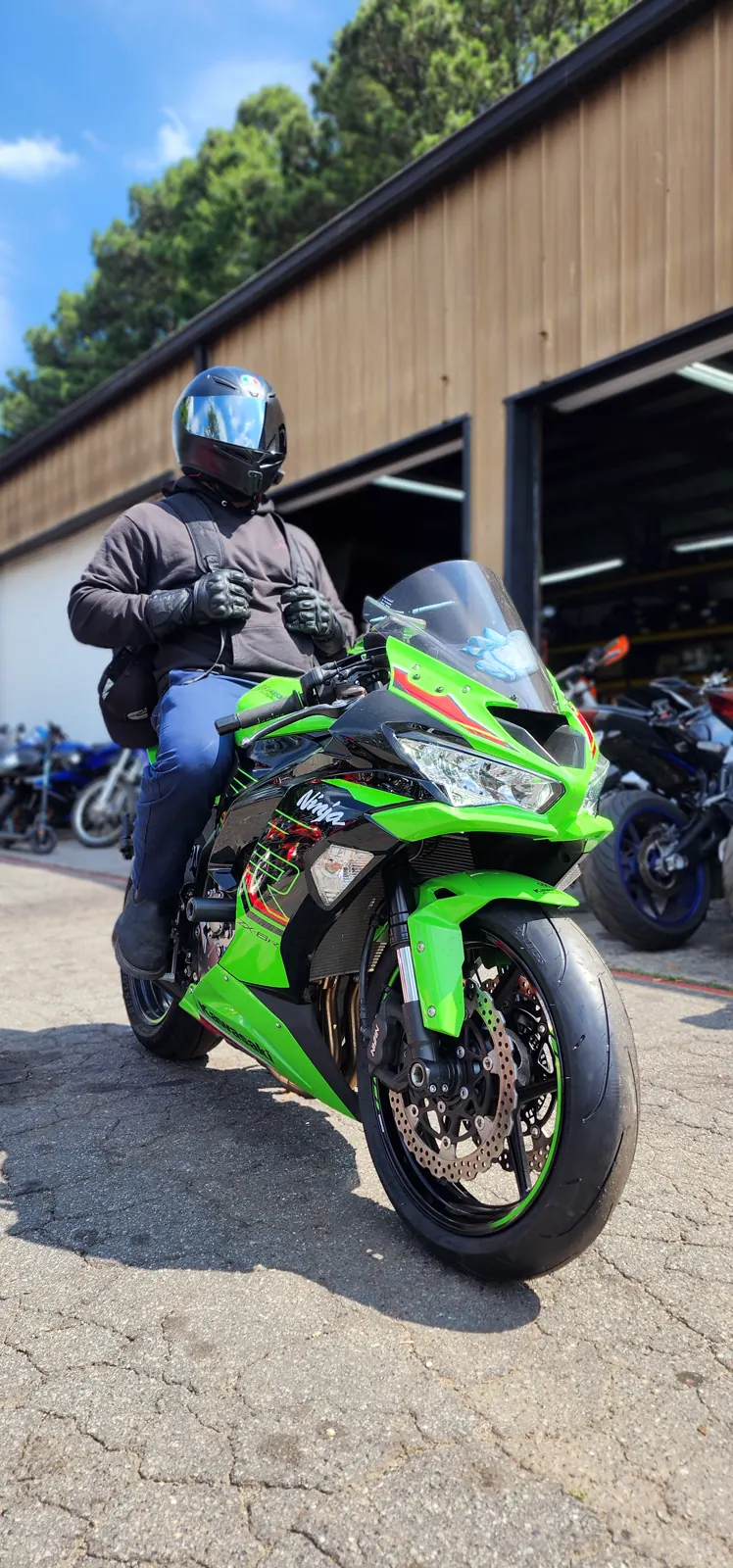
Now for the part that has nothing to do with parts at all.
What this looks like from Newnan
Newnan is a nearly 200-year-old town with long memories, and folks here judge a shop by its work, not its talk. You can feel that pride the moment you park downtown around the Newnan Commercial Historic District, the Court Square core listed on the National Register. Ride a few minutes out and you pass the Newnan Cotton Mill and Mill Village Historic District, with its 1920s mill houses, and the Platinum Point Historic District, a neighborhood that carries real weight in the city’s African American history. This is a place that respects craft it can see.
That is the whole reason we tune the way we do. Trust here is earned on the dyno, one honest pull at a time. Riders in this county already know where to get a Brunswick stew and a barbecue sandwich, because Sprayberry’s Barbecue has been feeding people since 1926 and is a genuine biker stop between the spots on Jackson Street and Bullsboro Drive. History runs deep in town, too, right down to the Coweta County Heritage Museum and Research Center over on Farmer Street. A shop asking for your business here has to show up the same way, with something real to point at.
You have two solid dealers in town for routine service, and Cycle City Power Sports over on Millard Farmer Industrial Boulevard handles the Honda, Kawasaki, Suzuki, and Yamaha crowd with full service and parts. We are not here to fight them on oil changes. Custom tuning is a different job, and that is the corner we live in. So when your bike needs a real map built around your parts and your riding, that is when a call across the metro makes sense.
And here is the thing about the drive. We know Newnan sits roughly 45 to 52 miles out, likely somewhere around an hour or a bit more depending on traffic, and yes, it crosses I-285. That is a real trip, so we make it easy. We come get your bike and bring it back. You never have to cross 285. You drop us a text, we handle the transport, and you keep your Saturday for the good stuff, like the empty rolling two-lanes south on the Coweta and Meriwether back roads. GA-16, GA-54, and the county roads toward Moreland, Greenville, and Warm Springs are classic Southern riding, and a bike that pulls clean out of every corner is a joy on them.
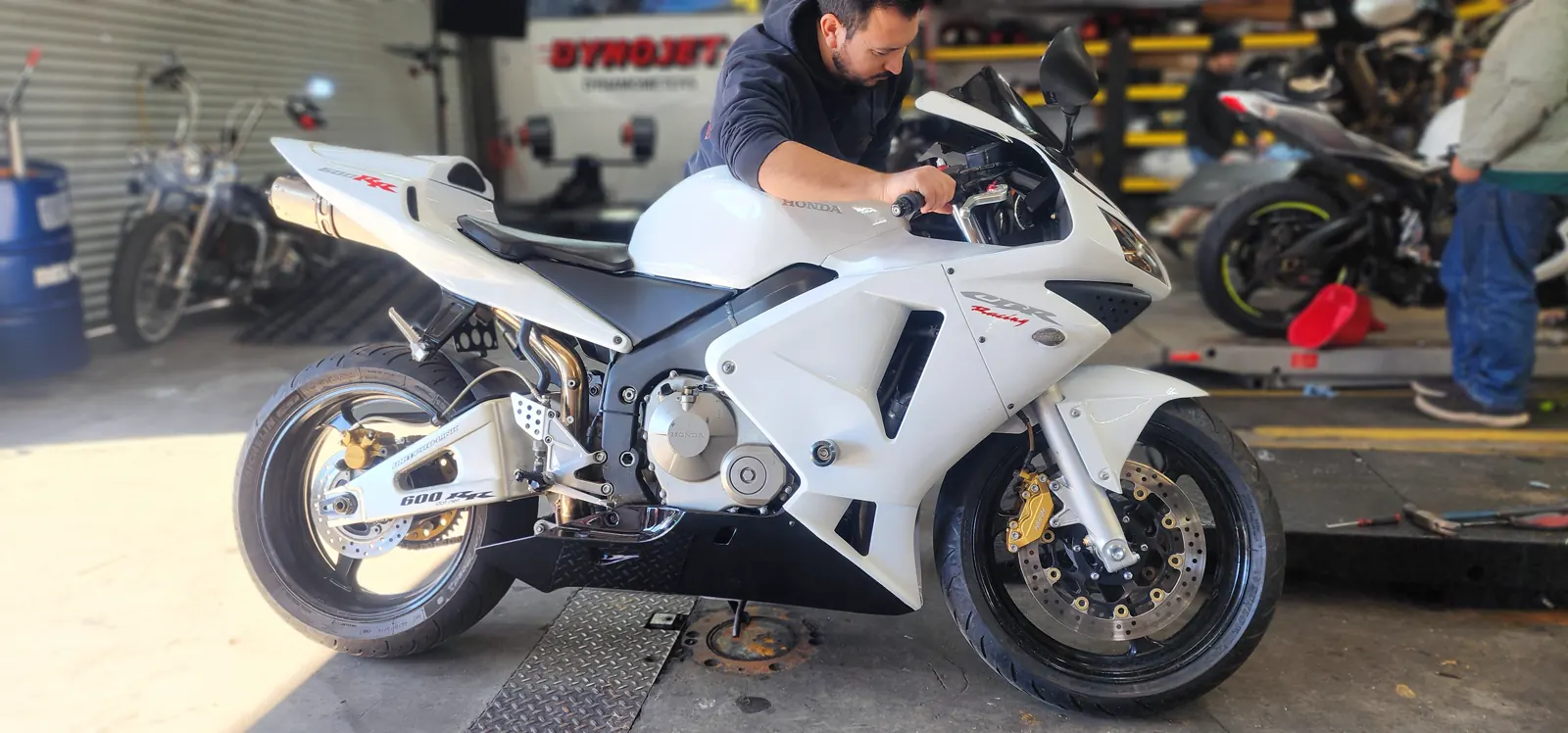
What you actually get out of it
When a tune is done right, the change is easy to feel. The throttle stops surging at a steady cruise. The bike runs cooler in slow traffic, which your right leg will thank you for on the next hot commute. Cold starts smooth out, that annoying pop on decel quiets down, and the power comes on clean instead of in a jerky rush. You did not add a single new part in that last round. You just taught the bike to use what it already had.
There is a fuel-economy bonus, too, that a lot of riders forget about. A bike that stops running rich stops wasting gas, so a good tune often pays a little of itself back at the pump over a season of commuting. You get a smoother ride and a longer range from the same tank. That is the quiet win nobody puts on a flashy dyno chart, but you feel it every week.
Best of all, you finish knowing your bike better than you did before. You saw the chart. You heard the plain-words reason for every change we made. That is the honest version of motorcycle dyno tuning Newnan riders deserve, and it is the feeling we are truly after. It is the calm confidence of someone who is in control of the machine, not guessing at it. Your bike stops being a mystery and turns back into a tool you trust. So whenever you are ready, the next step is genuinely simple. One text, and we take it from there.
Questions Newnan riders ask us
How do I get a quote for a tune?
Just text us a few details about your bike, the year and model, and any parts you have added like a pipe or air filter. We will give you a straight answer on what to expect. Nothing is final until we put the bike on the dyno and see its real numbers, so the diagnosis always comes before the price.
Do you tune older bikes, or just newer ones?
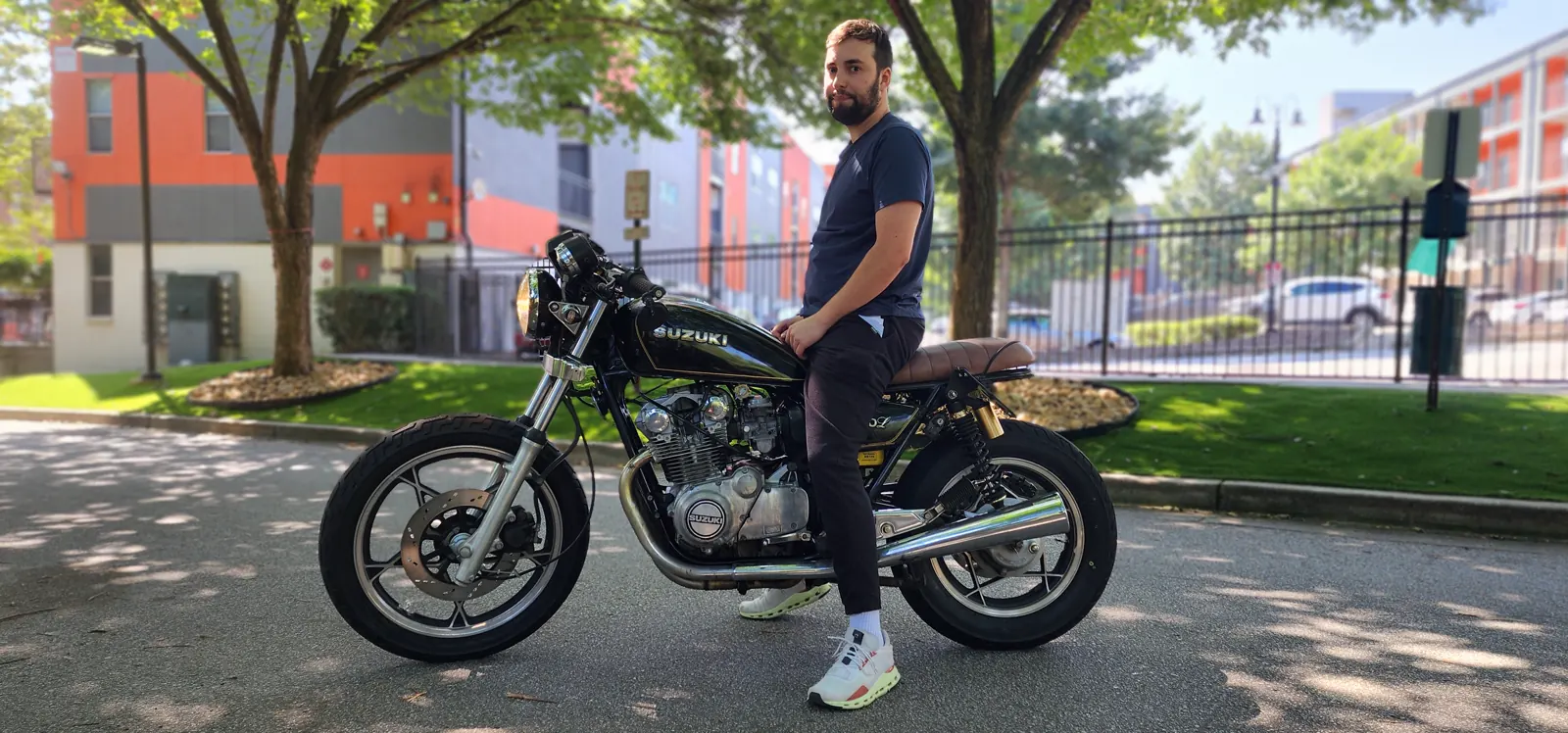
We tune both. Older carbureted bikes and modern fuel-injected ones can each be dialed in on the dyno, just with different tools. Newnan has a lot of well-kept classic and project bikes, and we love waking them up. Tell us what you have got and we will tell you what is possible.
What if my bike needs more than we first thought?
We stop and call you first, every time. If a baseline pull turns up something extra, like a worn plug or an intake leak, you hear about it before we do any added work. You stay in charge of the decisions. No surprises land on you after the fact.
What does a dyno tune include?
It includes a baseline pull, a full read of your air-fuel mix across the rev range, the actual tuning by ECU flash or Power Commander, and repeated pulls until the low, mid, and top all run clean. You also get a final chart and a plain walkthrough of what changed. You leave knowing exactly what we did.
How long does a tune take?
Most tunes are a same-day or next-day job once the bike is on the dyno. Sport bikes and heavily modified builds can take a little longer because there is more to fine-tune. Since we pick up and deliver to the Newnan area, the drive never eats into your schedule at all.
Do I really not have to cross I-285?
That is right. We pick your bike up in Newnan and bring it back when it is done, so you never make the trip across 285 yourself. Just send a text to set it up. It keeps a real distance from being any hassle at all.
We tune and pick up bikes all across the south metro and beyond, so riders never have to sweat the drive. That covers Newnan and the wider stretch of Coweta County, plus Peachtree City, Sharpsburg, Senoia, Tyrone, and Fayetteville to the east. It reaches Palmetto, Fairburn, and Union City up toward the airport, and Moreland, Grantville, and Turin closer to home. We also look after friends out in Carrollton. Wherever you are, we come get the bike and bring it back tuned.
TEXT US AND SKIP THE DRIVE
Ready to feel your bike run the way it should? Text us a couple details about your ride and we will set up a dyno session, no trip across 285 required. We pick up in Newnan, tune it in house, and bring it back pulling clean from the crawl on I-85 to the open back roads south. One quick message is all it takes to get in control of your machine.
470-460-9883Diaz Motorcycles and Service, LLC · 847 Barnes Mill Road, Marietta, GA 30062