Motorcycle Maintenance Mableton — What to Expect
What a real service includes, how we diagnose before we quote, and why the small stuff keeps staying small.
Actually the bike that rolls through our door most often isn’t broken at all. As a result it comes in under its own power, sounding fine, looking clean. Then it goes up on the lift and the chain has a dry spot you can hear across the bay, the front pads are down to a shiny sliver, and the oil that drains out is the color of gas station coffee. Nothing failed. Nobody got stranded on a shoulder. On the other hand that’s the honest starting point for motorcycle maintenance Mableton riders actually need, and it’s far less dramatic than people expect.
The myth: service is what you do after something breaks
So Plenty of riders treat service like a fire alarm. Still, you wait for the noise, the leak, the puddle on the garage floor, and then you call somebody. We understand the habit. Plus, a good bike will cover for you longer than it should, and nothing about the ride tells you it’s covering. That’s why the trouble is that waiting turns small, quick jobs into long, expensive ones.
A chain that only wanted a clean and an adjustment can take the sprockets with it. Front pads that needed twenty minutes can start chewing on a rotor. Same bike, same rider, wildly different afternoon. And your bike almost always warns you first — it just whispers instead of shouting.
Those whispers are easy to learn. A little more travel in the brake lever. Instead a slightly notchy feel when you roll off the throttle. A rear tire squared off flat down the middle from highway miles. A thin oily film creeping down a fork leg. None of that strands you today. All of it is telling you something, and catching it early is the cheapest work we ever do.
What a service actually includes
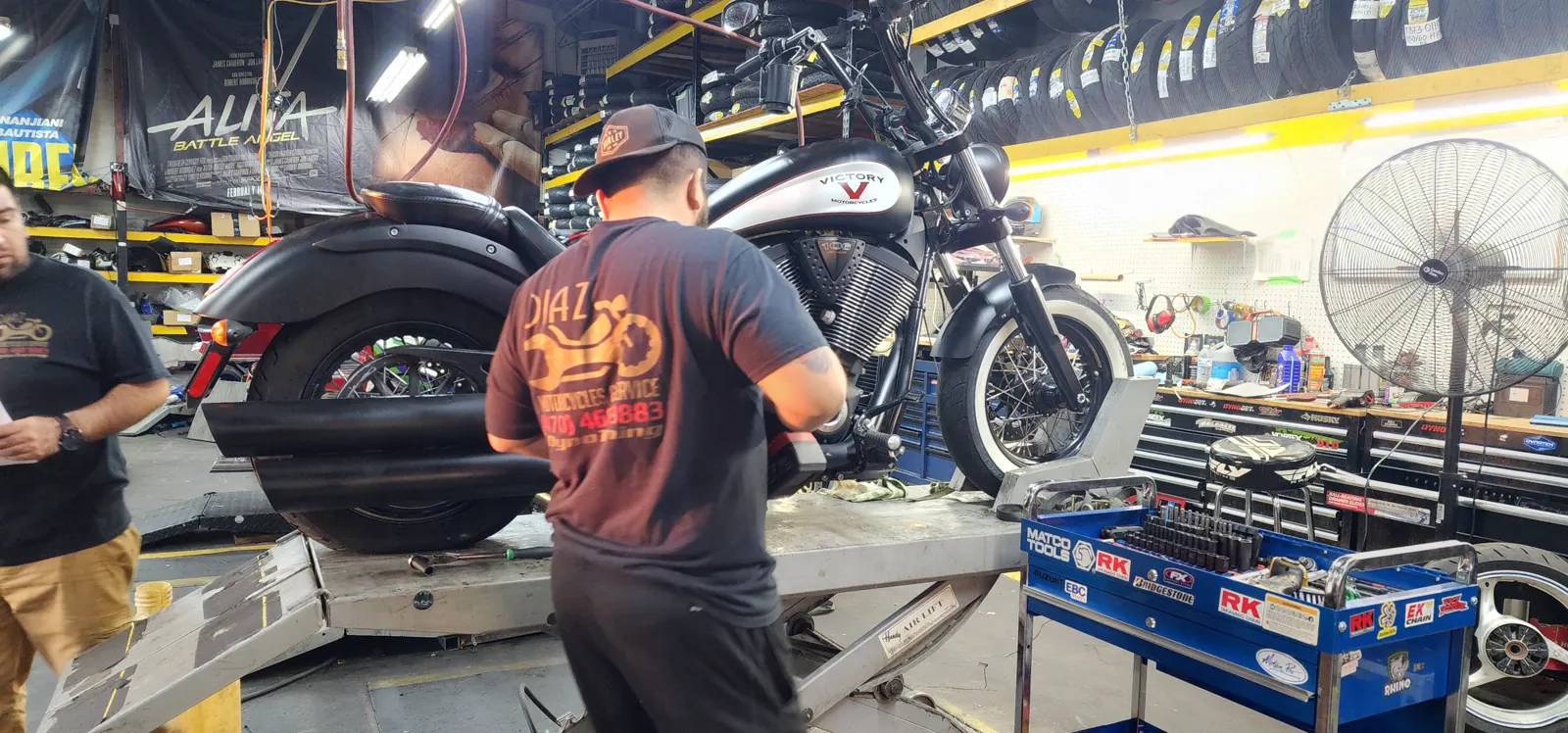
Let’s take the mystery out of the word, because “a service” sounds vague until somebody lists it out. On a routine visit we check and adjust the parts that wear on every bike, then report exactly what we found. In plain words, here’s what happens in our bays.
- Engine oil and filter, plus a look at what came out — color, smell and any glitter in the drain pan all tell a story
- Chain, belt or shaft drive: clean it, lube it, set the tension, and check the sprocket teeth for hooking
- Brakes front and rear: pad thickness, rotor condition, fluid color, and how the lever and pedal feel
- Tires: tread depth, pressure, age, wear shape, and anything stuck in the rubber
- Air filter, spark plugs, and coolant on the bikes that use it
- Controls and cables: throttle free play, clutch feel, lever pivots, and the little bolts that like to walk loose
- Battery health, charging output, lights, horn and switchgear
- Suspension: fork seals, sag, rear shock condition, and anything weeping where it shouldn’t
- A road test, because a few things only show up with weight on the bike
How often you run all that depends on your machine, and we won’t invent a number for you. Your owner’s manual sets the interval, and that number is worth trusting — the people who built the engine picked those miles on purpose. What we can add is that riders who ride hard, ride hot, or sit in a lot of stop-and-go usually land on the earlier end of the range.
PLAIN TALK
A service isn’t one repair. It’s a checkup with a written result. You should leave knowing what’s fine, what’s getting close, and what can safely wait.
Most good shops run something close to that list. Either way the order shifts and the names change from brand to brand, but the bones are the same everywhere.
The reality behind the checklist
That’s the common version. In short the real story is a little different. Besides the list above is only half the job — the other half is judgment. Two bikes can show identical pad thickness and still need completely different answers, because one runs two miles to the store on Sunday and the other covers the Perimeter five days a week. Parts don’t wear by the calendar. They wear by how you use them.
So we look at your bike instead of a chart. A commuter grinding up and down Interstate 285 in July heat cooks its fluids and squares off a rear tire in a hurry. A weekend bagger that only comes out for blue sky may have gorgeous tread and genuinely tired brake fluid, because fluid ages whether you ride or not. Same city, opposite problems, same checklist.
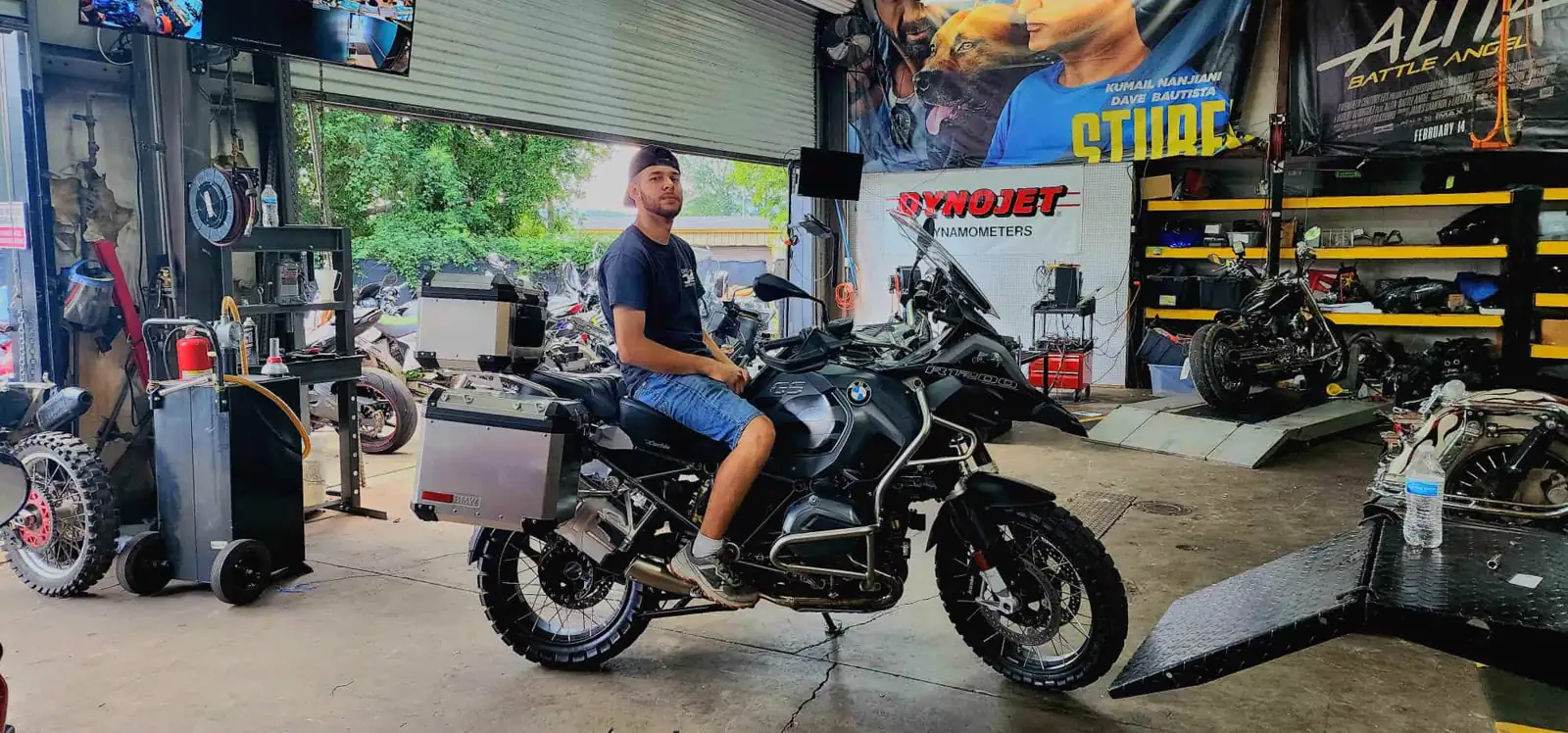
Older bikes get the same courtesy, and honestly we enjoy them. Machines that sat for a few years have their own pattern: stale fuel, gummed jets or injectors, dry seals, a battery that quietly gave up, and fasteners that fight back on principle. None of that is scary. It’s just slower, and we’ll tell you it’s slower before we start rather than after.
How we diagnose before we quote
Here’s the part riders care about most, and it’s refreshingly simple. Honest motorcycle maintenance Mableton riders can count on starts the same way every time — we look before we quote. You bring the bike in, we get it on the lift, and we find out what’s actually true instead of what sounds likely over the phone.
- You tell us what you’re feeling — the noise, the pull, the hesitation, or just “it’s been a while.”
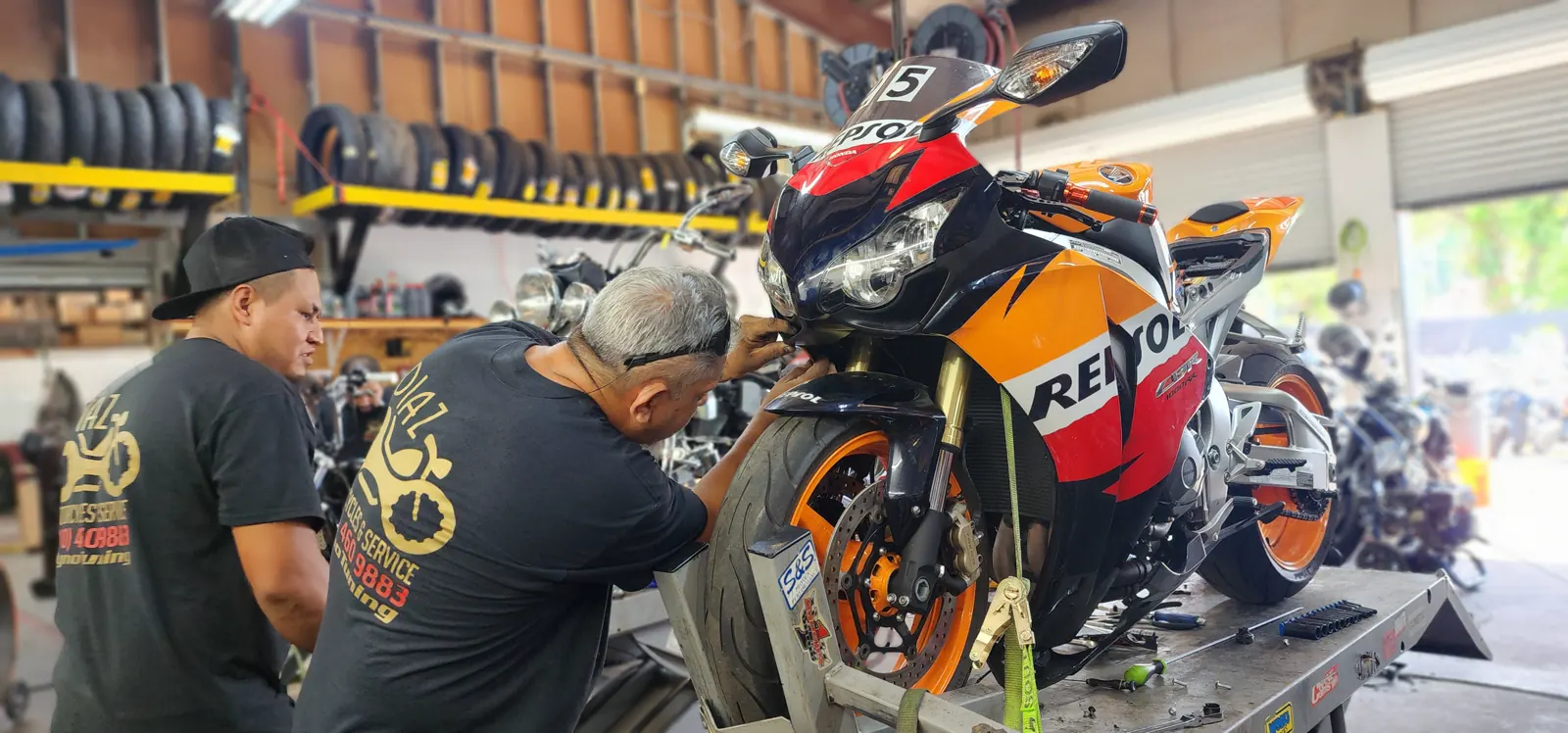
- We put the bike on the lift and go through it end to end, not only the part you mentioned.
- We sort everything into three buckets: needs it now, needs it soon, and fine for a while.
- We call or text you with what we found and what each piece takes to fix.
- You pick what gets done. Nothing else gets touched without your okay.
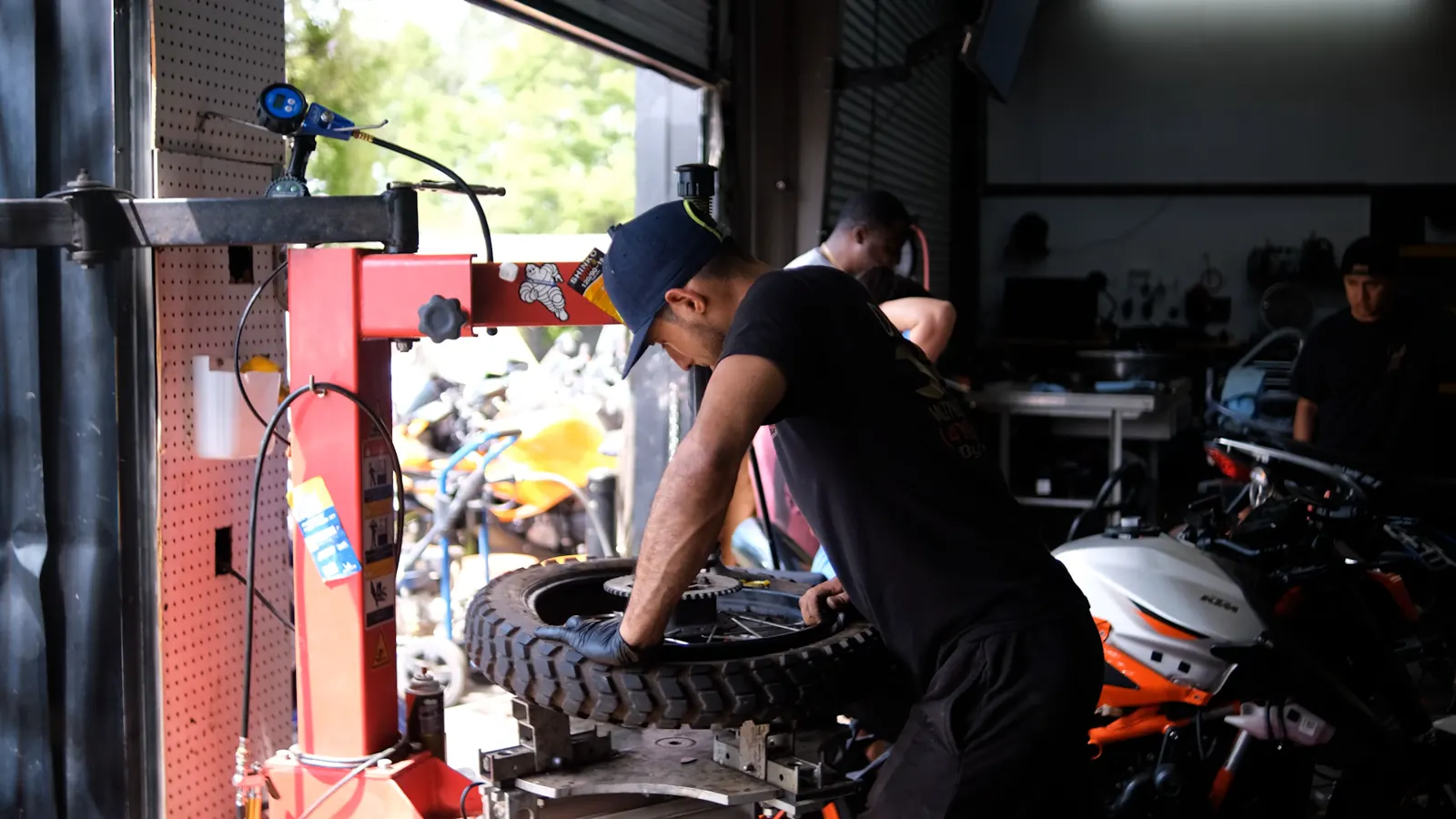
That third step is the one that keeps riders in control. Lots of bikes come in for one thing and leave with one thing done, because the rest genuinely could wait. When a job does turn out bigger than the first look suggested — a seized fastener, a worn part hiding behind another part — we stop and call before the wrench turns another degree. For the long version of a full-service visit, here’s how we handle that job.
How to tell a good shop from a busy one
Busy is easy to fake. Good is not. If you’re weighing your options, a few signs separate the two long before you pay for anything. We wrote a longer piece on what separates a good shop, though the short version fits right here.
- They ask what you’re feeling before they tell you what you need.
- Both show you the worn part instead of describing it from memory.
- Those tell you what does not need doing, not only what does.
- They put the plan in writing, in words you can repeat to someone else.
- They call before the scope changes, never after.
- They’re comfortable saying a job belongs somewhere else.
That last one carries more weight than it looks like. Specialists exist for good reasons — Traxxion Dynamics up in Woodstock, roughly thirty miles north of Mableton, lives and breathes suspension, and some days the right answer is a name that isn’t ours. A shop willing to say so out loud is a shop you can trust with everything else.
The clearest sign a shop is honest is the day they tell you not to spend anything.
We keep the paperwork boring on purpose too. No mystery line items, no vague “shop stuff” you can’t identify, no pressure to decide standing in the parking lot. You get the list, you get the reasoning, and you get time to think it over. If your plan says brakes now and chain next month, that’s a fine plan, and we’ll tell you which order protects the bike best.
The small stuff that saves the big stuff
If you only did five things between services, we’d pick these: keep the chain clean and properly adjusted, check tire pressure cold every couple of weeks, glance at your pads through the caliper window once a month, keep the battery on a tender when the bike sits, and change the oil on schedule. None of it takes real skill. All of it buys you years.
Fluids deserve one extra word. Brake fluid and coolant both age in place, quietly, on a bike that never leaves the garage. A low-mileage machine with old fluid can stop worse than a high-mileage bike that’s been kept up. Miles aren’t the whole story — time counts right alongside them.
What this looks like around Mableton
One rider off Interstate 285 put it better than we could. He said his bike didn’t feel bad, it just stopped feeling new, and he couldn’t name the day it changed. That’s the whole thing in one sentence. Wear happens slowly, so your hands quietly adjust to it. A good service is partly mechanical and partly a reset of what “normal” is supposed to feel like.
Mableton makes that doubly true, because it’s really two riding lives inside one city. Up in the Vinings Estates corridor, and over in Vinings Cove and Vinings Place, plenty of bikes live in clean garages and come out for good weather. Down along the Mableton Parkway commercial corridor and Floyd Road, a lot of bikes sit under a cover, in a carport, or in a shared lot, and they ride year round. Both groups are real riders. They simply wear parts in completely different ways.
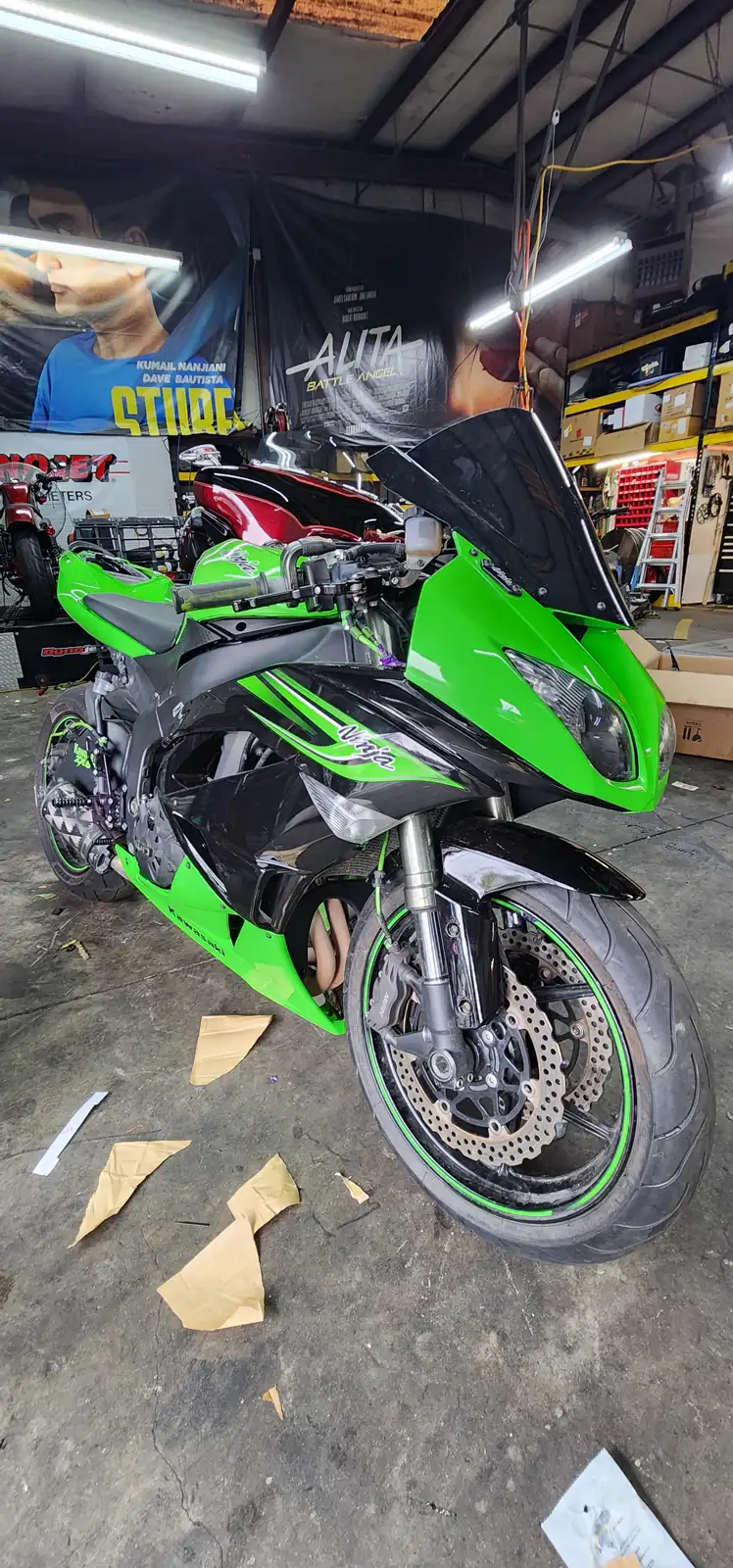
Weather and pavement do their part as well. Streets near Nickajack Creek collect washed gravel and silt after a hard rain, and heavy truck traffic shoves the asphalt at busy intersections until the edges start breaking apart. Tires, wheels and fork seals feel every bit of that. Then there’s the commuting reality: Georgia doesn’t allow lane splitting or filtering, so on I-285 your bike sits in the same heat and the same jam as every car around it. Clutches, fluids and cooling systems notice.
At the same time the reward is the riding out west. Once you’re on Burnt Hickory heading toward Sheffield WMA and High Shoals Falls, traffic thins out and the road finally means something again. Fall is our favorite stretch of the year for that loop, which is exactly why late summer is a smart time to book a service. Nobody wants to spend the best riding weekend of the year sorting out a chain in the driveway.
Getting to us is easy from South Cobb. From most of Mableton it’s roughly thirteen to sixteen miles, call it twenty-five to thirty-five minutes, running South Cobb Drive north through Smyrna into Marietta, then east on Roswell Road to Barnes Mill Road. If you want to compare notes with a neighboring city first, we’ve covered the Smyrna side of things too.
The outcome we're after
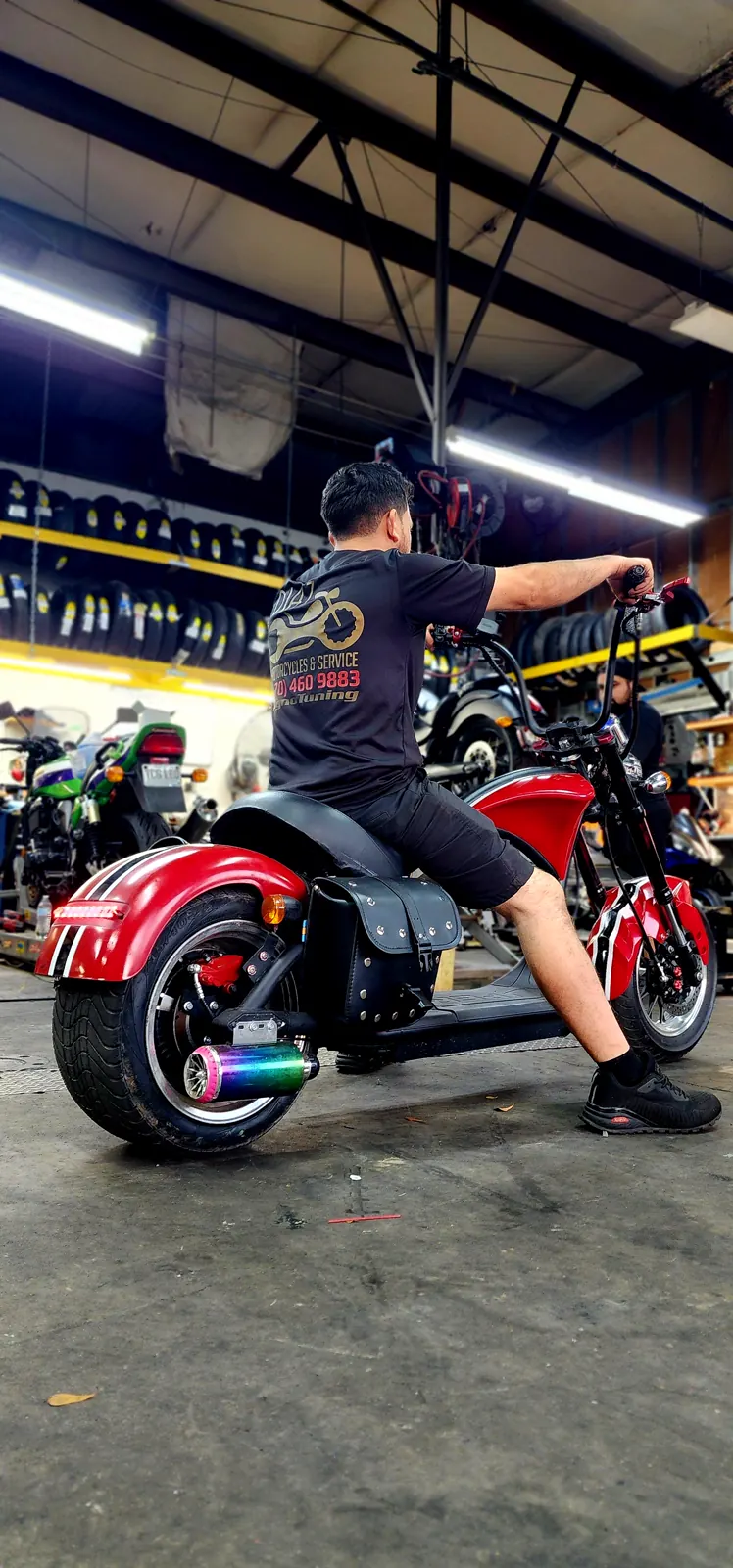
Control. That’s really it. A rider who knows what the bike needs, what it doesn’t, and roughly when the next thing is coming doesn’t spend the highway wondering. That’s the point of routine motorcycle maintenance Mableton riders can actually keep up with — not a longer list of work, just far fewer surprises.
Newer riders, one more thing while we’re here. Get legal and get trained. Georgia’s Department of Driver Services walks you through Georgia Class M licensing, and the Georgia Motorcycle Safety Program runs the training courses. A trained rider is gentler on a machine than an untrained one, so your service visits get lighter over time. Everybody wins, especially the clutch.
So if it’s been a while, don’t overthink it. Text us what you ride, how it’s been feeling, and when you’re free. We’ll tell you what we’d check first, and we’ll tell you straight if the whole thing can wait until next month.
Questions Mableton riders ask us
How do I get a quote?
Text or call us with your year, make, model and what you’re noticing. We’ll give you a range of what it usually takes and what we’d check first. The firm number comes after the bike is on the lift, because that’s the only point where we actually know. You’ll approve the plan before any work starts.
Do you work on older bikes?
Yes, and we like them. Bikes that sat for years usually need fuel system attention, fresh fluids, a battery and some patience with stubborn hardware. We’ll tell you upfront that it takes longer than a routine service. Then we’ll give you the same three buckets: now, soon, and later.
What happens if it needs more than expected?
We stop and call you. If a fastener seizes or a worn part shows up behind another part, you hear about it before we keep going. You decide whether to continue, pause, or put it off entirely. No surprise work ever shows up on your invoice.
What does a routine service actually include?
Oil and filter, drive chain or belt, brakes front and rear, tires, air filter, plugs, coolant where it applies, controls and cables, battery and charging, lights, suspension check, and a road test. You get a written report of what’s fine and what’s close. Then you choose the order of anything that needs doing.
How often should I have it serviced?
Your owner’s manual sets the interval for your specific bike, and that’s the number we go by rather than a made-up one. Hard riding, hot weather and heavy stop-and-go traffic usually push you toward the earlier end of the range. Riders who commute on I-285 tend to come in more often than weekend riders. We’ll help you pick a rhythm that fits how you actually ride.
How long does a service take?
A straightforward routine service is typically a same-day or next-day job depending on our schedule and parts. Bigger jobs, older bikes and anything needing ordered parts run longer. We give you a realistic time window when you drop off, and we update you if it changes. You’ll never have to chase us for a status.
We ride with riders all over the west side of the metro. Mableton is a short run from the shop, and we see plenty of bikes from Smyrna, Vinings and Cumberland just up the road, along with Austell, Clarkdale and Powder Springs to the west. Marietta and Fair Oaks are practically neighbors, while Douglasville, Lithia Springs and Hiram send us everything from daily commuters to garage projects that haven’t started in a decade. Atlanta riders make the trip out too, usually because they want one shop that can service, tune and paint the same bike.
TEXT US WHAT YOU RIDE
If your bike is due, overdue, or you honestly can’t remember, send us a text. Tell us what you ride, how it’s been feeling, and when you’re free, and we’ll tell you what we’d check first. Mableton is a short run up South Cobb Drive, and we’ll have you back on the road with a clear picture of exactly where your bike stands.
470-460-9883Diaz Motorcycles and Service, LLC · 847 Barnes Mill Road, Marietta, GA 30062