Motorcycle Not Starting Newnan — Causes & Fixes
A friendly, plain-English walk through why a bike goes quiet, what each symptom points to, and when it's still fine to ride.
For example, Nobody can tell you why your bike won’t start over the phone. Not honestly, anyway. After that, we can guess, and a decent guess gets you in the neighborhood, but a dead-silent starter button and a strong crank that never catches come from completely different places. So the honest version of motorcycle not starting Newnan riders deserve to hear sounds like this: describe the symptom, and we’ll narrow it down fast. What’s more, Skip the symptom, and everybody’s just throwing parts at a mystery.
That’s not us dodging the question. It’s the opposite. A no-start isn’t one problem. It’s a family of problems that all end the same way, with you standing in the garage in your gear, thumb on the button, hearing something you don’t like. So and Better yet, the good news is that the family is small. Once you can describe the noise your bike makes, or the noise it refuses to make, the list of suspects gets short in a hurry.
Start with the sound, not the theory
Before anybody touches a tool, we want to know exactly what happens when you hit the button. Not what you think is wrong. What you actually hear and see. Riders are great at this, because you already know your bike’s normal noises better than you realize. Still, You’d notice a new rattle at a stoplight on Bullsboro Drive without even trying, and this is the same skill pointed at the starter.
- Total silence. Plus, No click, no dash lights, nothing at all.
- Of course, one loud clunk or a rapid machine-gun clicking, but the engine never turns.
- Then again, the engine cranks slow and lazy, like it’s dragging.
- Even so, the engine cranks strong and fast but never fires.
- Meanwhile, it fires, runs for a second or two, then dies.
- It starts fine cold, then refuses after it’s been sitting hot for twenty minutes.
Six symptoms, six different stories. In fact, that said, Write down which one you’ve got before you call anybody. Take a short video with your phone if you can, because a five-second clip of the sound tells us more than five minutes of description ever will. And no, we’ve never once judged anybody’s garage in the background.
What each one usually means
Total silence
Silence almost always means power isn’t reaching the starting circuit at all. The battery is first on the list, especially on a bike that sat through a Georgia winter. After that come the simple, slightly embarrassing ones we all hit eventually: kickstand down with the bike in gear, kill switch flipped, clutch lever not pulled in far enough, a blown main fuse, or a battery terminal that looks tight but isn’t. Corroded ground straps hide in this category too. The fix here is usually small, which is why we love this symptom.
Clicking, or one clunk, with no crank
Now you’ve got power, just not enough of it. A rapid click is the classic weak-battery signature, because the solenoid keeps grabbing and letting go. A single heavy clunk usually points at the starter relay or the starter motor itself. Worn brushes inside a starter on a high-mile touring bike land right here as well. Charging system trouble hides behind this one, too, since a tired stator or a failed regulator will quietly drain a good battery over a few rides and leave you clicking in a parking lot.
Cranking strong, never catching
When the engine spins happily but won’t fire, the electrical side is fine and we move to fuel and spark. Old gas is the leading cause by a mile, especially on stored bikes. Ethanol fuel goes stale and gums up injectors and pilot jets faster than most riders expect. Behind that sit clogged fuel filters, a dead fuel pump, fouled plugs, a failed crank position sensor, or a bike that flooded itself after a few too many attempts. This is the symptom that most often has a genuinely cheerful ending.
Starts, then dies
A bike that catches and immediately quits is telling you it can start but can’t keep breathing. Think restricted fuel delivery, a plugged tank vent, a sticking idle air circuit, or a safety switch cutting the run circuit a half-second after you release the button. Bikes that only misbehave when hot usually have a component that fails as it warms, like a coil or a sensor. That one’s frustrating, but it’s also very findable once we can reproduce it in the shop.
Now flip it around and look at it from the bike’s side. Your motorcycle isn’t being stubborn. It’s actually being careful. Every one of those symptoms is a machine refusing to run without the four things it needs at once: air, fuel, spark, and compression, delivered at the right moment. When any one of those goes missing, the bike stops rather than hurting itself. A no-start is your bike putting a hand up and saying it noticed something before you did.
That reframe matters, because it changes how you feel walking into a shop. You’re not delivering a broken machine. You’re delivering a machine that caught its own problem early, which is a far better position than a bike that kept running until something expensive let go. Friends we’ve helped often show up apologizing, and we end up telling them their bike did them a favor.
What actually happens once it's on our lift
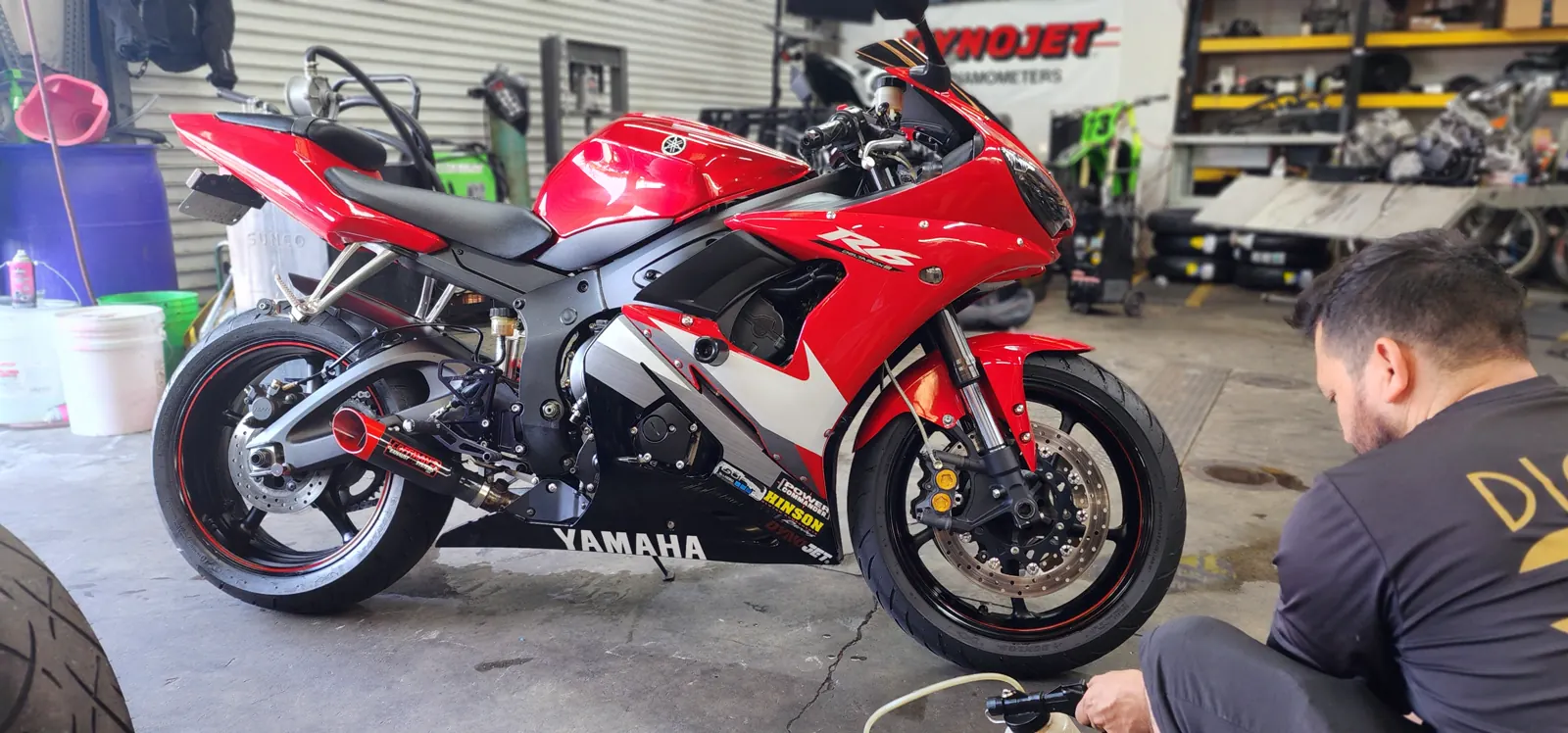
Diagnosis isn’t mystical. It’s a checklist run in order, cheapest and most likely first, so we never charge you for chasing a ghost. Here’s the path a no-start takes with us, and it’s the same path whether you ride a Street Glide, a Vulcan, or a scooter that lives downtown.
- Reproduce the symptom exactly as you described it, cold if that’s when it happens.
- Load-test the battery and check charging output at idle and at speed, because a battery that reads fine at rest can still be finished.
- Confirm the safety circuits: kill switch, kickstand, clutch, neutral and clutch switches.
- Check for spark at the plugs and pull the plugs to read what they’re telling us.
- Check fuel pressure and fuel condition, and smell the tank, since bad gas announces itself.
- Scan for stored codes and check the sensors the bike relies on to fire.
Most no-starts are solved somewhere in the first three steps. The rest take a little longer, and that’s fine, because we’d rather find the real cause once than fix the same bike three times. If you want the wider picture of how we handle a bike start to finish, here’s what that service actually involves from drop-off through the test ride.
When it's safe to ride and when it isn't
This is the part riders really want answered, so let’s be direct about it. Some no-start causes are annoying. Others mean you should not ride the bike home and hope.
- Fine to ride, carefully: a one-time no-start after a long sit that fires right up on a second try, with normal power and no warning lights.
- Ride it straight to a shop, not on a long route: a bike that needed a jump, or one where the headlight dims badly at idle. That’s a charging problem waiting to strand you.
- Don’t ride: any no-start paired with a fuel smell, a fuel leak, hot wiring smell, melted connectors, or a burning odor.
- Don’t ride: a bike that dies while running, especially at speed. A stall in traffic is a different kind of problem than a stall in your driveway.
- Don’t ride: cranking with a metallic knock or a grinding starter. Stop and let somebody look.
If you land in the don’t-ride column, that’s what trailers and vans exist for. Nobody has ever been embarrassed about arriving on four wheels, and every single one of us has done it. Basic riding habits help here too, and the MSF Basic RiderCourse covers the pre-ride check that catches a lot of this before it strands anybody.
How long this usually takes
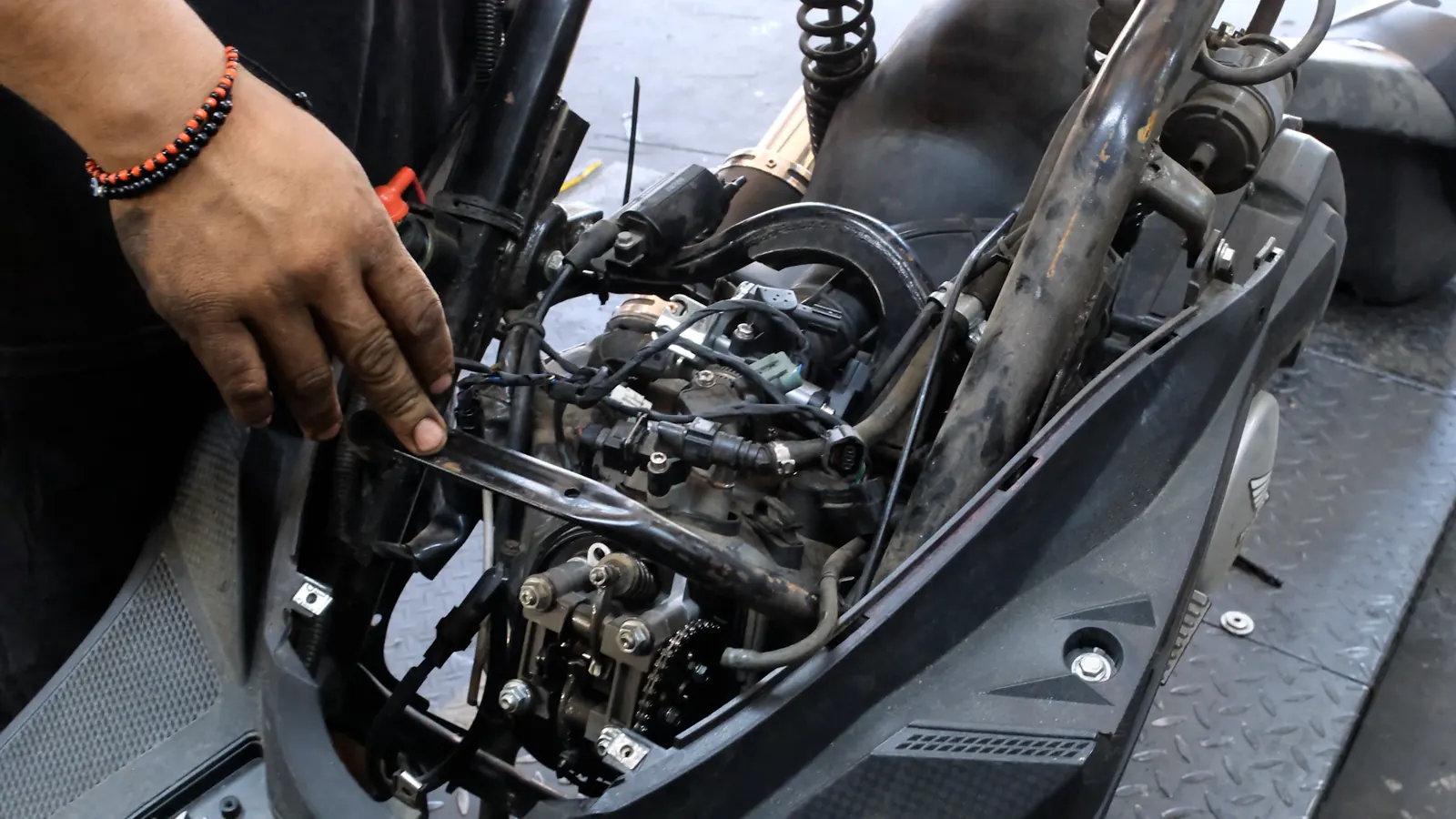
Timing depends almost entirely on which branch of the tree you’re on. A battery, a fuse, a relay, or a set of plugs is often a same-day turnaround. Fuel system cleaning on a bike that’s been parked a couple of seasons takes longer, because carb or injector work is patient work and rushing it just brings the bike back. Charging system repairs sit in the middle, and a wiring fault that only shows up when hot is the one job we won’t put a clock on, because chasing it properly beats guessing at it quickly.
There’s a detail in all this that changes how you’ll ride out of here. Almost every no-start we see has a second, quieter cause sitting behind the obvious one. The dead battery was dead because the stator was weak. The fouled plugs fouled because a sensor was reading rich. Replace only the part that failed and you’ll be back in a month, annoyed. Find the thing behind it and the bike starts every single time for years.
So when we hand your keys back, you’re not just getting a bike that fired once in the shop. You’re getting one where the reason it quit has been dealt with. That’s the whole difference, and it’s the same standard we apply to every job in the work we do in house. Tire condition falls under the same thinking, and Dunlop’s technical resources are a solid read on what a healthy tire should look like when you’re already down there checking things.
The Newnan side of this
Newnan gives bikes a specific life, and that shapes the kind of motorcycle not starting Newnan calls we get. The City of Homes has deep garages, big lots and outbuildings, which means Coweta County holds an unusual number of stored, inherited and half-finished project bikes. A bike that spent two years under a cover in a shop building behind a house in Cole Town Historic District will almost always come back with stale fuel, a flat battery and gummed jets. That’s not neglect. That’s chemistry, and it’s fixable.
Riders here also ride real roads, not gentle ones. The run west on US-27A and GA-70 toward Franklin and the Chattahoochee is a favorite, and so is a Saturday out to Chattahoochee Bend State Park along the river. Those rural two-lanes throw gravel at driveway entrances and hide seams and potholes after a freeze-thaw winter. Meanwhile the slow crawl around Court Square in the Newnan Commercial Historic District, where buildings have stood since as early as 1868 and most of the block dates from 1895 to 1900, cooks a big twin at low speed on a July afternoon. A trip north to Dunaway Gardens and its old rock garden theatre mixes both in one afternoon. Bikes in the White Oak communities, including White Oak Villages, The Village at White Oak and Woodstream at White Oak, live all of that in a single riding season.
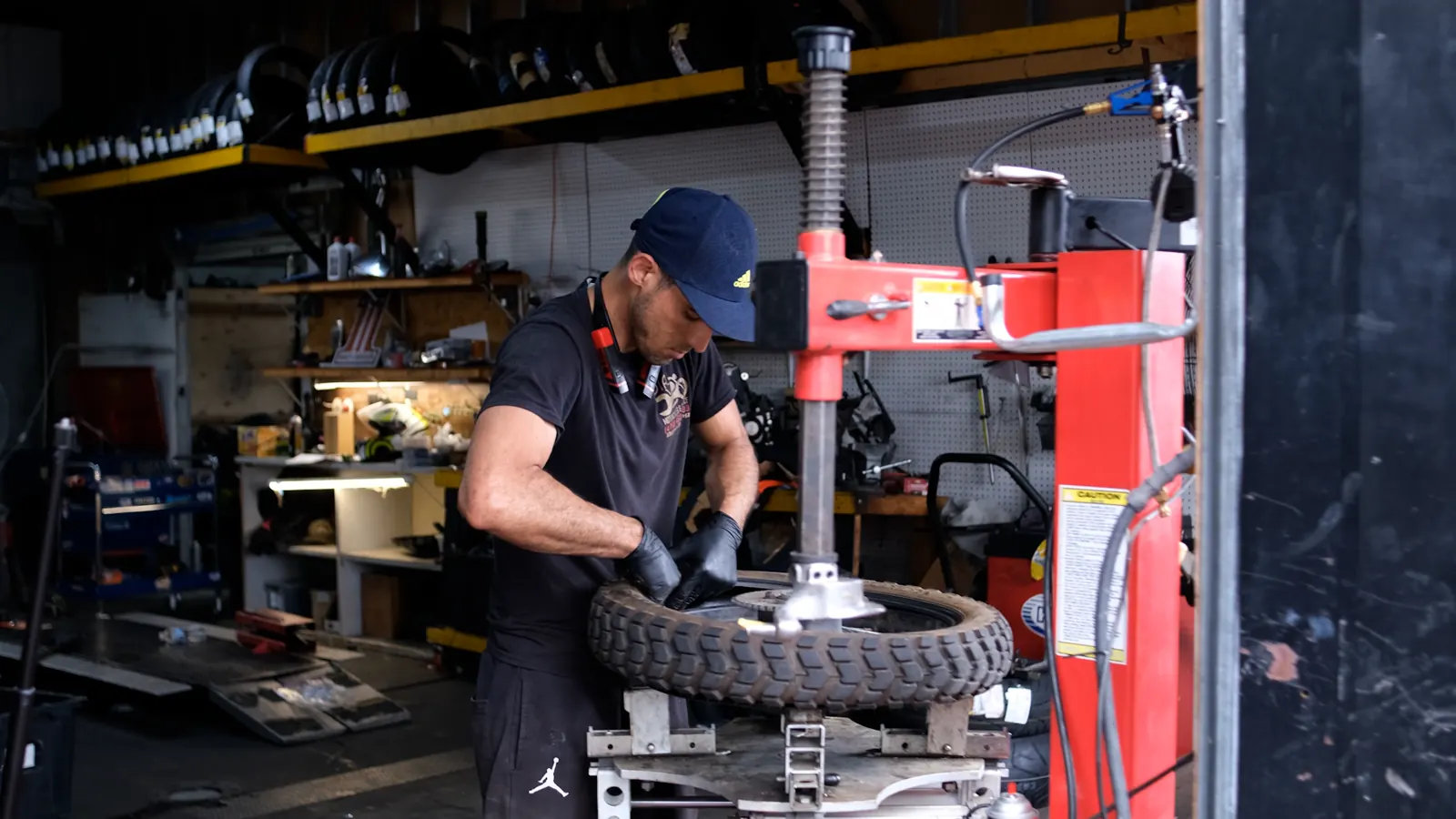
For routine service you’ve got real options in town. Cycle City Power Sports over on Millard Farmer Industrial Blvd runs full service and parts departments across Honda, Kawasaki, Suzuki and Yamaha, and that’s a genuinely useful thing to have nearby. Where riders come to us is the deeper work: custom paint, restoration and the electrical puzzles that take time. We’re in East Cobb, roughly forty-five to fifty-plus miles north depending on your route, which is a real drive, so we pick bikes up and deliver them back. Riding out with the same worry twice is the only thing we don’t do.
BEFORE YOU CALL
Grab three things: what you hear when you press the button, when the bike last ran, and how long it sat. Those three answers cut the guessing roughly in half before your bike ever leaves the garage.
Here’s the reassuring part, and we mean it. A no-start is one of the most solvable things that happens to a motorcycle. It’s loud, it’s inconvenient, and it always seems to happen on the one morning you had plans, but it is rarely the end of anything. The same conversation plays out with riders over in Gainesville every spring, and the outcome is almost always the same: a small part, a clear cause, and a bike that starts like it used to. If you want to see how we approach the diagnostic side across the board, here’s the full rundown on it.
Your bike didn't fail you. It caught something early and told you about it.
Questions Newnan riders ask us
How urgent is a no-start, really?
It depends entirely on the symptom. A bike that fires on the second try after sitting a month is a weekend problem, not an emergency. A bike that needed a jump, dims at idle, or smells like fuel or hot wiring should be looked at before your next ride.
What happens if I just keep jumping it and ignore it?
Usually the underlying cause keeps getting worse while the jump keeps hiding it. A weak charging system will eventually leave you stopped somewhere less convenient, and repeated deep discharges shorten a battery’s life fast. It’s a far easier fix caught early.
How do you find the actual cause?
We run the same checklist in the same order every time: reproduce the symptom, load-test the battery, verify charging output, check the safety switches, then check spark, fuel and stored codes. Most no-starts reveal themselves in the first few steps. The stubborn ones just take patience.
Could it be something other than the battery?
Often, yes. Relays, starter motors, stators, regulators, fuel pumps, filters, plugs, sensors and safety switches all produce no-starts that look like a dead battery at first glance. That’s exactly why we test rather than assume, and why we check what caused the battery to die.
Is it safe to ride a bike that barely starts?
Short answer, not far. If it starts hard but runs normally, ride it to a shop and skip the long route. If it dies while running, knocks or grinds while cranking, or smells like fuel or burning wire, don’t ride it at all. Have it transported instead.
Do I have to bring the bike to Marietta myself?
No. Newnan is a real drive from East Cobb, so we pick bikes up and deliver them back once the work is done. You describe the symptom, we handle the transport, and you get the bike back running the way it should.
We look after riders across Coweta County and the wider south metro, so alongside Newnan we regularly pick up bikes in Peachtree City, Sharpsburg and Senoia, run out to Tyrone and Fayetteville, and cover Palmetto, Moreland, Grantville and Turin without anybody having to make the drive north themselves. Riders in Fairburn, Union City and Carrollton get the same arrangement, because a bike that won’t start is hard enough to deal with before you add a trailer hunt on top of it.
TELL US WHAT IT SOUNDS LIKE
Text us what happens when you press the button and roughly how long your bike has been sitting, and we’ll tell you what we think is going on before anything moves. If it needs to come to the shop, we’ll pick it up in Newnan and bring it back running. No guessing, no lectures, just a bike that starts again.
470-460-9883Diaz Motorcycles and Service, LLC · 847 Barnes Mill Road, Marietta, GA 30062