Motorcycle Not Starting Smyrna — Why It Happens
A rider's plain-language guide to what a no-start really means, what causes it, and when it's still safe to ride.
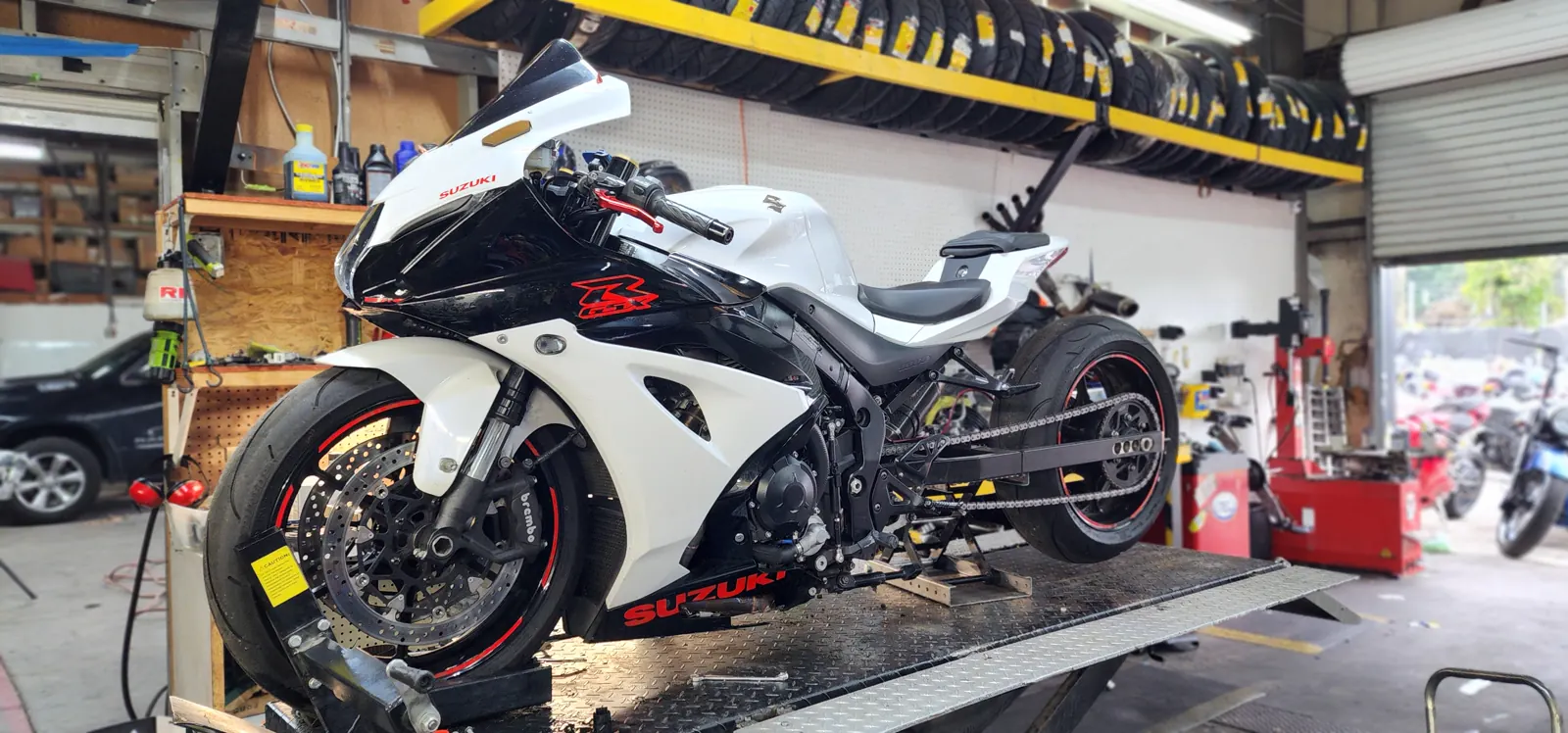
There’s a bike on our lift right now with the seat off and a meter clipped to the battery terminals. Its owner rode it into work every day, then one morning it cranked, coughed, and went quiet. That is the exact shape of a motorcycle not starting Smyrna riders roll through our door with, and it shows up more often than any other single complaint we get. So let’s stand over the lift together and figure out what’s actually happening down there.
First, take a breath. A motorcycle not starting Smyrna riders depend on for the daily commute feels like a disaster, but it is almost never the end of an engine. In fact, most of the bikes that come in dead leave under their own power the same week. The trick is reading the symptom instead of guessing.
The short answer first
Your engine needs four things to fire: spark, fuel, air, and enough electricity to make it all happen on command. When a bike won’t start, one of those four is missing or weak. That’s it. Everything else is narrowing down which one, so here’s the list we work through, most common first:
- A weak or undercharged battery, by a wide margin the number one cause
- A loose, dirty or corroded connection, especially a ground strap or a battery terminal
- Stale fuel, or fuel that has picked up moisture while the bike sat
- A tired starter relay or solenoid, which is what makes that famous single click
- A safety switch doing its job: kickstand down, clutch out, kill switch bumped, tip-over sensor tripped
- Fouled or worn spark plugs
- A clogged fuel filter or a lazy injector on a bike that sat through a long winter
Notice how far down the scary stuff sits. Real internal engine trouble is at the bottom of the list because it is genuinely rare, and we’d rather you know that up front than lie awake picturing a rebuild. Good news? The top three causes on that list are all cheap, quick and completely fixable.
What the sound tells you
You’ve probably noticed that a dead bike has more than one flavor of dead. Each one points somewhere different, so here are the common ones.
One sharp click, then nothing
That single click is the starter relay pulling in, then giving up because there isn’t enough juice behind it. So the first suspect is the battery, and the second is the connection feeding it. Sometimes it’s a terminal nut that backed off over a few thousand miles of Cobb Parkway SE (US-41) truck-seam vibration. Tighten, clean, charge, done.
It cranks slow, like it's tired
A slow crank is your battery telling you it can’t hold a full charge anymore. Also worth checking: the charging system, because a battery that keeps dying is often an alternator or regulator problem wearing a battery costume. We test both, since replacing only the battery on a bad charging system just buys you a few weeks.
It cranks fast but never catches
Now you’ve got plenty of electricity and something else is missing. Usually that’s fuel or spark. Old gas, a plugged filter, a fouled plug, or a sensor giving the ECU bad information will all produce this exact sound. Because the crank is healthy, though, this one is usually a good-news day.
Total silence, no click at all
Silence usually means the circuit never closed at all. So check the kill switch, the kickstand, the clutch lever and the main fuse before you assume anything expensive. Honestly, we’ve had bikes trailered in that needed nothing but the side stand flipped up. That switch has fooled everyone at least once.
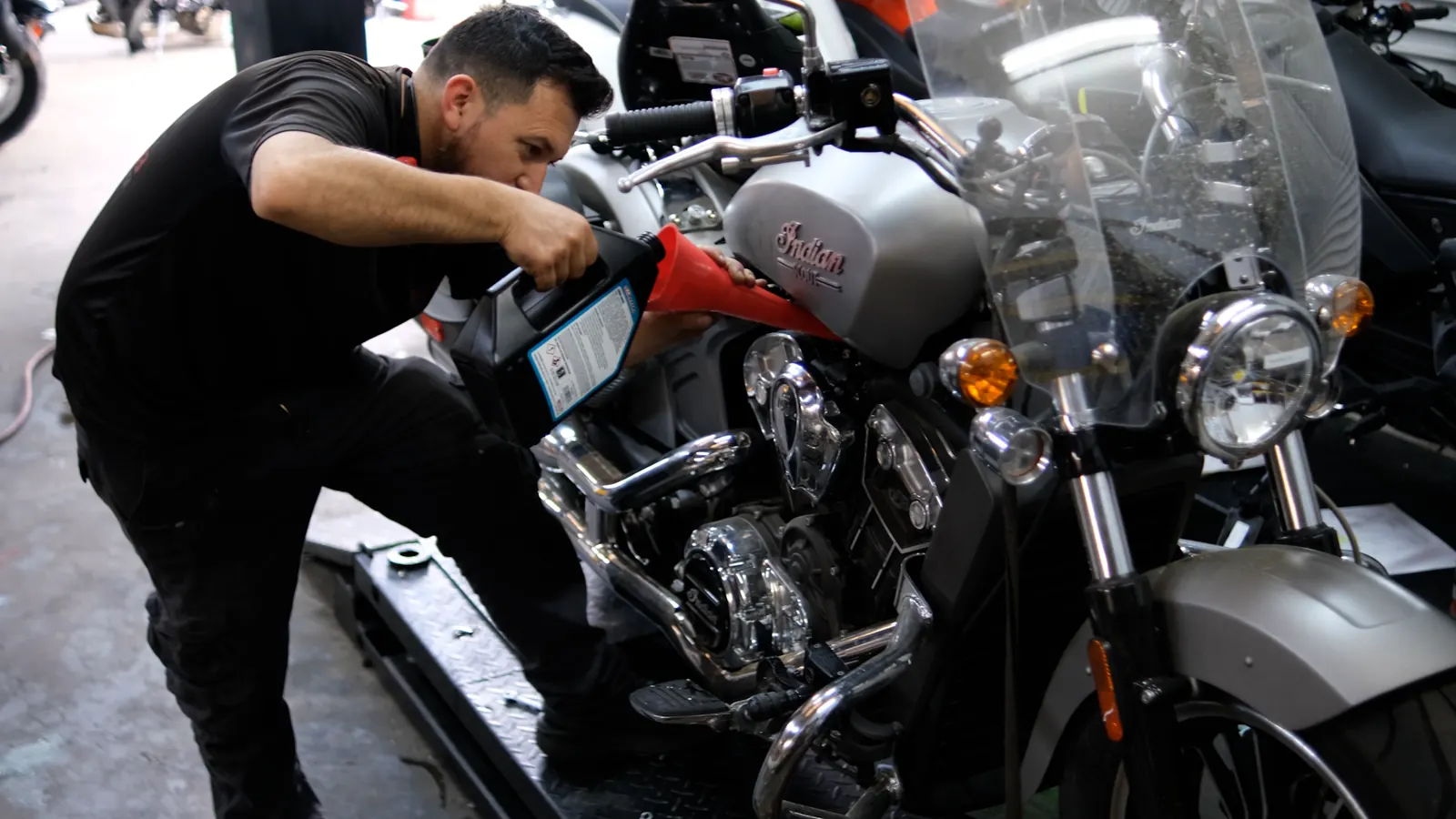
Here’s the thing about diagnosis. Anyone can throw a battery at a bike. But what saves you time is proving where the power stops first, and that takes a meter and a little patience.
There's a second failure that hides behind the first one
This is the part most riders never hear, so read it twice. A dead battery is almost never the whole story. It is a symptom, and something caused it. If we hand you a fresh battery and wave goodbye, we’ve just moved your no-start a few weeks into the future.
In Smyrna, GA the hidden cause is usually the ride itself. This is the most commuter-heavy rider market we serve. You’re minutes from Cumberland, The Battery, Buckhead and Midtown, so a fifteen-minute hop to the office is a real daily use case, and parking a bike downtown beats parking a car every single time. That short ride is great for your morning. Still, it’s rough on the machine.
Because a fifteen-minute commute never fully heats the engine, moisture from combustion condenses inside the crankcase and the exhaust instead of burning off. Meanwhile the charging system barely gets time to put back what the starter just took out. Do that five days a week and the battery slowly loses ground while the oil quietly picks up water. Then one cool morning it simply doesn’t have enough left to spin the motor.
THE SHORT-TRIP TRAP
Two or three short rides a week will drain a battery faster than leaving the bike parked. A tender fixes it, and so does one longer ride now and then — the Chattahoochee River crossings out toward Paces Ferry and Vinings make a fine excuse.
Georgia doesn’t permit lane splitting either, so your bike sits in stop-and-go heat exactly like a car. That stresses cooling through a Georgia July and speeds up clutch, brake pad, chain and sprocket wear too. None of that is a reason to stop commuting. It’s just a reason to service on the calendar, and if you want the full picture of what changes the total, we broke that down separately.
What we actually check, in order
When your bike lands on our lift, we don’t start swapping parts. We start measuring, because measuring is faster and it costs you nothing in wasted components. Here’s the sequence:
- Battery state of charge and load test, before anything gets touched
- Terminals, ground straps and the main fuse, cleaned and torqued properly
- Charging system output at idle and at higher rpm, so we know the battery has a fair chance
- Starter relay and solenoid function, tested rather than assumed
- Every safety interlock: kickstand, clutch, kill switch, tip-over sensor
- Fuel quality, pump prime, filter condition and injector spray
- Spark at the plug, plus plug condition and gap
- Compression, only if the first seven come back clean
That order moves from cheap and likely toward expensive and rare. As a result, most bikes get a diagnosis in the first three steps. And when the answer really is deeper, we’ve already ruled out the easy stuff, so you’re not paying to guess twice. Here’s what you get when you bring it in.
Mistakes we'd love you to skip
Nobody gets graded here, so relax. These are just the moves that turn a one-day fix into a three-day one, and they’re easy to sidestep once you know them.
- Cranking over and over. Long crank attempts cook the starter and drain what little charge is left. Try in short bursts, then stop and think.
- Jump-starting from a running car. The car’s charging system can push more current than a motorcycle’s electronics enjoy.
- Adding fuel treatment to gas that’s already gone stale. Treatment prevents trouble; it doesn’t reverse it.
- Replacing the battery without testing the charging system.
- Rolling it down a hill to bump-start a fuel-injected bike with a flat battery. There isn’t enough power to run the pump and ECU anyway.
Now the safety question, because it matters most. If your bike starts but the headlight dims hard at idle, or the dash flickers, ride it straight home or straight to a shop and no further. If it starts only after several tries, the next try might be the last one, so don’t plan a long day on it. But if it won’t start at all, that’s the safest version of this problem, because the bike removed the temptation for you.
A bike that won't start hasn't failed you. It told you something early, in the driveway, where nothing bad can happen.
What is never okay is riding a bike with intermittent electrical trouble in traffic. A stall on a quiet street is a story. A stall in the middle of the Cobb Parkway SE (US-41) commercial strip, with heavy trucks behind you, is not. That’s why we treat flaky electrics as urgent even when the bike technically runs.
Why Smyrna riders see this more than most
The Jonquil City has a rider profile all its own, and it explains why a motorcycle not starting Smyrna owners rely on daily is such a common call for us. Riders here skew young and busy, with modern bikes ridden hard on a schedule. Naked bikes, modern classics and mid-displacement standards are the urban-commuter default, while sportbikes stay strong close to the in-town scene. Scooters and small-displacement bikes are denser here than anywhere else we serve, plus there’s a healthy population of premium European sport-touring and ADV machines, especially BMW and KTM.
Storage is the other half of the story. Around Market Village, Windy Hill and Cumberland Mall, the townhome and apartment share keeps growing, and a lot of those spots mean open-lot parking with no garage. Meanwhile the original 1950s and 60s ranches have carports and driveways, while newer homes and renovated teardowns in areas like Bryerstone have proper two-car garages. Where your bike sleeps changes what fails on it.
If your bike lives outside, moisture, heat swings and near-daily summer thunderstorms work on the battery, connectors and fuel system year-round. But a tender and a well-fitted cover solve most of that. Since a bike parked in the open is also more visible, decent security hardware is worth the ten minutes.
Roads matter too. Smyrna sits on a 1950s and 60s street grid under constant teardown-and-rebuild work, so you get utility cuts, steel plates and gravel tracked across pavement. Cobb DOT grades roads on an Overall Condition Index and works a six-year resurfacing plan, though density still means more manhole covers, painted crosswalks and metal grates per mile than anywhere else we ride. They’re slick when wet, and that constant vibration is exactly what loosens a battery terminal over time. For traction and tire guidance, Dunlop’s technical resources are a good place to read up.
Picture the version of this where you caught it early
Imagine it’s a Thursday evening in the Village Green during an outdoor concert, and you’re walking back to your bike after a set. You thumb the starter. It fires instantly, the way it did the day you bought it. Then you slide out past Smyrna Market Village, catch the light, and you’re home before the crowd even reaches the parking lot. No drama, no guessing, no phone call to a friend with a truck.
That version is available to you, and it doesn’t take much. A tender when the bike sits. Clean, tight terminals. Fuel that doesn’t sit for months. Plus one longer ride now and then to get everything up to temperature. January and February are our quiet window, so that’s the ideal time for deeper work: paint, restoration, engine jobs, or a pre-season appointment.
Winter is also when short-trip commuters build up the worst moisture in the oil and the deepest undercharge, which is a strange kind of gift. Because it lands in the cold months, you get to fix it before spring instead of during it.
Getting it to us, and what happens after
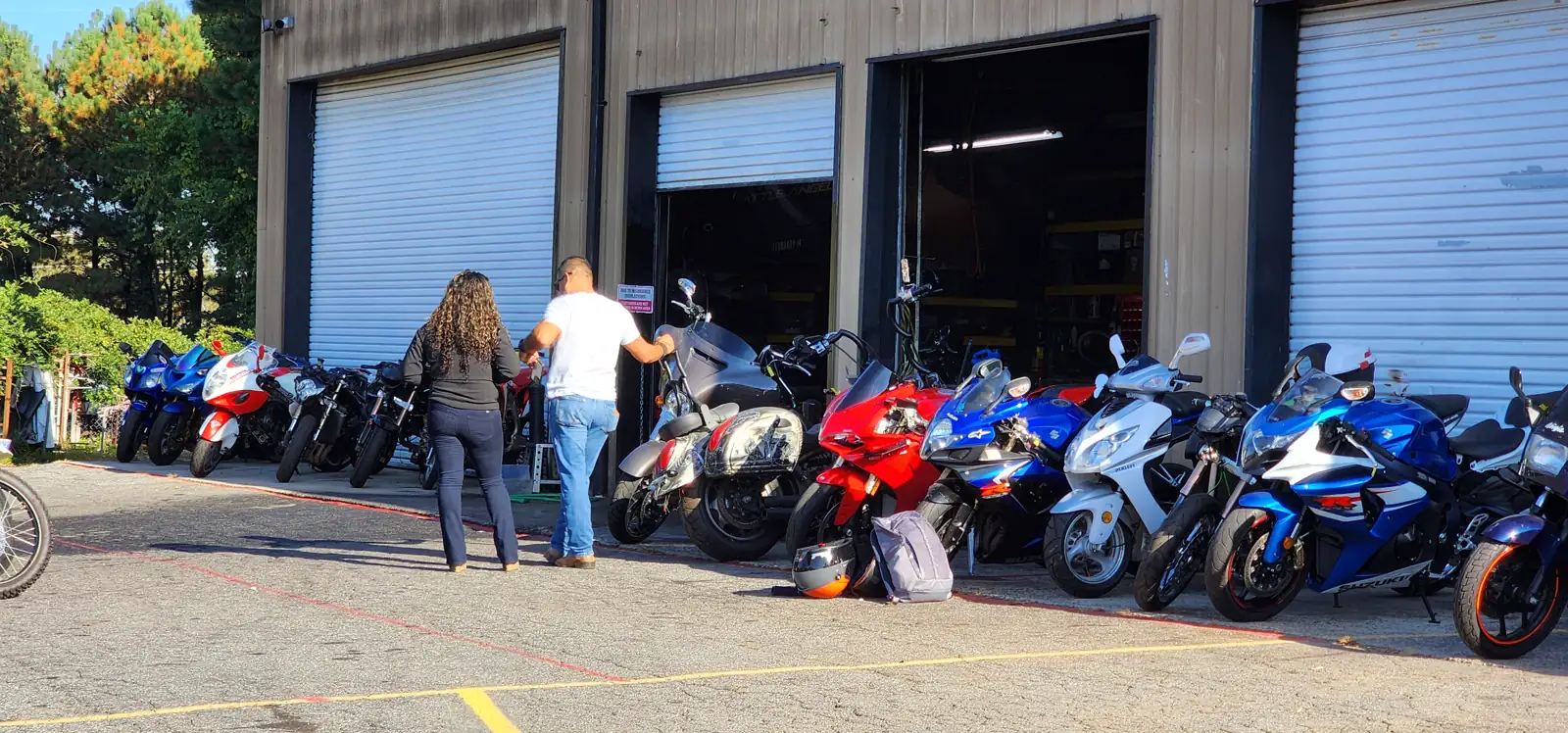
Smyrna has no full-service motorcycle shop inside city limits, so riders here either drive the Cobb Parkway strip or call a mobile mechanic. From Market Village we’re about 11 miles out, roughly 22 to 28 minutes, usually South Cobb Drive or Atlanta Road north into Marietta and then Roswell Road east. Wooly’s Cycles of Atlanta on Cobb Pkwy S is closer at about 14 minutes and is Georgia’s number one volume BMW and KTM Group dealer, plus CFMOTO, so it’s a genuinely good option if your bike is one of theirs and it’s a warranty matter.
For everything else, we cover all brands, and we can come to you when the bike won’t roll. Just text us. We’d rather you text than call, because nobody wants to sit on hold during a workday, and a photo of your dash tells us more than five minutes of description. The same symptom shows up south of here too, so if you’re curious, here’s what Newnan riders run into.
Once your bike is healthy again, a lot of riders start thinking about the fun stuff. Fueling and timing changes are popular with the commuter crowd here, and we explain what the work covers in its own guide. And if you’re newer to riding, or you just want sharper habits in traffic, the MSF Basic RiderCourse is time well spent.
Here’s the part we really want you to take with you. You noticed something was off. You looked it up instead of ignoring it, and now you understand your own machine better than most people who ride one. That’s not a small thing. That’s ownership, and it’s the difference between a rider who gets stranded and a rider who never does.
Questions Smyrna riders ask us
Will a no-start get worse if I keep trying?
Usually yes, though not in a dramatic way. Repeated long cranks heat the starter and drain what charge is left, so a small problem becomes a bigger one. Try in short bursts, then stop and diagnose. Because a battery that’s already low won’t recover on its own, more cranking only digs the hole deeper.
How urgent is it if the bike starts but the lights dim?
Treat that as urgent. Dimming at idle points at a charging or connection problem, and those can leave you stalled in traffic rather than safely in your driveway. So ride it straight home or straight to a shop and get it tested. It’s often a simple fix, but it isn’t a wait-and-see item.
What happens if I just ignore it and ride anyway?
Most riders get away with it for a little while, and then they don’t. A weak battery eventually strands you somewhere inconvenient, and a bad charging system can take out other electronics along the way. Since the underlying causes are usually cheap to correct, ignoring it costs more than fixing it.
How do you find the actual cause?
We measure before we replace anything. That means a load test on the battery, checking grounds and terminals, reading charging output at idle and at rpm, then testing the relay and the safety switches. Fuel and spark come next, and compression last. As a result, most bikes are diagnosed in the first few steps.
Could it be something other than the battery?
Absolutely, and sometimes it is. Safety switches, a tired starter relay, stale fuel, a clogged filter or fouled plugs all cause no-starts. However, the battery and its connections still win more often than everything else combined, which is why we always confirm those first.
Do short commutes really cause this?
They do, more than most riders expect. A fifteen-minute ride never fully warms the engine, so moisture stays in the oil and exhaust while the charging system barely replaces what the starter used. Over a season that adds up. A battery tender and one longer ride now and then solve most of it.
We take care of riders all over the west and north side of metro Atlanta. Smyrna is a short hop from us, and so are Marietta, Vinings and Mableton, with Austell and Powder Springs just to the southwest. We see plenty of riders from Atlanta proper, Buckhead and Sandy Springs too, since the Chattahoochee crossings make that run easy. East Cobb, Kennesaw and Fair Oaks riders come to us regularly, and Douglasville riders make the trip when they want a shop that knows their bike. If you’re outside that list, text us anyway, because we can often come to you.
TEXT US A PHOTO OF YOUR DASH
If your bike won’t fire in Smyrna, don’t spend your weekend guessing. Text us what it’s doing, send a picture of the dash, and we’ll tell you what we think before you load it anywhere. We can come to you if it won’t roll, and if you’d rather ride it over, we’re about 11 miles from Market Village. Either way, you’ll get a straight answer from someone who fixes bikes for a living.
470-460-9883Diaz Motorcycles and Service, LLC · 847 Barnes Mill Road, Marietta, GA 30062