Motorcycle Repair Cost Newnan — Full Breakdown
What actually makes one job bigger than another, and why the part on the shelf is the smallest piece of the story.
So and Better yet, ask ten riders what a job should run and you’ll get ten confident answers, and not one of them will match. Still, Almost all of them start from the same idea: the broken part sets the price. Big part, big bill. Small part, small bill. Plus, That’s the myth sitting under nearly every question about motorcycle repair cost Newnan riders bring us, and it falls apart the first time a tiny, cheap piece turns into a two-day job. Here’s what really drives the number.
The myth: the broken part sets the price
It feels right, honestly. Of course, a part is a thing you can hold. Then again, it has a number on a shelf tag, and that number feels like the whole story. So when something quits, your mind goes straight to the catalog. Even so, you picture the part, you picture the price, and you decide in advance what’s fair. Then the estimate comes back different, and it stings — because the version in your head didn’t include everything that part was hiding behind.
We get it. Meanwhile, Nobody likes being surprised by their own bike. But parts are usually the smaller half of the job. The bigger half is reaching them, testing them, and putting your machine back together so it rides exactly like it did before anyone touched it. A part is a noun. A repair is a verb, and verbs take time.
Parts have a price. Access has a cost. The second one is where the real number lives.
The reality: you're paying for access
Picture your bike as a very well-packed suitcase. Everything is in there for a reason, and everything is in the way of something else. A stator on a big touring bike can be an inexpensive part sitting behind a primary cover, a clutch, a fluid drain and a fresh gasket. A water pump seal can be a little rubber ring living behind a fairing, a radiator and a handful of brackets. The part isn’t the job. The part is the last five minutes of the job.
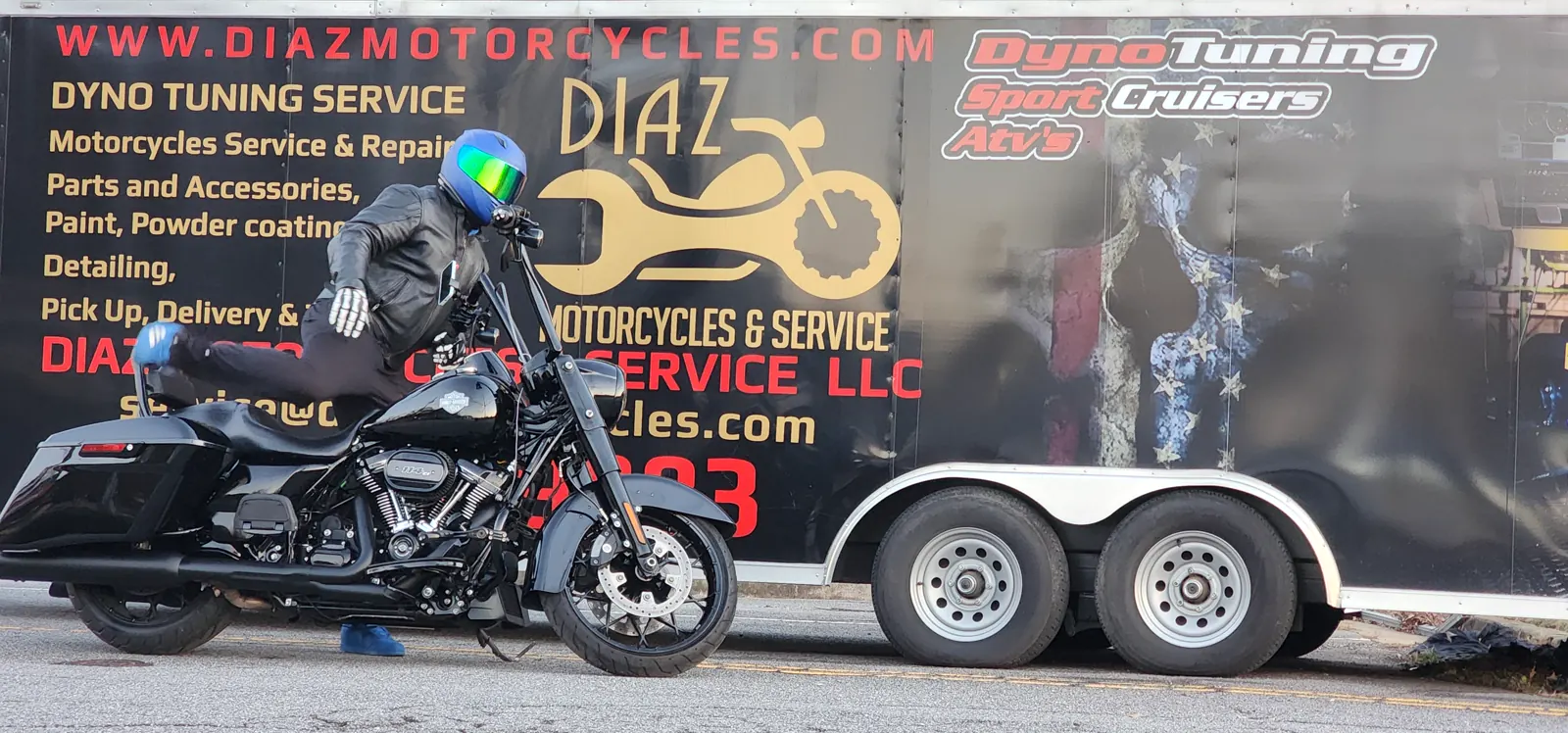
Access is why two riders with the exact same symptom get two very different answers. One of them rides a stripped-down cruiser with the engine hanging out in open air. The other rides a full dresser with lowers, a fairing, saddlebags, a stereo harness and heat shields stacked over that same bolt. Identical failure. Wildly different day.
A short list of things quietly decides how big any job gets:
- How much has to come off before a wrench can reach the failed part — and how much has to go back on after.
- Whether fluids, gaskets and seals get disturbed on the way in, because those get replaced, not reused.
- Whether the bike has been apart before, and whether the last person used the right fasteners.
- How long the problem sat, since heat, moisture and time turn easy bolts into stubborn ones.
- Whether the failure is the real problem or just the loudest symptom of something upstream.
That last one matters more than most riders expect. A dead battery is sometimes just a dead battery. Other times it’s a charging system that’s been slowly cooking all summer. If a shop swaps the battery and waves goodbye, you’re back in two weeks. We’d rather chase the upstream cause the first time around. If your bike won’t crank at all, here’s what usually causes it and why the fix isn’t always the obvious box.
Now, the part nobody mentions until you’re already paying for it. Labor isn’t one flat thing. Diagnosis is its own work, and it’s the work that protects your wallet. Guessing is cheap up front and expensive across a whole season. Testing takes a little time and then it’s finished. When a shop charges honestly for diagnosis, that isn’t a fee somebody invented to pad a ticket. That’s a shop refusing to spend your money on parts your bike never needed.
There’s a second hidden piece, too. Georgia summers are hard on machines. June through August runs hot and sticky here, with thunderstorms rolling through most afternoons and an average summer temperature right around 79 degrees. Heat cooks seals and gaskets. Humidity finds its way into connectors. Batteries give up early. So a bike that comes in for one leak often has two more getting started. A good shop tells you about all three, then lets you pick the order.
The actual process, start to finish
No mystery here. This is the whole thing, every time.
- You tell us what the bike is doing. When it started, what changed, what it sounds like, what it smells like. Riders make better witnesses than they think.
- We put eyes and hands on it. Fluids, fasteners, tires, chain or belt, wiring, leaks, heat marks. Ten minutes of looking saves hours of guessing.
- We test the system, not the symptom. Charging output, compression, fuel delivery, spark, sensors — whatever the story points at.
- We write it up in plain words. What’s broken, what caused it, what’s urgent, and what can wait until winter.
- You approve the work. Nothing gets ordered and nothing gets opened up until you say go.
- We do the repair, replace whatever got disturbed on the way in, and torque everything to spec.
- After that, we run it, ride it, then check it again cold the next morning, because some problems only show up on the second start.
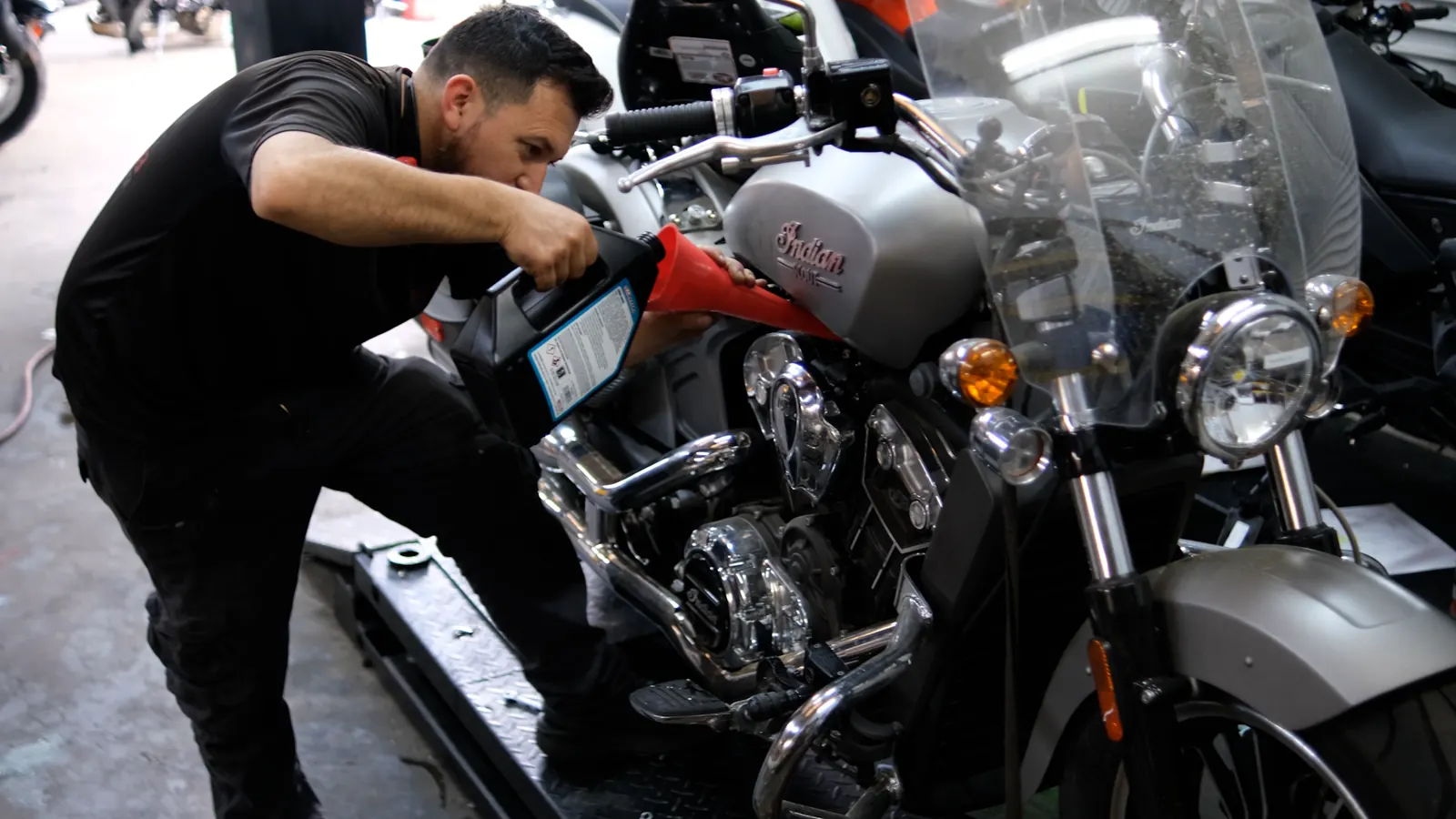
That order never changes, whether it’s a simple service on an Indian Scout or an engine already spread across the bench in pieces. It’s the same process behind everything we cover, from routine work all the way up to builds measured in weeks.
Why we won't quote it sight-unseen
This one frustrates people, so let’s be straight about it. A number over the phone is a guess wearing a nice suit. We can’t see whether your fasteners are seized. What’s more, we can’t see whether an old repair left a surprise waiting inside a cover. We can’t hear the little tick buried under the noise you’re describing. Toss out a number anyway and one of two things happens: we guess high and you overpay for nothing, or we guess low and have to call you later with bad news. Neither one makes for a good day.
The honest answer on motorcycle repair cost Newnan shops can give you by phone is a range of possibilities, not a price. What we can do is walk you through what the job usually involves, what has to come apart, and what would push it bigger or smaller. That’s real information you can actually use. Then, once the bike is in front of us, the estimate is a genuine estimate instead of a hopeful one. Riders up the other side of the metro hit the same wall, and it’s worth seeing what Lawrenceville riders run into when a simple job turns out to have layers.
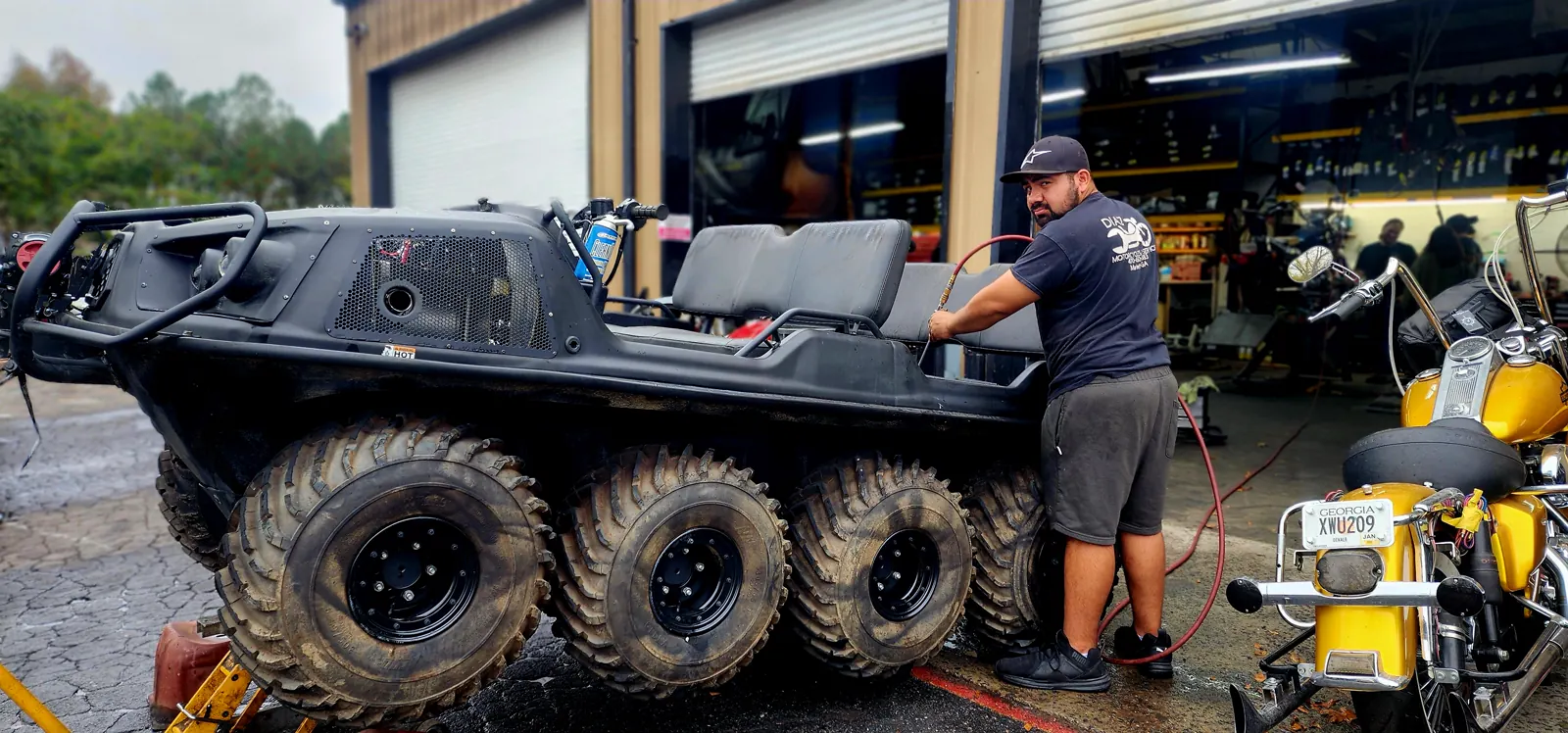
It’s also why we’d rather see the whole machine instead of just the sick corner of it. Everything on two wheels is a system, and so is everything on six, for that matter.
How to tell a good shop from a fast one
- They ask you questions before they name any number.
- They show you the old part, or the reading on the meter, without you having to ask twice.
- They separate what’s urgent from what’s simply on the list for later.
- They’ll tell you when the answer is “nothing’s wrong yet — ride it and keep an eye on it.”
- They put it in writing, in words you’d actually say out loud.
- They say no to work they aren’t the right shop for.
That last one deserves saying plainly. Newnan already has real dealers handling routine service well, and we aren’t trying to pull an oil change off anybody’s schedule. Great South Harley-Davidson sits right there on Highway 16 East. Cycle City Power Sports is over on Millard Farmer Industrial Boulevard. Cycle Specialty covers the Yamaha and ATV side from Fayetteville, roughly half an hour east. Use them. Where we come in is the work nobody nearby is set up for — paint, restoration, performance, the long builds. Your dealer sells parts. We build bikes.
And then there’s the part that’s just about riding again. Coweta County has some of the finest two-lane riding in the state sitting right outside town. GA-16, GA-54 and the county roads running toward Moreland, Greenville and Warm Springs roll along empty and quiet in a way that makes an hour disappear. Senoia is about fifteen minutes southeast, and on a good weekend half the sidewalk there is watching bikes park. None of that happens while your machine sits on a stand.
What this looks like in Newnan
Newnan wears its age well. The Newnan Commercial Historic District around Court Square has buildings standing since as early as 1868, with most of the block dating from 1895 to 1900, and the Cole Town Historic District nearby carries that same long memory in its houses. Roll through Chastain Park, Madison Park, Belmont Park or Westgate Park and you’ll find the other half of the story: deep garages, outbuildings and a whole lot of bikes that haven’t turned a wheel in years. The City of Homes holds more stored, inherited and half-finished projects than just about anywhere in our radius.
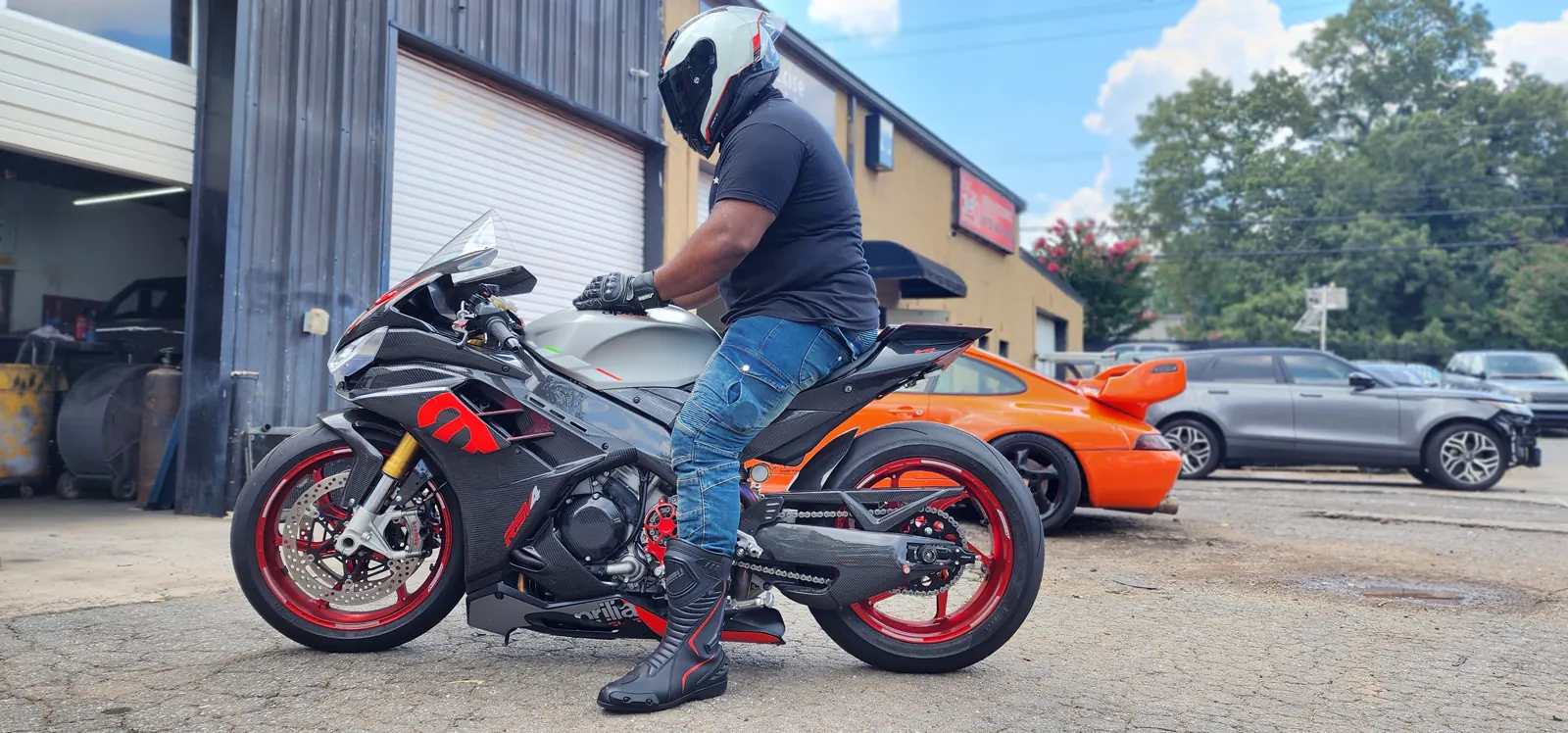
Where you ride shapes the repair list, too. I-85 through Coweta is a heavy freight corridor, so blown retreads and truck debris show up constantly. GA-34 and Bullsboro Drive bring the left-turn-across-traffic problem every retail strip has. The rural two-lanes west and south of town serve up their own menu: gravel washed across driveway and field entrances, farm equipment pulling out slow, loose dogs, deer at dusk, and no shoulder to duck onto when any of it surprises you. Add Georgia freeze-thaw to truck loading and county roads hand you pavement seams and potholes every spring.
The bikes around here tell you what the town cares about. Baggers and touring Harleys — Road Glides, Street Glides, Softails. Indian cruisers and metric tourers like the Goldwing, the Vulcan and the V-Star. Plenty of customs built around paint, chrome, audio, lighting and leather, because this is a customization market far more than a horsepower one. Sportbikes turn up too, mostly with younger riders and folks running up I-85. With Yamaha Motor Manufacturing employing more than two thousand people in town, a fair number of our Newnan friends build powersports machines for a living. They spot good work instantly, which keeps us honest.
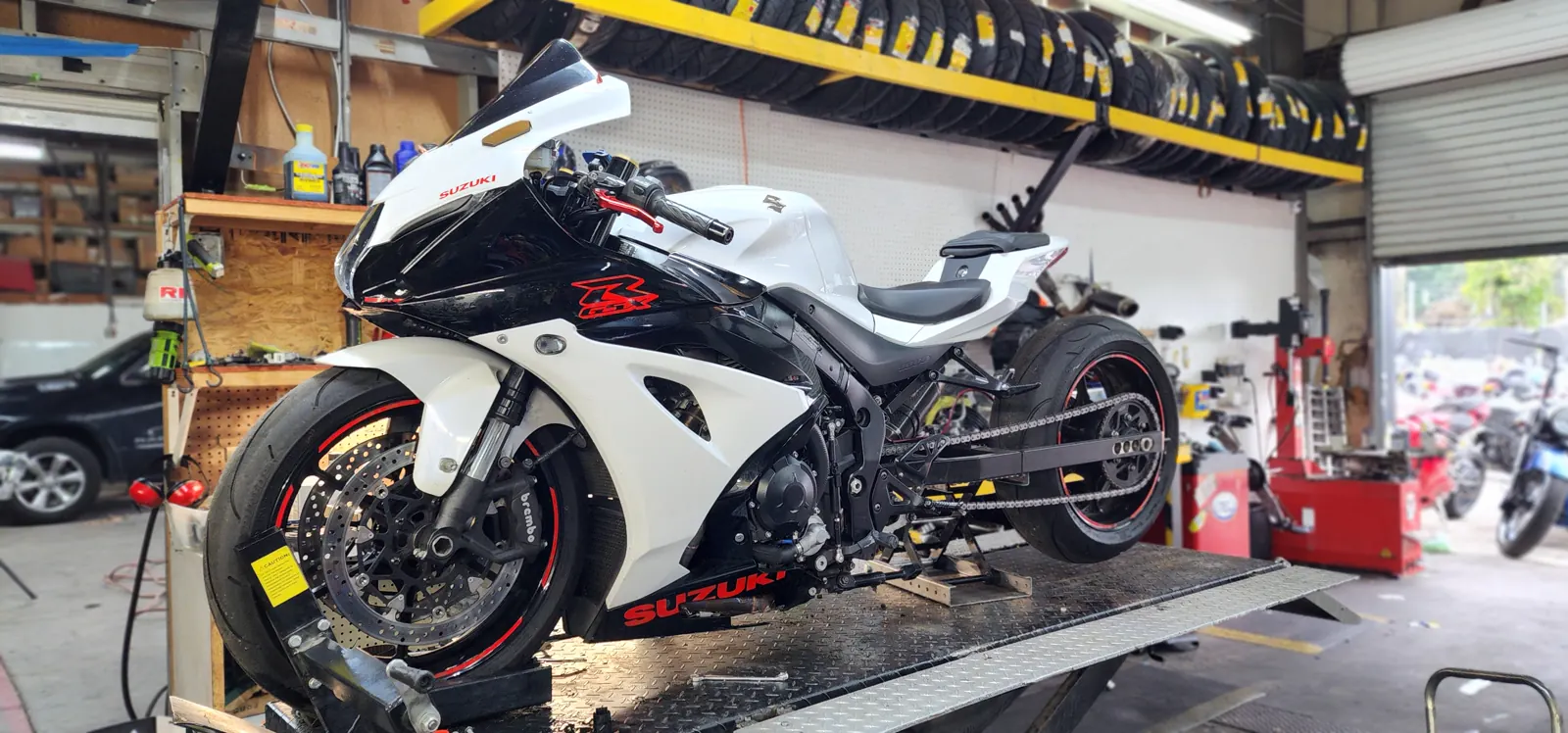
The drive to our shop on Barnes Mill Road is real, and we won’t pretend otherwise. Looking at the map, it works out to somewhere around 45 to 52 miles and roughly an hour, give or take, running up I-85 and around the west side of I-285 into East Cobb. That’s an estimate from road geography, not a stopwatch. So we made the whole thing a non-issue: we bring an enclosed trailer to you and haul the bike home ourselves. Title and registration questions belong with the Georgia Department of Revenue, and riders who want a wider view of the sport can start with the American Motorcyclist Association.
PICKUP AND DELIVERY
You never have to make the drive. Text us a photo of the bike and where it’s parked, and we’ll schedule a pickup from your driveway, barn or storage unit and deliver it back the same way.
Understanding motorcycle repair cost Newnan riders face isn’t about memorizing numbers. It’s about knowing what makes a job big, what keeps it small, and what a straight answer sounds like when you hear one. Once you’ve got that, an estimate stops feeling like a mystery and starts reading like a plan. If you’re comparing shops right now, here’s what the work covers and what to ask before you hand anybody a key.
Questions Newnan riders ask us
How do I avoid surprises on the bill?
Approve work in stages instead of all at once. We diagnose first, put the findings in writing, and wait for your go-ahead before anything gets opened up or ordered. If we find something extra along the way, you hear about it before we touch it — never after.
What makes one job bigger than another?
Access, mostly. Two bikes can have the same failed part, but one keeps it out in the open and the other buries it behind bodywork, a cooling system and a wiring harness. Age, past repairs and how long the problem sat all add time as well.
Why can't you quote it over the phone?
Because we’d be guessing, and guesses only go two ways — too high or too low. We can tell you what the job usually involves and what would make it bigger or smaller. An actual estimate needs the bike in front of us.
What's included in the work?
Diagnosis, the repair itself, and every gasket, seal or fluid that gets disturbed getting to the part. We also test-run the bike and re-check it cold before you get it back, since some issues only appear on the second start.
How long does it take?
Routine repairs usually turn around quickly. Deeper work — engine jobs, paint, restoration — runs in weeks, because parts have to arrive and finishes have to cure properly. We give you a time window up front and update you if anything shifts.
Do I have to bring it to Marietta myself?
Nope. We run an enclosed trailer down to Coweta County regularly and pick bikes up from driveways, barns and storage units. Delivery back home works the same way, so the drive never lands on you.
We pick up and deliver all across Coweta County and the south metro, so the distance is our problem instead of yours. Riders reach us from Peachtree City and Fayetteville, from Sharpsburg and Senoia, and from Tyrone when a project bike finally gets its turn. We run the trailer out to Palmetto, Moreland, Grantville and Turin regularly, and we head up through Fairburn and Union City on the same loop. Carrollton riders are on that route too. If your town sits near any of those, just text us and we’ll work out a pickup day.
TEXT US A PHOTO OF THE BIKE
You don’t need a number over the phone — you need someone who’ll actually look. Send us a photo of your bike and tell us what it’s doing, and we’ll tell you what the job usually involves and what could make it bigger. Then we’ll trailer it up from Newnan, sort it out, and bring it right back to your driveway.
470-460-9883Diaz Motorcycles and Service, LLC · 847 Barnes Mill Road, Marietta, GA 30062