Motorcycle Service Cost Gainesville — What You Pay For And Why
Parts you can price anywhere. Labor driven by access. Here's how a real service quote gets built, in plain words.
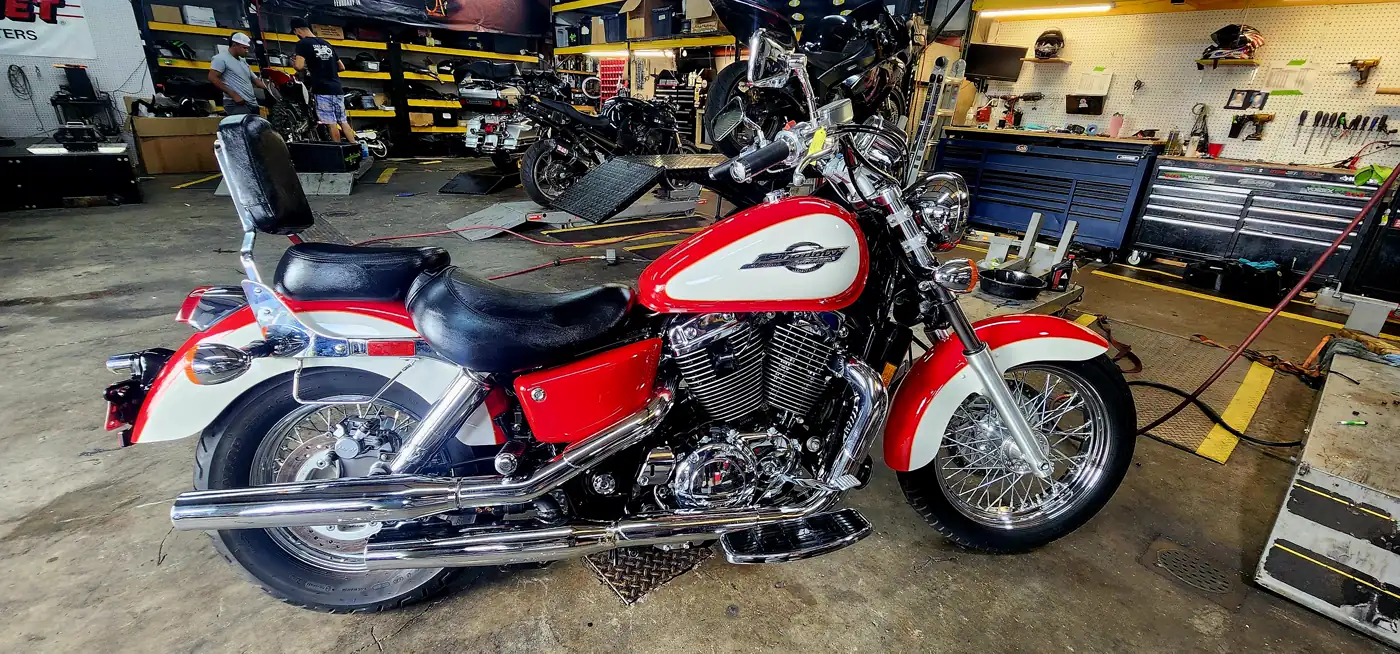
Even so, there’s a certain kind of garage up in Hall County. What’s more, a cruiser sits under a cover by the door. Meanwhile, a sportbike waits on rear stands with the wheel off. After that, a dual-sport leans in the corner with red clay still dried into the fender. Three bikes, three sets of needs, and somehow three different shops saved in your phone. One did the tires. Of course, one did a valve check two summers back. One you don’t call anymore. So when a rider like that asks about motorcycle service cost Gainesville shops quote, the real question underneath is bigger than a number. It’s this: which of these jobs is actually a big job, and which one only feels big?
We hear that a lot. You’re not trying to squeeze anybody. You just want to know what you’re walking into before you hand over the keys. That’s fair, and it’s also the easiest thing in this trade for a shop to be squirrelly about. So let’s not be. We’ll walk through what makes a service job small, what makes it big, and what happens while your bike is with us.
What You're Really Asking
When somebody asks what a service runs, they’re rarely asking about a number alone. They’re asking three things at once. Is this shop going to find a pile of extra work? Will the repair last? And am I paying for skill or just for time? Those are good questions. Any shop worth its floor space should be glad to answer them out loud, without shuffling papers.
Here’s the frame that makes the whole thing click. Every service job splits into two piles: parts and labor. Parts are the stuff you can hold. Oil, a filter, pads, a chain, a set of tires, a battery. Those have prices the whole world can look up. Labor is different. Labor is time, and time is driven by one thing above all others — access. How much of the bike has to come apart before a tech’s hands can reach the part that needs attention? That’s the secret. It isn’t glamorous, but it explains almost every quote you’ll ever be handed. Look through what our team handles and you’ll see the pattern hold across every job on the list.
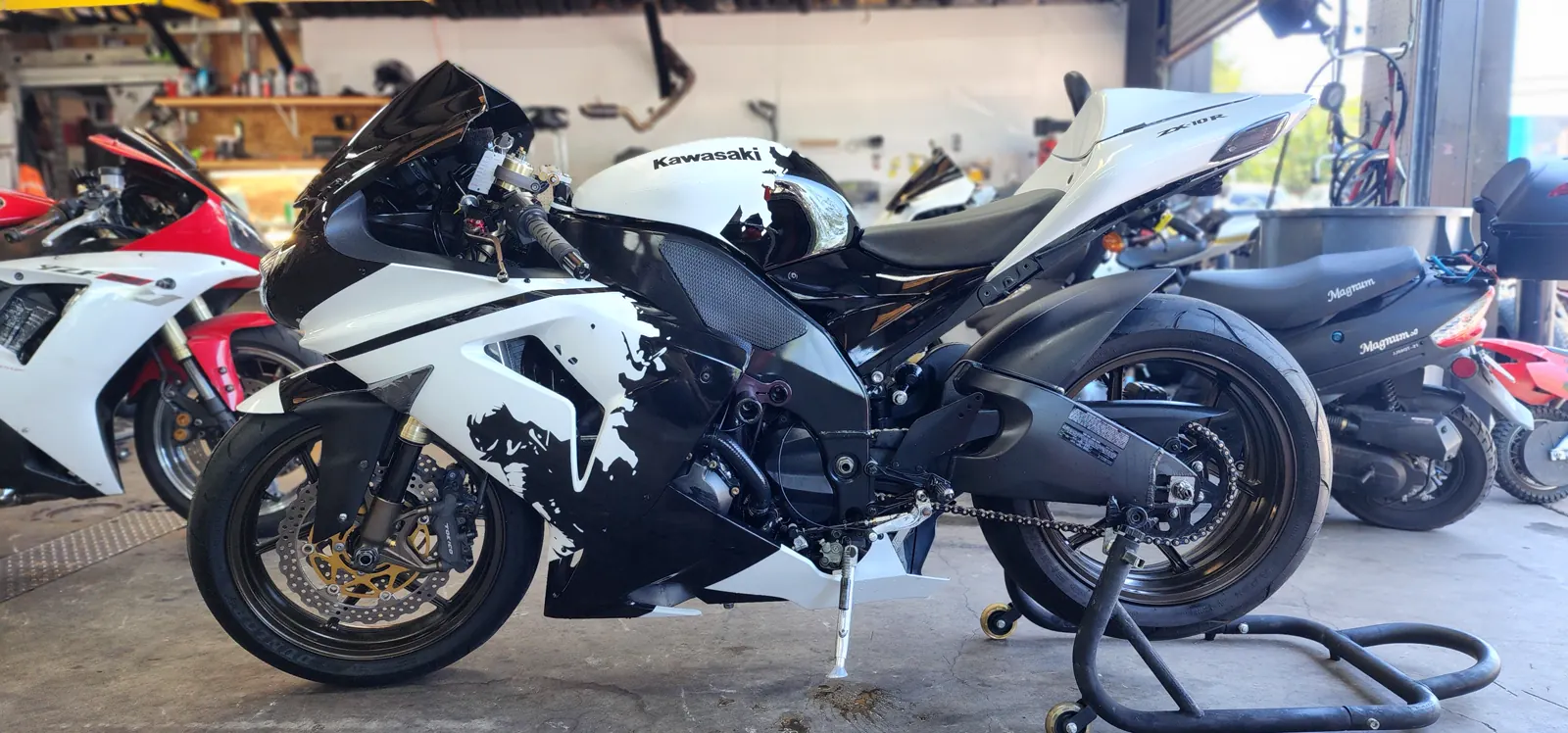
The Honest Answer, Said Plainly
No honest shop can quote a full service sight-unseen over the phone, and we’d be a little suspicious of one that does. Not because we’re hiding something — the opposite. A phone quote is a guess wearing a nice shirt. We haven’t seen your chain. In fact, we haven’t measured what’s left of your pads. We have no idea whether the last person to touch your fasteners used a torque wrench or pure enthusiasm.
What we can tell you on the phone is the shape of the job. We can say whether it’s a small one, a medium one, or the kind that earns a lift for a day. For example, we can name the parts it will likely need. We can tell you roughly how many hours the book calls for. Then, once the bike is up and the panels are off, we call you with a real number before we go any further. Nothing gets done that you didn’t agree to. No surprises waiting at pickup.
One more thing while we’re being straight with each other. We’ll never invent a service interval for your bike. Your owner’s manual sets those, full stop. Every manufacturer builds its own schedule around its own engine, its own oil spec and its own valve design, and the mileage that’s right for a big v-twin is flat wrong for an inline four that lives near redline. So we read your book, not somebody else’s. Lost yours? We’ll help you track down the right one.
Here's The Question We'd Ask If You Were Standing In The Shop
It’s this: what do you want this bike to do for you over the next twelve months? A machine that gets ridden hard up US-129 north toward Cleveland and Blairsville every other weekend needs a different plan than one that putters to breakfast and back. Same model, same mileage, completely different plan. Tell us how you actually ride and we can aim the work where it earns something.
That question doubles as a decent test of any shop. If they ask about your riding before they ask about your budget, that’s a good sign. If you want the longer version of that idea, we wrote up what separates a good shop from one that’s merely busy. Short version: good shops are curious about your bike and boring about their promises.
What Makes One Job Bigger Than Another
Four things move the needle. Once you can see them, quotes stop feeling random and start feeling like math.
- Access. An oil change on a naked bike is a wrench and a drain pan. The same job on a full-fairing sportbike or a loaded bagger starts with pulling bodywork and ends with putting it back straight.
- Condition. A chain cleaned and lubed all season adjusts in minutes. A chain rusted stiff in three links wants replacing, and a worn chain usually took the sprockets with it.
- Parts choice. Same brake job, very different pads. You pick the level, and we’ll tell you honestly where the upgrade does real work and where it just looks good in the box.
- What we find. Sometimes a bike comes in for routine service with a screw in the rear tire. We don’t fix what you didn’t ask for. We show you, explain it, and let you decide.
None of those are about a shop being greedy. They’re about the bike in front of us. Two riders on the same street can bring in the same model, same year, and leave with different tickets — because one bike wintered in a dry garage and the other lived behind a shed with a tarp and good intentions.
That’s also why the second visit usually lands lighter than the first. Visit one is where we catch up on everything that got skipped. After that we’re maintaining, not rescuing. Maintaining is faster, cheaper and far less dramatic. Riders who keep a few bikes figure this out quickly, and honestly it’s the closest thing to a free lunch this trade offers.
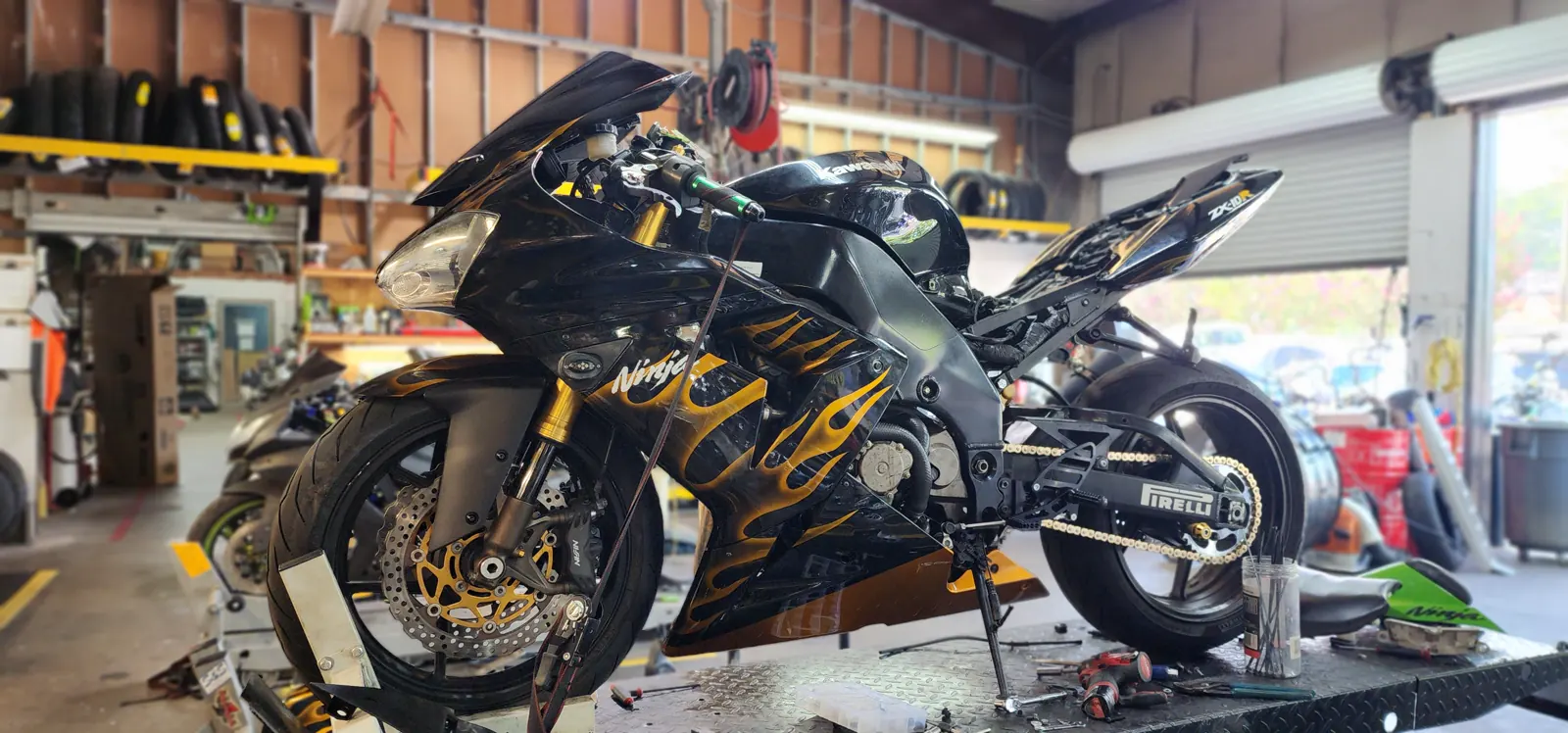
What A Service Actually Includes
Plain words, no mystery. Routine service on most street bikes covers the same ground whether it’s a touring bike from a driveway at The Bluffs at Lanier or a track-day sportbike that lives on a trailer.
- Oil and filter, drained warm, refilled to the spec your manual calls for — not whatever jug happens to be open.
- Chain and sprockets cleaned, lubed and set to the slack your book lists, with wear measured rather than eyeballed.
- Brakes: pad thickness, rotor condition, fluid color and level, plus a look at the lines and caliper pins.
- Tires: tread depth, pressure, age, and a hunt for the screws that GA-365 and I-985 hand out along with their poultry trucks and blown retreads.
- Fluids and filters, meaning coolant, brake fluid, air filter and the breather lines everybody forgets.
- Controls: cables, levers, throttle free play, clutch feel, and every light and switch.
- Fasteners checked to torque, a battery test, and a slow walk around for the leak that hasn’t started dripping yet.
That’s the honest list. Notice how much of it is looking rather than replacing. That’s deliberate. A fork seal caught while it’s only weeping is a small Tuesday job. Ignored until it soaks a brake pad, it becomes a much bigger one. Small and early beats big and late every single time, and that’s the entire argument for keeping up with service in the first place.
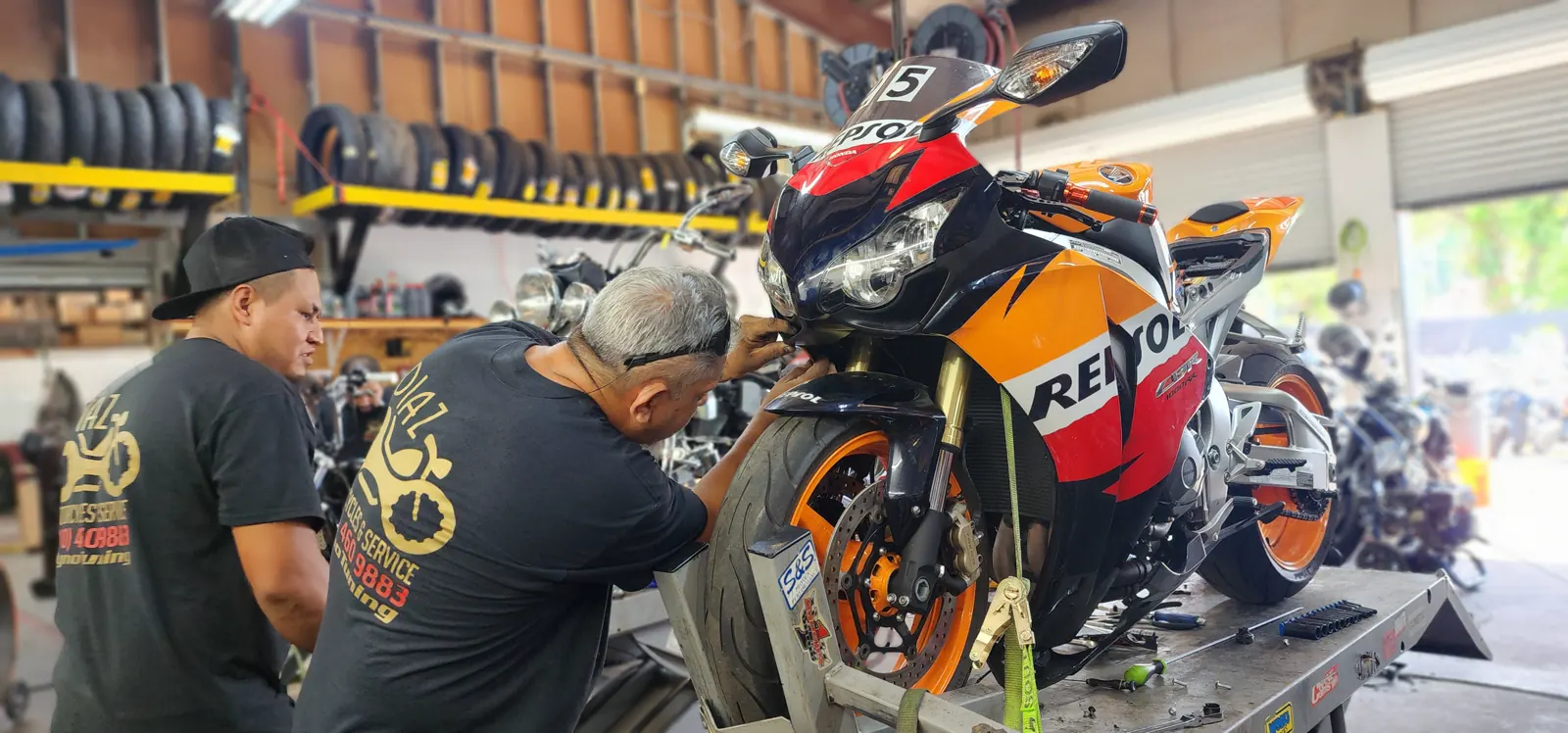
Start to finish, the loop looks like this. Your bike comes off the truck and gets logged in with photos. It goes up on a lift, panels come off, and a tech works the checklist. Then we call you with what we found and a firm number, and you say yes or no item by item. After that the work gets done, the bike gets a road test, and it goes back on the truck home.
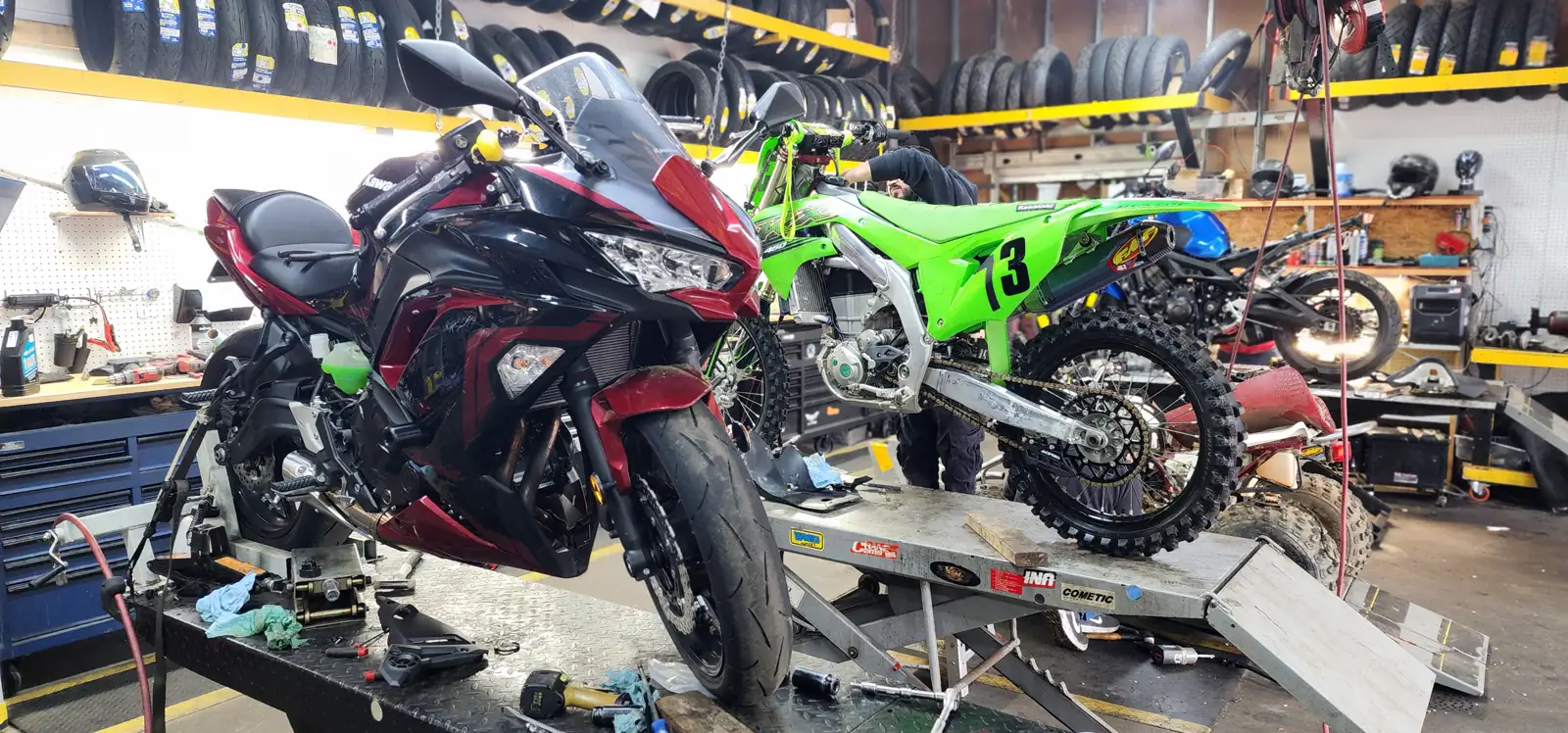
How We Handle The Distance
Now the part most articles aimed at Hall County quietly skip. You’re roughly 55 to 62 miles from our door on Barnes Mill Road — call it 65 to 85 minutes, depending on whether you take the lake route through Cumming on GA-53 and GA-369 or run down I-985 to I-85, around I-285 and over to I-75. That’s our read off the map, not a stopwatch. And no, nobody should ride an hour and change for an oil change. We wouldn’t either.
So we do it differently for riders up your way. We come get the bike. Pickup and delivery makes the drive our problem instead of yours, and your Saturday stays yours. The other move is batching. If the cruiser needs tires, the sportbike is due for a valve check, and the dual-sport has been asking about fork oil for two seasons, send them together. One trip, one conversation, one plan. Here’s how we handle that job when it shows up as a stack instead of a single bike.
THE RULE WE RIDE BY
If the work is routine and there’s a good shop near you, get it done near you. If it’s work nobody up there can do, that’s exactly what the truck is for.
This Is Where Gainesville Is Genuinely Different From Other Towns
Most towns share the same shape: a couple of dealers, a couple of independents, everybody scrapping over the same oil changes. Hall County isn’t that. Gainesville Motorsports has been family-owned at one location on Browns Bridge Road since 1974, carrying Suzuki, Kawasaki, Honda, Yamaha and more, and for routine service they’ve earned the run of the place. We won’t pretend otherwise.
The real gap sits somewhere else. There’s no dyno up there. No Hall County shop we can verify advertises in-house dyno tuning, ECU flashing or a paint booth. So a rider who wants true fueling work — a flash that cures a snatchy throttle, a tune that finally matches the exhaust and filter already bolted on — is leaving the county no matter what. Marietta simply happens to sit on a very short list. That isn’t a sales pitch. It’s arithmetic.
It matters more here than it would elsewhere, because Michelin Raceway Road Atlanta sits 25 to 30 minutes southeast in Braselton via GA-53. The 2.55-mile, twelve-turn course has been there since 1969 and it runs motorcycle track days all season long. Riders who spend Saturdays out there care about fueling in a way a weekday commuter never will. Sunday they’re back on US-129 north, where the Blairsville-to-Dahlonega stretch rolls like a roller coaster and rewards a bike that pulls clean off a corner.
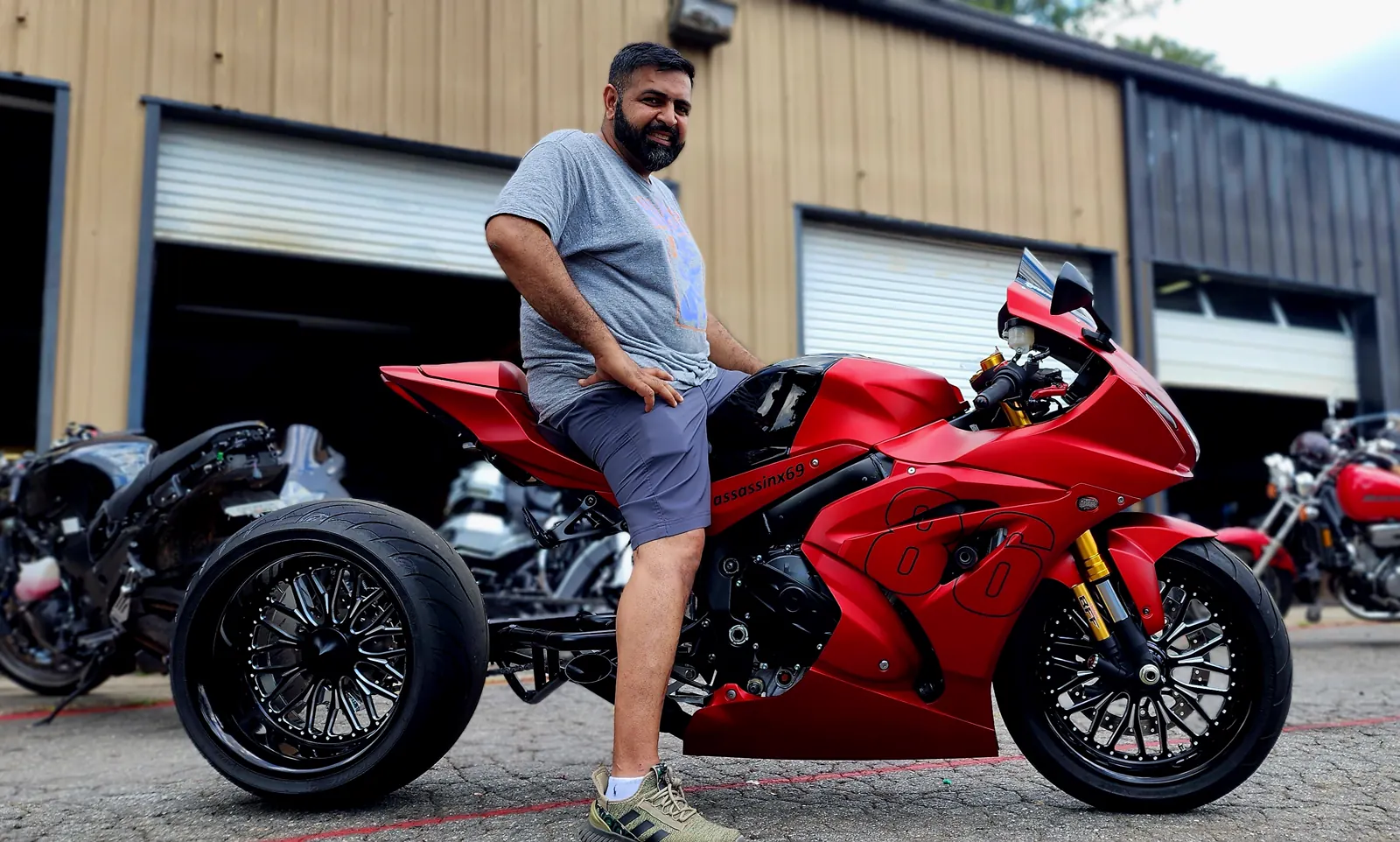
The mixed garage is a Hall County specialty for good reason. Out at The Bluffs at Lanier a boat slip and a touring bike often share the same driveway. On the big lots at Grey Oak Plantation and Red Oak Plantation there’s usually room for a machine that only comes out in October. Along the old homes of the Green Street District, storage runs deep enough that bikes sleep for years at a stretch, which is exactly how carburetors gum up and batteries quietly retire. All three are service stories. They just move at different speeds.
Then there’s the ordinary weekday stuff. The commercial strip along GA-13, the old Atlanta Highway running beside I-985, is where a lot of these bikes put on their real miles. Shift work around Northeast Georgia Medical Center, the region’s Level I trauma center and the county’s largest employer, puts riders out early and late. Tires, brakes and lights aren’t paperwork items on the checklist. They’re the systems doing the most work on a dark road, and NHTSA crash data is public if you ever want the sober version. We’d rather just keep your tires honest and your bulbs bright.
Multi-bike households aren’t unusual either, and groups like the Motorcycle Industry Council have tracked that pattern for years. One last note on comparing quotes: compare the same job, not the same word. “Full service” means different things at different counters. We broke down the Newnan side of things for riders down that way, and the logic is identical up here. Ask what’s included, ask what’s checked versus replaced, and ask what happens if they find something. That’s how you get a real read on motorcycle service cost Gainesville riders can actually trust.
Small and early is cheap. Big and late is not. That's the whole game.
What You Walk Away With
Confidence, mostly. Once you see the two piles — parts anybody can price, labor driven by access — quotes stop being mysterious. You’ll know why a faired bike takes longer than a naked one, and why a neglected chain costs more than a maintained one. Better still, you’ll know which questions to ask, and you’ll hear the difference between a straight answer and a shrug.
You’ll also know what’s worth the trip and what isn’t. Routine upkeep belongs close to home, on your schedule. The bigger stuff — fueling, dyno time, paint, a full sort-out on a bike that sat too long — comes to us, and the bike rides in the truck while you stay put. Riding season up your way runs roughly March through December, trimmed a little on both ends because Gainesville sits at 1,214 feet and gets more genuine freezing nights than Atlanta. That still leaves plenty of Saturdays. Let’s spend them on US-129 instead of in a waiting room.
Questions Gainesville riders ask us
Why won't you quote a full service over the phone?
Because we haven’t seen the bike yet, and a guess isn’t a quote. We can tell you the shape of the job, the parts it will likely need and roughly how long the book calls for. Once it’s on the lift and the panels are off, we call you with a firm number and wait for your yes before anything else happens.
What's actually included in a routine service?
Oil and filter, chain and sprocket check and adjustment, brakes, tires, fluids and filters, controls and cables, lights and switches, a battery test and a torque check on fasteners. A lot of it is inspection rather than replacement, which is the point. Catching a small thing early keeps it small.
How long does the work take?
A straightforward service on an easy-access bike is often a same-day job. Full bodywork, a valve check or anything we find along the way stretches it out. We give you a realistic window when we call with the quote, and we’d rather tell you two days and finish early than the other way around.
How does parts versus labor break down?
Parts are fixed and easy to compare anywhere. Labor is time, and time is mostly about access — how much has to come off before a tech can reach the work. That’s why the same oil change on a naked bike and a full-fairing sportbike aren’t the same job at all.
Does the type of bike change the service?
It changes the labor more than the checklist. Cruisers, baggers, sportbikes and dual-sports all need the same systems looked after, but they’re built very differently underneath. Your owner’s manual sets the intervals for your specific machine, so we follow your book rather than a generic schedule.
Do I really have to ride down from Hall County?
No. It’s roughly an hour and change each way by our read of the map, which is far too far for routine work. We run pickup and delivery, so the bike makes the trip and you don’t. Riders with more than one machine often send two or three at once and knock the whole list out in a single go.
We look after riders across Hall County and the wider Northeast Georgia area, from Oakwood and Flowery Branch just south of town to Chestnut Mountain and Braselton along the corridor toward the track. Pickup and delivery runs regularly through Buford, Sugar Hill and Cumming, and we’re just as happy heading north to Clermont, Lula, Murrayville and Talmo, or up toward Dahlonega where the good roads start. If your bike lives near Lake Lanier, along the Atlanta Highway strip or out on a gravel drive in the foothills, we can get to it.
SEND THE BIKE, KEEP YOUR SATURDAY
Tell us what you’ve got in the garage in Gainesville and how you ride it, and we’ll tell you straight which jobs are small, which are big, and which ones are worth the trip down to Marietta. Text or call us with the year, model and what it’s doing, and we’ll sort out pickup from there. No pressure, no guessing games, no work you didn’t approve.
470-460-9883Diaz Motorcycles and Service, LLC · 847 Barnes Mill Road, Marietta, GA 30062