Your Motorcycle Sat for Years in Douglasville — Here's How to Bring It Back Safely
What actually goes wrong when a bike sits, why firing it up cold is a mistake, and the right way to wake it up.
Plus, the most tempting thing to do with a bike that’s been parked for years is throw in a battery, splash in some gas, and hit the button. Meanwhile, that one move is exactly what turns a savable bike into an expensive lesson. Of course, it feels productive, so people do it all the time. Here’s the honest version: a motorcycle sitting for years Douglasville riders want back on the road needs to be woken up in the right order, because the stuff that went bad while it sat can hurt the engine, hurt the bike, and hurt you if you skip steps.
We get it. That bike has been staring at you from the corner of the garage in Chapel Hills, or sitting under a cover in the apartment lot off Thornton Road, and you just want to hear it run again. That itch is real, and it’s a good instinct. But a bike is a little like a friend who’s been asleep for five years. You don’t wake them up by dumping cold water on their head. You do it gently, in the right order, and everybody comes out happier.
What actually goes wrong while a bike sits
Time is hard on a machine that isn’t moving, and it attacks in a bunch of places at once. Gasoline is the first troublemaker. Left alone, it turns to varnish and gum that clogs the tiny passages in a carburetor or the injectors, and it can leave a gummy mess that no amount of fresh gas will flush out. The tank itself can rust from the inside if any moisture got in, and Georgia humidity makes sure it did. That’s problem number one, and it’s the most common thing we see.
From there it spreads. Rubber dries out and cracks, so fuel lines, brake seals, and tires all get brittle. Brake fluid absorbs water over the years and stops working the way it should, which is a scary thing to learn at a stop light on Bill Arp. Chains rust, cables seize, and the oil in the engine loses its protective punch and lets internal parts sit in acid. None of it is a mystery, and none of it is your fault. It’s just what time does when a bike isn’t ridden.
Why firing it up cold is the wrong move
Here’s the part that costs people the most money. When a bike sits, the oil drains down off the top of the engine and the metal parts up there sit dry. Crank it cold and those parts grind against each other for a few seconds with no protection, and a few seconds is enough to score a cylinder or wipe a cam. On top of that, old varnished fuel gets pulled into the engine, brakes that don’t work send you into traffic, and a cracked fuel line can drip onto a hot pipe. That’s a lot of ways for a fun afternoon to go sideways.
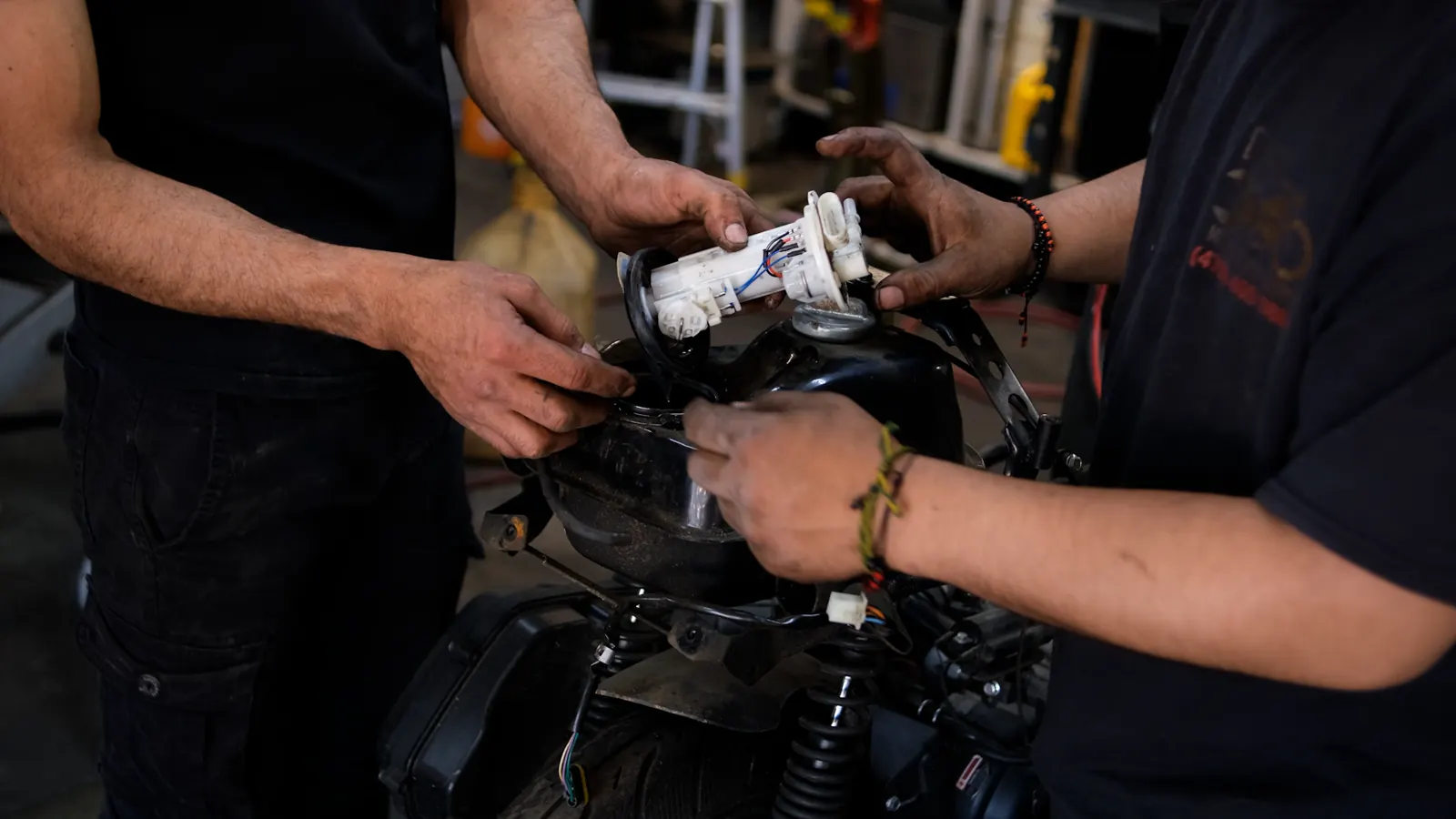
The fix isn’t complicated, it’s just patient. We prime the engine so parts are protected before anything spins. We drain the old fuel and clean the system instead of trying to run through the gunk. We check the brakes and tires before the bike ever moves under its own power. It’s the same idea as stretching before you run instead of sprinting cold. Do it in order and the bike thanks you. Skip it and you’re paying to fix damage you caused in the first ten seconds.
HEADS UP
The most expensive bikes we see are the ones somebody already tried to start.
We’re not saying that to scare you. We’re saying it because it’s true, and because it’s an easy mistake to make with good intentions. A bike that gets towed in untouched is usually a cleaner job than one that got cranked, run for a minute on bad fuel, and shut back off. So if your bike has been sitting and you haven’t started it yet, that’s actually the best-case starting point. Leave it be and let us wake it up right.
The safe wake-up, step by step
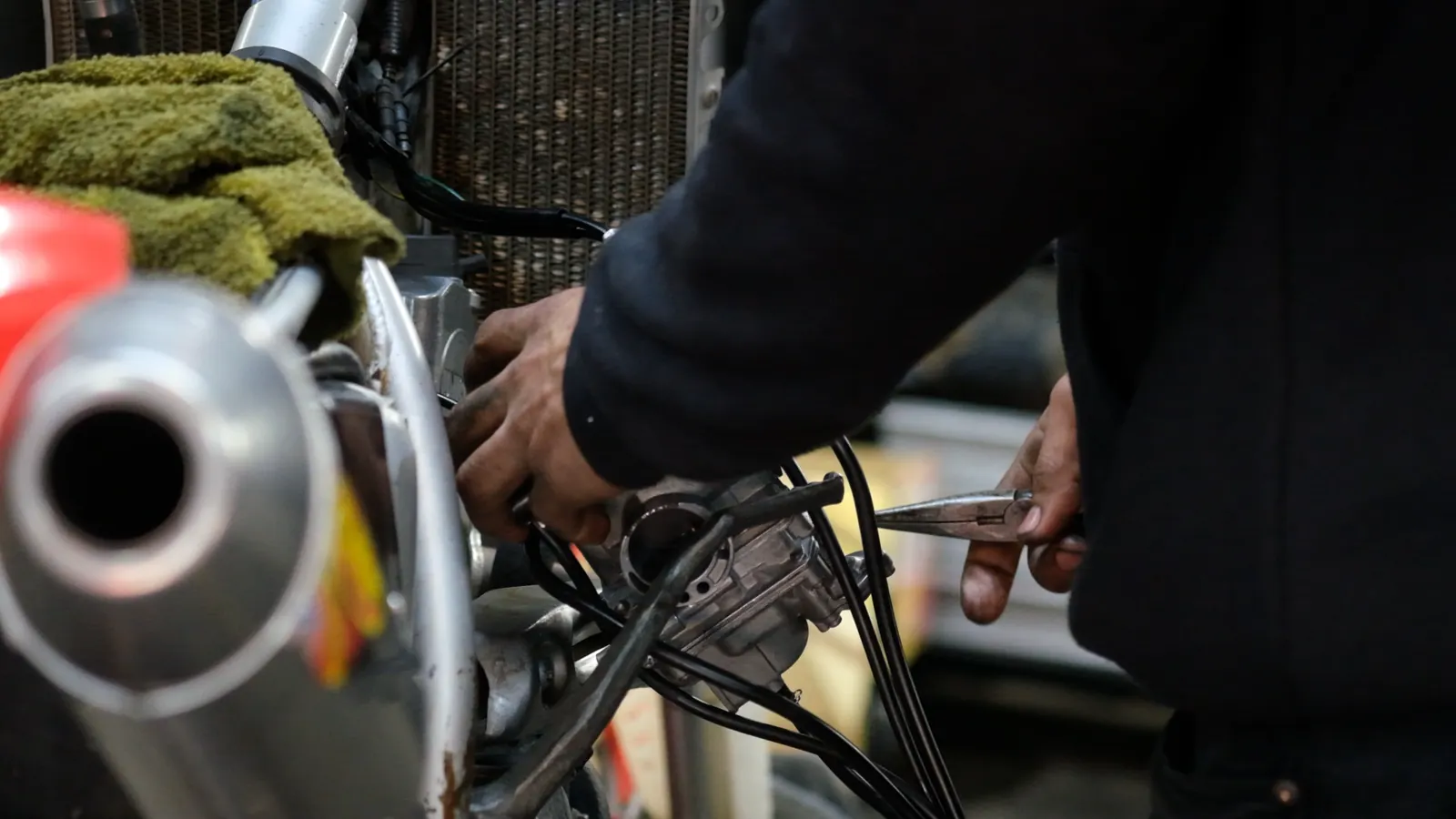
So what does the right revival actually look like? It isn’t a mystery, and it isn’t one big scary job. It’s a sequence, and each step sets up the next. Here’s the honest order we follow on a bike that’s been parked for years, whether it’s a barn find from out in Winston or a project that’s been in the family since before Arbor Place was built.
- Look it over cold and tell you honestly what sitting did and what’s still good.
- Drain the old fuel and clean or rebuild the fuel system so it isn’t fighting varnish.
- Fresh oil and a proper prime so the engine’s protected before anything turns.
- New fuel lines, filters, and any perished rubber that dried out while it sat.
- Brakes and tires — new fluid, checked or replaced lines, and rubber that’s safe to ride.
- Battery, spark, and a careful first start, watching for leaks before it ever hits the road.
Notice the first step is looking, not cranking. A bike that sat two years in a dry garage and a bike that sat eight years under a leaky cover are completely different jobs, and we won’t know which yours is until we look. That honest first look is also where we tell you whether it’s a quick revival or a full bring-back, which ties right into what the work costs once we can see the real condition.
When a revival turns into a restoration
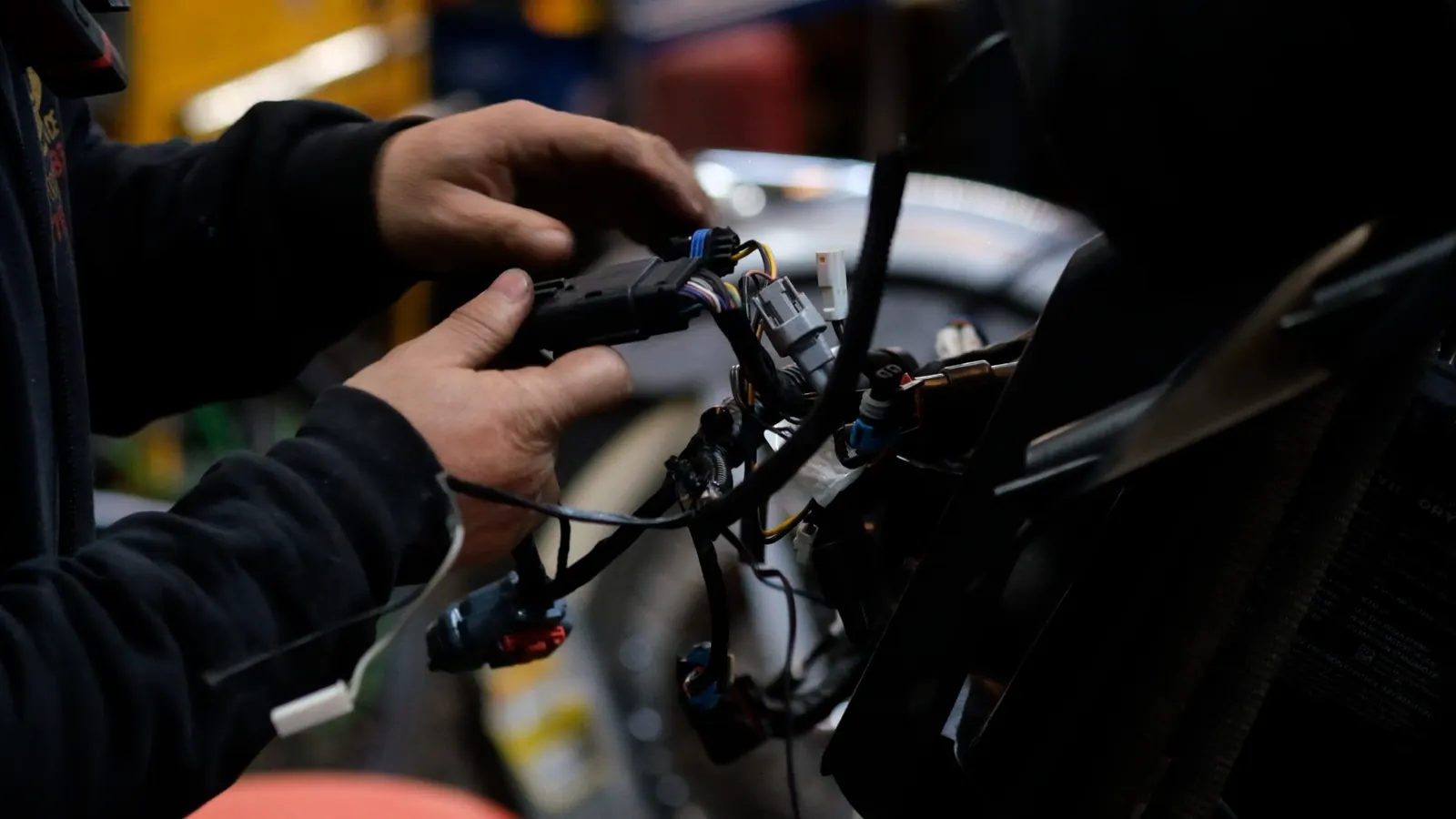
Sometimes a bike just needs a good wake-up and it’s ready to ride. Other times, once we’re in there, it’s clear the machine deserves more than a jump-start. The tank’s rusted through, the chrome is pitted, the paint’s faded from years under a cover in the Georgia sun. That’s the moment a revival becomes a restoration, and it’s a good moment, not a bad one, because now you’ve got a real decision to make instead of a nasty surprise.
We never push you up that ladder. We tell you what’s safe-to-ride versus what’s showpiece, and we let you pick. Plenty of riders start with just get it running, ride a season, then come back for chrome and paint when they’re ready — and knowing you’re with the right people matters, which is why picking the right shop is worth a minute of thought. If you want to understand the full picture of a proper bring-back, our rundown on our restoration work walks through everything the shop can do, and there’s no pressure to use all of it.
A bike that sat isn't dead. It's asleep. Wake it up wrong and you'll wish you hadn't.
Douglasville storage makes this worse — or better
Where your bike sat changes everything about how it comes back. A garage-kept bike in Tributary at New Manchester is usually fighting old fuel and dead rubber, and not much else. But a huge share of west-side riders live in apartments and townhomes along the I-20 corridor with no garage, so the bike sat outside under a cover. That means sun, moisture, and those water spots baking into the paint on top of all the mechanical stuff. Outdoor storage doesn’t ruin a bike, but it does add to the list.
The good news is that none of it is hopeless. We’ve brought back bikes that looked like lawn ornaments and handed them to owners who couldn’t believe it was the same machine. Georgia weather is hard, humidity keeps everything damp, and pollen season coats it all in yellow, but a bike that’s woken up right and protected afterward shrugs all of that off. The trick is doing the wake-up before you ride, not learning the hard way on Fairburn Road.
What we replace, and what we save
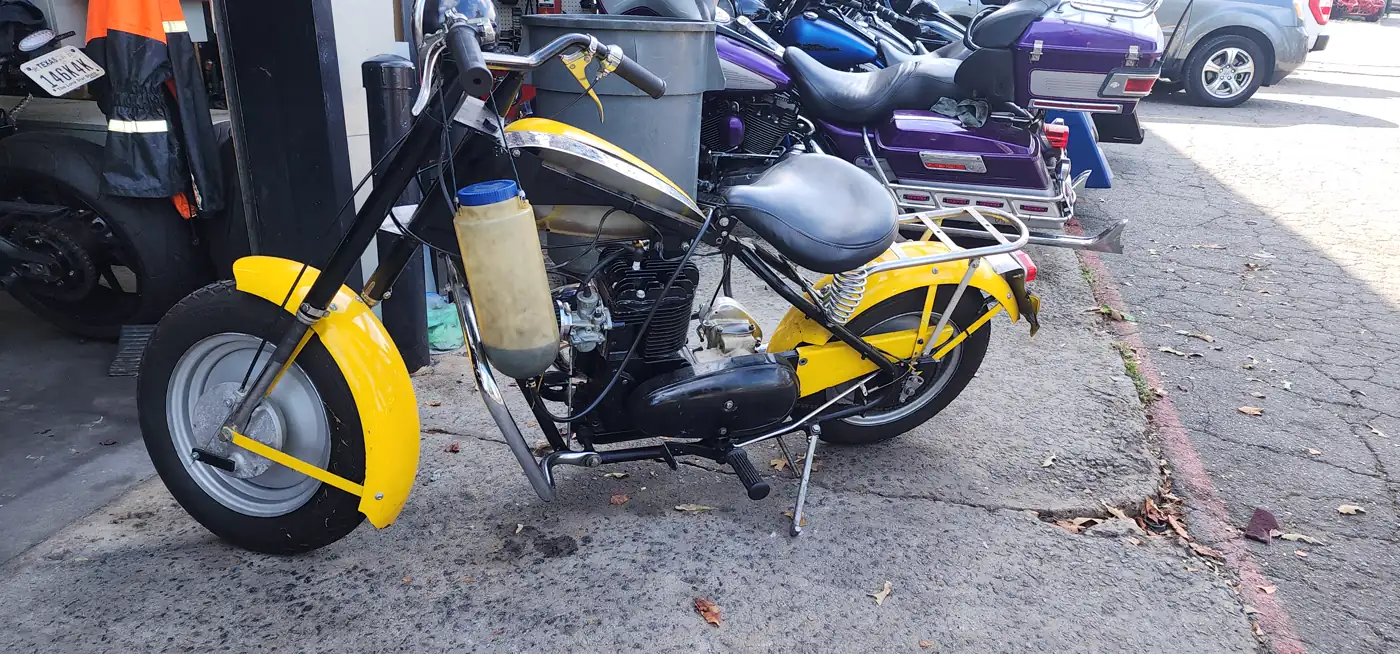
One thing riders worry about is that a shop will just replace everything and hand them a giant bill. That’s not how we work. Plenty of what sits on an old bike can be cleaned, freed up, and reused, and we’d rather save a good original part than sell you a new one you didn’t need. Chrome that looks hopeless often polishes back to a shine. A gummed carb usually cleans rather than gets tossed. The goal is a safe, running bike, not a receipt as long as your arm.
But some things get replaced no matter what, and we won’t budge on those, because they’re the safety stuff. Old brake fluid, cracked fuel lines, brittle tires, and perished seals get changed, full stop. Those are the parts standing between you and a bad day on Fairburn Road, and they’re too cheap to gamble on. We’ll always tell you which bucket a part falls in, so you know exactly why something’s getting saved or swapped.
How long a proper wake-up takes
The honest answer is it depends on the bike, and we won’t pretend otherwise. A bike that sat two years in a dry garage might just need a fuel-system clean, fresh fluids, and a careful start, and that’s a quick turnaround. A bike that sat eight years under a leaky cover with a rusted tank and seized brakes is a bigger job, because we’re not going to rush safety work to hit a deadline that doesn’t help anybody.
What we can promise is that you’ll always know where things stand. We text updates and send photos as the bike comes back to life, so there’s no wondering what’s happening to your machine. If waiting on a rare part slows things down, you’ll hear about it from us, not from silence. A wake-up done right is worth a little patience, and we’ll give you a realistic window the moment we’ve had a proper look.
And here’s the good news that keeps this from feeling like a chore: once a bike is properly woken up and protected, it stays woken up. You’re not going to be back in six months chasing the same varnish and rust, because we handled the root causes instead of masking them. That’s the whole point of doing it in the right order the first time — one good wake-up buys you seasons of riding, not a string of breakdowns.
The easy first move
WISH YOU KNEW
The cheapest revival is the one where nobody tried a shortcut first.
Here’s the thing we wish every rider knew before they grabbed a battery charger. The safest, cheapest path is to leave the bike exactly as it sits and let us look before anything gets started. It costs you nothing to find out, and it can save you a lot. Since a bike that sat usually isn’t roadworthy anyway, we come get it from Douglasville, so you don’t have to trailer a non-runner up the highway. Text us a few photos of the bike and the tank, tell us how long it sat and where, and we’ll give you a straight read on what it takes to wake it up right. And when you’re ready to think bigger, here’s what a restoration really buys you.
Questions Douglasville riders ask us
My bike sat for years. Can I just put in a battery and start it?
Please don’t. When a bike sits, oil drains off the top of the engine and those parts sit dry, so cranking it cold can score a cylinder in seconds. Old varnished fuel and dead brakes make it worse. A bike that gets looked at before anyone starts it is almost always a cheaper, cleaner job.
What's the first thing that goes bad when a motorcycle sits?
Fuel, almost every time. Gas turns to varnish and gum that clogs carburetors and injectors, and the tank can rust from the inside in Georgia’s humidity. After that it’s dried rubber — fuel lines, brake seals, and tires — plus old brake fluid that’s absorbed water and stopped working right.
Does storing it outside under a cover ruin the bike?
It doesn’t ruin it, but it adds to the list. Outdoor storage along the I-20 and Fairburn Road corridors means sun, moisture, and water spots baking into the paint on top of the mechanical issues. We can bring those bikes back — it just means a little more work on the finish.
How do I know if it's a quick revival or a full restoration?
We look it over cold before we quote. A bike that sat two years in a dry garage is very different from one that sat eight years under a leaky cover. Once we can see the tank, the chrome, and the mechanicals, we tell you honestly whether it’s a wake-up or a full bring-back — your call from there.
Do I have to trailer it to you?
No. A bike that sat usually isn’t roadworthy yet, so we come get it from Douglasville and the surrounding west metro. You don’t need to borrow a trailer or risk riding a bike that hasn’t been checked. Pickup removes the whole hassle.
I already tried to start it. Did I ruin it?
Maybe not, but stop now and let us look before you try again. A short cold crank doesn’t always cause damage, but running it on old fuel or with dead brakes can. The sooner we see it, the better your odds of keeping it a small job instead of a big one.
We wake up bikes for riders all over Douglas County and the west metro, not just folks near downtown Douglasville. We get calls from garages in Chapel Hills and the golf-course neighborhoods, from the master-planned streets of Tributary at New Manchester where the trails wind toward Sweetwater Creek State Park, from new-construction homes in Brookmont, and from the family cul-de-sacs of Anneewakee Trails. Out in Winston, folks find a bike in a shed that hasn’t turned over since before the kids left home. And along the Fairburn Road and Thornton Road corridors, plenty of apartment and townhome riders have a bike that sat under a cover in an open lot with no garage. Every one of those bikes comes back the same careful way. Here’s the part that makes it easy: a bike that sat for years usually isn’t roadworthy, so you shouldn’t be trailering it or riding it up an interstate to find out what’s wrong. We come to you. And no, we’re not sending you through the I-20 and I-285 interchange to reach us — nobody in Douglasville wants that, and you don’t have to. Our shop is at 847 Barnes Mill Road in East Cobb, and the smart route is Thornton Road up to the East–West Connector, sliding into Marietta without ever touching the Perimeter. But for a non-runner, forget the route entirely. We pick up from Douglasville, Lithia Springs, Austell, Mableton, Powder Springs, Hiram, Villa Rica, Winston, Chapel Hill, and Fairburn, and we handle transport for bikes you buy across the Southeast. We know Arbor Place is how everybody gives directions out here, and we know the historic downtown Main Street district is the center of the city, so when we talk about your bike we speak in the roads and landmarks you actually use. Georgia weather is a big part of why bikes go downhill while they sit — humidity, summer heat, and spring pollen all pile on — so a bike that sat through a few seasons usually collected more than just old gas. That’s normal, and it’s fixable, and we’ve brought back bikes that looked far worse than yours. You get an all-makes shop that treats a barn find like a new build, saves the good original parts, changes the safety pieces without cutting corners, and keeps you posted with photos the whole way. Whether your bike sat in a dry garage in Tributary at New Manchester or under a cover in an apartment lot off Thornton Road, the wake-up follows the same careful order. If your bike has been asleep in the west metro, we’ll wake it up right — and we’ll do it without you ever touching the Perimeter.
TEXT US A PHOTO OF YOUR BIKE
Got a bike that’s been sitting for years? Don’t jump-start it yet. Text us a couple of photos of the bike and the tank, tell us how long it sat and where, and we’ll give you an honest read on what it takes to wake it up safely. We’re in East Cobb, an easy run up Thornton Road to the East–West Connector so you skip the Perimeter — and since a bike that sat usually isn’t running, we’ll come get it from Douglasville. No sales script, just answers.
470-460-9883Diaz Motorcycles and Service, LLC · 847 Barnes Mill Road, Marietta, GA 30062