That Motorcycle Sitting for Years in Your Roswell Garage: What It Needs Before It Runs Again
What actually goes bad when a bike sits, why you shouldn't just turn the key, and how we wake one up safely.
Plus, the most tempting thing to do with a bike that’s sat for years is also the most expensive: hop on and try to start it. Meanwhile, that old fuel, that flat battery, and those dry tires are all quietly waiting to bite. Of course, that’s how a fun Saturday turns into a tow. In fact, here’s the honest version: a motorcycle sitting for years in a Roswell garage doesn’t need a jump start, it needs a wake-up done in the right order. For example, old gas alone can gum a carburetor, clog an injector, and leave you stranded before you clear the driveway.
We get it. It’s been in the back of the garage in Martin’s Landing since who-knows-when, you finally have a weekend, and you just want to hear it run. That itch is real. But a bike that’s been parked isn’t the same machine you put away. Rubber dries, fuel turns, metal corrodes, and the battery gives up. Turning the key before you check any of that is how good bikes get hurt worse than the sitting already hurt them.
What actually happens when a bike sits
Sitting isn’t gentle, even in a nice dry garage. Gasoline is the first thing to go. Left alone, it evaporates and leaves behind a sticky varnish that clogs the tiny passages in a carburetor or gums up a fuel injector. The stuff that’s left turns sour and can eat at the inside of the tank. So the fuel that was fine when you parked it is now the enemy.
The battery is next, and it rarely survives more than a season or two unhooked. Then come the tires: rubber dries out, flat-spots where it rested, and develops cracks you can’t always see. Brake fluid absorbs moisture and gets tired. Fork seals and fuel lines go brittle. And Georgia humidity does the rest, leaving surface rust on chrome and corrosion on the electrical connectors. None of it is dramatic on its own. Together, it’s a checklist.
And humidity here is relentless, even indoors. Our summers keep the air damp for months, so a bike doesn’t have to sit outside to pick up corrosion, it just has to sit. That’s the part people underestimate. They figure a garage means the bike froze in time. It didn’t. It aged, just more slowly and more quietly than one left in the weather. Time is doing something the whole while, and it’s rarely doing you a favor.
Why turning the key is the worst first move
Here’s the trap. The engine might crank. It might even cough and try to catch. That feels like good news, so people keep at it. But cranking a long-parked engine with old oil, stale fuel, and dry seals can push varnish deeper into the fuel system, run the fuel pump against gunk, and circulate acidic old oil through bearings that haven’t been fed in years. You can turn a cleanup into a repair in about ten seconds of enthusiasm.
Dry brakes are the scarier part. A bike that sat can have seized calipers, glazed pads, and moisture-soaked fluid, which means it might start but not stop. That’s not a garage problem anymore, that’s a you-in-traffic-on-Roswell-Road problem. So before anything spins or rolls, a few things get checked in order. Here’s the safe sequence we walk through on a bike that’s been sitting.
- Look, don’t crank. Check for leaks, rust, rodent damage, and rotten wiring first.
- Drain the old fuel and inspect the tank inside for rust and varnish.
- Service or replace the battery, then check the charging system before trusting it.
- Clean or rebuild the carbs or clear the injectors so fuel actually flows clean.
- Fresh oil and filter, and check the coolant, before the engine runs under load.
- Go through the brakes and tires last, because starting means nothing if it can’t stop.
Notice that brakes and tires come last but matter most. A bike that starts is exciting. A bike that stops is what gets you home. That order is a big piece of why a proper revival isn’t the same as “charge the battery and pour in fresh gas,” and it feeds right into what the work actually costs.
The fuel system is almost always the headache
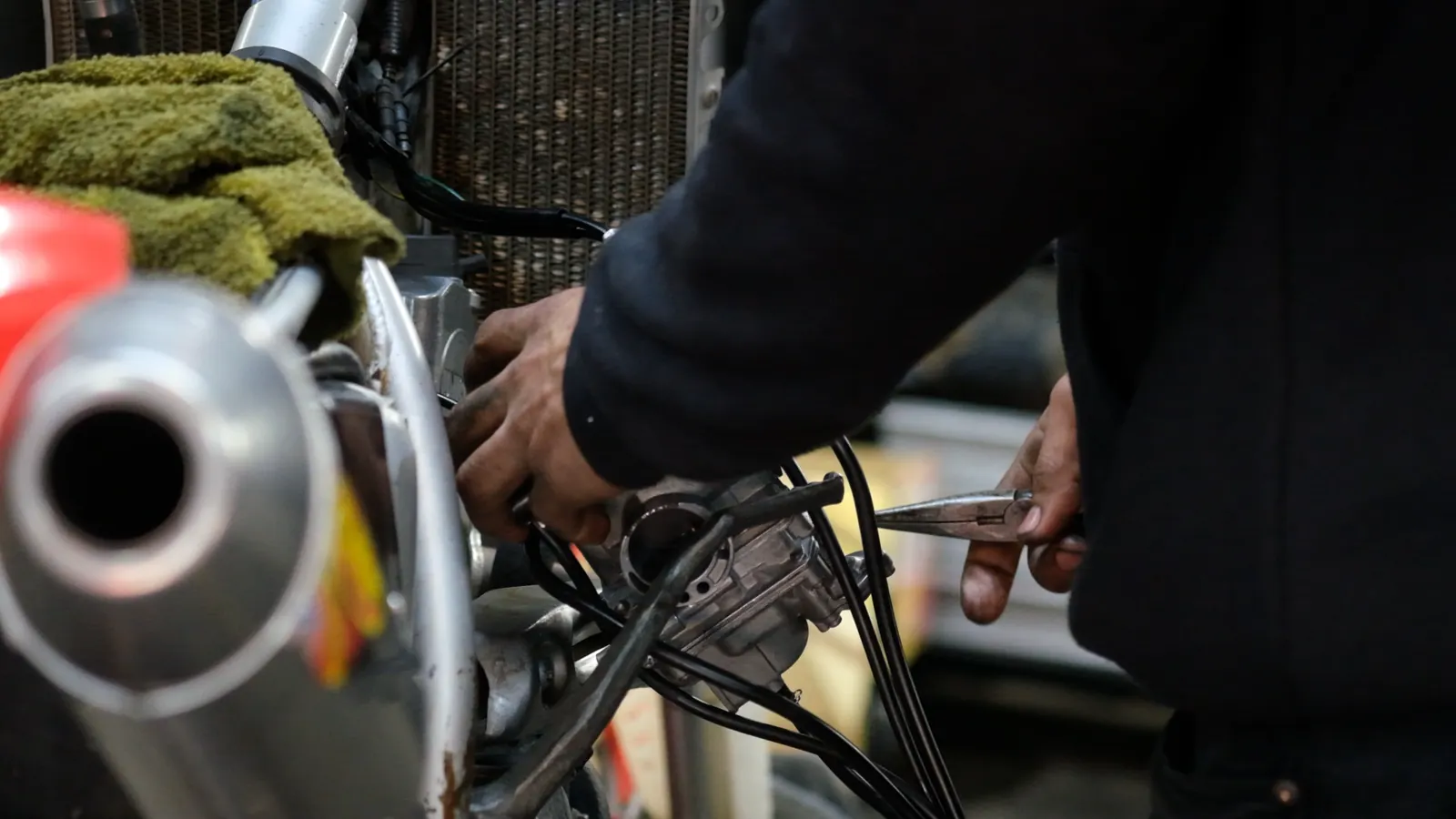
If a bike sat with fuel in it, plan on the fuel system needing attention. On older carbureted bikes, that varnish settles into passages narrower than a hair, and no amount of fresh gas flushes it out. The carbs usually have to come off, get opened up, and get cleaned properly. On newer fuel-injected bikes, the tank can rust from the inside and the pump and injectors need a careful look.
HEADS UP
If the tank has rust inside, running the bike just feeds that rust into the fuel system. Sort the tank before you chase anything else.
That’s the mistake we see most: someone dumps fresh gas on top of a rusty tank, gets it running for an afternoon, and then wonders why it dies a week later. The rust never left, it just went for a ride through the fuel system. Fix the source first. It’s less glamorous than hearing it fire up, but it’s the difference between a bike that runs once and a bike that runs for years. Slow is smooth, smooth is fast.
The stuff people forget: rubber, brakes, and rot
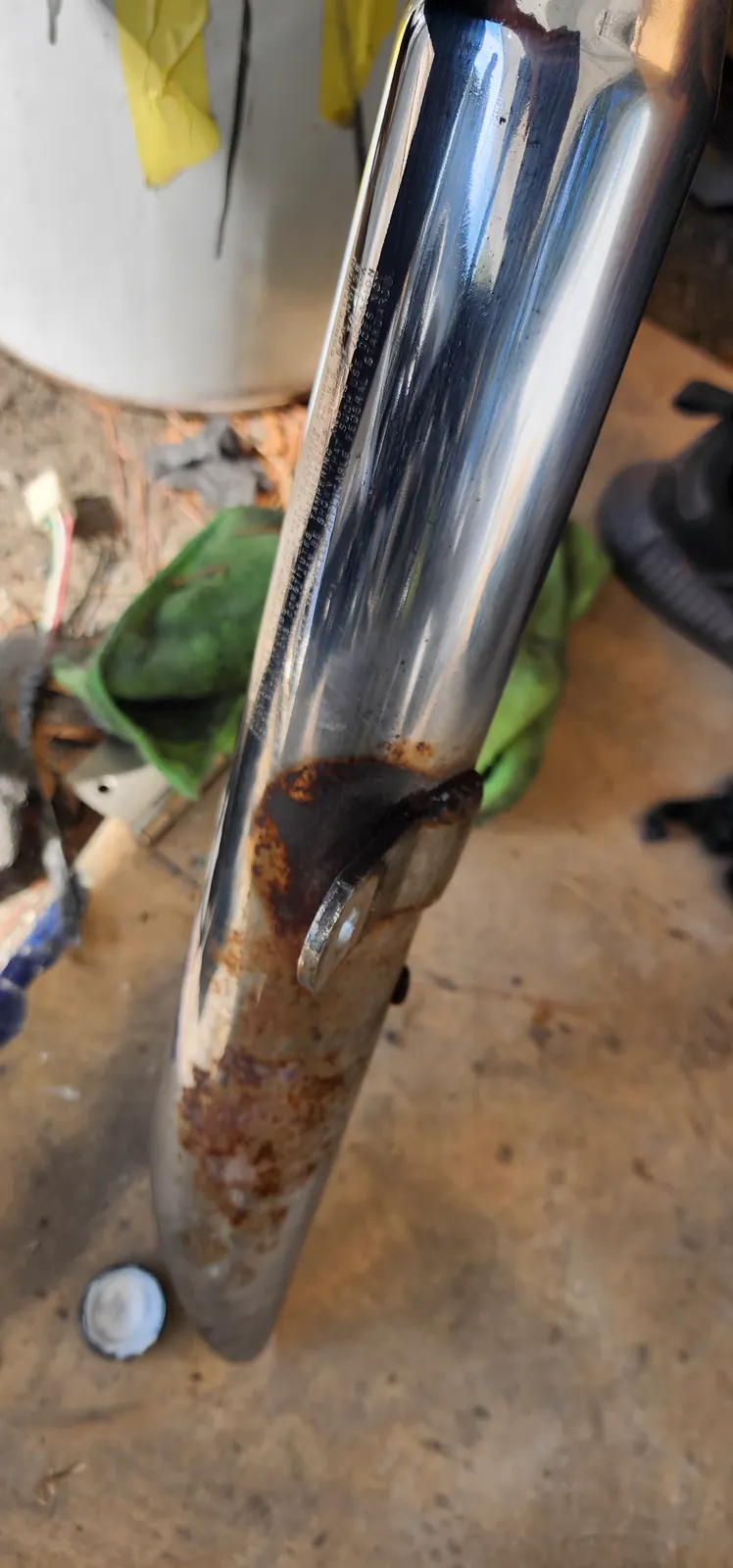
Everybody remembers the battery and the gas. Fewer people think about all the rubber. Tires that look fine can be dry-rotted and unsafe, especially if they’ve got age cracks or flat spots from resting in one place. Fork seals dry and start weeping. Fuel lines and vacuum hoses go hard and crack. Brake and clutch lines age out. It’s not exciting, but it’s what keeps a revived bike safe instead of just loud.
Then there’s the wildlife. A bike parked in a garage for years is prime real estate for mice, and chewed wiring is a genuinely common find. So is a nest in the airbox. We check for all of it before anything gets power, because a rodent-chewed harness can short things out the moment you connect a battery. Nobody wants to meet the previous tenant, but it’s better to find the damage than get surprised by it.
- Tires: check age, cracks, and flat spots, not just whether they hold air.
- Brakes: fresh fluid, unstuck calipers, and pads that aren’t glazed hard.
- Hoses and seals: brittle fuel lines and weeping fork seals are normal after years.
- Wiring: look for rodent damage and green, corroded connectors before adding power.
- Fluids: old oil goes acidic, and old coolant loses its protection over time.
The good news is that most bikes that sat in a Roswell garage are savable. Garage storage, even the crowded 1980s two-car kind most homes here have, is a lot kinder than sitting outside. If yours has been under cover on a driveway in East Roswell instead, expect a bit more corrosion and a longer list. Either way, it usually comes back. The question is just how big the list is, which ties straight into whether you revive it or move on.
How it was stored decides the length of the list
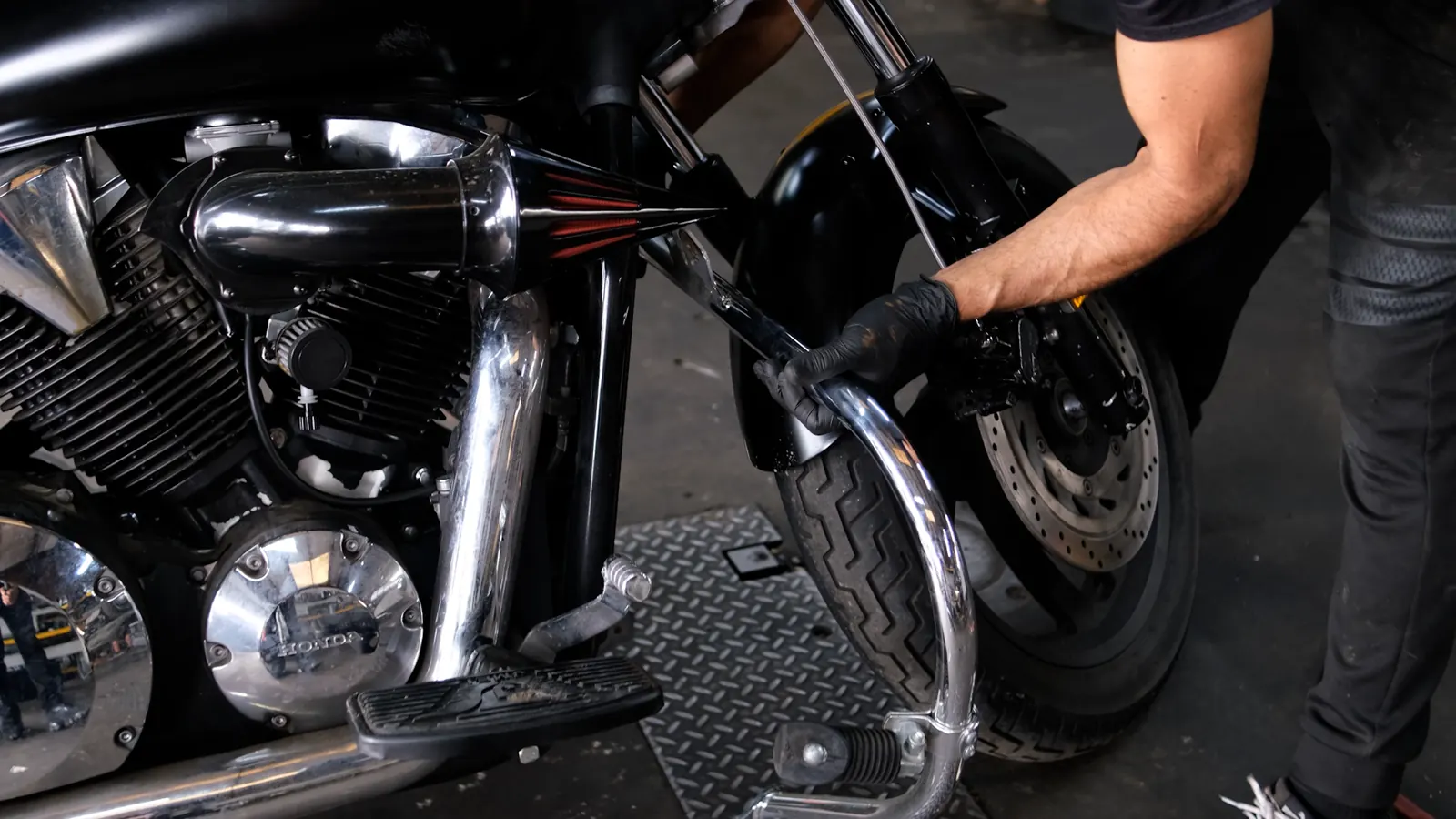
Not every parked bike is the same size of job, and the difference usually comes down to where it slept. A bike tucked into a garage, even a crowded 1980s two-car one like most Roswell homes have, is protected from the worst of the weather. It’ll still need fuel, battery, and fluids, but the metal and rubber tend to hold up better. That’s the shorter list, and the happier surprise.
A bike that lived outside under a cover on a driveway in East Roswell is a different story. Covers trap moisture as much as they block rain, so you get more rust in the tank, more corroded connectors, and more perished rubber. It still usually comes back, it’s just a longer list. Either way, telling us how and where it was stored helps us give you a straight read before the bike even arrives. It’s the difference between a guess and a plan.
How we wake one up safely
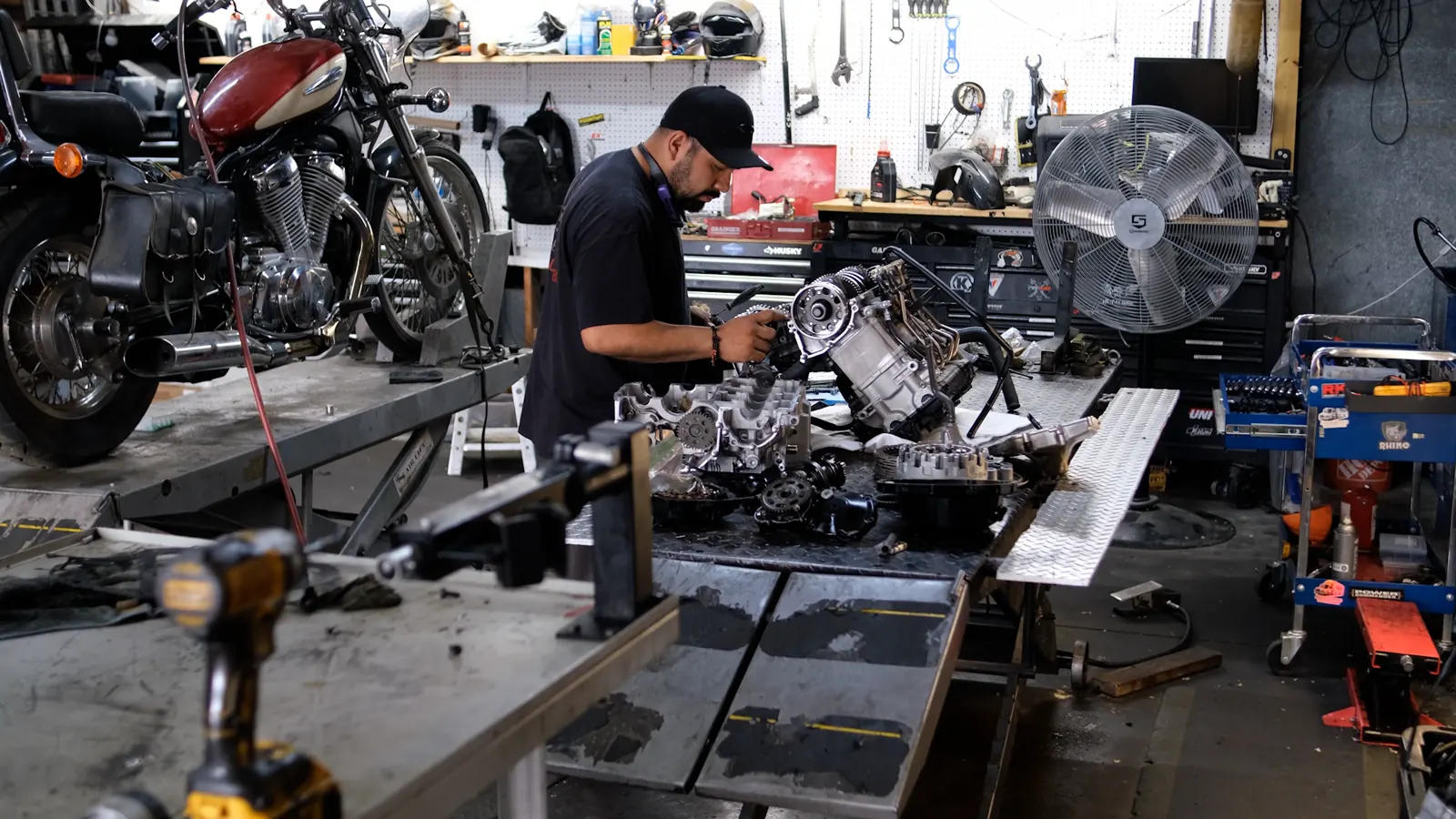
When a long-parked bike comes to us, we don’t try to start it that day. We go through it cold first: inspect, drain, clean, and replace what the sitting killed, in the order that keeps the engine and you out of trouble. Only once the fuel is clean, the oil is fresh, the electrics are sound, and the brakes actually work do we bring it to life. Then we run it, watch it, and make sure it’s not just alive but reliable.
THE HONEST REASON TO CALL
A safe revival costs less than fixing the damage a rushed start causes. Ask us how we know.
And you don’t have to get it here running. That’s the whole point. Roswell to the shop is basically one road, Roswell Road west across the Chattahoochee into East Cobb, about fifteen to twenty minutes from Canton Street. If the bike won’t roll under its own power, we can arrange transport so you’re not trying to trailer a dead machine across the river. Send photos, tell us how long it sat and where, and we’ll take it from there.
The feeling when it finally fires
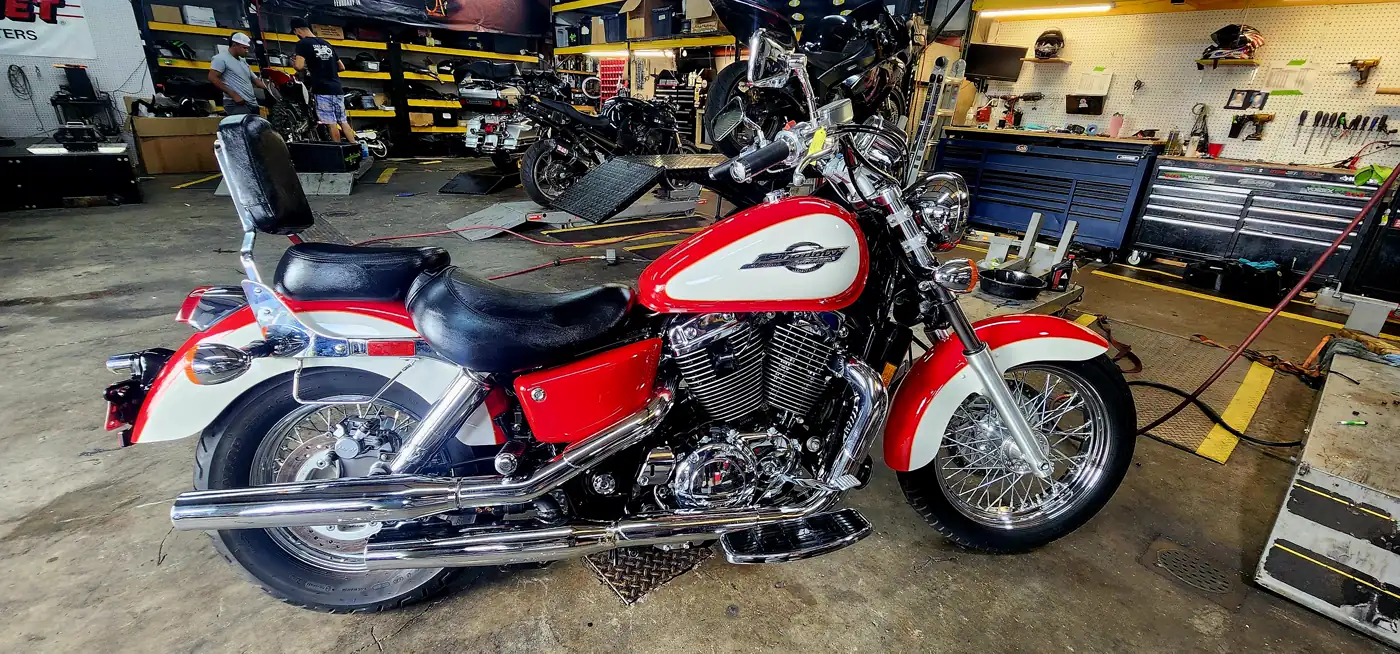
Here’s the fun part, and it’s genuinely fun every time. A bike that sat silent for five or ten years, that everybody in the family had given up on, coughs once and then settles into an idle. It’s a small thing that hits people surprisingly hard. That’s the bike from before the kids, or the one that reminds you of somebody. Getting it running right isn’t just mechanical. It’s giving that bike back to you in a way you can actually trust and ride.
A bike that's been sitting doesn't need a hero with a jumper pack. It needs a wake-up done in the right order, so it runs for years, not for an afternoon.
So resist the key. Text us a few photos instead, tell us how long it’s been parked and whether it lived in a garage or under a cover, and we’ll give you a straight read on what it needs to come back safely. We’re one road away, down Roswell Road across the Chattahoochee in East Cobb, and reviving parked bikes is bread and butter for us. No pressure, no guessing, just a plan.
Questions Roswell riders ask us
Can I just charge the battery and add fresh gas to start it?
Please don’t, not before it’s checked. Old fuel gums the system, dry brakes may not stop, and cranking can push varnish deeper and circulate acidic old oil. A bike that sat needs a wake-up in the right order, not a jump start. Turning the key first is how a cleanup becomes a repair.
How long can a bike sit before it needs this?
Even one season parked without prep can cost you a battery and gummy fuel. After a couple of years, plan on fuel-system work, tires, brake fluid, and a full check for rot and rodent damage. The longer it sat and the more exposed it was, the longer the list. Garage-kept is always kinder than outside.
My bike doesn't run. How do I get it to you?
We can arrange transport across the river so you’re not trailering a dead bike yourself. Roswell to the shop is essentially one road, Roswell Road west into East Cobb, about fifteen to twenty minutes. Send photos to start and we’ll handle getting it here.
Why does the fuel system always come up first?
Because old gas leaves a varnish that clogs passages narrower than a hair, and fresh gas won’t flush it out. On carbureted bikes the carbs usually have to come off and get cleaned. On injected bikes the tank can rust inside. If the tank is rusty, running it just feeds rust through the system, so we fix the source first.
Is a bike that sat for years even worth reviving?
Usually, yes, especially a garage-kept one. Most parked bikes come back fine once the fuel, battery, fluids, tires, and brakes are sorted. We’ll look it over and tell you honestly how big the list is. If it’s genuinely too far gone, we’ll say so and help you weigh reviving it against selling.
What's the most overlooked thing on a parked bike?
The rubber and the brakes. Tires can look fine but be dry-rotted or flat-spotted, fork seals and fuel lines go brittle, and brake fluid soaks up moisture. A bike that starts but can’t stop safely isn’t ready to ride. We go through brakes and tires before we ever hand it back.
We revive parked bikes from across North Fulton. Riders bring long-sitting projects from Historic Roswell and Canton Street, Martin’s Landing, Horseshoe Bend, and East Roswell, plus homes near the Chattahoochee Nature Center on Willeo Road. Whether your bike rested by Roswell Mill and the Vickery Creek covered bridge or off Holcomb Bridge Road near GA 400, you’re a short run down Roswell Road, just across the river in East Cobb.
DON'T TURN THE KEY. TEXT US FIRST
Got a bike that’s been sitting for years? Before you try to start it, text us a few photos and tell us how long it’s been parked and where. We’ll give you an honest read on what it needs to come back safely. We can arrange transport if it won’t roll. We’re one road away, down Roswell Road across the Chattahoochee into East Cobb.
470-460-9883Diaz Motorcycles and Service, LLC · 847 Barnes Mill Road, Marietta, GA 30062