Motorcycle Transport Cost Canton — What You Pay
The honest breakdown of what a pickup and delivery actually involves, and why one bike is a ten-minute load and the next is a full afternoon.
Even so, it’s a little past nine at night. The garage light hums. What’s more, the bike hasn’t turned over in two winters, and the guy you bought it from lives three states away. So you sit on the workbench, thumb your phone, and type the same thing half of Cherokee County has typed: what does motorcycle transport cost Canton riders, really? After that, that quiet late-night question is actually the right place to start. Also and you deserve a straight answer, not a runaround.
The question behind the question
Here’s a little secret. Instead most folks who ask about price don’t really want a number first. Besides they want to know they won’t get taken. When you search that at night, you’re asking three quieter things at once. Actually Will my bike show up in one piece? Am I about to overpay because I sound stuck? That’s why and is this even worth it, or should I white-knuckle a rented trailer down I-575 myself?
Either way those are fair worries, every one of them. We’ll take them in order. In short By the end of this you’ll know exactly what moves a transport job up or down, so you can call any shop and sound like the smartest person on the phone.
Let’s clear up the first truth. At the same time Transport is a service, not a boxed thing on a shelf. As a result two bikes that read the same on paper can be two completely different jobs. On the other hand a running cruiser rolled out of a tidy BridgeMill garage is a ten-minute load. So a seized project bike wedged behind a lawnmower, a deep freezer, and eight years of boxes is a whole different afternoon. Still, Same truck, same trailer, very different sweat.
The honest answer, in plain words
So what actually sets the price? Three things, mostly. Plus, Access, distance, and the shape the bike is in. Meanwhile, Notice that none of those is a parts bill. Transport is almost pure labor and time, which is good news for you, because every one of those three is something you can see and describe before anyone quotes a dime.
Access is the big one. If we can back the trailer up to a flat driveway and roll a healthy bike aboard, the clock barely starts. If the bike is up a gravel slope, down a tight side yard, or stuck in gear with a flat rear tire, we’re moving it by hand, foot by foot, and that time is real. A bike that fires up and rolls is the easiest thing in the world. A bike that won’t roll is the reason we own the gear we own.
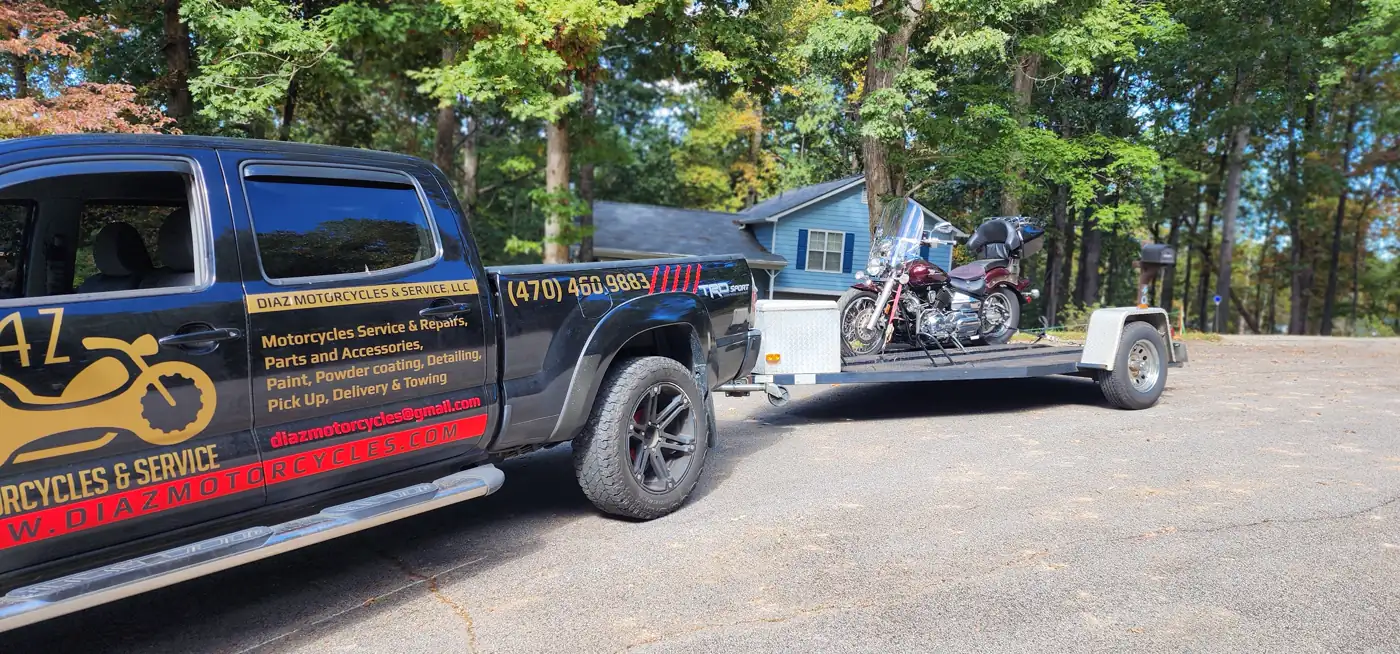
Distance is the honest second piece. A short hop from Hickory Flat over to East Cobb is one thing. A run up GA-140 toward Waleska and Reinhardt University, or a long-distance haul for a bike you bought sight-unseen in another state, is another. More miles means more fuel, more time, and more careful driving. We don’t hide that. Meanwhile, we just tell you the road up front.
The third piece is condition. A bike that starts, brakes, and rolls loads clean and quick. A non-runner needs winching, extra hands, and softer handling so nothing gets scuffed on the way up the ramp. That’s not a penalty. It’s just more work, and more work is the whole story of what you pay for.
That’s the common version, and it’s true as far as it goes. The real story is a little different. Because the thing that makes people nervous isn’t the price at all. It’s the surprise. Nobody minds paying for honest work. What eats at you is the fear that the number changes after the bike is already on the trailer. So let’s talk about how a good shop kills that fear before it starts.
What actually changes the number
Think of it like a short checklist. Every yes or no here nudges the job one way or the other. Once you can answer these, you can size up your own transport before you ever call.
- Does the bike run and roll, or is it a non-runner that needs a winch?
- Is it in gear, and does the rear brake or clutch work enough to move it?
- Can a truck and trailer reach a flat, hard surface near the bike?
- Is it a light sportbike, a heavy bagger, or a wide trike or sidecar rig?
- How far is the pickup, and how far is the drop?
- Open trailer for a quick local move, or enclosed for a long haul or a show bike?
See how none of that is guesswork once you look at it? A light, running Suzuki GSX-R that starts on the button is about as easy as it gets. A dead touring bagger with saddlebags and a top case is heavier, taller, and needs more strap points. Bigger bike, bigger job. Simple as that.
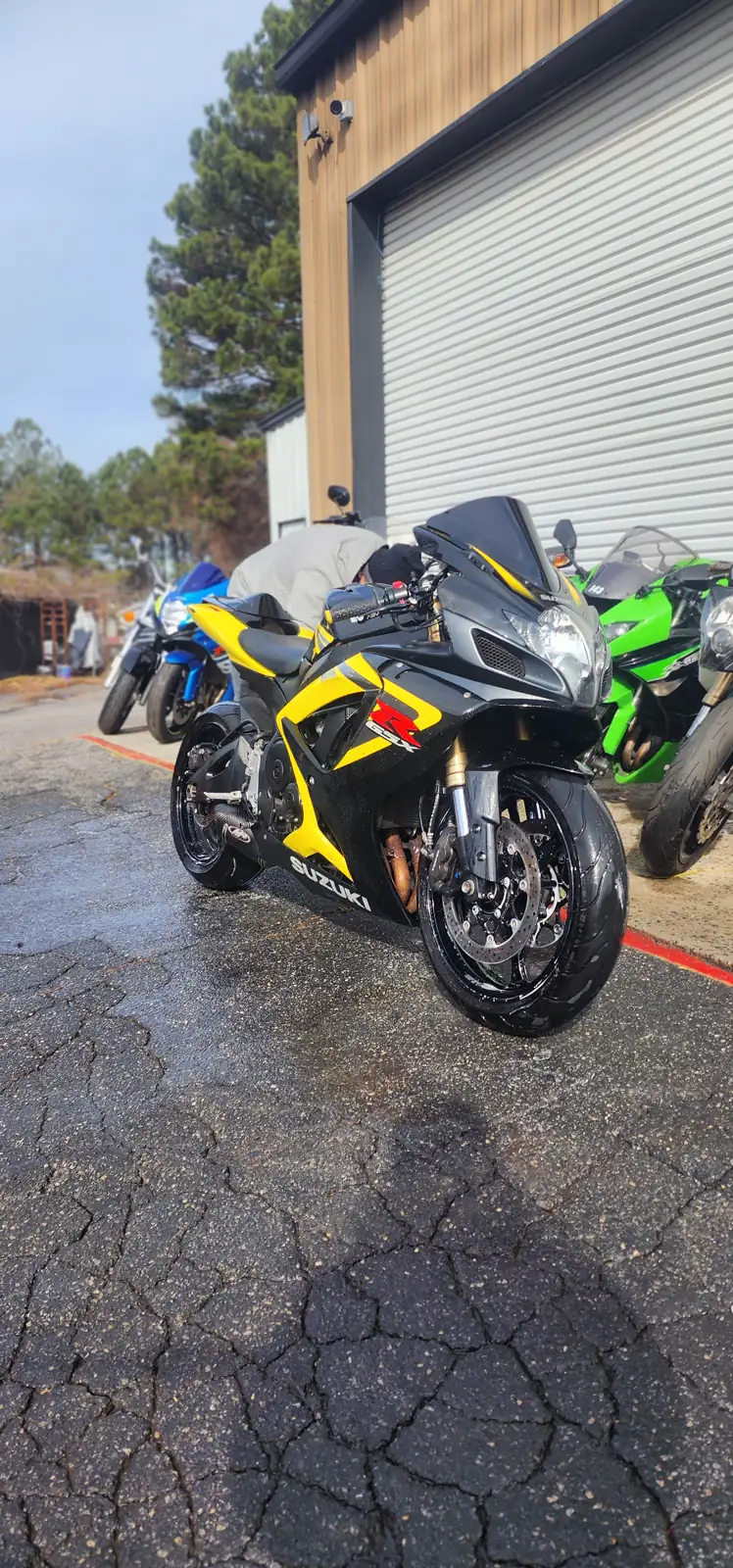
Open versus enclosed matters too, and it’s a real choice, not an upsell. An open trailer is perfect for most local moves around Woodstock and Holly Springs. It’s fast, it’s simple, and your bike is strapped down tight the whole way. Enclosed makes sense for a long-distance haul, a fresh paint job, or a restored classic you don’t want to see road grime for the first hundred miles. We’ll tell you which one fits, and we’re happy to explain why.
How the pickup actually works, start to finish
People relax the moment they know the steps, so here they are. Nothing about a good transport should feel like a magic trick. This is the whole thing, top to bottom.
- We talk first. You tell us where the bike is, what it is, and whether it runs. Photos help a ton, so send a few if you can.
- We schedule a window and show up in a wrapped truck with the right trailer for your bike.
- Of course, we look the bike over with you and note anything already scuffed or scratched, so there’s no confusion later.
- If it rolls, we walk it up the ramp. If it doesn’t, we winch it gently and steady it the whole way.
- We tie it down with soft loops and ratchet straps at the frame and bars, compressing the front suspension just enough to hold it dead still.
- In fact, we double-check every strap, close up, and roll out. You get a heads-up when it’s loaded and when it lands.
Notice that a bike never rides on its kickstand or its brakes. It stands upright, held by the straps, with the front end lightly loaded so it can’t wobble. Grippy chocks catch the front wheel, and the soft loops protect your bars and levers from strap rash. Done right, your bike arrives exactly the way it left, just on wheels that aren’t its own.
Paperwork is the part people forget, and it’s the part that protects you most. A simple condition sheet or a quick set of before photos means everyone agrees on the bike’s shape at pickup. That little bit of documentation is your safety net, and any shop worth its salt offers it without being asked. For the full picture of what a load-in looks like on our end, here’s what we take care of here from the first call to the drop-off.
Why we won't quote it blind over the phone
Now for the question that trips people up. Why won’t a good shop just rattle off a price the second you call? It feels like they’re being cagey. They’re not. It’s the opposite.
A blind phone quote is a guess, and a guess only goes one direction later, up. If a shop throws out a low number without seeing the bike or the driveway, one of two things happens. Either they eat a loss on a hard job, which no honest business can keep doing, or they pad every quote sky-high to cover the worst case, so you overpay for an easy one. Neither of those helps you.
A number without a look isn't a quote. It's a coin flip, and the house always wins.
When we ask a few questions and want a photo or two, that’s us protecting your wallet, not stalling. Ten seconds of looking is what lets us tell you a real number that doesn’t move. It’s the same reason a mechanic won’t price a rebuild without opening the cases. Honest work needs an honest look first. That’s exactly what separates a good shop from a call center reading off a script.
How we handle it, the Diaz way
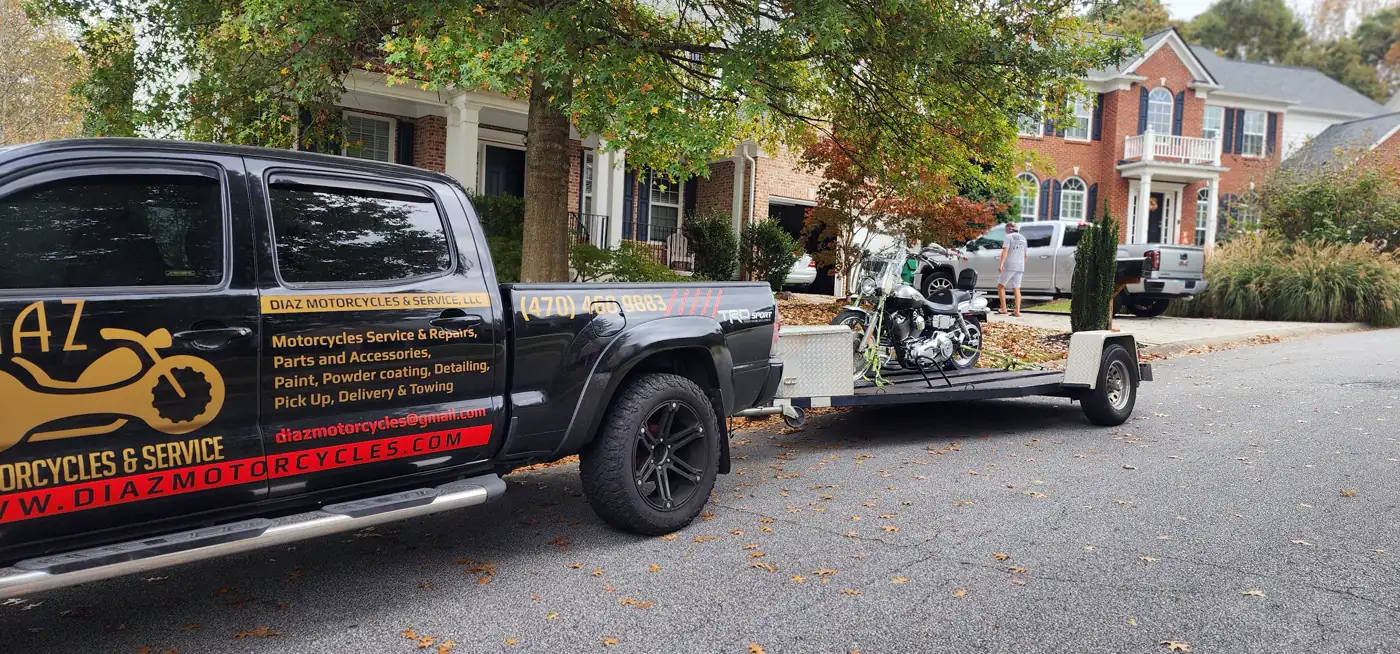
Our approach is boring on purpose, and boring is what you want when your bike is on a trailer. We come to you. For example, we look before we commit. We tell you the truth about access and distance. And then the number we say is the number you pay, barring something we couldn’t have seen, like a hidden seized wheel we all discover together in the driveway.
For a stuck or non-running bike, honestly, nothing beats “we come get it.” You could rent a trailer, borrow a buddy’s truck, wrestle a dead 700-pound bagger up a ramp alone, and hope you tie it down right at 70 miles an hour. Or you can hand it to folks who load a dozen a week. One of those ends with a scraped knuckle and a prayer. The other ends with your bike in our bay, ready for whatever it needs next.
And plenty of bikes need something once they arrive. A lot of our transport calls are project bikes and long-stored machines, which around here means ethanol-gummed carbs, a dead battery, and flat-spotted tires from sitting all winter. If yours needs tuning after it wakes up, that’s a whole separate story, and how we handle that job follows the same no-surprises rule. Transport just gets it to the people who can bring it back to life.
Canton context: why the road matters here
Where you sit changes the math, and Canton sits somewhere special. This is the gateway to the North Georgia mountains, the last real services town before the highway climbs toward Jasper and Ellijay. That means two kinds of riders live around here. Destination riders who moved here because the twisties start thirty minutes north, and weekend riders in the master-planned belt with a garage-kept bagger they baby all year.
Both kinds need transport for the same reasons, just at different times. The mountain crowd calls after a long day on GA-52 over Fort Mountain leaves a bike limping. The garage crowd calls in spring, when a cruiser that napped all winter in a Fox Hollow garage won’t start no matter how many times they hit the button. Different riders, same rescue.
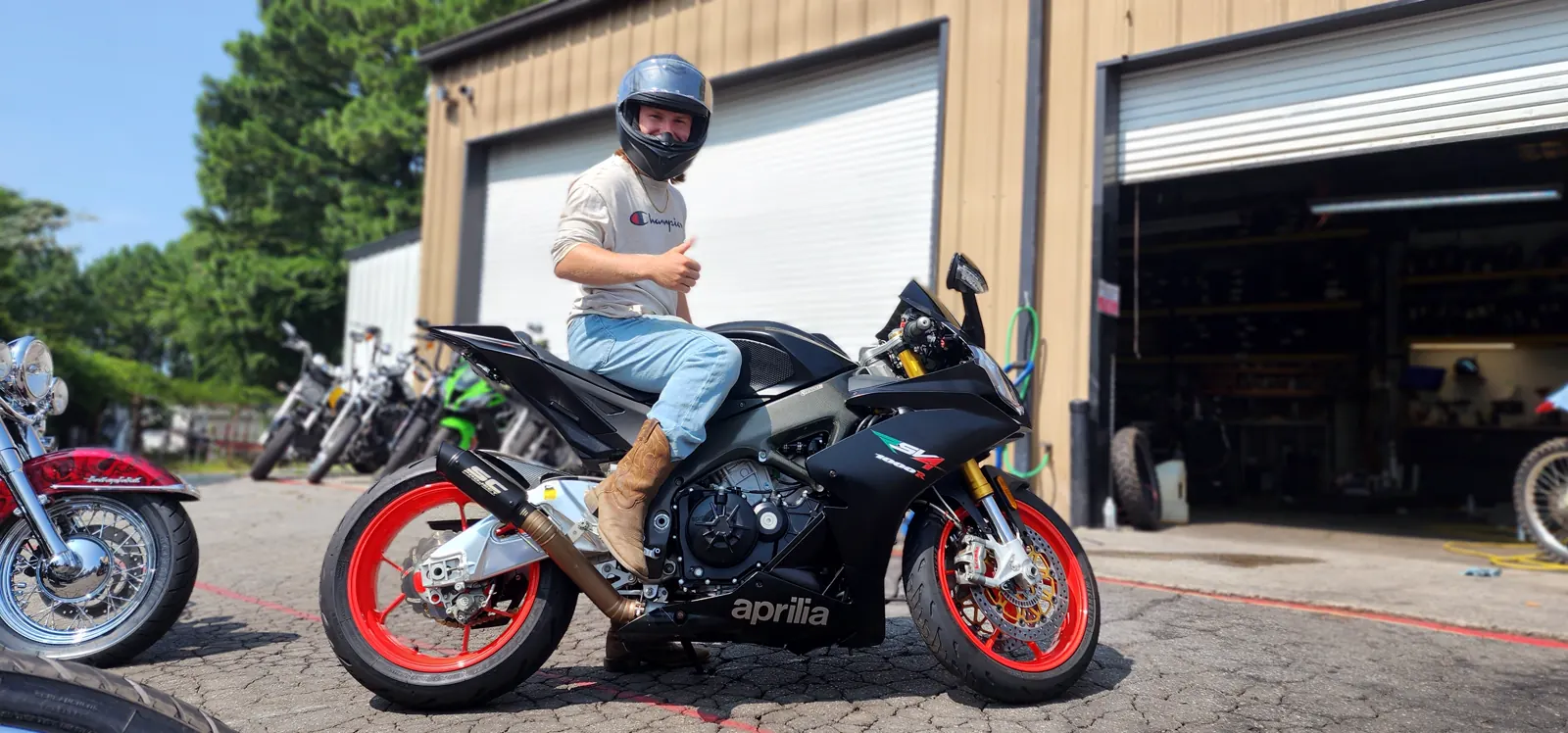
One rider off GA-140 put it better than we could. He’d inherited his late father’s bike, hadn’t ridden in years, and told us he almost didn’t call because he figured a shop that far out wouldn’t bother coming to get one dead machine. We came. He watched us winch it up near where the road runs toward Reinhardt University, and by the time we pulled away he’d stopped apologizing for the flat tire and started telling stories about the bike. That’s the whole point. The distance was never the problem. It was just a drive.
Speaking of the drive, from most of Canton to our Marietta shop is roughly 22 to 26 miles, generally a half-hour or so down I-575 and through East Cobb. Locals here drive for everything anyway, so a run to the shop is nothing new. If you’re actually closer to Cobb, the math shifts a little, and we break down the East Cobb side of things in its own guide. Wherever you start, the trailer comes to you first, and that’s the part that matters.
You’ve got choices out this way, too, and we’ll always shoot straight about that. Bartow Powersports over in Cartersville is about a half-hour west if a dealer counter is what you’re after. What we do differently is come to the bike, look before we quote, and get you a real number, whether you’re downtown by the free parking around Cannon Park or tucked back in Hickory Flat. On the pure numbers side, riders sometimes want context, and groups like the Motorcycle Industry Council and NHTSA crash data are solid places to read up before you decide anything.
The outcome: you, in the driver's seat
So circle back to that 9pm question. What does motorcycle transport cost Canton riders? The honest answer is: exactly as much as the job in front of us, no more, and you get to see every piece of it before you say yes. Access, distance, condition. That’s the whole recipe, and now you can read it as well as we can.
YOUR QUICK CHECKLIST
Before you call anyone, know four things: does it run and roll, where it sits, how far it’s going, and whether you want open or enclosed. With those, you can’t be surprised, and you can spot a padded quote a mile off.
That’s the feeling we want you to have when the truck pulls away with your bike on it. Not nervous. In control. You knew the steps, you saw the straps go on, and you’ve got photos to prove the shape it left in. A dead bike in the garage feels like a wall. A phone call turns it back into a plan. And the ride home, whether it’s a short one or a long haul, was never the hard part.
Questions Canton riders ask us
Does the type of bike change the work?
Yes, quite a bit. A light, running sportbike loads fast and needs fewer strap points. A heavy bagger or touring bike is taller, wider, and needs more careful tie-downs. Trikes and sidecar rigs take a wider setup again. Bigger and heavier means more time and more hands, which is the honest driver of the price.
What if you find something else once you're there?
We tell you on the spot, before anything moves. If a bike we thought would roll turns out seized, we show you, explain what it changes, and let you decide. There’s never a quiet surprise added after the fact. You always get the say.
How do I avoid surprises on the final number?
Send a couple of photos and answer a few quick questions up front. Show us where the bike sits and whether it runs and rolls. When we can see the job before we quote, the number we give holds. Surprises come from blind guesses, so we skip the guessing.
What makes one transport job bigger than another?
Three things, mostly. Access, meaning how easily a truck and trailer can reach the bike on a flat surface. Distance, since more miles means more time and fuel. And condition, because a non-runner needs a winch and extra care. None of it is a parts bill, so it’s all easy to see coming.
Why can't you just quote it over the phone?
Because a blind quote is a coin flip, and it only ever flips against you later. Without seeing the bike and the driveway, a shop either lowballs and eats it or pads every quote to be safe. A quick look lets us give you a real number that doesn’t move. That’s us protecting your wallet, not stalling.
Do you handle non-running and long-distance bikes?
Absolutely, those are our bread and butter. Dead batteries, seized engines, flat tires, estate bikes, and machines bought out of state all get the same gentle winch-and-strap treatment. For a stuck bike, honestly, “we come get it” beats every do-it-yourself plan out there.
We roll the trailer all over the north metro and up toward the mountains. That means friends in Woodstock, Holly Springs, and Ball Ground, out west to Acworth, Cartersville, and Kennesaw, and north through Waleska, Free Home, Nelson, and Jasper. We also run south to Marietta and east to Alpharetta whenever a bike needs a lift. Wherever you sit around Canton, the truck comes to you first.
STUCK BIKE IN CANTON? WE'LL COME GET IT
You don’t have to wrestle a dead bike up a rented ramp alone. Text or call Diaz Motorcycles, tell us where it sits in Canton and whether it runs, and we’ll bring the right trailer to your driveway. No blind quotes, no surprises, just your bike safe in our bay and a plan for whatever it needs next.
470-460-9883Diaz Motorcycles and Service, LLC · 847 Barnes Mill Road, Marietta, GA 30062