Tuning Cost East Cobb Riders Ask About: What Actually Drives It
A plain-English walk through what a dyno tune involves, why one bike takes longer than the next, and why a straight answer starts with a look at your bike.
You know the feeling. For example, you roll up to a counter, you say the bike feels flat off idle and surges at a steady 45, and the guy behind the register keeps looking past your shoulder at the next person in line. He fires off a number before you finish your sentence. After that, he never asks what you ride, what pipe is on it, or how it ran last summer. That is usually the moment a rider goes home and starts searching for tuning cost East Cobb, hoping somebody out there will just explain the thing like a normal human being. Let’s do that right now.
What’s more, here’s the good news up front: your bike is almost certainly fine. What you’re feeling is a fuel map that doesn’t match the parts on your bike, and that is a fixable, everyday thing. So and Better yet, we fix it in our own shop, on our own dyno, and we’ll show you the screen while we do it. Still, No mystery, no shrug, no talking down to you.
The real problem isn't the price. It's the brush-off.
Plus, most riders who ask about tuning cost East Cobb shops quote aren’t scared of the work. Of course, they’re annoyed that nobody will explain it. Then again, they got a one-word answer at a big showroom, or they got handed to a service writer who’d never sat on the bike in question. That stings when you’re the type who reads the manual and wants to know why before you say yes.
And that’s fair. Even so, you’d never let somebody re-roof your house off a number scribbled on a napkin with no trip up the ladder. A tune is the same deal. Meanwhile, it depends entirely on what’s already bolted to your machine.
A tune isn't a product you buy off a shelf. It's a fitting, like a suit.
Why shops answer that way in the first place
Part of it is volume. In fact, that said, the multi-line dealers along Cobb Parkway move a lot of units, and their service departments are built around warranty work for one or two brands. Custom mapping is a different animal. It ties up a bay, a dyno and a tech who can read the numbers for hours at a stretch, so plenty of shops send that work out and quote you a guess in the meantime.
Other shops don’t have the equipment at all. There are good mobile guys around here who’ll come to your driveway and do excellent work on brakes, fluids and diagnostics. Mini Boss Mobile Mechanic covers Marietta, Kennesaw, Smyrna, Acworth and Atlanta by appointment, and that’s genuinely useful. But no van carries a dynamometer. Tuning needs a fixed drum, a load cell, an exhaust sniffer and a fan the size of a small aircraft propeller. That part happens indoors, in a room built for it.
What a dyno actually measures, in plain words
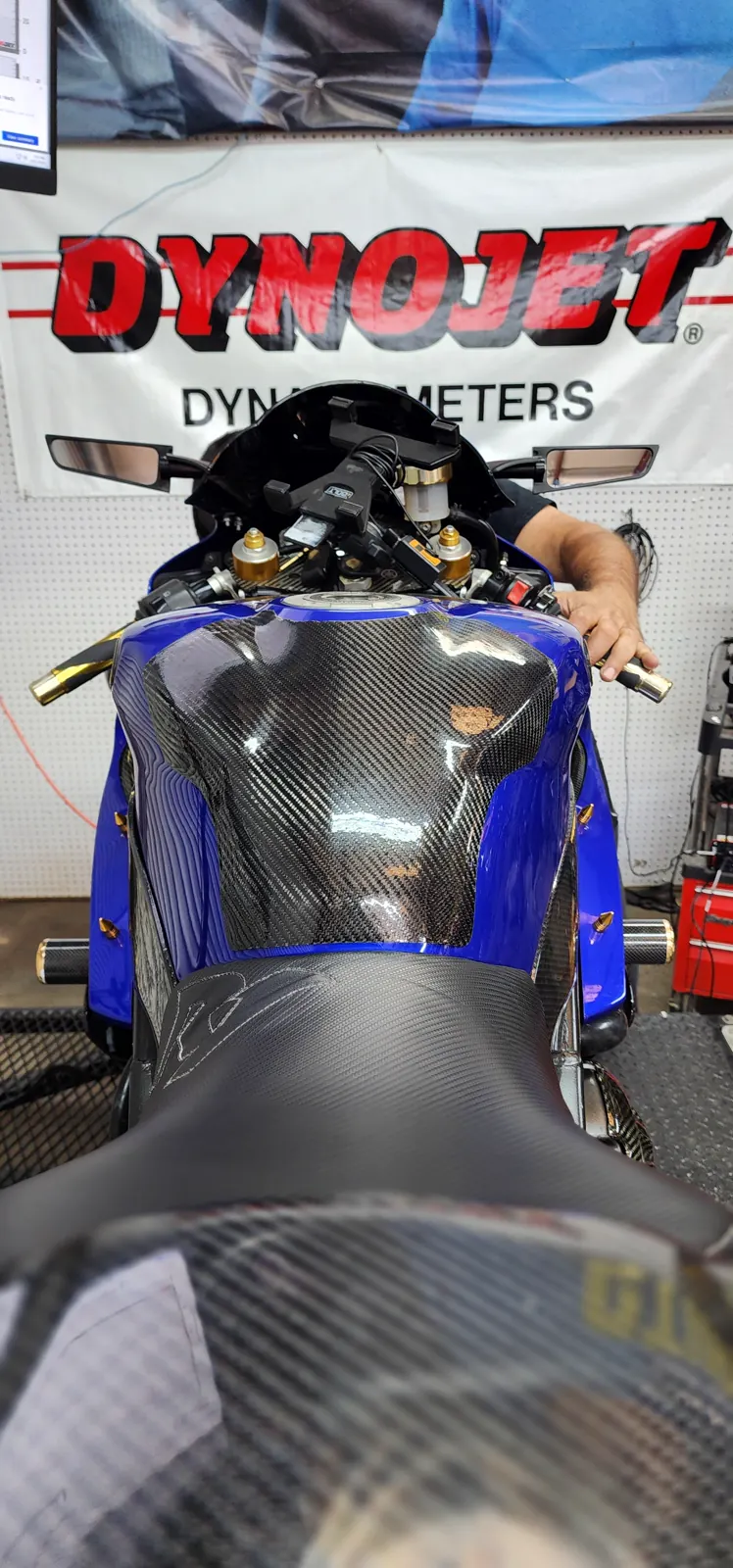
Strip away the jargon and a dyno is a heavy steel drum set in the floor. We strap your bike down, the rear tire sits on that drum, and you spin it. The drum pushes back. The machine measures how hard your rear wheel can turn it, plus how fast the engine is spinning while it does. Put those together and you get torque and horsepower at every point in the rev range, drawn as a line on a screen.
That line is only half the story. A second sensor goes in your exhaust and sniffs what’s coming out the back. That tells us the air-fuel ratio, which is just how much gasoline the engine burns for the air it swallows. Too little fuel and we call it lean. Too much and we call it rich.
Lean feels like a bike that pops on deceleration, runs hot in traffic, hesitates when you crack the throttle, and surges at a steady cruise like somebody’s tapping the grip for you. Rich feels lazy, smells strong and dulls the top end. Neither means anything is broken. It means the computer is following instructions written for a different bike than the one you’re sitting on.
WHY YOUR BIKE CAME LEAN
Factory fuel maps get set to pass emissions and noise rules across a whole country of weather and fuel quality. That’s a lean, conservative starting point on purpose. Add an aftermarket exhaust or a free-flowing filter and the engine now breathes more air than the map ever planned for. Nothing failed. The recipe just got out of date.
Now flip it around and look at it from the bike's side
Your engine has no idea what pipe you bolted on. It only knows what the computer tells it, and the computer reads a table of numbers a factory engineer wrote years ago in another country. Every time you open the throttle, the ECU looks up that table, squirts in a measured amount of fuel and sets the spark timing. It does that thousands of times a minute, faithfully, whether the numbers still fit or not.
So the bike isn’t misbehaving. It’s obeying. Our job is to rewrite the table so the instructions match the hardware, and there are two common ways to do it.
The first is ECU flashing, where we rewrite the factory computer’s own software. That’s the cleanest route when the manufacturer’s ECU can be unlocked, because everything lives in one brain with no extra box under the seat. The second is a piggyback controller like a Power Commander, which sits between the ECU and the injectors and adjusts the signal on its way through. That’s the answer when the factory computer won’t open up, and it’s been the workhorse of this trade for a long time. Either way you land in the same place: a fuel and timing map built for your exact machine.
How we diagnose it before we touch a thing
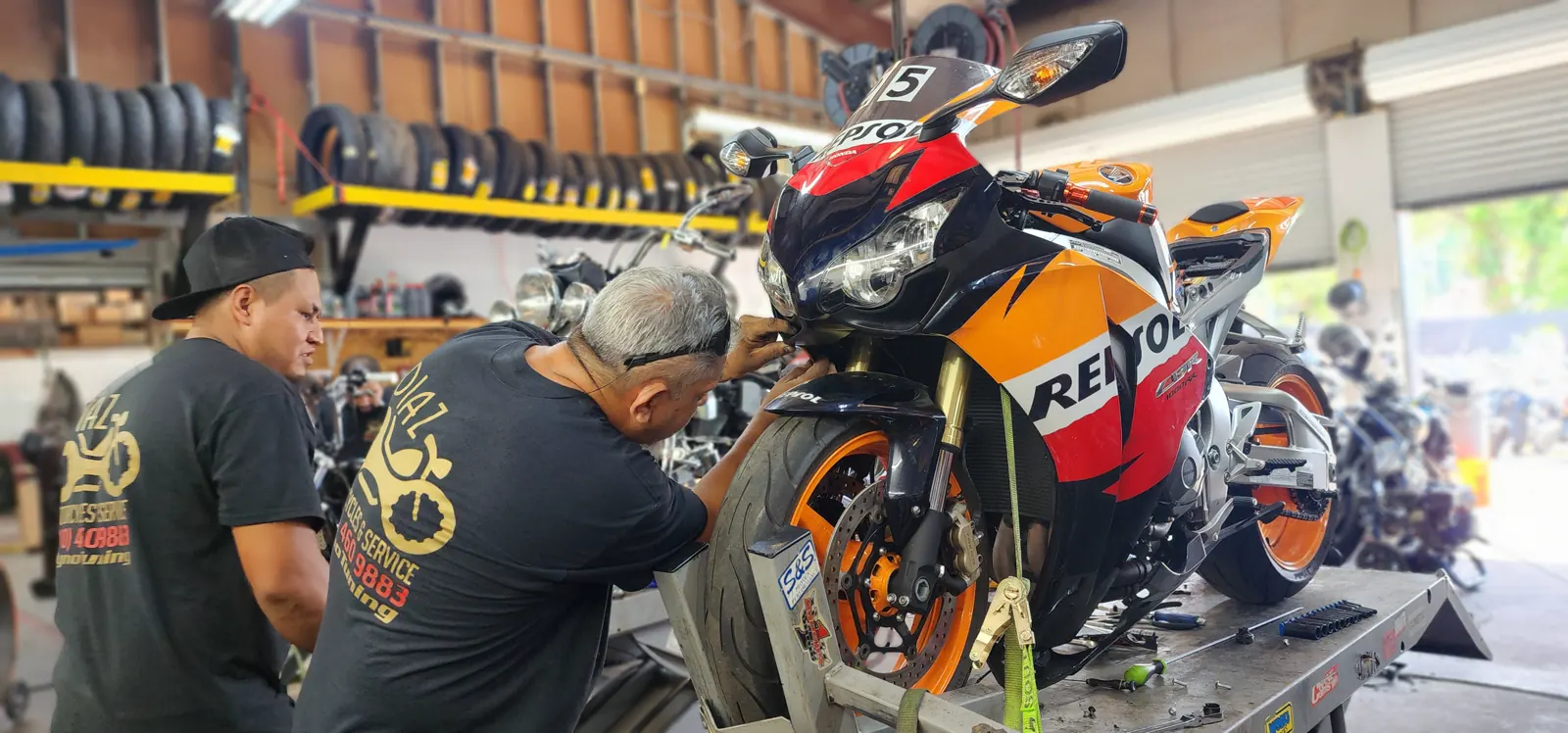
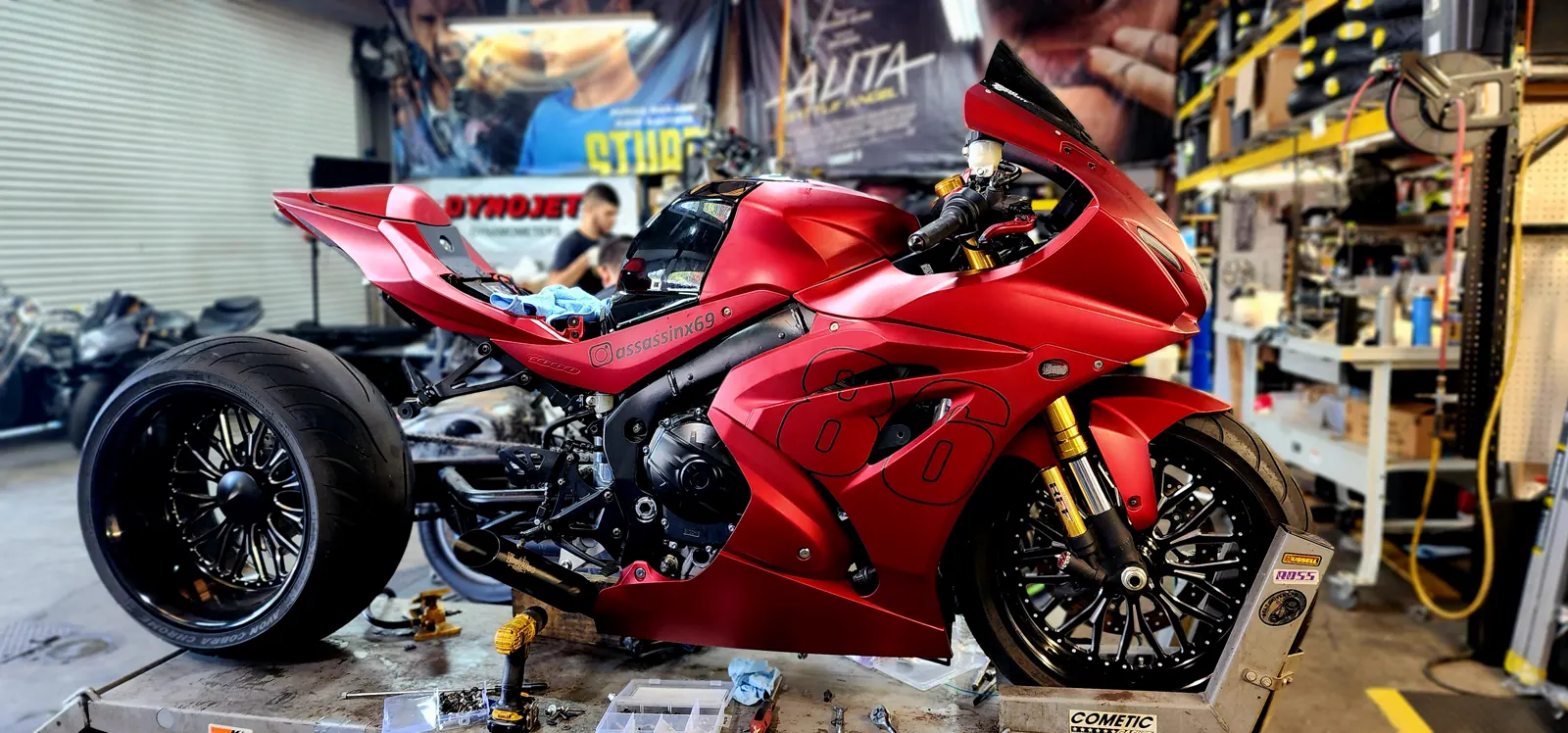
The first appointment isn’t a tune. It’s a conversation and a look. We want to hear how it feels to you, in your words, because you’re the one riding it. Then we go over the bike ourselves, since a tune written on top of a mechanical problem is just an expensive way to hide it.
- We ride it or run it and listen. Flat spots, surging, popping, hard starts and heat all point different directions.
- We pull codes and check what the computer already thinks is wrong. Sometimes the bike has been telling somebody for months.
- We check the basics that fake a fuel problem: spark plugs, air filter, valve clearances, throttle bodies or carbs, intake boots, and any air leak sneaking in where it shouldn’t.
- We look at what’s actually bolted on. Exhaust, filter, cams, gearing, even the tire and its pressure change what the numbers say.
- We put it on the drum for a baseline pull and read the air-fuel line before we change a single value.
That baseline is the honest starting point. It’s also why a real shop won’t quote a tune sight-unseen. Two bikes of the same model can need very different amounts of work, and the difference usually isn’t the tune itself. It’s what we find on the way there. Guessing over the phone means either padding the number for the worst case or lowballing it and calling you later with bad news. We’d rather look first and tell you the truth once.
What the work involves: access, labor and parts
Three things move the size of a job, and only one is the tuning itself.
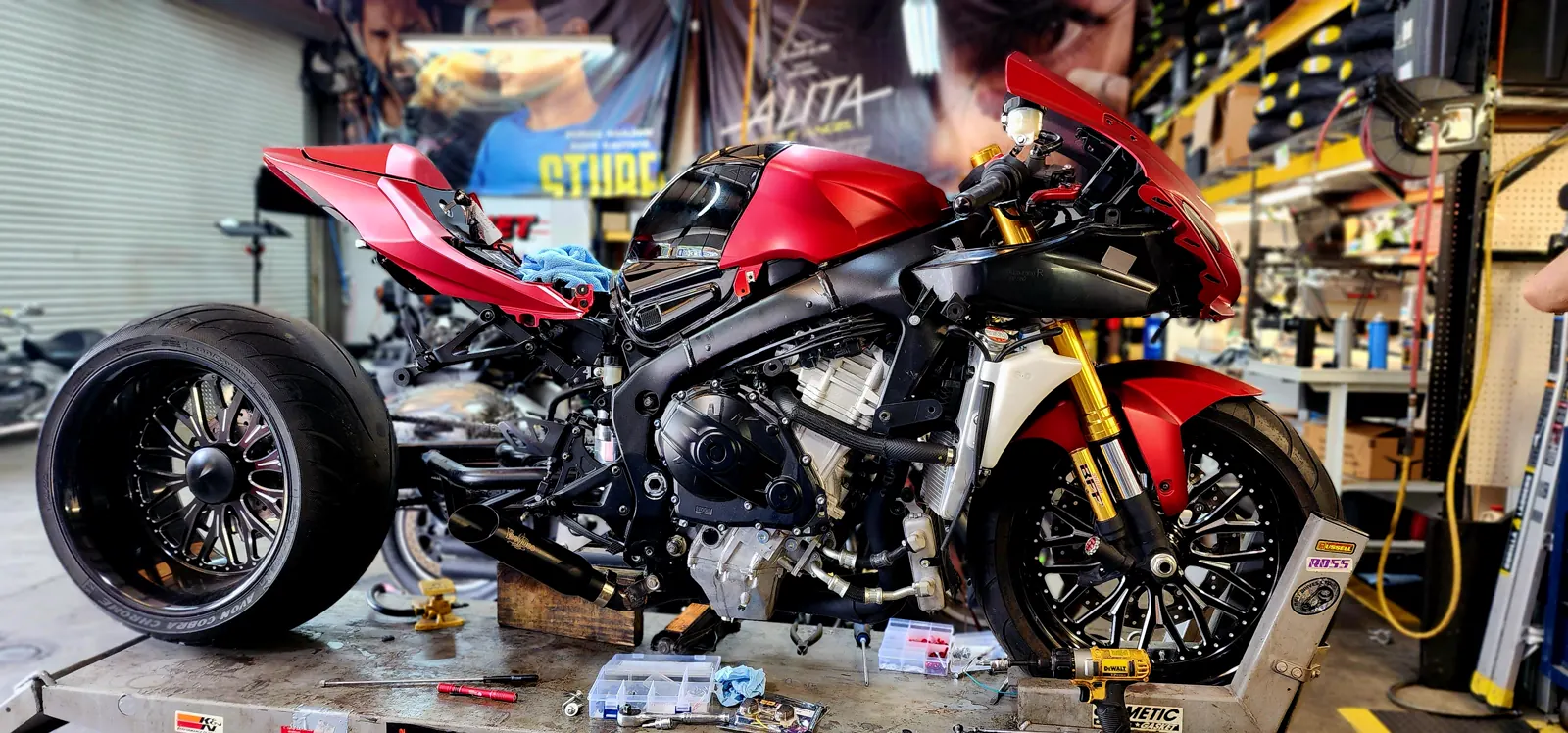
Access is how much of your bike has to come apart before anybody can reach what matters. A naked bike with the ECU under the seat is quick. A full-fairing sportbike or a dressed bagger means panels, a seat, a tank lift, maybe a subframe, and every step takes time going on as well as coming off. Same tune, very different afternoon.
Labor is dyno time. A tune isn’t one pull. It’s a pull, a change, another pull, another change, until the line is smooth everywhere you actually ride, not just at wide-open throttle. Cruise areas, part-throttle transitions and the first crack off closed throttle take the most patience, because that’s where your real riding life happens.
Parts are whatever the bike needs to hold a tune. Sometimes that’s nothing but plugs. Sometimes it’s a controller, an autotune module, a wideband bung welded into the pipe, or a filter. Now and then the diagnosis turns up something unrelated, like a tired coil or a leaking intake boot. We’ll always call you before we do anything you didn’t say yes to.
If you want the technical side laid out on its own, we wrote up what that service actually involves in a separate post, and you can also see what we take care of here on our tuning page.
Why East Cobb bikes come to us with the same story
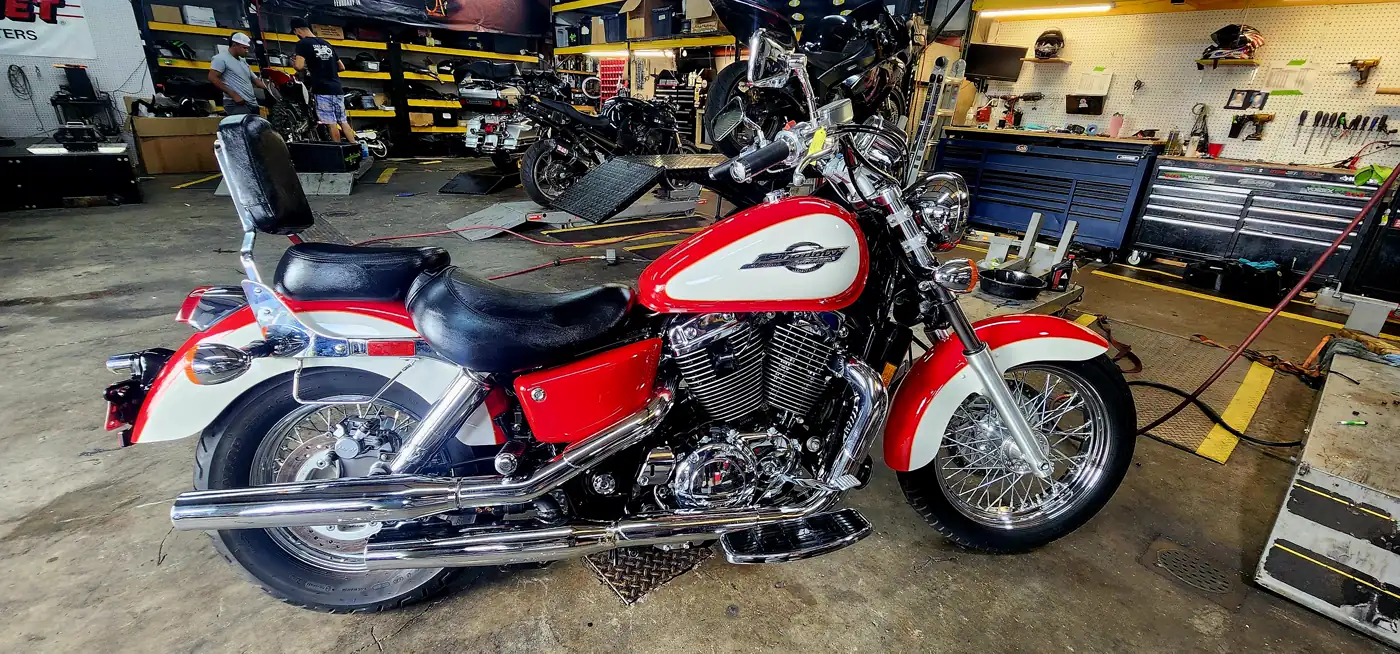
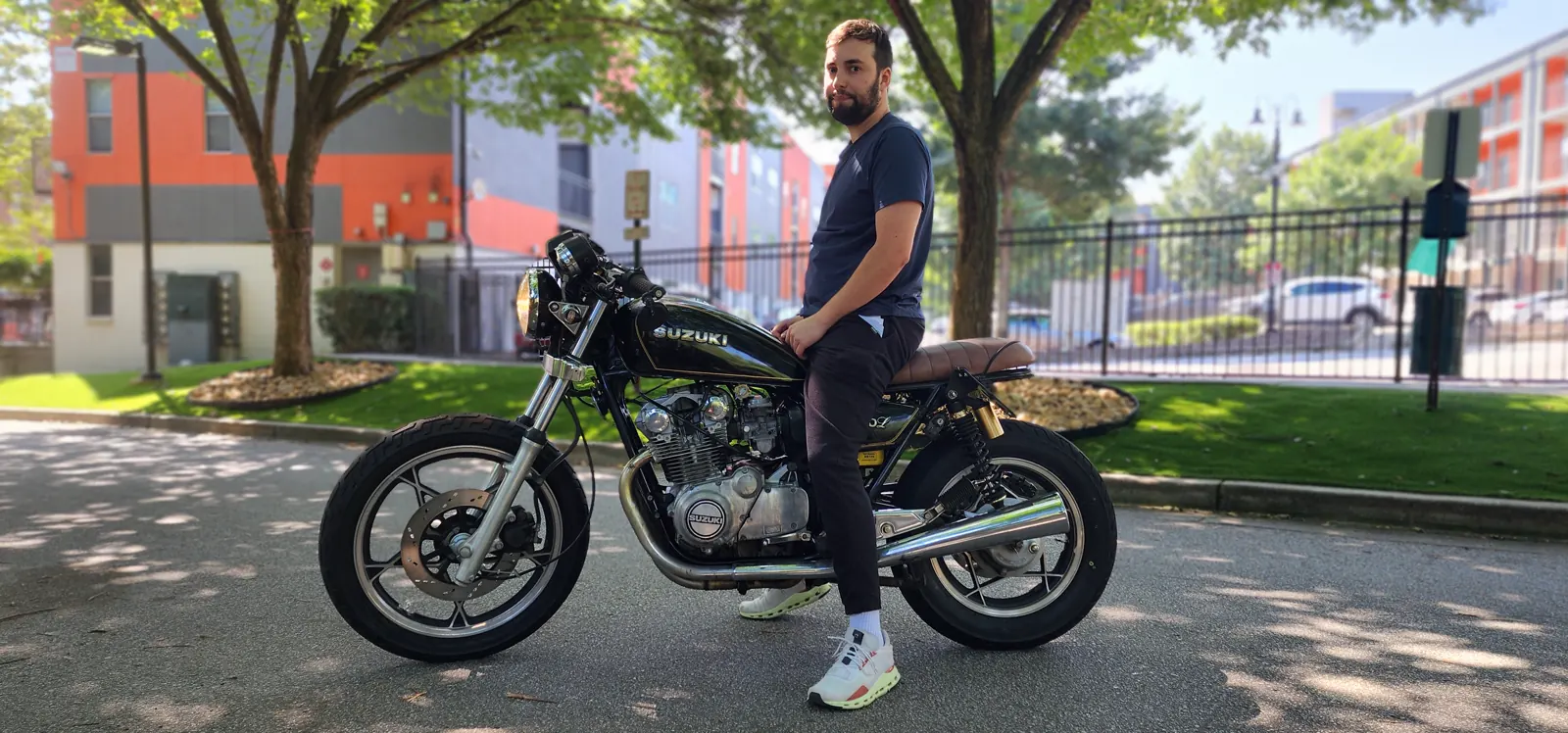
This community rides differently than the rest of the metro. East Cobb bikes are garage-kept, low-mileage and loved. Half the garages between Indian Hills and East Hampton hold a Harley next to a BMW next to somebody’s old air-cooled project, and those bikes come out on Saturday mornings, not Tuesday commutes. Great for paint. Rough on fuel systems.
A bike that sits gets varnish in the fuel, a tired battery and a cranky first ten minutes. Then the owner adds a slip-on because it sounded good, and the map drifts further off. By spring it stumbles pulling out of a driveway in Holly Springs Crossing and the rider assumes the engine is getting old. It isn’t. It’s hungry and confused.
Pavement plays a part too. Sewell Mill Road is a creek-crossing arterial with patched sections and steep creek-bottom dips, and a snatchy off-idle response feels awful there, because you’re on and off the throttle right where a bad map is worst. Smooth that out and the road stops being work. Same story on the shaded stretches near the Chattahoochee River National Recreation Area, where wet leaves and shade moisture linger and you want a predictable throttle, not a twitchy one.
Then there’s the fun part. Sandy Plains Road up through Post Oak Tritt and Trickum Road is the easiest way northeast out of the suburbs toward Woodstock, and that’s where our tuning customers really feel it. A bike that holds a steady cruise and picks up cleanly on the roll-on turns that ride into something you look forward to all week.
We’re right here in it, too. The shop sits in East Cobb, about two to five miles and under fifteen minutes from most of the community, roughly ten minutes from the Johnson Ferry and Lower Roswell hub. If you can get to Atlanta Country Club, you can get to us without crossing the county line or losing your whole morning.
There's a detail in all this that changes how you'll ride out of here
Most people think a tune is about peak power. Not really. The headline number is the smallest part of what you’ll notice. You feel it first at the bottom of the rev range and in the transitions, because that’s where a stock map fights hardest with aftermarket parts.
So the change shows up in ordinary moments. The bike pulls away from a stop sign without that half-second of nothing. Steady throttle stays steady instead of hunting. Roll-ons in third get crisp. The engine runs cooler in traffic on Roswell Road because it isn’t starving for fuel. Fuel range often improves a little, which nobody expects. Friends we’ve helped describe it the same way: the bike finally woke up in a good mood.
If you want the specifics, we broke down the full rundown on it gain by gain. And the questions we get here are almost word for word the ones we hear from riders over in Douglasville, which tells you it’s a bike thing, not a neighborhood thing.
How to avoid surprises, no matter who does the work
- Ask to see the before-and-after graph. Any shop with a real dyno can show you both lines on one screen.
- Ask whether they flash the factory ECU or fit a controller, and why they picked that path for your bike.
- Ask what happens if they find something mechanical mid-job. The right answer is a phone call, not a decision made for you.
- Bring the parts history. Every pipe, filter, cam and sprocket change matters, even the one from three owners ago.
- Book the diagnosis and the tune as two steps. That’s how you get a firm number instead of a guess.
One more practical note: keep your paperwork tidy. Registration and title questions run through the Georgia Department of Revenue, and if you’re the sort who rides beyond the state line a few times a year, the American Motorcyclist Association is a decent resource for road and rights news.
What you ride away with
The end of a tune is not a receipt. It’s a printed graph of your bike, a map saved under your name, and a machine that does exactly what your wrist asks. That’s the whole point. You paid attention to your bike, and now it pays attention back.
Winter is the smart season for this, by the way. December through February is when garage bikes sit anyway, so that’s our window for tuning, restoration and engine work, and a pre-season once-over in January or February means you’re ready the first warm Saturday instead of three weekends after it.
And if you’re still gathering information, that’s fine. Text us a photo of your bike and a list of what’s on it. We’ll tell you honestly what a tune would involve and whether you even need one. Some bikes don’t, and we’d rather say so.
Questions East Cobb riders ask us
Is a tune mostly parts or mostly labor?
For most bikes it’s mostly labor. The tuning itself is dyno time and a tech reading numbers, pull after pull, until the map is right everywhere you ride. Parts only enter the picture when your bike needs a controller, a wideband bung, plugs or a filter to hold the tune properly.
Does the type of bike change the work?
It changes it a lot. A big V-twin bagger, a four-cylinder sportbike and an older carbureted machine all take different approaches and different amounts of time. Access matters too, since a full-fairing bike has to come apart before anyone can reach the important bits. Same service, very different afternoon.
What happens if you find something else wrong?
We stop and call you. If a coil is tired or an intake boot is leaking, tuning around it would just paper over the problem, so we’d rather tell you what we found and let you decide. Nothing gets done that you didn’t approve first.
How do I avoid surprises?
Split it into two steps. Let us diagnose the bike first, then get a firm plan for the tune based on what’s actually there. Bring the modification history if you have it, and ask to see the baseline graph. Once we’ve looked at the bike, the answer stops being a guess.
What makes one tuning job bigger than another?
Three things: how much has to come off to reach the computer and the exhaust, how many dyno passes it takes to smooth out the whole rev range, and whether any hardware needs to be added or repaired first. The tuning cost East Cobb riders end up with tracks those three variables, not the badge on the tank.
Do I need a tune if my bike is stock?
Often not, and we’ll say so. Stock bikes with stock exhausts usually run close enough to what the factory intended. Once you add a pipe, a filter or cams, the factory map stops matching the hardware, and that’s when a tune earns its keep.
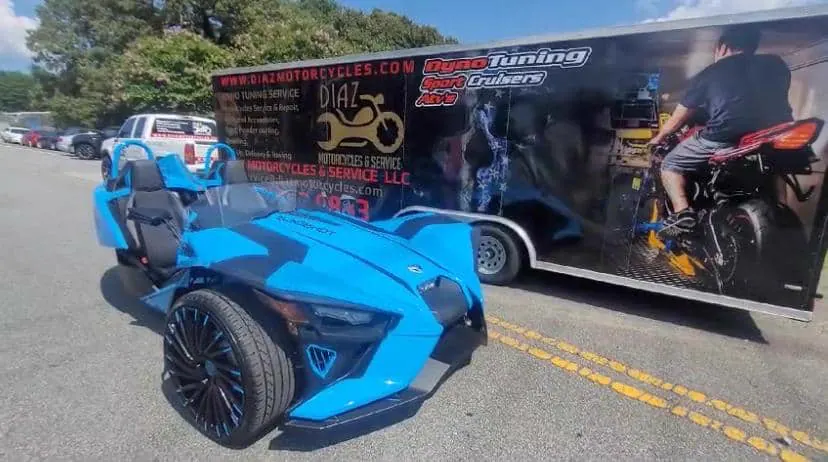
We’re based right here in East Cobb and we take care of riders all across the north metro. That includes Marietta, Roswell, Sandy Springs, Kennesaw, Woodstock, Smyrna, Vinings, Alpharetta, Dunwoody, Canton, Acworth and Atlanta. Plenty of folks ride in for a Saturday morning appointment, and if a bike isn’t running well enough to ride, the trailer comes to you instead.
TEXT US A PHOTO OF YOUR BIKE
If your bike surges at a steady cruise or feels flat off idle, we can help, and we’ll explain every step in plain English before you commit to anything. We’re in East Cobb, we tune on our own dyno, and we work on every make in your garage. Text us a photo of your bike and what’s bolted to it, and we’ll tell you straight whether a tune is the right call.
470-460-9883Diaz Motorcycles and Service, LLC · 847 Barnes Mill Road, Marietta, GA 30062