Chrome Pitting in Peachtree City: Why Georgia Humidity Eats Your Chrome, and How to Stop It
Those little rust freckles on your pipes and bars aren't your fault — they're the climate. Here's what causes chrome pitting, how to fix it, and how to keep it from coming back.
You noticed it on a Saturday, didn’t you. Tiny rust-colored freckles creeping across the chrome pipe, or a rough, cloudy patch on the handlebars that won’t wipe away no matter how hard you scrub. That’s chrome pitting, and here in Peachtree City it’s almost never your fault. It’s Georgia’s humidity, our hard water, and time all ganging up on the metal. The good news: it’s fixable, and it’s very preventable once you understand what’s happening.
First, take a breath. Pitting looks scary because it feels like the chrome is rotting from the inside out. In the early stages, it isn’t. It’s surface corrosion that started small and got ignored. Catch it early and it polishes out. Let it sit for a few Georgia summers and it digs in. So let’s walk through why it happens, what to do about it, and how to keep your PTC bike from getting the freckles in the first place.
What chrome pitting actually is
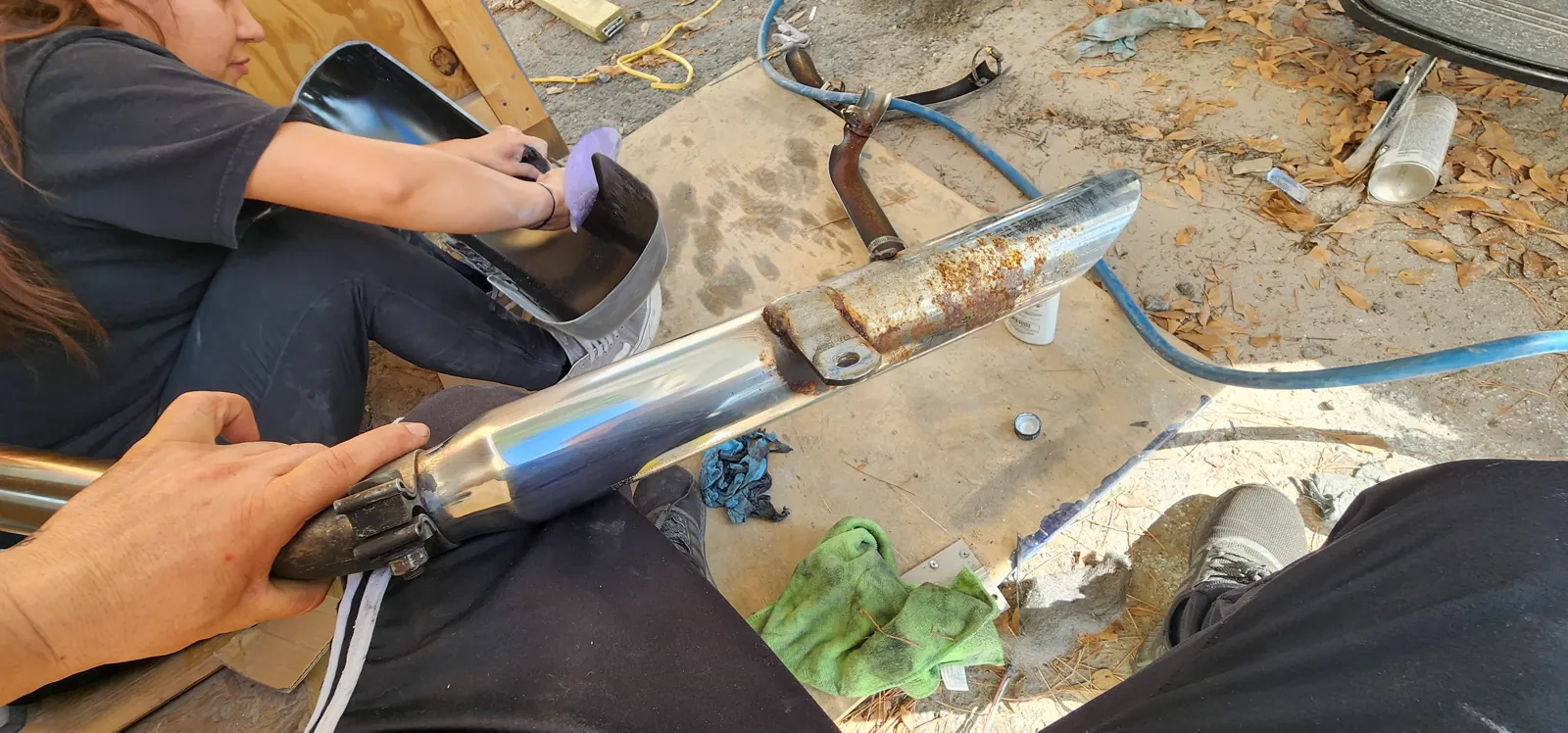
Chrome isn’t solid metal all the way through. It’s a thin, shiny plating layered over steel underneath. That plating is what gives you the mirror shine. But it’s also microscopically porous, which means moisture and salts can sneak through the tiniest gaps and reach the steel below. When they do, the steel starts to rust from underneath, and the rust pushes up through the plating as little pits and freckles.
So when you see pitting, you’re not looking at dirty chrome. You’re looking at corrosion coming up from below the surface. That’s the key thing to understand, because it changes everything about how you fix it. You can’t just scrub harder. You have to stop the rust and lift what’s already there without tearing through the plating that’s still good.
Why Peachtree City is rough on chrome
Here’s the local truth. Georgia’s climate is basically a chrome-corrosion machine, and PTC sits right in the thick of it. Our summers run 90-plus degrees with heavy humidity, so the air itself holds moisture against the metal for hours at a time. That thin film of damp is all corrosion needs to get started, especially on a bike that cooled down sweaty and got parked without a wipe-down.
Then there’s our hard water. Rinse a bike in a driveway off Robinson Road and let it air-dry in the sun, and the water evaporates but the minerals stay behind as chalky spots. Those deposits trap moisture against the chrome and speed up the pitting. Add spring pollen, which turns mildly acidic when it gets damp and sits, and you’ve got three attackers working on your pipes at once.
THE SWEATY-PARK TRAP
The worst thing for chrome is a hot ride followed by a park in a humid garage with no wipe-down. Condensation forms as the metal cools, and it just sits there overnight. A 30-second wipe when you get home does more good than you’d believe.
Living at 15 miles per hour has a hidden upside here, by the way. Because so many short PTC trips happen by golf cart, the motorcycle usually stays garaged and low-mileage. That’s great for the paint. But a stored bike still breathes the same humid air, and a bike that sits untouched for weeks can quietly pit while you’re not looking. Storage helps, but it isn’t a force field.
How we fix pitting that's already there
Now the part you came for. Early, light pitting is genuinely fixable. We start by cleaning the chrome down completely, then work the affected areas by hand with the right polish and pad to lift the surface corrosion and level the freckles. Done carefully, mild pitting disappears and the mirror shine comes right back. It takes patience and a light touch, not brute force, because the goal is to save the plating that’s still good.
Deeper pitting is a more honest conversation. Once corrosion has eaten through the plating and dug real craters into the steel, polishing alone won’t fully erase it. We can dramatically improve the look and stop the spread, but chrome that’s pitted all the way through eventually needs re-plating to be perfect again. We’ll tell you which camp your parts fall into after we see them, instead of promising a miracle and handing you a letdown.
Pitting caught in its first season polishes out. Pitting ignored for three summers digs into the steel. Time is the whole game with chrome.
This is exactly why we look before we quote. A pipe with light surface freckles and a pipe with deep craters need different work and different expectations. We’d rather show you the parts under a good light and tell you the truth than guess over the phone. That honesty is a big piece of what separates a real shop from a quick one.
How to keep it from coming back
Fixing pitting is only half the win. The other half is making sure it doesn’t return the moment the bike sits through another muggy PTC summer. The great news is that prevention is simple and cheap compared to correction. It’s mostly about not letting moisture sit on bare chrome, and it becomes a habit fast.
Here’s the routine we give every PTC rider who wants to keep their chrome mirror-clean through Georgia’s worst months. None of it is hard. It just has to actually happen, not live in your head as a good intention.
- Dry the bike by hand after every wash — never let hard water air-dry and leave mineral spots on chrome.
- Wipe the chrome down after a ride when it’s parked hot, so cooling condensation doesn’t sit overnight.
- Keep a chrome polish and protectant on the chrome — a sealed surface fights off moisture far longer than bare metal.
- Store the bike in a dry garage and consider a moisture absorber or dehumidifier in the muggiest months.
- Catch new freckles early — a five-minute polish at the first spot beats a full correction after a season.
- Get a full detail before winter storage so the chrome goes into the off-season sealed, not exposed.
That last point matters more than most riders realize. A bike that sits all winter with sealed, protected chrome comes out in March looking sharp. A bike that goes into storage with bare, spotted chrome comes out with fresh pitting, because it spent three months breathing humid garage air with nothing between the metal and the moisture. The off-season is when pitting quietly wins if you let it.
Protection is the real fix
When we detail a bike, we don’t just polish the chrome and hand it back naked. We seal it, because sealed chrome is chrome that shrugs off Georgia. The same idea applies to the paint, which is why a lot of PTC riders go a step further and add a ceramic coating to the finish while they’re at it. If you’re weighing that, here’s how ceramic stacks up against wax.
Think of protection as insurance against the climate. You already paid good money for that chrome, whether it’s stock pipes or a full custom cruiser build. A little protection now keeps it from turning into a re-plating bill later. In a humid state like ours, sealed metal isn’t a luxury. It’s just smart ownership.
And the same care applies to a bike that only comes out on weekends. Because so many PTC errands happen by cart, your motorcycle can sit for weeks between rides, quietly breathing humid garage air. A sealed, protected bike handles that downtime just fine. A bare, spotted one uses it to pit. The less you ride in a given stretch, the more that protection is doing its job while you’re not looking.
You don't even have to leave the driveway
Now the PTC-specific part. Our shop is up in East Cobb, about an hour north via GA-74 and I-85. But Peachtree City has no motorcycle shop of its own, so any chrome work means leaving town regardless. Here’s the twist: with us, it can mean leaving your driveway and going nowhere. We’ll bring a truck to your home in Kedron or Braelinn, take the bike, do the chrome and paint work right, and bring it back.
For a city that lives at 15 miles per hour and values its time, that’s the way to do it. No trailer, no fighting I-285 with a bike strapped down, no lost Saturday. You send a few photos of the pitting, we tell you honestly whether it polishes out or needs more, and we handle the logistics. That’s the whole idea behind detailing that comes to you.
SNAP A PHOTO IN GOOD LIGHT
Chrome pitting shows up best in bright, angled light. Get the sun on the freckled area and send us a close shot — we can usually tell you right away whether it’s a polish job or a re-plate conversation.
So don’t let those little rust freckles ruin the way you feel about your bike. They’re the climate, not you, and they’re fixable when you catch them early. Text us a couple of close-up photos of the chrome and how the bike is stored, and we’ll give you a straight read on what it takes to bring it back and keep it that way. Your pipes deserve to throw that mirror shine again.
Questions Peachtree City riders ask us
Is chrome pitting my fault?
Almost never. In Peachtree City it’s mostly Georgia’s humidity, our hard water, and spring pollen working on the metal over time. Chrome plating is slightly porous, so moisture reaches the steel underneath and rust pushes up as pits. A wipe-down habit helps, but the climate does most of the damage.
Can pitting be polished out completely?
Light, early pitting usually polishes out and the mirror shine comes back. Deep pitting that has eaten through the plating into the steel can be improved a lot but often needs re-plating to be perfect. We look at the parts under good light and tell you honestly which camp yours fall into.
Why does my chrome pit if the bike stays garaged?
A garage helps, but it isn’t sealed against Georgia humidity. Damp air still reaches bare chrome, and a bike parked hot forms condensation as it cools. Storing dry, wiping down after rides, and keeping the chrome sealed with protectant does far more than the garage alone.
How do I stop pitting from coming back?
Dry the bike by hand after washes, wipe chrome down after hot rides, keep a protectant on the metal, store it dry, and catch new freckles early. Get a full detail before winter storage so the chrome goes into the off-season sealed rather than exposed to months of humid air.
Do I have to trailer my bike to Marietta to fix it?
No. We bring a truck to your Peachtree City driveway, take the bike, do the work, and return it. PTC has no motorcycle shop of its own, so you’d travel for this anyway — this way you don’t travel at all. Snap a few chrome photos and we’ll tell you what it needs first.
Is sealing chrome really necessary in Georgia?
Yes. Bare chrome corrodes fast in our humidity, while sealed chrome shrugs it off for far longer. A little protection now is cheap next to a re-plating bill later. In a humid state, keeping the metal sealed is just smart ownership, not a luxury add-on.
We bring chrome and detailing work to riders across Peachtree City, though our shop sits up in East Cobb. We care for bikes in Kedron Hills, Smokerise Plantation, and Cardiff Park, and humidity beats chrome the same whether you park near Lake Kedron, out by Flat Creek Nature Area, or off Peachtree Parkway. We also reach Tyrone, Fayetteville, Senoia, Sharpsburg, Newnan, and Fairburn, so the whole south-metro side gets pitting caught early.
TEXT US A CLOSE-UP OF THE CHROME
Caught some rust freckles on your pipes or bars? Text us a couple of close-up photos in good light and tell us how the bike is stored. We’ll give you an honest read on whether it polishes out or needs more — and we’ll bring the truck to your Peachtree City driveway so you never have to trailer it. No guessing, just answers.
470-460-9883Diaz Motorcycles and Service, LLC · 847 Barnes Mill Road, Marietta, GA 30062