Motorcycle Restoration in Roswell: What Your Old Bike Is Really Worth
Why a garage-kept project is worth more than its sticker price, and how we figure the number before you spend a dime.
Plus, most folks think a restoration is a blank check with two wheels attached. Meanwhile, the bike has been sitting in the back of the garage since the kids were small, and nobody wants to hear a scary number. Of course, that fear is exactly why so many good bikes stay parked. In fact, here’s the honest version: motorcycle restoration Roswell riders actually get from us starts with a look and a real conversation, not a guess pulled out of thin air. For example, we figure out what the bike is worth to you first, then what the work costs, and we say both parts out loud.
We get it. In a town like Roswell, that old bike usually came with a story. It was your dad’s, or it’s the first one you ever bought, or it’s been in the family longer than the house. So the question isn’t really “what’s it worth on paper.” The question is what it’s worth to keep. Those are two different numbers, and the second one is the one that matters when you’re standing in the garage looking at it.
Sticker price and real worth are not the same thing
Here’s where a lot of people trip. They punch the make and model into a search bar, see what a clean one sold for, and decide the whole thing based on that. But a private-sale number doesn’t know your bike from a stranger’s. It doesn’t know it was garage-kept in Martin’s Landing for thirty years, or that it’s the exact bike your grandfather rode. Market value is a starting line, not the finish.
Real worth is a mix of three things: what a good example sells for, what the bike means to you, and what it’ll cost to bring it back right. Get those three on the table and the decision gets easy. Skip any one of them and you’re guessing. We’d rather help you do the math than let you talk yourself out of a bike you’ll regret selling. And yes, we’ve watched people regret it. It’s a quiet kind of sad.
Why we look before we ever talk price
A restoration quote from a photo is a fairy tale. Two bikes that look the same in a picture can be a thousand dollars apart once you get the tank off and look inside. One has a little surface rust. The other has a fuel system that turned to varnish and a top end that needs real attention. You can’t tell which is which until somebody who does this every week actually looks.
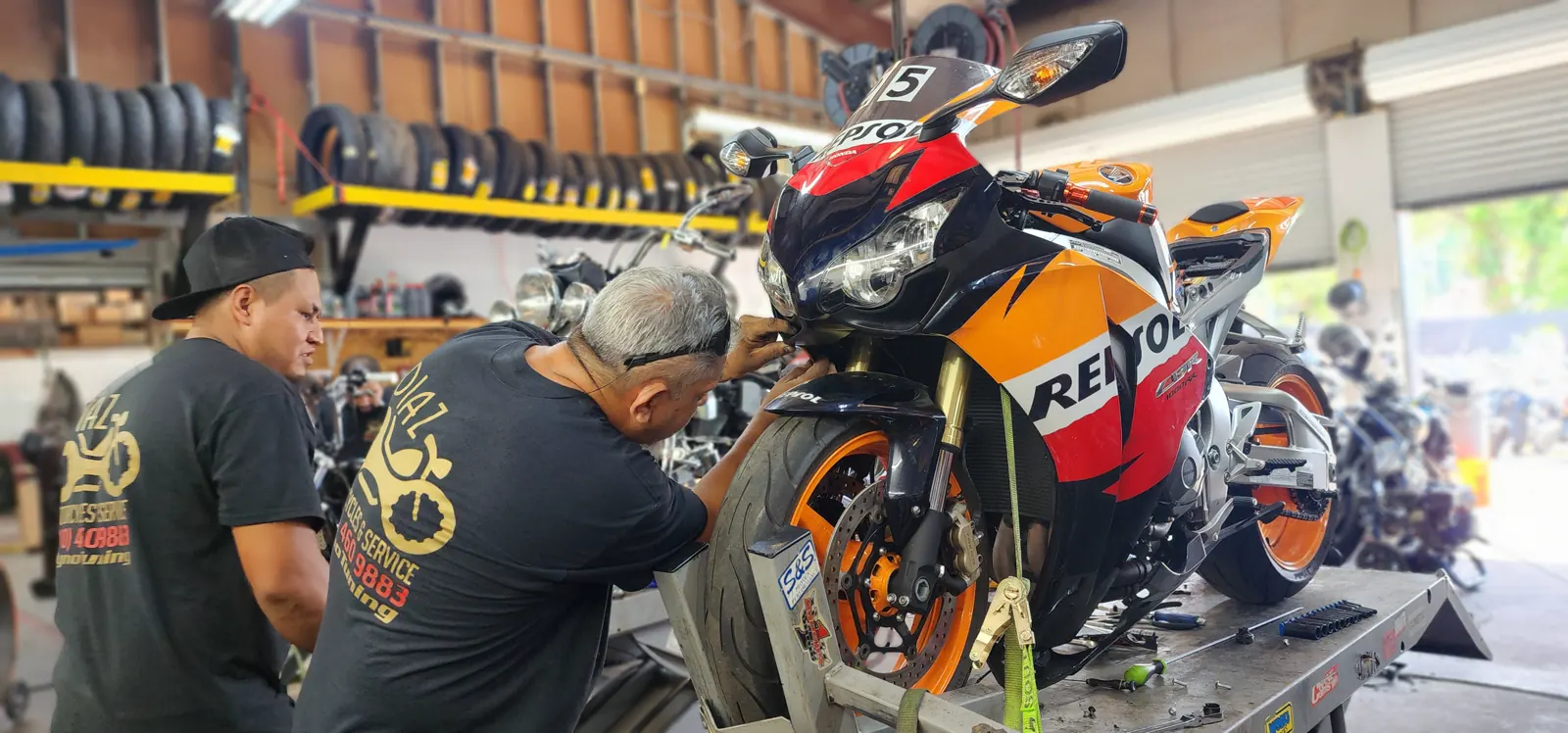
So we look first. We check the engine, the frame, the tank, the wiring, the brakes, and the chrome, and we tell you honestly what’s solid and what’s tired. Then we build the number from what’s really there, not from what we’re scared it might be. That’s the whole reason we never lead with a price over the phone. Here’s the order a good restoration follows once the bike’s in front of us.
- Look it over inch by inch and tell you what’s genuinely worth saving.
- Sort the must-fix safety items from the nice-to-have cosmetic items.
- Price the mechanical work and the finish work as separate lines you can see.
- Show you where original parts matter and where a smart substitute saves real money.
- Give you a plan you can do all at once or in stages, your call, your budget.
Notice that splitting mechanical from cosmetic is its own step. A bike that runs safe but looks rough is a very different bill than one that needs both. Plenty of Roswell owners just want it running and honest first, then handle the paint and chrome later. That’s a smart move, and it’s a big part of what drives the total either way.
The stuff that quietly adds value
A restoration doesn’t just make a bike pretty. Done right, it protects and even lifts what the bike is worth. A buyer, or your own insurance, reads a documented rebuild very differently than a bike that “ran when parked.” Fresh fuel system, sorted electrics, good brakes, real chrome instead of pitted metal, honest paint instead of a rattle-can cover-up. Each piece is money in the bike, not just money spent.
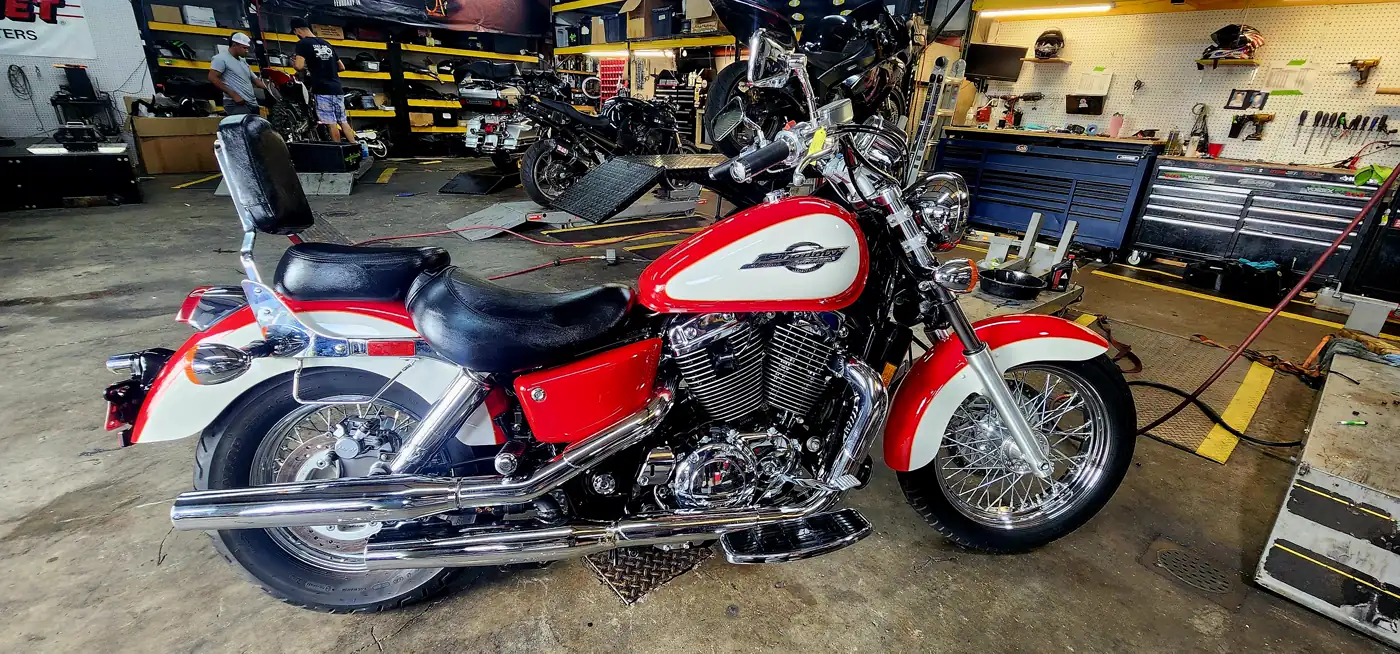
Chrome is the sneaky one here. Pitted, rusted chrome screams neglect from ten feet away, and no wash fixes it, it has to be polished back or re-plated by hand. But bring that chrome back to a real mirror shine and the whole bike jumps a tier in a buyer’s eyes. It’s slow work, and it’s exactly the kind of thing the dealers on Alpharetta Highway don’t do. That’s why proper chrome and paint sit at the heart of a real restoration, not the edge of it.
WORTH KNOWING
Keep every receipt and photo. A documented restoration is worth more than an undocumented one, every single time.
That paper trail is worth more than people think. When it’s time to sell, or hand the bike to a kid, or add it to a policy, a folder of photos and receipts turns “trust me” into proof. Roswell is a proof-over-promises town anyway. Show a buyer the before-and-after and the rebuild receipts and you’ve done ninety percent of the selling before you’ve said a word. It also makes the tire-kickers evaporate, which is a nice bonus.
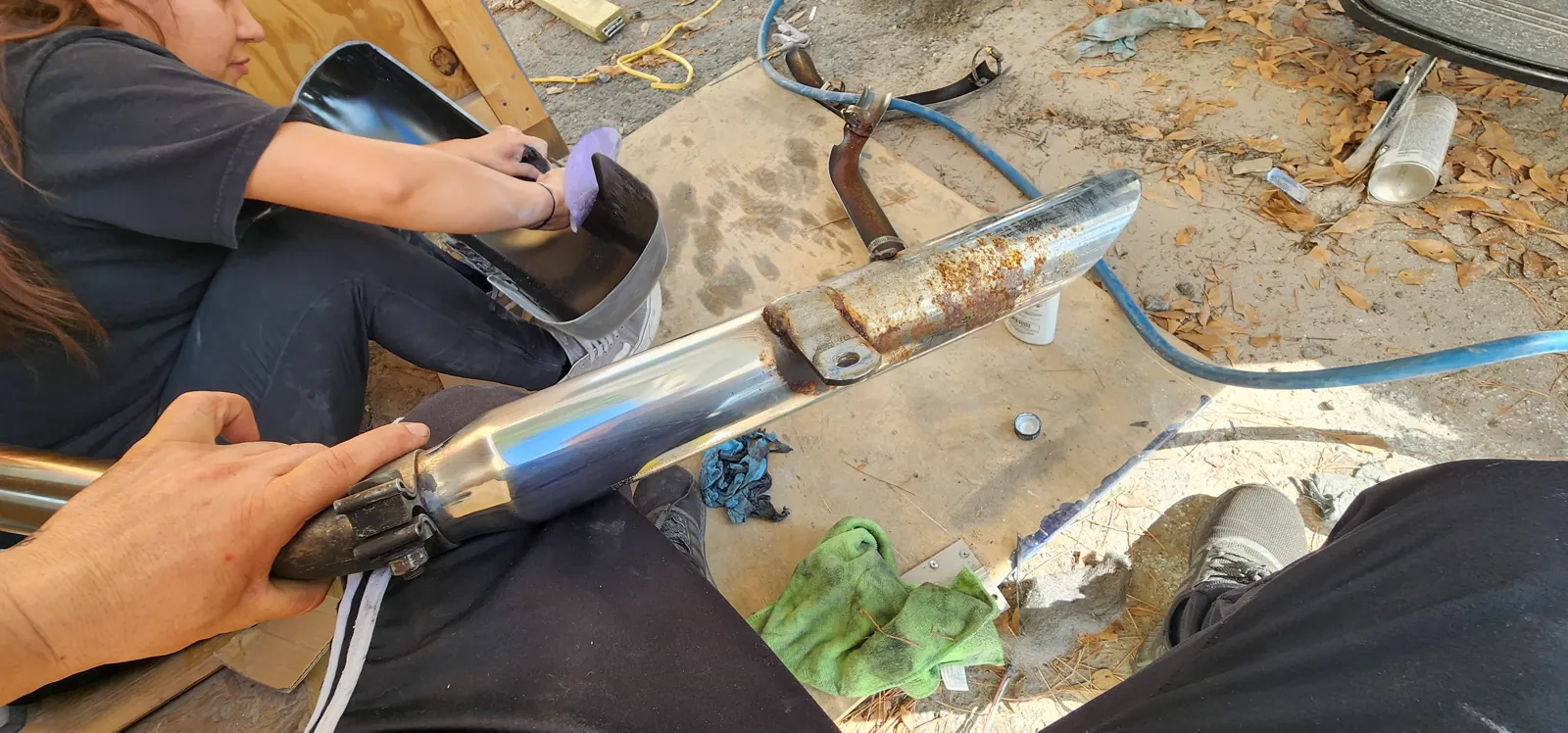
Original, or better-than-new? Your money, your call
There’s a fork in every restoration, and it’s a money fork. Do you keep everything factory-correct, hunting down original parts to match the day it rolled off the line? Or do you build it to be a bike you actually ride, with modern tires, updated electrics, and a few sensible upgrades? Neither answer is wrong. They’re just different budgets and different goals.
Correct-to-factory matters most for a rare collector bike where originality is the value. For a family bike you plan to ride up Willeo Road on a Sunday, better-than-new usually makes more sense and costs less. We’ll tell you honestly which camp your bike falls into. Sometimes the collector answer is the pricier path, and we’ll say so instead of quietly steering you toward the bigger bill.
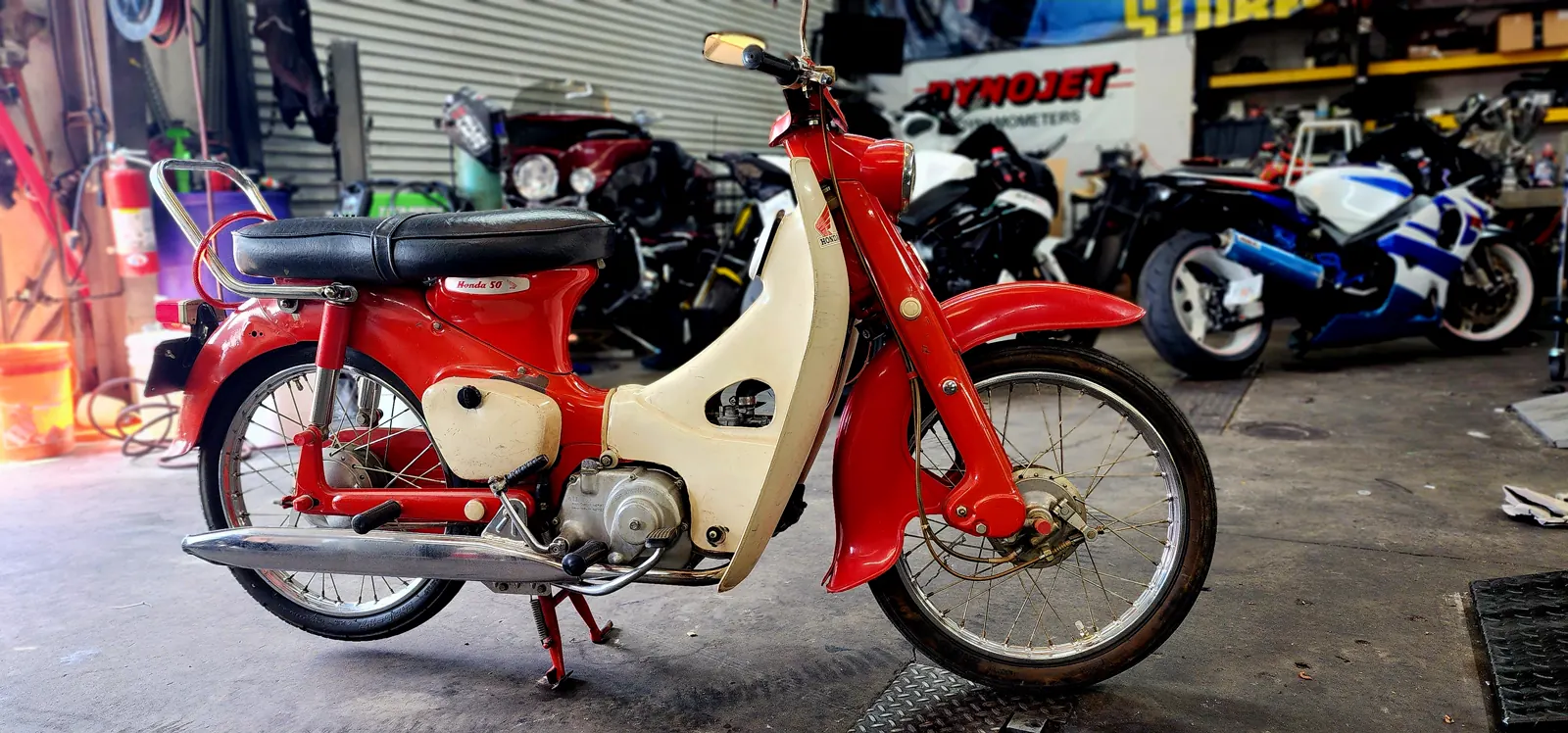
When restoring is the smart money
People assume restoring is always the expensive choice compared to buying something already done. It usually isn’t, once you count what a good finished bike costs and what you’d give up letting yours go. You already own the bike. You already know its history. You’re not inheriting somebody else’s shortcuts. When the numbers are close, the bike you know almost always wins.
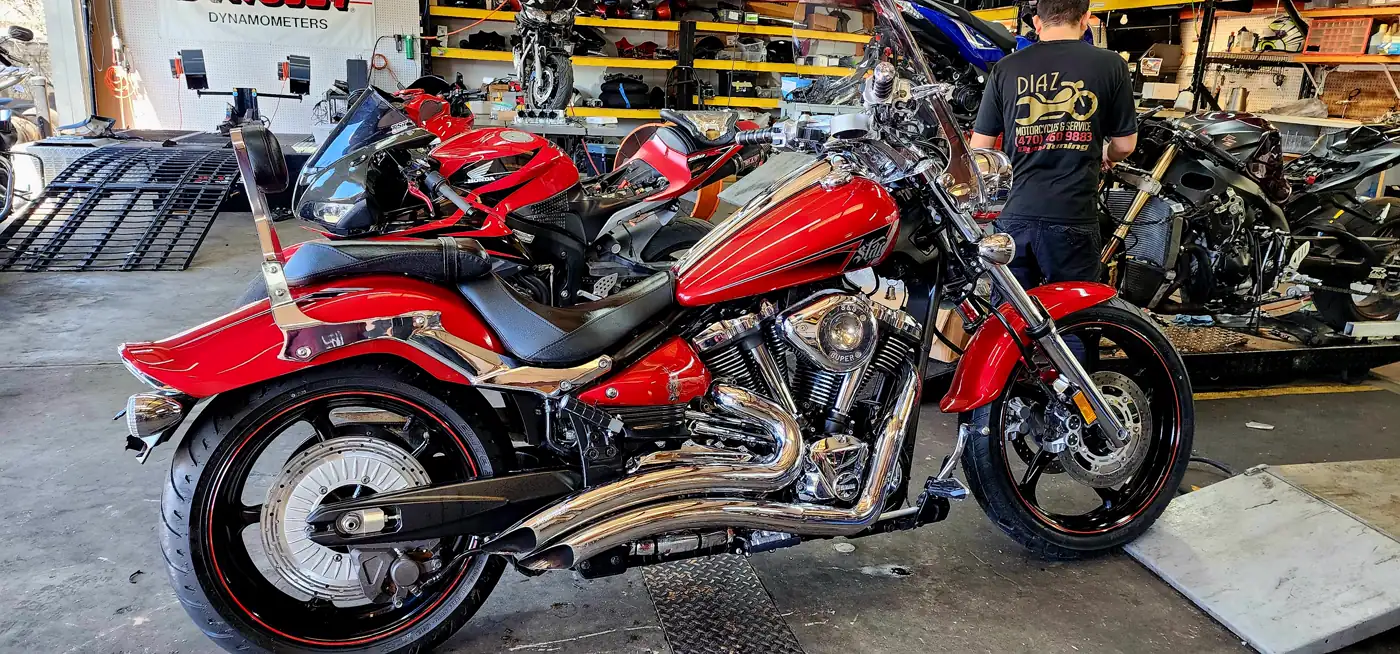
There’s also the math nobody puts on paper: the cost of buying back a bike you sold. We’ve met Roswell riders who let a family bike go, then spent years and real money trying to find the exact one again. Restoring the one you already have skips that whole heartache. It’s not just cheaper on the day, it’s cheaper on the regret, and regret has a way of getting expensive.
- You know the bike’s real history instead of trusting a stranger’s story.
- A staged plan spreads the cost so nothing lands all at once.
- A documented rebuild protects resale and makes insuring it simpler.
- Sentimental bikes almost never come back once they’re gone.
- The finished bike is exactly the one you wanted, not a compromise you settled for.
Still, we won’t pretend every bike pencils out. If yours truly is too far gone to make sense, we’ll tell you that too, and we’ll help you weigh restore against sell like grown-ups. An honest “this one isn’t worth it” is worth more than a shop that says yes to everything and hands you a surprise bill later.
Why Roswell riders cross the river for this
Here’s the local truth. Roswell has plenty of motorcycle shops, but they’re mostly brand dealers on Alpharetta Highway. BMW works on BMWs. Killer Creek works on Harleys. Mountain Motorsports moves new metal. None of that is a knock, it’s just not restoration. Almost nobody over there does full vintage rebuilds, custom paint, and chrome work under one roof.
THE HONEST REASON
We’re one road away. Roswell Road west across the Chattahoochee, and you’re at the shop in East Cobb in about fifteen to twenty minutes.
So a garage-kept project from Horseshoe Bend or a barn-find from Crabapple ends up at one independent that actually does the whole job. And because it’s just across the river in East Cobb, drop-off is easy, and we can arrange transport if the bike doesn’t run yet. You don’t have to figure out how to trailer a dead bike across town. That’s on us. That’s kind of the point of picking the right shop.
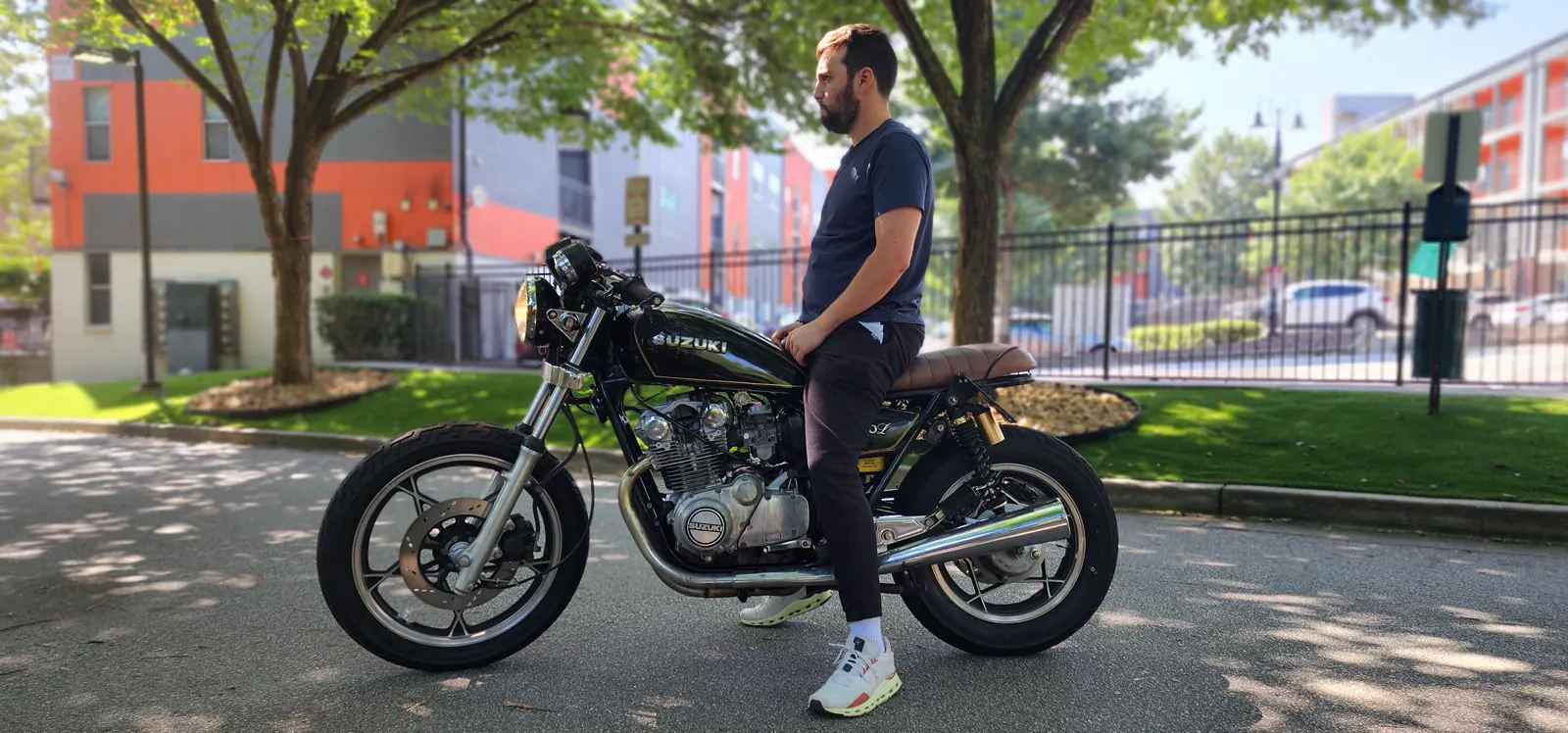
The real payoff isn't the resale number
When it all comes together, sure, the bike is worth more. But that’s not usually why people are grinning in the parking lot. They’re grinning because a bike that sat silent for years just fired up and pulled out under its own power. Because the thing that reminded them of their dad every time they walked past it is finally alive again. That feeling doesn’t show up on any value guide, and it’s the one people actually remember.
The market tells you what a bike sells for. It can't tell you what it's worth to you. That part's your call, and we'll help you make it honestly.
So let’s make the first step easy. Text us a few photos of the bike, tell us its story and where it’s been sitting, and we’ll give you a straight read on what it’d take to bring it back and what that gets you. We’re a short run down Roswell Road, just across the Chattahoochee in East Cobb. No pressure, no sales script, no number until we’ve actually looked.
Questions Roswell riders ask us
Can you tell me what my restoration will cost over the phone?
Not honestly, and we won’t fake it. Two bikes that look identical in photos can be far apart once we get inside them. We look the bike over first, sort what’s really needed from what’s optional, then build a real number. A phone guess only helps us, not you, so we don’t do it.
Is restoring my old bike worth it, or should I just sell it?
It depends on three things: what a finished one sells for, what the bike means to you, and what the work actually costs. We’ll put all three on the table and tell you straight. If it doesn’t pencil out, we’ll say so. Sentimental bikes rarely come back once they’re gone, and that counts too.
Do I have to do the whole restoration at once?
No. Plenty of Roswell owners get the bike running safe and honest first, then handle paint and chrome later. We price the mechanical work and the cosmetic work as separate lines so you can stage it around your budget. Your call, your timeline.
Do you keep bikes factory-original or upgrade them?
Either, depending on your goal. A rare collector bike is usually worth keeping factory-correct because originality is the value. A bike you plan to ride is often better with modern tires, sorted electrics, and a few smart upgrades. We’ll tell you honestly which camp yours falls into.
My bike doesn't run. Can you still get it there?
Yes. We can arrange transport across the river so you don’t have to trailer a dead bike yourself. Roswell to the shop is basically one road, Roswell Road west into East Cobb, and pickup makes the crossing a non-issue. Just send photos to start.
Will a restoration actually add value to the bike?
Done right and documented, yes. Fresh fuel system, sorted electrics, good brakes, real chrome, and honest paint are money in the bike, not just money spent. Keep the receipts and before-and-after photos. A documented rebuild is worth more than an undocumented one every time, and it makes selling far easier.
We take restoration projects from across North Fulton. Riders bring bikes from Historic Roswell and Canton Street, Martin’s Landing, Horseshoe Bend, and East Roswell, plus homes near the Chattahoochee Nature Center on Willeo Road. Whether you’re by Roswell Mill and the Vickery Creek covered bridge or off Holcomb Bridge Road near GA 400, you’re a short run down Roswell Road, just across the river in East Cobb.
TEXT US A PHOTO OF YOUR PROJECT
Want a straight read on what your old bike is really worth and what it’d take to bring it back? Text us a few photos and tell us its story and where it’s been sitting. We’ll give you an honest number before you spend a thing. We’re one road away, down Roswell Road across the Chattahoochee into East Cobb. No pressure, no sales script.
470-460-9883Diaz Motorcycles and Service, LLC · 847 Barnes Mill Road, Marietta, GA 30062