Motorcycle Running Lean Smyrna — Why It Happens
The popping, the heat, the little stumble off idle — here's what's really going on, and what it takes to fix it for good.
Of course, Stand around a parking lot long enough and you’ll hear the warning. Then again, a lean bike is a grenade with the pin half pulled. Even so, ride it one more weekend and you’ll cook a piston. That story gets told so often it starts to feel like a fact, and it pushes good riders into one of two ditches: ignoring the symptom, or panicking and parking the bike. Both are wrong. Meanwhile, the truth is that a motorcycle running lean Smyrna riders roll into the shop every summer is usually a bike that’s been running that way since it left the crate, and the real story is far more boring — and far more fixable — than the legend.
Lean and rich, in plain words
In fact, that said, your engine drinks two things at once: air and fuel. For example, it wants them mixed in a certain ratio. When there’s too much air for the fuel it’s getting, that’s lean. When there’s too much fuel for the air, that’s rich. It’s coffee. Too weak or too strong. No mystery in it.
Lean burns hotter and cleaner. Rich burns cooler and dirtier. After that, Emissions rules push almost every modern bike toward the lean side straight from the factory. What’s more, the map in your ECU wasn’t written to make your bike feel wonderful on Atlanta Road. So and Better yet, it was written to pass a test.
Still, Which brings us to the flip side of the myth. Lean isn’t a countdown timer. Plus, what matters is how lean, and where in the rev range it happens. Of course, mildly lean means a bike that runs warm and feels a little rough. Then again, Badly lean — usually after someone bolts on a slip-on exhaust and skips the tune — means real heat in the top end and pinging under load. Even so, those two situations feel nearly identical from the saddle, and that gap between what you can feel and what’s actually happening is the entire reason the dyno exists.
Lean isn't a death sentence. It's a measurement — and measurements can be corrected.
What it feels like from the seat
Meanwhile, Riders almost never walk in saying the words “air-fuel ratio.” They say the bike feels off, the way you’d describe a friend coming down with something. Here’s the list we hear most.
- In fact, that said, Popping and crackling in the exhaust when you roll off the throttle — the classic one, and the one riders argue about most
- For example, a stumble or flat spot right off idle, like the bike takes a breath before it goes
- Surging at steady throttle, so a relaxed cruise turns into a slow tug-of-war with the right wrist
- Running hotter than it used to, especially sitting still in traffic
- After that, Idle that hangs high after you pull the clutch, then drifts down slowly
- Hard starts when the engine is already warm
What’s more, Any one of those can have another explanation. Together, they paint a clear picture. So and Better yet, and they get louder in summer, because hot air is thinner air, which pushes an already-lean bike further the same direction. Still, your bike isn’t being dramatic in July. It’s doing math.
The real causes, most common first
There’s no single villain here. Plus, there’s a short list of usual suspects, and they show up in a pretty predictable order once you’ve had enough bikes on the rollers.
1. The factory map
Say it again because it’s the biggest one. Of course, your bike was calibrated to clear an emissions standard, not to feel smooth at part throttle. Then again, Decel popping on a bone-stock modern bike is normal, expected, and not a sign anything is broken.
2. Aftermarket parts with no tune behind them
Even so, a new exhaust lets more air out. A high-flow filter lets more air in. The ECU doesn’t know either of those things happened, so it keeps delivering the same fuel it always did. More air plus the same fuel equals leaner. This is the most common self-inflicted version, and it’s an easy one to solve.
3. An air leak somewhere it shouldn't be
A cracked intake boot, a split vacuum line, a tired exhaust gasket. Air sneaks in past the sensors, so the engine gets air the computer never counted. Rubber gets hard and brittle after enough Georgia summers, and old rubber is the quietest troublemaker in the whole garage.
4. Fuel that can't get through
Dirty injectors, a clogged filter, a fuel pump that’s lost its push. The bike wants fuel, asks for it, and simply doesn’t receive it. This one shows up most on bikes that sat through a winter with old ethanol fuel in the tank, which is common for anyone parking outside near Market Village with no garage to work in.
5. Maintenance that quietly drifted
Valve clearances tighten over time, and a tight valve doesn’t seal right, so the engine’s breathing changes. None of this is exciting. All of it matters more than the internet says it does.
QUICK GUT CHECK
Mild popping on decel with normal engine temps? Ride it. Pinging or rattling under hard throttle, temps climbing in traffic, or a bike that dies at stoplights? That one gets a look before the next ride.
So is it actually safe to ride?
Straight answer, because you deserve one. A motorcycle running lean Smyrna style — short commutes, city traffic, mostly stock — is usually safe to keep riding. A little decel pop and a slightly warm engine won’t hurt anything over a normal week. Keep riding, get it on the schedule, sleep fine.
There’s a shorter list where the answer flips. If you hear a metallic rattle or ping when you’re accelerating hard, that’s detonation, and detonation is the thing that actually damages engines. If the temp gauge climbs when you’re stopped, or the bike stalls in traffic, don’t gamble with it. Sitting in stop-and-go on South Cobb Drive is the worst place for an engine already fighting heat, and Georgia doesn’t allow lane splitting, so there’s no escape hatch when traffic locks up. Your bike bakes in the same spot a car does.
This is the point where a lot of riders make the wrong call. They hear “lean,” they read a forum thread, and they buy a fuel controller off the internet and plug it in with a downloaded map. That map was built for someone else’s bike, someone else’s exhaust, and someone else’s air. Sometimes it helps. Often it just moves the problem to a different part of the rev range, where it’s harder to feel and easier to ignore.
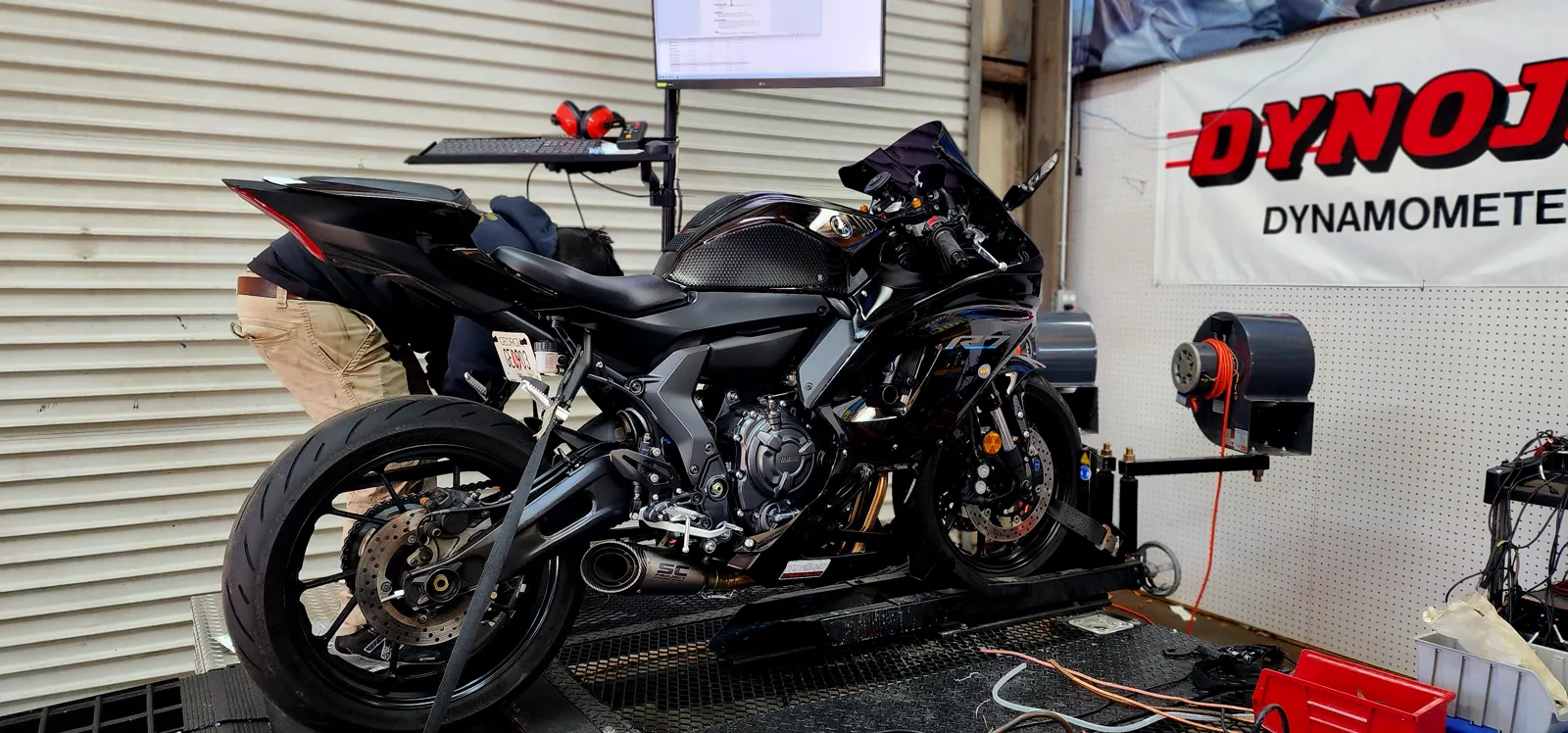
What a dyno actually measures
A dyno is a heavy roller the rear wheel spins against. The roller pushes back, which loads the engine exactly like a hill or a hard pull would while the bike stays in the bay. Two numbers come out. One is power at the rear wheel through the rev range. The other is the air-fuel ratio, read live by a wideband sensor in the exhaust.
That second number is the one that matters for you. It turns “the bike feels weird around four grand” into a line on a screen showing exactly where the mixture goes thin and by how much. For the deeper version of how the equipment works, Dynojet’s dyno center lays it out well. The short version: a dyno replaces opinions with a graph.
From there it’s correction work. On many bikes we flash the ECU directly and rewrite the fueling in the factory computer. On others we add a Power Commander, which sits between the ECU and the injectors and adds or removes fuel cell by cell. Either way the bike goes back on the rollers and gets checked again. That’s our dyno tuning services in one sentence: measure, correct, measure again.
The process, start to finish
- We run it first and listen to what you’ve been describing
- Baseline pull with the sensor in the pipe, recording power and mixture together
- Health check on the boring stuff — leaks, filter, plugs, fuel delivery
- Flash the ECU or set up the Power Commander across throttle position and rpm
- Re-run, re-read, refine, repeat until the mixture line sits where it belongs
- Final pass with you there if you want to watch, and a printout you keep
Step three is the one people skip, and it’s the one that saves the day. A tune laid over an air leak is a bandage on a splinter. If you’re curious how a full session is put together, here’s what the work covers, and if you’re budgeting your time and parts around it, here’s what changes the total.
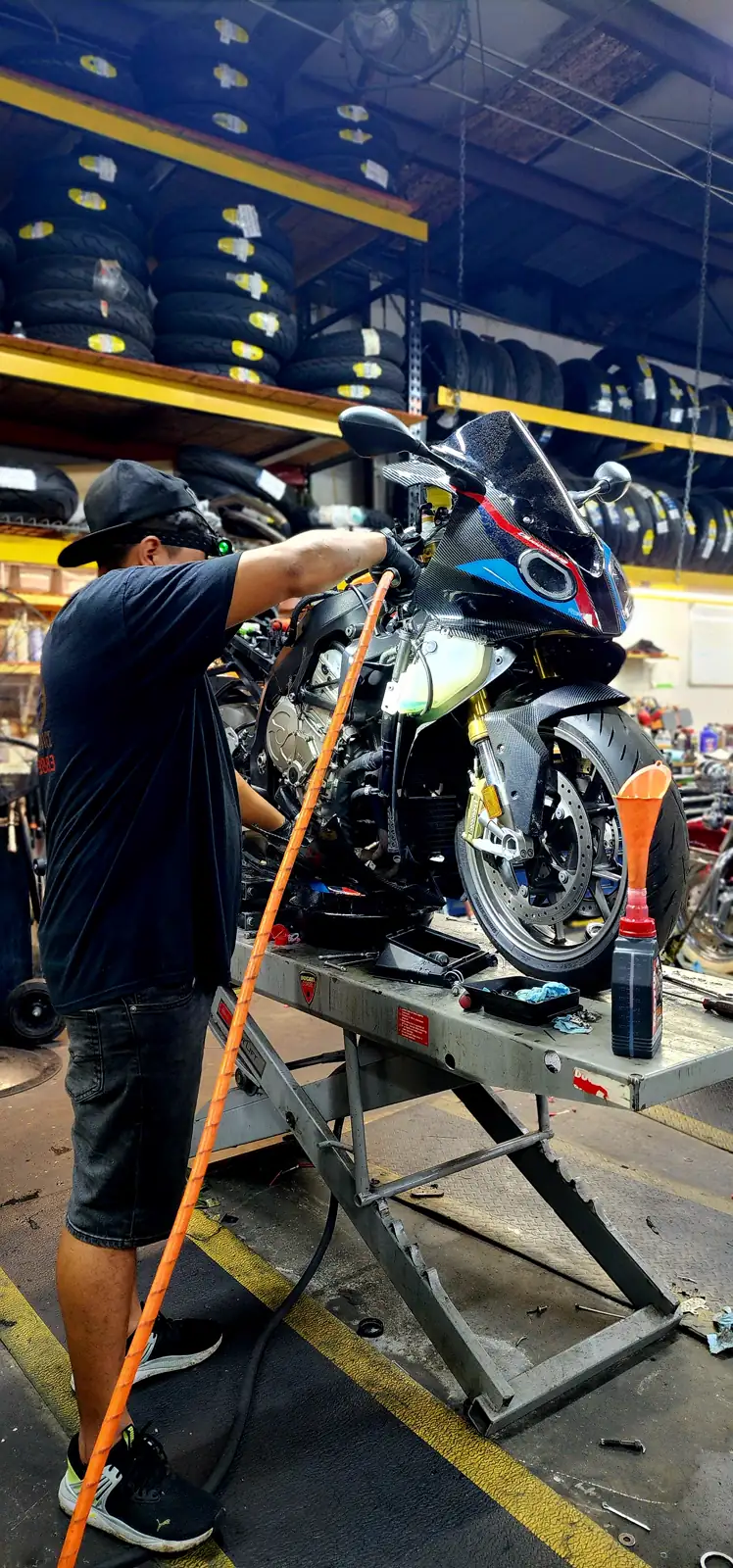
How to tell a good tuning shop from a fast one
Not every place that owns a dyno does real custom mapping on it. Some load a canned file, do one pull, and hand you a graph. Here’s what separates the real thing.
- The shop asks about your exhaust, filter, gearing and how you actually ride before touching anything
- They run a baseline before they change a single setting
- They show you the air-fuel line, not just the power line
- They check for leaks and fuel delivery problems first, and tell you if the bike isn’t ready
- They explain what they changed in words you can repeat to a friend
Around Cobb Parkway you’ve got plenty of multi-line dealers, and most will sell you parts happily and then send the mapping somewhere else. Independents exist too — The Motor Cycle Shop LLC over on Shallowford Road in Marietta is one, though that’s the far side of the county from you. The dyno being in-house is the difference. When the machine lives in the same building as the technician, your bike gets checked again instead of scheduled again.
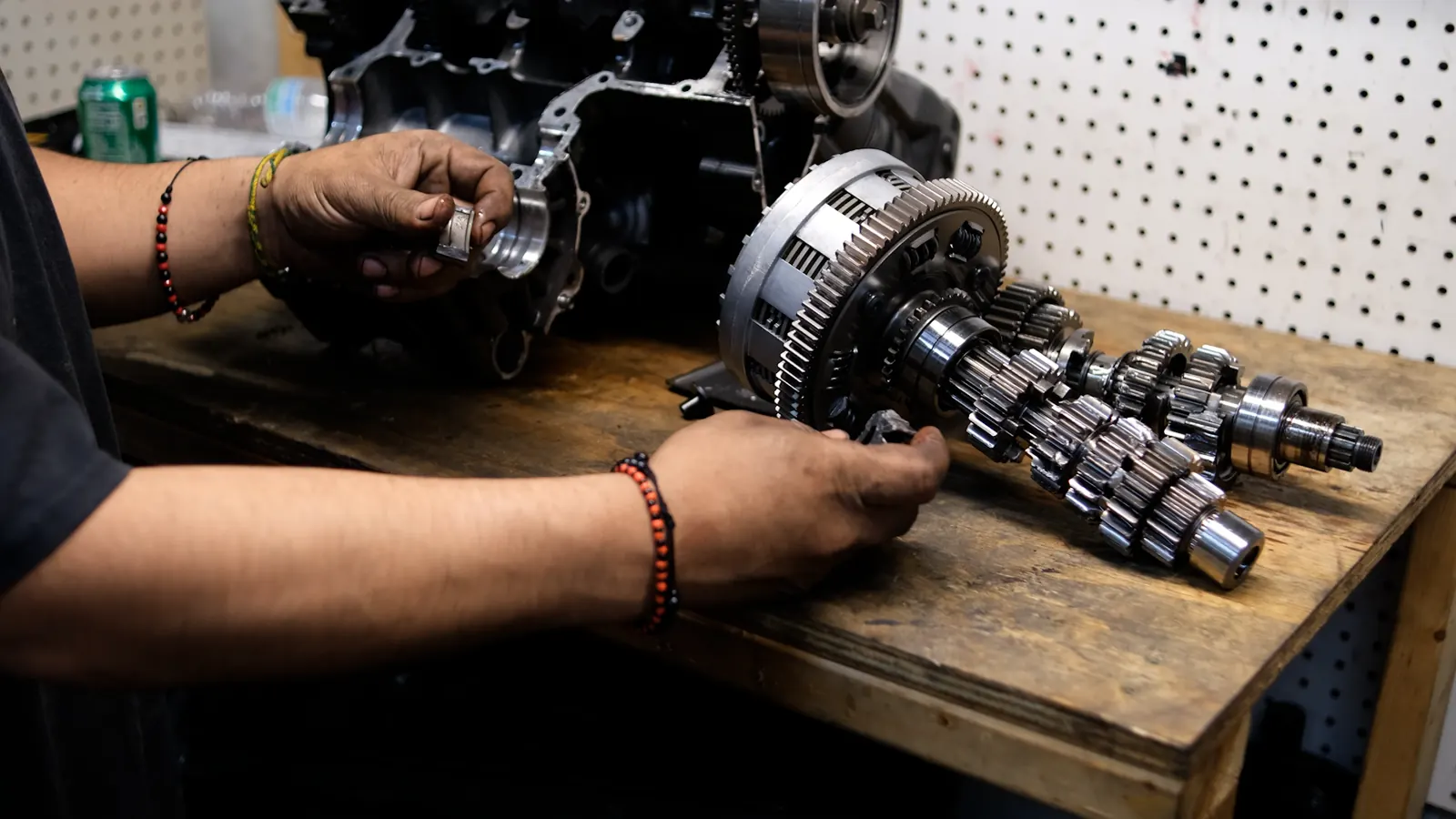
Why Smyrna bikes end up here
Here’s the thing we wish every rider knew a season earlier. Smyrna riding is short-trip riding, and short trips are hard on a fuel system in a way nobody warns you about. A fifteen-minute hop from a townhome near Market Village to a desk in Cumberland never gets the engine fully hot. Moisture stays in the oil, the exhaust corrodes from the inside, and the battery never quite catches up. Layer a slightly lean factory map on top of that and the bike feels worse every month without one thing ever actually breaking.
Storage plays into it too. Newer builds around the Sherwood Road area have real garages, plenty of original 1950s ranch houses have a carport, and the townhomes near Windy Hill and Cumberland have an open lot and nothing else. A bike that lives outside all winter comes back to spring with old fuel and a tired pump, which reads exactly like a lean condition on the road.
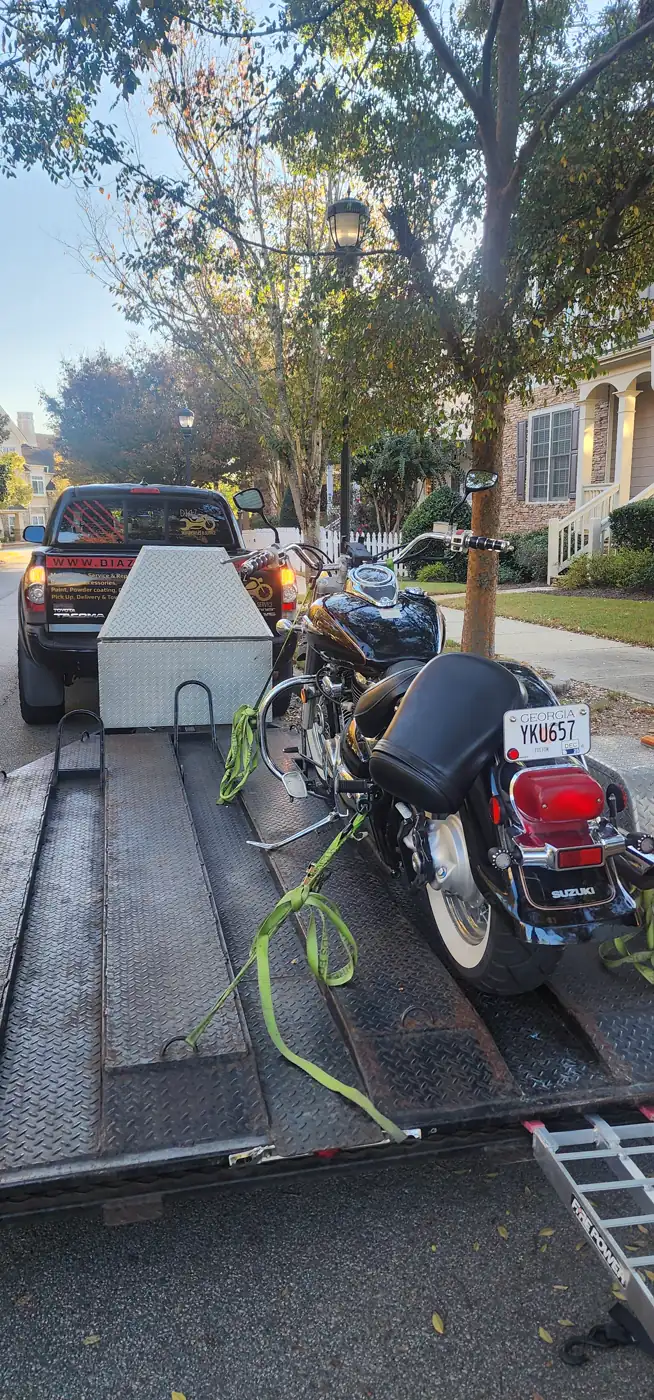
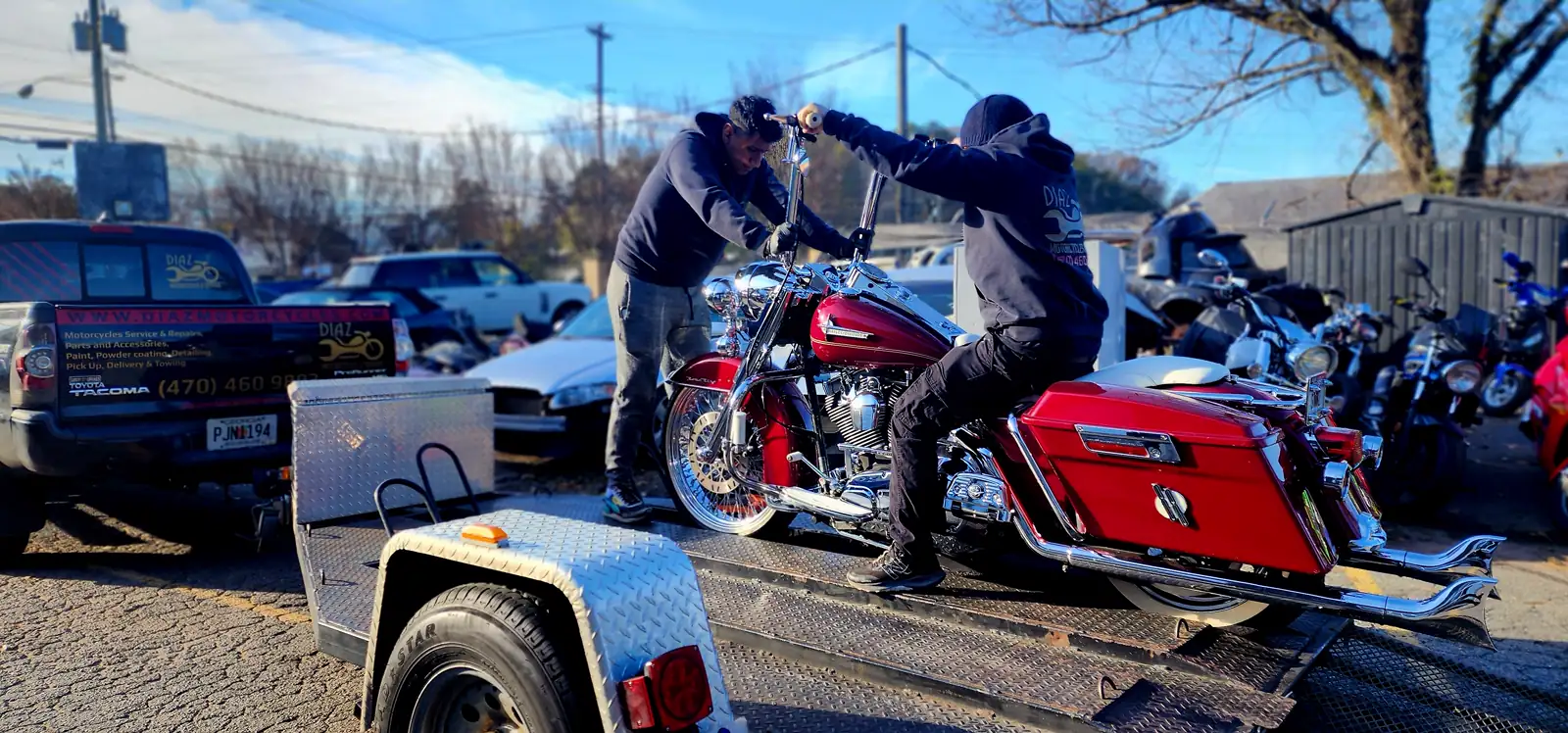
And there’s the geography problem. There’s no full-service motorcycle shop inside Smyrna city limits, so getting a bike looked at means the drive — roughly eleven miles from Market Village, twenty-two to twenty-eight minutes, usually South Cobb Drive or Atlanta Road north into Marietta and then Roswell Road east. That’s why we pick bikes up and bring them back. A packed calendar shouldn’t be the reason a good bike stays broken.
The payoff is the fun part, because a properly tuned bike makes the pretty rides better. Atlanta Road toward Vinings is tree-canopied and low-speed, running past the cobblestone streets and boutique storefronts of the Historic Vinings District, and that’s exactly the ride where a lean stumble at small throttle openings drives you crazy. Same story parking near Jonquil City Park, or riding out to the Mavell Road Trailhead where the Silver Comet Trail begins its 61.5-mile run toward Cedartown. Smyrna is the trail’s eastern origin, and a fine place to stand around and lie about how fast you got there.
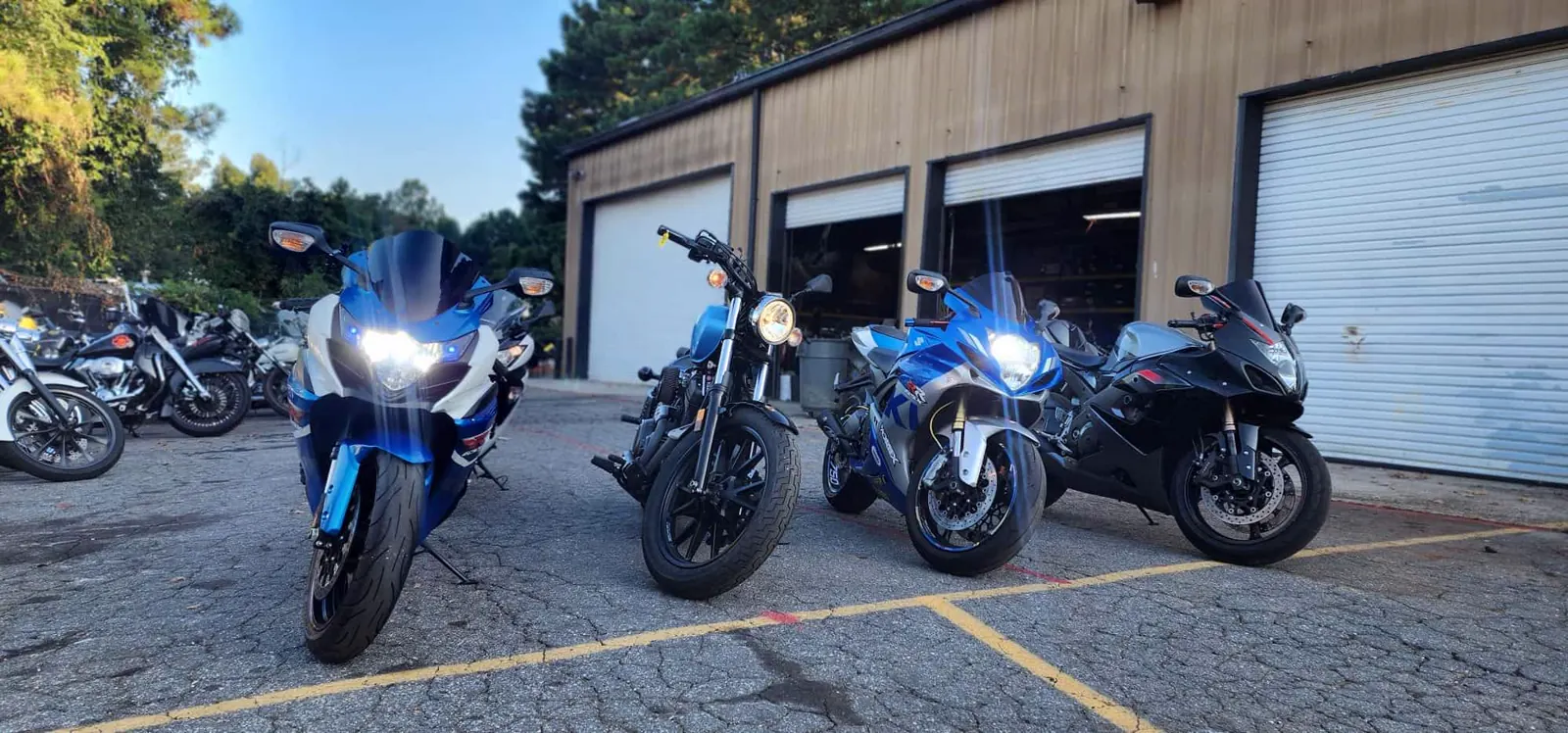
What it feels like when it's right
The change surprises people. Riders expect a tune to be about power, and power does come, but that’s not what they mention first. What they mention is that the bike stopped arguing with them. Throttle response gets crisp instead of vague, the surge at steady cruise disappears, and heat drops in traffic. The little hesitation off a light goes away too — the one you’d stopped noticing because you’d trained yourself around it.
That smoothness is a safety feature, not a luxury. A predictable throttle in stop-and-go traffic is one less thing competing for your attention, which is the same reason we point riders toward MSF rider courses even after twenty years in the saddle. Riding well is a skill you keep sharpening. The bike should be helping, not fighting.
So if you’ve been carrying around the parking-lot version of this story, put it down. Lean is common, lean is measurable, and lean is fixable in an afternoon on the rollers. Smyrna isn’t alone in it either — it’s close to what Acworth riders run into, just with more traffic and shorter commutes. Get the number, correct the map, and go enjoy the season you paid for.
Questions Smyrna riders ask us
Could my popping and hesitation be something other than a lean condition?
Absolutely, and it’s worth ruling out. Old spark plugs, a clogged air filter, a weak battery, a sticky throttle body or a failing sensor can all mimic the same symptoms. That’s exactly why we check the basics before we touch a fuel map. Guessing is the expensive part, not the fix.
Is it safe to keep riding while I wait for an appointment?
In most cases, yes. Light popping on deceleration with normal engine temperatures is fine for daily riding. Stop riding it and call us if you hear metallic pinging under hard acceleration, if temps climb while you sit in traffic, or if the bike stalls at stoplights.
What actually causes a bike to run lean?
Most often it’s the factory emissions map, which is set slightly lean on purpose. After that comes an aftermarket exhaust or filter installed without a tune, then air leaks from cracked boots or vacuum lines, then fuel delivery problems like clogged injectors or a tired pump. Heat and thin summer air push all of it further in the same direction.
Can I fix this myself with a fuel controller and a downloaded map?
You can install one, sure. The catch is that a downloaded map was built for a different bike with different parts, so it’s a guess wearing a lab coat. Without a wideband sensor reading your actual mixture, you can’t tell whether you fixed the problem or just moved it somewhere you can’t feel it.
Will it get worse if I leave it alone?
A stock bike that’s mildly lean usually stays about where it is, though summer heat makes it feel worse. What does get worse is a real fault behind it, like a growing air leak or a fuel pump losing pressure. Those trend downhill, so a quick diagnostic is the cheap insurance.
Do I have to bring the bike to you in Marietta?
Nope. We pick up and deliver throughout Smyrna, which is the whole point given there’s no full-service shop inside city limits. Text us your address and a couple of times that work and we’ll handle the round trip.
We take care of riders across Smyrna and the surrounding metro, including Marietta, Vinings, Mableton and Austell just west and south, plus Atlanta and Buckhead in close, Sandy Springs across the river, and East Cobb, Fair Oaks and Kennesaw to the north. Riders from Powder Springs and Douglasville come our way too. If you’re inside that ring, pickup and delivery is on the table, so the drive up South Cobb Drive or Atlanta Road never has to land on your calendar.
TEXT US AND WE'LL COME GET IT
If your bike has been popping, surging or running hot around Smyrna, you don’t need to guess at the cause and you don’t need to lose a Saturday. Text us what it’s doing and where it lives, and we’ll schedule a pickup, put it on the dyno, and send you the actual numbers. You’ll get the bike back smoother than you remember it, and you’ll finally know what was going on.
470-460-9883Diaz Motorcycles and Service, LLC · 847 Barnes Mill Road, Marietta, GA 30062