Dyno Tune vs Stock Woodstock — Compared
Two honest options, who each one is really for, and the recommendation we'd give you standing in the shop.
So and the adventure bike gets the mountain miles. In fact, the bagger gets the Saturday run past the Outlet Shoppes at Atlanta, because somebody wants to shop and somebody wants to ride. Still, the old sportbike gets fired up once a month so it doesn’t sulk in the corner. Plus, three bikes, three sets of habits, and somehow three different shops — one for suspension, one for tires, and nobody for the thing you keep quietly wondering about. Of course, that’s usually how the dyno tune vs stock Woodstock question finally shows up. Not as a project. As a hunch that one of those bikes is leaving something on the table.
What You're Really Asking
Strip the shop talk off it and the question gets small and clear. Should you leave the engine settings exactly the way the factory wrote them? Or should you pay to have them measured and rewritten for your bike, your parts, and the air right here in Cherokee County? Everything else is detail hanging off that one fork in the road.
Stock means the fuel and spark numbers loaded at the factory. Those aren’t lazy numbers. A big team of smart people tested them hard. But they were written for one model to satisfy every rule in every country it ships to, survive whatever fuel it might meet, and pass a noise and emissions test with margin to spare. Your bike isn’t an average. It’s yours.
A dyno is basically a treadmill for a motorcycle. The rear wheel spins a heavy steel drum, the drum pushes back, and sensors measure how hard the engine has to work to keep it turning. Out of that we get real power and torque readings across the whole rev range instead of a guess. A probe in the exhaust reads what’s left after the fuel burns, which tells us the mixture at every throttle position and every engine speed. So a dyno doesn’t only answer how fast. For example, it answers what’s happening in there, moment by moment, and that’s the part that changes decisions. It’s the core of what our team handles.
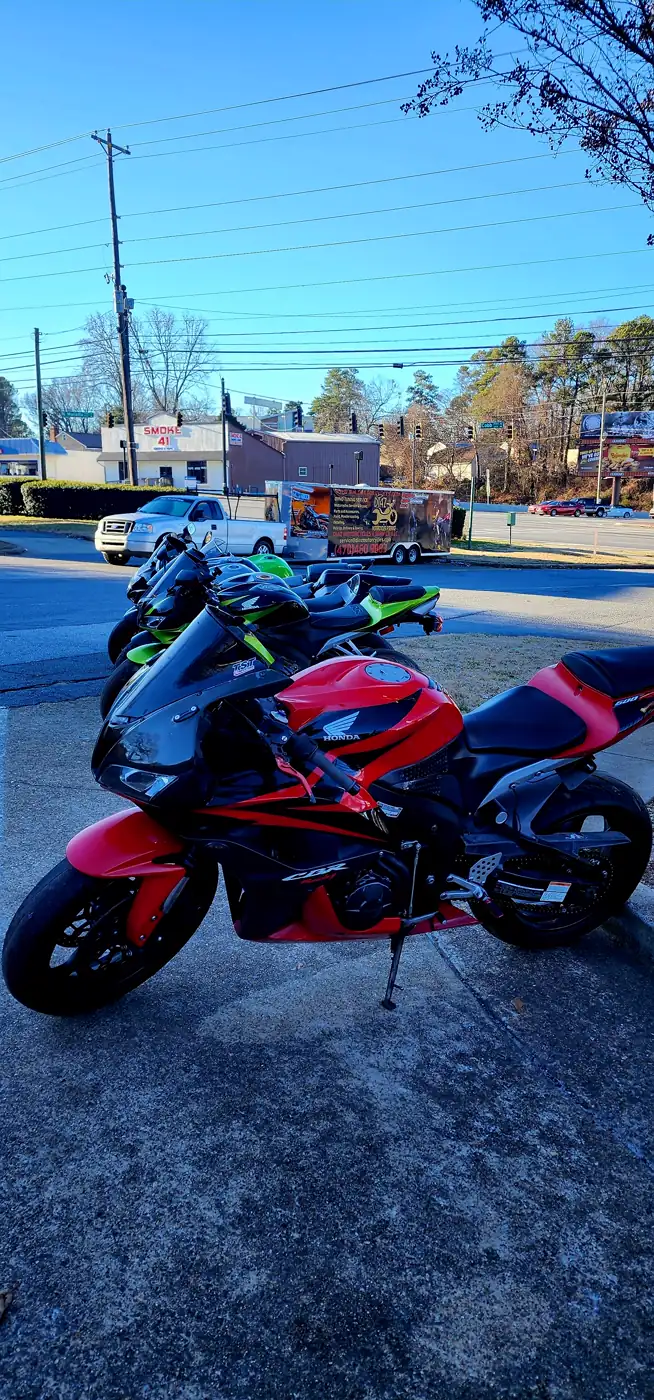
Two words come up constantly, so let’s kill the mystery. Lean means there isn’t enough fuel for the air coming in. A lean bike runs hotter than it should, feels snatchy when you crack the throttle, and can surge at a steady cruise like it’s hiccuping. Rich is the opposite — too much fuel for the air. That one feels soft and lazy, smells strong at a stoplight, sooties the plugs and slowly washes the oil film off the cylinder walls.
Neither one is a catastrophe by itself. Both feel like something, though, and both quietly take a little from you every ride. Here’s the cheerful part: they’re just numbers in a table, and tables can be rewritten. That’s all a tune is.
THE SHORT VERSION
Stock is a compromise written for everybody. A tune is a set of instructions written for your bike. Neither is wrong — they’re just aimed at different targets.
The Honest Answer, No Fence-Sitting
Here’s where a lot of articles get soft and say it depends. After that, it does depend, but not on much, so we’ll just say it. The dyno tune vs stock Woodstock call comes down to one thing: if you’ve changed anything your engine breathes through — a slip-on or full exhaust, a high-flow filter, a different intake, cams — get it tuned. If your bike is fully stock, plans to stay that way, and rides how you want it to, leave it alone and go put miles on it.
That’s not us talking ourselves out of work. That’s just where the honesty lives. A stock exhaust and a stock airbox were part of the same package the factory calibration was written around. Pull one of those pieces out and the recipe no longer matches the ingredients. The engine gets more air, the map still delivers the old fuel, and now you’re lean in places you can feel and places you can’t.
So the fair way to lay it out is by who each option genuinely fits.
Stock is the right call when
- Your bike is factory everything and you like it that way.
- It’s newer, still under warranty, and you’d rather not have that conversation with a dealer.
- You ride mostly short suburban hops and rarely see the top half of the tach.
- The bike already feels smooth, starts clean, and runs its normal temperature.
- You’re about to sell it and the next owner will make their own choices.
A dyno tune is the right call when
- You’ve changed the exhaust, intake, filter, or anything internal.
- There’s a flat spot, a surge at steady throttle, or a hot-running habit that nobody has explained.
- You ride two-up, loaded, or up long mountain grades where heat and load stack up.
- The bike is older and has drifted away from its factory numbers over the years.
- You want the low and midrange to feel right, not just the peak number.
Most riders don't want more power. They want the power they already paid for to show up when they ask.
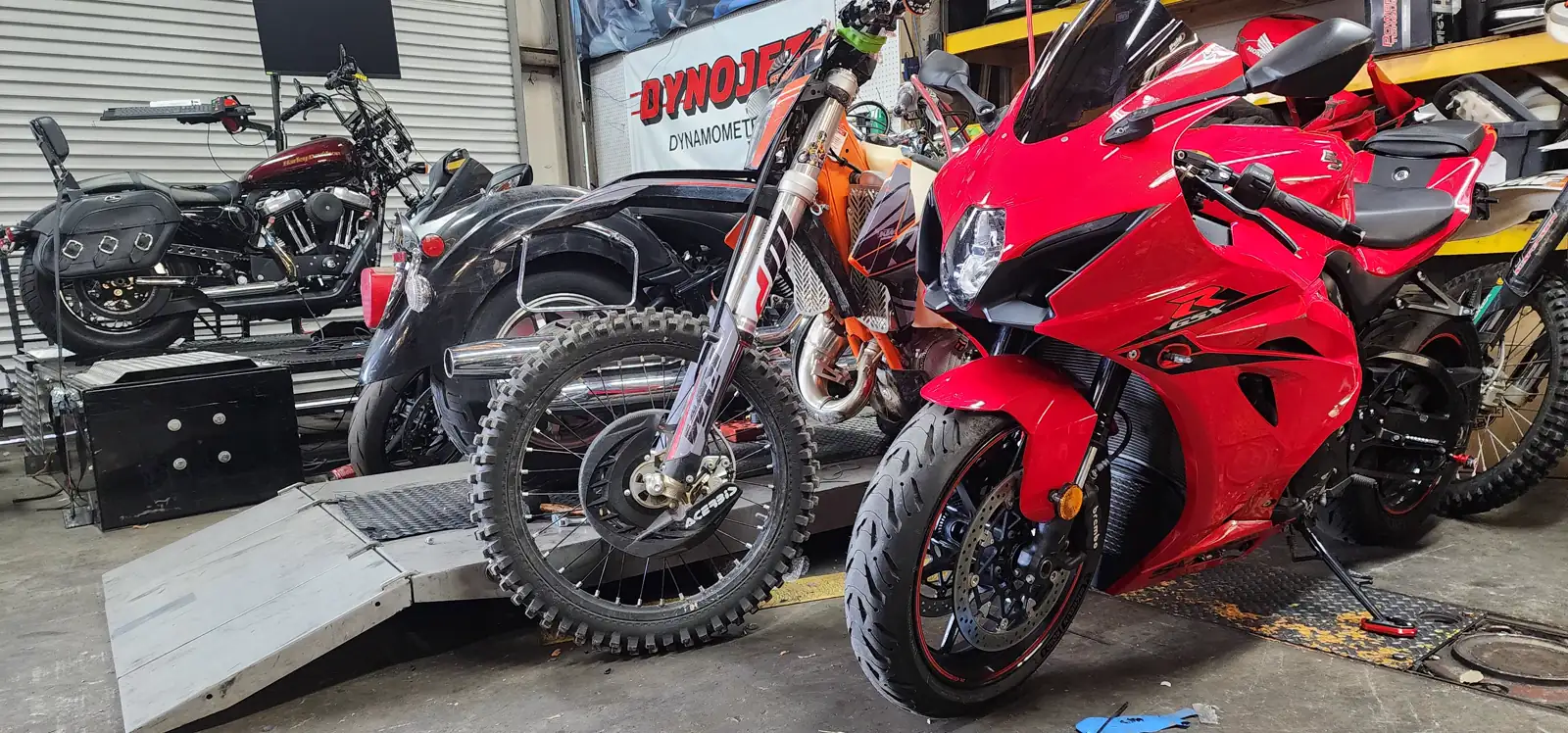
Here's the Question We'd Ask If You Were Standing in the Shop
Forget horsepower for a second. What we’d actually ask you is this: where on the road does the bike annoy you? Not where is it slow — where does it bug you? Riders almost always have an answer ready, and it’s never a number. It’s rolling on in second gear and getting a lurch. Or it’s a soft spot right where you want to pass. It’s the fan screaming in traffic on Alabama Road while everybody else’s bike sits quiet.
Those complaints are the map, honestly. Each one points to a specific corner of the fuel and spark tables, and each one is fixable. A tune isn’t a magic wand waved at the whole engine. It’s targeted corrections at the exact throttle openings and engine speeds where you actually ride.
If the answer is “nothing annoys me, I just wondered,” then you’ve got your answer too. Go ride. We’ll be here when something changes, and we’ll tell you the same thing then that we’re telling you now. That consistency is a big part of what separates a good shop from a shop that says yes to everything.
What Changes the Answer
How your bike takes instructions
Modern bikes run on an ECU, the little computer that decides fuel and spark thousands of times a minute. Flashing the ECU rewrites those factory tables directly. It’s the cleanest option because there’s no middleman — the brain itself learns new numbers. Some bikes are locked down tight, though, and that’s where a piggyback device like a Power Commander earns its keep. What’s more, it sits between the sensors and the ECU and adjusts the signal on the way through. Different tools, same goal: give the engine better instructions.
What kind of bike you're riding
High-revving sportbikes and hyper-nakeds tend to show the biggest change in feel, because they live in a rev range the factory calibration treats carefully. Big touring bikes and baggers usually gain most in the midrange and in heat management, which matters more than peak numbers when you’re loaded up on a long climb. Sport-touring and adventure bikes sit in between and often benefit in throttle smoothness above all. We wrote up how we handle that job on the high-revving platforms if you want the deeper version.
Warranty and how long you'll keep it
If the bike is new and you plan to lean on the warranty, stock has a real argument on its side. If it’s yours for the long haul, that argument gets quieter. Both are legitimate priorities.
How We Approach It
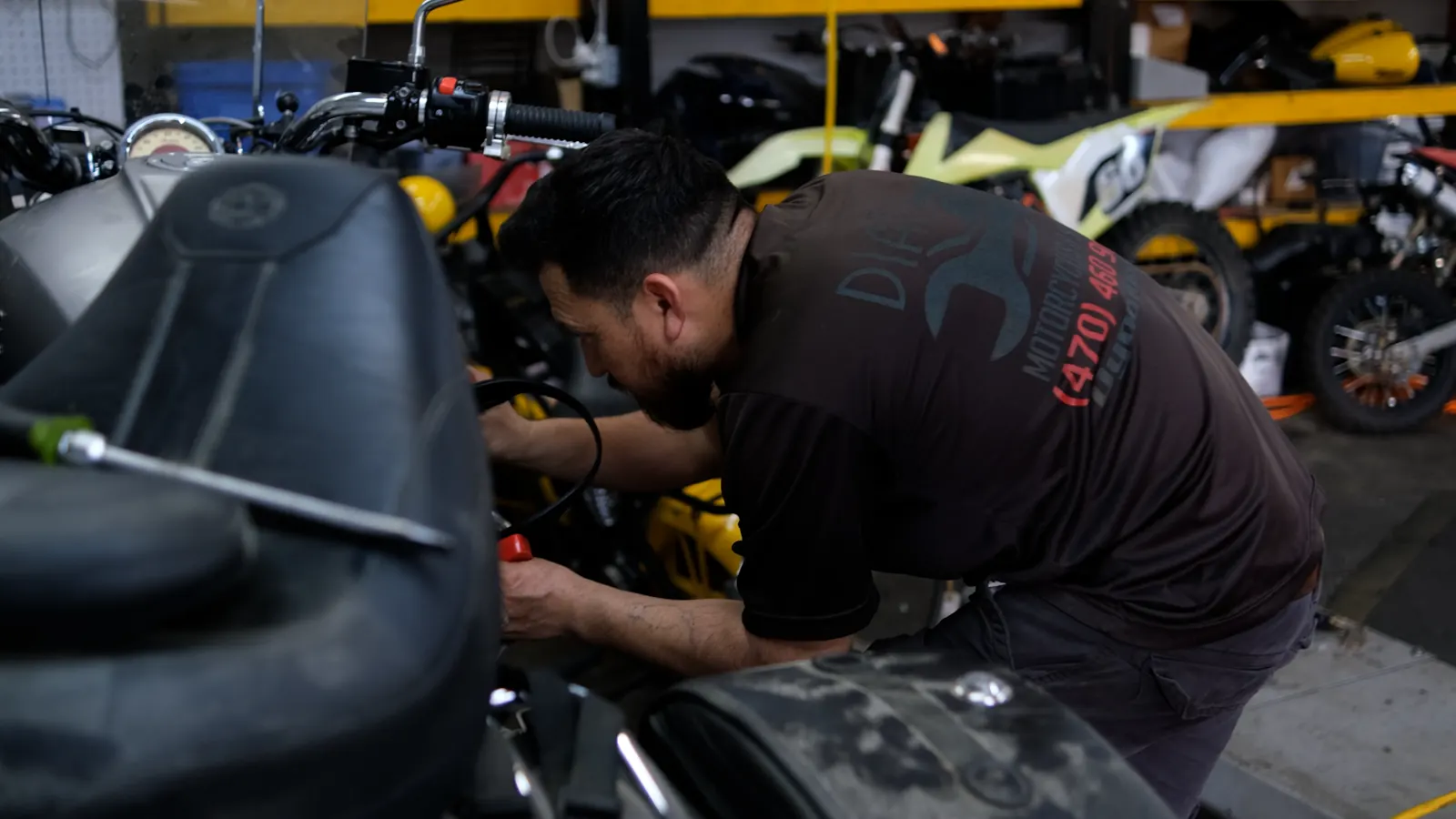
Before a bike gets strapped down, it gets checked. Plugs, air filter, valve clearance if it’s due, exhaust leaks, throttle bodies, battery health. Tuning a bike with a leaking header is like tailoring a shirt with a hole in it. Not much point. That inspection step catches more problems than the tune itself does some weeks, and we’d rather find it early than build a map around a fault.
Then comes baseline. We run the bike as it sits and record what it’s really doing, mixture included. After that we adjust, run it again, adjust, run it again — small changes, repeated, until the numbers and the feel line up. You get a printout at the end showing where it started and where it finished, though honestly the ride home tells you more.
We don’t chase a headline figure. A bike that makes a big peak number and stumbles everywhere else is a worse motorcycle than one that pulls cleanly from anywhere. Peak power gets bragged about at coffee stops. Midrange is what you actually use.
One more thing we tell everybody: tires and habits carry more of your riding experience than any map does. Fresh rubber changes a bike more than most tunes do. If you like reading up on that, Dunlop’s technical resources are a solid, non-salesy place to start, and the Georgia Motorcycle Safety Program is worth a look no matter how many years you’ve been riding.
This Is Where Woodstock Is Genuinely Different From Other Towns
Woodstock riders ask better questions than most. That’s not flattery — it’s the effect of having Traxxion Dynamics headquartered right there on Rope Mill Parkway. When a nationally respected suspension house lives in your town, the technical literacy of everybody around it goes up. Riders here talk about damping and mixture the way other towns talk about paint. They’re a suspension specialist, not a general-service shop, so we’re glad they’re there. They’ve raised the floor for everyone.
Then there’s the geography. I-575 is a direct on-ramp to the north Georgia mountains, so a rider leaving Towne Lake can be in real curves inside an hour or so. That does something specific to how bikes here get used. They sit still for a couple of weeks, then eat a hard mountain day in one bite — long climbs, sustained load, heat, altitude change. A run up to GA 52 past Fort Mountain State Park, with the mountain horizon opening up at the Cohutta Overlook and those mellow curves and long relaxing stretches, asks more of a fuel map than a month of errands ever will.
The garages help too. Those 1990s master-planned neighborhoods under the Towne Lake umbrella — nearly 5,700 homes, streets like Wyngate included — were built with two- and three-car garages as standard. That’s why so many riders here own more than one bike and keep them properly. Even the cottage-style communities, the Cottages at Towne Lake, the Courtyards at Towne Lake, the Cottages of Woodstock, tend to hold owners who’ve ridden for decades and know exactly what their bike used to feel like.
Traffic and pavement matter as well. Construction is constant around a growing city, so gravel gets tracked onto the road along Ridgewalk, Towne Lake Parkway and the State Route 92 corridor — the main east-west artery running toward Roswell and Alpharetta one way and Acworth the other. A bike with snatchy off-idle response is less pleasant over a loose patch than one with smooth throttle, and that’s a tuning issue as much as a traction one. Same goes for creeping out of a packed lot after a show at the Northside Hospital-Cherokee Amphitheater, or easing along near Olde Rope Mill Park on a warm evening.
Getting to us is easy — figure fifteen to nineteen miles, twenty-five to thirty-five minutes, I-575 south to I-75 south, then east on Roswell Road to Barnes Mill Road. Bells Ferry Road south into north Cobb is the surface alternative. Plenty of our Cherokee County friends drop the bike off, grab breakfast, and come back later. For the same comparison from another corner of the metro, here’s the Mableton side of things.
What You Actually End Up With
A well-tuned bike doesn’t feel like a different motorcycle. Better yet, it feels like your motorcycle with the static removed. Throttle response gets predictable. The dip that used to sit right where you needed drive smooths over. Heat settles down. Fueling gets consistent whether it’s a cool February morning or a sticky August afternoon.
And if you decide stock is fine for now, you’ve still won something. You’ll ride knowing why it’s fine instead of wondering, which is worth as much as any change to a map.
You can also change your mind whenever you want. Nothing here locks a door. Bikes get tuned years after they’re modified, and plenty of tuned bikes go back to factory settings before a sale. Ride it, learn it, then decide. That’s the whole recommendation.
Questions Woodstock riders ask us
What's the real difference between a dyno tune and leaving my bike stock?
Stock settings are one recipe written to satisfy every market, every fuel and every emissions test. A dyno tune measures what your specific engine is doing and rewrites those settings for your parts and your riding. The biggest difference riders notice isn’t peak power — it’s how smooth and predictable the throttle feels everywhere else.
Which one lasts longer?
A good tune doesn’t wear out. The file stays put unless the bike changes, so most riders never need it touched again unless they add parts or something mechanical drifts. Stock settings last just as long, of course. The thing that shortens either one is a mechanical problem the map is quietly working around, which is why we inspect before we tune.
How do I know which is right for my kind of riding?
Ask yourself where the bike bugs you. If nothing does, and it’s all factory parts, stock is doing its job. But if you’ve changed the exhaust or intake, or you ride long mountain days with load and heat, a tune usually pays you back in feel every single ride.
Can I switch later, or is this a one-shot decision?
You can switch either direction, and people do all the time. A stock bike can be tuned years after it was modified, and a tuned bike can be returned to factory settings before a sale. So there’s no reason to rush the call — ride it, get a feel for what bothers you, then come talk to us.
Will a tune hurt my engine?
A proper one protects it, actually. Running lean is what puts heat where you don’t want it, and a tune’s whole job is putting the mixture back where it belongs across the rev range. The risk comes from generic downloaded files applied without measuring anything, which is exactly what a dyno session prevents.
So which do you actually recommend?
If your bike is fully stock and feels good, keep it stock and go ride — we’ll say so out loud. If you’ve changed anything the engine breathes through, get it tuned, because the factory recipe no longer matches the ingredients. Text us what you’ve got and what you’ve changed, and we’ll give you a straight answer either way.
We take care of riders all over the north metro, and Woodstock folks make the run down to us constantly. That includes friends in Canton and Ball Ground up north, Holly Springs just down the road, and the whole Towne Lake side of the city. We also see plenty of bikes from Acworth and Kennesaw to the west, Marietta and East Cobb right around us, and Roswell, Alpharetta and Milton coming over from the east side of State Route 92. Cartersville riders make the trip too. If you’re somewhere in that stretch, you’re in our neighborhood.
TEXT US WHAT YOU'VE GOT
If you’re a Woodstock rider stuck between leaving your bike stock and putting it on the dyno, send us a text with the year, model and anything you’ve changed. We’ll tell you straight which way we’d go and why — even when the answer is to save your money and go ride. Drop the bike off on your way to breakfast and pick it up knowing exactly what it’s doing.
470-460-9883Diaz Motorcycles and Service, LLC · 847 Barnes Mill Road, Marietta, GA 30062