Motorcycle Dyno Tuning Roswell Riders Can Book Without Guessing
You bought a bike with a past you can't see. A dyno lets us read it out loud.
You found it on a Saturday. Still, Somebody’s garage, a bike under a dusty cover, a folder with the title in it, and a story about how it hardly got ridden. Plus, the price felt fair and the tank was clean, so you shook hands and rode it home grinning. A week later it surges at steady throttle, cooks your right boot at every red light, and pops on the way down through the gears. Of course, that’s usually the moment somebody starts hunting for motorcycle dyno tuning Roswell riders can actually trust. Then again, a used bike with unknown history is really just a bike carrying somebody else’s settings, and nobody left you the notes.
So let’s say the plain version first. Even so, a dyno is a machine that holds your bike still and lets the rear wheel spin against a heavy roller, while we read what the engine is doing under real load. Meanwhile, we watch the air-fuel mix, the throttle position, the rpm and the heat, and then we change the instructions the bike’s computer follows. That’s it. It’s for anyone whose bike feels wrong, anyone who added pipes or a filter, and anyone who bought secondhand and wants to know what they’ve got.
The symptoms that bring people to us
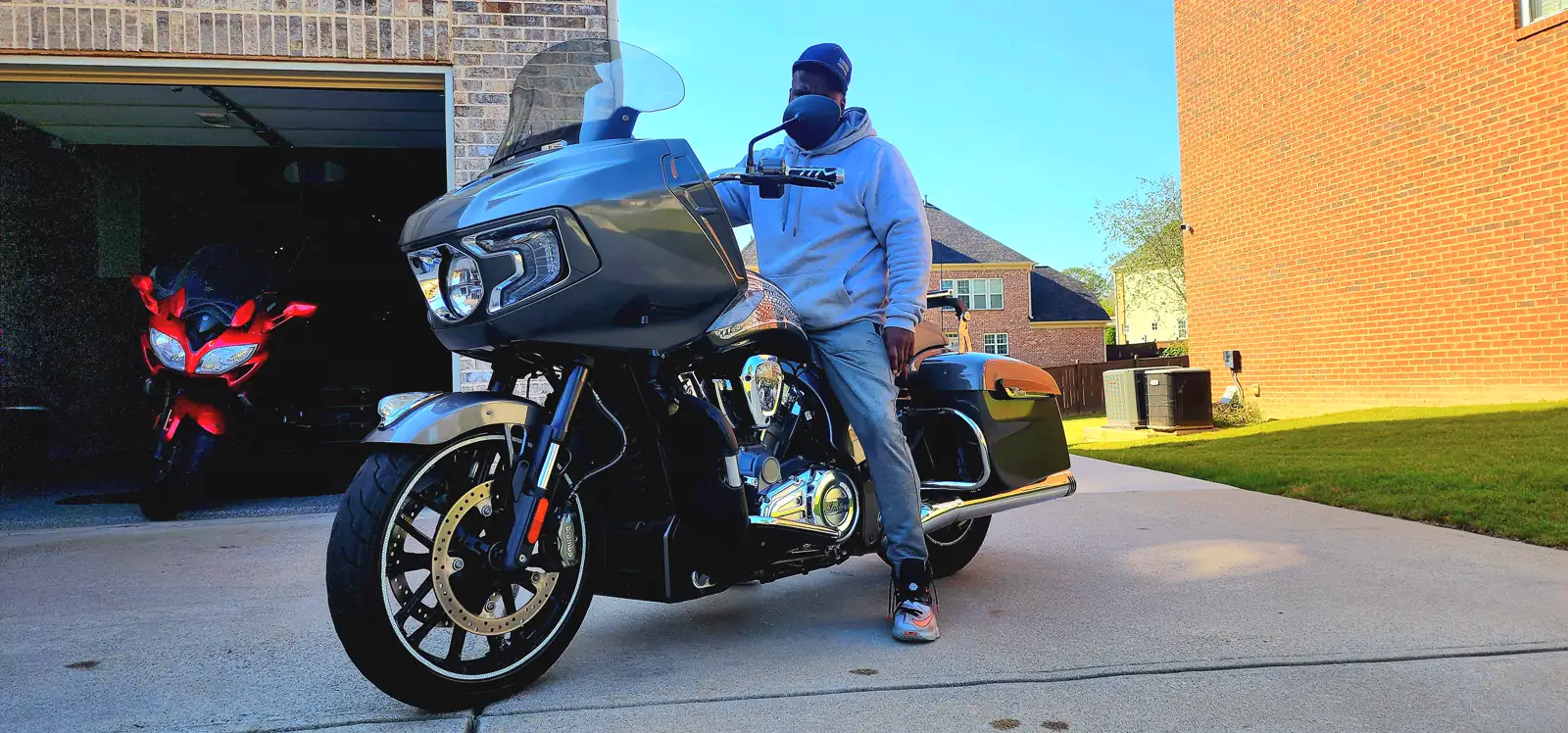
Almost nobody calls us saying “my fuel map is off.” They call describing a feeling. Here’s the list we hear most, and if two or three of these sound like your morning ride, you’re in good company.
- It surges or hunts at a steady cruising speed, like the bike can’t decide how much throttle you asked for
- Heat pours off the header into your leg in stop-and-go traffic
- It pops and crackles on deceleration, more than the fun kind
- Cold starts need a long warm-up before it’ll pull cleanly
- There’s a flat spot in the middle of the rev range that wasn’t in the ad
- Fuel economy dropped and the exhaust smells sharp and rich
- Somebody bolted on a slip-on or an air filter and never touched the fueling afterward
What each of those symptoms is telling you
Engines want a certain amount of air mixed with a certain amount of fuel. When there’s too much air for the fuel being sprayed, we call it lean. Lean runs hot, surges at light throttle, and makes the bike feel jumpy and nervous. Most modern bikes leave the factory a little lean on purpose to pass emissions rules, which is a fine trade for the factory and a slightly annoying one for you.
Too much fuel for the air is rich. Rich feels soft and lazy, fouls plugs over time, smells strong, and drinks more gas than it should. Neither one means your engine is broken. They mean the instructions in the computer no longer match the hardware bolted to the bike. Change the exhaust or the filter and you changed how much air moves through, but the computer never got the memo.
A dyno measures the twisting force your rear wheel actually puts down across the whole rev range, plus the exhaust gas readings that tell us lean or rich at every point. The chart matters less than the shape of it. A smooth line means a bike that pulls without stumbling. A dip means a hole you feel in your wrist somewhere around town. We’re chasing the shape, not a bragging number.
There are two common ways to fix it. We can flash the bike’s own computer, which rewrites the factory instructions directly, or we can add a piggyback unit like a Power Commander that corrects the fueling on the fly. Each suits different bikes and different goals, and we’re happy to walk you through the tradeoffs between them before you spend a dime.
There’s a version of this that’s cheap and a version that isn’t. The cheap version is somebody loading a generic file that was written for a bike like yours, handing you the keys, and calling it tuned. It might even feel better for a week. The honest version puts your specific bike on the roller, reads your specific numbers, and adjusts until the mix is right at the throttle openings you actually ride. We’d rather do the second one, and we’ll tell you straight if your bike doesn’t need either.
How we diagnose before we quote
We don’t price a tune off a phone call, because a phone call can’t hear a flat spot. Instead we start with a look, a listen and a short baseline run. That baseline is the honest picture of where your bike sits today, and it’s the reference we tune against. If you’d like the full walkthrough of the work we do in house, it’s all written out plainly, no jargon wall.
- You text us the year, make, model and anything the previous owner bolted on
- We inspect the basics first — plugs, filter, chain, leaks — because a tune can’t fix a mechanical problem
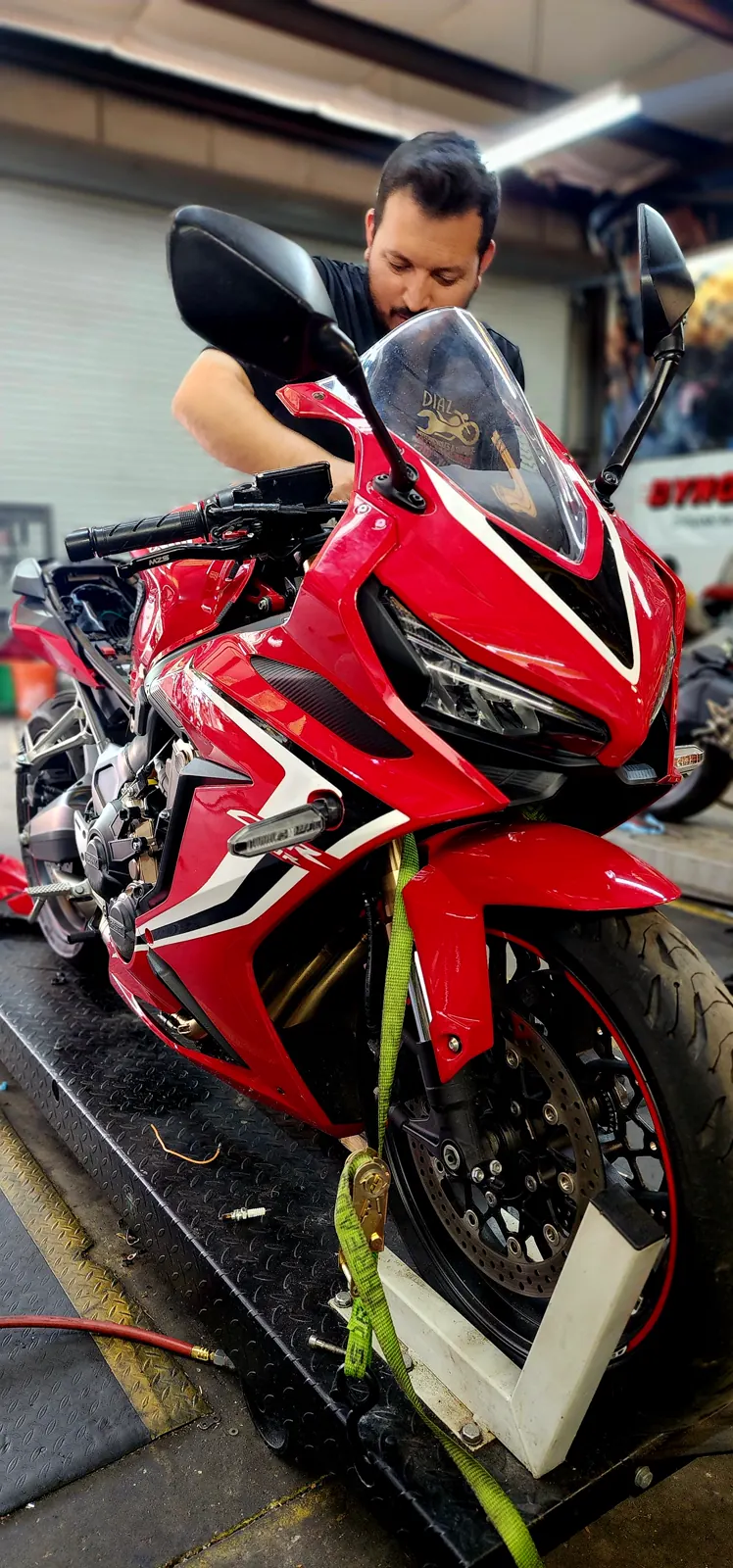
- We strap it down and make a baseline pull to see the real numbers
- We call you with what we found and what it’ll take, before any tuning work starts
- You say go, we tune, and we hand you the before-and-after charts with the bike
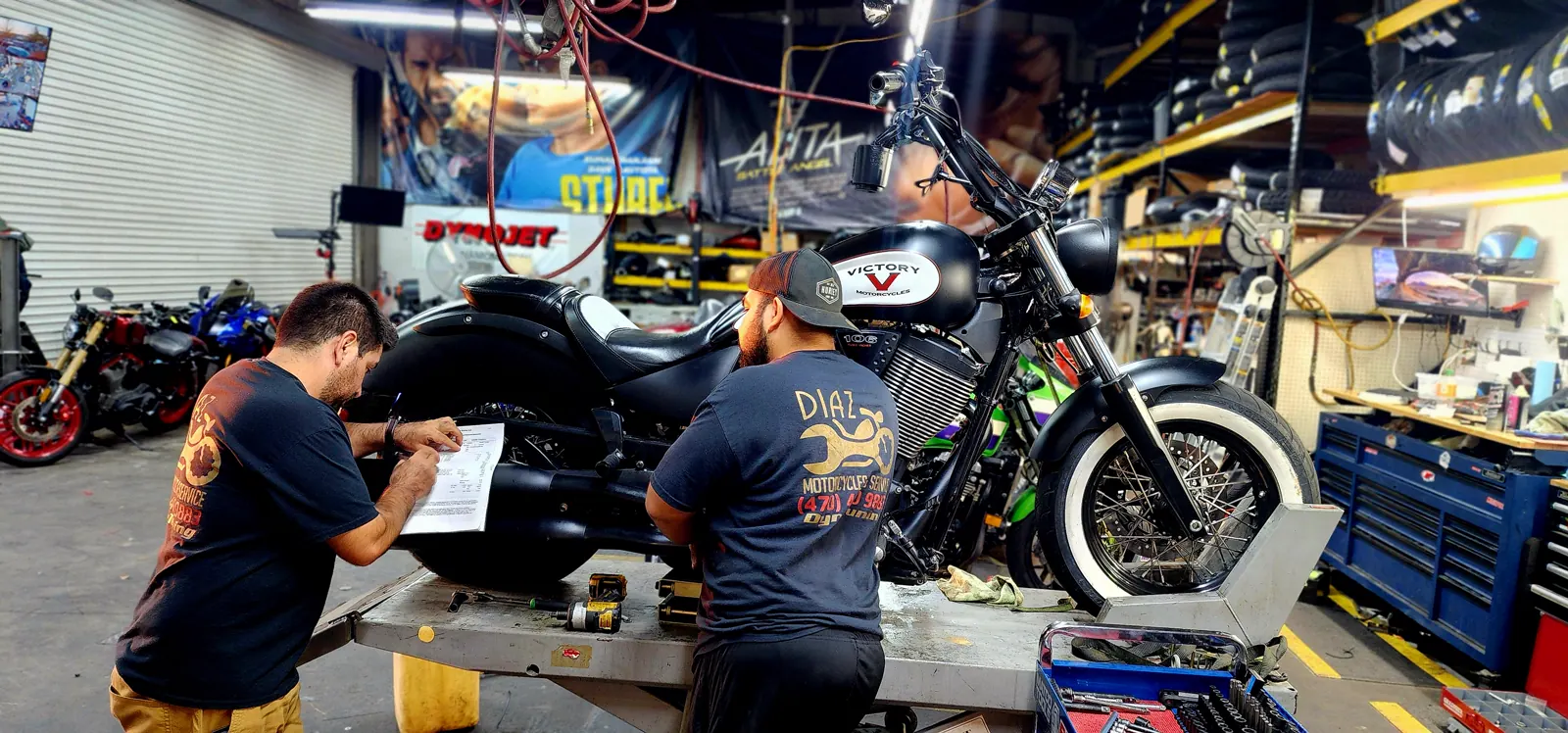
That inspection step catches more than you’d think. We’ve found a collapsed air filter, a cracked intake boot, and once a nest of acorns, all on bikes whose owners were certain they needed a tune. Fixing the cheap thing first is not us being noble. It’s just that tuning around a leak gives you a map built on a lie, and the bike will feel wrong again the moment the leak changes.
We also ask what you want out of the bike, because the answer changes the map. A commuter who runs GA 400 south every morning wants smooth, cool and predictable at small throttle openings. A weekend rider chasing mountain roads wants clean pull in the middle of the rev range where the corners live. Same bike, same dyno, two different targets. That four-minute conversation is the difference between a generic file and motorcycle dyno tuning Roswell riders would call worth the ride over.
How long it takes
Most tunes are a same-day or next-day job once the bike is here and healthy. The strap-down and baseline take a chunk of the morning. The tuning itself is a loop of pull, read, adjust, repeat, and the number of loops depends on how far off the bike started and how many hardware changes it’s carrying. We wrote up what that service actually involves if you want the step count.
WHEN TO BOOK
December through February is our quiet stretch and the easiest window to grab. If you want the bike sorted before the first warm Saturday, that’s the time to text.
If the inspection turns up something real — a tired chain, a sensor gone lazy, a leak at the header — we call you and you decide. Nothing gets added to your bill because we felt like it. The whole point of diagnosing first is that surprises happen in a phone call, not at pickup.
Why Roswell riders end up over here
Roswell is a real city with its own history, and the riders here reflect that. We see bikes from the Craftsman bungalows and newer townhomes around Canton Street and the Historic Roswell district, from the established streets of Huntington Park, and from the private-club side of Brookfield. Getting to us is basically one road: Roswell Road, GA 120, straight west across the Chattahoochee into East Cobb, roughly seven to nine miles depending on where you start. From the Holcomb Bridge and GA 400 side it’s a bit longer, still an easy morning.
Riders here also tend to own the kind of bikes that reward this work. Big tourers and baggers that spend hours at highway speed, premium adventure bikes, sportbikes ridden by GA 400 commuters, and a healthy number of older Italian machines that need an independent willing to take the job. Every one of those benefits from a map matched to its own hardware. That mix is a big part of why motorcycle dyno tuning Roswell owners ask about covers such a wide range of bikes on any given week.
You already know that Alpharetta Highway is North Fulton’s motorcycle row, with several dealers sitting inside about half a mile of each other. That cluster makes Roswell riders educated buyers, which we like. You know what a flagship service department feels like and what dealer labor looks like. Down on Cobb Parkway there’s WOW Motorcycles, the big used-bike dealer that absorbed DucShop back in 2021 and does dyno and European work of its own. Plenty of good shops exist. We just want you to know what questions to ask any of them, and groups like the Motorcycle Industry Council will tell you the same.
Something worth knowing before you book anywhere: ask whoever you call whether the tune is custom to your bike or loaded from a file, and ask to see the before-and-after chart. A shop doing real work will answer both in one sentence without getting cagey. If the answer wanders, keep calling. That question costs you nothing and it sorts the field fast.
Pavement matters too. The city has real money going into resurfacing this year, with Canton Street, Bulloch Avenue, Riverside Road and Old Roswell Road among the named targets. That means construction seams, utility cuts and rough patches in exactly the areas you ride through most. Coming west, GA 92 through Holcomb Bridge Road and Woodstock Road is the other big east-west spine feeding Alpharetta Highway and GA 400, and it collects its share of the same. Rough pavement won’t ruin a tune, but it will remind you fast whether your bike is smooth at small throttle openings or fighting you.
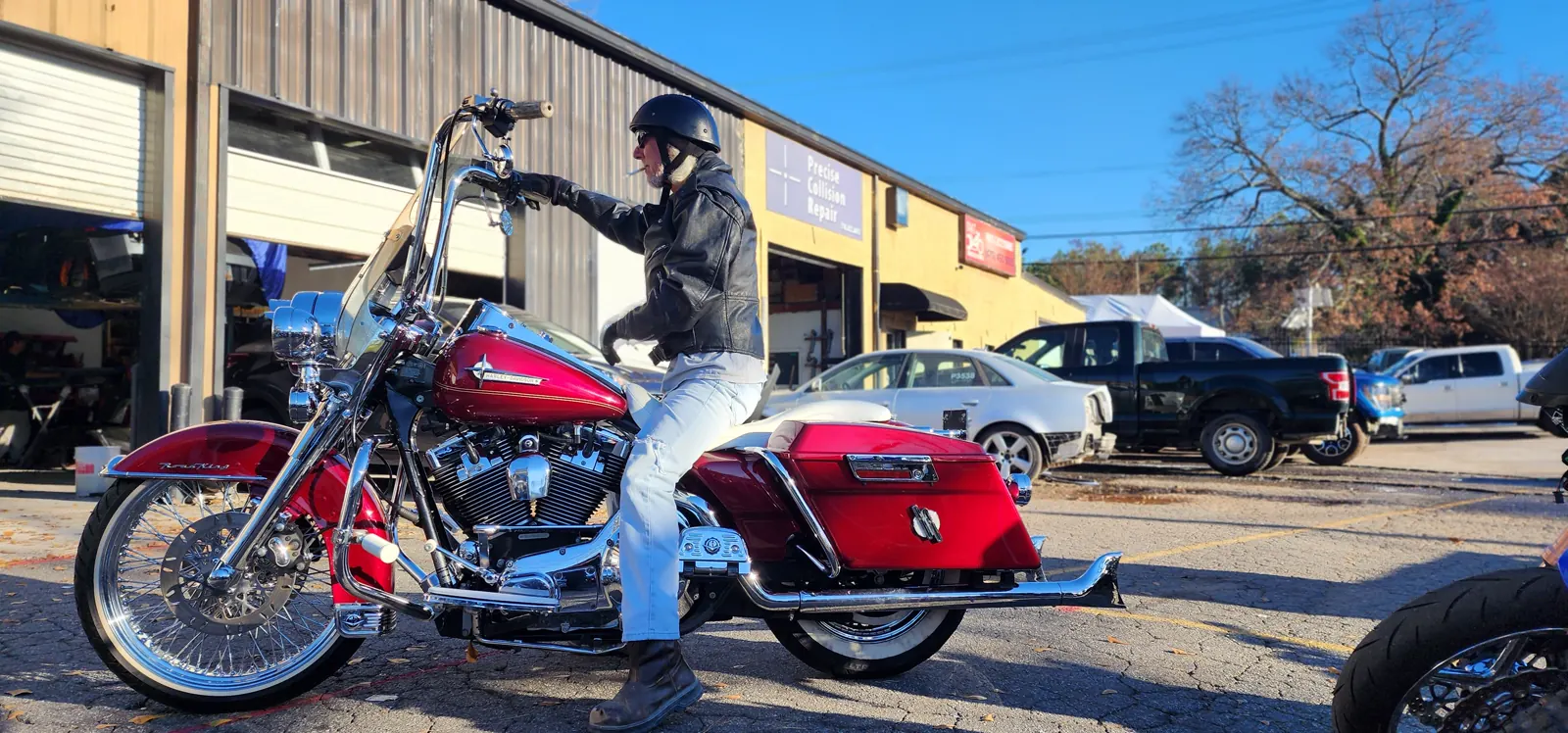
The other half of it is where you actually ride. Roswell folks use their bikes hard, whether that’s a lap out to the Suches loop on US-19 and GA-180 for the weekend, a slow evening roll past the Vickery Creek Covered Bridge, or a Saturday morning run that starts from a parking lot near East Roswell Park while somebody’s kid finishes a soccer game. Most of you also store your bikes properly in a garage, but those garages are shared with cars and short on room, which is why so many riders here would rather hand the wrench work to somebody with a lift and a roller.
None of this is unique to North Fulton, by the way. The same conversations happen on the west side of the metro, and we’ve written about how this plays out in Douglasville for riders over there. Different roads, same used-bike mystery.
What you actually get at the end
Here’s the feeling people describe when they pick the bike up. The throttle stops arguing. Steady cruising smooths out, so your right hand isn’t making small corrections all the way down the road. Heat drops in traffic. Cold starts get boring in the best way. The bike pulls where it used to hesitate, and the whole machine feels like it was built on purpose instead of assembled by three different previous owners with three different ideas.
You don’t need to know any of this to book. That’s our job. But we’d rather you understand what you’re paying for, because a rider who understands the work is a rider who can tell when it was done right. If you’ve been reading up on your own, RevZilla’s Common Tread covers a lot of this ground well too. Then text us, tell us what your bike is doing, and we’ll tell you honestly whether it’s a tune or something simpler.
You bought the bike. The tune is how you finally meet it.
Questions Roswell riders ask us
Do you work on older bikes?
Yes, and we like them. Older carbureted bikes get jetting and mixture work on the dyno instead of a computer flash, and the process is the same idea with different tools. Bikes from the 80s and 90s come through here regularly. If yours is odd or European, that’s usually a reason to call us rather than a reason not to.
What if it needs more than expected?
We call you before we do anything extra. The baseline run and the inspection exist so surprises show up early, while your bike is still just sitting on the lift. You approve the added work or you don’t, and either answer is fine with us.
What does the service include?
An inspection of the basics, a baseline dyno run, custom fueling work through an ECU flash or a piggyback unit depending on your bike, and repeat pulls until the mix is right across the rev range. You leave with the before-and-after charts. We’ll also tell you what we noticed that has nothing to do with tuning.
How long does it take?
Most tunes wrap in a day or two once the bike is here and mechanically healthy. Bikes with a lot of bolt-on changes take more loops on the roller, so they run longer. We’ll give you a realistic window after the baseline run rather than a guess over the phone.
Do you work on my brand?
Almost certainly. Harley, Indian, Victory, Honda, Yamaha, Suzuki, Kawasaki, BMW, Ducati, Triumph and a long tail of odd stuff all get tuned here. If we ever hit a bike we can’t help with, we’ll say so quickly instead of letting it sit.
I just bought it used and don't know its history. Is that a problem?
That’s one of the best reasons to come in. The baseline run tells us what the bike is doing right now, no matter who owned it or what they changed. Think of it as a physical for a machine that can’t tell you where it’s been.
We tune bikes for riders all over the north and west metro, starting with Roswell and the rest of North Fulton. Alpharetta, Milton, Johns Creek and Crabapple riders make the run west on Roswell Road regularly, and folks from Mountain Park and Sandy Springs are even closer. On our side of the river we serve Marietta, East Cobb, Kennesaw and Woodstock, plus Dunwoody riders coming across the top end and anyone heading up from Atlanta proper. If you’re roughly within an easy morning ride of Cobb Parkway, we can help.
TEXT US ABOUT YOUR BIKE
If your used bike is surging, running hot or just feeling off, send us a text with the year, make, model and anything the last owner bolted on. We’ll tell you whether it sounds like a tune or something simpler, and what the next step looks like. Roswell is a short ride west on Roswell Road, and we’ll have the dyno ready when you get here.
470-460-9883Diaz Motorcycles and Service, LLC · 847 Barnes Mill Road, Marietta, GA 30062