Dyno Tuning Sandy Springs — What It Costs
A plain-English look at what a dyno reads, why bikes run lean or rich, and how a real tune changes the way yours feels.
In short you rolled your bike in, pointed at the flat spot you feel every time you crack the throttle, and the guy behind the counter barely glanced up. At the same time he mumbled something about “they all do that,” quoted you a number with no explanation, and went back to his phone. You left feeling smaller than when you walked in, and no closer to an answer. As a result that’s the story we hear most about dyno tuning Sandy Springs riders have tried before finding us, and it’s the exact thing we set out to fix.
Here’s the good news up front. A tune is not magic, and it’s not a secret you have to be worthy of. It’s a measurable job with a clear before and after. We do it in-house on our own dyno, we do the ECU flashing and Power Commander work ourselves, and we explain every step in words you’ll actually understand. No talking down. No mystery. Just your bike, running the way it should.
What a dyno actually measures
Think of a dyno as a treadmill for your motorcycle. The rear wheel sits on a big steel drum, we strap the bike down tight, and we run it through the gears while it stays put in the shop. The drum has sensors in it. As your engine spins the wheel, those sensors read how hard the bike is pushing and how fast the drum is turning.
From that, the dyno draws you a picture. It shows how your engine pulls from low revs all the way to redline, and where it stumbles or falls flat along the way. We won’t throw made-up numbers at you here, because every bike is different and honest shops don’t promise figures they haven’t measured. But the point is simple: the dyno turns a vague “it feels weak down low” into something we can see on a screen and act on.
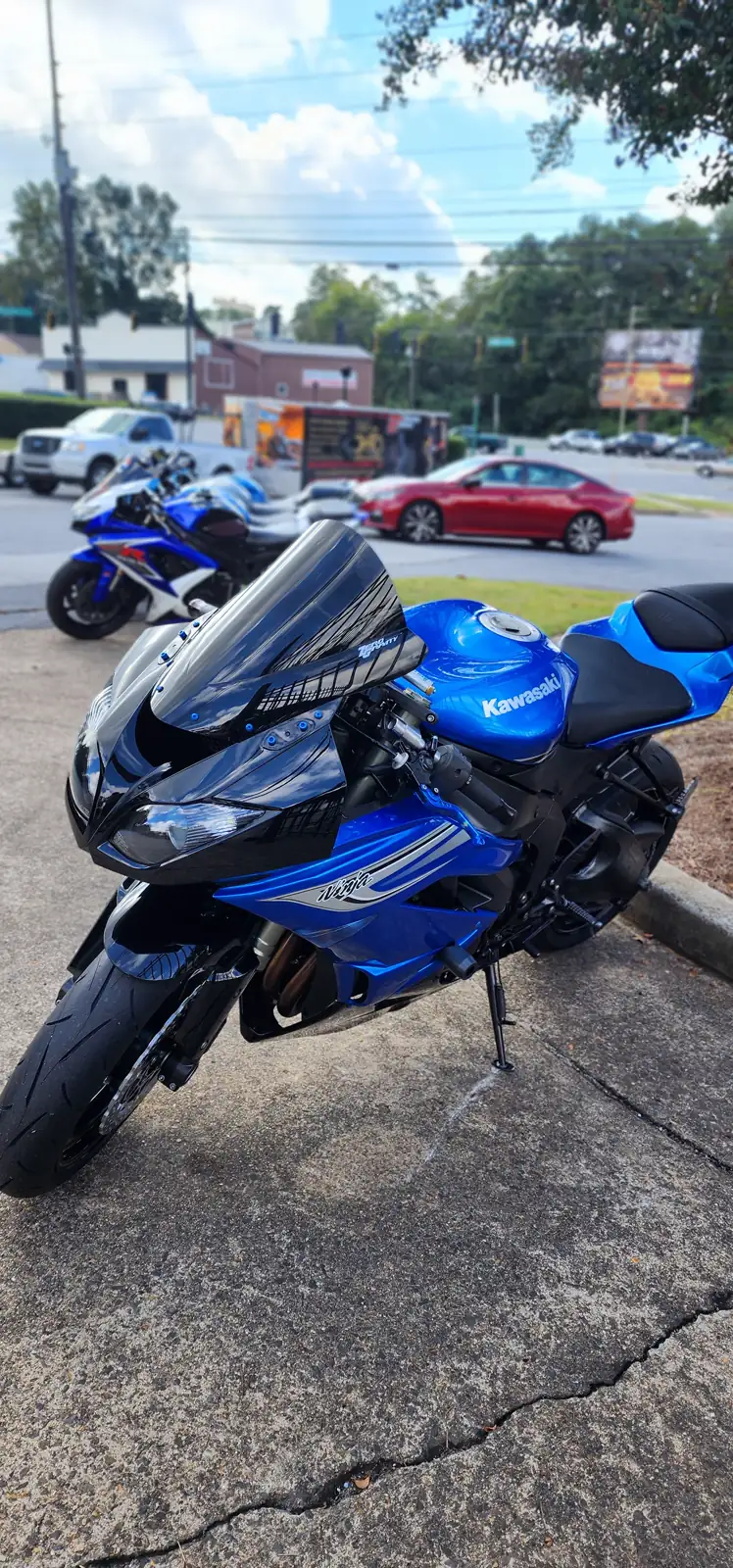
So who is this for? Honestly, almost anyone who rides. If you added a slip-on exhaust and the bike now pops and hesitates, a tune sorts it. If you commute down through the Perimeter every morning and your throttle feels jumpy in traffic, a tune smooths it. And if you just want your stock bike to feel like the best version of itself, a tune gets you there. It’s not only for race bikes with big-dollar builds. Most of the work we do is for regular riders who want their machine to feel right. A tune meets your bike where it is, and it earns its keep on every single ride afterward, not just the fun ones.
Why a bike runs lean or rich
Your engine wants a certain mix of air and fuel to burn cleanly. Too much air for the fuel, and we call that lean. Too much fuel for the air, and that’s rich. Neither one is a moral failing on your part. It’s just the recipe being off, and the recipe is set by a little computer and, on many bikes, a fuel controller like a Power Commander.
A lean bike often runs hot, surges at steady speed, and pops on decel like it’s clearing its throat. It can feel snatchy and nervous. A rich bike, on the other hand, feels lazy and soft, fouls plugs, and can smell like a campfire at a stoplight. Both waste your ride, and both are common straight from the factory because bikes leave the assembly line tuned to pass emissions rules, not to feel great. If you want the deeper version of that story, we wrote up why that problem shows up in its own post.
Now flip it around and look at it from the bike’s side. Your engine isn’t being stubborn. It’s doing exactly what its instructions tell it to do. When you bolt on a freer exhaust or a hungrier air filter, you’ve changed how much air the engine can gulp, but the computer is still working off the old recipe. So the bike breathes in more air than it has fuel for, and it goes lean. It’s not broken. It’s just following an outdated map, and a map is a thing we can rewrite.
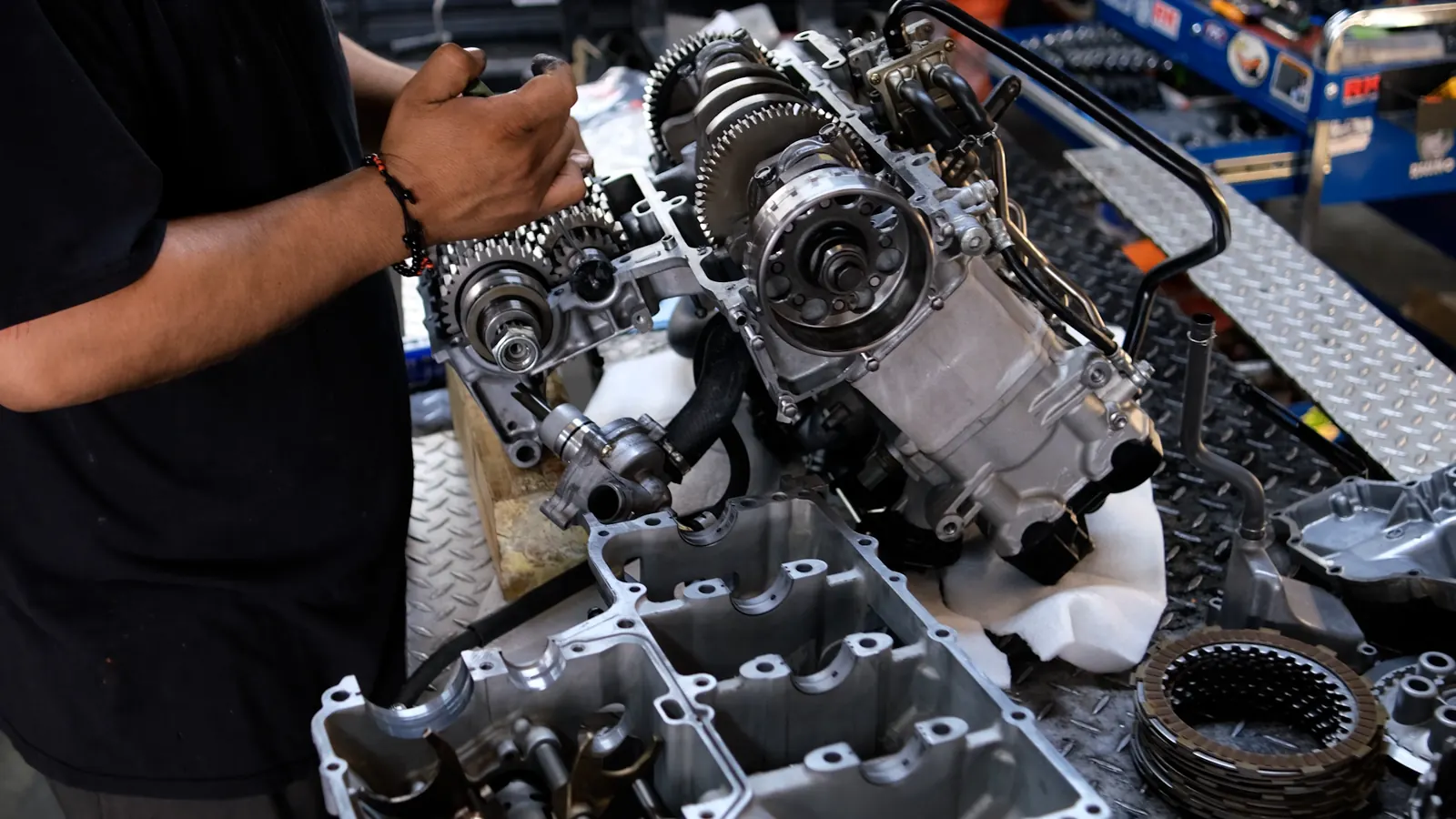
That’s really all a tune is at heart. We measure the true air-fuel mix while the bike runs on the dyno, then we adjust the fuel and timing until the recipe matches your actual engine, your actual mods, and the way you actually ride. riders over in Acworth ask us the same question, and the answer is the same everywhere: we tune to what the sensors read, not to a guess.
IN PLAIN WORDS
Lean means too much air. Rich means too much fuel. A tune fixes the recipe so your engine burns clean and pulls smooth from idle to redline.
How we diagnose before we quote a single thing
This is the part that got skipped at the shop that treated you like a bother. We don’t hand you a price and shrug. We look first. A good quote comes from knowing what your bike actually needs, and that starts with a real conversation and a real inspection, not a number pulled from the air.
Here’s how it usually goes when you bring us a bike:
- You tell us what you feel — the flat spot, the surge, the pop, whatever’s bugging you. Plain words are perfect.
- We check what’s already on the bike. Stock exhaust or aftermarket? Any fuel controller? Air filter swapped? These decide the whole approach.
- We put it on the dyno and read the real air-fuel mix through the rev range, so we can see the problem instead of guessing at it.
- We tell you, in writing, what the tune involves and what it will run. You approve it before we touch a setting.
- We tune, then we run it again to confirm the fix on the same dyno, so the after is proven, not promised.
Notice that the quote comes after we’ve looked, not before. That order matters. It’s the difference between a shop guessing at your wallet and a shop that respects your time. You’re a careful buyer. You read reviews, you trust detail over adjectives, and you should. A written quote you can actually read is the whole point.
What the tune changes in how it feels
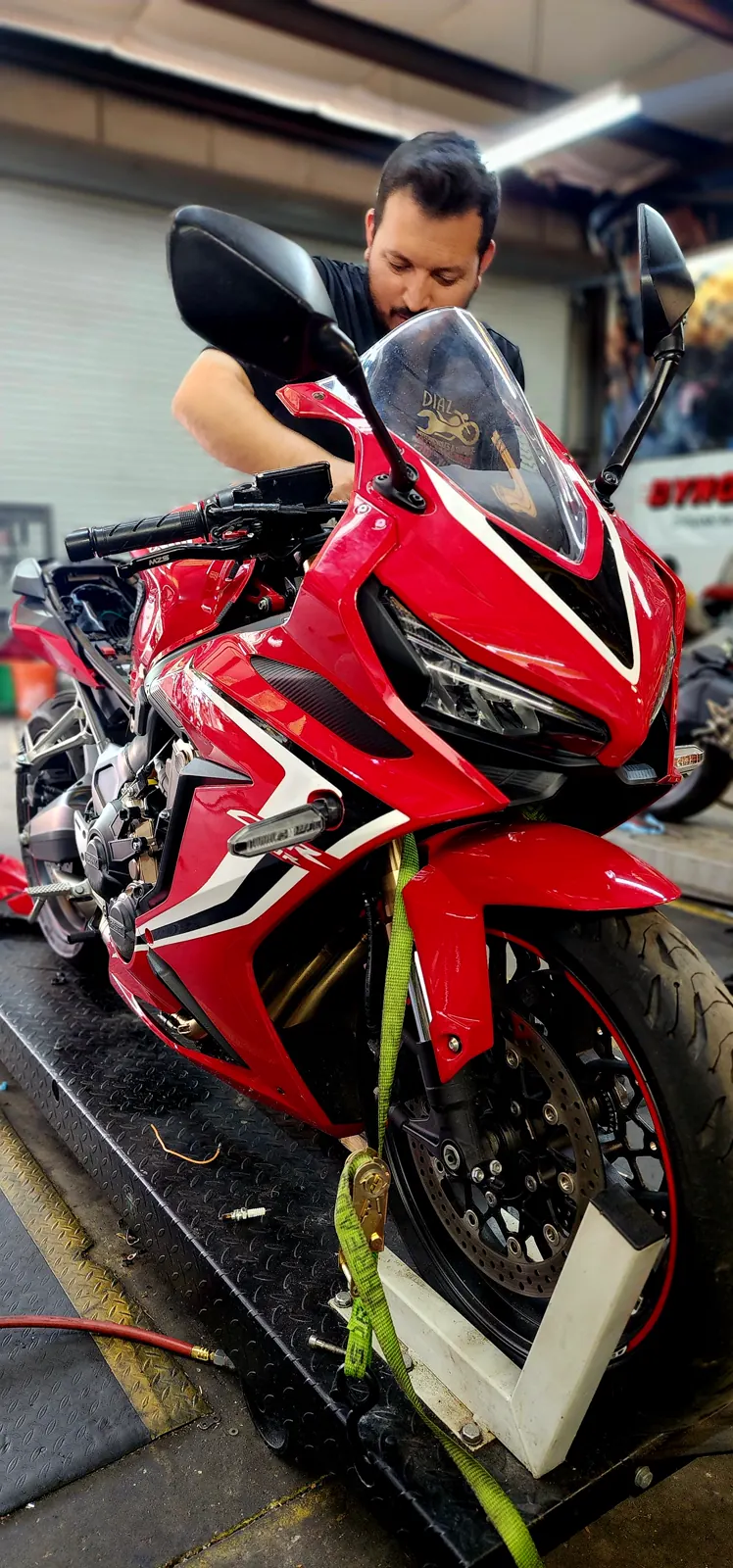
So you drop the bike off lean and grumpy. What do you actually feel when you pick it up? First, the throttle gets honest. When you roll on, the bike responds right now instead of hesitating and then lunging. That jumpy on-off feeling in slow traffic softens into something you can trust with two fingers.
Second, the pulling smooths out. That flat spot in the midrange, the one you learned to shift around, gets filled in. The engine runs cooler because it’s no longer starving for fuel, which your legs will thank you for at a long red light. And that annoying popping on decel usually quiets right down. None of this is about chasing a big scary number. It’s about the bike finally feeling like it was built to feel.
A tune doesn't make your bike a different machine. It makes it the machine it was always supposed to be.
There’s a detail in all this that changes how you’ll ride out of here. A proper tune isn’t a one-size setting we copy off a shelf. It’s built around your exact bike and how you ride it. A calm commuter and a weekend canyon rider on the same model can want two different maps, and we tailor to that. So the bike you pick up doesn’t just run cleaner on paper — it fits your right hand. Once you feel that, it’s hard to un-feel.
Why Sandy Springs riders end up at our door
Here’s a thing plenty of riders don’t say out loud: Sandy Springs is a great place to own a bike and a rough place to get one serviced. There’s no motorcycle dealership or dedicated repair shop inside the city limits, so you’re already driving somewhere no matter what. Whether you’re near the river over in Riverside, in one of the classic mid-century streets of High Point, or tucked into the wooded lots of Lost Forest, real service means a drive. That’s the quiet reason so many folks searching for dyno tuning Sandy Springs end up looking just outside the city, because the tools and the know-how simply aren’t sitting on any corner in town.
And the roads around you aren’t gentle on a bike. Roswell Road, the city’s ten-mile retail spine, is a patchwork of utility-cut patches, seams, and manhole lips that beat up stiff sportbike suspension every day. That kind of daily grind is exactly why a bike that runs clean matters — you’ve got enough to manage without a cranky throttle in the mix. The good news is we’re closer than you’d think. From most of Sandy Springs it’s roughly eight to eleven miles, usually well under half an hour, straight across the Chattahoochee on Johnson Ferry Road into East Cobb. No I-285 required, which anyone who’s crawled the GA-400 interchange will appreciate.
When you do want to actually enjoy the bike, all that clean-running power pays off. The Chattahoochee River National Recreation Area gives you easy green miles close to home, and a proper day trip north puts you on the Suches Loop — the US-19, GA-60 and GA-180 triangle that plenty of riders call the best thirty-five miles in the state. A bike that pulls smooth and predictable is a very different animal on roads like those. You’ll notice it in the first tight corner. Sure, franchise dealers further out toward the south metro host the big bike nights near Atlanta Harley-Davidson, and those are a good time. But for the actual wrenching and tuning, an independent that does it all under one roof is the gap nobody local fills.
The easy part: getting started
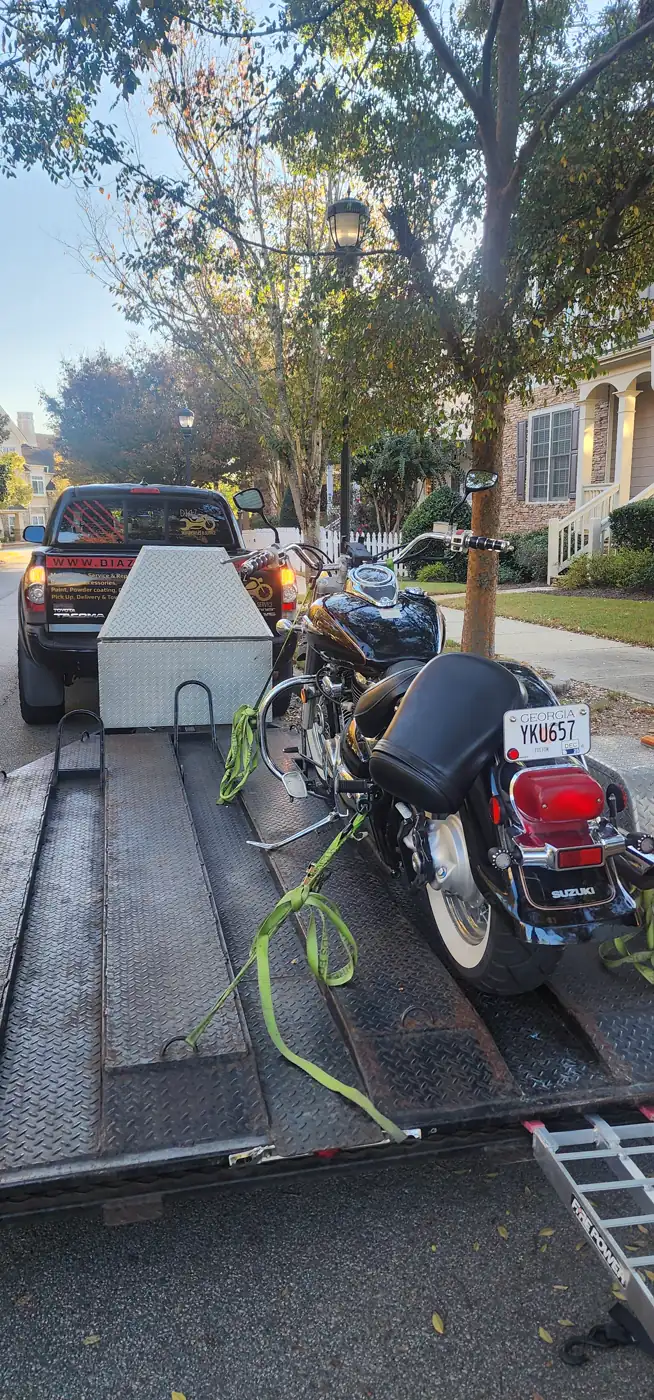
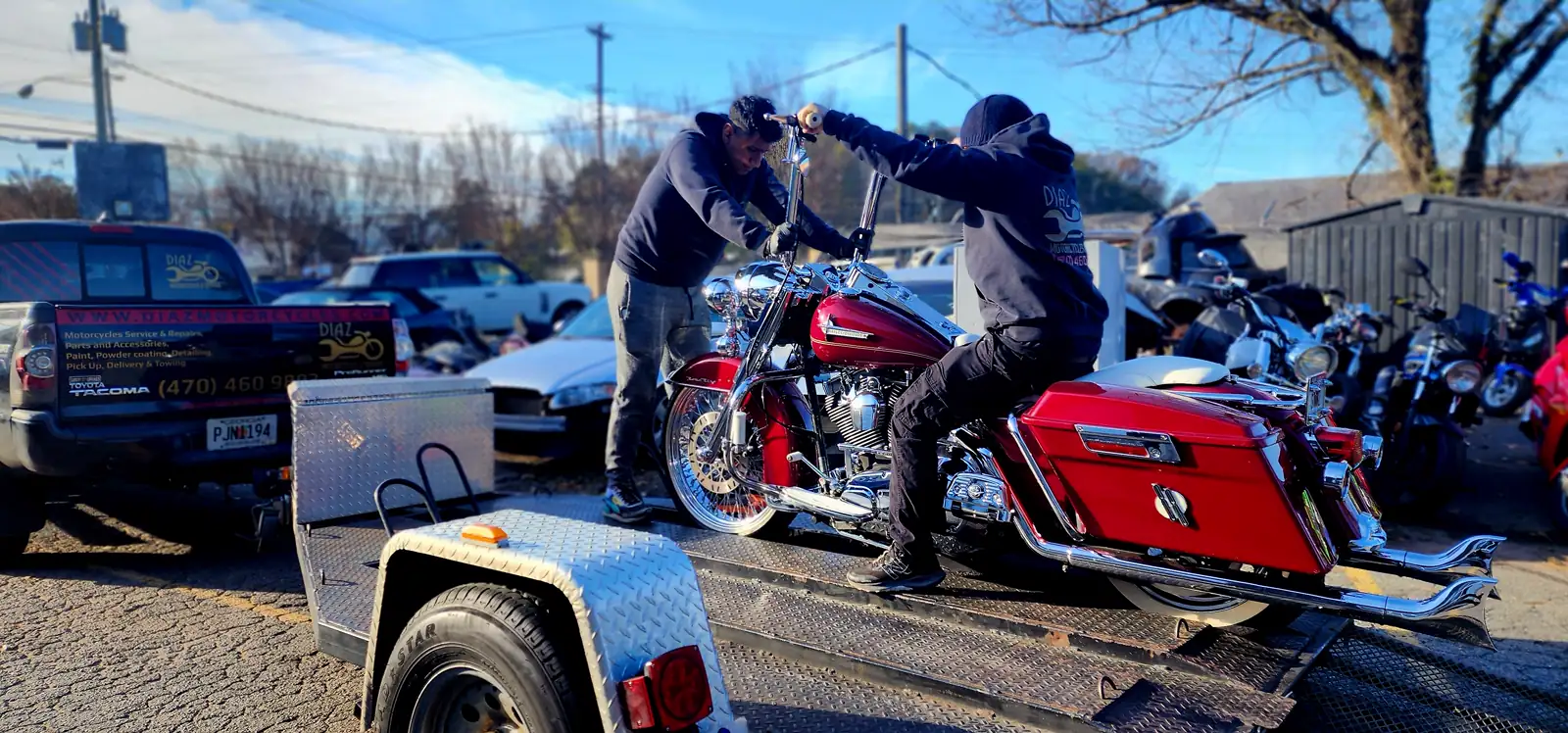
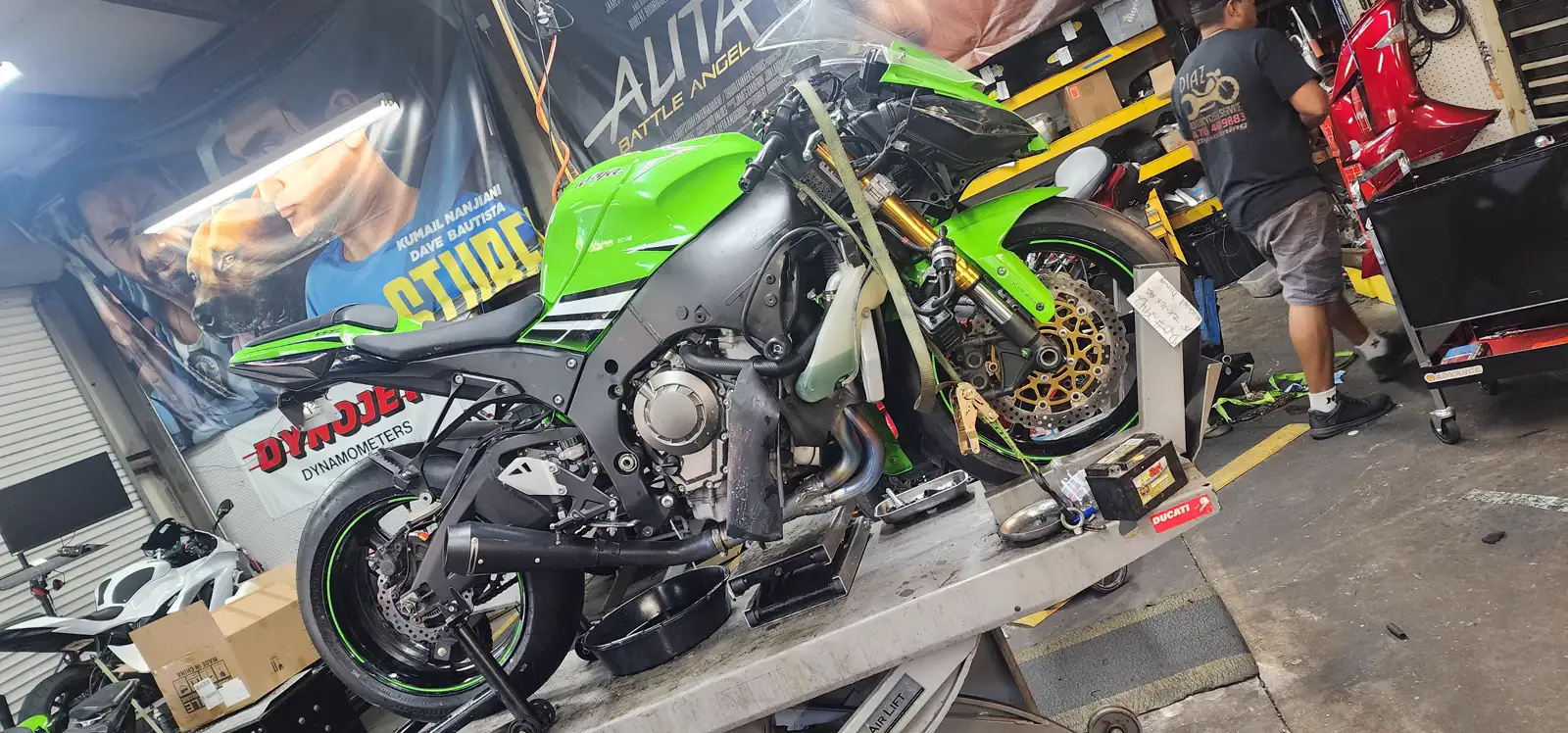
You don’t have to garage your bike to reach us, either, which is a real problem around here. A huge share of Sandy Springs riders live in apartments and condos with no garage and no outlet for a battery tender, so hauling a bike to a shop is a chore. That’s why pickup and delivery is a normal part of what we do, not a favor. We come get it, we tune it, we bring it back. If you’re brand new and still sorting out Georgia Class M licensing, we’re happy to talk through where a tune fits in your plans, too.
The next step is genuinely easy: text us. Tell us your bike, what you feel, and what you’ve added to it. We’ll tell you what makes sense, set up a look, and put a real number in writing before we do anything. Want the deep dive on the service itself? See everything we cover, or if you like reading the full case first, here’s the full rundown on it from a neighboring city. Either way, you’ll leave knowing exactly what you’re getting.
You deserve a shop that treats a good question like a good question. That’s the whole idea behind how we handle dyno tuning Sandy Springs riders bring us: look first, explain everything, quote it in writing, then prove the fix on the same dyno. No part of that should feel out of reach or over your head. Bring us the bike that’s been bugging you, tell us what it’s doing, and let’s make it feel right. You’ll ride away knowing exactly what changed and why.
Questions Sandy Springs riders ask us
Can you pick up my bike if I don't have a garage or a trailer?
Yes, and it’s one of our most-used services. Plenty of Sandy Springs riders live in apartments and condos with nowhere to work on a bike, so we come get it, do the work, and bring it back. Just text us your address and we’ll set it up.
How do I get a quote for a tune?
Text us your bike, what it’s doing, and any mods you’ve added like an exhaust or air filter. We look at the bike and read it on the dyno first, then we hand you a written quote before we change a single setting. You approve it before we start.
Do you work on older bikes, not just new ones?
Absolutely. We take the older Hondas, Triumphs, Guzzis and cruisers that a lot of shops wave off. Tuning approaches vary by machine, so tell us the year and model and we’ll tell you honestly what’s possible and what it’ll take.
What happens if the bike needs more than we expected?
We stop and call you. If the dyno shows a problem bigger than a tune can fix, we explain it in plain words and give you a fresh written quote for the added work. Nothing extra gets done without your okay first.
What does the dyno tuning service actually include?
We strap your bike to our in-house dyno, read the real air-fuel mix through the rev range, then adjust the fuel and timing with ECU flashing or Power Commander work to match your bike and mods. After, we run it again on the same dyno to confirm the fix.
I'm new to riding — should I still get a tune?
If your bike is stock and running fine, you may not need one yet, and we’ll tell you that. If you’ve added parts or it feels off, a tune helps. New riders can also check out the state’s own resources through the Georgia Motorcycle Safety Program while they get settled.
We’re an easy ride from all over the north metro. Beyond Sandy Springs, we regularly tune and service bikes for riders in Roswell, Dunwoody, and Atlanta, along with Buckhead, East Cobb, and Vinings just across the river. Our home base in Marietta puts us in reach of Brookhaven, Alpharetta, and Chamblee, and we see plenty of machines from Smyrna and Doraville too. Wherever you are, pickup and delivery keeps the whole thing simple.
LET'S MAKE YOUR BIKE FEEL RIGHT
If you’re in Sandy Springs and tired of a throttle that surges, pops, or falls flat, text us. Tell us your bike and what it’s doing, and we’ll read it on our own dyno, then put a real number in writing before we touch a thing. No talking down, no mystery — just an honest fix you can feel on the first ride home.
470-460-9883Diaz Motorcycles and Service, LLC · 847 Barnes Mill Road, Marietta, GA 30062