Dyno Tune vs Stock Atlanta — Which Is Right for You
A plain-English look at what tuning does, what it doesn't, and how to pick the honest answer for your bike.
In fact, call three shops and ask what a tune will do for your bike. You’ll get a number. For example, Somebody will promise you a big horsepower jump before they’ve even heard your engine turn over. Even so, here’s the honest part nobody likes to say out loud: no one can hand you that number over the phone. Not us, not anyone. What’s more, every engine breathes a little differently, and the only way to know yours is to strap it down and read it. After that, that’s the real heart of the dyno tune vs stock Atlanta question, and it’s why we’d rather show you than sell you.
So this post is not a pitch. Also it’s the same walk-through we give friends who roll in unsure. Instead We’ll lay out both roads fairly, tell you which one we’d pick and why, and be straight about the times leaving your bike stock is the smarter move. Besides By the end you should feel calmer about the whole thing, not more confused.
The stuff you feel before you ever think about a tune
Most riders don’t wake up wanting a dyno session. They notice something. The bike does a little thing it didn’t used to do, and it nags at them. Usually it’s one of these:
- A flat spot or hesitation when you crack the throttle in the low-to-mid range
- Popping and crackling in the pipe on deceleration, more than the bike had when it was new
- The engine feeling hot and cranky in slow traffic, or the fan kicking on early
- Jerky, on-off throttle response that makes smooth low-speed riding hard
- Worse fuel economy than the bike used to get, with no other change
- A new exhaust or air filter that made the bike feel worse, not better
None of those mean your engine is broken. They’re symptoms, and symptoms have causes you can actually fix. That’s the good news. The bike is telling you something, and once you can read the message, the road forward gets a lot clearer.
What each of those signs is telling you
Almost all of it comes back to one idea: the mix of air and fuel your engine is burning. Too much air for the fuel and we call it lean. Too much fuel for the air and we call it rich. Neither is a moral failing. It’s just a recipe that’s off, and recipes can be corrected.
A lean bike tends to run hot, surge, and pop on deceleration. It’s starving a little. That’s common when someone bolts on a freer-flowing exhaust or air filter but leaves the fuel map alone, because now more air is coming in with the same squirt of fuel. A rich bike runs sooty, sluggish, and thirsty. It’s drinking more than it can cleanly burn. Both feel wrong in the seat, and both trace back to a map that doesn’t match the hardware anymore.
Here’s the piece that surprises people: bikes leave the factory a touch off on purpose. Makers tune for strict emissions rules and for the worst gas someone might ever pour in, all over the world. That safety margin keeps the engine legal and durable, but it can leave the throttle abrupt and the low end lazy. So your stock bike isn’t wrong. It’s just built to a compromise that isn’t really about you or your roads.
What a dyno actually measures, in plain words
A dyno is a roller the back wheel spins on while the bike stays put. As the engine pulls, the machine measures how hard it’s working and how much it’s twisting that roller. From that we get a graph of power and torque across the whole rev range, not one headline figure. Just as useful, a sensor in the exhaust reads that air-fuel mix in real time, so we can see exactly where the bike is running lean or rich.
The dyno doesn't guess. It shows you the truth about your engine, one rev at a time.
That’s why we won’t quote you a gain sight unseen. The graph for your bike, with your exhaust, your miles, and Georgia’s summer air, is the only one that counts. Two identical models can read differently. Before we go further, one thing worth clearing up: a tune isn’t magic power from nowhere. It’s cleaning up the recipe so the engine delivers what it already had, smoothly and safely, everywhere you actually ride. If you want the deeper mechanics, we wrote up what that service actually involves in its own post.
A custom map does this by adjusting fuel and, on many bikes, spark timing at hundreds of little points across the rev range and throttle openings. On some machines we flash the bike’s own computer, its ECU. On others we add a piggyback unit like a Power Commander that trims the signal on the fly. Different tools, same goal: match the recipe to the hardware. For big-brand specifics, factory resources like Harley-Davidson service information back up why these platforms respond so well to real mapping.
What actually happens when you bring a bike in
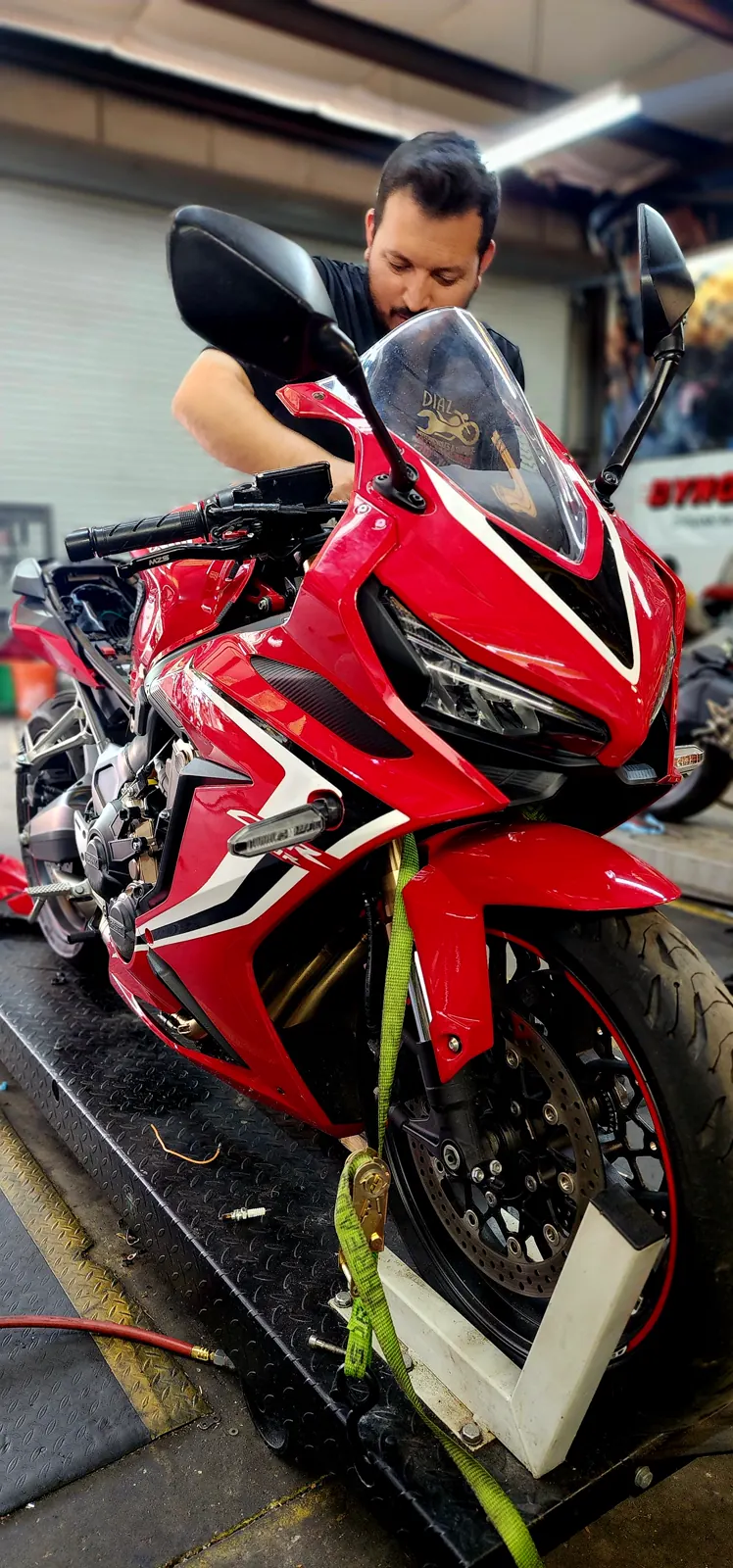
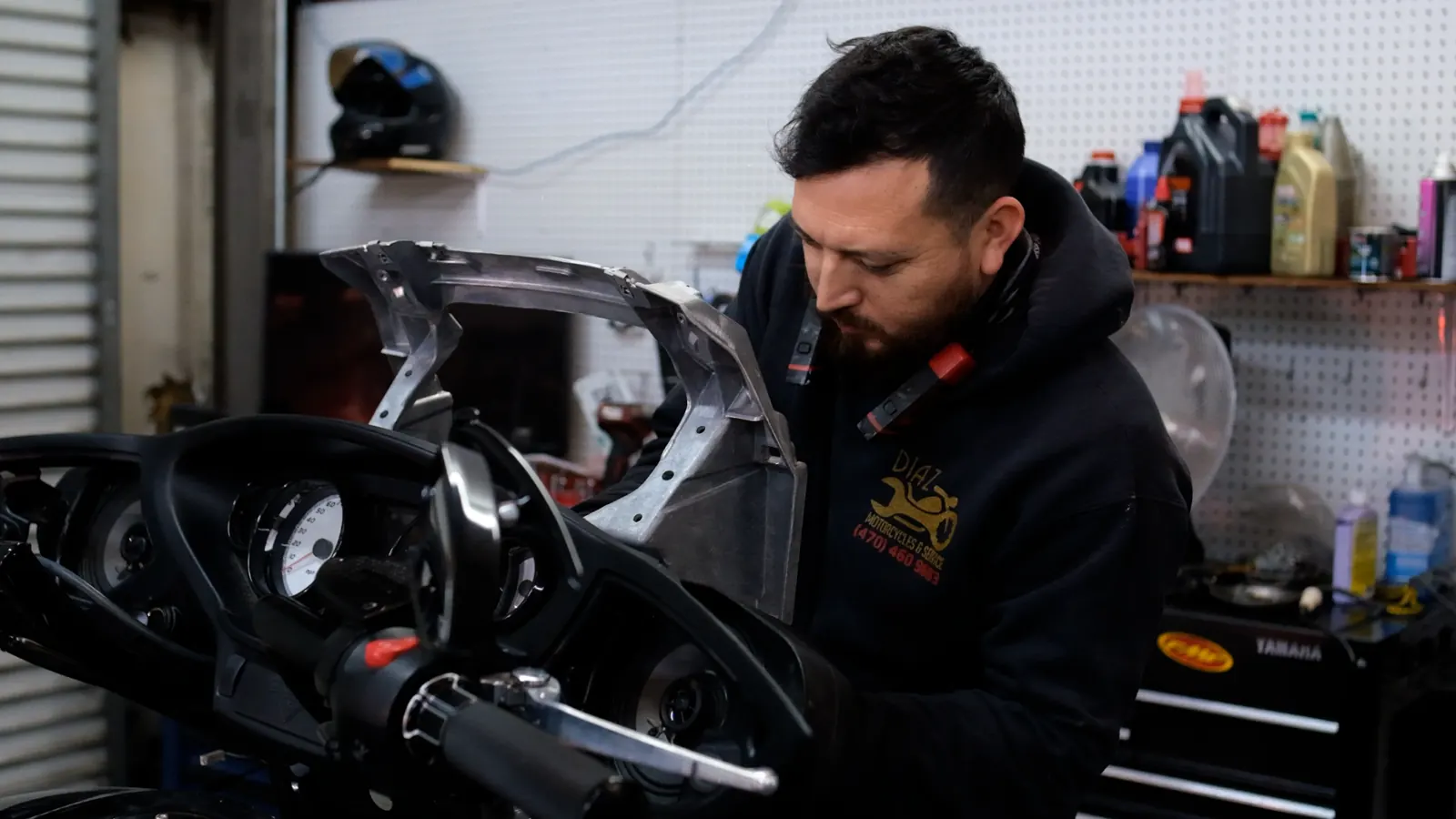
People picture a mysterious back room. It’s calmer than that. First we talk. We ask how the bike feels, what mods it has, and what bugs you most, because your complaint points us straight at the fix. Then the bike gets strapped to the dyno, the front wheel locked in a chock, and we take baseline pulls to see where it stands today.
- We read the current air-fuel mix across the whole range and find the lean and rich spots
- We build a custom map that corrects those spots for your exact setup
- We make pull after pull, adjusting in small steps and re-reading each time
- We smooth out throttle response so the on-off jerkiness settles down
- We hand you a before-and-after graph so you can see what changed, not just take our word
That last step matters to us. You leave with proof, not a story. This is the same careful loop for a commuter as it is for a track bike, and it’s a big part of the work we do in house rather than farming out. Most multi-line dealers along Cobb Parkway don’t run real custom mapping on-site, so a bike that needs it often gets a shrug or a shipping label. We’d rather just do it here where we can watch every pull.
So… tune it, or leave it stock?
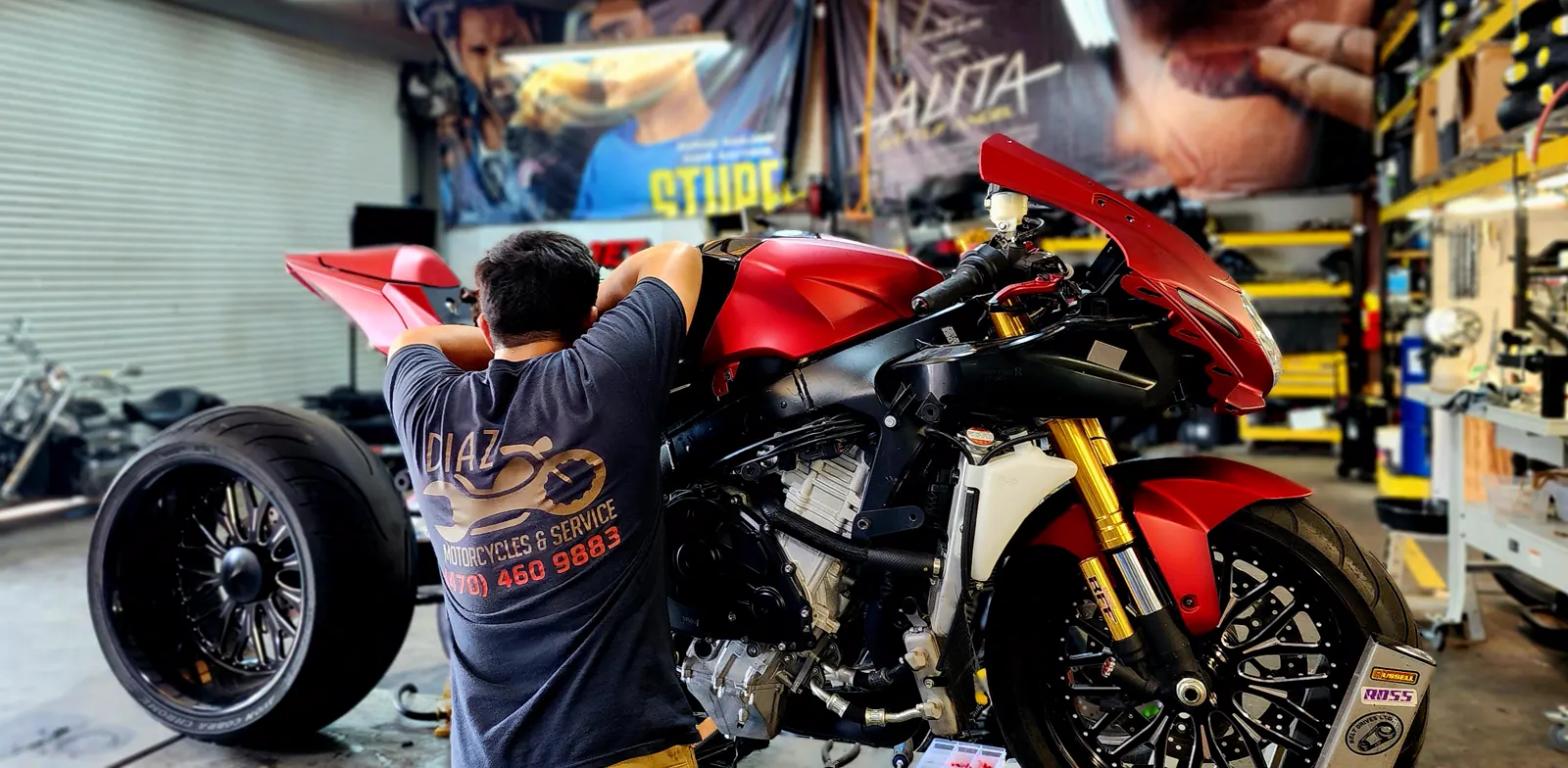
Here’s our real recommendation, no fence-sitting. If your bike has any breathing mods at all, a slip-on, a full exhaust, a high-flow filter, an intake, get it tuned. Full stop. Those parts change the air side of the recipe, and running them on the stock fuel map is the exact thing that makes a bike run lean, hot, and poppy. You already spent on the hardware. A tune is what lets that hardware do its job instead of fighting the computer.
We’d also lean toward a tune if your bike is bone-stock but drives you nuts with abrupt throttle or a lazy low end, which is common on bikes choked down to pass emissions. A gentle map often turns a twitchy, hard-to-lug engine into one you can ride smoothly at walking pace. That’s not about big numbers. It’s about the bike feeling like a friend instead of a light switch.
When leaving it stock is the smarter call
Now the honest flip side, because the other choice really does win sometimes. If your bike is completely stock, runs great, feels smooth, and gets the mileage you expect, there’s no rule that says you owe it a tune. A healthy, unmodified engine on its factory map is a perfectly happy machine. Chasing a tiny gain on a bike you’re already content with is spending effort you don’t need to spend.
Stock also wins if you’re about to sell the bike soon, if it’s under a warranty you want to guard carefully, or if the bike has a mechanical problem hiding underneath. A tune can’t fix a tired clutch, a clogged injector, or a worn chain and sprockets. In those cases we’ll tell you to fix the real issue first, and we’ll say so before you spend a dime on mapping. Riders over in Dallas hear the same thing from us, and we spelled it out for riders over in Dallas in a sister post.
THE SHORT VERSION
Bolt-on mods? Tune it. Cranky throttle that bugs you? A tune probably helps. Totally stock, runs great, and you’re happy? You’re free to leave it alone. There’s no wrong rider here.
How long it takes, and how to plan around it
A straightforward tune is usually a same-day or next-day job once the bike is on the schedule. More involved setups, a fresh exhaust plus a piggyback unit plus fussy fueling, can stretch longer because we make more pulls to get it right. We’d rather take an extra hour than hand you a rushed map. You’ll get a real time estimate up front, and a text when it’s done, not a mystery.
Timing your ride to us is worth a thought too. The reverse commute up I-75 to East Cobb is your friend here. An in-town rider heading north mid-morning runs against the inbound wave, so you’re rolling while everyone else sits. Drop the bike, grab coffee, and you’ve dodged the worst of the crawl in both directions.
Why this hits different for in-town Atlanta riders
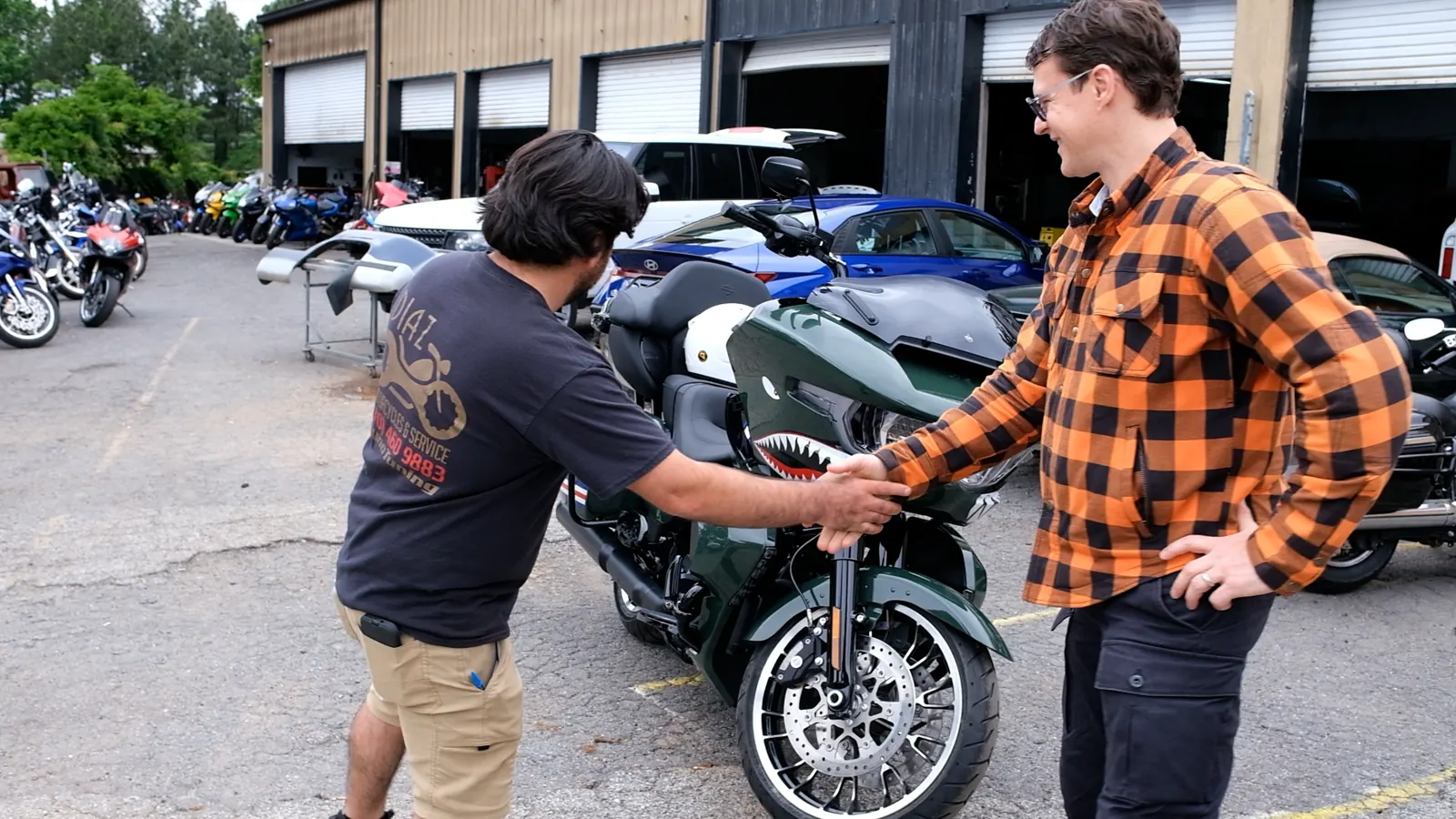
There’s a reason we bring this up on nearly every intake: where you ride in Atlanta shapes what your tune should do. A rider whose day is stop-and-go around the Midtown core, in and out of the high-rise towers along Peachtree, spends a lot of time at low speed with the clutch in. For that bike, a smooth, cool-running low end matters way more than peak power you’ll never touch downtown. Georgia law keeps you in your lane in that traffic, so you’re sitting in summer heat, and a good map helps the engine stay calm instead of cooking.
Peachtree Street itself is a reminder that smoothness beats aggression here. Midtown’s stretch is notorious for utility trenches under steel plates, a classic front-end-tuck hazard when it rains, and jerky throttle is the last thing you want crossing a slick steel plate. A tune that softens that on-off snap is genuinely a control upgrade, not just a comfort one. Meanwhile a Buckhead rider on a big cruiser who runs up to Chastain Park Amphitheatre for a show, or parks free at Atlantic Station off 17th Street on District Avenue, is asking for relaxed midrange and clean fueling, not a screaming top end.
That’s why one number could never answer the dyno tune vs stock Atlanta question for everyone. A commuter threading Tuxedo Park’s quiet estate streets near the Governor’s Mansion wants something different from a rider carving out to the suburbs on the weekend. The tune should fit your bike and your roads, and reading the graph is how we make sure it does. If you’re weighing shops, we also put together the full rundown on it for folks doing their homework.
The outcome you're actually buying
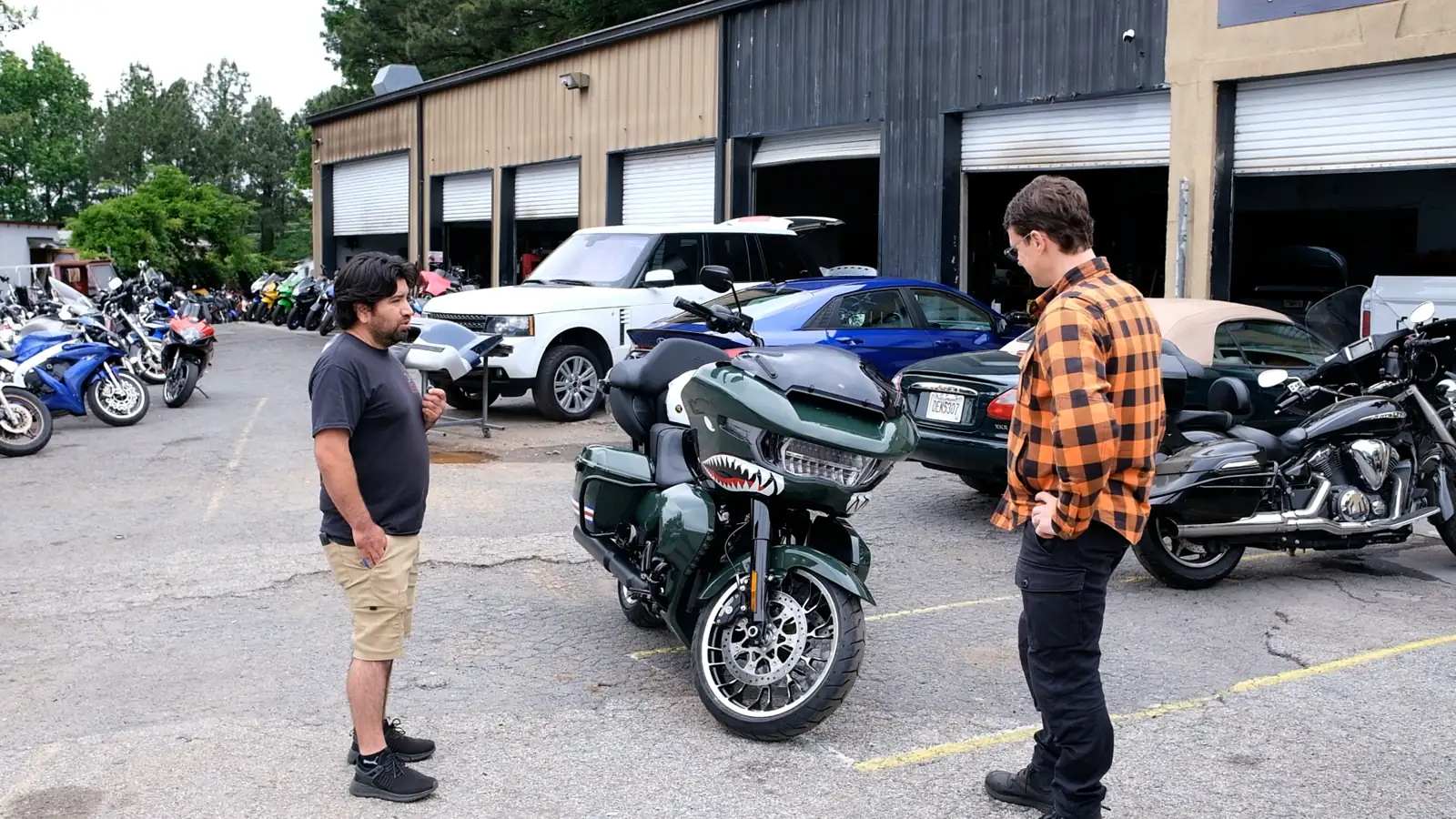
When a tune goes right, the win isn’t a bragging number. It’s the way the bike feels the next morning. The hesitation is gone. Of course, the throttle rolls on clean and predictable. The engine runs cooler in traffic and pulls with an easy, connected feel from down low. You stop thinking about the machine and just ride it. That’s the whole point, and honestly it’s a nicer feeling than any dyno chart.
And if the honest answer for you is to leave the bike stock, you get something valuable too: peace of mind that you’re not missing out, plus money kept in your pocket for the stuff your bike really needs. Either way you leave sure of the call, because we showed you the reasoning instead of just selling a service. New to riding or coming back after a break? Brushing up with MSF rider courses pairs nicely with a bike that finally behaves the way you want.
We should be fair about the field too. Shops like Atlanta Motorcycle Works over at 615 Mauldin Dr in Woodstock cover sales, service, parts, and restoration, and carry lines like Moto Morini, Benelli, Benda, and Keeway. Plenty of good people work on bikes around metro Atlanta. What we lean on is in-house custom mapping paired with our own dyno, so the answer to your tune question gets measured, not guessed. Bring the bike in, and let’s read yours together.
Questions Atlanta riders ask us
Can I start stock now and get a tune later?
Absolutely, and lots of friends do it that way. There’s nothing about riding stock first that hurts a future tune. When you’re ready, or when you add an exhaust or filter, just bring the bike in and we’ll map it then. The dyno reads it fresh no matter when you show up.
Which one do you actually recommend?
If your bike has any breathing mods, we recommend a tune, because those parts leave the stock fuel map mismatched. If your bike is bone-stock, runs great, and you’re happy with how it feels, you’re free to leave it alone. The mods, or a throttle that bugs you, are what tip it toward tuning.
Does my specific bike change the answer?
Yes, quite a bit. A stop-and-go commuter wants a smooth, cool low end, while a weekend bike wants clean midrange pull. Some bikes get a flash of their own computer, others get a piggyback unit. That’s exactly why we read your bike on the dyno instead of quoting a one-size number.
Is the upgrade really worth it on a stock bike?
It depends on how the bike feels to you now. If it’s smooth and you’re content, a tune is optional and we’ll tell you so. If a stock bike is twitchy on the throttle or lazy down low, a gentle map often makes it far nicer to ride at low speed, which many riders find well worth it.
Between tune and stock, which should I pick?
Pick a tune if you’ve added parts or the bike’s throttle annoys you. Pick stock if the bike is unmodified, healthy, and you’re happy, or if you’re selling soon or guarding a warranty. If a mechanical issue is hiding underneath, fix that first, because a tune can’t cure a worn clutch or chain.
Do you show proof of what changed?
Every time. You leave with a before-and-after graph of your bike’s power, torque, and air-fuel mix, so you can see what the tune did rather than just trust us. If the honest call was to leave it stock, we’ll show you that reading too. No mystery either way.
We tune and wrench for riders all across metro Atlanta from our Marietta shop. That includes Buckhead and Midtown riders making the quick reverse commute up, plus friends in Decatur, Sandy Springs, and Brookhaven who’d rather deal with a shop that texts back. We’re an easy hop for Smyrna, Vinings, and Mableton, and we regularly see bikes from Chamblee, Tucker, and East Point too. Wherever you park it in-town or out, the dyno reads your engine the same honest way.
LET'S READ YOUR BIKE, NOT GUESS AT IT
If you’re stuck on the dyno tune vs stock question here in Atlanta, don’t settle for a number over the phone. Text us how your bike feels and what mods it has, and we’ll tell you straight whether a tune makes sense or whether stock is the smarter call. Drop the bike in Marietta on the reverse commute, grab a coffee, and leave with a real answer and a graph to prove it.
470-460-9883Diaz Motorcycles and Service, LLC · 847 Barnes Mill Road, Marietta, GA 30062