Best Dyno Tuning Cartersville — How to Choose
How to judge a tuning shop, what a dyno really measures, and why a good map changes how your bike feels.
So you rolled your bike in with one simple question. Still, Something felt off — a flat spot when you cracked the throttle, a little popping on decel. Plus, the guy behind the counter barely looked up. Meanwhile, he said ten words you didn’t know, shrugged, and told you it was “just how these run.” You left feeling small, and the bike still ran the same. That is a rough way to spend an afternoon. It is also the exact moment most folks start hunting for the best dyno tuning Cartersville has within reach.
Of course, here is the good news, and we mean it. That feeling is not on you. In fact, Tuning got wrapped in mystery on purpose, and a lot of that mystery is just jargon standing in for a plain idea. So let’s take the mystery out. For example, By the end of this, you’ll know what a dyno measures, why a bike runs lean or rich, and what a real tune actually changes in how your ride feels. You’ll also know how to walk into any shop and tell the pros from the guessers in about five minutes.
What a dyno actually measures
Even so, a dyno is a machine that lets your bike run hard while it stays still. What’s more, the rear wheel spins a big steel drum. After that, the drum fights back with a known amount of resistance. Also From that push and pull, the dyno reads how much power and pulling force your engine is making at every point in the rev range. Instead In plain words, it turns a feeling into a picture.
That picture is the whole point. A road can lie to you. Besides Wind, a hill, and adrenaline all mess with what your seat tells your brain. Actually the dyno does not care about any of that. That’s why it just reports the truth, over and over, so a tuner can see the exact spot where the engine gasps or floods instead of pulling clean.
Either way there is a second, quieter gauge that matters even more. In short a sensor sniffs the exhaust and reads the air-fuel ratio. That number tells the tuner whether the engine is getting the right mix of air and gas at each throttle position. Watch that line move and you can spot trouble long before it shows up as a stumble or a hot-running motor.
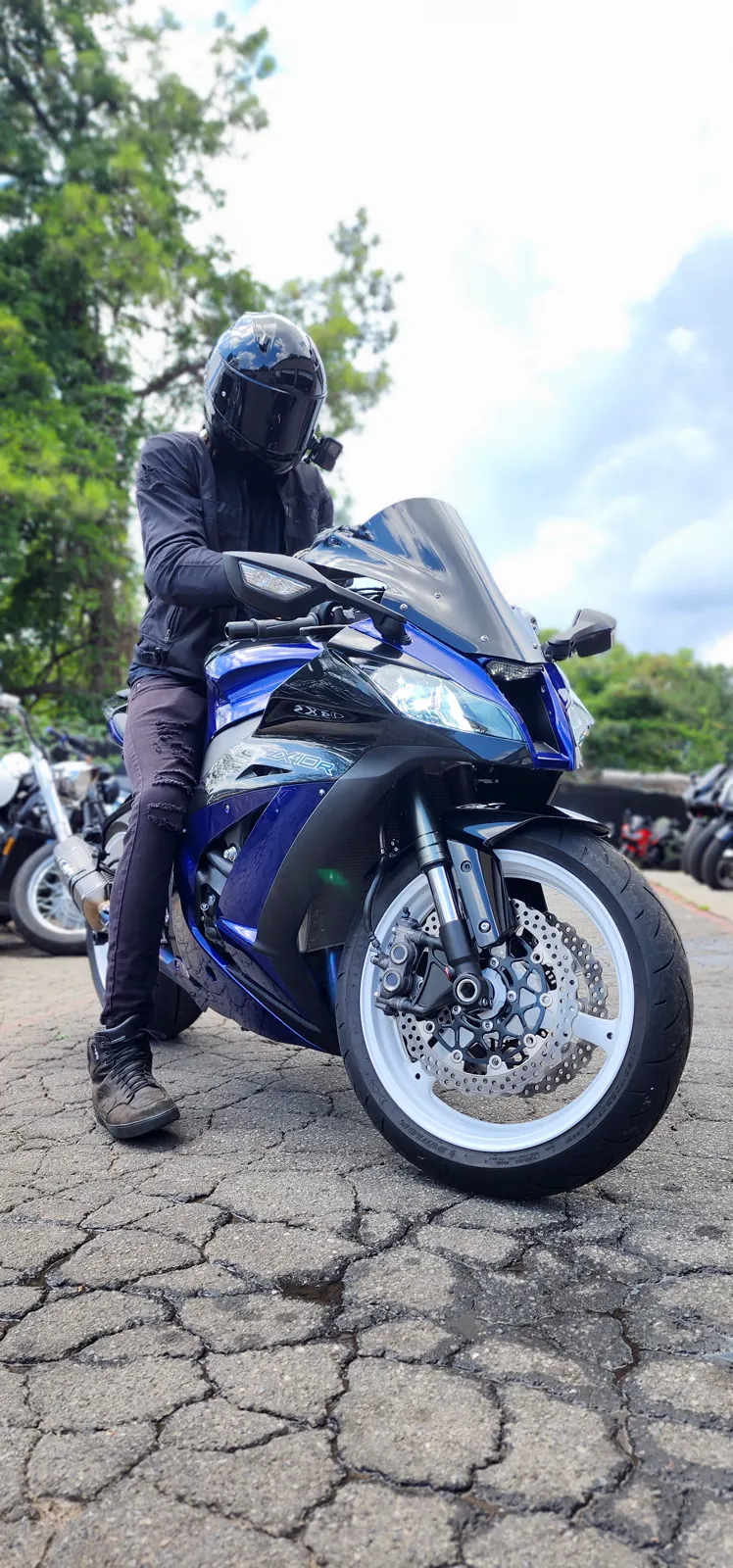
So when a shop says they will “put it on the dyno,” they are really saying they will measure the truth before they touch a thing. That baseline is sacred. Skip it, and everything after is a shot in the dark.
Lean or rich, in words you can use
You have heard someone say a bike runs “lean” or “rich.” Those words sound like a secret handshake, but they’re simple. Think of your engine like a campfire. Air is the oxygen. Fuel is the wood. Get the mix right and it burns clean and strong.
Lean means too much air and not enough fuel. A lean bike often runs hot, pops on decel, and feels twitchy or hesitant at part throttle. Rich means the opposite — too much fuel for the air. A rich bike can smell like gas, foul plugs, run sluggish, and waste fuel. Neither one is a death sentence. Both are just a mix that got knocked out of balance, and a tune is how you set it back.
Why does a bike drift lean or rich in the first place? Usually because something changed. A new exhaust flows more air. A high-flow filter breathes easier. Even a fresh air temperature or a lot of elevation can shift the mix. Most bikes leave the factory tuned a little lean on purpose to pass emissions, so the second you bolt on parts, that stock map is out of date.
Before we go further, one thing worth clearing up. A tune is not a magic horsepower button, and any shop that talks like it is should raise an eyebrow. We will never promise you a number we haven’t measured, and we won’t quote you power figures out of thin air. What a good tune really does is make the power you already have usable and smooth, everywhere, all the time.
That is the part that changes your life on the road. A well-mapped bike pulls without hiccups. The throttle feels connected to your wrist instead of lagging behind it. Cruising gets calmer, heat drops, and that annoying surge at steady speed just goes away. You feel it most in traffic and in the twisties, right where a jerky throttle wears you out.
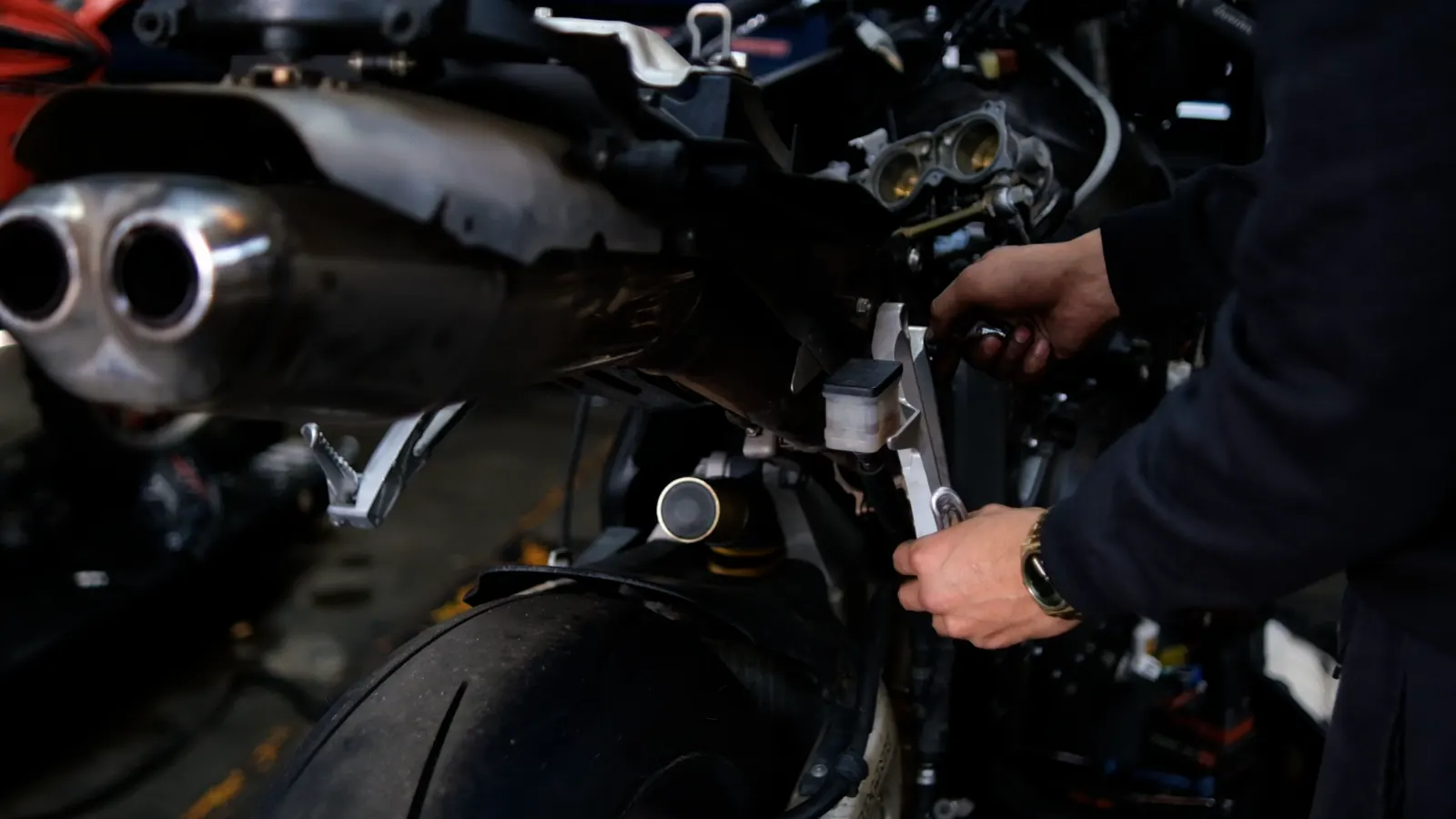
How a good shop diagnoses your bike
Now for the part that separates the real deal from the guessers. Diagnosis. A shop that knows what it’s doing does not start by selling you parts. It starts by listening and measuring. We ask what you feel, when you feel it, and what changed on the bike lately. Those answers point us straight at the likely trouble.
Then we get data. We strap the bike down and run it, watching the power line and the air-fuel line together. If the mix goes lean right where you feel that flat spot, there’s your smoking gun. We are matching what you feel in the seat to what the sensors read on the screen. When those two agree, the diagnosis is solid — not a hunch, not a shrug, and not “they all do that.”
A fair shop will also tell you when you do not need a tune at all. Sometimes the real fix is a loose clamp, a tired plug, or a vacuum leak faking a fuel problem. Honest measuring catches that too, and it saves you from paying for a tune that was never the answer. If you want the deep version, here is the full rundown on it from a nearby town that faces the same questions.
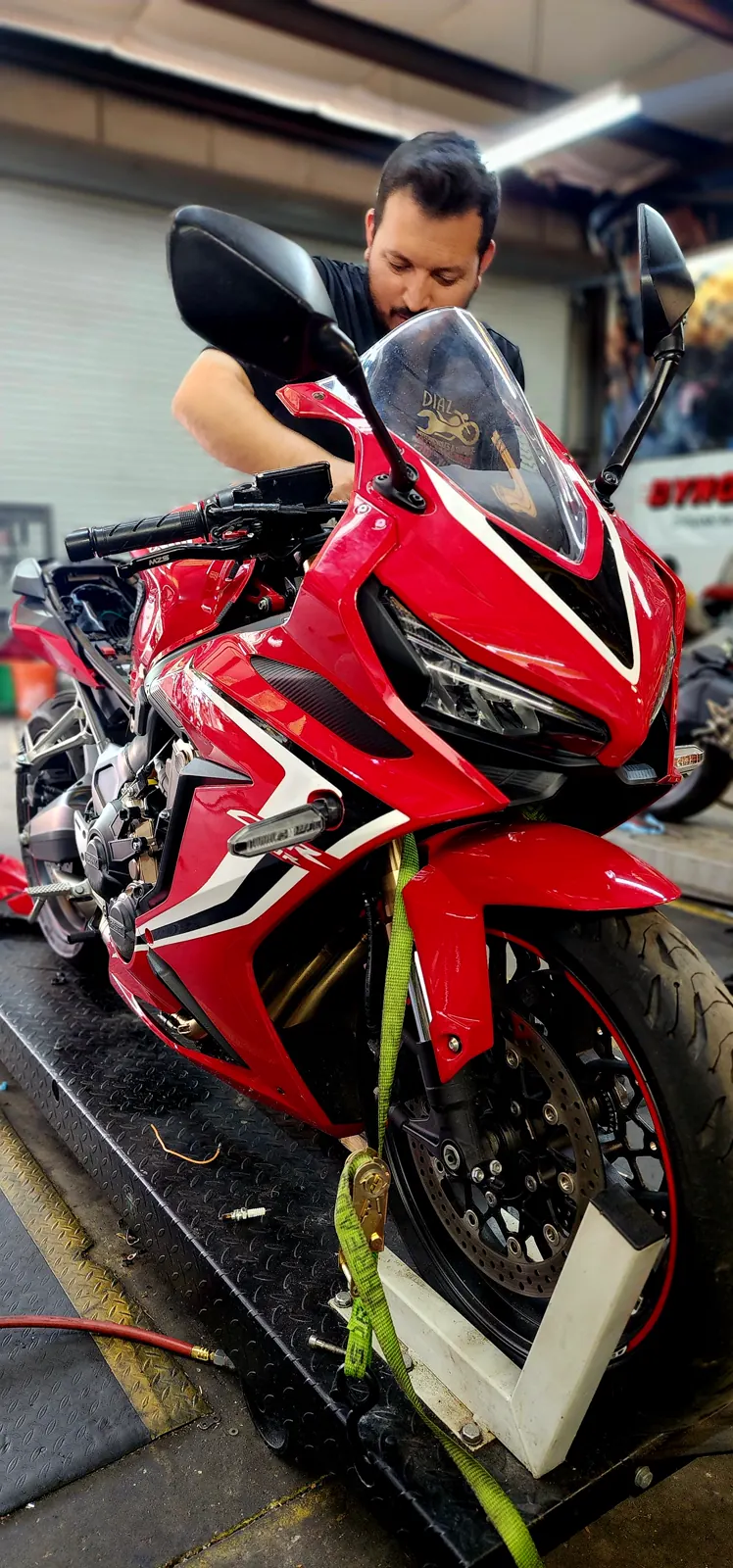
What the fix actually involves
Once we know the story, the fix depends on your bike. On many modern machines, we adjust the brain — the ECU — with a flash that rewrites the fuel and timing tables. On others, we add a piggyback like a Power Commander that layers our changes on top of the stock map. Either way, the goal is the same: feed the engine the right mix at every throttle position and rpm. If you’re new to the idea, this walks through what that service actually involves in plain steps.
A custom tune on the dyno is not one setting. It’s a whole map, dialed in a little at a time. Here is what a careful session looks like:
- Take a baseline pull so we know exactly where the bike stands before we touch it.
- Read the air-fuel line across the full rev range, at low, mid, and full throttle.
- Adjust the fuel and timing in small steps, then re-run and re-measure.
- Chase out the flat spots, the surge, and the decel popping one by one.
- Confirm the bike is safe and consistent, not just strong for a single lucky pull.
That back-and-forth is the craft. It’s why a real tune takes time and why a rushed one never sticks. You are paying for judgment and patience, not a button press. If you want to see the whole menu, this is what we take care of here, from a simple flash to a full custom map.
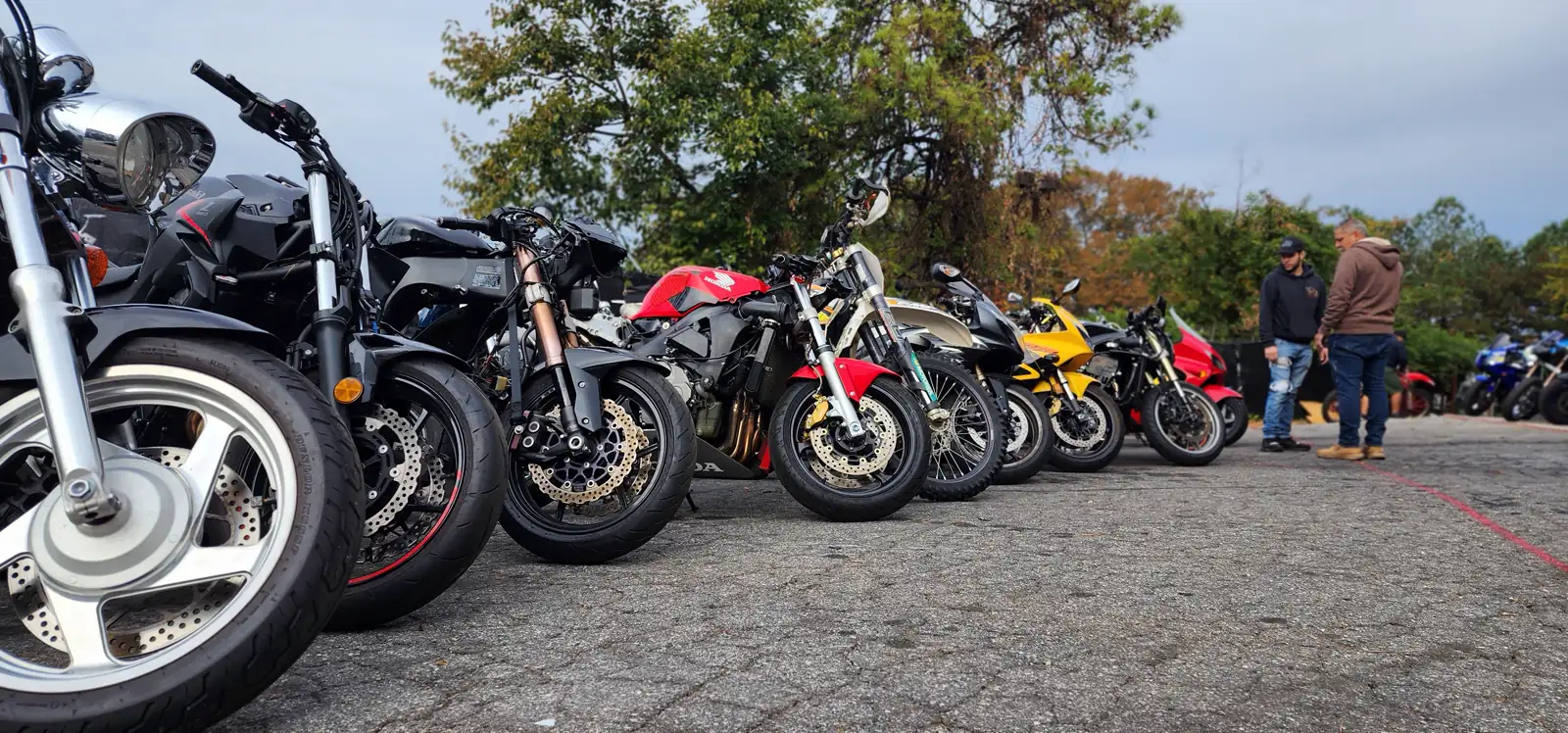
How to choose a shop you can trust
This is really why you’re here. You’re comparing shops and deciding who to hand your bike to, and finding the best dyno tuning Cartersville offers comes down to a few honest signs. Bartow County is a show-me place. Folks here judge a shop the way they judge a machine, and that instinct is exactly right. So use it. Here is a simple checklist you can carry into any door:
- They measure before they sell. A baseline dyno pull comes first, every time.
- They talk in real terms — air-fuel ratios, throttle positions, before-and-after data — not vague adjectives.
- They show you the numbers they got, and they never invent numbers they didn’t.
- They’ll tell you when you don’t need a tune, and why.
- They work on your kind of bike, whether it’s a bagger, an import sportbike, or a project.
- They explain it in words you understand, and they never make you feel dumb for asking.
Notice what’s not on that list — bragging. A shop that only talks itself up, without showing you data, is asking for faith instead of earning it. The riders over at the counter here in a genuine Harley town, near the folks who keep the Cartersville Georgia H.O.G. Chapter #1593 rolling, tend to spot that fast. And plenty of riders over in Roswell ask us the very same questions you’re asking now.
There’s a reason we bring this up on nearly every intake. Trust is the whole ballgame in tuning, because you can’t see the work from the saddle. You only feel the result. So we’d rather earn it out loud — show you the baseline, walk you through each change, and hand you the after numbers — than ask you to just believe us. That’s the difference between a shop that guesses and one that measures.
Being fair also means being fair about the other shops. Cartersville is well served for a couple of the big brands, and those folks do good work in their lane. What’s harder to find nearby is one independent shop that tunes across every make and model under one roof. That’s the gap we fill. It’s not a knock on anyone — it’s just a different job, and it’s the one we love.
A little local context
Cartersville riders have some of the best roads in the state right out the back door, which is exactly why a crisp throttle matters so much. You stage in town — maybe roll past the old downtown square where the world’s first outdoor painted wall sign for Coca-Cola still sits on the south side — and then you point the bars at the mountains. US-411 north to Fairmount is the classic launch. From there you can swing GA-53 east to Jasper, drop GA-5 and I-575 south to Canton, and loop GA-20 and GA-108 back west to close it out.
That GA-53 leg is the one that tests you. It’s curvy, and part of it is carved right into a cliff, so a bike with a jumpy throttle turns a great road into a tiring one. Nail the tune and the same road turns into pure joy. Plenty of folks make Bigguns BBQ near Jasper the halfway stop, because a good loop deserves a good plate. Closer to home, weekend miles run down GA-61 toward Dallas and Paulding County, or a lazy afternoon out by Lake Allatoona, where half of Bartow ends up when it’s warm. Locals just say Allatoona and everyone knows.
You feel a tune everywhere, but you feel it most on roads like these. Around the historic commercial core of the Downtown Business District, the stop-and-go is where lean-running heat and decel popping wear on you. Out through the established streets of Carter Grove, it’s the steady-cruise surge that gets old. And on the long National Register blocks of the Cartersville Downtown Historic District, a smooth idle and a clean pull just make the whole ride feel calmer. A good map fixes all three.
What you get at the end
So picture the flip side of that bad afternoon we opened with. You bring the bike in. Someone actually listens. They measure, they show you the picture, they explain the plan in plain words, and they hand you the after numbers with nothing invented. You ride off, crack the throttle, and the flat spot is gone. The bike feels like it finally woke up.
A great tune doesn't add drama. It just quietly makes every mile feel right.
In the end, the best dyno tuning Cartersville riders can find isn’t about the loudest claims — it’s a bike that pulls clean, runs cooler, and feels connected to your hand. No mystery, no talking down, no faith required. Just measured, honest work you can feel the second you leave the lot. Ride safe out there, keep the DOT helmet on, and if you’re newer to the sport, the MSF Basic RiderCourse is time well spent.
THE SHORT VERSION
A dyno measures the truth. Lean or rich just means the air-fuel mix got knocked off. A good shop measures before it sells, shows you real numbers, and never invents power figures. That’s how you tell a tuner from a guesser.
Questions Cartersville riders ask us
How far out do you serve? I'm up in Bartow County.
Plenty of our friends ride down from Cartersville and all over Bartow. We’re an easy trip south down I-75, and lots of folks make a morning of it. Distance is no reason to settle for a shop that won’t measure your bike honestly.
Can you pick up my bike if I can't ride it in?
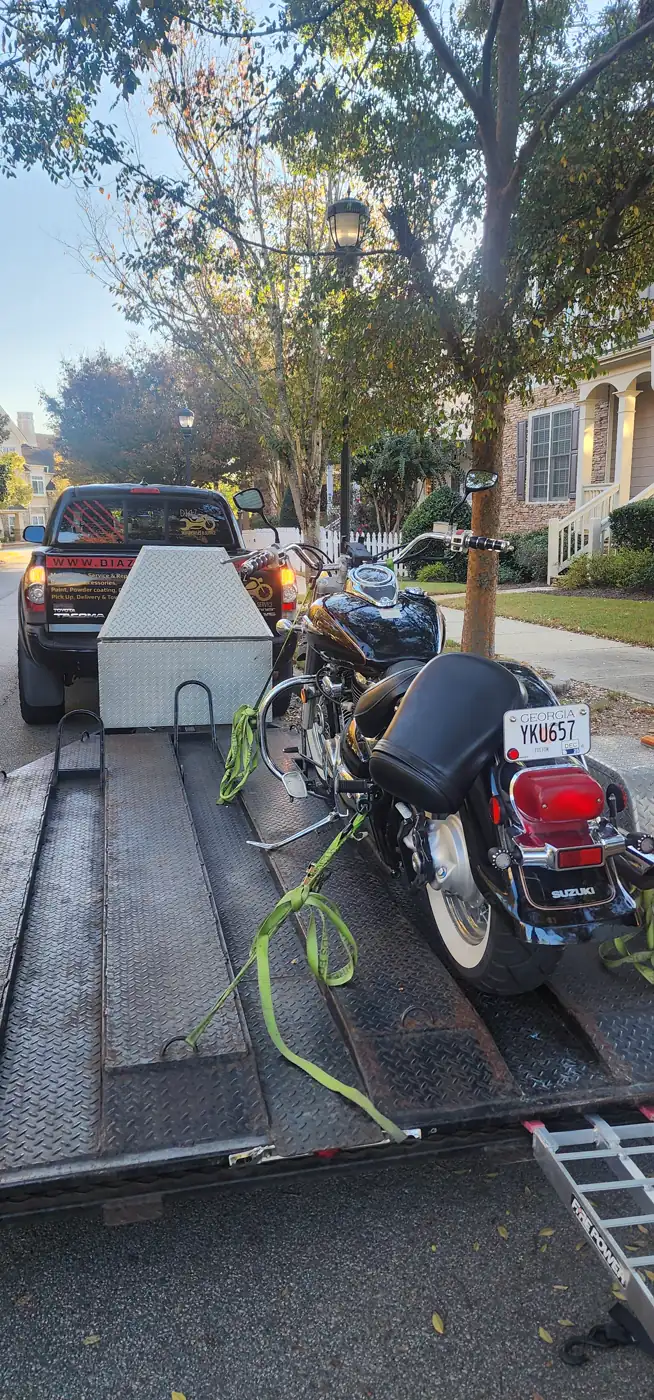
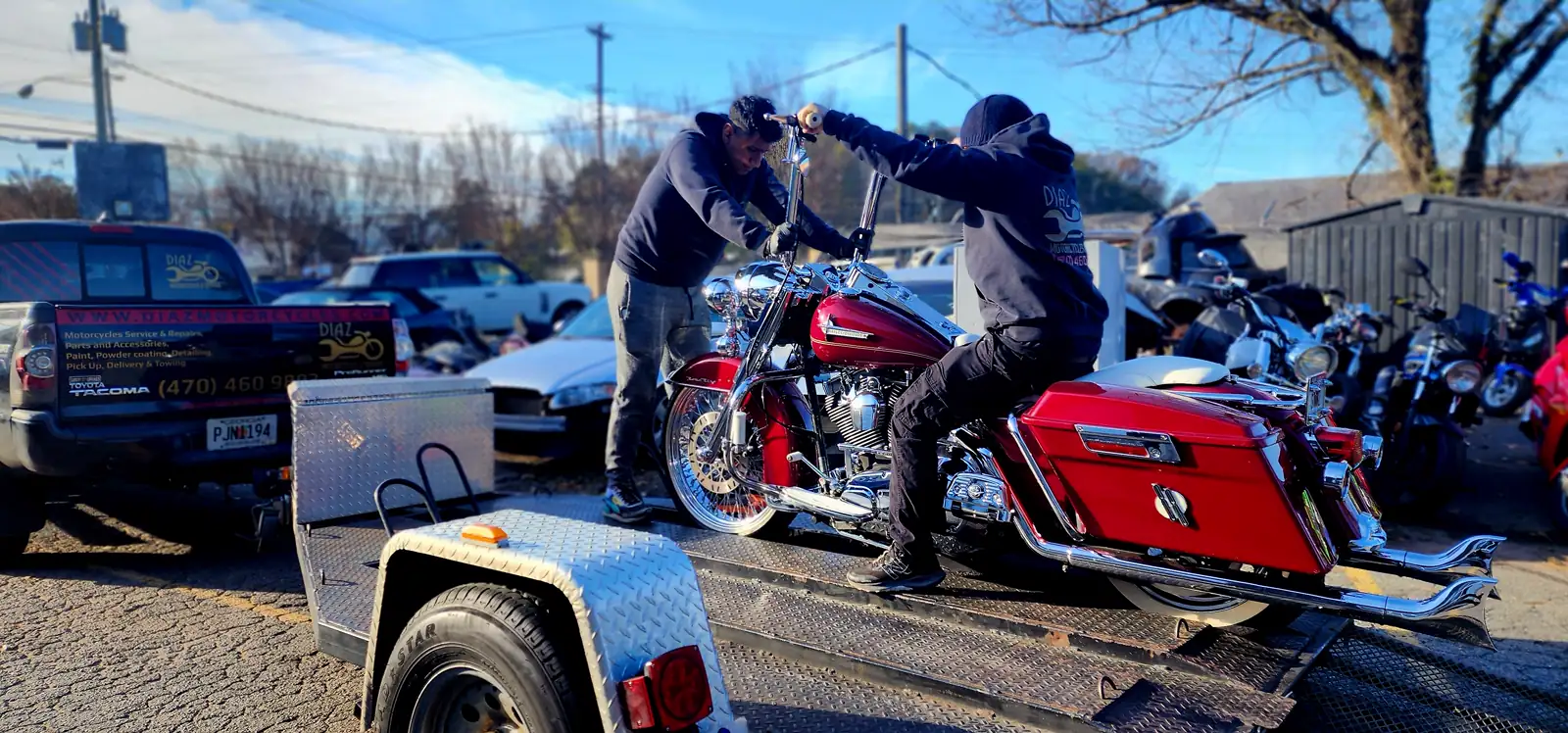
Yes. If the bike isn’t running right, or you just can’t spare the time, we can arrange transport and bring it to the shop. You don’t have to risk riding something that feels off. Just reach out and we’ll set it up.
How do I know your diagnosis is actually right?
We match what you feel to what the sensors read. If you describe a flat spot and the air-fuel line goes lean at that exact throttle position, that’s proof, not a guess. We show you the data before and after, so you can see the fix with your own eyes.
What makes you different from a brand dealer?
The big-brand shops nearby do solid work in their lane, and we respect that. The difference is we tune across every make and model under one roof — cruisers, baggers, imports, sportbikes, and projects. We’re the independent shop that measures first and never invents a power number.
How do I pick a good tuning shop in general?
Watch for four things. They take a baseline pull before touching anything. They talk in real terms like air-fuel ratios instead of vague adjectives. They show you the numbers and never make any up. And they’ll tell you honestly when you don’t even need a tune.
Will a tune add horsepower to my bike?
A tune makes the power you already have usable and smooth everywhere, and it can free up gains when you’ve added parts. But we won’t promise you a figure we haven’t measured on the dyno. Any shop quoting big numbers before they’ve run your bike is guessing.
We take care of riders all over the northwest metro, not just here in Marietta. Friends roll in from Acworth, Kennesaw, and Woodstock, and from up the corridor in Emerson, White, Adairsville, and Kingston. We also see plenty of bikes from Euharlee, Taylorsville, and Rydal, along with folks coming over from Canton and out of Dallas. Wherever you stage your rides in and around Bartow County, an honest tune is worth the trip.
LET'S SET YOUR BIKE STRAIGHT
If your bike feels off and you’re tired of being told “they all run like that,” bring it to people who measure before they talk. We tune the truth into your bike, show you the numbers, and get you back on the road toward the Cartersville mountains feeling connected to the throttle again. Text us about your bike and we’ll tell you exactly what it needs — no mystery, no guessing.
470-460-9883Diaz Motorcycles and Service, LLC · 847 Barnes Mill Road, Marietta, GA 30062