Motorcycle Running Lean Gainesville — How to Fix It
A stumble off idle, chalky pipes, and more heat than usual all point to one thing. Here's what it means and how a real tune sets it right.
Of course, Picture the same Saturday ride you love, one month from now. In fact, that little pop on deceleration has turned into a stumble off idle. The pipes have gone chalky white. For example, the engine that used to pull clean up US-129 north now surges and hangs high between shifts, and it cooks your legs in stop-and-go traffic near town. Even so, that slow slide is what a motorcycle running lean Gainesville riders keep putting off can turn into. What’s more, the good news is simple: it’s fixable, and there is almost always a clear cause sitting behind it.
After that, Lean just means your engine is pulling in too much air for the fuel it’s burning. Rich is the opposite, too much fuel for the air. Your bike wants a steady balance of the two, and when that balance drifts, the engine tells on itself. It runs hot. Plus, it stumbles. It pops on the overrun. None of that is a mystery to us. Every one of those signs points back to a real cause, and most of the common ones are things we see on the bench every single week.
What running lean feels like from the seat
You don’t need a scan tool to feel a lean condition. Your body picks it up before any gauge does. Riders describe it a dozen ways, but the pattern is usually the same. Here’s what shows up first, and what our friends tell us when they roll in worried.
- A stumble, hesitation, or flat spot right off idle when you crack the throttle
- Popping or backfiring through the exhaust when you roll off the gas
- More heat than normal, especially on your legs in slow traffic
- Idle that hangs high or won’t settle, then surges up and down on its own
- Pipes turning a chalky gray or bone white instead of a light tan
- Harder starting, or a cold engine that stalls until it warms up
- A flat, gutless feeling in the midrange where the bike used to pull hard
If you nodded at three or four of those, you’re not imagining it. Your bike isn’t being dramatic. It’s being honest. And honest is good, because a bike that shows its symptoms clearly is a bike we can read fast.
What each sign is actually telling you
Let’s walk the likely causes in order, most common first. The single most frequent reason a bike runs lean is an air leak somewhere it shouldn’t be, and it’s usually cheap to find. A cracked intake boot, a loose clamp, a dried-out vacuum line, or a tired throttle-body seal lets extra air sneak in past the sensors. The engine never planned for that air, so the mix goes thin. This is the first thing we chase because it’s so common and so often overlooked.
Next up is a fuel map that no longer matches the bike. This one trips up a lot of good riders. If someone added a slip-on exhaust, a full system, or an open air filter and never re-tuned, the bike is now breathing more but still spraying the same fuel it did stock. More air, same fuel, and there’s your lean condition, built right in. It ran fine the day the parts went on and drifted worse from there. Because so many bikes here wear aftermarket pipes, this is a regular one for us.
Third is plain fuel delivery falling behind. A clogged fuel filter, a weak pump, a partly blocked injector, or dirty carbs on an older bike all starve the engine of the fuel it’s asking for. The result feels identical from the saddle, a thin, hot, stumbling mix. On bikes that sat in a garage all winter, and up here plenty of them do, stale fuel and gummed carbs are near the top of the list.
Last come the quieter causes. A lazy oxygen sensor feeding bad data, a stock tune that was always a touch thin from the factory to pass emissions, or simple elevation. Gainesville sits at more than a thousand feet, higher than most of Atlanta, and thinner mountain air changes what your engine wants. None of these are scary. They’re just line items on a checklist, and a checklist is exactly how a real fix works.
What a good shop checks that a rushed one skips
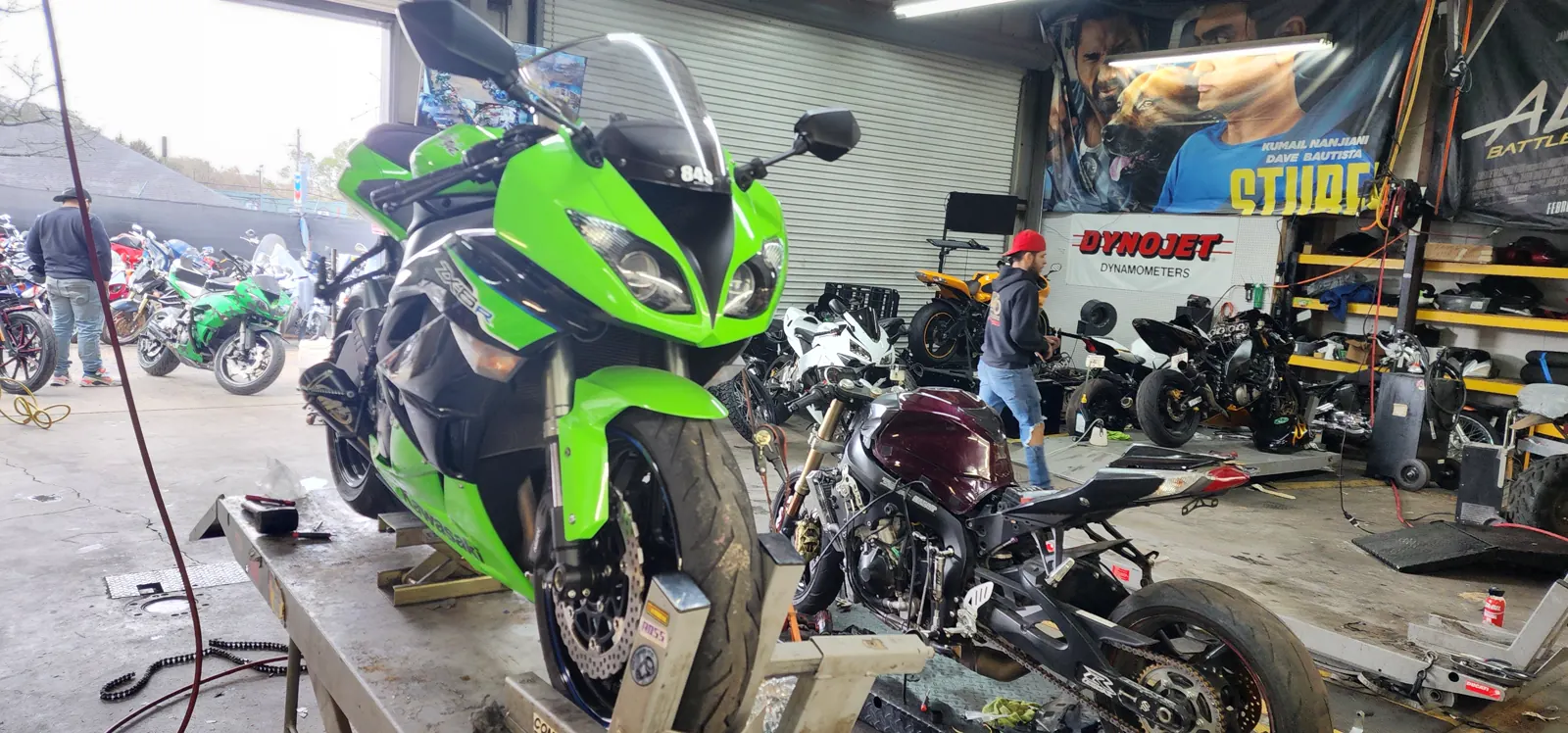
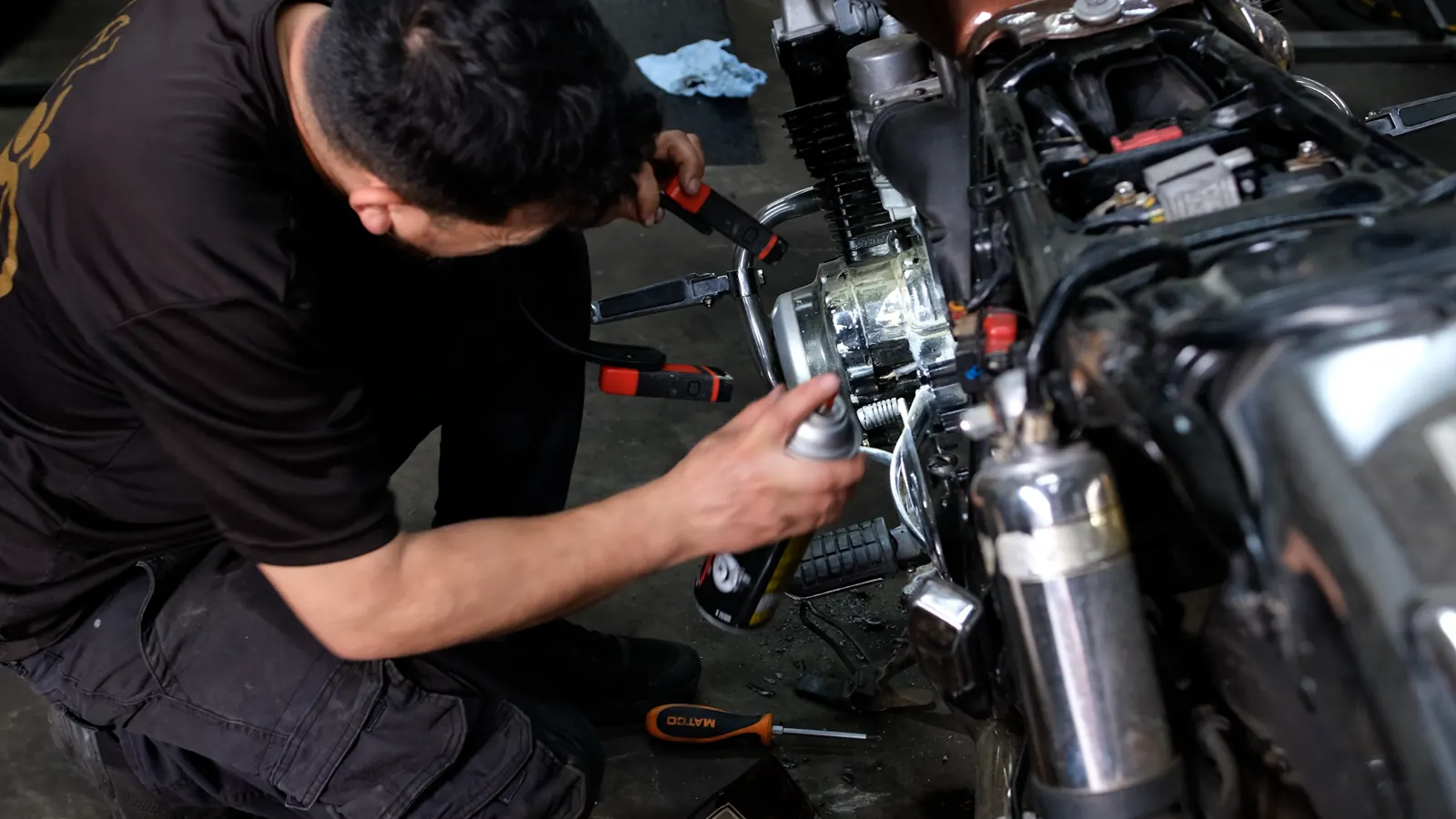
Here’s what a good shop checks that a rushed one skips. A rushed shop hears “lean” and reaches straight for the tuning software, cranks in more fuel, and sends you home. That masks the symptom. It doesn’t fix the cause. If a cracked intake boot is the real problem, you’ve now papered over an air leak with extra fuel, and the day that boot fails all the way, you’re right back here. We start the other direction. Meanwhile, we check the boots, clamps, and vacuum lines. We look at the fuel filter and pressure. We read the plugs and the pipe color. Only once the bike is mechanically honest do we put it on the dyno.
So what does a dyno actually measure? Think of it as a treadmill for your bike. We strap the bike down on a roller, and it runs through the gears in place while sensors read what the engine is really doing at every rpm. A sniffer in the exhaust reads your air-fuel mix live, so we can see exactly where the bike goes thin and where it goes fat across the whole range. Instead of guessing, we watch the numbers change as we ride the bike through its powerband, standing still. That’s the difference between hoping the mix is right and knowing it.
WHAT A TUNE ACTUALLY CHANGES
A tune doesn’t add magic. It re-teaches the engine how much fuel to spray at every throttle opening and rpm, so the mix stays balanced everywhere. You feel it as a clean pull off idle, a crisp throttle, less heat, and a smoother roll-on. The bike stops fighting you.
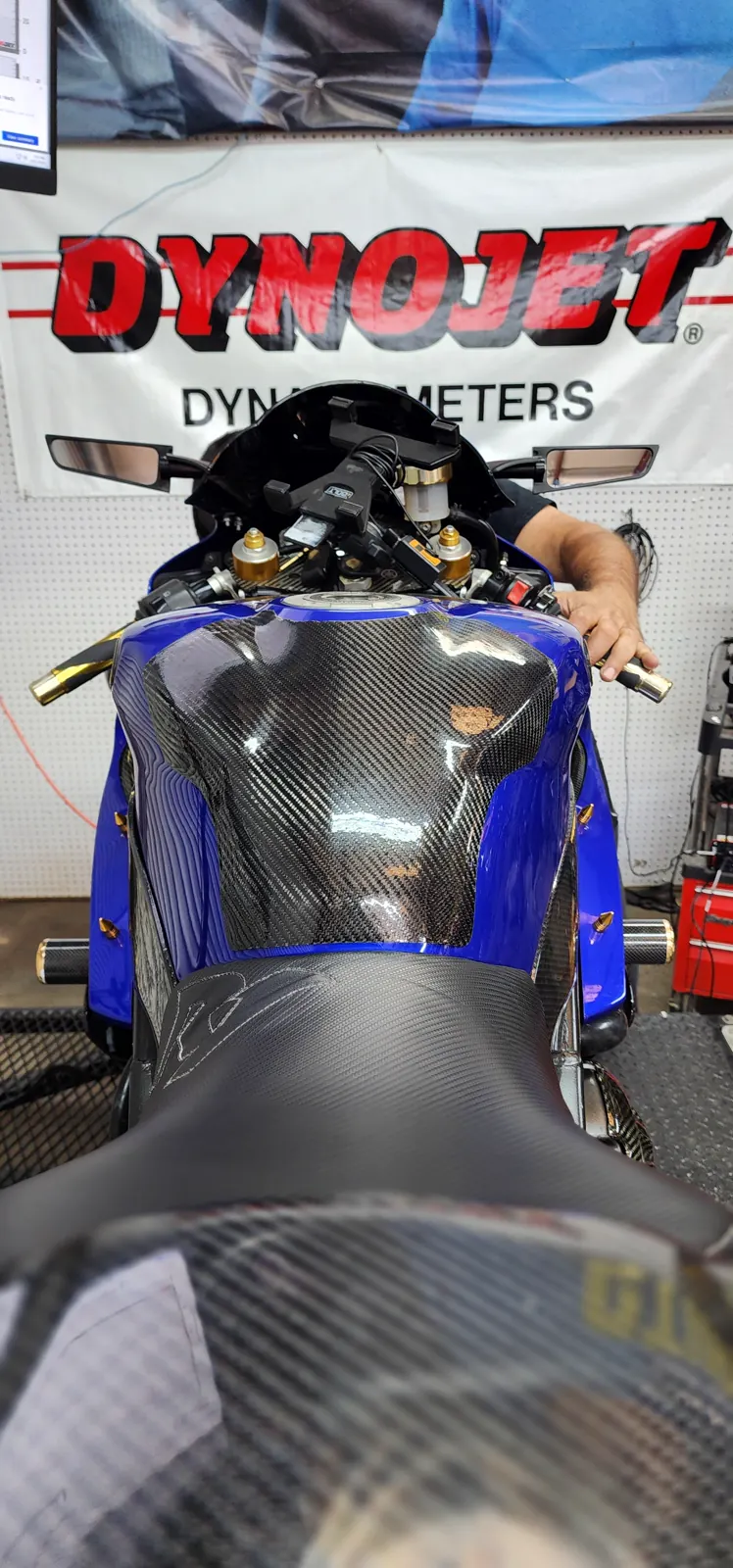
On a fuel-injected bike, we do this with an ECU flash or a Power Commander. On older carbureted bikes, it’s jetting and needle work read the same way, on the same rollers. Either path, the dyno keeps us honest. If you want the deeper version of how the machine and the mapping fit together, that’s the work we do in house, and it’s worth understanding before you decide. For a fuller breakdown of what that service actually involves, we’ve written that up too, so you can see the whole process start to finish.
When it's safe to ride and when it isn't
This is the question every rider actually wants answered, so let’s be plain about it. A mild lean condition, a small stumble off idle, a bit of decel pop, is usually safe to ride gently to the shop. The engine isn’t in danger over a short, easy trip at a relaxed pace. You’re not going to hurt anything cruising it in for a look on a calm road. So don’t panic, and don’t leave the bike parked all season out of fear of a problem that a single afternoon usually sorts out.
But a few signs mean stop riding and call us for pickup instead. Here’s where the line sits.
- Pinging or knocking under load, that light metallic rattle when you roll on, means back off now
- A temperature gauge climbing into the red, or heat you can’t stand in normal traffic
- A hard stumble bad enough to stall you in an intersection or leave you stranded
- White or badly blistered spark plug tips, a sign the engine has been running hot and thin for a while
Lean running raises combustion heat, and heat is what wears an engine before its time. That’s the honest reason not to sit on it for a whole season. Still, most bikes that roll in are firmly in the “safe to ride here gently” camp, so the fix is usually a good day, not a rebuild. If you want to see how the same problem reads on a different bike, here’s how this plays out in Sandy Springs, where a reader had the identical symptom list. For the tire and heat side of things, Dunlop’s technical resources are a solid, plain-English place to start.
How this played out near the Square
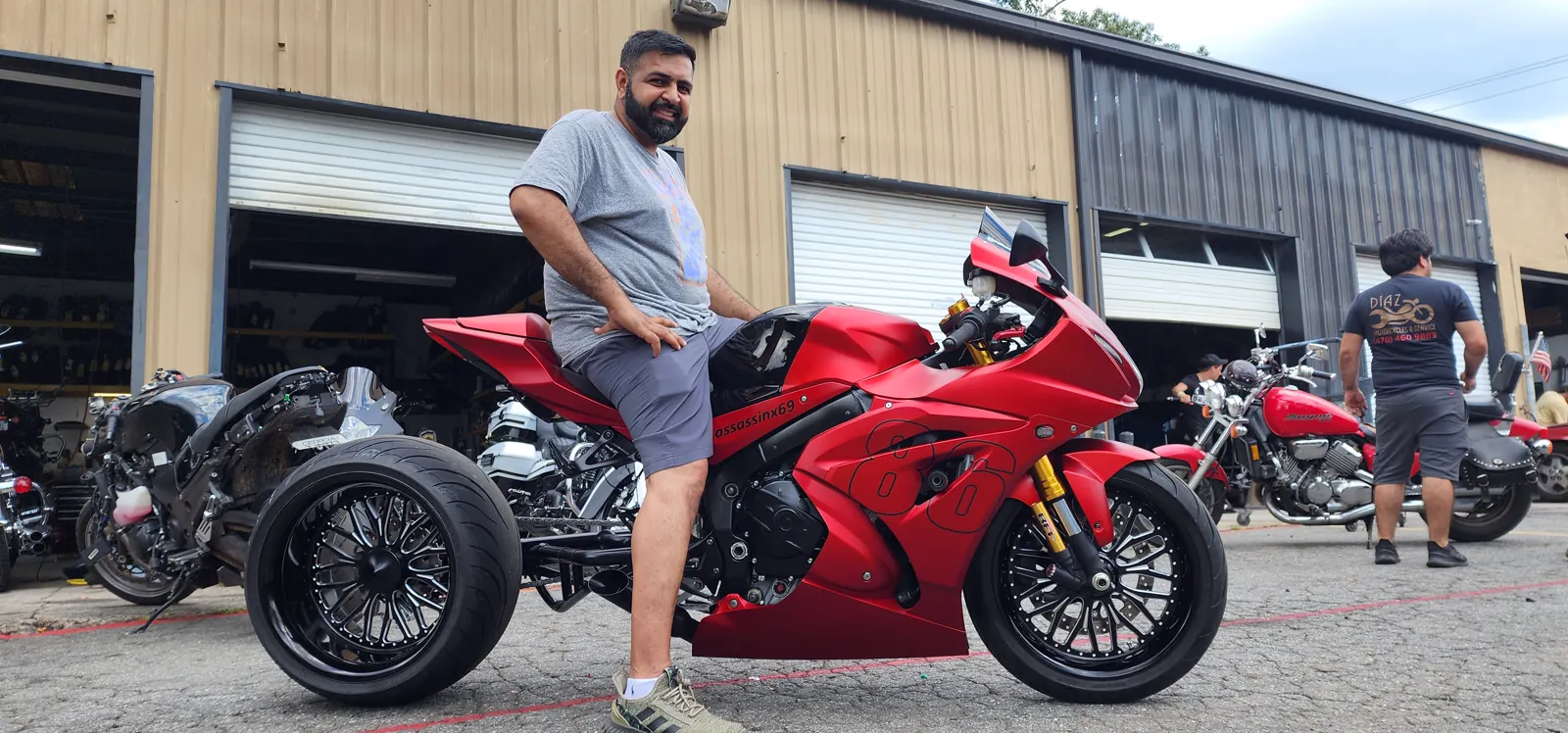
Here’s how this played out for someone over by Downtown Gainesville Square. A rider who keeps his bike in a garage off the Green Street District brought us a cruiser that popped on every downshift and roasted his shins at the light by 112 Main Street. He’d added a full exhaust the year before and never re-tuned it. Classic setup, more air and the same old fuel. We found a loose intake clamp on top of the mismatched map, tightened the mechanical side first, then flashed a proper tune on the rollers. He texted us from GA-53 on the way home, the east-west artery that crosses the north end of Lake Lanier toward Dawsonville, and said the bike felt like a different machine. No pop, no roasting, clean pull.
We hear versions of that from all over Hall County. A track-focused sportbike owner in Brenau Point who runs days at Michelin Raceway Road Atlanta, the road course down in Braselton, needs his mix dialed for hard, sustained load. A weekend cruiser rider out in the Lanier Estates and Lanier Forest subdivisions just wants his bike to stop stumbling on the way to breakfast. Different bikes, same root fix. The Harley crowd has Frazier’s Harley-Davidson down in Buford for routine work, and that’s a fine option for an oil change. But when the answer is real fueling work on a dyno, a rider up here is leaving the county either way, because there’s no dyno of this kind in Gainesville at all.
That’s also why the honest question isn’t just “can you make it faster.” Sometimes stock is right for how you ride, and sometimes it isn’t. If you’re weighing whether a tune is even worth it for your bike and your roads, we laid out the tradeoffs between them in plain terms, no pressure either way. The point of the dyno isn’t more power for its own sake. It’s a bike that runs the way it’s supposed to, cool and clean, whether you’re touring the mountains or lapping a track.
You've got more control here than it feels like
Here’s the part we want you to walk away with. A motorcycle running lean Gainesville riders often dread is really one of the most readable, most fixable things a bike does. The symptoms line up with the causes, the causes show up on a checklist, and the checklist ends on a dyno that reads the truth instead of guessing at it. You don’t have to live with a bike that pops, stumbles, and cooks your legs on a hot afternoon. You just have to have it looked at by someone who checks the mechanical side first, before they ever touch the tune.
A bike that shows its symptoms clearly is a bike we can read fast, and fix once.
If you’re newer to all this and want to build confidence on two wheels while you’re at it, MSF Basic RiderCourse is a great foundation, and it makes you better at noticing when your bike is talking to you. Notice early, ride gently, and get the mix set right. That’s the whole game. Your Saturday morning up US-129 is waiting, and it should feel effortless, not like a fight with your own throttle.
Questions Gainesville riders ask us
Can I fix a lean condition myself?
Some of it, yes. You can check for loose intake clamps, cracked vacuum lines, and a dirty air filter with basic tools, and those simple fixes solve a fair number of cases. What you can’t do at home is read the air-fuel mix across the whole rev range, which takes a dyno. So do the easy checks, and if the stumble stays, bring it in for the part you can’t see.
Will running lean get worse over time?
Usually, yes, because the causes tend to grow. A small crack in an intake boot spreads, a weak fuel pump keeps weakening, and a mismatched tune never corrects itself. The good news is that catching it early keeps the fix small and mechanical. The longer a bike runs hot and thin, the more heat wear you invite, so early is always cheaper on your engine.
How urgent is it, really?
For a mild stumble or a little decel pop, it’s not an emergency, and you can ride it in gently. It becomes urgent when you hear pinging under load, see the temperature climbing into the red, or spot white, blistered spark plugs. Those mean stop riding and let us pick it up. Everything short of that is a normal appointment, not a panic.
What happens if I just ignore it?
A lean engine runs hotter than it should, and sustained heat is what shortens an engine’s life. Ignore it long enough and a cheap intake boot or fuel filter problem can turn into real top-end damage. Nothing about that is meant to scare you, it’s just why we’d rather see it sooner. Fixed early, it’s a good day at the shop and a bike that feels new again.
How do you actually find the cause?
We work from the outside in. First we check the mechanical basics, intake boots, clamps, vacuum lines, fuel filter and pressure, plug color. Then we put the bike on the dyno and read the live air-fuel mix at every rpm, so we can see exactly where it goes lean. That order matters, because it fixes the real cause instead of hiding it under extra fuel.
I'm in Gainesville and you're in Marietta. Is the trip worth it?
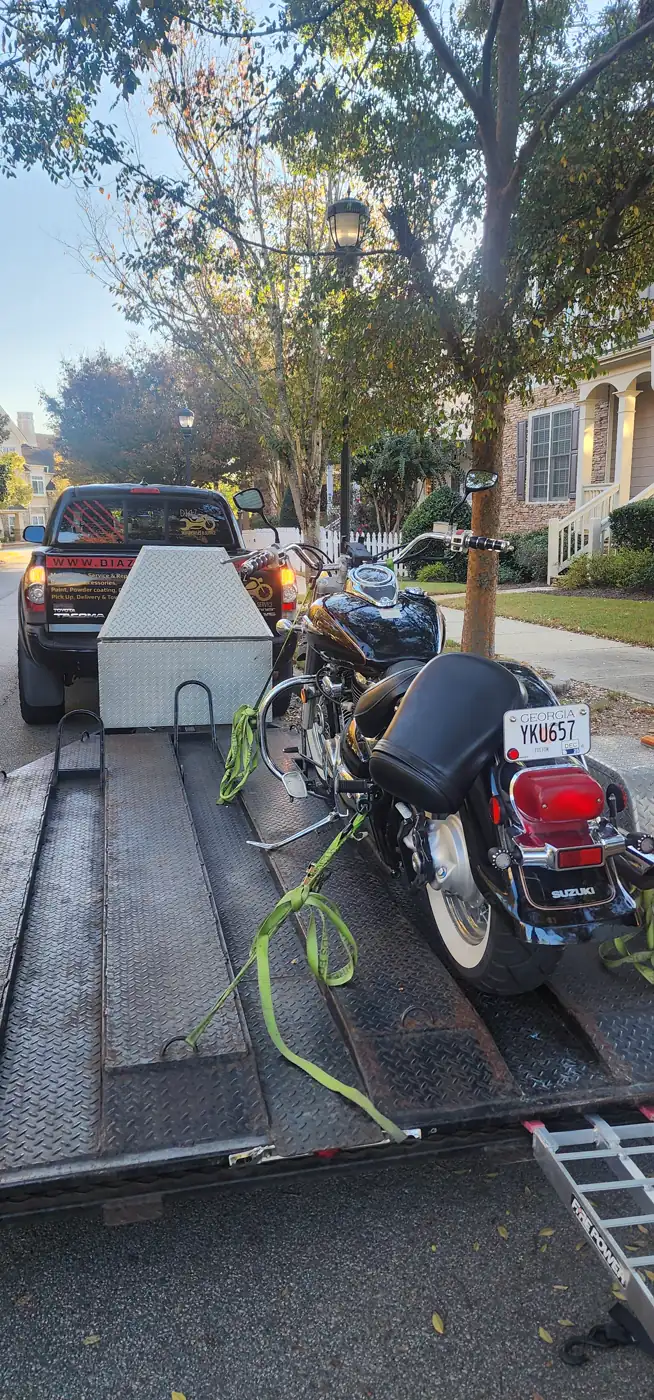
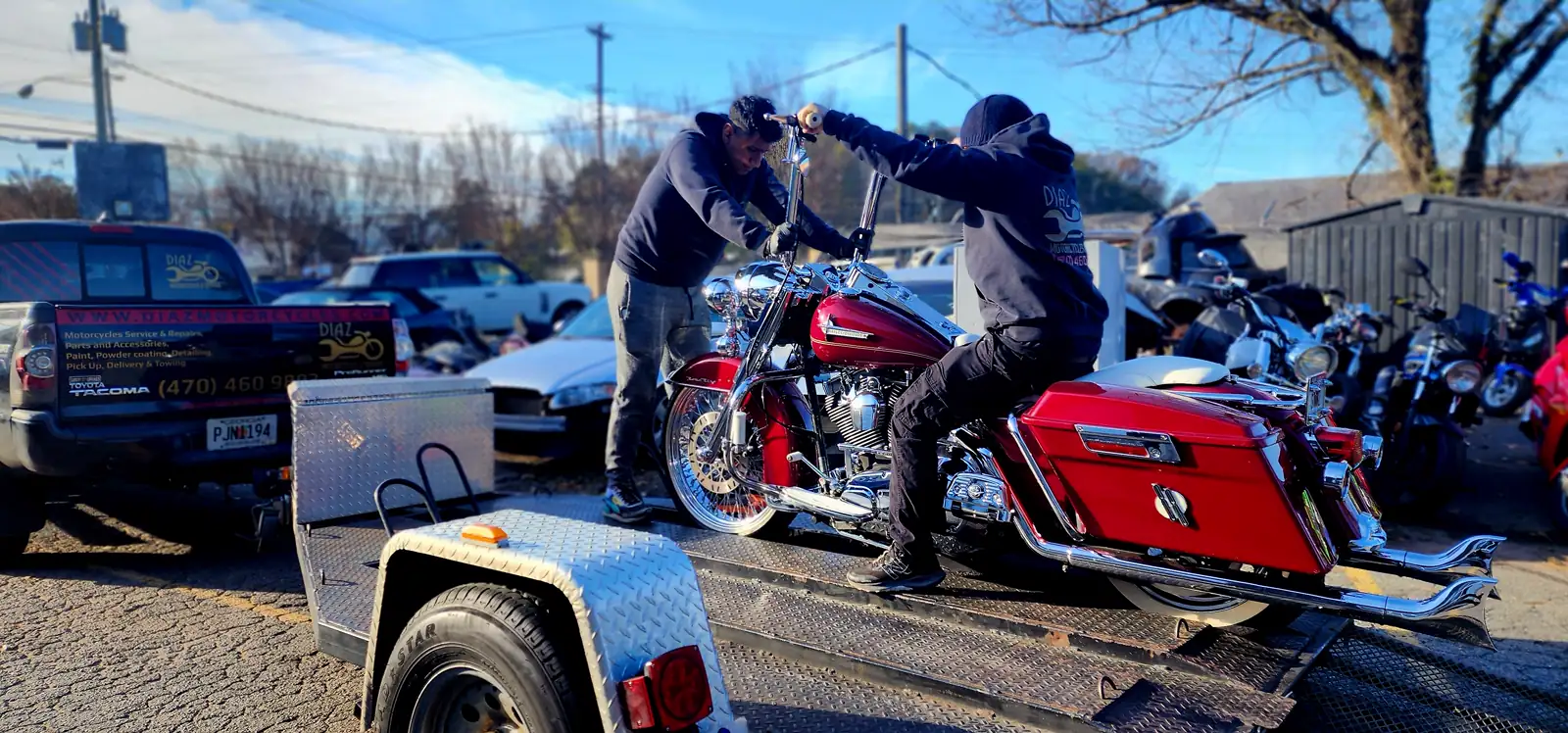
For an oil change, no, and we’d never tell you it was. For real dyno tuning and ECU work, there’s simply no comparable dyno up in Hall County, so you’re leaving the area either way. We keep it easy with pickup and delivery, so your bike makes the drive and you don’t have to. Plenty of Northeast Georgia riders do exactly that.
We take care of riders all across Northeast Georgia and Hall County, from Oakwood and Flowery Branch down toward Braselton and Buford, and out to Clermont, Lula, and Murrayville on the north side. Folks come to us from Dahlonega, Cumming, and Sugar Hill when they want real fueling work done right, along with neighbors in Chestnut Mountain and Talmo. Wherever you keep your bike, our pickup and delivery makes the Marietta trip an easy one, so distance never stands between you and a bike that runs the way it should.
STOP FIGHTING YOUR THROTTLE
If your bike stumbles, pops, or runs hot around Gainesville, let’s read the real cause instead of guessing at it. Text us a few of your symptoms and we’ll tell you straight whether it’s safe to ride in or whether we should come grab it. Real dyno tuning, an honest checklist first, and pickup and delivery so the miles are on us, not you.
470-460-9883Diaz Motorcycles and Service, LLC · 847 Barnes Mill Road, Marietta, GA 30062