Dyno Tuning Cost Gainesville — What You Pay
What a dyno really measures, what a tune changes in how your bike feels, and the honest reasons one job costs more than the next.
For example, most weeks, the same bike rolls through our door. Even so, a rider grabbed a slip-on exhaust off the internet, bolted on a fresh filter, and now the thing pops on decel and feels flat pulling out of a corner. What’s more, they want it running right, and they want one number first. So the most common question about dyno tuning cost Gainesville riders bring us is blunt: what am I going to pay? After that, that’s a fair question, and it deserves a straight answer.
Also here’s the thing nobody tells you upfront. Instead Tuning isn’t like buying a tire, where the price is printed on the box. Besides two bikes can look identical parked side by side and still need very different work on the dyno. So before we talk about what pushes the number up or down, let’s clear up what a dyno actually does, because most of the confusion starts right there.
What a dyno really measures
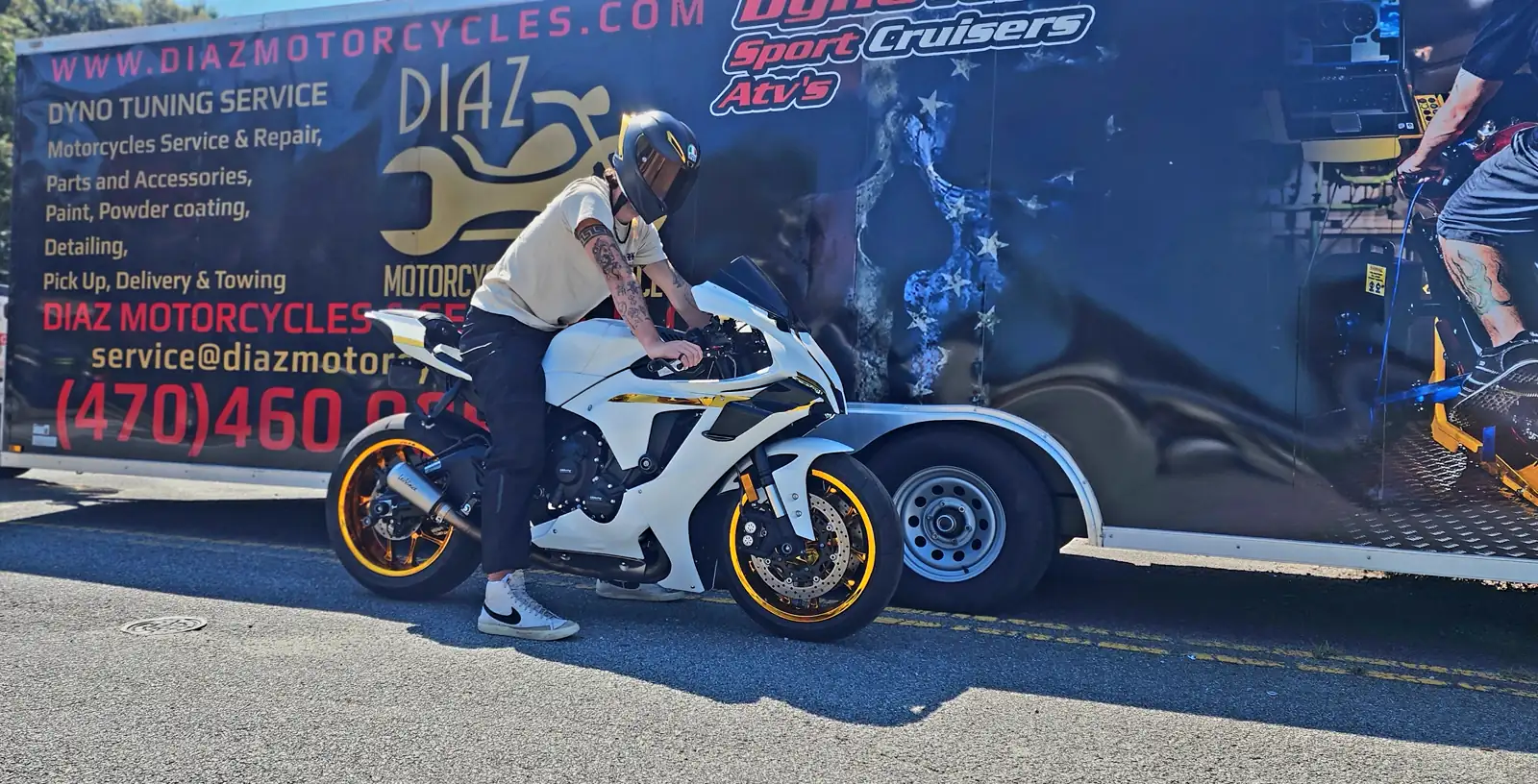
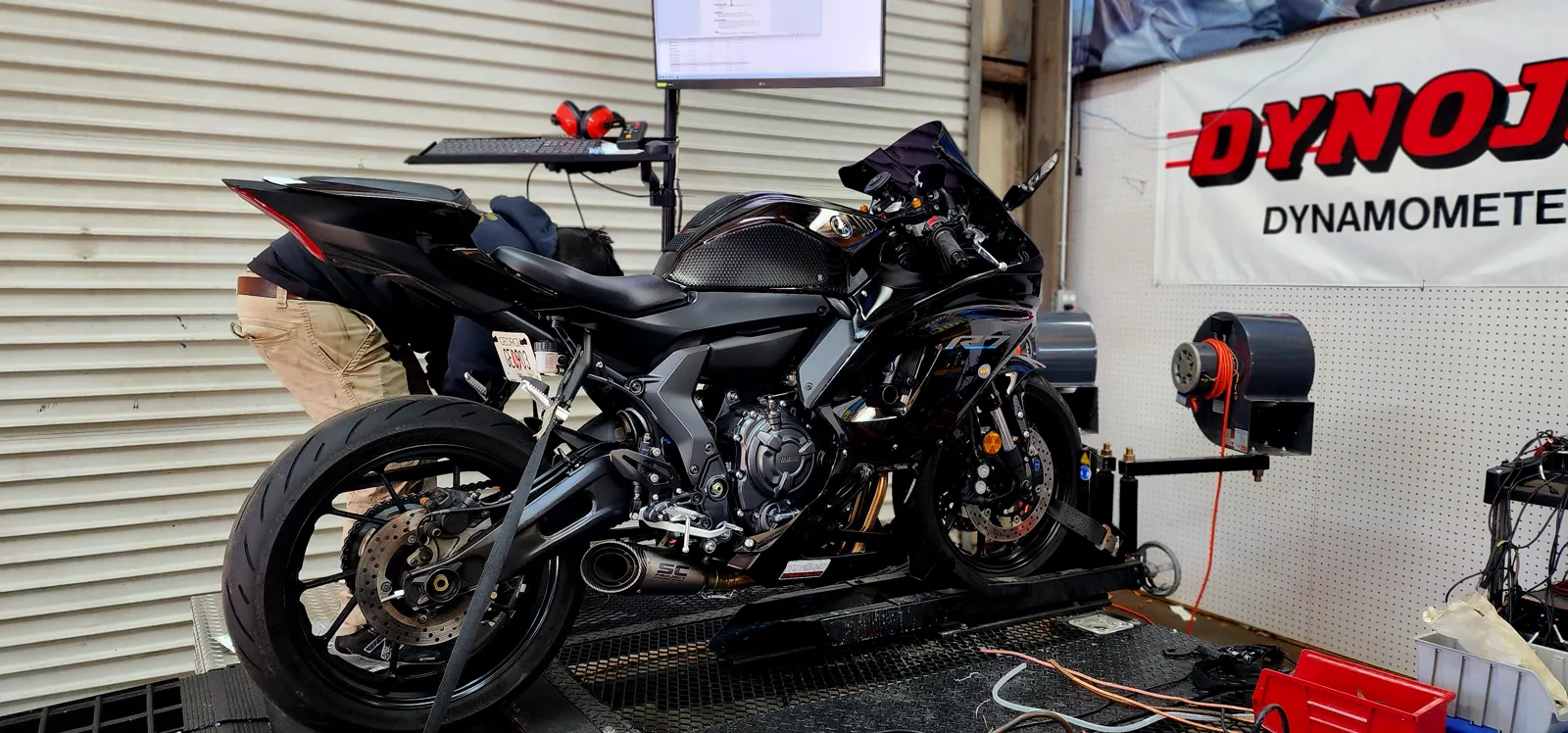
A dyno is a roller. Actually your rear wheel sits on a big steel drum, we strap the bike down tight, and we run it through the gears while it stays in one spot. That’s why the drum has a brake on it that can push back, just like a hill or a headwind would. That lets us load the engine the same way the real road does, except we’re in a room where we can watch everything at once.
While the bike pulls, sensors read what’s coming out the tailpipe and what the engine is doing inside. Either way we watch the air-fuel mix, the ignition timing, and the temperatures on a screen right next to the bars. In short that graph you’ve seen with the climbing line? It’s the bike’s output at every point in the rev range. We’re not chasing a bragging number. We’re reading the story the engine is telling us.
Lean, rich, and why your bike feels off
Ever hear someone say a bike runs lean or rich? All that means is the mix of air and fuel is off. Lean means too much air for the fuel. Rich means too much fuel for the air. Engines want a certain balance, and when it’s wrong, you feel it in your hands. A lean bike often runs hot, surges at steady throttle, and pops on the way down. A rich bike feels lazy, fouls its plugs, and can smell a little like a campfire.
Why would a stock bike run wrong in the first place? Usually it doesn’t, until you change something. That exhaust and filter the rider added moved more air through the engine. But the factory computer is still feeding the old amount of fuel, so now the balance is off. The fix isn’t the parts, and it isn’t more parts. Meanwhile, the fix is telling the computer the truth about the bike’s new set of lungs.
What a tune actually changes in how it feels
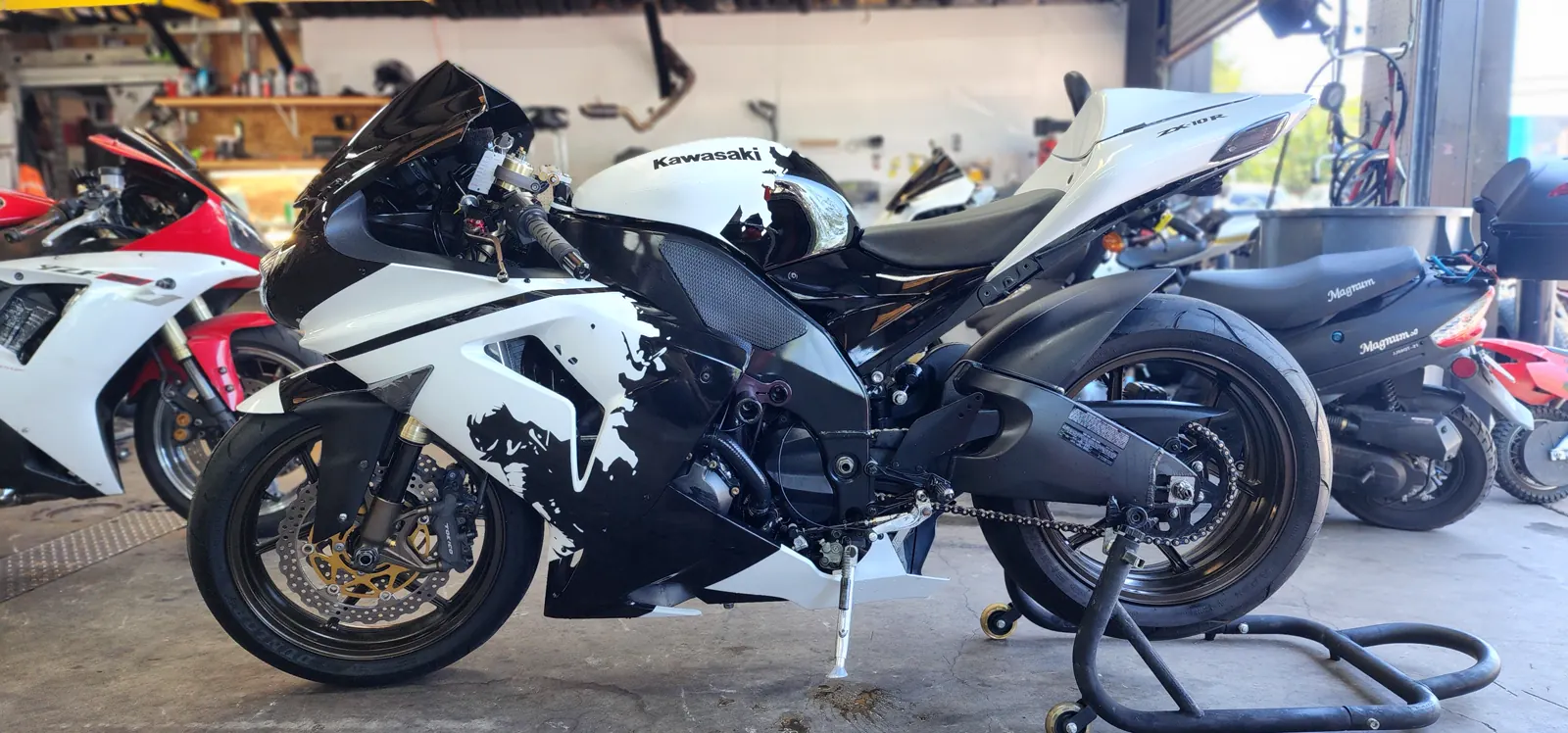
So what does a tune really do? We rewrite the instructions the engine follows. On some bikes that means flashing the ECU, the factory brain, with corrected numbers. On others we add a Power Commander, a small module that trims the fuel and timing without touching the stock computer at all. Both roads lead to the same place. The engine finally gets the right fuel at the right moment.
What you feel afterward is the whole point. The flat spot down low fills in. Of course, the surge at steady speed smooths out. The popping quiets down. Throttle response gets crisp, so a small twist of your wrist gives a clean, predictable answer. The bike stops fighting you. That’s the feeling riders are really paying for, and it has nothing to do with a dyno sheet you tape to the garage wall.
Now, most folks assume the price is basically a flat menu item. Bike goes on, tech clicks a few buttons, bike comes off, you pay the posted rate. Clean and simple. If that were the whole story, we could text you a number tonight and never even look at your bike.
That’s the common version. The real story is a little different. What one rider pays and what the next rider pays can split apart fast, and the reasons are pretty easy to understand once somebody actually shows them to you.
What actually drives the cost up or down
Think of a tune as two buckets: the work and the parts. The work is our time on the dyno, and time is the honest cost of a good tune. A bike that’s basically stock with a slip-on takes fewer pulls to dial in. A built engine with a big cam, high compression, and a full exhaust takes many more, because every change we make ripples straight into the next one. More pulls means more time, and more time means more cost. That part is just math.
The parts bucket depends on your bike. A bike we can flash needs no hardware at all, just our time and the software. A bike that needs a Power Commander or a similar module has to carry that part. Some bikes need a small sensor bung welded into the exhaust so we can read what’s coming out properly. None of that shows up on paper until we know exactly what you’re riding and what’s already been done to it.
Access is part of the labor
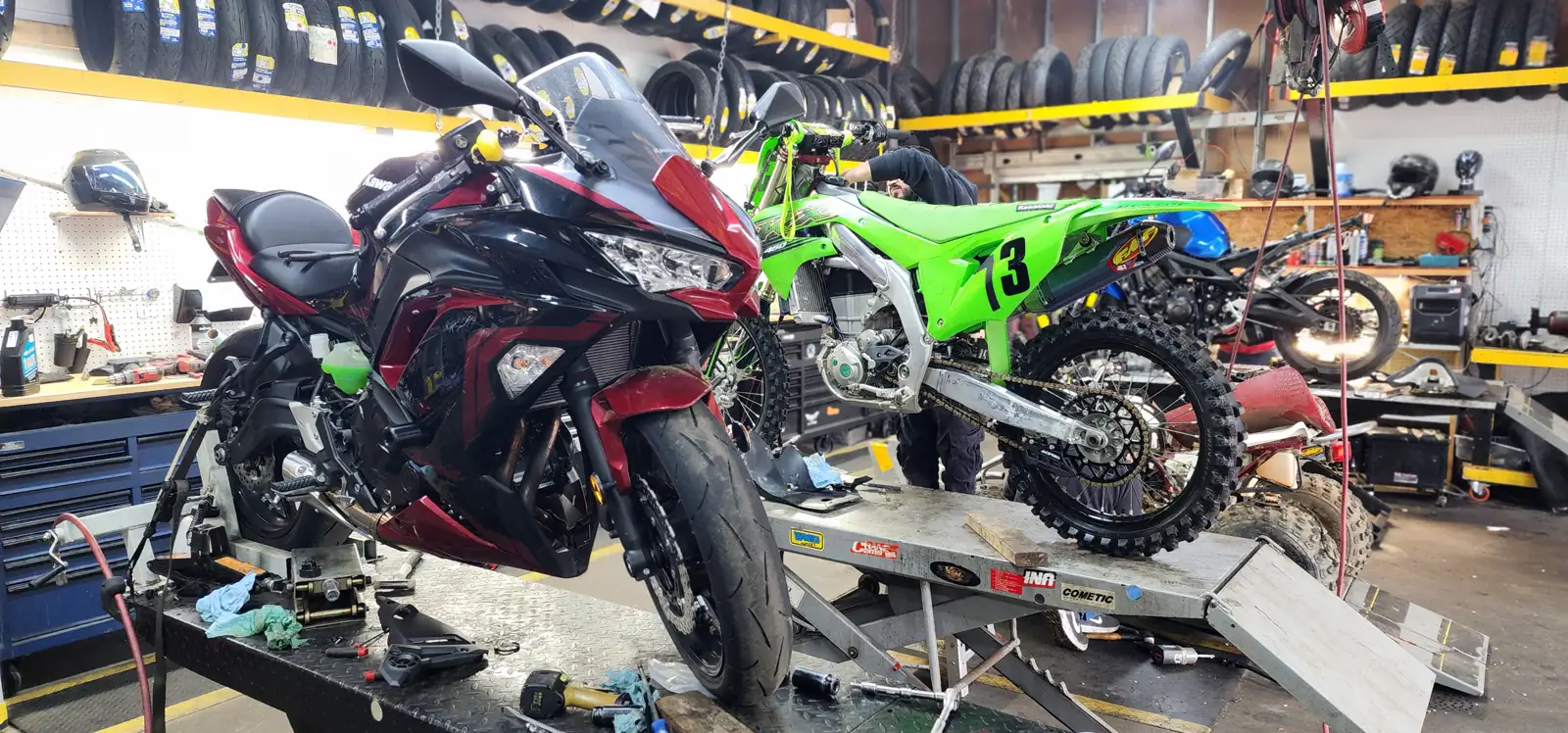
Here’s a piece riders almost never think about: getting to the parts. On that black Aprilia superbike we had strapped down not long ago, the tail and a few panels had to come off before we could even reach the sensors. Some bikes hide everything behind bodywork, seats, and tanks that all have to come apart and go back together. That’s real labor. A cruiser with everything out in the open is quicker to reach than a fully faired sportbike. Same tune, different access, different time.
None of this is about nickel-and-diming anybody. It’s the opposite. The time is where the quality lives. A shop that rushes the pulls just to hit a low posted price is selling you a worse tune. We’d rather take the pulls it actually takes and hand you a bike that’s genuinely right.
The actual process, start to finish
So what happens when you actually bring us a bike? Here’s the whole thing, in order, with no mystery to it.
- We talk first. What’s the bike, what’s been changed, and what bugs you about how it runs right now.
- We look it over. In fact, we check the parts already on it, hunt for anything worn or leaking, and make sure it’s safe to run hard.
- We strap it to the dyno. Wheel on the drum, tie-downs snug, big fan up front to keep air moving over the engine.
- We make a baseline pull. This is the bike exactly as it sits, so we can see where the mix is off before we touch a thing.
- We tune in steps. Flash or module, then pull, then read, then adjust. We repeat until the fuel and timing are right across the whole range.
- We road-check the feel. Numbers on a screen are one thing; how it pulls in your hand is another, and both have to agree.
- We hand it back with the before-and-after. You see what changed and why, in plain terms.
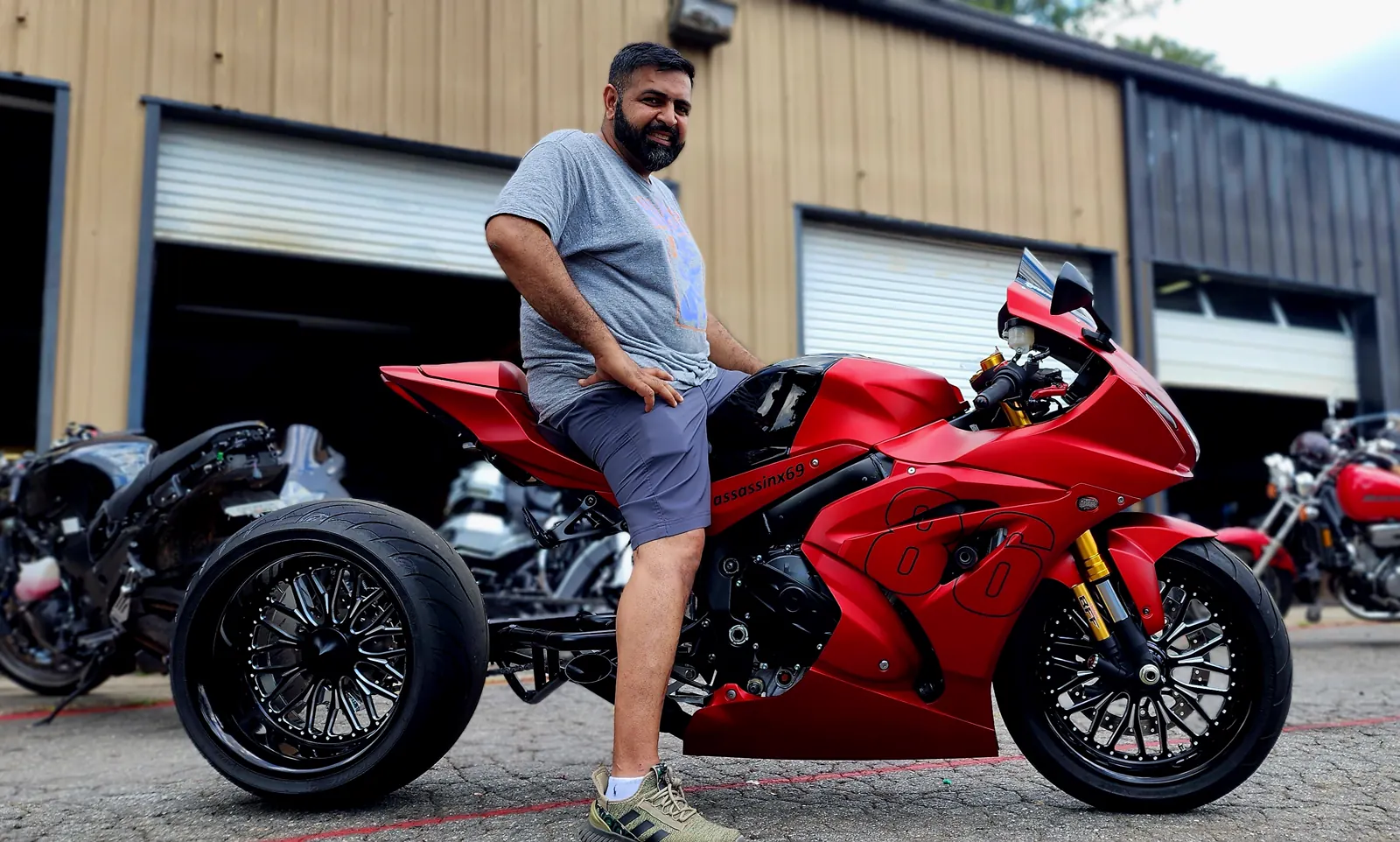
That loop of pull, read, adjust is exactly why an honest tune takes the time it does. We’re not guessing our way through it. Every change gets tested, and the engine tells us whether we helped or hurt. If you want the deeper version of this, we broke down how many pulls a proper tune really needs and how we handle that job on the bench.
How to tell a good shop from a guess
Not every place that owns a dyno tunes well. The machine is just a tool. What matters is the person reading it. A good shop asks about your bike before quoting anything, walks you through the pulls as they happen, and shows you the data at the end. A guess-shop posts one price, rushes you through, and hands the bike back with a printout and a shrug. If you want the full checklist, we wrote up what separates a good shop in plain terms.
You should also expect honesty about your specific bike. Two riders can want the exact same slip-on tune and still get different bills, and a straight shop tells you plainly why yours is what it is. Curious how this plays out closer to the city? We also covered the Atlanta side of things, and the drivers are the same even though the market is bigger.
And if you just want to see the range of what we do on the dyno, from mild bolt-on tunes to full builds, everything we cover is laid out on one page. No pressure, just the lay of the land before you decide.
What this looks like up in Hall County
One rider off GA-369 (Browns Bridge Road) put it better than we could. He rides that stretch across Lake Lanier most Saturdays, heading west toward Cumming and Forsyth County, and he told us he’d stopped chasing a magic price and started asking what the work actually involved. Once he understood the pulls and the access, the cost made sense to him. He wasn’t nervous about it anymore. He was in the driver’s seat.
That’s the thing about riders up in Hall County. Gainesville sits right at the mouth of the North Georgia mountains, so folks here ride the good roads on Saturday mornings that Atlanta riders drive an hour to reach. Run GA-52 up into the hills and you’ll pass more bikes before lunch than most people see all week. A bike that’s tuned right makes those roads better. A flat spot or a surge in a tight mountain corner is the last thing anybody wants.
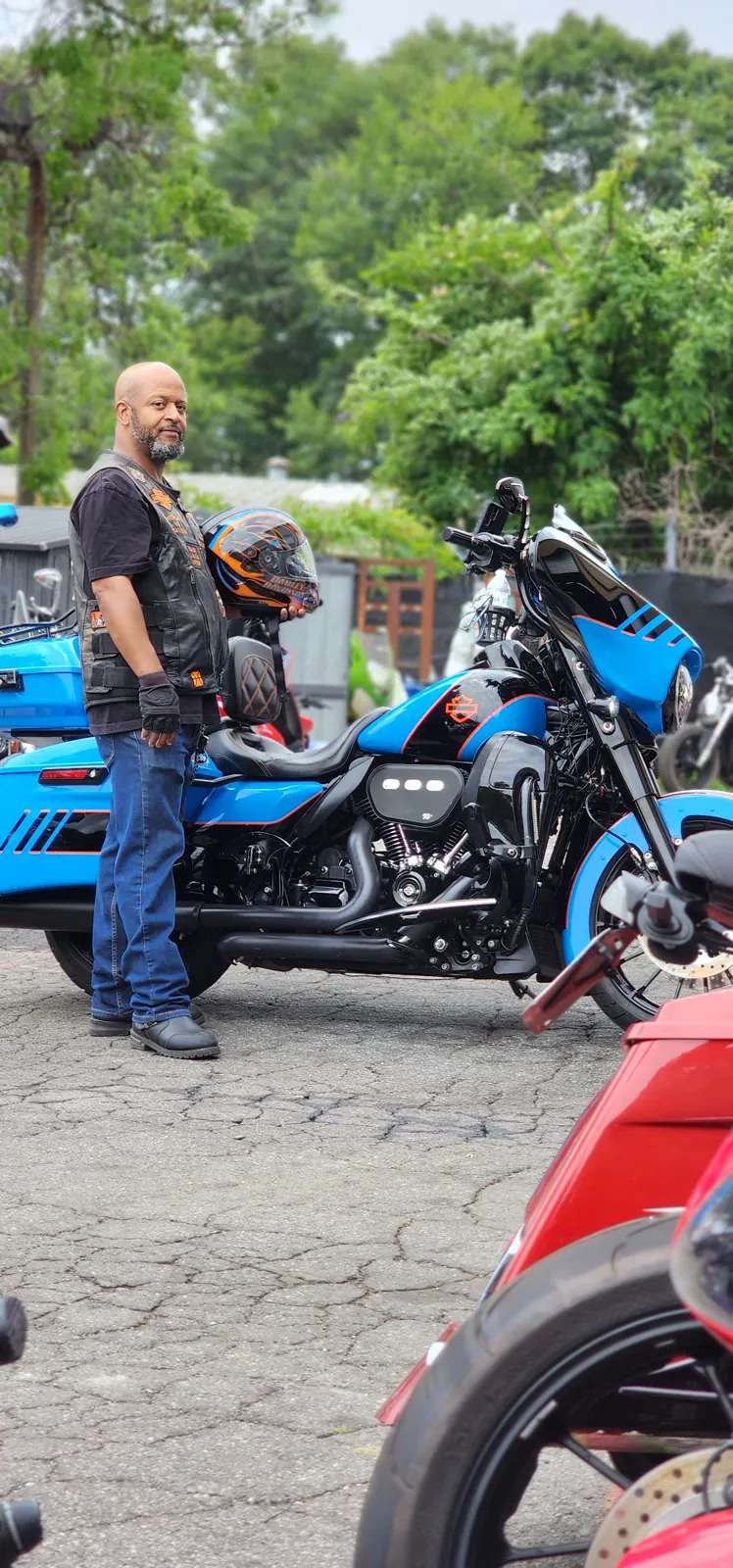
We see every kind of rider from up there. Touring and cruiser folks from the neighborhoods around town, sportbike riders who run track days at Michelin Raceway Road Atlanta down in Braselton about half an hour away, and lake households that keep a bagger in the garage right next to the boat. A rider off Green Street District, that grand old boulevard of Victorian homes near downtown, wants the very same thing as one out in Chattahoochee Estates near the golf club: a bike that does exactly what the throttle asks.
Landmarks help us keep the ride straight, too. Longstreet Hills, the established neighborhood named for General James Longstreet, sits not far from Alta Vista Cemetery, where the general himself is buried. Plenty of our Gainesville friends give us directions off those, or off Northeast Georgia Medical Center, the big Level I trauma hospital that anchors the north side of town. Point us at a landmark you know, and we’ll figure out the ride down to you.
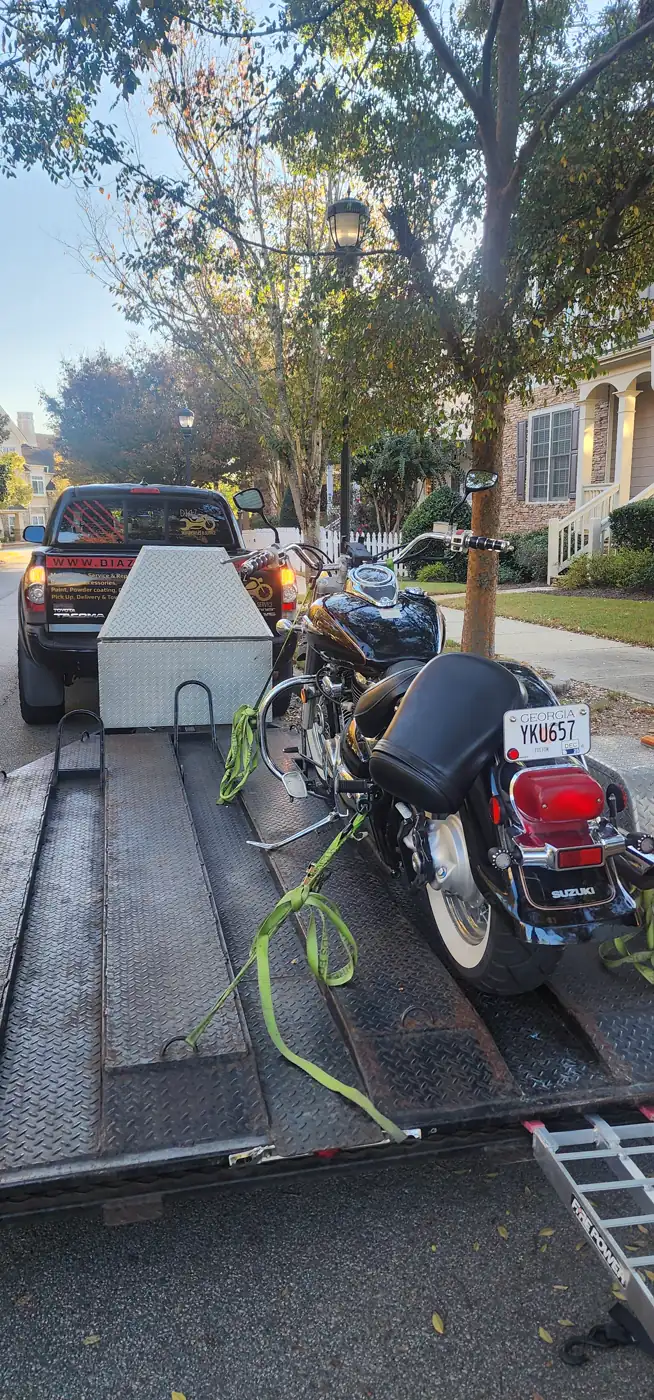
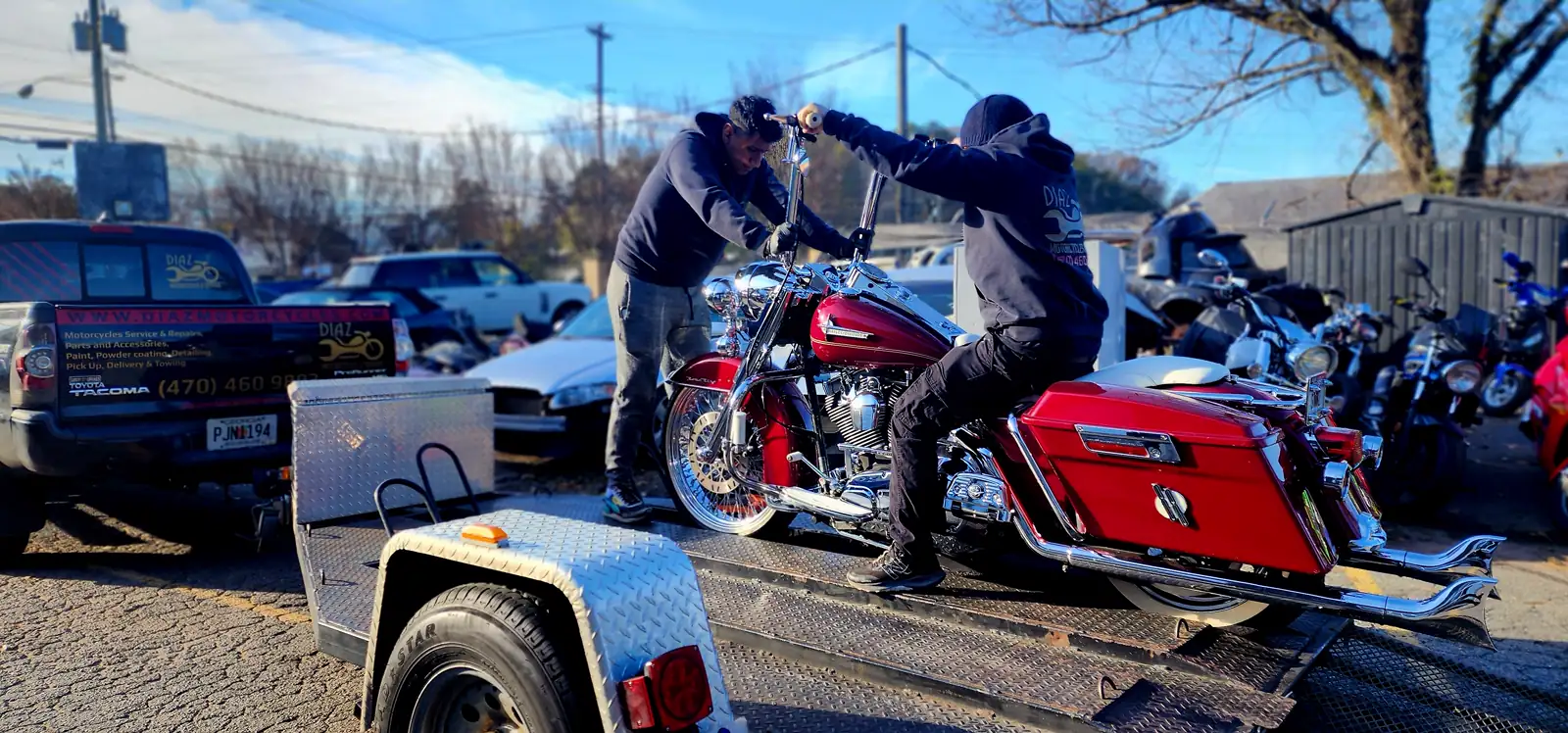
The honest catch is the drive. We’re down in Marietta, and by the map it’s roughly 55 to 62 miles and somewhere around 65 to 85 minutes from Gainesville, give or take, depending on whether you take the lake route through Cumming or drop onto the interstate. That’s a real trip for a tune. So we don’t make you ride it twice. We do pickup and delivery, load the bike, tune it here, and bring it home. One quick note: some tunes touch emissions gear, so if your bike sees the street, keep it road-legal and current with the Georgia Department of Revenue.
The outcome — you in control
So let’s go back to the question you walked in with. When it comes to the dyno tuning cost Gainesville riders can plan for, there’s no secret number a shop pulls out of thin air. It’s the work your specific bike needs, plus any parts it simply can’t go without. Once you know what drives it, you can see the figure coming, ask sharp questions, and spot a shop that’s guessing instead of measuring. That’s the whole point of this: you in control, not talked down to.
Riding season peaks in spring when the mountains reopen, which is our busiest window for pre-season tunes. If you ride enough to care about any of this, groups like the American Motorcyclist Association are worth a look for the community side of things.
You bought the bike to enjoy it, whether that’s a mountain run up GA-52 or a slow cruise home along the lake. A proper tune gets it out of its own way. When you’re ready, we’ll come get it. You can ride the good roads while we sort out the numbers, and you’ll get back a bike that finally does exactly what you tell it to.
Questions Gainesville riders ask us
Does the type of bike change the work?
Yes, quite a bit. A cruiser with open access tunes faster than a fully faired sportbike we have to undress first. A bike we can flash needs no extra hardware, while another might need a Power Commander or a welded sensor bung. Same idea, different time and parts.
What if you find something else while it's on the dyno?
We stop and call you before we do anything. Sometimes a worn plug, a small leak, or a loose bolt shows up once we run the bike hard. We tell you what we found and let you decide. No surprise work ever goes on your bill.
How do I avoid surprises on the final number?
Tell us everything up front. What the bike is, what’s been changed, and how it runs now. The more we know before it goes on the dyno, the tighter our estimate. Honesty both ways is how nobody gets caught off guard.
What makes one tune bigger than another?
Two things: pulls and parts. A near-stock bike with a slip-on takes fewer pulls. A built engine takes many more, because each change affects the next. Add any hardware the bike needs, and that’s the whole story.
Why can't you quote it over the phone?
Because we haven’t seen your bike yet. Two bikes that sound identical on the phone can need very different work once they’re in front of us. A number we text you blind would just be a guess, and we’d rather be right than fast. Send photos and we’ll get you close.
Do I have to ride all the way to Marietta?
Nope. We know it’s a real trip from Gainesville, so we offer pickup and delivery. We load the bike, tune it here, and bring it home. You keep your Saturday and still get a proper tune.
We pick up and deliver all across Northeast Georgia and Hall County. That means riders in Oakwood, Flowery Branch, and Braselton, plus friends over in Buford, Sugar Hill, and Cumming. We head up to Clermont, Murrayville, and Chestnut Mountain, out to Lula and Talmo, and north into the hills around Dahlonega. If you ride the good roads up there, we’ll come get your bike.
READY WHEN YOU ARE
If you’re in Gainesville and your bike feels flat, surges, or pops after a bolt-on, let’s fix it. Text us what you’re riding and what’s been done to it, and we’ll tell you what a proper tune actually involves. We’ll pick it up, dial it in on the dyno, and bring it back running right. Text first, ride sooner.
470-460-9883Diaz Motorcycles and Service, LLC · 847 Barnes Mill Road, Marietta, GA 30062