Motorcycle Pickup Peachtree City — Why It Happens
A bike that won't run and a shop an hour north — here's the honest way to get it there.
Here’s something a lot of shops won’t say out loud. When your bike is sick, they’d still rather you ride it in. It fills the calendar, and it saves them a trip. But nobody wants to admit that a rough-running motorcycle and a fifty-mile haul up the interstate don’t mix. That quiet gap is exactly where motorcycle pickup Peachtree City riders start looking for a straight answer. So let’s give you one.
You’re probably here because something’s wrong and you’re not totally sure what. The bike won’t crank. Or it fires up, then dies at the first light and won’t come back. Maybe it sat all winter in the garage and now it just clicks at you. Whatever it is, you’ve got a symptom you can feel, and the nearest real shop is an hour north. Good news, though: the symptom is the easy part, and getting the bike to help is easier than you think.
What you're really asking
On the surface, the question is simple — how do I get my bike to the shop? Underneath, it’s really two questions stacked together. First, what’s actually wrong with it? Second, is it safe to ride the way it is right now? Those two answers decide everything else, so we’ll take them in order and keep it plain.
Start with the symptom, because that’s what you can actually feel from the saddle. A bike that won’t start at all is a different animal from one that starts and dies. A bike that leaks is different from one that pulls to one side or shudders under braking. Tell us what it’s doing in everyday words — cranks but won’t fire, no crank at all, ran fine then quit — and honestly, half the mystery is already solved. We’ve heard every version of it from friends we’ve helped, and the pattern almost always points straight at the cause.
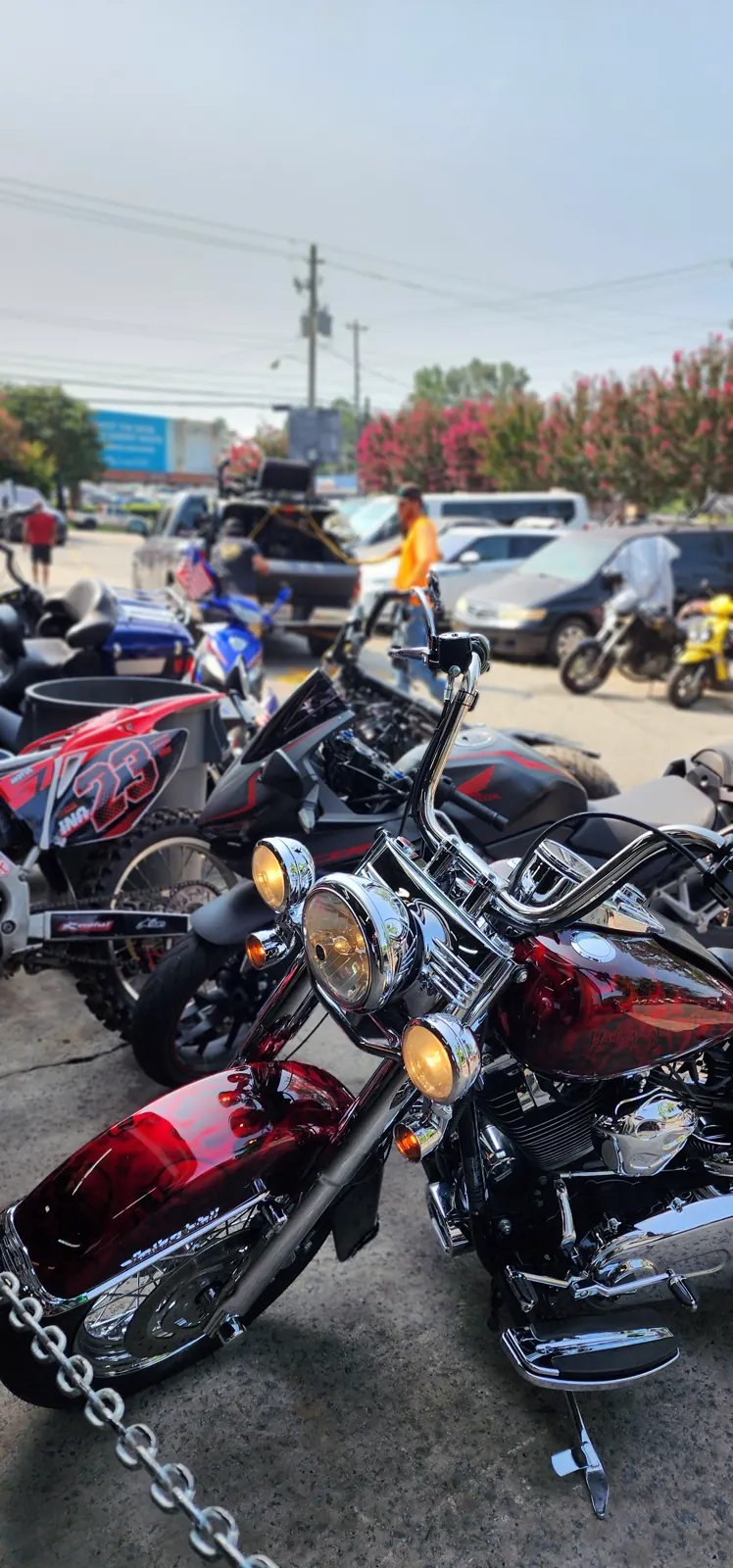
Now the causes, most common first. A dead or weak battery is the number one reason a stored bike goes quiet, especially after a mild PTC winter where the cold was never really the problem — the months of just sitting were. After that comes bad or old fuel, because ethanol gas gums up and turns to varnish inside a carburetor or an injector. Next you’ve got a blown fuse, a loose ground, or a tired stator that isn’t charging. And then there’s the stuff that makes a bike genuinely unsafe even when the engine runs fine: soft brakes, a slipping clutch, a tire that won’t hold air. Most of these are small. A few are not. The whole trick is knowing which is which before you throw a leg over it.
The honest answer
So, is it safe to ride? Here’s the straight version. If the bike starts clean, idles steady, shifts through the gears, and both brakes bite hard, a short careful trip is usually fine. But if any one of those is off, don’t gamble it on GA-74. That road — locals just call it 74 — is the north-south spine through town, and it dumps straight onto I-85. It’s a congested arterial with heavy turning movements, the kind of corridor Georgia DOT watches closely, and it is not the place to discover your front brake is mushy. A sick bike on a busy road is a bad trade every time.
The things that make us say “just let us come get it” are pretty simple. Bad brakes. A clutch that slips or drags. Anything electrical that cuts out while you’re rolling. A tire that won’t hold air — and if you’re not sure how worn yours really is, Michelin’s motorcycle tire resources spell out what to watch for. Wobble, weave, or a stumble in the wet. If your bike is doing any of that, the smart move isn’t a white-knuckle ride up the interstate — it’s a phone call. That’s the honest answer most shops skip right past.
WHEN TO CALL INSTEAD OF RIDE
Soft or grabby brakes, a slipping clutch, power that cuts out at speed, a low or leaking tire, or any wobble in the front end. Any one of those means the bike should ride on a trailer, not on the road.
Now, the part nobody mentions until you’re already paying for it. Getting a bike loaded and hauled the right way is a real skill, and doing it wrong costs more than doing it right. A motorcycle isn’t a couch you can just wedge in and go. It has to be stood upright, held in a wheel chock, and tied down at the frame or triple tree with soft ties — never cinched down by the handlebars until the fork seals blow. Ratchet it too hard and you can dent a tank or crack a fairing. Leave it too loose and it tips at the first hard stop. This is exactly where “we come get it” earns its keep.
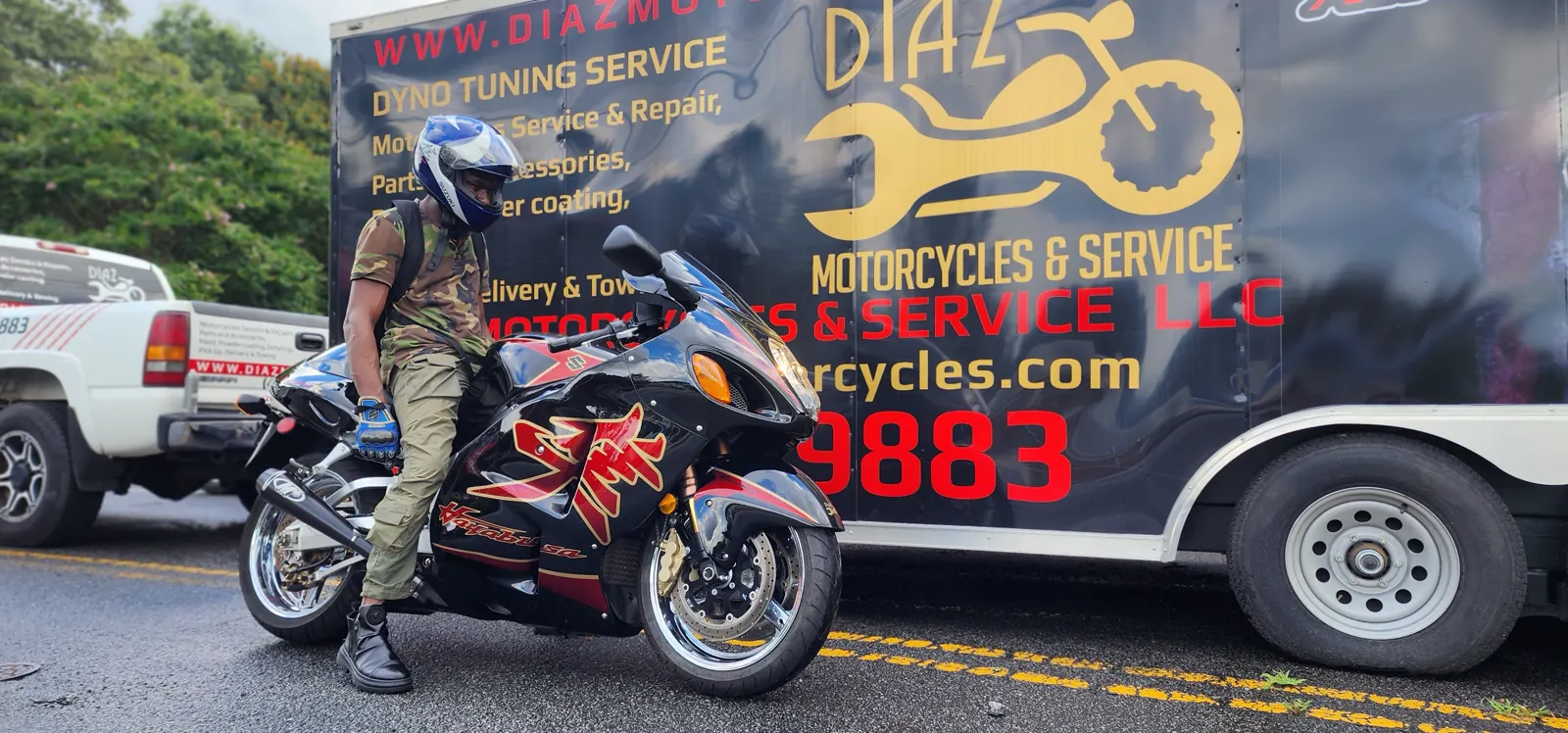
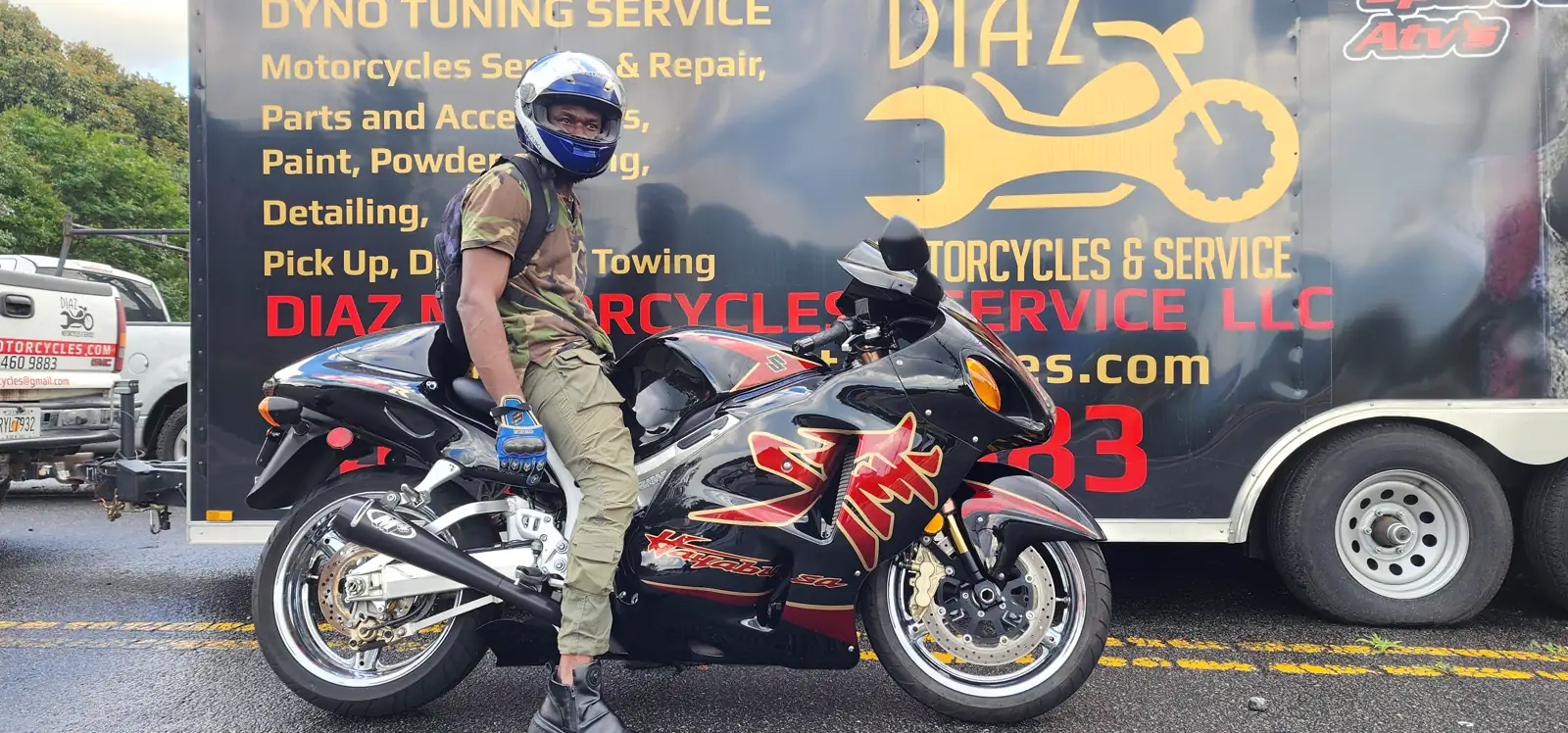
When we roll out for a motorcycle pickup Peachtree City run, your bike gets treated like it’s one of ours. Front wheel into the chock, straps at the solid points, extra padding anywhere metal wants to touch metal. Open or enclosed, it rides level and it rides secure. You can see the whole setup listed right on the side of our trailer, and the entire idea behind that rig is dead simple: your bike shows up in the same shape it left in.
What changes it
A few things change how a transport goes, and it helps to know them before you call. We broke down what changes the total in more detail elsewhere, but here’s the short version so you’re not walking in blind.
- Open versus enclosed. Open is quicker and perfectly fine for most local hauls. Enclosed keeps weather, road grime, and curious eyes off a show bike or a fresh paint job.
- Distance and access. A bike sitting in a flat driveway loads a lot faster than one wedged sideways in a tight garage.
- Condition. A bike that rolls and steers is quick to load. A crashed or seized bike needs extra hands and gear to do it safely.
- Documentation. A simple condition report, photos before and after, and a signed hand-off protect you as much as they protect us.
That last one matters more than folks expect. Before your bike ever touches the ramp, we write down its condition and take photos. You get the same set. It’s not about distrust — it’s about both of us knowing exactly what left the driveway, so there’s never a question later on. Paperwork is boring right up until the moment it saves the day, and then it’s the best thing you did all week.
Our approach
Here’s how a pickup usually goes for a rider down in PTC. It’s about as low-effort as we can make it, because you’ve already got enough on your plate with a bike that won’t cooperate.
- You call or text and tell us what the bike’s doing and where it lives.
- We give you a pickup window that works around your day.
- At the same time we show up with the trailer, walk around the bike, and load it soft and level.
- We haul it back to the shop at 847 Barnes Mill Road in East Cobb and diagnose it.
- We call you with what we found, you decide, and when it’s done we can run it right back.
Once it’s on the bench, what the work covers ranges from a five-minute battery swap to a full carb clean and sort-out. And none of this is unique to your zip code, by the way — it mirrors what Lawrenceville riders run into every spring when a stored bike refuses to wake up. Same symptoms, same fixes, different driveway. You can see the full list of what we take care of here whenever you want the details, and if a part turns out to be the holdup, we’ll tell you that up front too.
Straight up, it’s a real drive, and we’re not going to pretend otherwise. We’re roughly 48 to 56 miles from most Peachtree City driveways, and figure somewhere around an hour to an hour and a half each way depending on 74 and the interstate — that’s our honest estimate off the map, not a stopwatch reading. There’s a Yamaha dealer, Cycle Specialty, over in Fayetteville about fifteen minutes from you if you just need a part in a pinch. But here’s the thing PTC riders already know in their bones: there’s no motorcycle shop inside the city limits, so you’re driving out of town for real service no matter what. If you’re already making that trip, let the bike make it on a trailer instead of on a gamble.
Local context
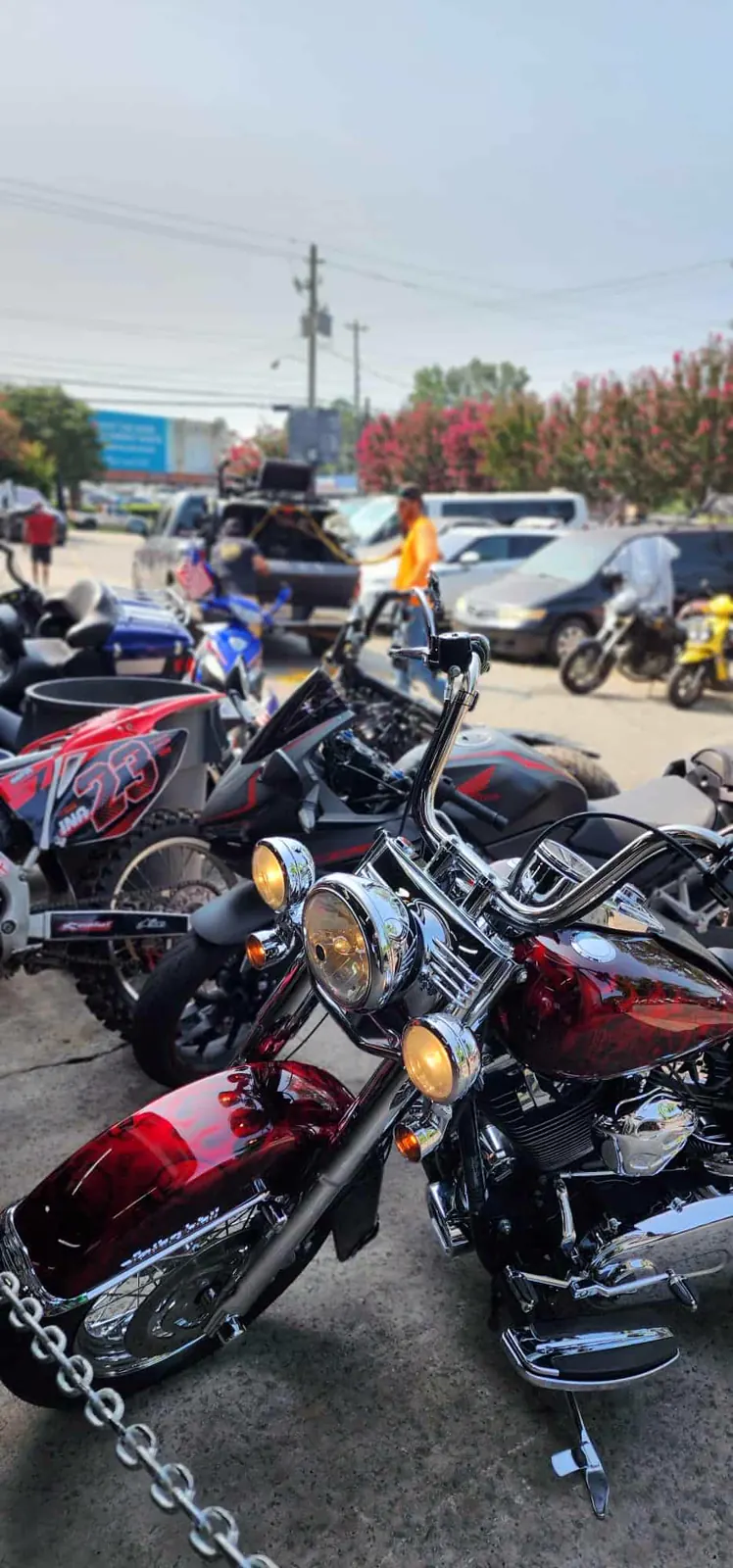
Peachtree City bikes tend to be a little special, and that shapes how we handle them. This is garage-kept, low-mileage, appearance-forward territory — baggers, touring rigs, and the occasional vintage project that’s been babied for a decade. The kind of machine parked in a Planterra Ridge garage, or tucked away out in Wilshire Estates, or sitting under a cover in one of the original-era homes over in Aberdeen, isn’t a beat-up commuter. It’s a hobby, and it’s meant to look the part. So when one of those needs to move, the last thing you want is an amateur cinching it down by the bars.
This is a town that’s used to moving valuable things carefully, too. The place wears its film history on its sleeve — it’s stood in for scenes in Drop Dead Diva, Joyful Noise, Greener Grass and Megalopolis, and Francis Ford Coppola even turned a local Days Inn into his All-Movie Hotel. Between the film crews and Falcon Field, the general aviation airport with a hundred and sixty-five aircraft based there, plenty of precious cargo rolls through PTC. Your motorcycle deserves that same level of care on the ride to the shop and back.
And then there’s the part that’s just about riding again. Because that’s the whole point, isn’t it? You didn’t buy the bike to stand there and admire it in the garage. You bought it for a clean Saturday run down to Senoia — that historic little downtown about twenty minutes southwest, the one with the easy parking and the Walking Dead crowd milling around the storefronts. Getting your bike fixed and back home is really just about getting that ride back on the calendar where it belongs.
Where that leaves you
So here’s where you should land after all this: clear-headed. You know the likely cause of whatever your bike’s doing, most common first. You know whether it’s safe to ride or not. And you know that getting it to a real shop doesn’t mean risking it on 74 with fingers crossed. If the fix is simple and the bike’s genuinely safe, ride it in and enjoy the trip up. If it’s not, let us handle the haul and skip the stress entirely. There’s no wrong choice here as long as it’s the informed one, and now it is. That’s the whole reason we laid it all out plainly instead of rushing you toward a repair order.
The honest move isn't riding a sick bike an hour up the interstate. It's a phone call.
That’s really all a proper motorcycle pickup Peachtree City service comes down to — the right straps, the right hands, an honest word about what’s wrong, and your bike back where it belongs. No white knuckles, no wondering if the brakes will hold. Just the fun part, waiting for you on the other side.
Questions Peachtree City riders ask us
Could it be something else entirely?
It could, and that’s exactly why we diagnose before we quote a fix. The same symptom can come from a few different places — a no-start might be a dead battery, old fuel, or a bad ground. We rule things out in order, most common first, so you get the real cause instead of a guess.
Is it safe to ride like this?
Depends on the symptom. If it starts clean, idles steady, shifts, and both brakes grab hard, a short careful ride is usually fine. But soft brakes, a slipping clutch, power that cuts out, or a low tire mean it should ride on a trailer, not on 74.
What actually causes a bike to sit dead in the garage?
After a stored winter, it’s almost always the battery or old ethanol fuel gumming things up. Loose grounds, blown fuses, and tired stators show up too. None of these are dramatic, and most are a quick fix once the bike is on the bench.
Can I fix it myself?
Sometimes, yes. A fresh battery or a fuse is very doable in your own garage. But if you’re chasing a charging problem, a fuel-system clog, or anything brake or clutch related, that’s where a bike gets unsafe fast. When you’re not sure, call us before you ride it.
Will it get worse if I keep riding it?
Often it will. A weak charging system leaves you stranded farther from home. A dragging brake cooks itself. Old fuel keeps varnishing the more it sits. Catching it early is almost always the cheaper, easier path, and it keeps a small problem from becoming a tow.
Do you really come all the way to Peachtree City?
We do. It’s roughly an hour to an hour and a half each way by our estimate, and since there’s no motorcycle shop inside the city limits, you’re driving out for service regardless. We’d rather your bike make that trip on our trailer than on the road while it’s hurting.
We run pickups and deliveries all across the south metro, so a driveway in Peachtree City is well within reach. That includes riders over in Fayetteville and Tyrone, out toward Newnan and Senoia, and the smaller communities like Sharpsburg, Brooks, and Woolsey where a bike can sit a long way from the nearest shop. We also cover Union City, Fairburn, and Palmetto to the north, along with Jonesboro and Riverdale to the east. If your bike won’t ride to us, we’ll bring the trailer to it.
LET US COME GET IT
If your bike won’t start, won’t stop right, or just won’t cooperate, don’t risk the ride up the interstate. Text or call Diaz Motorcycles and we’ll set up a motorcycle pickup in Peachtree City that fits your day. We’ll haul it safe, sort out what’s wrong, and get you back to the fun part — a clean Saturday run down to Senoia.
470-460-9883Diaz Motorcycles and Service, LLC · 847 Barnes Mill Road, Marietta, GA 30062