Ceramic Coating vs Wax Woodstock: What Really Holds Up
Two ways to protect your bike's finish, one honest recommendation, and how to pick the right one for the way you ride.
So run your bare hand flat across the tank. If it drags, if you catch that faint squeak of skin on paint, the finish is thirsty and unprotected. Still, a clean, coated tank feels like a wet ice cube instead. Plus, your palm glides, water beads into little balls, and the drops roll off on their own. Meanwhile, that simple hand test sits right at the center of the ceramic coating vs wax Woodstock question, and it’s the quickest way to learn where your bike stands today.
The short answer, up front
Of course, let’s not make you scroll for the verdict. For most riders around here, ceramic coating is the smarter pick. It stands up to heat, pollen, and hard water far longer than wax, and it makes every wash after that quicker and easier. Wax still earns its keep, though. When you love the Sunday ritual of rubbing on a coat by hand, or you plan to sell the bike soon, wax does the job for less up front. Both add real gloss. Both protect the paint underneath. They just protect for very different stretches of time, and that’s the honest ceramic coating vs wax Woodstock breakdown in one breath.
| Ceramic coating | Wax | |
|---|---|---|
| Protection life | Years, depending on care | Weeks to a couple of months |
| Heat resistance | High, bonds to the clear coat | Low, softens and thins in summer |
| Cleaning after | Easier, water sheets right off | Needs more elbow grease |
| Up-front cost | More to start | Less to start |
| Best for | Hard-ridden, long-term keepers | Weekend rides, ritual lovers, quick sellers |
Georgia weather is what tips the scale for a lot of riders. Our summers pile on hard heat and thick humidity. Spring drops a yellow blanket of pollen over anything with two wheels. On top of that, hard water leaves chalky spots when droplets dry in the sun before you can wipe them away. Wax is a soft shield, and heat is its enemy, so it softens and thins and one Woodstock summer can wear a coat down fast. Ceramic bonds to the clear coat and shrugs off far more of that daily abuse, which is why it usually wins the long game.
A wash, a detail, and a coating are three different things
Folks mix these up all the time, and honestly, it’s an easy mistake to make. A wash gets the loose dirt off, and that’s about it. On the other hand a real detail goes much deeper. We clay the paint to pull out grime that’s bonded into the surface, correct the finish to erase swirls and light scratches, and polish the chrome until you can nearly read a plate in it. We scrub the wheels, clean the engine bay, feed the leather and vinyl, and bring faded plastic and trim back to life. Bug splatter and road tar come off. Stubborn water spots get chased down one at a time. Only after all of that do we lay on the top layer, and that top layer is exactly where the ceramic-versus-wax choice lives. It’s also a big part of what you get when you bring it in.
What paint correction actually does
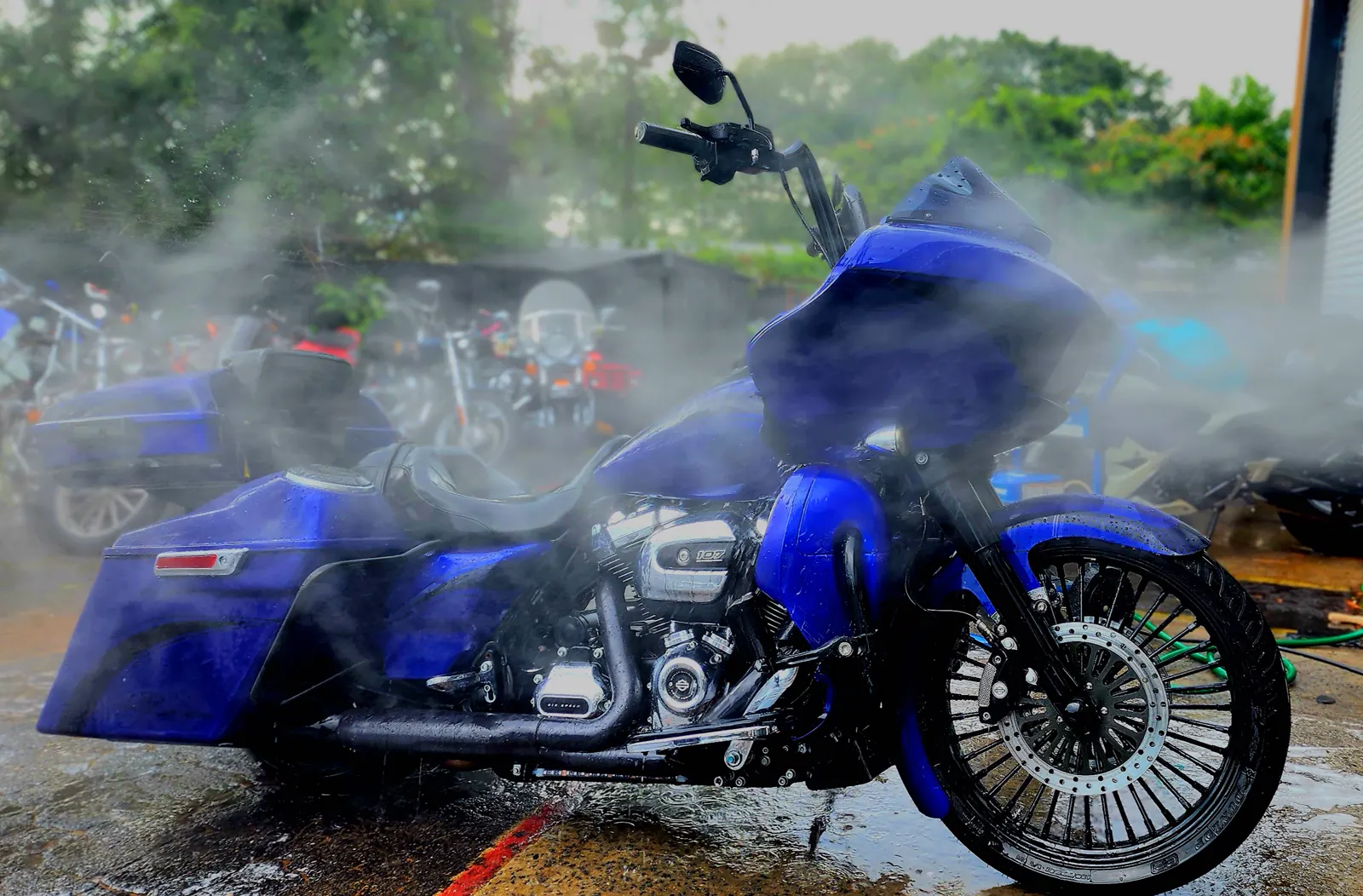
Swirl marks are just tiny scratches in the clear coat. In bright sun they look like a spiderweb spinning around the light, and once you see it you can’t unsee it. Machine polishing gently levels that clear coat so the scratches vanish and the surface goes flat and clear again. Suddenly the color has depth, like you’re looking into it instead of just at it. Here’s the key part, though: correction has to happen before any coating goes down. Seal a swirl under ceramic and you’ve locked it in for good.
What ceramic coating is, and what it isn't
A ceramic coating is a liquid that bonds to your clear coat and hardens into a thin, glass-like layer. It protects the paint, makes cleaning easier, and adds a deep, wet-looking shine that lasts for years, depending on care. Now for the honest part, because we’d rather you trust us than oversell you. Ceramic coating is not scratch-proof. It’s not an invisible force field either. A rock kicked up on Bells Ferry Road is still a rock, and gravel is still gravel. What a coating does is take the daily beating, the sun and pollen and bug guts and hard-water spots, so your paint doesn’t have to.
Here’s the question we’d ask if you were standing in the shop. How do you ride, and how long do you plan to keep this bike? Your answer picks the product for you. A rider who logs hard mountain miles all season and wants to hold onto the bike for years leans ceramic. Someone who babies a weekend cruiser in the garage and might trade up next spring is perfectly fine with wax. Neither answer is wrong. They’re just two different riders.
What we check before we pick a product
Before we ever open a bottle, we look the bike over with you. A few things decide the call, and none of them are guesswork.
- Paint condition, meaning how many swirls and light scratches need correcting first
- Chrome and metal, whether it’s clean or starting to oxidize
- What’s already on there, since old wax or sealant has to come off cleanly
- How and where you store it, from a sealed garage to a spot out in the weather
- How you actually ride, hard seasonal miles or gentle weekend loops
- Your timeline, keeping the bike for years or selling before long
That last point matters more than people expect. A longer coating only pays off when you’re around long enough to enjoy it. And once we know how you ride, the recommendation almost makes itself.
Mistakes we'd steer you around
A few habits quietly wreck a good finish. We’ve seen every one of them, so here’s how to dodge the common ones.
- Coating over swirls. Fix the scratches first, or you seal them in forever.
- Automatic brush car washes. Those stiff brushes drag grit and add fresh swirls every visit.
- Dish soap. It strips wax and sealant right off along with the dirt.
- Letting hard water dry in the sun. Dry the bike by hand and you skip the chalky spots.
- Skipping maintenance washes on ceramic. A coating loves a gentle rinse, and neglect still dulls it.
- Expecting ceramic to be bulletproof. It’s protection, not armor.
Following the bike maker’s care guidance helps too. Harley riders, for instance, can check the Harley-Davidson service information for what’s safe to use on their finish.
When the paint's too far gone
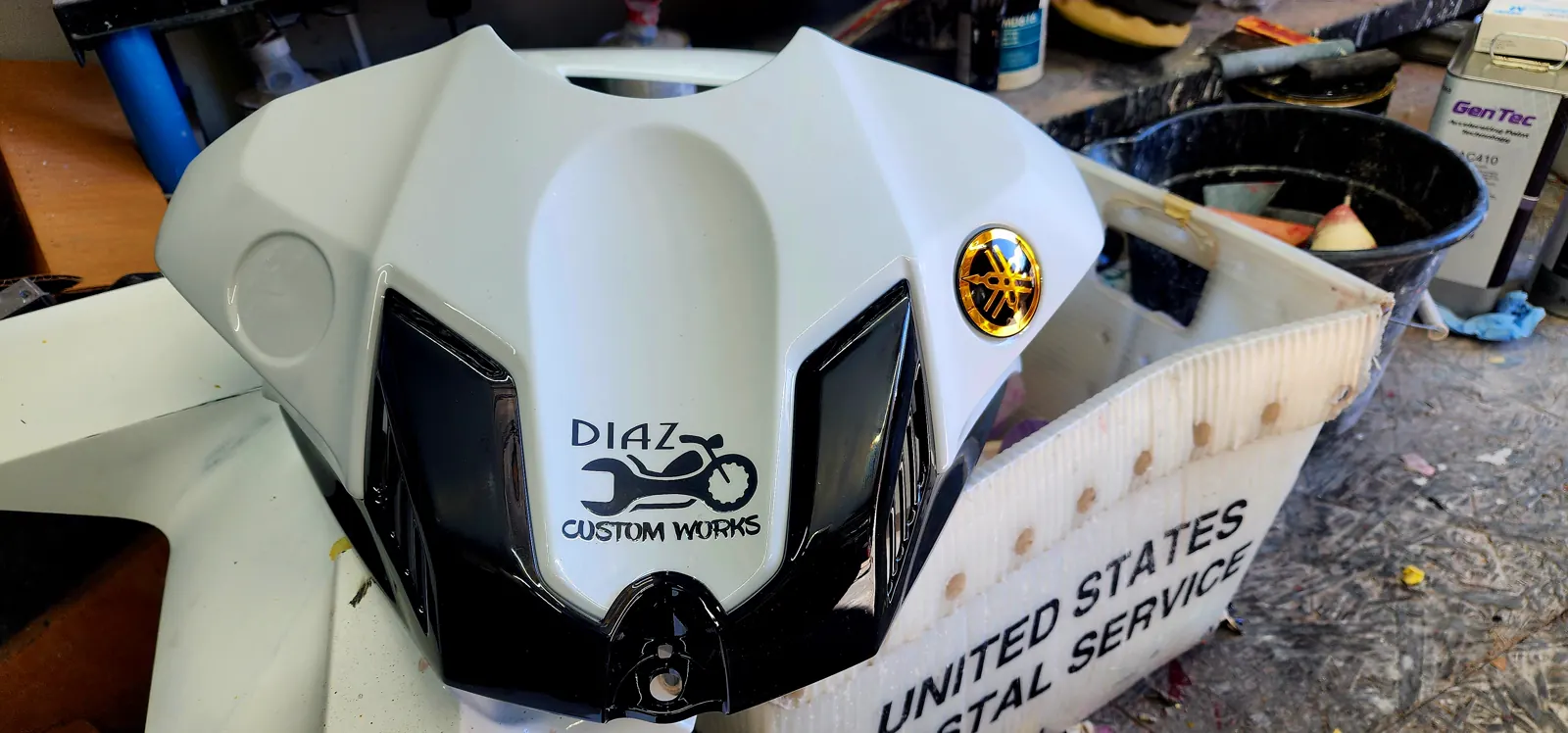
Sometimes correction isn’t enough, and that’s okay. When the clear coat is worn through, or the tank’s been scratched down to primer, no coating or wax will hide it. At that point a fresh repaint is the real fix, and how we handle that job is its own kind of craft. A good coating goes on top of good paint, never in place of it.
Where Woodstock riders land
Two riders can own the same bike and still make opposite choices, and both can be right. Before the local part, one more honest note: the best product is the one that matches how you live with the bike. That’s also what separates a good shop from a place that just upsells the priciest bottle on the shelf.
Push us for one answer and we’d say ceramic for the rider who keeps a bike and rides it hard, wax for the rider who loves the hands-on ritual or is selling soon. That’s the split nine times out of ten. The tenth rider usually lands somewhere in between, and a good sealant can bridge the gap, longer than wax and simpler than full ceramic.
This is where Woodstock is genuinely different from other towns. Sitting in Cherokee County, not Cobb, Woodstock is the most motorcycle-serious spot in our whole radius and the closest one to real riding. I-575 is a straight on-ramp to the north Georgia mountains, so a rider here can be carving real corners within an hour. Because of that, bikes rack up hard, concentrated miles instead of easy commuter loops. Hard miles mean more sun, more bug splatter, and more grit, which is exactly the punishment a coating is built to take.
The garages help. Those 1990s master-planned neighborhoods came with two- and three-car garages as standard, so storage here is about the best in the region. Ride out to Towne Lake Hills, where hundreds of homes sit west of I-575 around golf, swim, and tennis, and you’ll spot workbenches, tools, and trickle chargers tucked in the garage. Newer pockets like Woodstock Knoll, built in traditional and European styles, tell the same story, and so do the mid-market streets of Little River Crossing, Falls, North, and South named for the Little River nearby. Multi-bike households are more common here than anywhere else we serve.
The roads shape the work too. Rapid growth means constant construction, so gravel and mud get tracked onto pavement along Ridgewalk Parkway, Towne Lake Parkway, and the SR 92 corridor, all rough on wheels and lower fairings. Rope Mill Road and Rope Mill Parkway feed those same busy corridors. Head the other direction onto Bells Ferry, Wiley Bridge, Trickum, and Arnold Mill Roads and you get the good stuff: rolling, wooded, low-traffic Cherokee County backroads minutes from downtown. Fall, from September into November, is the biggest riding season here, and it’s the perfect window to protect a finish before the leaf cover and damp shade of the mountain roads set in. Sharpening your skills for those corners never hurts either, and the MSF rider courses are a solid stop.
Riders here also do their homework. Woodstock folks read reviews, compare shops, and ask sharp technical questions, and the whole area leans toward sport-touring, adventure, and premium touring machines. We respect that a lot. On the chassis side, the suspension specialists in town do excellent work, while we handle the engine and finish side, which fits right alongside it rather than against it. After a ride, you can park downtown by the old depot and grab a bite in one of the most walkable districts in metro Atlanta, or run up to Lake Allatoona for the day. A bike that beads water and shrugs off spots is a lot nicer to show off, and there’s a great walk at Olde Rope Mill Park where the mill ruins sit right on the Little River.
One more thing that matters this far out. Woodstock is about 15 to 19 miles from our shop, roughly 25 to 35 minutes down I-575 to I-75, so pickup and delivery is a genuine convenience and not a gimmick. We can grab the bike, do the work, and bring it back detailed. Plenty of options sit closer, like Mountain Motorsports over in Roswell about 15 to 20 miles southeast, but full detailing with real paint correction is a different service than a quick once-over. If you’re up the road, here’s the Canton side of things too.
The payoff either way
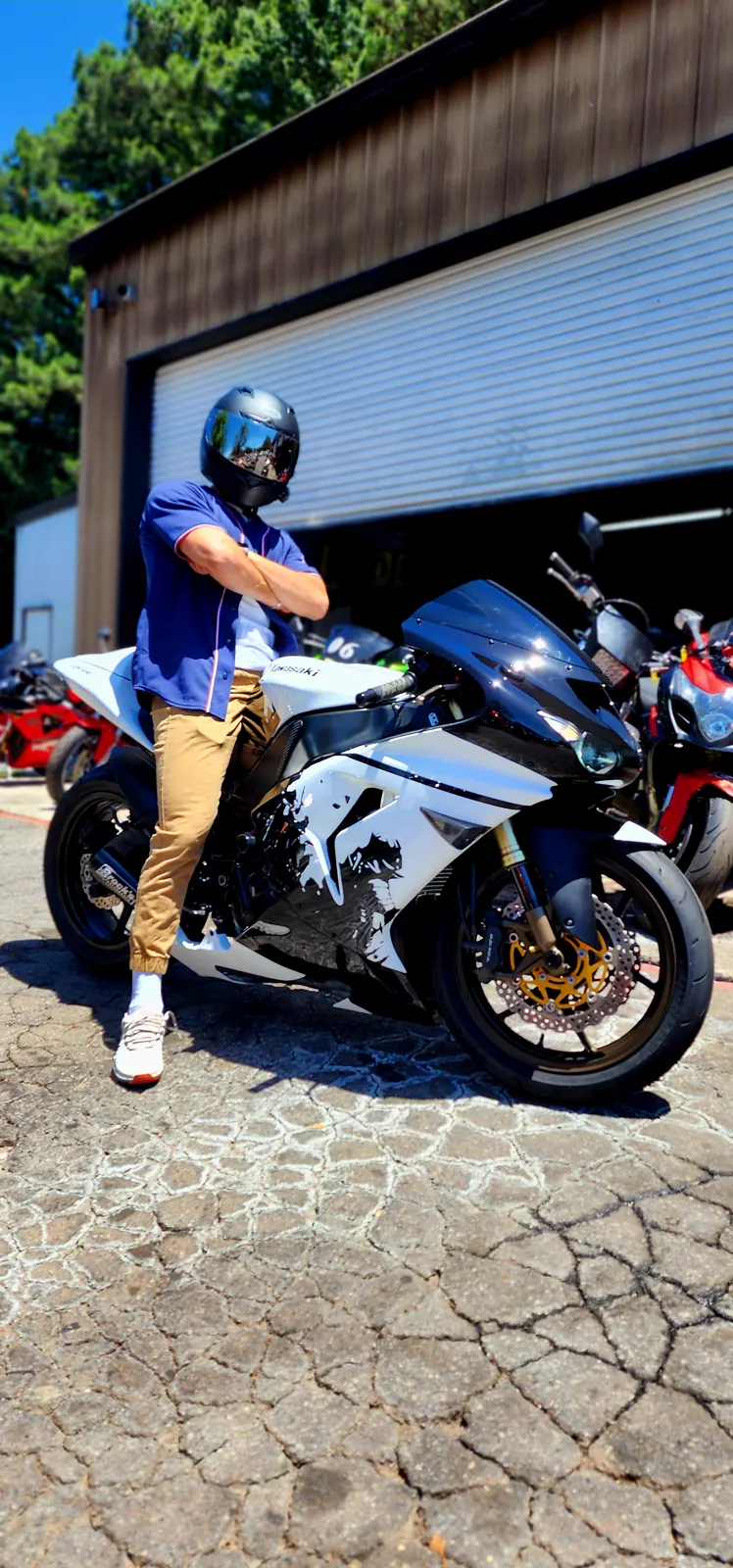
Here’s the part that makes the whole choice easy to feel good about. A properly detailed bike doesn’t just look clean, it looks better than the day it rolled out of the showroom. The paint has a depth you can almost sink into. The chrome throws your reflection right back at you. Run your hand across a coated tank and it’s glassy and slick, the exact opposite of that thirsty drag you felt at the start. Water beads up and rolls off like it’s late for something.
That shine does more than turn heads. A finish that’s protected and cared for holds its resale value, because the next buyer sees a bike that was loved, not just ridden. Whether you go ceramic or wax, you come out ahead. Ceramic gives you longer, tougher protection and easier cleaning. Wax gives you that hands-on ritual and a warm, classic glow. Pick the one that fits your riding and you really can’t lose.
So take that hand test again in a month. When your palm glides and the water runs, you’ll know the choice paid off, and you’ll be grinning under your helmet the whole way up I-575.
Questions Woodstock riders ask us
What's the real difference between ceramic coating and wax?
Wax is a soft shield that sits on the paint and wears off fairly quickly. Ceramic coating bonds to the clear coat and hardens into a thin, glass-like layer. Both add gloss and protect, but ceramic is tougher and lasts much longer.
Which one lasts longer?
Ceramic, by a wide margin. Wax typically holds up for weeks to a couple of months, especially in our summer heat. A ceramic coating can protect for years, depending on how the bike is stored and cleaned.
Which is right for my kind of riding?
If you ride hard seasonal miles and plan to keep the bike, ceramic is the better fit. If you enjoy waxing by hand on the weekend, or you might sell soon, wax makes plenty of sense. Tell us how you ride and we’ll steer you right.
Can I switch from wax to ceramic later?
Absolutely. We strip the old wax, correct any swirls, then apply the coating. The paint has to be clean and corrected first, so switching is really just a matter of doing the prep the right way.
Does ceramic coating make my bike scratch-proof?
No, and anyone who says so is overselling. Ceramic protects against sun, pollen, bug guts, and hard-water spots, and it makes cleaning easier. A hard rock strike or gravel can still leave a mark, so think protection, not armor.
Which do you actually recommend?
For most Woodstock riders, ceramic coating. It matches how people ride here, hard bursts of mountain miles followed by quiet weeks, and it makes upkeep easy. Wax still wins for the rider who loves the ritual or is about to sell.
We take care of riders all across the north metro, so distance is rarely a reason to skip a proper detail. Beyond Woodstock and nearby Towne Lake, we regularly help friends in Canton, Holly Springs, and Ball Ground to the north, plus Acworth, Kennesaw, and Cartersville out west. Closer to the shop we cover Marietta and East Cobb, and we head east to Roswell, Alpharetta, and Milton whenever a bike needs pickup and delivery. Wherever you park it, we can bring the shop-quality finish to you.
LET'S MAKE IT SHINE
Ready to protect that finish before the next big ride out of Woodstock? Text us a couple of photos of your bike and tell us how you ride, and we’ll tell you straight whether ceramic or wax fits you best. Pickup and delivery keeps it easy, so you never have to trailer it down yourself.
470-460-9883Diaz Motorcycles and Service, LLC · 847 Barnes Mill Road, Marietta, GA 30062