Best Motorcycle Restoration in Atlanta: What to Look For in a Shop
How to pick a restoration shop you can actually trust, the green flags, the red flags, and why the right one might be a short reverse-commute away.
Finding the best motorcycle restoration Atlanta has to offer isn’t about chasing the fanciest website or the cheapest quote. It’s about finding a shop that tells you the truth, shows you the work, and hands your bike back better than promised. That’s harder than it sounds, because a restoration is a trust exercise, you’re leaving something you love in someone else’s hands for a while. So let’s make the choice simple with a clear list of what actually matters.
Here’s the tricky part for in-town riders specifically: there’s no dense cluster of full-service motorcycle shops inside the Perimeter. Most of the real capacity sits outside it, up in the northern arc around Roswell, Marietta, and Woodstock. So you’re going to be choosing a shop that isn’t around the corner no matter what. That makes picking the right one, and how they handle logistics, even more important.
Green flag one: they look before they quote
The best shops diagnose first and price second. A restoration quote fired off over the phone without seeing the bike is either padded high to be safe or lowballed to reel you in. Neither respects your money. A good shop wants eyes on the bike, checks the bones, and then gives you a real read. If a place is happy to name a big number sight unseen, that tells you plenty.
This matters even more with restorations than regular repairs, because the starting condition drives everything. A garage-kept bike and one that sat outside for years are wildly different jobs, which is exactly why the price ranges so much in what a restoration costs. The shop that insists on looking first is the shop that’ll quote you honestly.
Green flag two: they show the work and explain it plainly
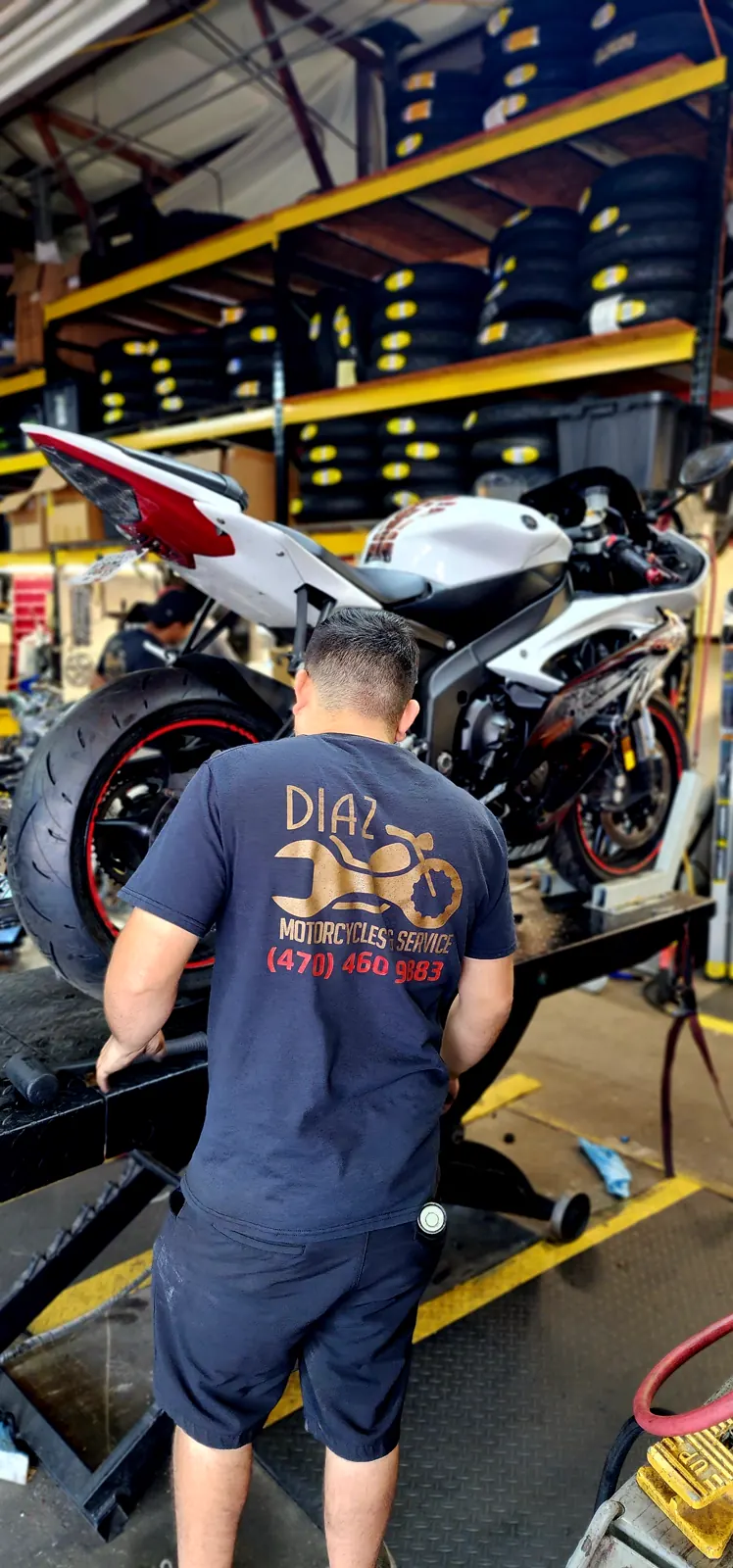
The best restoration shops don’t hide the process behind a curtain. They’ll walk you to the bike, point at what’s actually wrong, and explain it in words you can follow, no jargon smokescreen. They itemize the job so you can see where the money goes instead of just staring at one scary total. And they text you photos and updates, because they know you’re thinking about your bike the whole time it’s gone.
In-town Atlanta riders especially hate being sold a mystery “package.” You want it broken down, shown, and explained. A shop that’s proud of its work is happy to show you every step. A shop that gets vague, rushed, or annoyed when you ask questions is telling you how the whole job will go. Trust the one that welcomes the questions.
GREEN FLAG
A shop that calls you before adding any work, and gets your okay first, is a shop that will never surprise you with the bill at pickup.
That one habit, call before you add, separates the shops you can relax with from the ones that keep you nervous. It means you approve the plan and the budget, and every change to it, before a wrench turns. You should never come back to work you didn’t authorize. If a shop can’t promise that simple thing, keep looking.
Green flag three: they work on your kind of bike
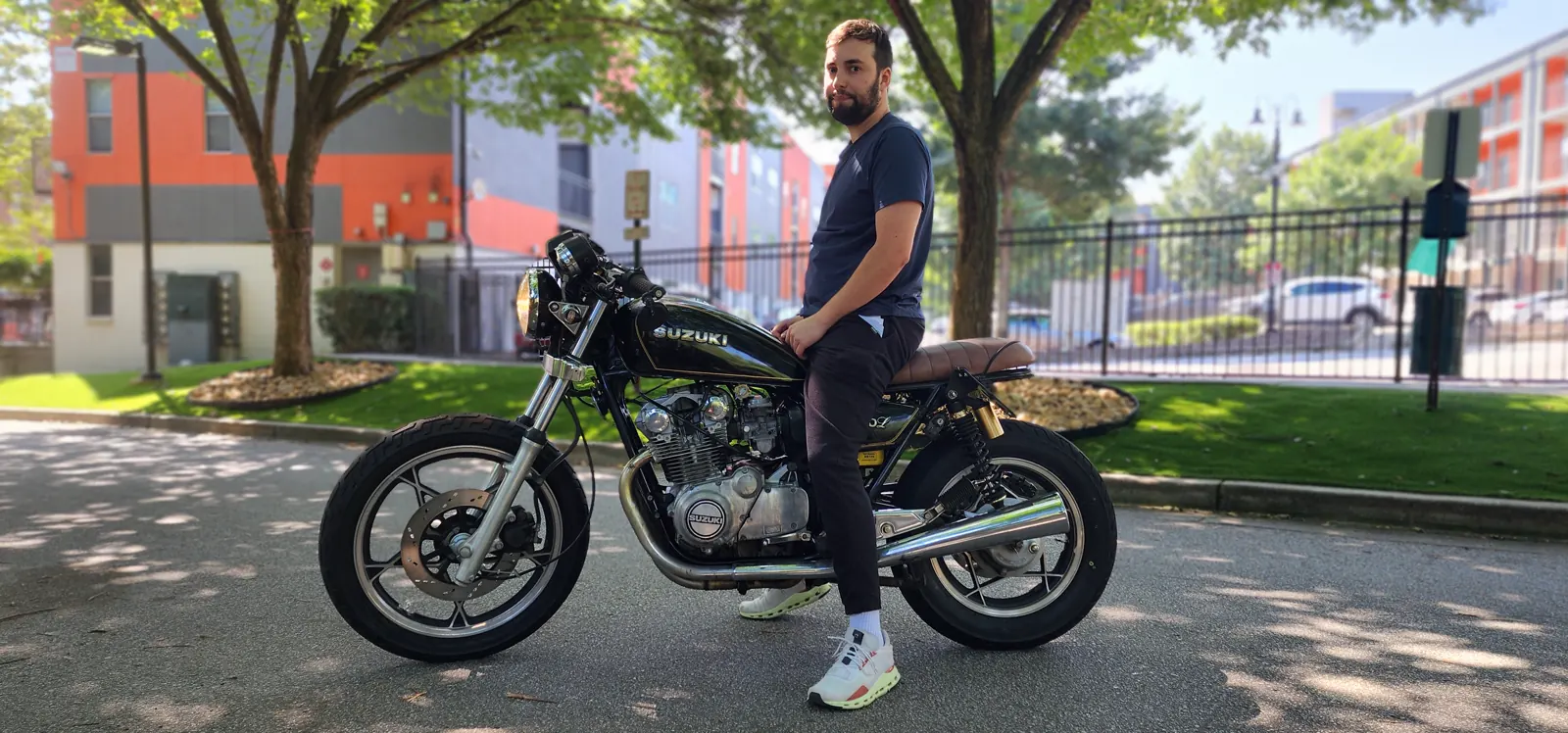
Atlanta’s rider scene is wonderfully mixed. East Atlanta and Old Fourth Ward lean sportbikes, supermotos, and little Grom-class bikes. Buckhead runs cruisers, Harleys, and premium touring bikes. West Midtown loves cafe racers and vintage builds. So the ideal restoration shop is one that works across makes and eras, because a brand-locked dealer service department can’t help you with a mixed garage.
An all-makes shop means one trusted stop whether you’re bringing a seventies Japanese project, a Harley bagger, or a European sportbike. It also means the crew has seen a huge range of problems and knows how bikes actually age. When you’ve got a cafe racer and a cruiser and a dirt bike, you don’t want to juggle three dealers. You want one shop that treats them all like they belong there.
Green flag four: they solve the logistics for you
This is the one in-town riders undervalue until it saves them. Nearly half of Atlanta rents, and a huge share of those pre-1950 homes in Kirkwood, Reynoldstown, and Grant Park have a detached garage or none at all. Condo riders in Midtown and Buckhead store bikes in shared parking decks. If your project bike doesn’t run, and you have no truck and no trailer, how are you even supposed to get it to a shop?
The best restoration shop for an Atlanta rider is one that comes and gets it. Pickup and delivery turns “I physically can’t move this bike” into “when can you swing by.” A shop with a working website and a slick lobby but no way to fetch your dead bike isn’t much use if the bike can’t leave the deck. Logistics isn’t a bonus feature here, it’s the whole ballgame for a lot of in-town projects.
The best shop isn't the closest one. It's the one that shows the work, tells the truth, and comes to get your bike.
The red flags to walk away from
Just as important as the green flags are the warning signs. If you spot these, keep shopping, because a restoration is too big a job to hand to a shop you’re already unsure about:
- They quote a big number over the phone without ever seeing the bike.
- They’re vague about what’s included and won’t itemize the work.
- They get annoyed when you ask to see the problem or understand a step.
- They promise a “showroom” result with no honest talk about condition or timeline.
- They can’t or won’t get your okay before adding work to the job.
- They dodge questions about how they’d handle a bike that won’t run or can’t be moved.
None of these mean a shop is evil. They just mean the experience is likely to be stressful, and a restoration should be exciting, not nerve-wracking. You’re going to be talking to this shop for weeks. Pick one whose answers make you feel calmer, not more anxious. Your gut is a decent instrument here, listen to it.
SMART MOVE
Before you decide restore or sell, pick your shop, because a trustworthy shop’s honest look is what tells you which way to go in the first place.
It’s a little backwards, but true. The right shop’s honest assessment is the tool you use to make the big decision, so choosing a trustworthy one comes first. If you’re still weighing whether the bike’s even worth it, that’s a whole conversation of its own in restore versus sell, and a good shop will happily be the one to help you answer it.
Green flag five: they respect what the bike means to you
A restoration is rarely just a transaction, and the best shops get that. A lot of the bikes worth restoring aren’t the valuable ones, they’re the meaningful ones: a dad’s old cruiser, a first bike, the one that got parked when life got busy. A shop that treats your keeper like just another job on the board is missing the whole point of why you called in the first place.
You can feel this one in the first conversation. Does the shop ask about the bike’s story, or just its year and model? Do they light up a little when you describe it, or do their eyes glaze over? The crews that genuinely love old bikes do the careful, patient work those bikes need, because to them it isn’t a chore, it’s the fun part of the trade.
Why Marietta is closer than it looks
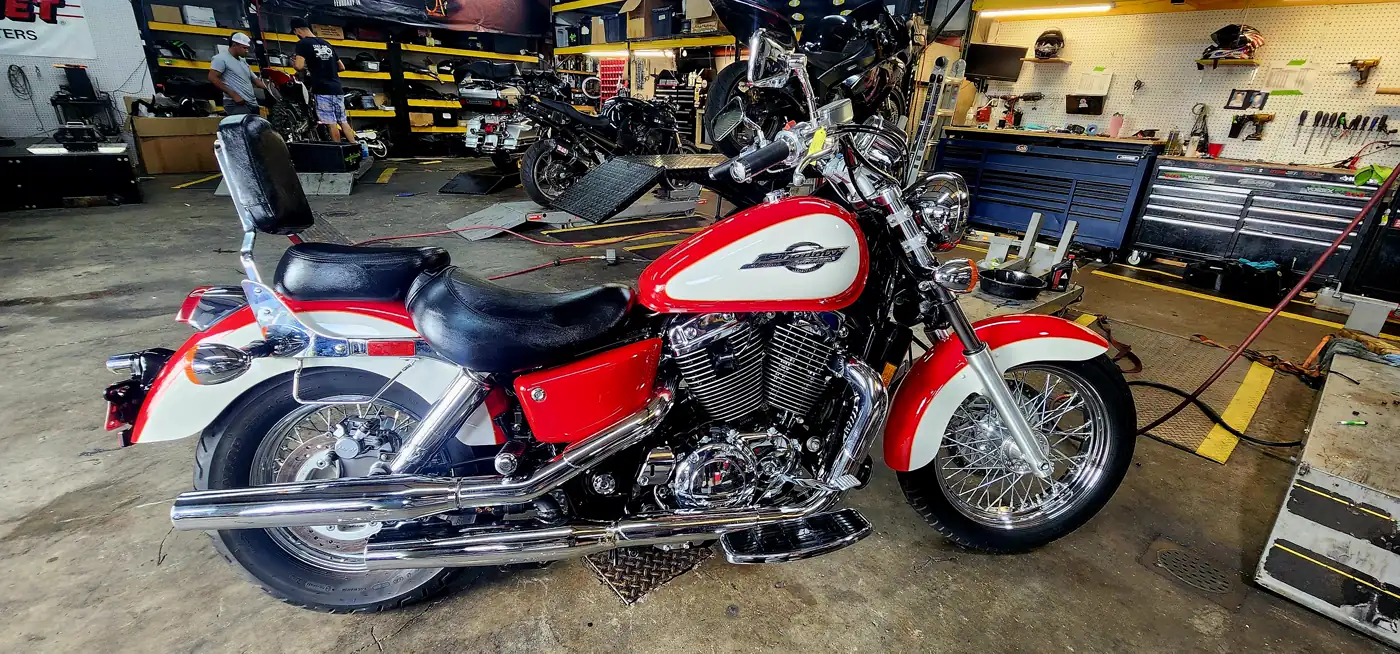
Since ITP has no real cluster of full-service shops, you’re driving out no matter who you pick. We’re in East Cobb, roughly 13 miles from Buckhead and 16 from Midtown up I-75, about the same as any shop in Roswell or Woodstock, and often closer than the east- or south-side options. Better yet, heading our way mid-morning runs against the inbound traffic, so the trip is easier than the map suggests.
And if the bike can’t move at all, the distance stops mattering entirely, because we’ll come get it. That’s the whole point: the best restoration shop for an in-town rider is defined less by its zip code and more by whether it shows the work, tells the truth, and handles the logistics. Distance is a problem we already solved.
So here’s your move. Line up any shop against this list, green flags, red flags, and how they handle a bike that won’t run. Then text us a few photos, tell us the bike’s story and how it’s been stored, and see how our answers stack up. We’ll give you a straight read, show you the work, and if it’s a fit, we’ll come get the bike. No pressure, no sales script, just an honest place to start.
Questions Atlanta riders ask us
How do I find the best motorcycle restoration shop in Atlanta?
Look for green flags: they diagnose before quoting, itemize and explain the work plainly, work across makes, and get your okay before adding anything. Watch for red flags like big phone quotes sight unseen or vague, rushed answers. The best shop tells the truth, shows the work, and handles the logistics.
There aren't many shops inside the Perimeter. Does that mean I'm stuck?
Not at all. Most full-service capacity sits OTP in the northern arc, so you’ll be driving out no matter who you pick. What matters is choosing a trustworthy shop and one that offers pickup, so a bike that won’t run still gets there. Distance is a solved problem when a shop comes to you.
Should I pick a shop that only works on my brand?
For a mixed garage, an all-makes shop is usually better. Brand-locked dealer departments can’t help with a cafe racer, a cruiser, and a dirt bike all at once. An all-makes crew has also seen a wider range of aging problems, which is exactly what a restoration needs.
What's the biggest red flag in a restoration shop?
A big quote over the phone without seeing the bike. Condition drives restoration cost more than anything, so a real number requires a real look. Right behind it: refusing to itemize, getting annoyed at questions, or not getting your okay before adding work.
Should I choose my shop before deciding whether to restore or sell?
Yes, a little backwards but true. A trustworthy shop’s honest assessment is the tool you use to decide. Pick the shop you trust first, get a straight look at the bike, and the restore-or-sell answer usually becomes clear.
My bike won't run and I can't move it. How do I even get it to a shop?
Choose a shop that picks up. We come get dead bikes across the metro, from Midtown decks to East Atlanta sheds, so a no-start or a flat is just a trailer ride. For in-town riders with no truck or garage, pickup is the single most important thing a shop can offer.
We restore bikes for riders all over the metro, most choosing a shop that isn’t around the corner, since there’s no cluster of shops inside the Perimeter. Calls come from Buckhead and Midtown condos near Piedmont Park, West Midtown cafe-racer folks by Atlantic Station, and Old Fourth Ward near Ponce City Market and the BeltLine, plus East Atlanta, Grant Park, and Inman Park. We’re up I-75 in East Cobb, and we pick up bikes that won’t move.
TEXT US AND SEE HOW WE STACK UP
Shopping for a restoration shop you can trust? Text us a few photos, tell us the bike’s story and how it’s been stored, and see how our answers measure against your checklist. We’ll show you the work, give you a straight read, and if it’s a fit we’ll come get the bike, straight up I-75 from East Cobb. No pressure, no sales script, just an honest place to start.
470-460-9883Diaz Motorcycles and Service, LLC · 847 Barnes Mill Road, Marietta, GA 30062