Motorcycle Sitting for Years in Atlanta? Here's How to Fix It Safely
What really happens to a bike that sits, why you shouldn't just fire it up, and how we bring a long-parked machine back the right way.
So you’ve got a motorcycle sitting for years Atlanta weather has been slowly working on, tucked in a parking deck or under a cover behind the condo, and now you want it back. Good news: it’s probably fixable. But here’s the part most people get wrong. The worst thing you can do to a bike that’s been parked forever is walk up, dump in fresh gas, and hit the start button. That’s how a fixable bike becomes an expensive one. Let’s do this the safe way instead.
We say this gently, because we’ve all been there. The temptation to just crank it over and hear it run is strong. But a bike that sat has old fuel, dry seals, a tired battery, and sometimes surprises hiding in the fuel or oil. Rushing it can turn a weekend fix into a real repair. A little patience up front saves you a lot of money and heartache.
What actually goes bad when a bike sits
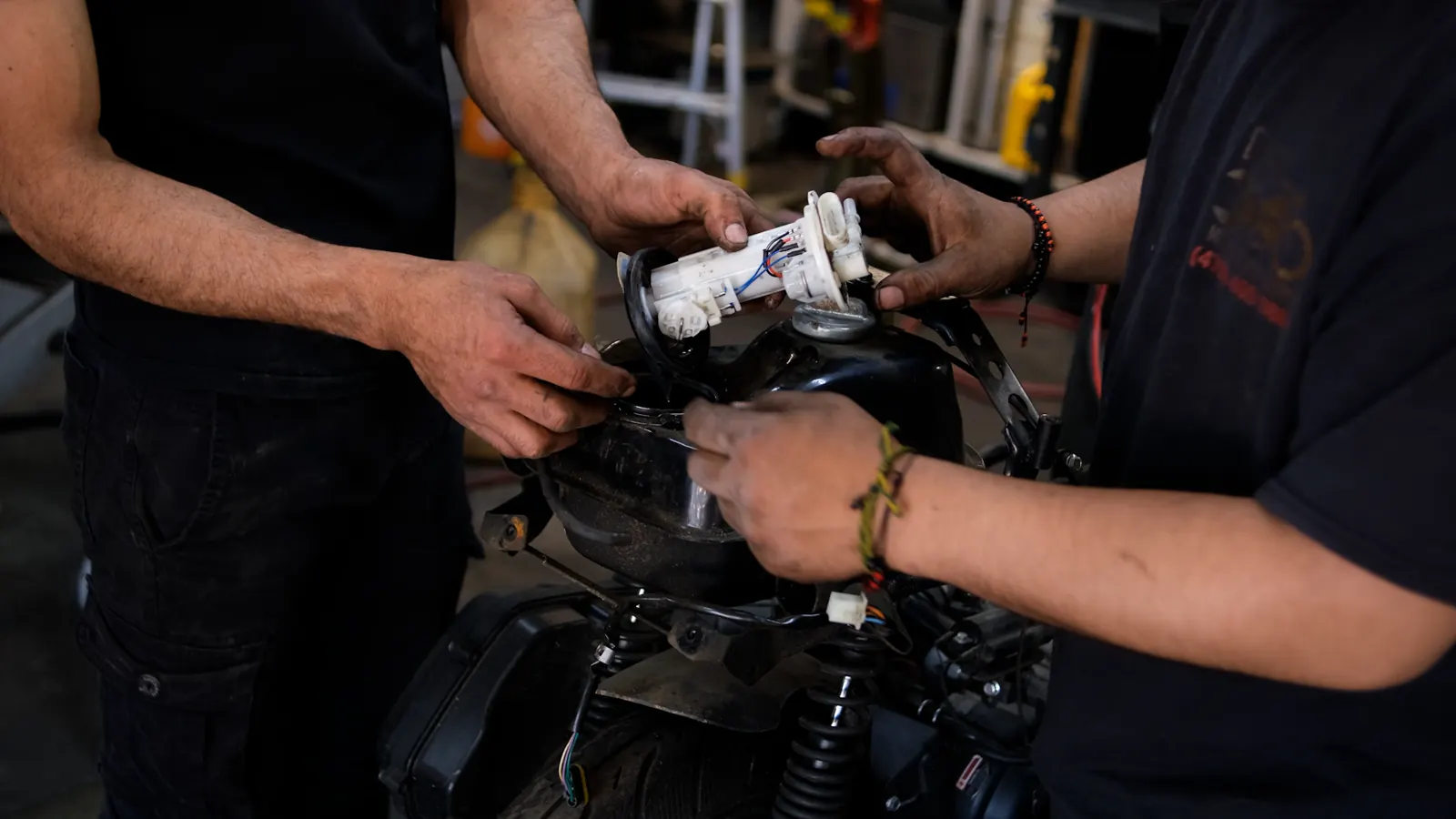
Time is sneaky. A bike doesn’t rot all at once, it just quietly falls apart in slow motion while it sits there looking fine. The biggest culprit is the fuel. Gas goes stale in a few months and turns to varnish and gum in a year or two. That sticky gunk clogs carburetors, plugs tiny fuel passages, and gums up injectors and pumps. It’s the number one reason a long-parked bike won’t start or won’t run right.
Then comes everything else. The battery slowly dies and often can’t be saved. Fork seals and other rubber dry out and crack. Brake fluid absorbs water and gets soft. Tires flat-spot and the rubber hardens. Chrome starts to freckle with rust, especially in Atlanta’s humidity. And moisture can sneak into the oil and the cylinders. None of it is dramatic on day one. All of it adds up by year three.
Why Atlanta is especially hard on a parked bike
Where your bike sat matters as much as how long. And in-town Atlanta is a tough place to store a machine. Nearly half the city rents, and a huge share of those pre-1950 homes in Kirkwood, Reynoldstown, and Grant Park have a detached garage or none at all. If you’re in a Midtown or Buckhead high-rise, your bike likely lived on level P3 of a parking deck with no outlet for a battery tender and no protection from the damp.
That exposure speeds up every problem on the list. Georgia heat bakes the fuel, the humidity keeps everything damp and rusting, and spring pollen coats the whole bike in yellow that turns mildly acidic when it gets wet. A bike parked outside for a few Atlanta summers sees more damage than the same bike stored in a dry garage for twice as long. It’s not your fault. It’s just the reality of storing a bike in-town, and it’s the exact math behind what a revival ends up costing.
DON'T DO THIS
Do not pour fresh gas in and hit start on a bike that’s sat for years. If the fuel system is gummed, you can pull junk straight into the engine.
We know it’s tempting. You just want to hear it run. But firing up a long-parked bike before you’ve checked the fuel, oil, and cylinders is how good engines get hurt. Old varnish gets sucked deeper, a stuck ring can score a cylinder, and water in the oil turns into wear the moment it spins. Five minutes of impatience can cost you a top-end. Patience is cheaper than pistons.
The safe way to wake a bike up
Here’s the honest sequence for reviving a bike that sat, and notice that starting it is near the end, not the beginning. Each step protects the one after it. Skip ahead and you risk turning a cleanup into a rebuild.
- Look it over first: check for rust, rodent damage, cracked lines, and how bad the old fuel really is.
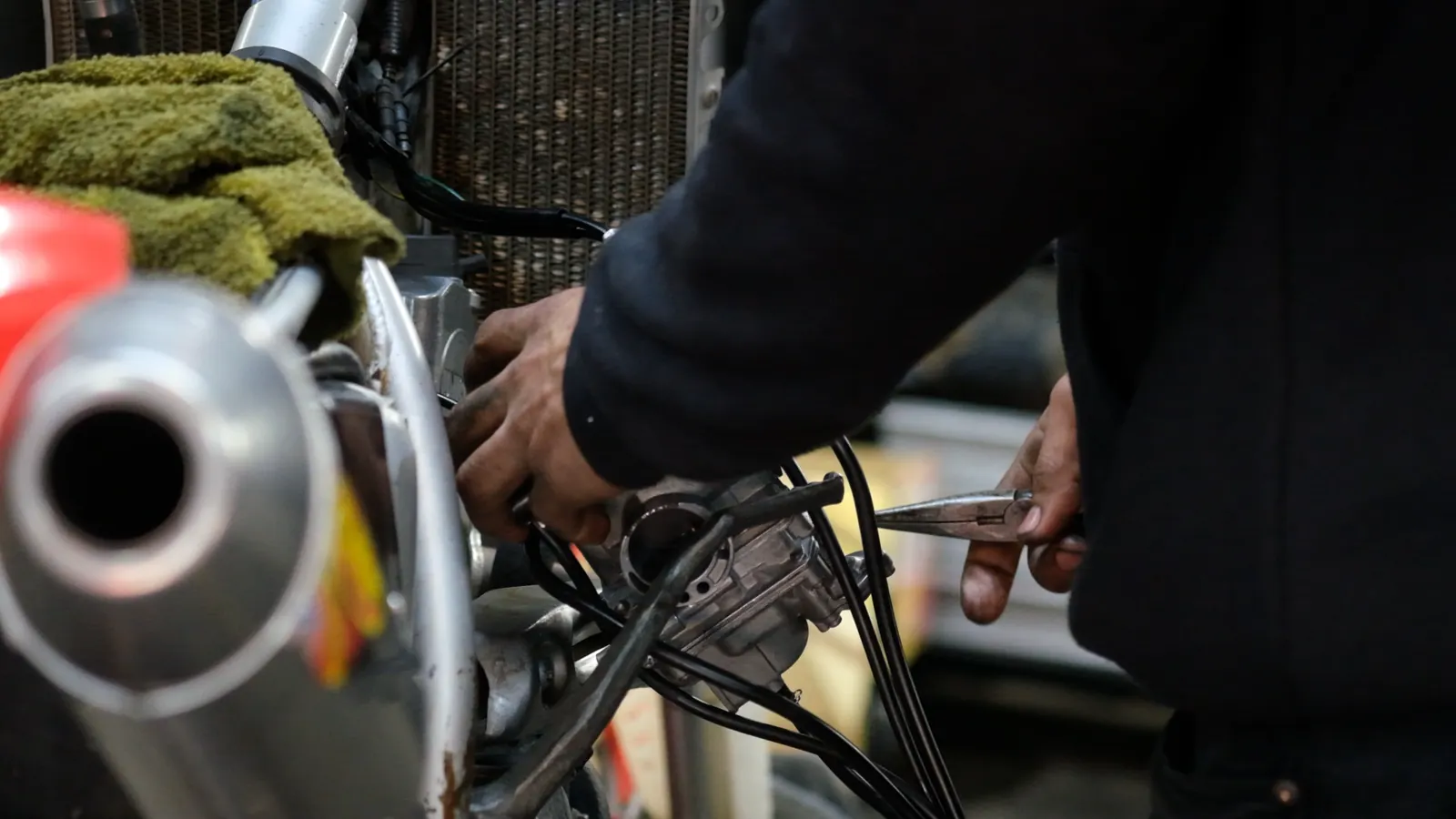
- Drain the stale fuel and clean or rebuild the carbs, injectors, or pump so nothing gummy reaches the engine.
- Change the oil and filter before it ever runs, to flush out moisture and old, broken-down oil.
- Fit a fresh battery, inspect the spark plugs, and check that the engine turns over freely by hand.
- Go through the brakes, fluids, cables, and tires, because a bike that sits still has to stop and steer.
- Only then start it, warm it gently, and watch closely for leaks, smoke, and anything that sounds off.
That first step, looking before doing, is the one that saves you the most. A bike that sat one winter in a dry garage is a totally different job than one that sat three years in a damp deck. We diagnose before we quote, because guessing high over the phone helps nobody and guessing low is worse.
The surprises we sometimes find
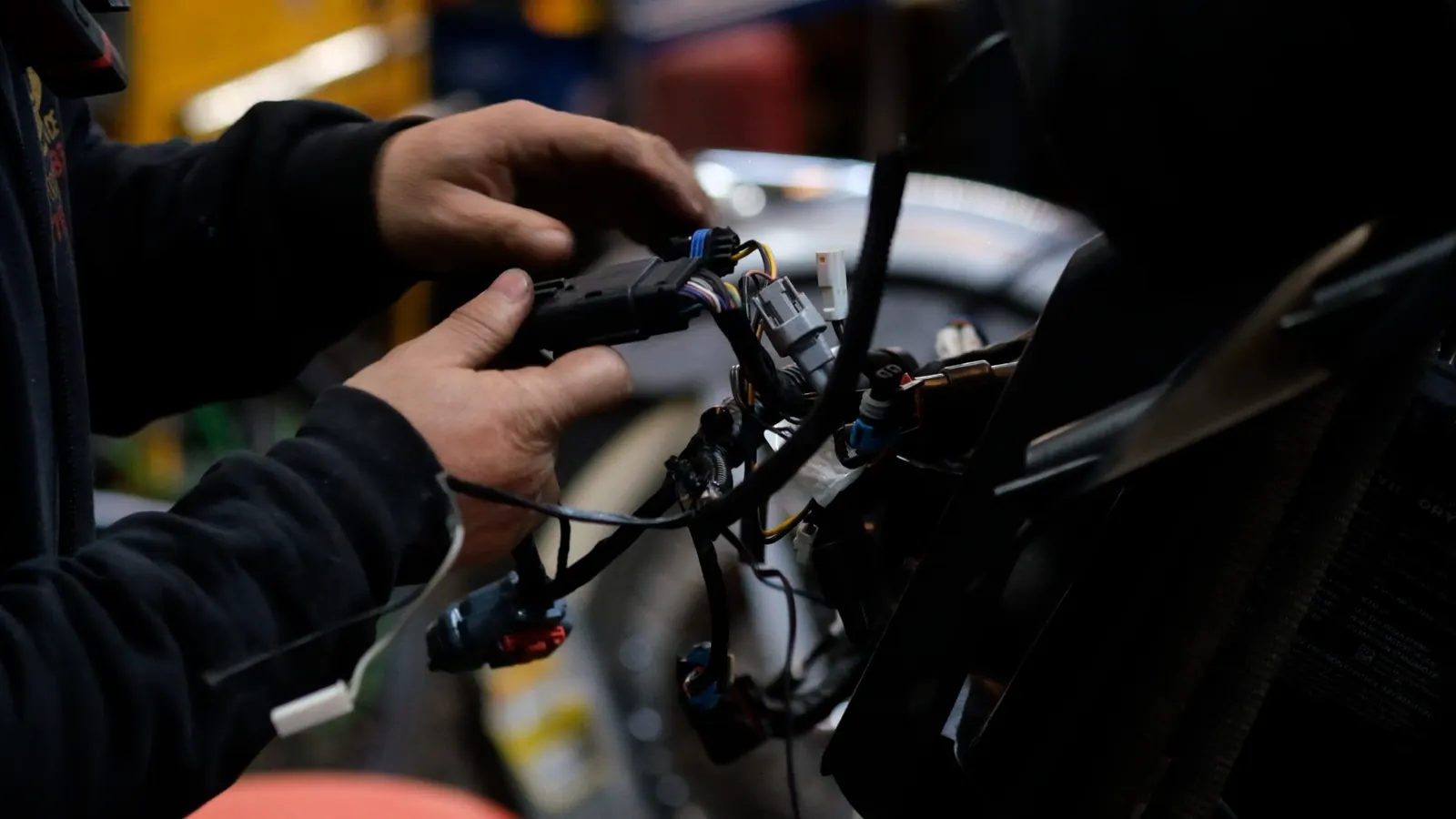
Most long-parked bikes come back with nothing scary, just old fuel, a dead battery, and tired rubber. But once in a while a bike that sat has a real hidden issue, and it’s better to find it on a lift than on the road. Mice love to build nests in airboxes and chew wiring. Moisture can rust a cylinder wall or seize a component. And a bike that was parked because something was already wrong, well, that something is still wrong.
That’s why we go slow and check as we go. If we open it up and find more than the photos showed, we stop and call you before we touch it. You approve the plan and the budget. No surprise bill at pickup, no work you didn’t okay. You’re always the one deciding how far to take it, and we’re just the ones telling you the truth about what we see.
Atlanta’s climate makes a few of these surprises more likely than they’d be elsewhere. Humidity is the quiet troublemaker, since damp air trapped under a cover or in a stuffy deck rusts metal and rots rubber faster than dry storage ever would. A bike that spent three summers exposed near the BeltLine or in a Buckhead parking structure simply carries more moisture history than one that napped in a dry garage.
That’s why we don’t cut corners on the inspection. A few extra minutes checking the cylinders, the wiring, and the oil for water tells us whether we’re waking a healthy bike or nursing a hurt one. Either way, you get the truth before we bring it to life, not a nasty surprise three weeks after you’re back on the road.
Is it worth reviving, or should you let it go?
Fair question, and we’ll always answer it honestly. If the bones are good, the frame is straight, and the engine turns freely, a revival is usually well worth it, especially for a bike you love. If the core is truly gone or the bike never meant much to you, sometimes selling makes more sense, and we’ll say so. We walk through that whole decision in restore versus sell so you can make the call with your eyes open.
A bike that sat isn't dead. It's just waiting for someone to wake it up the right way.
The good news for most riders is that a long sit sounds scarier than it usually is. The stuff that goes bad first, fuel, battery, rubber, is exactly the stuff that’s straightforward to fix. It’s the folks who skip the steps and just crank it who turn an easy job into a hard one. Do it in order and a bike that hasn’t run in years can be back on Ponce by the weekend after next.
You don't have to get it here yourself
Here’s the part that stops a lot of Atlanta riders before they even start. Their bike won’t run, they live in a condo with no truck and no trailer, and they can’t figure out how to get a dead machine across town. So it just keeps sitting, getting a little worse each season. We solve that with pickup and delivery across the metro.
WISH YOU KNEW
A no-start bike isn’t a dead end. We pick up dead bikes from decks, driveways, and sheds all over Atlanta, so it never has to run to get here.
A flat in an Inman Park driveway, a no-start in a Buckhead deck, a project bike buried in an East Atlanta shed, all of it is just a trailer ride to us. We’re outside the Perimeter in East Cobb, but that’s no farther than the service shops in Roswell or Woodstock, and the reverse-commute up I-75 actually works in your favor. When the bike can’t come to us, we come to it.
The move if your bike's been sitting
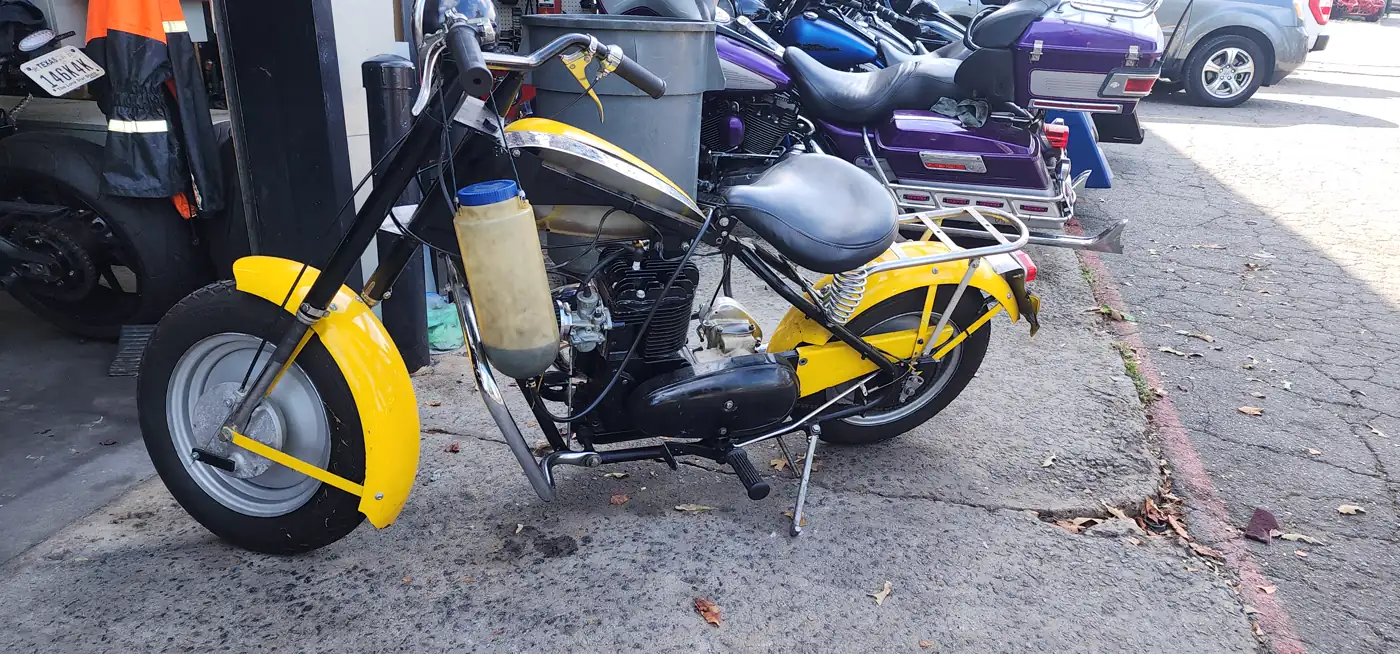
Don’t crank it. Don’t panic. And definitely don’t assume it’s junk just because it’s been quiet for a few years. The safest, cheapest path is to have someone look at it before anything spins, sort the fuel and fluids first, and bring it back in the right order. That’s the difference between a revival and a rebuild.
So text us a few photos of the bike, tell us how long it sat and where, and we’ll give you a straight read on what it needs to come back safely. If it won’t move, we’ll come get it. No pressure, no guessing, no sales script, just an honest plan to get your bike running again the right way.
Questions Atlanta riders ask us
My bike sat for years. Can I just put in fresh gas and start it?
Please don’t. Old fuel turns to gum that can get pulled into the engine, and moisture in the oil or cylinders causes wear the moment it spins. Sort the fuel system and fluids first, check that it turns freely, then start it gently. That order protects the engine and your wallet.
What's the first thing that goes bad when a motorcycle sits?
Fuel, almost always. Gas goes stale in months and turns to varnish in a year or two, clogging carbs, injectors, and pumps. Right behind it are the battery, dry seals, soft brake fluid, and hardening tires. The good news is that’s all straightforward to fix.
How long can a bike sit before it needs work to run again?
Even a few months of sitting can stale the fuel and drain the battery. A year or more, especially outdoors in Atlanta’s humidity, usually means a proper fuel-system cleanup and fresh fluids. Where it sat matters as much as how long, so we look before we quote.
Is my long-parked bike too far gone?
Usually not. Most long-sit damage is fuel, battery, and rubber, all fixable. If the frame is straight and the engine turns freely, it’s very likely worth reviving. If the core is truly gone, we’ll tell you honestly rather than sell you a lost cause.
The bike won't start, and I have no way to move it. Can you help?
Yes. We pick up dead bikes across the metro, from Midtown decks to East Atlanta sheds. It never has to run to get to us. A no-start or a flat is just a trailer ride, so storage with no truck and no garage isn’t a dealbreaker.
Do you work on older and vintage bikes that have sat a long time?
Yes, and the older and rarer the bike, the more the slow, careful method pays off. We diagnose first, sort fuel and fluids before it ever runs, and check for hidden trouble like rodent nests or a rusted cylinder before we bring it back to life.
We revive long-parked bikes for riders across the metro. We hear from Midtown and Buckhead condo owners whose bikes slept in a deck near Piedmont Park, and from Old Fourth Ward riders storing projects near Ponce City Market and the BeltLine. Plenty come from East Atlanta, Grant Park, and Kirkwood, where narrow lots and no garages mean bikes live outside. When yours won’t run, our pickup rolls straight down I-75 from East Cobb.
TEXT US BEFORE YOU CRANK IT
Got a bike that’s been sitting for years? Don’t just fire it up. Text us a few photos, tell us how long it sat and where, and we’ll give you a safe, honest plan to bring it back the right way. We’re in East Cobb, an easy reverse-commute up I-75, and if it won’t move we’ll come get it. No sales script, just straight answers.
470-460-9883Diaz Motorcycles and Service, LLC · 847 Barnes Mill Road, Marietta, GA 30062