Motorcycle Restoration Atlanta: The Honest Money Talk
What a real restoration is worth, where your dollars actually go, and how a bike stuck in a Midtown deck becomes a keeper again.
Here’s the question every rider asks before they ever text us a photo: is a motorcycle restoration Atlanta prices even worth it? Fair question. That old bike has been sitting in the parking deck for years, the paint looks tired, and part of you wonders if you’re just pouring money into a lost cause. So let’s skip the sales pitch and talk money like grown-ups. Because a good restoration isn’t about spending big. It’s about knowing exactly where every dollar goes and what it buys you back.
First, the honest part. A restoration is not a magic wand, and it’s not free. But it’s also not the money pit people fear. The trick is that a real shop looks at your bike first, tells you what it actually needs, and lets you decide how far to take it. You’re the one holding the throttle on the budget. We just give you a straight read so you’re never guessing.
What you're really paying for
When folks hear “restoration,” they picture a giant bill and a bike that comes back looking like a museum piece. Sometimes that’s the job. Most of the time it isn’t. A lot of Atlanta bikes just need a wake-up and a clean-up: fresh fluids, new rubber, a carb that isn’t full of old varnish, and paint or chrome brought back to life. That’s a very different number than a frame-off, nut-and-bolt rebuild.
Your money goes to three basic buckets. One is parts, the stuff that bolts on: tires, cables, seals, a battery, gaskets, maybe a tank or a seat. Two is labor, the hands and hours it takes to tear down, clean, fix, and put it all back together right. Three is the finish work, the paint, polish, and chrome that make people stop and stare. Knowing those three buckets is half the battle, because now you can see where a quote comes from instead of just hearing a scary total.
Why Atlanta bikes cost more to leave alone
Here’s the local truth that hits in-town riders the hardest. Nearly half of Atlanta rents, and most of those pre-1950 houses in places like Kirkwood, Reynoldstown, and Grant Park have a detached garage or no garage at all. If you live in a Midtown or Buckhead condo, your bike probably sleeps in a shared parking deck with no outlet for a tender. That means it sits, exposed, cooking in the summer and soaking up humidity, whether you ride it or not.
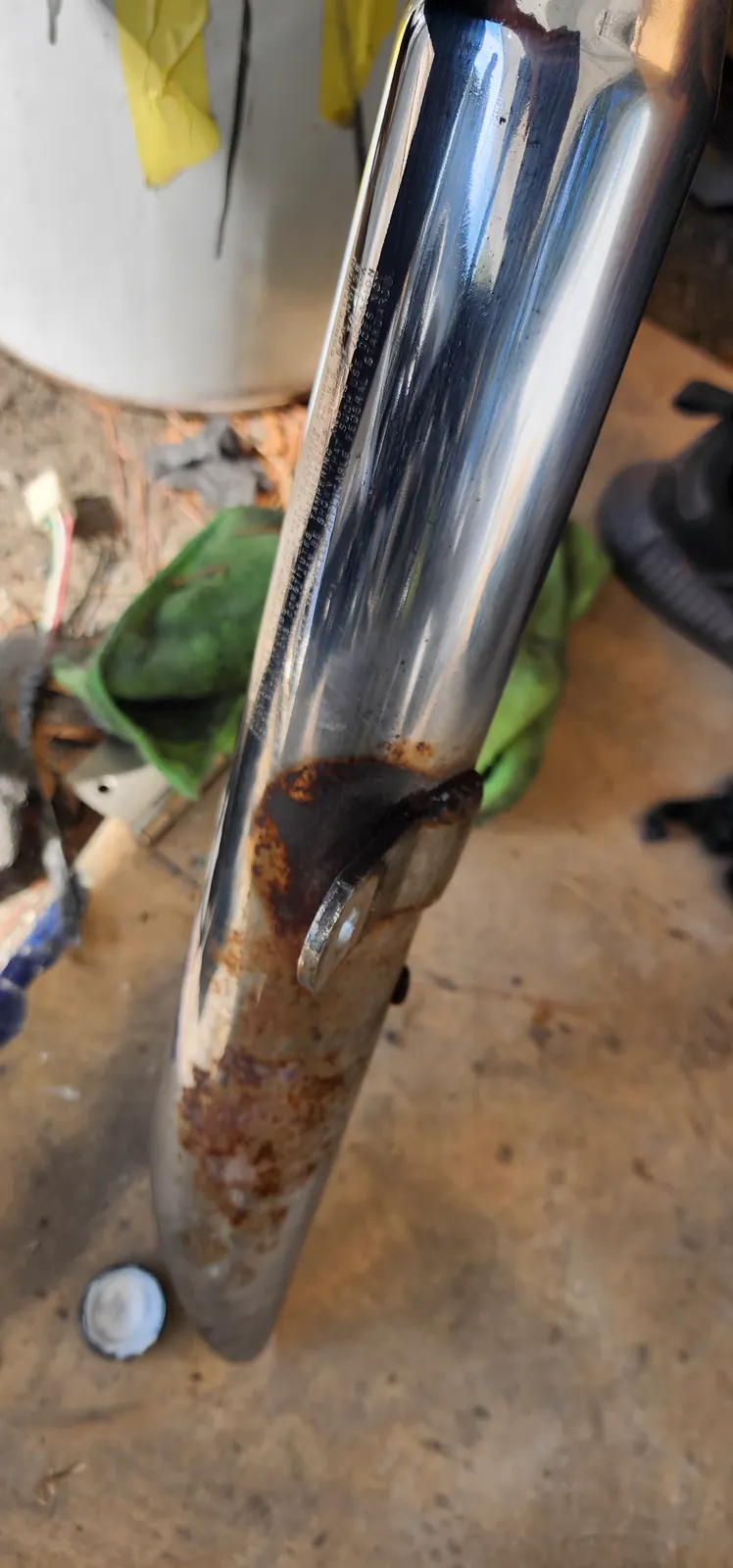
A bike that sits outside doesn’t stay frozen in time. It quietly gets worse. Fuel turns to gum, batteries die, seals dry out, and chrome starts to freckle with rust. The longer you wait, the bigger the eventual bill, which is the exact same story we walk through in what happens when a bike sits for years. So “I’ll deal with it later” isn’t saving you money. It’s just moving the payment to a future you, plus interest.
HEADS UP
The single biggest way to keep restoration costs down is to start before the rust and old fuel settle in for good.
We’re not saying that to rush you. We’re saying it because we’ve torn down enough tanks full of crusty old gas to know that time is the one repair nobody can un-charge you for. A bike caught early is a cleanup. A bike caught late is a project. Same bike, very different invoice.
The math that actually matters
Let’s put real numbers-thinking to it, without pretending we can quote your exact bike from a blog post. Compare the cost of bringing your bike back against what a comparable used bike would run you today. A clean used mid-size bike isn’t cheap anymore, and it comes with somebody else’s mystery history. Your bike, restored, comes with a history you know and work you can trust because you watched it happen.
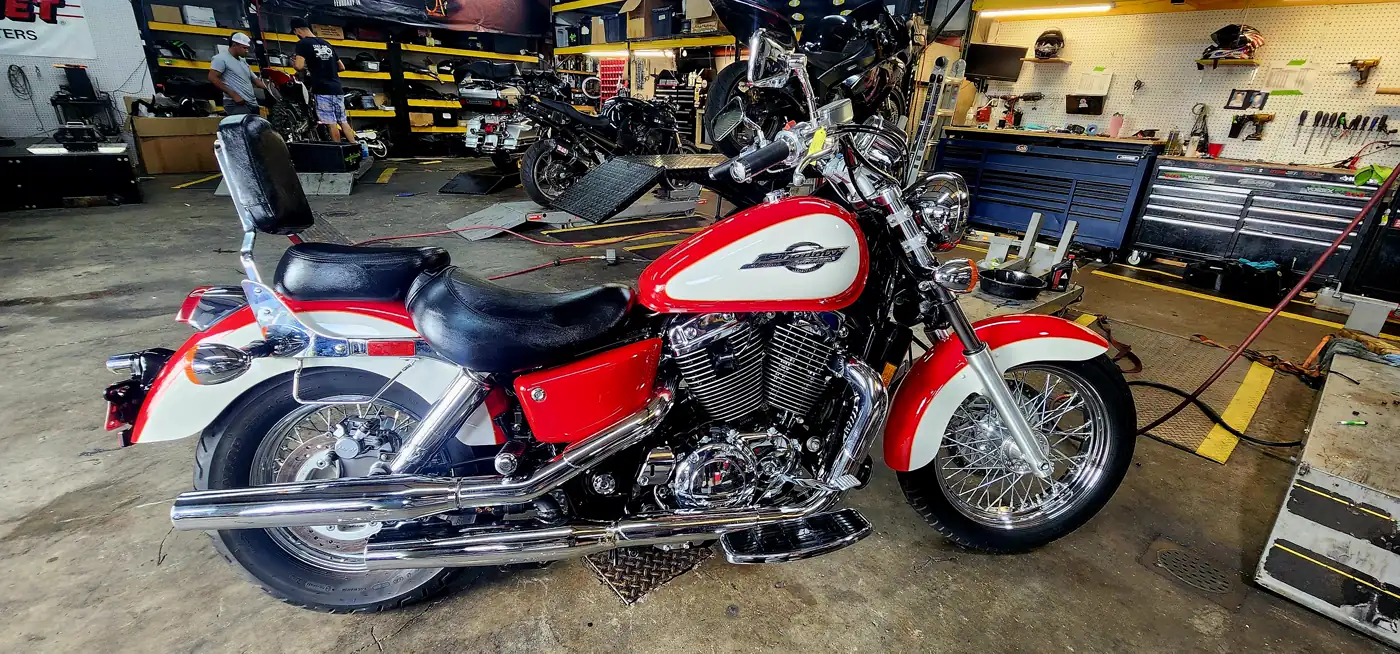
Then there’s resale. A restored, well-documented bike holds value in a way a tired one never will. Buyers read a cared-for machine in about two seconds flat, and they pay for it. If you’re weighing keeping it against letting it go, that’s a whole conversation on its own, and we lay it out plainly in restore versus sell. Spoiler: it’s not always restore, and we’ll tell you when.
Here’s a simple way to think about how far to take a restoration, from lightest to fullest:
- Revive it: fluids, fuel system, battery, tires, brakes, and a safety check so it runs and stops right.
- Refresh it: everything above, plus polished chrome, cleaned-up finish, and worn parts replaced.
- Restore it: strip it down, fix or replace what’s tired, and bring the paint and metal back to showroom.
- Rebuild it: a full frame-off, nut-and-bolt job for a bike that deserves the whole treatment.
Most riders land on the first or second rung and are thrilled. You don’t have to climb the whole ladder to love the result. You just have to pick the rung that fits your bike and your wallet, and a good shop helps you pick honestly instead of upselling you to the top.
Sentimental bikes and the number that isn't on the invoice
Some bikes aren’t a math problem at all. It was your dad’s. It was your first. It’s the one you swore you’d never sell and then life got busy and it ended up under a cover behind the condo. There’s no blue-book value on that, and honestly, we get it more than most. A lot of the machines we love best are the ones that never made financial sense and made every other kind of sense.
For those bikes, the money talk is different. It’s not “what’s it worth on the market,” it’s “what’s it worth to ride it again.” We’ll still give you honest numbers and honest options, because you deserve to make that call with your eyes open. But we won’t pretend a keeper is just a spreadsheet. That’s not how riders think, and it’s not how we think either.
How we keep the money honest
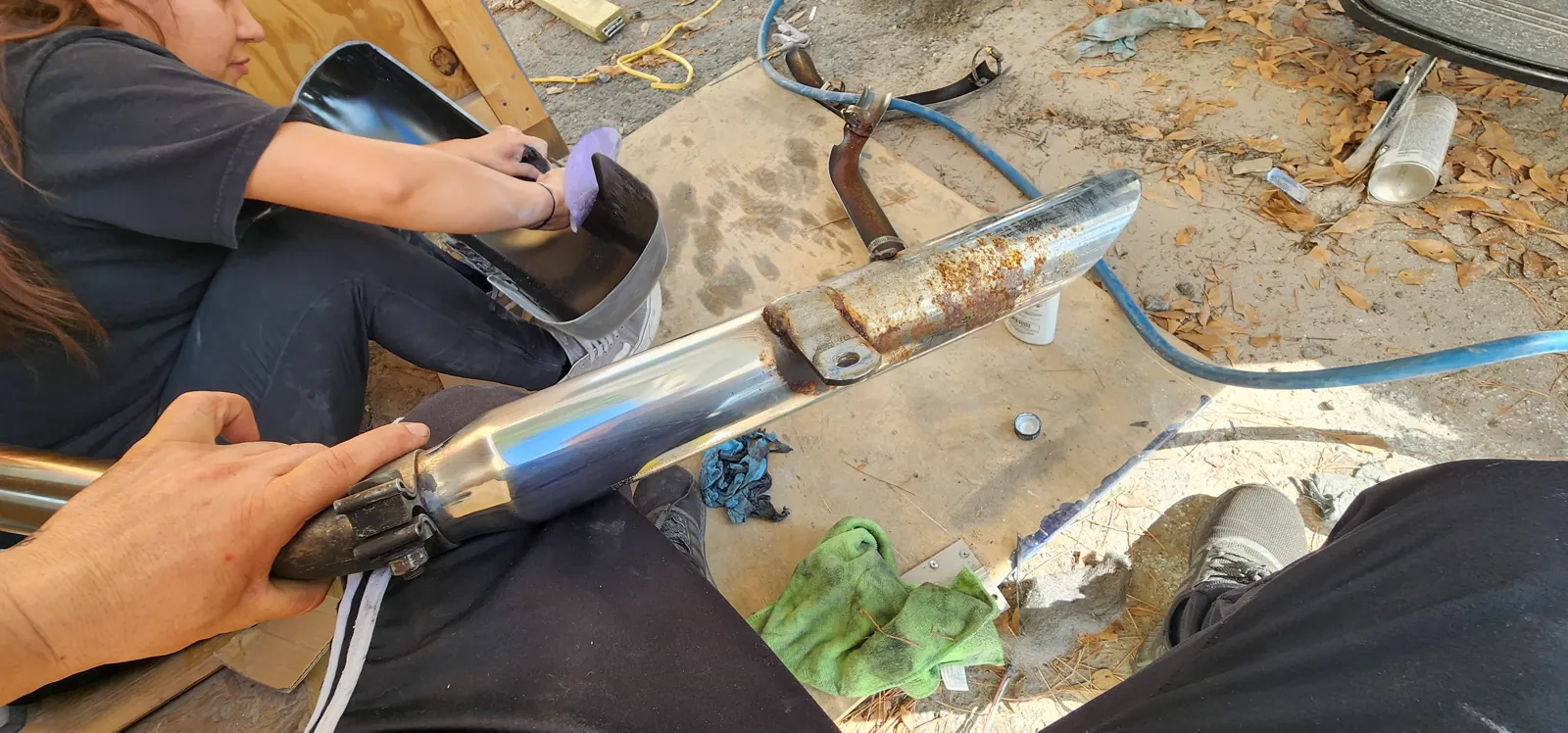
The number one way people get burned on a restoration is a shop that quotes high over the phone, or worse, quotes low and then piles on “surprises” halfway through. We do it backwards from that. We look at the bike first, tell you what it needs and what it doesn’t, and give you the read before you spend a dime. If we open something up and find more than the photos showed, we stop and call you before we touch it.
That means you approve the plan and the budget, and you approve any change to it. No mystery bill at pickup. No work you didn’t okay. Itemized, in plain words, the way in-town riders actually want it. If you’ve ever felt handled by a shop, this is the opposite of that on purpose.
A restoration isn't about spending big. It's about knowing exactly where every dollar goes.
And because we know a lot of you literally cannot get a dead project bike to a shop, we come to you. A bike with a flat in an Inman Park driveway or a no-start in a Buckhead deck isn’t a lost cause, it’s just a pickup. That single service turns “I can’t” into “when,” and it’s a big reason ITP riders end up trusting an East Cobb shop with the bike they love.
The drive out is worth it, and you might not even make it
We’re outside the Perimeter in East Cobb, about 13 miles from Buckhead and 16 from Midtown up I-75, roughly the same distance you’d drive to any real service shop in Roswell or Woodstock. But here’s the thing about the reverse commute: heading our way at mid-morning, you’re going against the inbound wave. And if the bike won’t move at all, the mileage stops mattering, because we’ll trailer it.
WISH YOU KNEW
You don’t need a truck, a trailer, or a running bike to start a restoration. You just need a couple of photos and a text.
That trips people up more than anything. They assume they have to somehow get a dead bike across town before a shop will even talk to them. Nope. Snap a few pictures, tell us how it’s been stored, and we’ll give you a real read on what it needs and what it’ll cost to bring it back. No pressure, no guessing, no sales script.
Bottom line for Atlanta riders
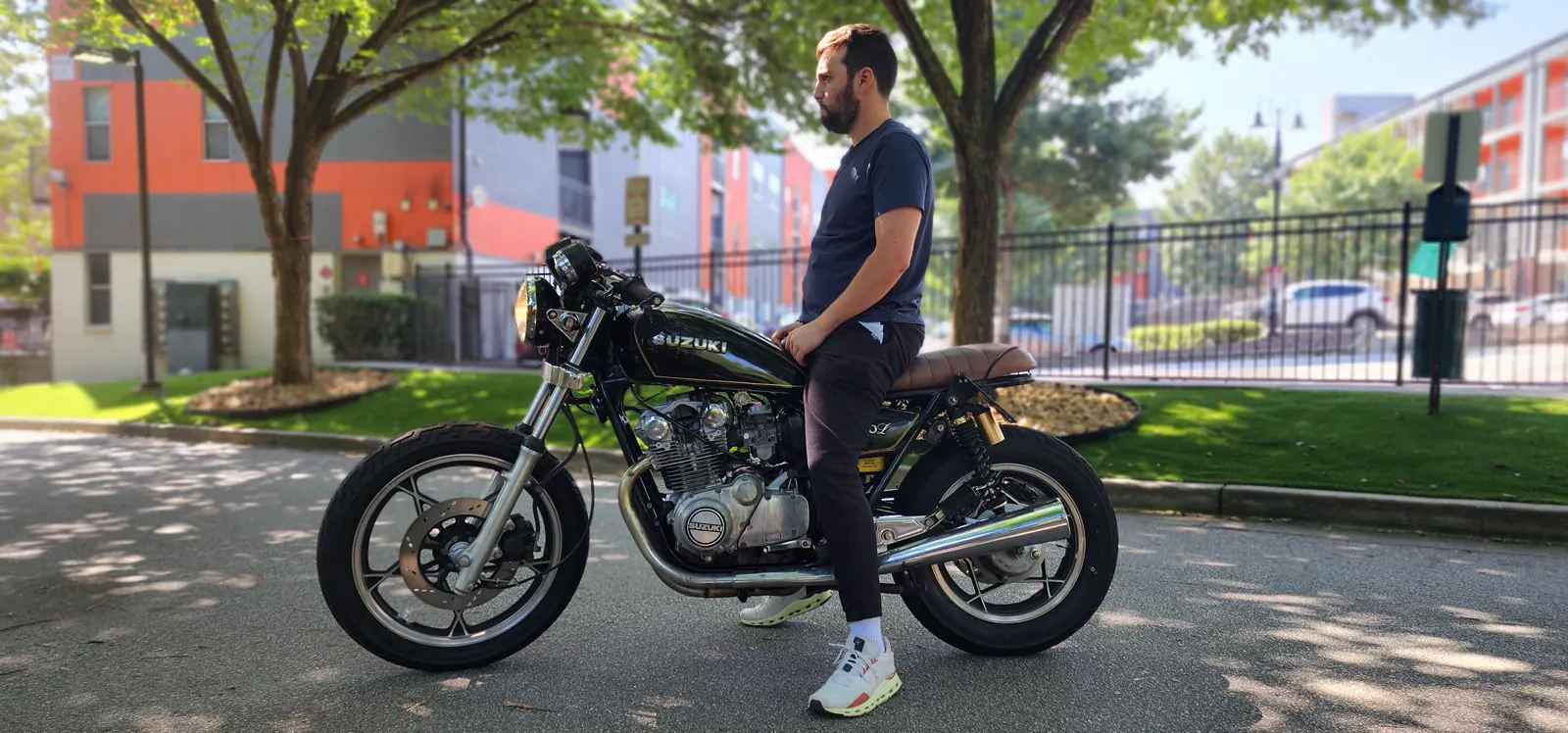
A restoration is worth it when the bike means something, the bones are good, and you’d rather own the machine you know than gamble on somebody else’s. It’s worth it when the finish pays you back in resale, or in pride, or in the simple joy of hearing it fire up again. And it’s worth it when a shop gives you honest numbers so you’re never spending blind.
So if your bike’s been sitting out behind the condo, quietly getting worse, do future-you a favor. Text us a couple photos, tell us the story, and let’s talk about where the money actually goes and whether it’s worth it for your bike. We’ll shoot you straight either way, and if it makes sense, we’ll come get it.
Questions Atlanta riders ask us
How much does a motorcycle restoration cost in Atlanta?
It depends entirely on the bike and how far you want to take it. A revive-and-refresh on a bike with good bones is a fraction of a full frame-off rebuild. That’s why we look first and quote after, so the number is real. Text us photos and tell us how it’s been stored, and we’ll give you an honest read before you spend anything.
Is restoring my old bike cheaper than buying a used one?
Often, yes, especially for a light revive. A clean used bike isn’t cheap anymore and comes with a stranger’s history. Your bike, restored, comes with work you watched happen and trust you built. For sentimental bikes, the math tilts even harder toward keeping it.
My bike has been sitting for years. Is it too far gone to be worth it?
Rarely. A bike that sat mostly loses fuel-system parts, a battery, seals, and rubber, which is fixable. We’ll tell you honestly if the core is sound or if you’re better off selling. Either way you get a straight answer, not a scare tactic.
Will you tell me if a restoration isn't worth the money?
Absolutely. Not every bike should be restored, and we’ll say so plainly. We’d rather keep your trust and earn the next job than talk you into work that doesn’t make sense for your bike.
I can't get my dead bike to the shop. Now what?
That’s the easiest problem to solve. We pick up across the metro, from Buckhead condos to East Atlanta sheds. A no-start or a flat isn’t a dealbreaker, it’s just a trailer ride. You don’t need a truck or a running bike to get started.
How do I keep the cost down?
Start early, before old fuel and rust set in, and pick the level that fits your bike instead of defaulting to a full rebuild. We’ll itemize everything and let you decide how far to go. You hold the throttle on the budget the whole way.
We bring bikes back for riders all over the metro. Friends roll down I-75 from Buckhead and Midtown, park near Piedmont Park, and store projects in Old Fourth Ward near Ponce City Market and the BeltLine. We see East Atlanta, Grant Park, and Inman Park folks whose bikes weather outside with no garage. Inside the Perimeter with a bike that won’t move? That’s exactly when our pickup really earns its keep.
TEXT US A PHOTO OF YOUR BIKE
Wondering if your bike is worth bringing back? Text us a couple of photos and tell us how it’s been stored, and we’ll give you an honest read on the money before you spend a thing. We’re in East Cobb, an easy reverse-commute up I-75, and if your bike won’t start we’ll come get it. No sales script, just straight answers.
470-460-9883Diaz Motorcycles and Service, LLC · 847 Barnes Mill Road, Marietta, GA 30062