Dyno Tuning Cost Newnan — Full Breakdown
What a dyno really measures, why bikes run lean or rich, and how an honest shop prices the work.
That’s why the first truly warm Saturday of the year does something to a garage in Coweta County. Covers come off. Batteries click back in. Either way and somewhere around the second or third ride, a rider notices the bike doesn’t feel the way it used to — a flat spot here, a little surge there, more heat off the pipes than they remember. That’s the season when questions about dyno tuning cost Newnan start landing in our inbox, right as the pollen turns every black seat yellow.
Here’s the good news before anything else. A tune isn’t some dark art. In short it’s a measurable job with a clear start and a clear finish. Once you understand what the machine actually does, the whole money question gets a lot less scary. So let’s walk it, step by step, the way we’d explain it if you were standing in the bay with us — coffee in hand, bike up on the drum.
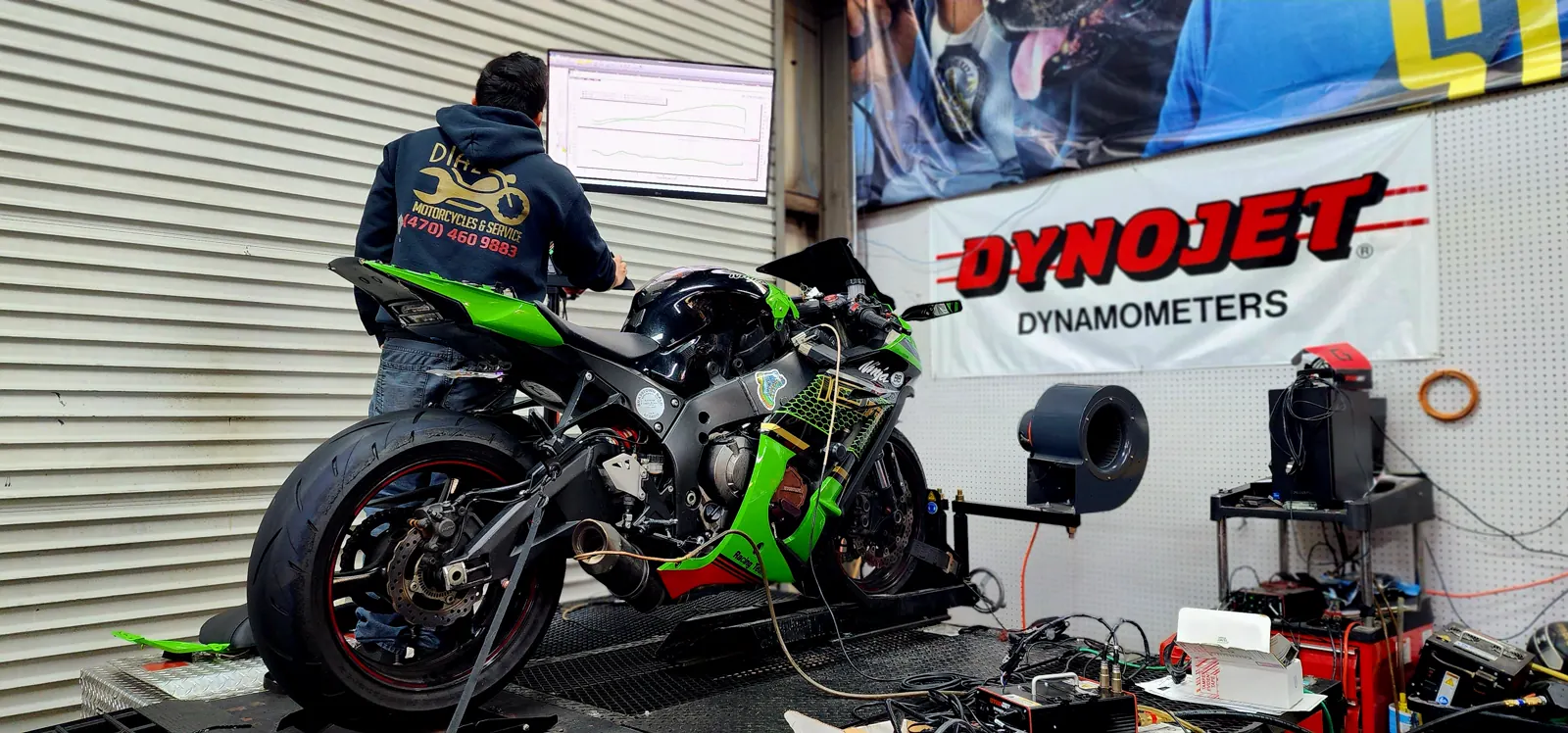
A dyno is really just a heavy drum bolted into the floor. We strap your bike down tight, spin the rear wheel against that drum, and the machine measures how hard the wheel pushes back. At the same time, a small probe reads your exhaust to see how much fuel the engine is burning against how much air it’s pulling in. That mix is the whole ballgame. Get it right and the bike feels alive. Get it wrong and you feel that too, usually as a dead spot right where you wanted a strong pull.
So why does a bike run lean or rich in the first place? Lean means too much air and not enough fuel. That’s the one that runs hot, pops and crackles when you roll off the throttle, and feels snatchy at low speed. Rich is the opposite — too much fuel for the air. That one feels lazy and heavy, fouls the spark plugs, and drinks gas like it skipped breakfast. Neither one is a moral failing. It’s just the map in your computer not matching the parts on your bike, and what usually causes it is a change you made that the map never caught up to.
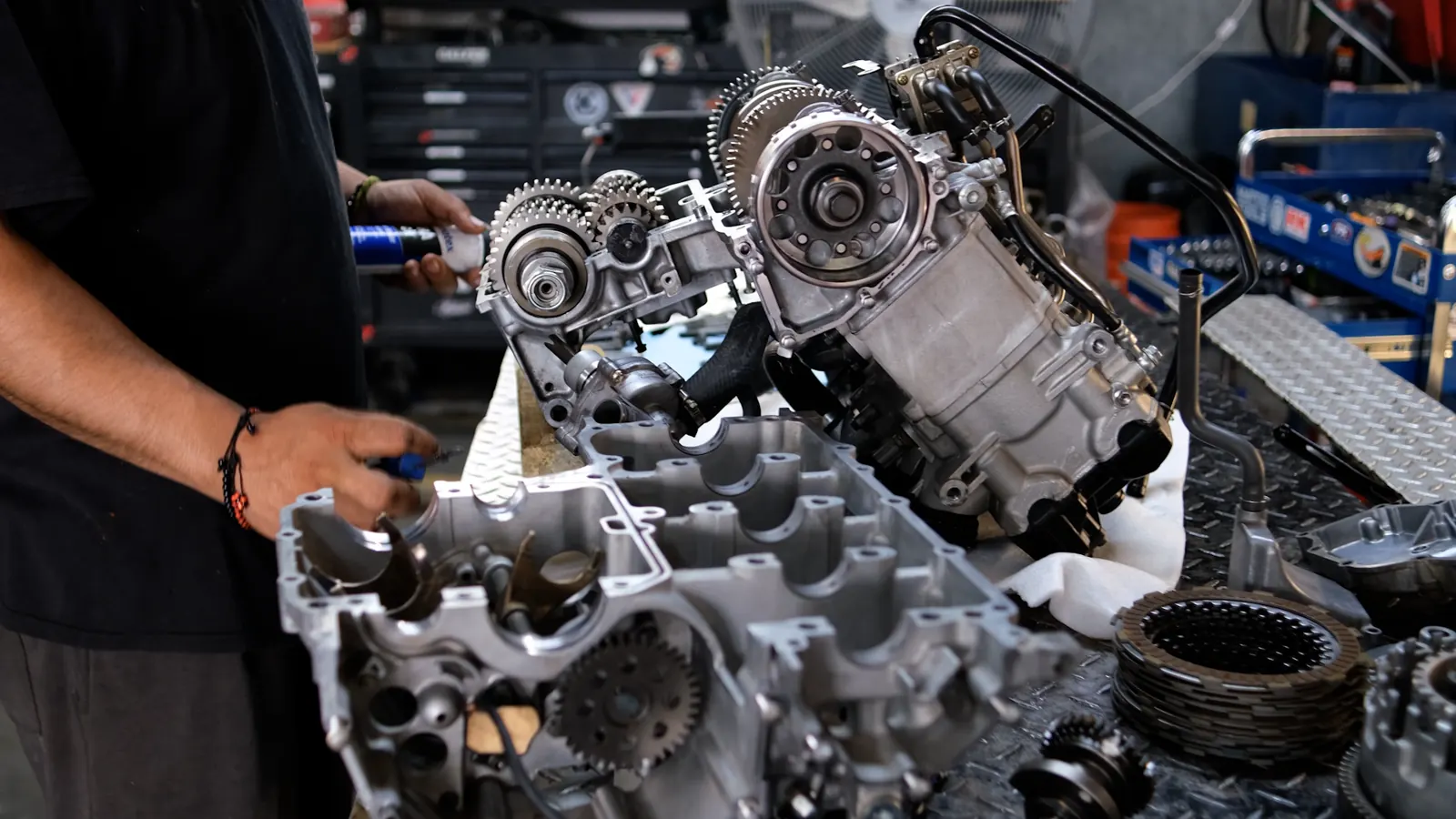
A tune fixes that mismatch. On most modern bikes we flash the ECU — that’s the little computer that decides how much fuel and spark to send. On others we add a Power Commander, which sits between the computer and the engine and nudges the numbers where they need nudging. Either way, we’re rewriting the instructions at every rpm and every throttle position, not just cranking one knob. When it’s dialed in, the throttle wakes up, the heat off the pipes settles down, and the bike pulls clean from the bottom without that hunting feeling. We won’t promise you a horsepower figure, because honest shops don’t guess at those. We’ll show you the graph instead.
The honest answer nobody loves at first
Now for the question you actually came here for. What does it cost? And here’s where an honest shop has to disappoint you a little. We can’t give you a real number sight-unseen. Any shop that fires one off before seeing your bike is either guessing or telling you what you want to hear, and neither one does you any good on ride day.
Why not? Because a tune isn’t one fixed thing. It’s labor plus parts plus access, and all three swing wide depending on what’s sitting in front of us. A bone-stock bike with an easy-to-reach computer is a quick, tidy job. A heavily built engine buried under bodywork, needing a piggyback unit and a fresh sensor first, is a different afternoon entirely. Quoting both the same would be dishonest, and dishonest is how you end up mad at the end.
There’s a second failure that hides behind the first one. A lean or rich condition doesn’t just cost you smoothness. Left alone, it cooks things. Run too lean and you’re hotter than the engine wants, which is hard on valves and pistons across a long, sticky Georgia summer. Run too rich and you’re washing oil off the cylinder walls and loading up the plugs. So a tune isn’t only about feel. It’s cheap insurance for the expensive parts underneath — the ones you really don’t want to meet on a lift.
What actually changes the job
So what makes one tune bigger than another? Really, it comes down to three things, and none of them are mysterious.
- The parts already on the bike. A stock exhaust and airbox tune differently than a full exhaust, cams, and a big-bore kit. More changes mean more time on the drum chasing the right map.
- How easy it is to reach the computer and sensors. Some bikes hand you the ECU in a minute. Others make you pull the tank, the seat, and half the bodywork just to plug in.
- What the bike needs before it can even be tuned. A worn plug, a tired air filter, or a small intake leak has to be sorted first, or we’re tuning around a problem instead of fixing it.
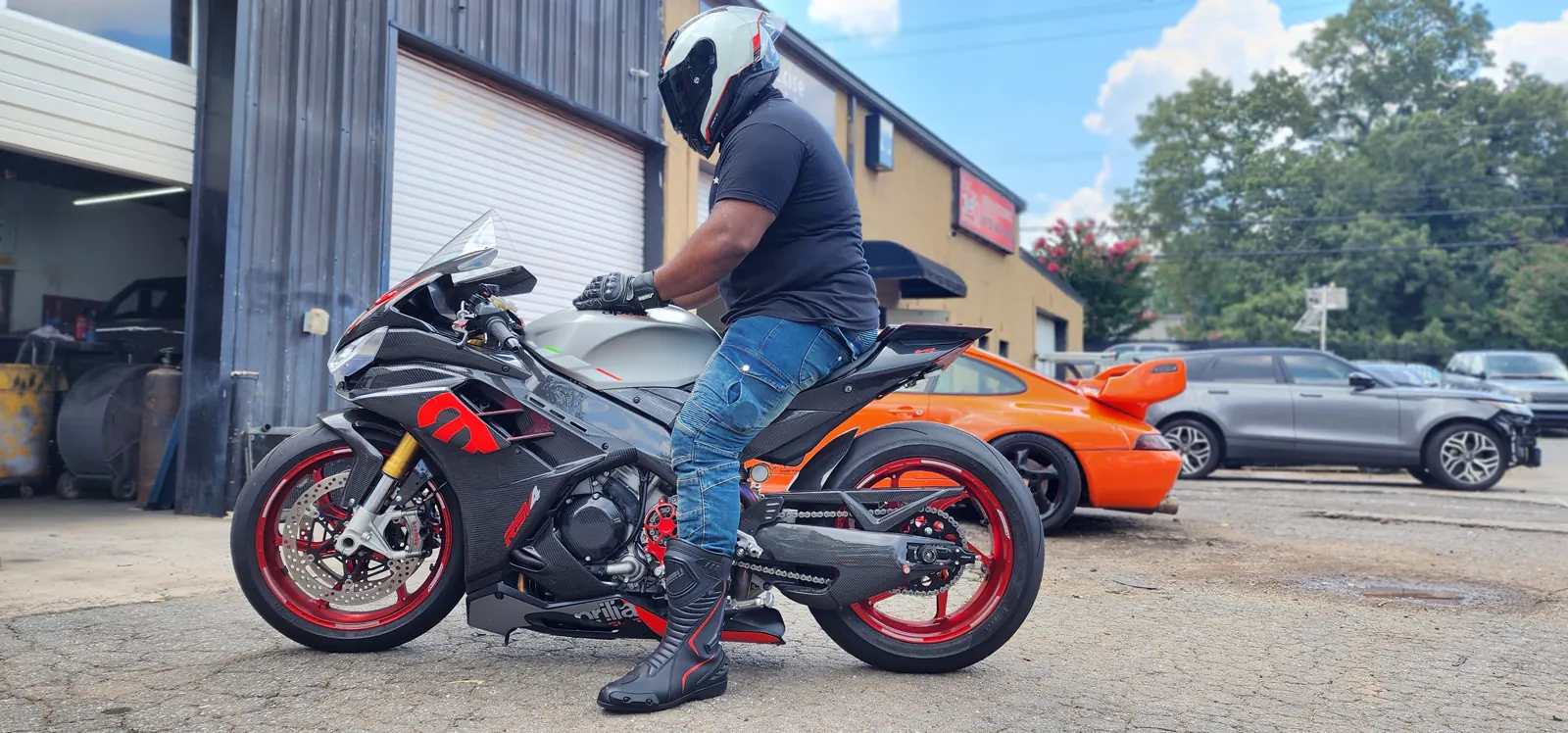
Bike type matters more than most folks expect, too. A sportbike that flashes in a few minutes is one story. A big bagger with the computer tucked under the bodywork is another. The engine build usually matters even more than the badge — a stock cruiser and a stroked-out cruiser wear the same nameplate but ask for very different amounts of dyno time. This is the same puzzle every shop sorts through, and honestly, what Smyrna riders run into looks a whole lot like this.
That’s why we ask questions first and quote second. When you bring the bike by, or we come grab it, we can see the parts, feel where the ECU lives, and check that the engine is healthy enough to tune at all. Then the number is real. If you want the fuller picture of what our team handles, it’s all laid out plain, and what the work covers is spelled out there too.
How the job actually goes, start to finish
People picture a tune as one dramatic pull on the dyno. It’s really a calm, repeatable process, and walking it makes the labor part make sense. Here’s the honest order of operations.
- We talk first. You tell us how the bike feels and everything you’ve changed. That story points us at the problem before the drum ever spins.
- We look it over. Fresh plugs, a clean filter, no leaks, good compression. A tune sits on top of a healthy engine, not a sick one.
- We strap it down and take a baseline run. That first pull shows us where the fuel and spark are living right now.
- We read the air-fuel numbers across the whole rev range and find every lean and rich spot.
- Actually we change the map — a flash or a Power Commander adjustment — and run it again.
- We repeat until the line is clean and steady from idle all the way to redline.
- We hand you the before-and-after graph and a bike that feels like the one you hoped you bought.
None of that is padding. The labor is the job. Each run, each read, each small change and re-check is a person paying attention to your specific bike. That’s what you’re really paying for — not a part in a box, but time and a trained eye. And because it’s careful work, we won’t rush it just to hit a number we blurted out over the phone.
Picture the version of this where you caught it early. You felt the flat spot on that first warm ride, brought the bike in before the summer heat set in, and spent a couple hours on the drum instead of a couple weekends chasing a problem that only grew. That’s the whole pitch. A tune done in spring is a small, planned job. The same problem ignored until July, running hot on I-85, turns into a much bigger conversation.
Why Newnan riders end up leaving the county for this
If you’ve called around Coweta County looking for a real dyno, you already know how that goes. The two dealers in town handle routine service just fine, and a specialist like Moto Guzzi Peachtree City — which actually sits up in Fairburn, despite the name — covers its own corner. But custom mapping on an in-house dyno isn’t something the county offers. Whether you’re parked near Court Square in the Newnan Commercial Historic District, over by the old Newnan Cotton Mill and Mill Village Historic District, or out on the quiet, lake-adjacent streets around Lake Coweta, Lake Zachary, Hoods Lake and Bone Lake, the nearest dyno means a drive.
Our shop sits at 847 Barnes Mill Road up in East Cobb. From Newnan that’s roughly 45 to 52 miles, and depending on traffic it usually runs somewhere around 55 to 80 minutes — up I-85, west on I-285, then north on I-75, crossing the west side of the perimeter. We’re estimating that from the map, not a stopwatch. And honestly, on a bike that isn’t running right, it’s a trip you shouldn’t have to make twice. That’s exactly why we pick the bike up and bring it back. You don’t ride a sick bike an hour up the interstate. We come get it, no drama.
We know this market, too. Newnan leans hard toward baggers and cruisers — Road Glides, Street Glides, Softails, plus a good many Indians and metric tourers. Folks here ride in groups, run charity rides, and put real miles on their machines. A clean-running bike matters when you’re rolling out to Chattahoochee Bend State Park west of town along the river, or meeting up before a run and idling in a lot near Ashley Park along the Bullsboro Drive corridor. Even a slow Sunday cruise up toward Dunaway Gardens is more fun when the throttle answers the first time you ask.
The roads around here don’t do a rough tune any favors, either. I-85 through the county is a freight highway, thick with trucks and the debris they shed. The retail crawl along Bullsboro Drive is all stop-and-go and left turns. And the neighborhood streets riders actually live on — Lower Fayetteville Road, Poplar Road, Greison Trail, the older grid of Jackson Street and Temple Avenue closer to downtown, plus the industrial stretch of Millard Farmer Industrial Boulevard — all ask your bike to run clean at low speed, off idle, in traffic. That’s precisely the range a good tune cleans up first.
NO RIDE REQUIRED
We pick your bike up in Newnan, tune it on our in-house dyno, and bring it back. You never have to ride a rough-running bike an hour up the interstate to get it sorted.
What you're left with
When the bike comes back, here’s what you get. A throttle that snaps to attention. Less heat on your legs in traffic. A pull that’s smooth all the way through instead of hunting for its footing. And a graph that shows exactly what changed, so you’re never taking anyone’s word for it. Riding is a bigger part of life down here than a spreadsheet from the the Motorcycle Industry Council could ever capture, and a bike that runs right is a bike you actually want to be on.
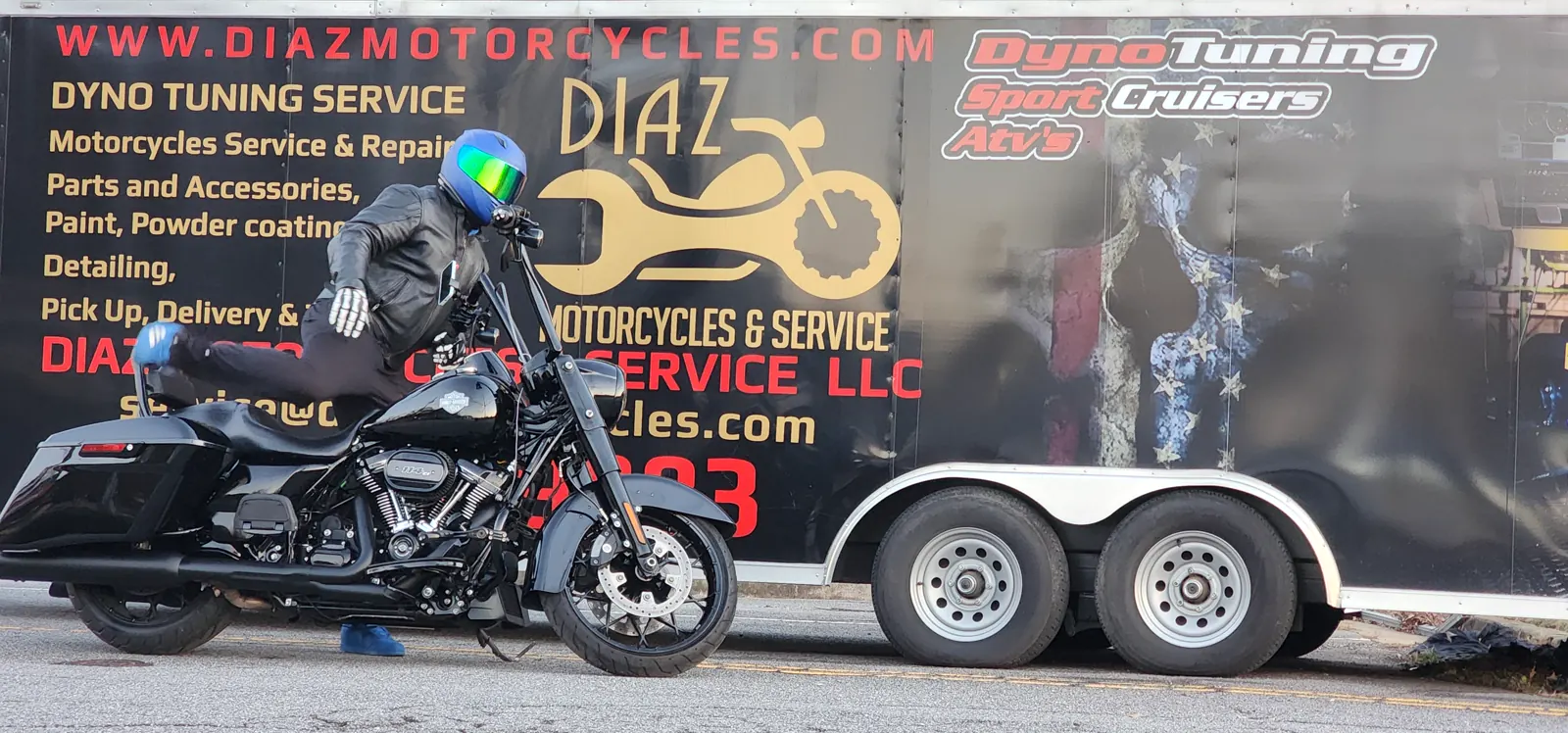
There’s a quiet pride in that. You didn’t just buy a bike and leave it stock. You made it yours, you made it right, and you did it the honest way — by measurement, not by guesswork. That’s the feeling friends we’ve helped describe when they roll a bike off our trailer back home. Not “I hope this is better.” Just “yeah, that’s it.” A well-sorted bike also does you favors on the road; smooth, predictable power is one small piece of the safety picture the NHTSA crash data keeps pointing back to.
And it’s not only sportbikes on the drum. We tune baggers, cruisers, metric tourers, and even side-by-sides and utility machines when they need it. If it burns fuel and you want it running its best, it can go on the dyno. The honest promise stays the same across all of them — we look first, we measure, and we tell you the truth about the job before we ever start it.
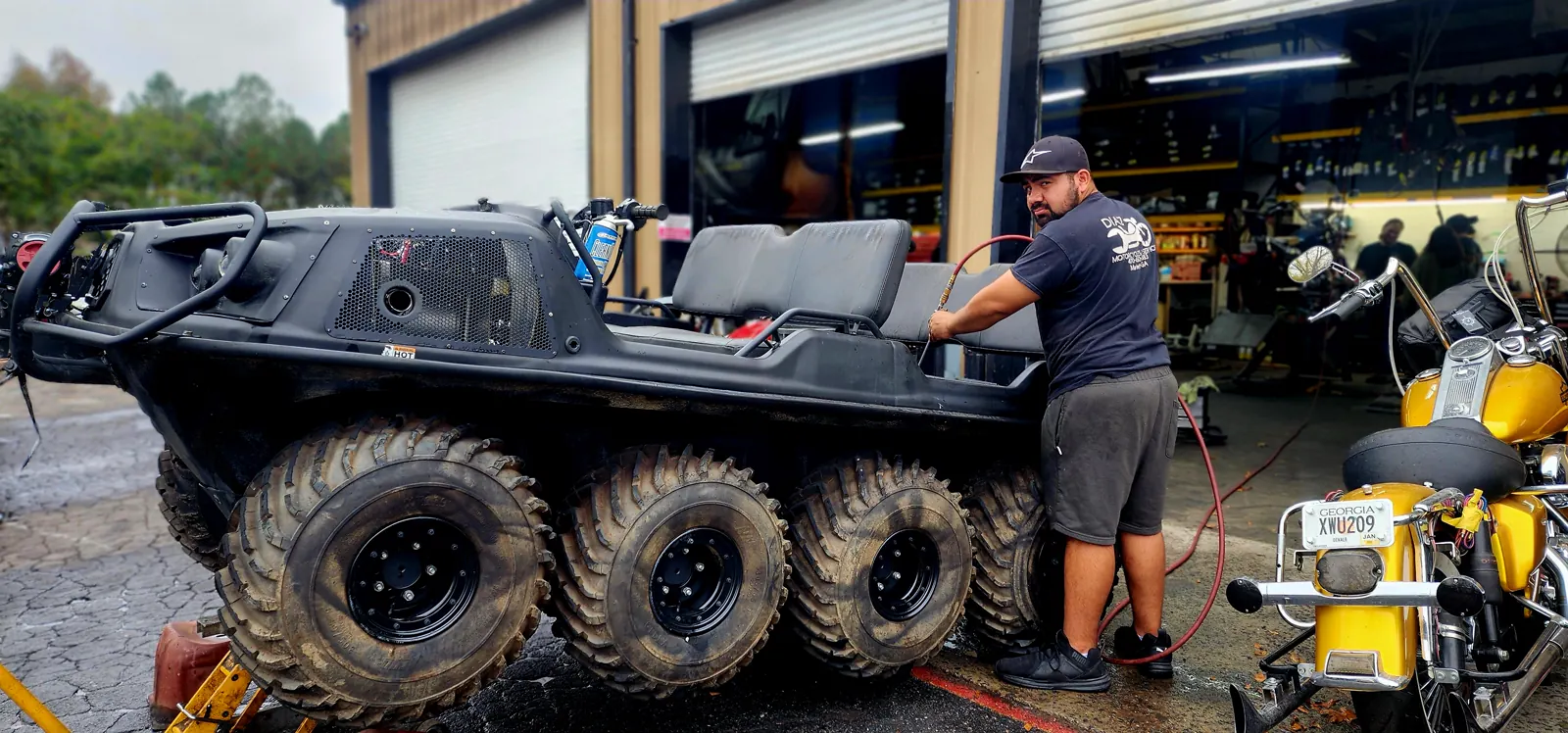
An honest number comes after the look, never before it.
Questions Newnan riders ask us
How long does a dyno tune take?
Most tunes are a same-day or overnight job once the bike is healthy. A stock or lightly modified bike moves quick. A heavily built engine takes longer, because there’s more map to dial in and more runs to make. We’ll give you a real time window after we look it over, not before.
Is it mostly parts or mostly labor?
For most tunes, the biggest piece is labor and dyno time, not parts. A simple ECU flash may need no parts at all. A Power Commander or an autotune module adds hardware. If your bike needs a plug, filter, or a small fix first, that’s parts too, and we’ll spell out which is which before we start.
Does the type of bike change the work?
Yes, quite a bit. A sportbike that hands us the computer easily is faster to reach than a bagger buried under bodywork. Some bikes flash in minutes; others need a piggyback unit. The engine build usually matters even more than the badge — more mods mean more tuning time.
What if you find something else while it's in?
We stop and call you. If we spot a worn plug, an intake leak, or a tired sensor, we won’t tune around it and pretend it’s fine. You decide how to handle it with the full picture in front of you. Nothing gets tacked on at the end as a surprise.
How do I avoid surprises on the price?
Bring the bike in for a look first, tell us everything you’ve changed, and let us give you a plan before any work starts. That one habit clears up almost every worry about dyno tuning cost Newnan riders have. An honest quote comes after the look, never before it.
Do I have to ride it all the way up there?
Nope. We pick your bike up in Newnan and bring it back when it’s done. You never have to ride a rough-running bike an hour up the interstate just to get it sorted.
We keep the trailer busy all across the south metro, so a Newnan tune is an easy call from just about anywhere nearby. We regularly pick up and deliver for riders in Peachtree City, Sharpsburg, Senoia and Tyrone, out toward Fayetteville and Palmetto, and through the smaller towns of Moreland, Grantville and Turin. We also cover Fairburn and Union City on the way north, and swing west for Carrollton riders who want real in-house dyno work without hunting for it.
READY WHEN YOU ARE, NEWNAN
If your bike’s got a flat spot, runs hot, or just never felt right, let’s put it on the dyno and find out why — no guessing. We’ll pick it up in Newnan, tune it on our in-house dyno up in East Cobb, and bring it back running the way it should. Text us a few details about your bike and what it’s doing, and we’ll tell you the honest next step.
470-460-9883Diaz Motorcycles and Service, LLC · 847 Barnes Mill Road, Marietta, GA 30062