Motorcycle Running Lean Newnan — Causes & Fixes
That stumble off the line usually isn't a broken engine. It's a fuel recipe that needs dialing in, and it's one of the most fixable things on your bike.
Actually you’re rolling west out of town on GA-16, headed toward Carrollton and the Chattahoochee. That’s why the road opens up, two lanes, rolling hills, almost nobody around. Either way you crack the throttle to pass a slow truck and the bike hesitates. Just a beat. In short a little stumble right where the pull should be. It clears, then it does it again on the next roll-on. At the same time that hiccup is the classic sign of a motorcycle running lean Newnan riders know well, and here’s the relief right up front: it’s one of the most fixable things on a bike.
As a result let’s slow this down and talk about it like two friends out in the garage. On the other hand a lean condition just means your engine is getting too much air and not enough fuel for the mix to burn right. Think of it like a campfire. So Too much fuel and it’s smoky and lazy. Still, Too much air and it burns hot, sharp, and uneven. Plus, your motor wants a balanced meal every single time it fires, so when the fuel side comes up short, you feel it in the way the bike behaves.
So what does lean actually feel like from the saddle? Meanwhile, you get that stumble or hesitation off idle and on light throttle. Of course, the exhaust might pop or crackle when you roll off. The bike can run hotter than normal, so your leg picks up more heat at a stoplight on Bullsboro Drive. In fact, Sometimes it surges at a steady cruise, like it can’t hold one speed. For example, Cold starts get fussy and the idle hunts up and down. Even so, None of these are the end of the world on their own. Put together, though, they’re your bike waving a little flag at you.
What a dyno measures, in plain words
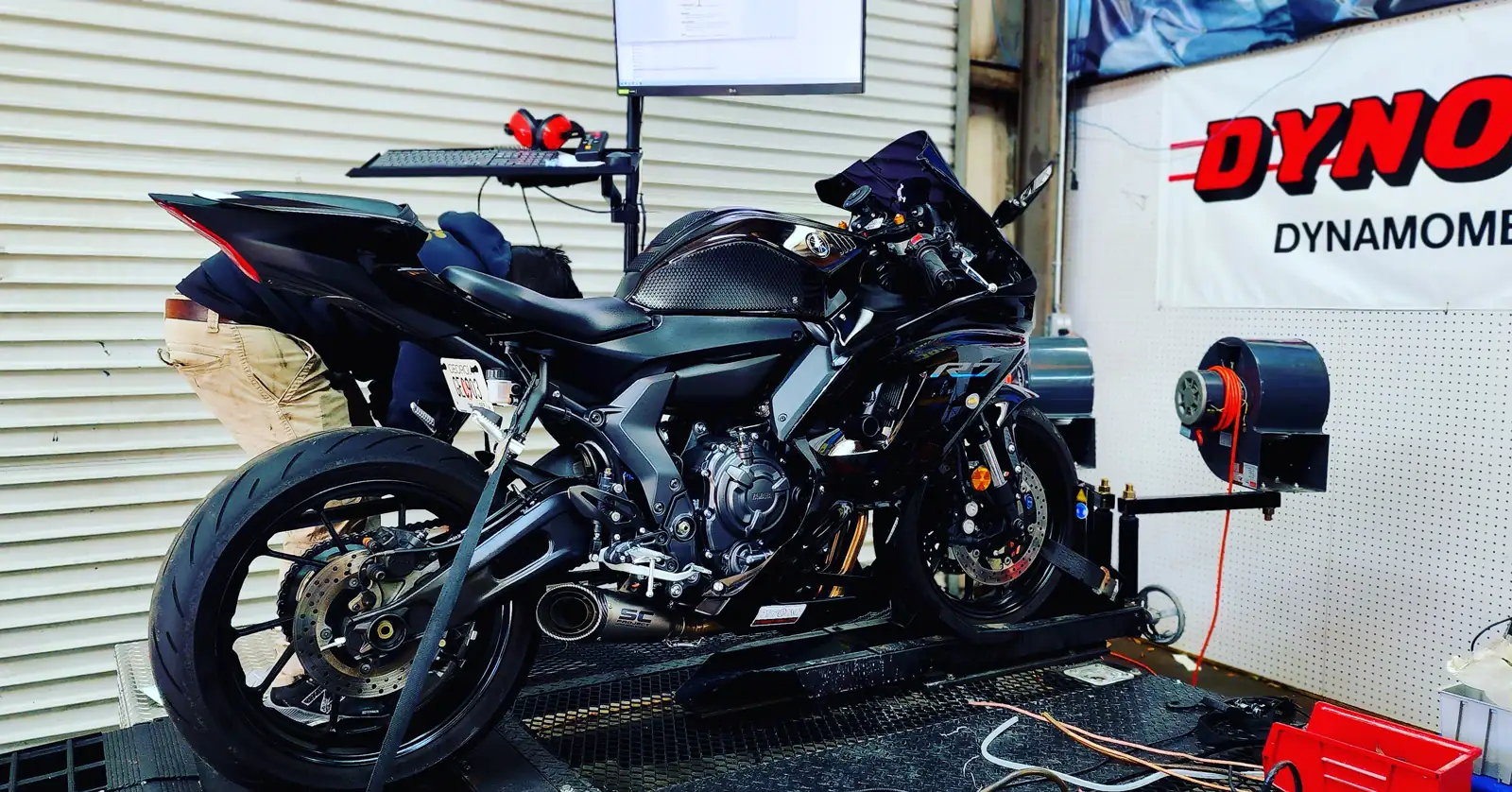
What’s more, this is where a dyno earns its keep. A dyno is a machine that lets us run your bike hard under real load while it stays parked in the shop. The rear wheel spins a big drum, the bike thinks it’s out on US-29 pulling up a hill, and sensors read exactly what’s going on. We measure how much power the engine makes across the whole rev range. Even more useful for a lean bike, we read the air-fuel ratio straight out of the exhaust. That number tells us, moment by moment, whether the mix is too lean, too rich, or right on the money. No guessing at all. We watch it live on the screen while the bike works.
That reading is the whole game. If you want everything we cover on the tuning side, we lay it all out there. The short version is this: the dyno turns a vague “it just feels off” into a clear picture we can actually read and act on.
Why a bike runs lean in the first place
Alright, so why does the fuel come up short? Here are the usual suspects, most common first, so you can see where your bike probably lands.
- An air leak. A cracked intake boot or a loose clamp lets extra air sneak in past the fuel metering. The engine breathes air it never planned for, so the mix goes lean. This is the number one cause we find.
- New pipes or a filter with no tune. Slip on a louder exhaust or a high-flow air filter and you’ve changed how the bike breathes. More air in, same fuel program, instant lean. The bike left the factory expecting the stock setup.
- A weak fuel side. Dirty injectors, a tired fuel pump, or a partly blocked filter all mean less gas gets through, especially right when you ask for power.
- Factory tuning that’s already lean. Plenty of modern bikes leave the line running lean on purpose to pass emissions. Fine on paper. Not always happy out in the real world.
- A bad sensor. An oxygen sensor or an air-temp sensor feeding bad numbers can trick the computer into leaning things out on its own.
But here’s what most riders get wrong about this. They assume lean always means a big, scary engine problem, so they park the bike in the garage and worry. Most of the time it’s the exact opposite. Lean is usually a tuning mismatch, not a broken part. Something changed on the air side, and the fuel side never got the memo. Once you know that, the whole thing gets a lot less stressful.
Is it safe to ride like this?
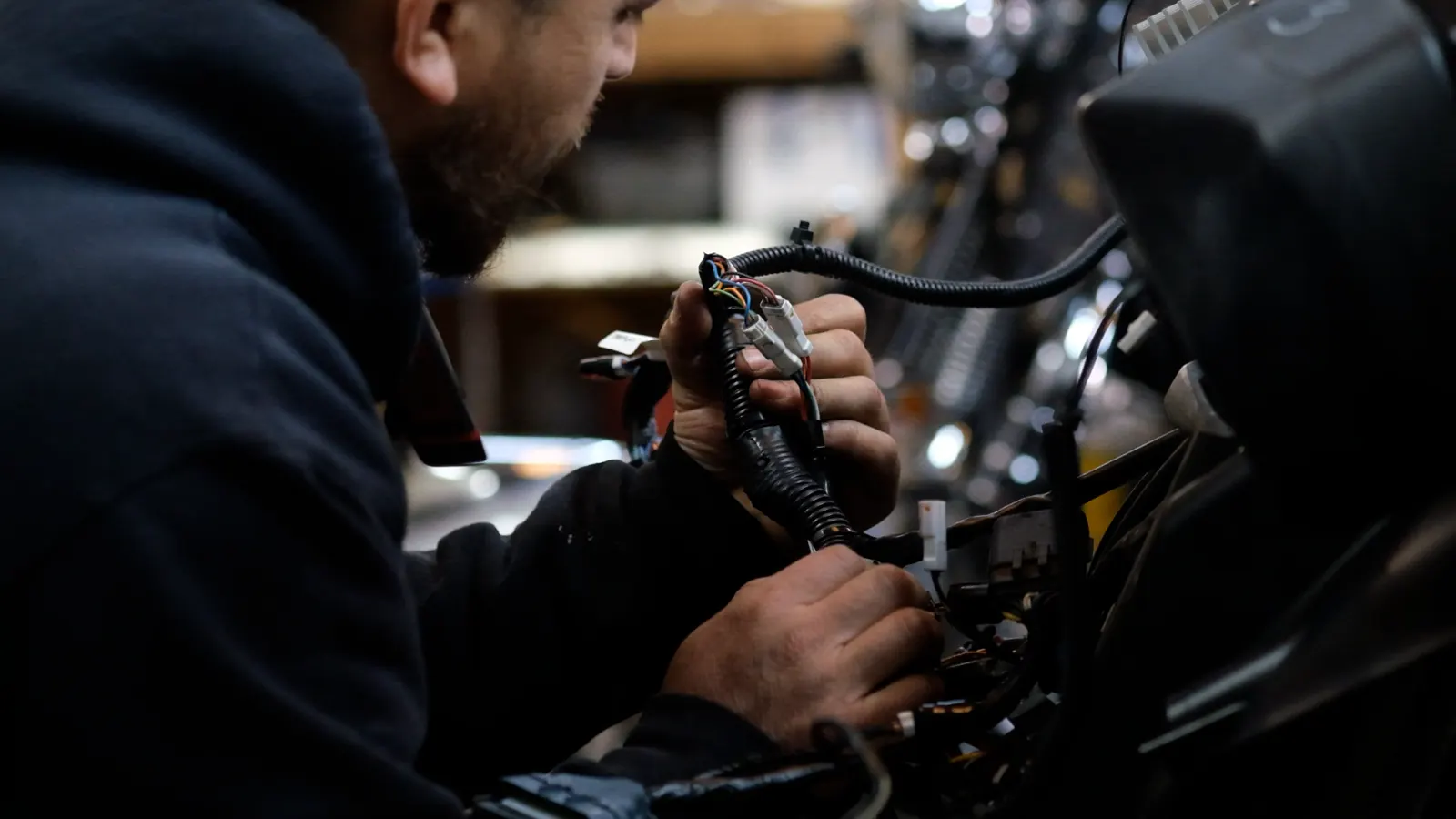
Here’s the honest answer, because you deserve a straight one. A mild lean condition is usually safe to ride short distances. Your morning loop, a run to grab a barbecue sandwich, getting the bike over to us. Most of the time it won’t strand you on the shoulder of I-85.
That said, there’s a line, and it matters. Lean burns hot. Run hard and lean for a long stretch, on a warm Coweta County afternoon, and that extra heat can start to hurt things. Pistons and valves don’t love running cooked. So the rule we give friends is simple, and it fits on one hand.
- Safe for now: a light stumble, an occasional pop, normal temps, short trips.
- Ease way off: running noticeably hot, heavy surging, hard starts, or it’s clearly getting worse week to week.
- Don’t ride it hard at all: any lean that comes with pinging or a rattle under load. That’s the sound to respect. Trailer it, or let us come get it.
When in doubt, keep it mellow and get it looked at soon. There’s no prize for pushing a hot, lean motor down GA-34 in traffic. A little patience now saves you a big headache later.
How we find the real cause
When your bike comes in, we don’t start swapping parts and hoping something sticks. We put it on the dyno and let it tell on itself. We strap it down, spin it up under load, and watch the air-fuel numbers across the whole range. Lean only down low points us straight at an air leak. Besides Lean only up top points at the fuel supply. Lean everywhere points at the base tune or a sensor. The pattern is the fingerprint, and the dyno reads it clean.
We check the simple stuff first, because friends don’t sell you things you don’t need. Clamps, boots, filter, plugs. Then we read exactly what the dyno shows us. If you’re curious how the machines behind all this actually work, Dynojet’s dyno center shows the same gear we run every day. This is also the same process riders over in Kennesaw go through. Lean bikes are lean bikes wherever they happen to park.
What a tune actually changes
Once we know why it’s lean, the fix is a tune. We adjust the fuel program so the engine gets the right amount of gas at every rpm and every throttle position. On a lot of bikes we do that with an ECU flash, which rewrites the factory computer. On others we add a fuel controller like a Power Commander that sits inline and fine-tunes the fueling. Both get you to the same happy place: a mix dialed in for your exact bike, your pipes, your filter, your air.
Here’s the part you’ll actually feel. The stumble goes away. Throttle response gets crisp, so a roll-on feels instant instead of laggy. The bike pulls clean and smooth from way down low. It runs cooler at the light. Cold starts settle down and the idle holds nice and steady. It’s the same bike you rode in on, just finally breathing right. Friends tell us it feels brand new, and honestly, under the tank, it kind of is.
Lean isn't your bike breaking. It's your bike asking for the right recipe.
Now, most multi-line dealers around Cobb Parkway can’t do real custom mapping in house. They’ll sell you the part and ship the tuning off somewhere else. We run our own dyno and do the flashing and Power Commander work right here, so your bike gets tuned on the same floor it gets wrenched on. If you want to see what that service actually involves, we break it down step by step.
This isn't just for race bikes
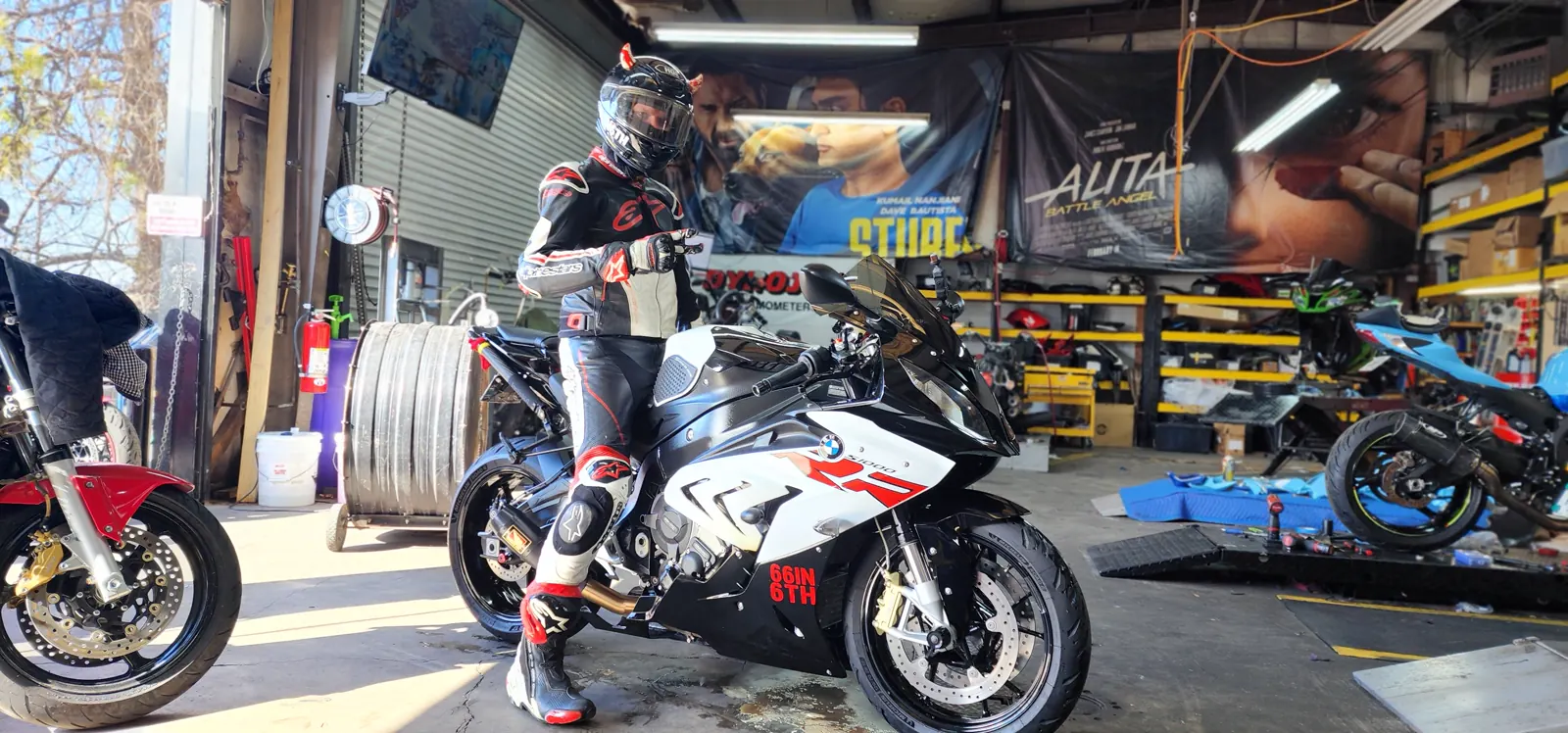
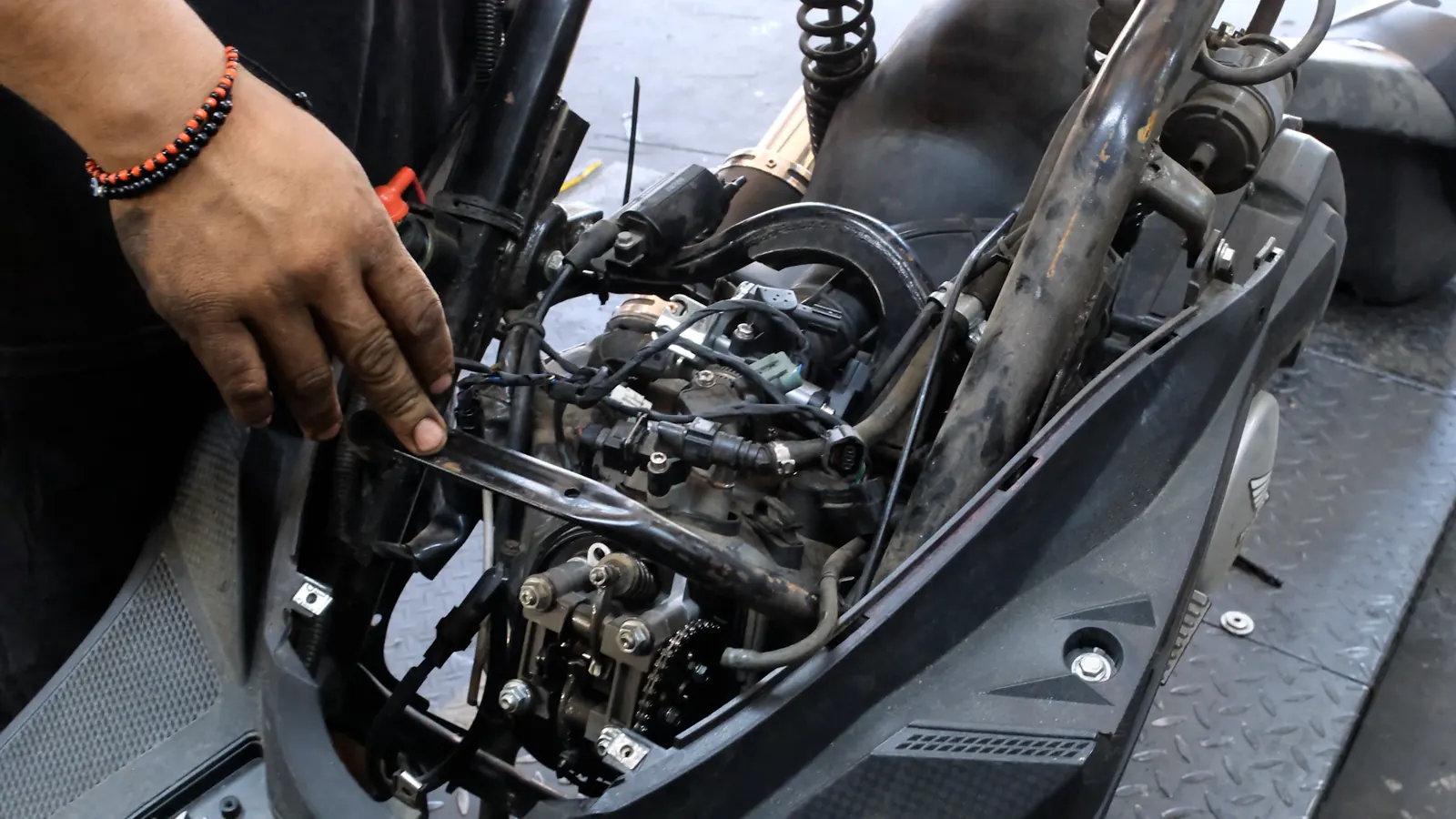
You might figure tuning is only for the sportbike crowd chasing lap times. Not true at all. Baggers, cruisers, touring rigs, a Road Glide or a Street Glide with fresh pipes, a Vulcan, a Goldwing, they all benefit. Anytime you’ve changed intake or exhaust, or the bike just never felt quite right from day one, a tune brings it back where it belongs. We even sort out lean scooters. The little commuters get the same careful treatment as everything else.
The point is this. A lean condition doesn’t care what badge is on the tank. It cares about air and fuel, and those two things follow the same rules on every machine that rolls through the door. That’s good news for you, because it means the fix is well understood no matter what you ride.
Newnan riders, here's the local part
Coweta County is bagger and cruiser country, and it’s a proud, careful town that’s been around almost two hundred years. Around the Court Square core downtown, the Newnan Commercial Historic District, you’ll see clean, cared-for bikes parked out front on a Saturday. On the first Saturday of the month, Market Day fills the courthouse square from ten to two, March through December, and the riders roll right in. Over by the old Newnan Cotton Mill and Mill Village Historic District, with its 1920s mill houses, it’s the same story. Folks here keep good machines and want them running right. A motorcycle running lean Newnan owners bring us is almost always a tuning mismatch, not a busted engine.
Let us tell you about a rider near Newnan Commercial Historic District. He’d put a set of pipes on his bagger, loved the sound, hated the new stumble off idle. He rode it that way for a whole season, kept it mellow, then finally sent it up to us. On the dyno it read lean right where he felt it, exactly like the pipes did it. One tune later he had his throttle back, no stumble, cooler at the lights. He said the only regret was waiting the whole riding season to make the call. That’s the usual story, honestly.
Now, the elephant in the room: we’re up in East Cobb, and that’s a real drive from Newnan. Nothing routes you past our door on a normal week, since Coweta traffic runs north toward Atlanta and the airport, not toward Marietta. So we made it easy. We pick your bike up and deliver it right back. You don’t ride a hot, lean motor an hour up the interstate. We come get it, tune it, and bring it home. Simple as that.
If you’d rather stay close for other things, that’s fine too, and we’re not here to knock anybody. A shop like Cycle Specialty over in Fayetteville, about thirty minutes east, handles Yamaha and ATV work. When it comes to real in-house custom mapping, though, that’s the gap we fill, and the pickup truck erases the miles. Newer riders can also brush up their skills with MSF rider courses while their bike is with us getting sorted.
The bottom line
So take a breath. A motorcycle running lean Newnan owners worry about sounds scary and feels worse, but it’s routine, it’s readable on the dyno, and it’s fixable in about a day of shop time on most bikes. You’re not staring down a blown motor. You’re looking at a recipe that needs adjusting. We’ve done exactly this for a long list of friends, and they ride away with the bike they wanted all along, no stumble, no worry.
If you want to go deeper on how to pick the right shop for this, we wrote the full rundown on it. Otherwise, you know where we are, and you know we’ll come to you. Grab a barbecue sandwich, let us handle the tune, and get back to enjoying that ride out toward the Chattahoochee.
Questions Newnan riders ask us
Is it safe to ride my motorcycle while it's running lean?
A mild lean condition is usually fine for short trips at an easy pace. The problem is heat, since lean runs hot, so don’t ride it hard or for long stretches. If you hear any pinging or rattle under load, stop pushing it and let us come get the bike.
What actually causes a bike to run lean?
The most common cause is an air leak, like a cracked boot or loose clamp letting in extra air. New pipes or a high-flow filter with no tune do it too, along with a weak fuel pump or dirty injectors. Some bikes even leave the factory a little lean on purpose, and a bad sensor can trigger it as well.
Can I fix a lean condition myself?
You can check the easy stuff yourself, like tightening clamps, inspecting the intake boots, and swapping a dirty filter. The real fix, though, needs a dyno reading so we know exactly where and why it’s lean. Guessing at the fuel program without that reading usually makes things worse, not better.
Will running lean get worse over time?
It can, because the extra heat from a lean mix adds up the harder and longer you ride. A small stumble today can turn into a hot, unhappy motor down the road. Getting it read on the dyno early keeps a simple tune from becoming a bigger repair.
How urgent is this really?
A light lean stumble isn’t an emergency, so you don’t need to panic and park it forever. That said, don’t sit on it a whole riding season either. If it’s pinging under load or running very hot, treat that as urgent and get it in soon.
Do I have to ride it all the way to Marietta?
Nope. We pick your bike up in Newnan and deliver it back once it’s tuned, so you never have to ride a lean motor an hour up the interstate. You call, we come get it, and it comes home running right.
We take care of riders all across the south metro, so the drive is never on you. From Peachtree City, Sharpsburg, and Senoia to Tyrone and Fayetteville, we pick up and deliver. We cover Palmetto, Moreland, Grantville, and Turin, and we reach up toward Fairburn and Union City as well as west to Carrollton. Wherever you park it in Coweta County and the towns around it, your bike gets the same dyno time and the same door-to-door care.
LET'S GET THAT STUMBLE GONE
If your bike hesitates, pops, or runs hot around Newnan, text us and tell us what it’s doing. We’ll read it on our own dyno, tune it right here, and hand it back crisp and cool. Best part for Newnan riders: we come get the bike and bring it home, so you never ride a lean motor up the interstate. Reach out today and let’s sort it out.
470-460-9883Diaz Motorcycles and Service, LLC · 847 Barnes Mill Road, Marietta, GA 30062