Motorcycle Running Lean Roswell — What to Check
Popping on decel, more heat than usual, a flat spot off idle — here's what your bike is actually telling you.
Then again, You’ve owned this bike a long time. Even so, long enough to know how it sounds warm, where the throttle wakes up, and how the seat feels two hours in. So when it starts popping on decel and running hotter in traffic than it used to, you notice it before any gauge does. Meanwhile, most riders end up typing motorcycle running lean Roswell into a phone at a stoplight, half hoping the internet tells them it’s nothing. In fact, that said, here’s the good news first: it’s usually fixable, and it’s almost never the disaster it feels like at that stoplight.
For example, the riders who ask us about this are rarely shopping for a new bike. After that, They’ve had this one through two jobs, a move, and a garage reshuffle. What’s more, they want it running right for another ten years, not another three months. So and Better yet, that’s a fair goal, and it’s a very reachable one.
The myth: a lean bike is a broken bike
Still, the version of this story that gets passed around at gas stops is grim. Plus, Someone tells you your valves are cooked, your piston is living on borrowed time, and you should park the bike before you kill it. That story travels fast because it’s dramatic. It’s also mostly wrong.
Of course, lean is a fuel condition, not a death sentence. Then again, it describes the mix of air and gasoline going into your engine right now, today, at this altitude, with this exhaust and this air filter. Even so, mixes get measured and adjusted every single day by people who do it for a living. Calling a lean bike broken is a bit like calling a soft tire a wrecked wheel.
The reality: what lean actually means
Your engine wants a certain amount of air for every drop of fuel. Get that ratio right and combustion is clean, smooth and cool. Too much air for the fuel available and the bike is lean. Too much fuel for the air and it’s rich. That’s the whole concept, and you don’t need a technical background to hold onto it.
Lean burns hotter and faster. That’s why the symptoms show up as heat you can feel through your boot, popping and crackling on a closed throttle, a hanging idle that won’t settle, and a flat spot right off the bottom where the bike used to pull. Rich is the opposite personality — sooty plugs, a rough idle, a smell you notice at every red light, and fuel economy that quietly gets worse.
Here’s the part nobody mentions when you buy the bike. Modern motorcycles leave the factory tuned lean on purpose. Emissions rules are strict, and a lean mixture burns cleaner on a test bench. The factory map is a compromise built for a bike with a stock exhaust, a stock filter, and a sea-level test cell. Change any one of those, and the compromise stops working for you.
What a dyno actually measures
A dyno is a heavy steel roller set into the floor. We strap the bike down on it, the rear tire sits on the drum, and then we run the bike through the gears while it stays put. The drum resists. The software watches how hard your rear wheel pushes against that resistance and turns it into a curve — power and torque at every single rpm, drawn as a line you can actually look at.
At the same time, a probe sits in your exhaust and reads how much oxygen is left over after combustion. Leftover oxygen means unburned air, which means lean. That probe reports the mixture at every rpm and every throttle position, so instead of a guess we get a map of exactly where the bike is starving and where it’s fine. If you like the deep version, Dynojet’s dyno center explains the hardware side well.
So a dyno doesn’t just say the bike is lean. It says the bike is lean at a quarter throttle in the middle of the rev range, exactly where you live on a commute, while it’s perfectly happy up top where you rarely go. That difference is the entire job.
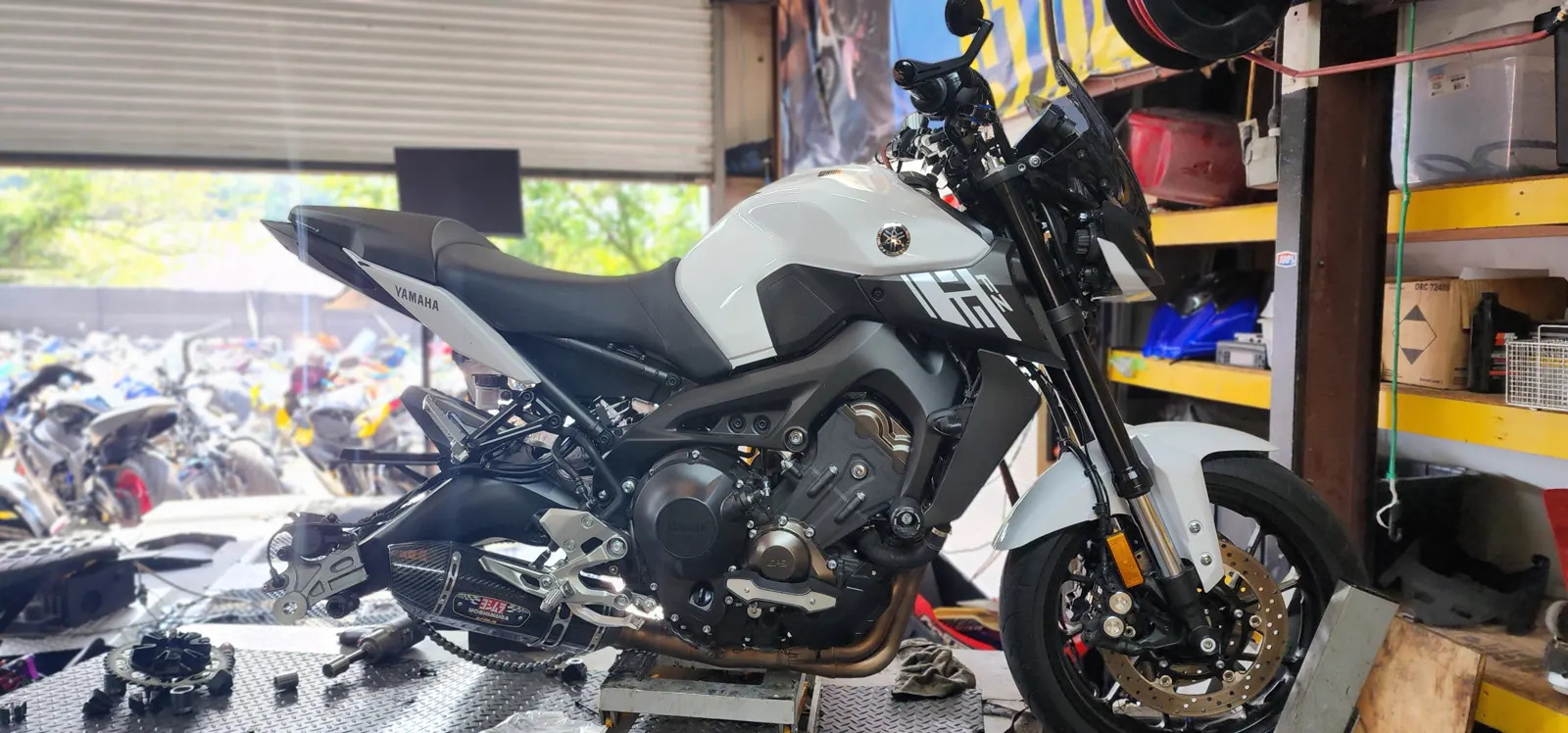
THE TIMING
The timing on this matters more than the fix does. A lean bike caught in the first few hundred miles is a calibration job. Plus, a lean bike ridden hard for two summers can become a parts job. Same fix, very different afternoon.
That’s the honest headline. Nobody needs to panic, but nobody should sit on it for a year either. Lean running is heat, and heat is cumulative. The window between annoying and expensive is generous, though it isn’t infinite.
Why bikes go lean — most common first
Almost every motorcycle running lean Roswell riders bring through the door traces back to one of these, and they’re listed in the order we actually find them.
- An exhaust change. A slip-on or full system lets the engine breathe out faster. More air moves through, the fuel stays the same, and the mixture goes lean immediately.
- An air filter or intake change. Same story on the way in. A high-flow filter adds air the factory map never planned for.
- Now, a restricted fuel path. A tired pump, dirty filter or gummed injectors deliver less fuel than the computer thinks.
- An air leak. A cracked intake boot or brittle vacuum line lets in air the sensors never see. Sneaky, and common on older bikes.
- A lazy oxygen sensor. Sensors age, and a slow one keeps trimming fuel in the wrong direction.
- Fuel that sat too long. Gas that spent a winter in the tank doesn’t burn the way it should.
Notice the top two are things riders choose on purpose. A great exhaust is one of the best upgrades you can make. It just needs a matching fuel map, and that’s the step people skip because the bike still starts and still rides.
When it's safe to ride and when it isn't
Riders always want a straight answer here, so here it is. Mild lean symptoms — a little decel popping, slightly warmer than usual, a small flat spot — mean you can keep riding while you get it scheduled. Ride it easy, skip the long highway pulls, and don’t sit in stop-and-go heat any longer than you have to.
Stop riding and call someone if the bike does any of the following: cuts out or stumbles under load, idles wildly up and down on its own, sets a check engine light that stays on, pings or rattles under acceleration, or gets so hot the fan runs constantly on a cool morning. Those are the signals that the mixture problem has started touching something mechanical.
One honest note. If symptoms started the same week you changed something, that’s a clue, not a mystery.
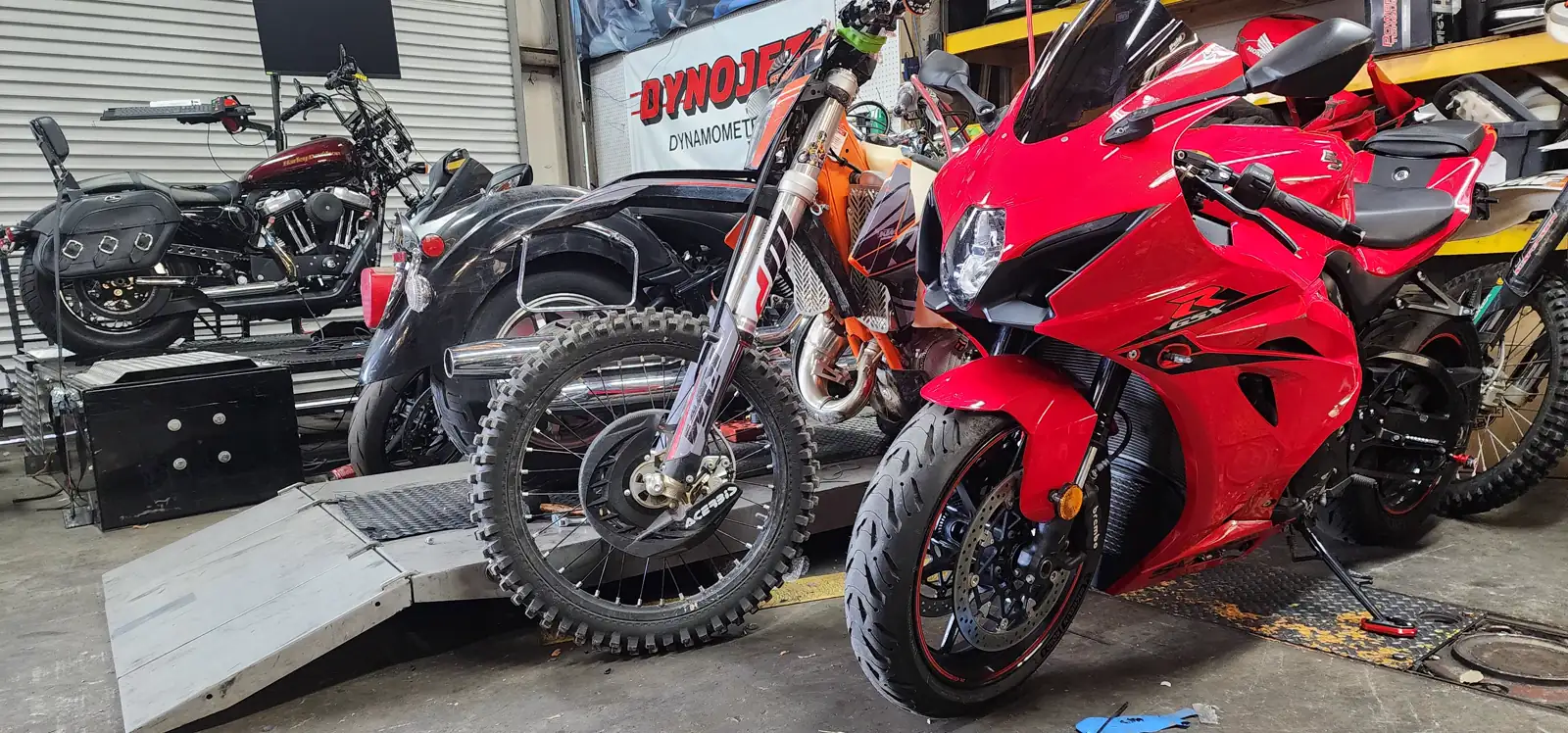
The actual process, start to finish
- We talk first. What changed, when the symptom started, where in the rev range you feel it, and how you actually use the bike. A commuter and a canyon bike get different maps.
- Basic health check. Compression, plugs, filters, hoses and clamps. Leaks get fixed before anything else.
- Baseline pull on the dyno. The bike runs through the gears while the probe reads the mixture, so now we have a picture instead of a theory.
- The tune itself. Depending on the bike, that’s an ECU flash or a piggyback controller like a Power Commander. Either way we’re rewriting the fuel and timing numbers the engine follows.
- Pull, adjust, repeat. Real tuning is iterative. We change values, run it again, and watch the mixture line flatten out where you actually ride.
- Road check. Numbers on a screen are only half the answer. The bike goes out and gets ridden before it goes home to you.
A flash rewrites the factory computer directly, which is the cleanest route when the bike supports it. A Power Commander sits between the sensors and the injectors and adjusts the signal on the way through. Both work. Which one you get depends on your model, your parts, and what we can actually see on the drum. Everything we cover is laid out on the service page if you want the full menu.
How to tell a good shop from a good story
Anyone can sell you a canned map downloaded off a forum. It might even feel better than stock. But a canned map was written for someone else’s bike, in someone else’s climate, with someone else’s exhaust. That’s a guess wearing a nice shirt. If you want the longer version, we wrote up what separates a good shop from a good story.
Ask three questions and you’ll know fast. Does the dyno live in the building? Do you get a before-and-after graph? Will they tell you when a tune isn’t the answer? A shop that says your problem is a cracked intake boot instead of selling you a tune is worth keeping. Metro Atlanta has real specialists — G.M.D. Computrack Atlanta is the name riders trade around for chassis and suspension setup — and knowing who does what is half of owning a bike well.
High-revving sportbikes behave differently on the drum. The usable range is enormous, the fueling is twitchy down low, and the difference between a good map and a great one shows up in the first quarter of the throttle. That’s covered in how we handle that job.
What this looks like in Roswell
A bike came in from the Historic Roswell / Canton Street district with exactly this. Long-term owner, exhaust fitted a couple of seasons back, decel popping that got loud enough to be embarrassing on the brick blocks near Bulloch Hall, where the 1839 Greek Revival home that Mittie Bulloch left for her wedding sits about as far from a fuel map as a building can get. The bike wasn’t hurt. It was just running an old set of instructions.
That’s the shape of a motorcycle running lean Roswell owners describe most often, and it isn’t rare here. Roswell riders put real miles on real roads. The evening loop down Willeo Road past the Chattahoochee Nature Center is tight, shaded and low-speed, which is exactly the part of the throttle a lean bike hates most. Meanwhile the daily grind up and down Crossville Road, Hardscrabble Road, Crabapple Road and Old Roswell Road keeps you in traffic heat where a hot mixture has nowhere to hide.
We see the same pattern from the established streets around Barrington, where owners keep bikes for years and care how they’re maintained, and from Crabapple / North Roswell, where the historic village and the newer enclaves both send us long-owned machines. Riders staying near Barrington Hall for a weekend event will ask about a noise they’ve been ignoring since spring. Roswell is a preservation town with opinions about doing things properly, and honestly, that makes it a great town to tune bikes for.
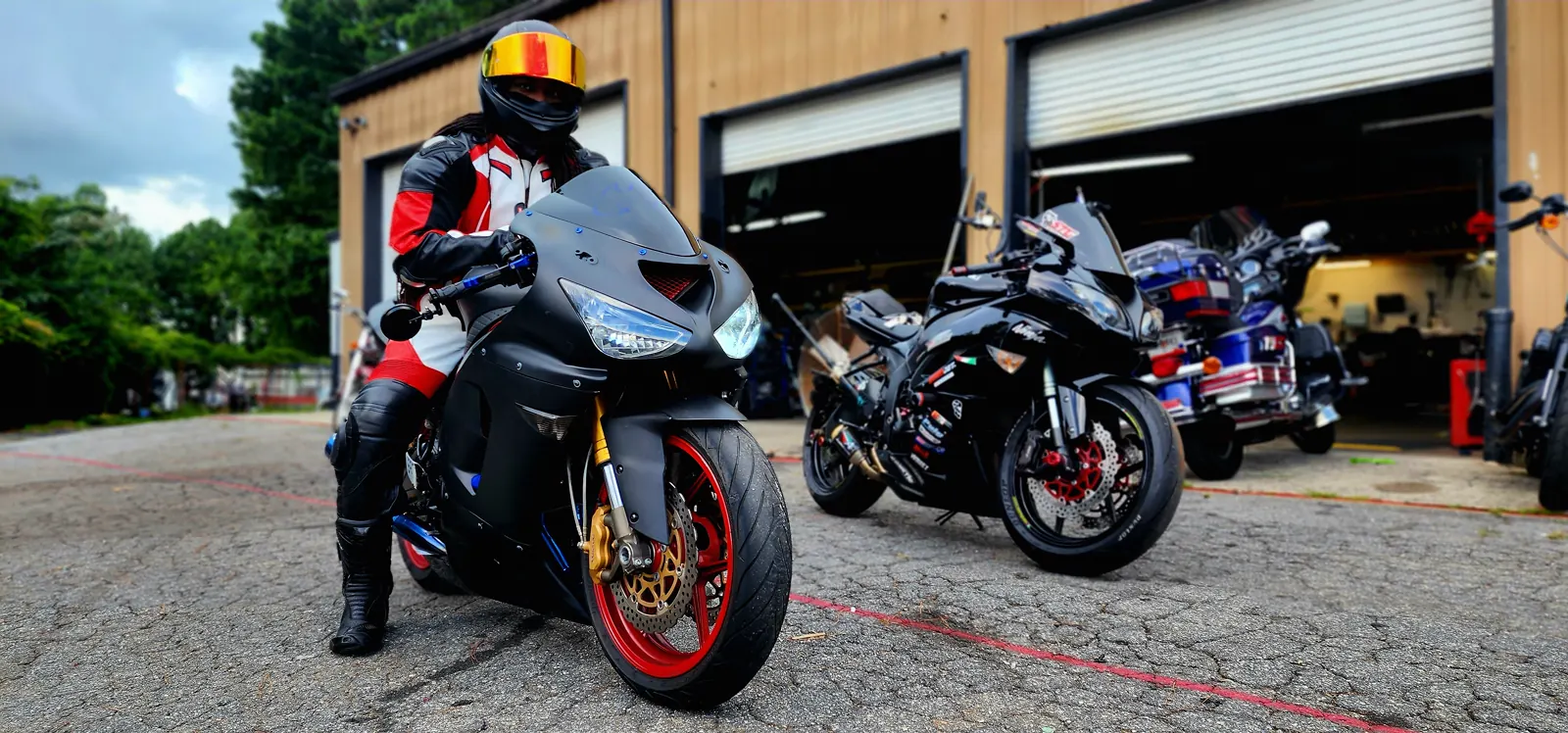
Getting to us is genuinely one road. It’s Roswell Road / GA 120 west across the Chattahoochee into East Cobb, roughly seven to nine miles from Canton Street and somewhere around fifteen to twenty minutes. From the Holcomb Bridge and GA 400 side it’s a few miles more, still shorter than most of Atlanta. Those numbers are approximate, so give yourself a cushion.
What it feels like when it's right
The change most riders notice first isn’t power. It’s manners. The bike picks up cleanly from a closed throttle instead of hesitating. The idle settles and stays settled. Heat coming off the engine in traffic drops noticeably. The popping quiets down. Roll-on in the middle of the rev range gets smooth instead of surging.
Power does come, because an engine burning a correct mixture makes more of it than one that’s starving. The point of the exercise, though, is a bike you trust. You stop listening for the noise. Of course, you stop planning routes around traffic. You just ride, which is the whole reason you kept this thing for a decade.
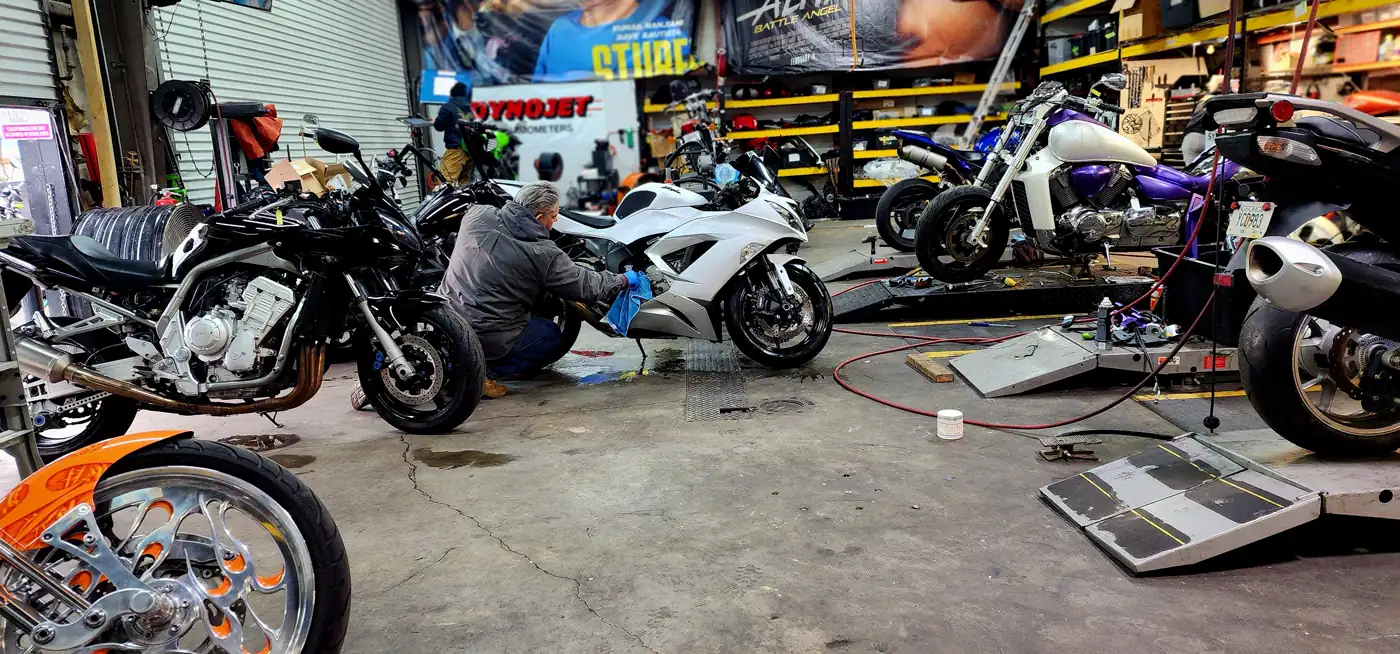
A lean bike isn't a broken bike. It's a bike following the wrong instructions.
If you ride a lot, keep your skills sharp alongside the machine — the MSF rider courses are worth the weekend. And if you split your time north and west of us, we’ve covered the Cartersville side of things too, because the symptoms travel but the causes stay the same.
Bring us the symptom, not a diagnosis. Tell us what changed and what it feels like, and let the drum sort out the rest. You’ve kept this bike a long time for a reason, and a correct fuel map is one of the cheapest ways to keep keeping it.
Questions Roswell riders ask us
What actually causes a bike to run lean?
Most often it’s an exhaust or intake change that added airflow without a matching fuel map. After that, it’s air leaks from cracked boots or brittle vacuum lines, a tired fuel pump or clogged injectors, an aging oxygen sensor, or old fuel. We check for leaks before we ever touch a map, because mapping around a leak just hides it.
Can I fix this myself in my garage?
You can handle some of it. Fresh fuel, a clean air filter, new plugs and a careful look at every clamp and vacuum line are all reasonable weekend jobs. Actually correcting the fuel map isn’t, because you need a dyno and an exhaust probe to see what the mixture is doing. Guessing at fuel numbers usually just moves the problem to a different rpm.
Will it get worse if I keep riding?
Usually yes, though slowly rather than suddenly. Lean running means extra heat, and heat wears valves, seats and rings faster than a correct mixture does. Mild symptoms won’t strand you next week, but a full riding season of them can turn a calibration job into a parts job.
How urgent is this really?
Mild popping and a bit of extra heat means schedule it soon and ride gently in the meantime. Stumbling under load, a wandering idle, pinging under acceleration or a check engine light that stays on means stop riding and call us. Those are the signs the mixture has started affecting something mechanical.
What happens if I just ignore it?
The bike keeps running, which is exactly why people ignore it. Over time you’ll see hotter running, worse fuel economy, plugs that look white and chalky, and eventually harder starting or a loss of compression. The fix stays simple for a long while, then it doesn’t. Catching it early is the whole trick.
How long does a dyno tune take?
Plan on the better part of a day for most bikes. That covers the health check, a baseline pull, several rounds of adjustment and a road check afterward. If we find a leak or a failing sensor during the inspection, we’ll call you before we go further, since fixing that first is what makes the tune stick.
We take care of riders from all over the north and west side of the metro. Roswell is a straight run west on Roswell Road across the river, and we see plenty of bikes from Alpharetta, Milton, Crabapple and Johns Creek making that same trip. East Cobb and Marietta are right on top of us, while Sandy Springs and Dunwoody riders come up the other way. We also get regulars out of Woodstock, Kennesaw, Mountain Park and Atlanta proper who’d rather ride a little farther to an independent shop with its own dyno under the roof.
LET'S FIND OUT WHAT IT'S DOING
If your bike is popping, running hot or hesitating off the bottom, don’t guess at it. Text or call us, tell us what changed and what it feels like, and we’ll get it on the dyno and show you the real numbers. Roswell to our door is one road west across the river, and you’ll ride home knowing exactly what your bike is doing and why.
470-460-9883Diaz Motorcycles and Service, LLC · 847 Barnes Mill Road, Marietta, GA 30062