Motorcycle Sitting for Years in Dallas, GA? Here's What to Check First
What quietly rots while a bike sits, why you shouldn't just turn the key, and how to wake up a Paulding County barn-find without hurting it.
First things first: a motorcycle sitting for years Dallas, GA garages are absolutely full of them, and almost every owner makes the same first mistake. They find the old bike, get excited, hook up a battery, and hit the starter. That one move can turn a cheap wake-up into an expensive repair, because a bike that’s been parked for years is not just dusty. It’s changed on the inside, and a lot of what changed is hiding where you can’t see it.
We get it. The bike looks fine. The tires hold air, the paint’s okay, and it feels like it should just fire right up like a lawnmower. But sitting is sneaky. Fuel turns to varnish, rubber quietly dries out, and metal rusts from the inside where the light never hits. The good news is that a bike that sat is usually very fixable. You just have to wake it up in the right order instead of the exciting order.
First rule: don't just turn the key
We know, we know. The whole reason you found the bike is to hear it run. But cranking a long-sat engine before you check it over is how good bikes get hurt. Old oil settles and stops protecting. Fuel goes to gum and can gunk up the whole fuel system the second it moves. And a dry engine spinning on a starter is metal grinding on metal with nothing in between. Ten minutes of patience saves you a lot of grief here.
So before anything spins, we look. What condition is the fuel in? Does the engine even turn over freely by hand? Is there a battery-acid mess or rusty crust hiding under the seat? A bike that’s been napping in a Cedar Mill garage since the flip phone era deserves a proper wake-up, not a jump-start and a wish. Do it right and the odds of it running well shoot way up.
What actually rots while a bike sits
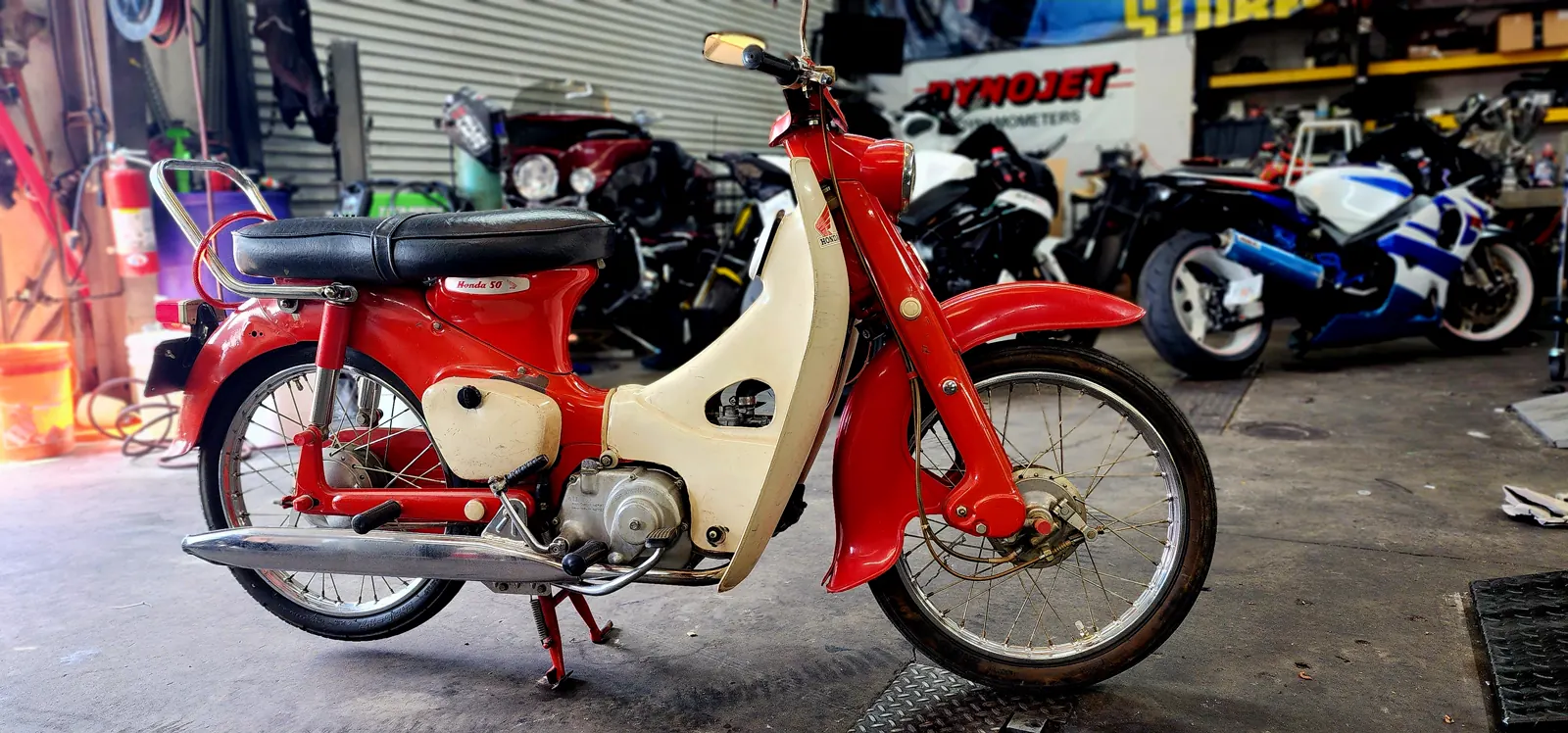
Here’s the honest list of what time does to a parked bike, whether it knows it or not. None of this is about how the bike looks from ten feet away. It’s about the stuff that decides whether it runs, stops, and doesn’t leave you stranded on GA-61.
- Fuel turns to varnish and gum, clogging carbs, injectors, and fuel lines.
- The gas tank rusts from the inside where old fuel and moisture sit.
- Tires dry-rot and crack even while they still hold air and look fine.
- Brake fluid absorbs water, and calipers and pistons seize up.
- The battery dies flat, and a dead-flat battery usually won’t come back.
- Seals and gaskets dry out and start to weep oil once things warm up.
- Chains rust stiff, and cables gum up inside their housings.
Read that list again and notice how much of it is invisible. The tires that look brand new are the classic Paulding trap: a garage-kept bike gets ridden a thousand miles a year, so the tread looks great, but the rubber is a decade old and hard as a hockey puck. That’s the exact kind of thing that bites when you finally take it out on Dallas Highway and need to stop in a hurry.
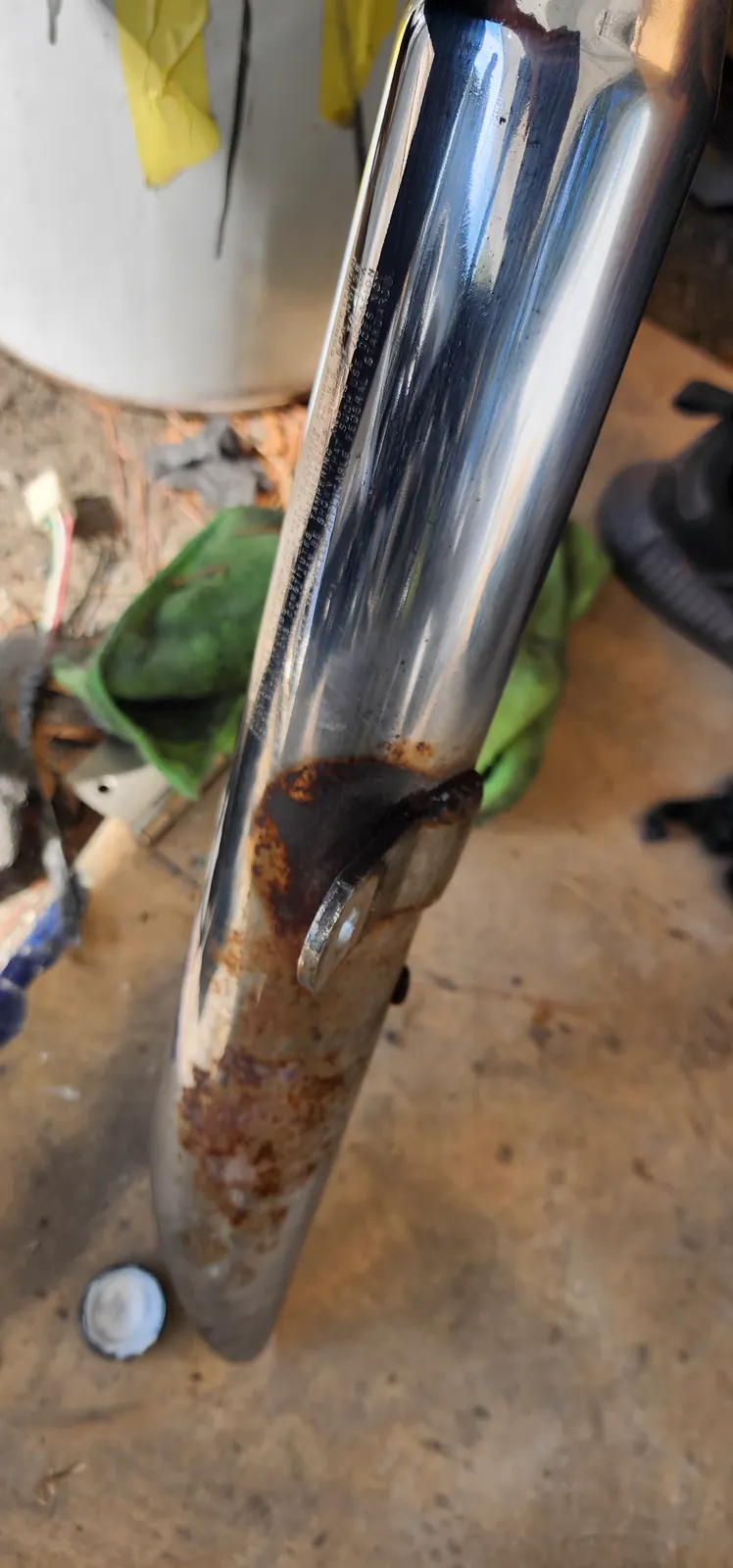
Here’s the sneaky part about all that invisible damage: a long-sat bike can pass the eyeball test with flying colors and still be a mess where it counts. Shiny tank, decent paint, tires that hold air. Meanwhile the fuel’s gone bad, the brake fluid’s full of water, and the chrome is quietly pitting from the inside out. That’s exactly why we go through one of these bikes system by system instead of trusting how it looks parked in the driveway.
HEADS UP
Old tires with deep tread can still be dangerous. Rubber ages on a calendar, not just on a mileage counter.
The fuel system is where sitting bites hardest
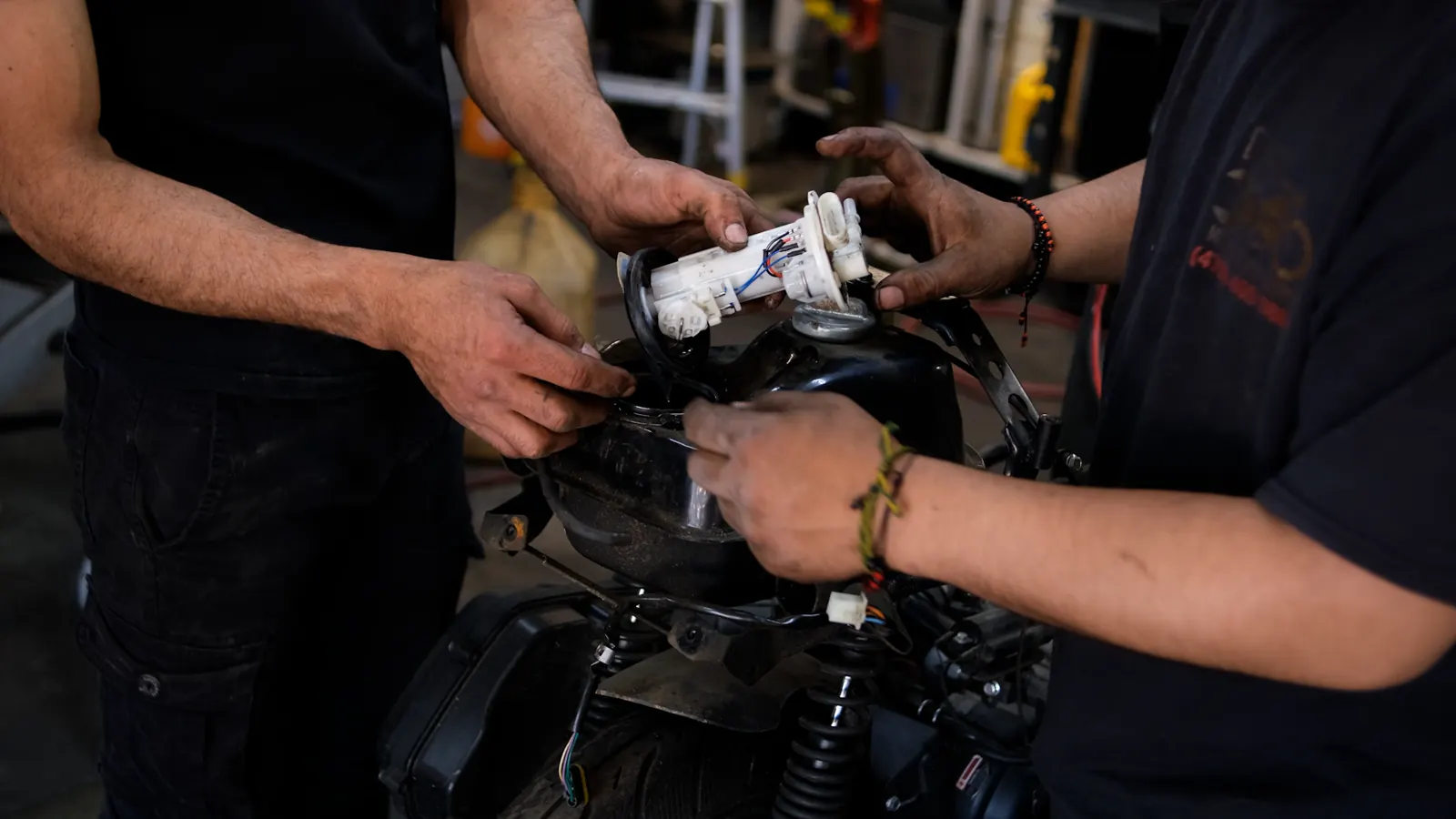
If we had to pick one system that ruins the most wake-ups, it’s the fuel system every time. Gas that’s been sitting for years isn’t gas anymore. It breaks down into a sticky, sour varnish that coats everything it touches. In a carbureted bike it plugs the tiny passages that make the engine idle and run clean. In a fuel-injected bike it can gum the pump and injectors. Either way, running that old fuel through the system just spreads the mess around.
That’s why part of any honest revival is draining the old fuel, cleaning or rebuilding the carbs, and dealing with rust inside the tank before you feed the engine fresh gas. It’s not glamorous work, but it’s the difference between a bike that idles like new and one that surges, stalls, and floods at every red light between here and Hiram. Skip it and you’ll be right back in the garage by the weekend.
The tank itself is half the battle. Old fuel plus a little moisture rusts a steel tank from the inside, and that rust flakes loose the second fresh gas starts sloshing around. Feed that grit straight into a clean carb or a fuel injector and you’ve just undone your own work. So dealing with the inside of the tank is part of doing the fuel system right, not some optional extra we tack on to pad the bill.
Tires, brakes, and the parts that look fine and aren't
After fuel, the two systems that scare us most on a barn-find are the ones that keep you alive: tires and brakes. Both love to look perfectly healthy while being quietly shot. We already talked about dry-rotted tires. Brakes are the same story. Brake fluid pulls in moisture over the years, which drops its boiling point and rusts the system from the inside. Calipers seize, pistons stick, and a lever that feels firm in the garage can fade to mush when it gets hot on a real ride.
None of this is meant to scare you off the bike. It’s meant to keep the first ride from being the last one. A safe wake-up means fresh brake fluid, freed-up calipers, tires you can actually trust, and a good look at the wheels and bearings. Get those sorted and that old bike goes from a garage ornament to something you’d happily ride out to the Silver Comet trailhead on a Saturday.
Why Paulding barns and sheds are full of these bikes
There’s a reason we see so many long-sat bikes from Dallas and the west side of Paulding. This is big-lot country. Lots of homes out here have detached garages, barns, and sheds, and the west side toward Yorkville and Braswell is full of acreage properties with room to store a bike and forget about it. Add in a growing county where people move in, get busy with kids and commutes, and “I’ll get back to it next spring” turns into next decade.
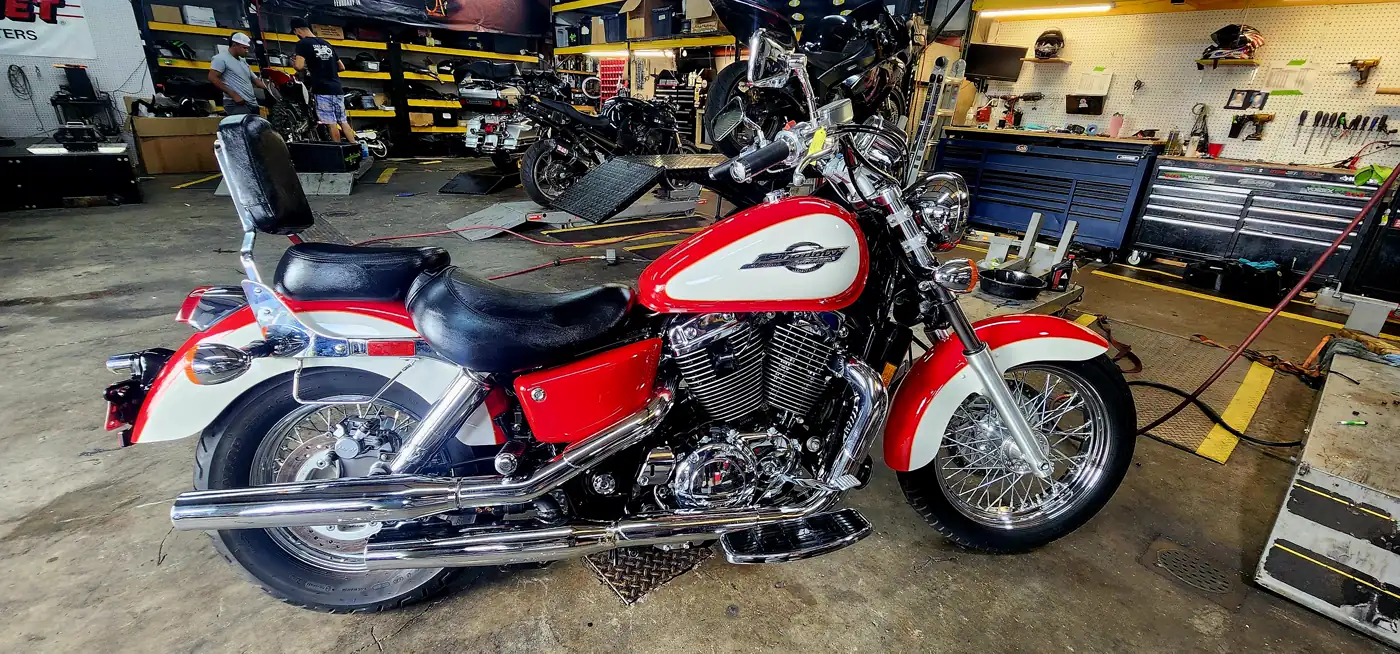
So you inherit grandpa’s Shadow, or you buy a house and the seller leaves an old cruiser in the shed, or you finally clear out the barn and there it is under a tarp. It’s a genuinely great problem to have. Most of those bikes are worth saving, and a lot of them are worth real money once they’re sorted. The trick is treating the wake-up like the careful job it is instead of a Saturday impulse.
The pattern is almost always the same, too. Life gets busy, the riding season slips by, and “I’ll fire it up in the spring” quietly becomes a five-year nap. It’s nobody’s fault. It’s just what happens when a bike lives in a big Paulding garage or barn with plenty of room and no deadline. The bike doesn’t mind the wait nearly as much as its fuel system does, which is the whole reason we start there.
A bike that sat for ten years doesn't need a jump-start. It needs a wake-up call, done in the right order.
The safe way to wake a bike up
Here’s the honest order we follow on a bike that’s been parked for years. Each step protects the next one, which is exactly why the exciting shortcut of hitting the starter first causes so much damage.
- Look it over first — check the fuel, the oil, and whether the engine turns freely by hand.
- Drain the old fuel and clean or rebuild the fuel system before feeding it fresh gas.
- Deal with tank rust so you’re not pumping grit into a clean carb or injector.
- Fresh oil, filter, and the right fluids so the engine has protection before it spins.
- Sort the brakes and replace aged tires so the first ride is a safe one.
- New battery, then a careful first start and a real test to catch any leaks or surprises.
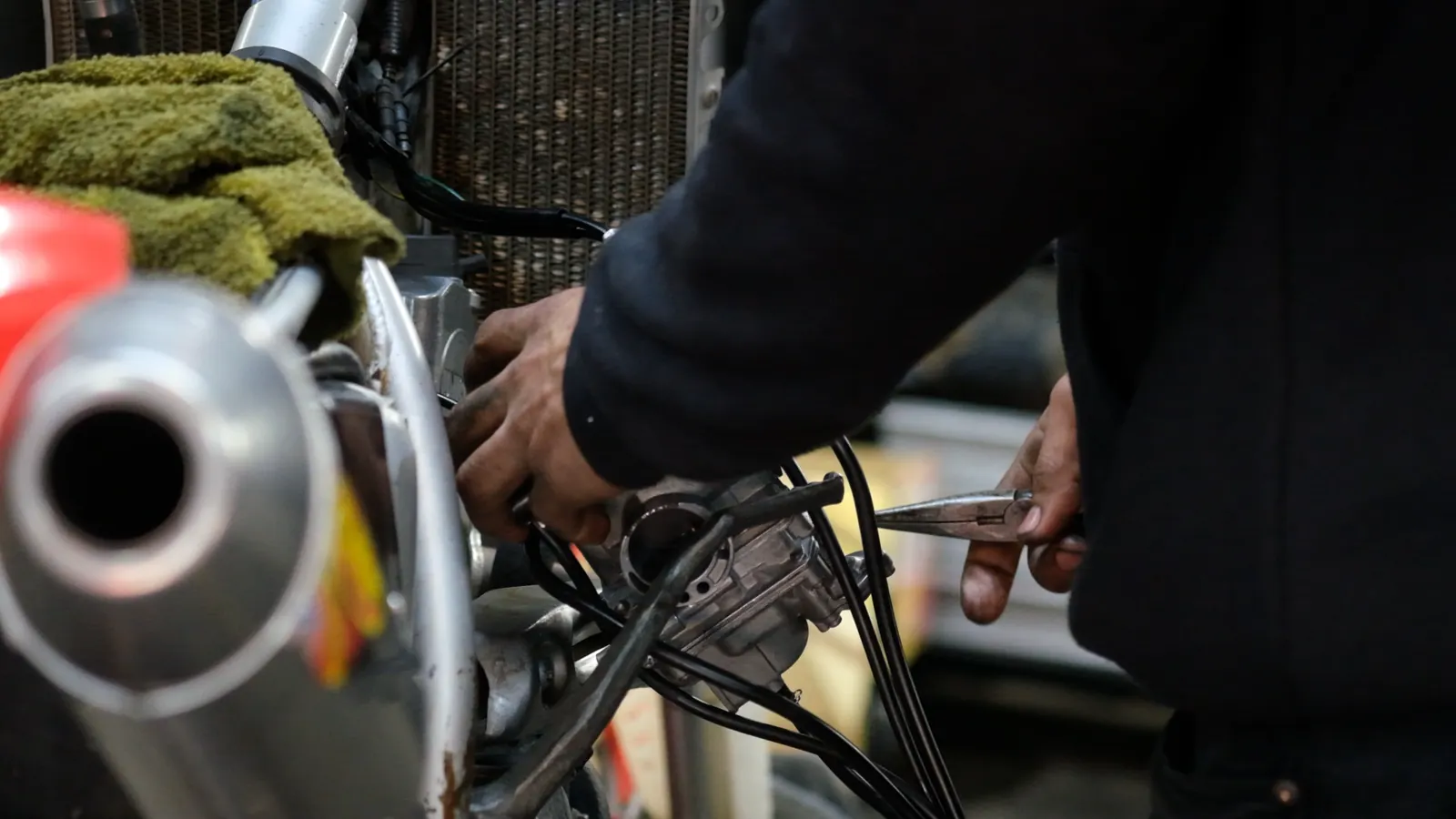
If some of that sounds like more than a driveway afternoon, that’s because it usually is. And most of it is stuff a lot of Paulding riders can start themselves. Where folks call us is when the fuel system needs real cleaning, the engine turns rough, or a wake-up turns into a bigger full restoration once you see what’s really under there.
WORTH KNOWING
A wake-up sometimes uncovers a bigger job. It’s better to find that on a lift than on the side of GA-278.
Send photos before you touch it
The cheapest thing you can do with a long-sat bike is text us before you start yanking on it. Send photos of the tank inside and out, the engine, the tires, and anything that looks crusty, and tell us how many years it sat and whether it lived in a dry garage or a damp shed. From that we can tell you a lot about what you’re dealing with and roughly what the wake-up will take.
And if the bike lives way out west of Dallas and you’d rather not trailer it yourself, we’ll come get it. There’s no bike transport service advertised in Paulding County, so we bring the trailer to your barn or garage, haul it to East Cobb, and bring it back running right. However long that bike’s been napping, waking it up the smart way beats jump-starting it the fun way every single time. Text us and let’s do it right.
Questions Dallas riders ask us
My bike sat for years but the tires look fine. Are they safe?
Probably not, even with good tread. Rubber ages on a calendar, not just on mileage, so a low-mile garage bike can have decade-old tires that are hard and cracked underneath. They can fail without warning. On a long-sat bike we always inspect the tires and usually recommend replacing them before the first real ride.
Can I just put in a fresh battery and start it?
Please don’t. Cranking a long-parked engine before checking the oil, fuel, and whether it turns freely can cause real damage. Old fuel can gum the system and dry parts can grind. A careful wake-up in the right order costs far less than fixing what a rushed start breaks.
What's the most common problem on a bike that sat?
The fuel system, every time. Gas turns to varnish that clogs carbs, injectors, and lines, and the tank rusts from the inside. That’s why we drain the old fuel, clean the system, and deal with tank rust before running fresh gas through it.
How long can a bike sit before it needs this kind of work?
It depends on how it was stored, but once a bike’s been parked a couple of years without stabilized fuel and a battery tender, you’re usually into varnished fuel, a dead battery, and aging tires. The longer it sat and the damper the spot, the more it needs. Photos tell us a lot.
Is it cheaper to wake it up or just restore it?
A wake-up is cheaper if the bike is basically sound and just needs its systems refreshed. But a wake-up sometimes uncovers deeper issues that push it toward a fuller restoration. We look first and tell you honestly which one you’re dealing with, so there are no surprises.
Do you pick up bikes from barns and sheds out in Paulding?
Yes, and we do it a lot. There’s no motorcycle transport service advertised in Paulding County, so we bring the trailer to your property, even out west toward Yorkville or Braswell, and haul the bike to our East Cobb shop for a proper wake-up.
We wake up long-sat bikes for riders all across Paulding County, not just downtown Dallas. Barn-finds come to us from Seven Hills, Bentwater, and Riverwood, plus the acreage west of town toward Yorkville and Braswell where the big lots and detached garages are. We help riders near the Silver Comet Trail and Pickett’s Mill Battlefield who commute east on Dallas Highway. If your bike’s napping off GA-61 or toward Hiram, we’ll come get it.
TEXT US BEFORE YOU HIT THE STARTER
Found a bike that’s been sitting for years? Don’t jump-start it yet. Text us photos of the tank, engine, and tires, tell us how long it sat and where, and we’ll tell you how to wake it up without hurting it. We’re an easy run east on Dallas Highway from Paulding, and we’ll bring the trailer to your barn or garage. No pressure, just a straight plan.
470-460-9883Diaz Motorcycles and Service, LLC · 847 Barnes Mill Road, Marietta, GA 30062