Restoration Cost in Sandy Springs: A Plain-English Price Guide
The real line items behind a restoration bill, what pushes the number up or down, and how to read a quote without a mechanic's dictionary.
Plus, most people want one number for a restoration, and the trade keeps answering “it depends,” which feels like a dodge. Meanwhile, the reason restoration cost Sandy Springs owners ask about is hard to pin down isn’t secrecy, it’s that a restoration is really a stack of smaller jobs. In fact, once you see the stack, the price stops being a mystery and starts being math you can follow. For example, a bike that runs and just needs freshening is cheap; a bike that’s seized, rusted, and needs paint is not. Same word, very different bills. So let’s open the box and look at every piece.
This is the guide we wish every rider had before they called a shop. You don’t need to become a mechanic. You just need to know what the line items are, which ones your bike actually needs, and what makes each one bigger or smaller. By the end, you’ll be able to read a restoration quote and understand why it says what it says, instead of squinting at a total and hoping it’s fair.
A restoration is a stack of smaller jobs
Think of a restoration less like buying one thing and more like assembling a meal. There’s the mechanical side, the cosmetic side, and the parts. Your bike might need a full plate or just a couple of items. That’s why two “restorations” of the same model can be hundreds or thousands apart, and it’s not the shop being inconsistent. It’s your bike ordering off a different part of the menu.
So the smart question isn’t “what does a restoration cost?” It’s “what does my bike need, and what does each piece run?” Answer that, and the total makes sense. Get a shop to quote before they’ve looked, and you’re really just getting a number they made up to sound good on the phone. We’d rather show you the stack.
The mechanical line items
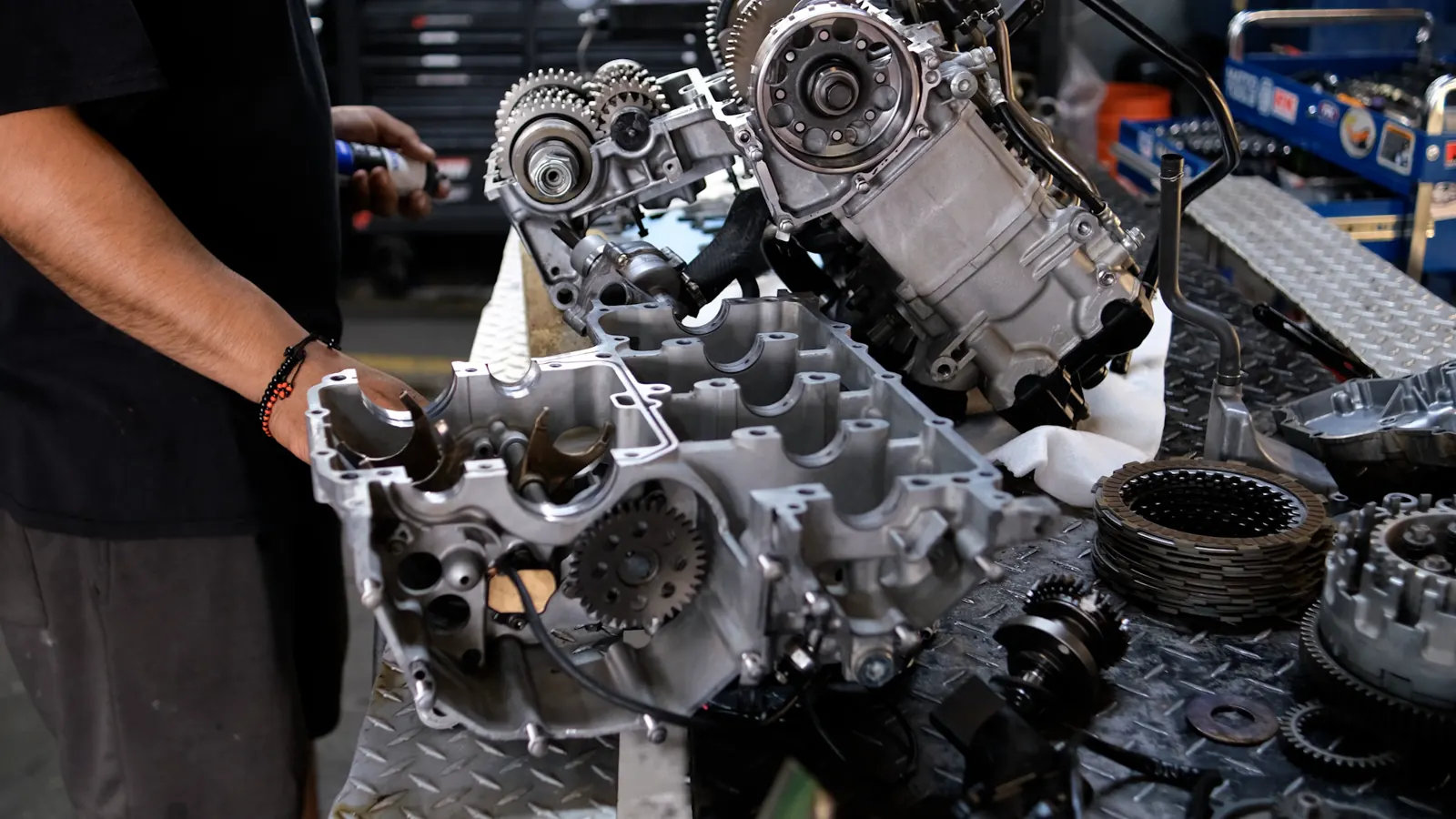
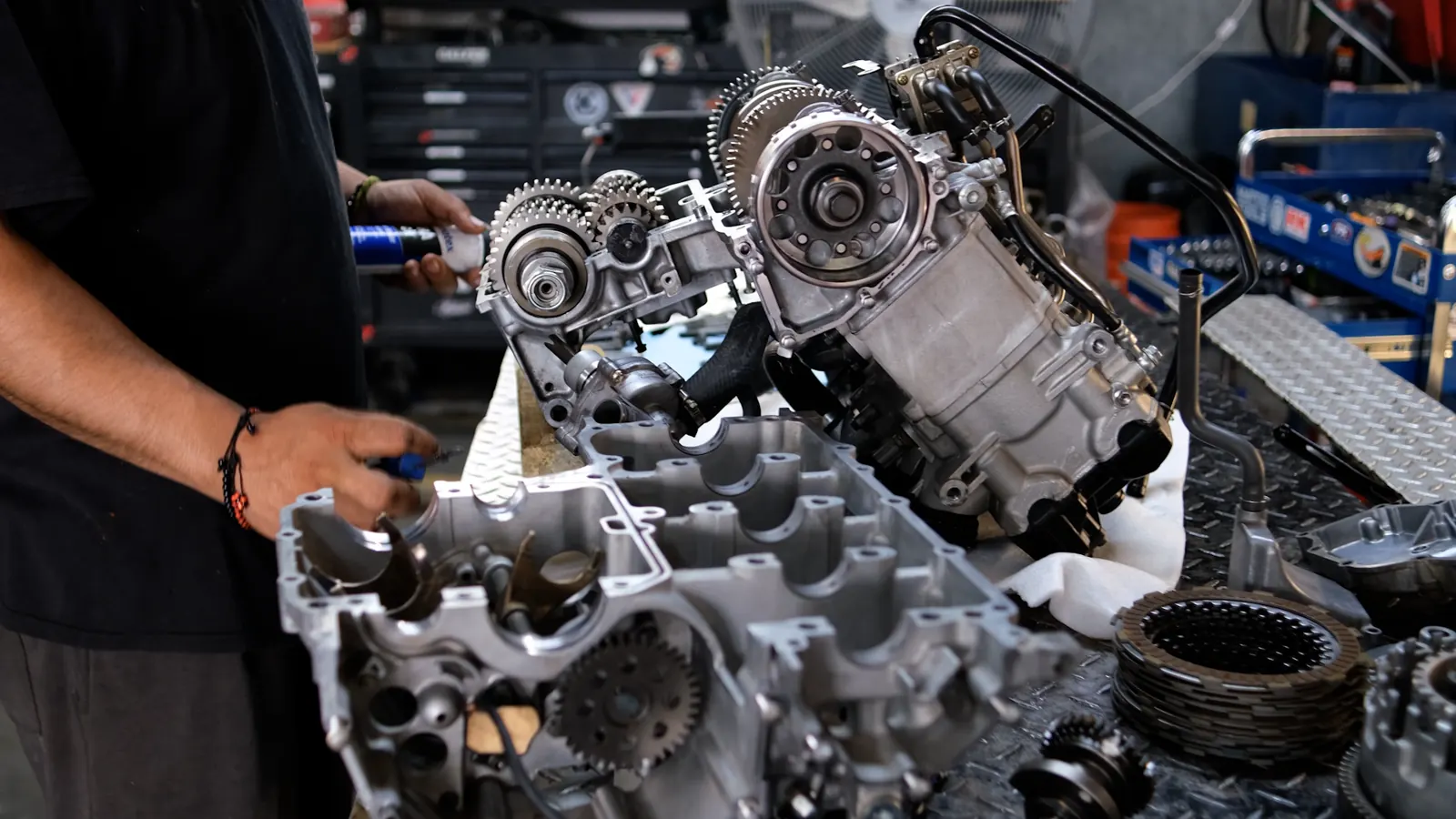
This is the part that makes the bike run and stop, and it’s where safety lives. It’s also where labor hours concentrate, because engines and fuel systems are slow, careful work. Here’s the mechanical side of a typical restoration, from the parts almost every stored bike needs to the deep work only some bikes require.
- Fluids and filters — fresh oil, filter, coolant, and brake fluid. Nearly every project needs this.
- Fuel system — clean or replace varnished carbs or injectors, and address a rusty tank.
- Battery and electrical — new battery, plus chasing down corroded connectors and cracked wiring.
- Brakes — pads, lines, and often seized or sticky calipers rebuilt or replaced.
- Tires, chain, and sprockets — safety wear items that age out whether you ride or not.
- Cables and rubber — throttle and clutch cables, fuel lines, and seals that dry out and crack.
- Engine internals — only if it’s seized, smoking, or damaged. This is the big one when it’s needed.
Notice the last item is the expensive outlier, and most revivals never touch it. That’s the good news hiding in a scary list: if your engine still turns over and runs, you’ve dodged the single biggest cost. The rest of the mechanical work is fairly predictable, because those wear parts age out on a known schedule whether the bike moves or not.
The cosmetic line items
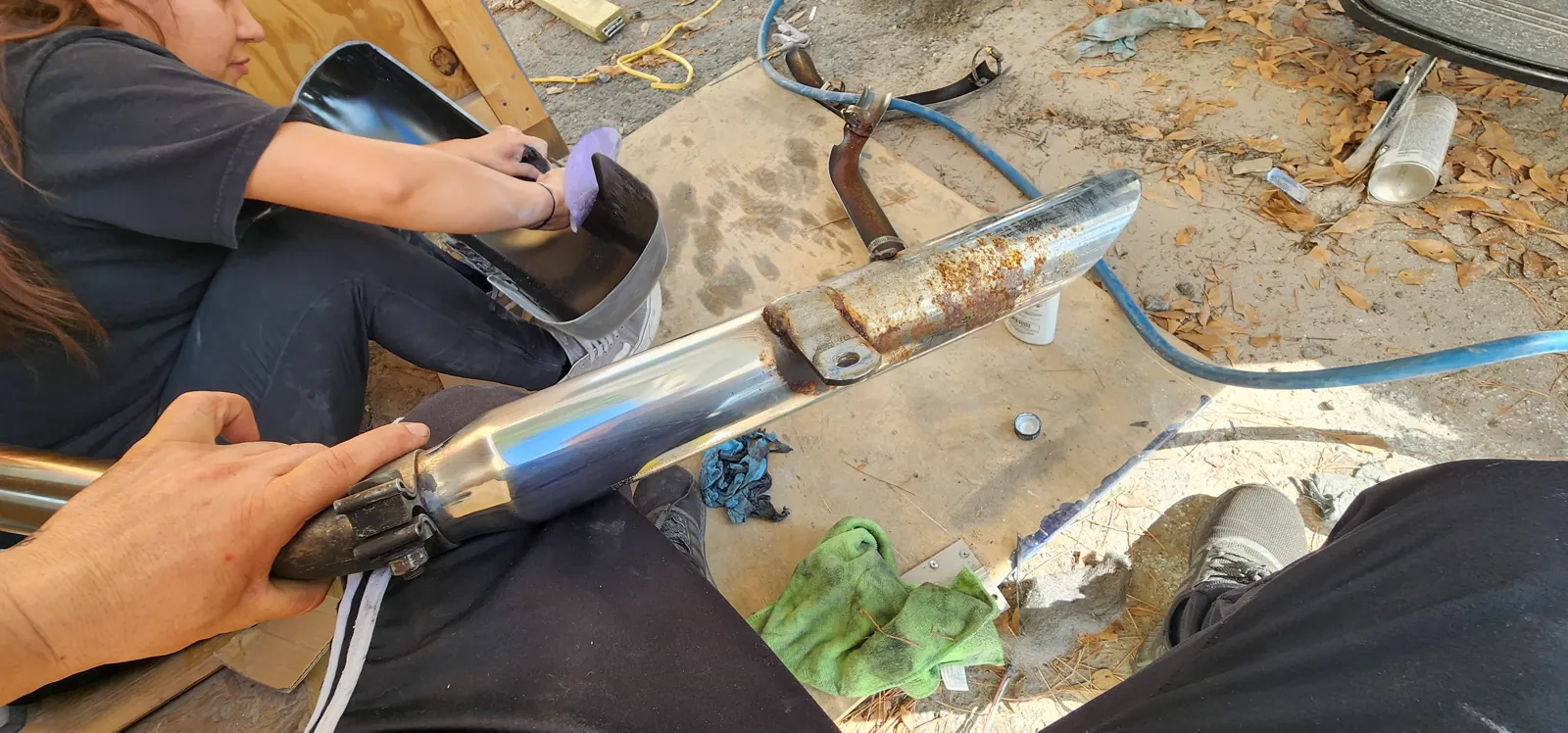
This is the part everyone can see, and it’s where a restoration turns heads. Cosmetic work covers paint, chrome, and finish, and it ranges from a quick correction to a full teardown and respray. It’s also where Sandy Springs storage habits hit hardest, because sun and moisture attack finish before they attack anything else.
Paint is the swing item. A bike with tired-but-solid paint might just need correction and polishing, which is affordable. A bike with peeling, faded, or damaged paint needs a full strip and respray in a paint booth, which is a real line item. Chrome works the same way: light rust polishes off cheaply, but deep pitting means re-plating or replacing the piece. That’s why a bike baked in a surface lot costs more to finish than one kept in the shade of a garage.
HEADS UP
Labor is often the biggest number on the sheet — and that’s a good sign, not a rip-off.
A lot of people are surprised that labor, not parts, tops the bill on many restorations. That’s normal, and it’s actually what you want. Restoration is patient, hands-on work: stripping the bike down, cleaning decades of grime, hunting the right parts, and reassembling everything so it’s safe. A shop that lowballs labor is usually planning to rush, and rushing is how you get a bike that looks fine and fails fast. You’re paying for the care that makes it last.
The third bucket: parts and parts-hunting
Parts are the wildcard. On a common bike, replacement parts are cheap and easy to get, so this bucket stays small. On a vintage or rare bike, the same part might be discontinued, expensive, or only available used from across the country, and finding it takes time. That time is real cost, and it’s also why restoration timelines stretch. You’re not waiting on the shop; you’re waiting on the world to cough up a forty-year-old fender.
This is where an all-makes shop helps a Sandy Springs owner, because there’s no motorcycle dealership in the city to lean on, and a brand-locked dealer won’t chase parts for a make they don’t sell. We work on everything and hunt parts for everything, so your seventies Honda, your old Triumph, or your neglected cruiser all get the same treatment. If you want the bigger-picture version, our overview of what a restoration costs ties these buckets together.
What pushes your number up or down
Now the useful part: the dials that move your total. Some you can’t change, like how rare your bike is. But one big dial is entirely in your hands, and it’s the one Sandy Springs riders control least on purpose and most by accident. It’s time. How long the bike sits, and how it’s stored while it sits, drives more of your final number than almost anything else.
Here’s why. A bike caught after one winter needs a freshening. The same bike caught after five years in a humid deck needs a rescue, because rust went deeper, varnish went harder, and more parts crossed from “save it” to “replace it.” Storage sets the starting condition, and condition sets the labor, and labor sets the bill. That’s the whole chain, and it’s why we ask how your bike is stored before we quote anything.
WISH YOU KNEW
The cheapest restoration is the one you start before the bike gets worse.
If your bike is sitting right now, this is the least expensive it will ever be to bring back. Every season it waits in a Sandy Springs deck or surface lot, the number quietly climbs. That’s not a scare tactic, it’s just how rust and varnish work. If you’re still deciding whether the project is worth it at all, our honest comparison of restoring versus selling lays out the math both ways.
Why Sandy Springs bikes often cost a little more to restore
Let’s connect this straight to the city. Sandy Springs is a condo-and-apartment town, especially along Roswell Road and around Perimeter Center, and roughly half the housing here is rentals. That means a huge share of riders have no garage and no outlet for a battery tender, so their bikes live outside, under covers, in surface lots and shared decks. Sun, humidity, and dead batteries are the default, not the exception.
So a Sandy Springs restoration often starts a step further down the condition ladder than the same bike would somewhere with a dry garage. That’s not you doing anything wrong. It’s the housing. Knowing it up front just helps you plan the budget honestly, instead of getting surprised by a chrome or paint line you didn’t expect.
How we quote, and how we get your bike
Our process is boringly honest: we look before we price. We go through the buckets, tell you what your bike actually needs and what it doesn’t, and give you a real number, in writing, before any work starts. If we open it up and find something the photos hid, we stop and call you first, so you approve every step. You’ll never get handed a bill for work you didn’t okay.
And getting the bike to us is not your problem to solve. We’re about eight to eleven miles from Sandy Springs, a straight run down Johnson Ferry Road across the Chattahoochee into East Cobb, no top-end-of-285 required. But if your bike is dead in a condo deck with no garage, our pickup and delivery comes and gets it. Transport is the piece that stops most apartment riders, so we took it off the table.
A restoration price isn't one number pulled from the air. It's a stack of line items — and every one of them is something you can understand.
So skip the guesswork. Text us a few photos of your bike, tell us how long it’s been sitting and where it’s stored, and we’ll walk you through which line items yours actually needs and what they run. We’re a short hop down Johnson Ferry from anywhere in Sandy Springs, no 285 needed, and if the bike can’t move, we’ll come get it. Clear math, no surprises, no sales script.
Questions Sandy Springs riders ask us
Why can't a shop just tell me one restoration price?
Because a restoration is a stack of smaller jobs — fluids, fuel system, brakes, tires, electrical, paint, chrome, and sometimes engine internals — and your bike may need all of them or just a few. The total depends on condition, which we can only judge by looking. A one-size number over the phone is a guess, not a quote.
What's usually the most expensive part?
When it’s needed, engine internal work is the biggest single line item, because it’s the most labor. The good news is most revivals never touch it — if your engine still turns and runs, you’ve avoided the largest cost. After that, a full paint respray and re-plating badly pitted chrome are the next biggest swings.
Is labor really the biggest cost on a lot of restorations?
Often, yes, and that’s normal. Restoration is slow, hands-on work: teardown, cleaning, parts hunting, and careful reassembly so the bike is safe and lasts. A quote that lowballs labor usually means a rushed job. You’re paying for the patience that makes the bike reliable, not just shiny for a month.
Why might my Sandy Springs bike cost more than the same model elsewhere?
Storage. With roughly half the housing here rentals and huge apartment and condo stretches along Roswell Road with no garage or outlet, bikes live outside under covers. Sun, humidity, and dead batteries push a bike further down the condition ladder, which means more line items. It’s the housing, not anything you did wrong.
How do parts affect the price and the timeline?
On common bikes, parts are cheap and quick. On vintage or rare bikes, a part might be discontinued or only available used from far away, which adds both cost and waiting time. We’re all-makes and hunt parts for everything, which matters here since Sandy Springs has no dealership to lean on.
How do I get my bike to you if it won't run?
You don’t move it yourself. Our pickup and delivery comes to your Sandy Springs address, loads the bike, and brings it in, then delivers it back when it’s done. Transport is the piece that stops most apartment and condo riders, so we handle it both ways as part of the job.
We restore bikes and break down the cost for riders all across Sandy Springs, wherever the project is parked. Owners bring us bikes from Riverside and the Dunwoody Panhandle, from the estate lots up in Huntcliff, and from established neighborhoods like High Point, Glenridge Close, and Deerfield. Plenty more come from the dense core — the condo towers around the City Springs district, the townhomes off Spalding Drive, and the older apartment communities along Roswell Road and Hammond Drive, where a garage is rare and a bike ends up living outside. That storage pattern is a big reason restoration cost here often starts a notch higher than the same bike would somewhere dry, and it’s exactly why we spell out every line item before any work begins. The route to the shop is easy: Johnson Ferry Road west across the Chattahoochee into East Cobb, roughly eight to eleven miles, avoiding the top end of 285 and the notorious 400 interchange entirely. From the Riverside and Powers Ferry side it can be under fifteen minutes. And when the bike can’t run, our pickup and delivery closes the distance for you, so a Sandy Springs address is never the reason a restoration stalls. We also quote and restore projects from Dunwoody and Brookhaven to the east, Roswell up 400, Buckhead to the south, and East Cobb, Vinings, and Marietta on our side of the river. Riders who pass Perimeter Mall, Island Ford, or Morgan Falls Overlook Park on their way over are already headed the right way. We price the same honest way no matter which side of Sandy Springs you’re on — the garage-kept bikes up around Huntcliff and River Chase off Riverside Drive, or the outdoor-stored bikes near Sandy Springs Circle, Mount Vernon Highway, and the Hammond Drive corridor that tend to need a paint or chrome line the owner didn’t expect. Knowing your storage story up front lets us build the estimate around your actual bike instead of a worst-case guess, and it lets us bring the bike in ourselves when there’s no way to move it. Whether your bike is a common model with cheap parts or a rare vintage machine that needs parts-hunting, whether it sat in a High Point garage or under a cover near Sandy Springs Circle, we handle it the same way: we look before we price, we tell you which line items yours actually needs, and we put the number in writing before we start. Send us a few photos and tell us how long it’s been sitting, and we’ll turn the mystery total into math you can follow.
WANT THE REAL LINE-ITEM PRICE? TEXT US
Skip the guesswork and the phone-quote games. Text us a few photos of your bike, tell us how long it’s been sitting and where it’s stored, and we’ll walk you through which restoration line items yours actually needs and what they run — in writing, before any work starts. We’re a short run down Johnson Ferry from anywhere in Sandy Springs, no 285 needed, and if it can’t move, we’ll come get it.
470-460-9883Diaz Motorcycles and Service, LLC · 847 Barnes Mill Road, Marietta, GA 30062