Motorcycle Restoration in Sandy Springs: What It Actually Costs
What a real restoration costs, what makes the number swing, and how to find out before you spend a dime.
Plus, most people think a restoration has one price, like a number on a menu. Meanwhile, the honest answer is that motorcycle restoration Sandy Springs riders ask about swings more than almost any other job in the shop. In fact, the same model can cost one owner a little and another owner a lot, and the reason isn’t the shop being cagey. It’s the bike. For example, a clean bike that just sat needs a wake-up. A rusty, seized, sun-baked bike needs a rescue. Those are two very different bills, and this is the plain-English version of why.
We get it. You’ve got a bike in a condo deck off Roswell Road, or tucked in the back of a shared garage in a townhome community, and you want to know the number before you fall in love with the idea. That’s smart. So instead of dodging, we’ll walk you through what actually drives the cost, what your money buys, and how we figure it out before either of us guesses. No sales script, just the real math.
First, what "restoration" even means
Here’s the confusing part: “restoration” covers a huge range. On one end, it’s a revival, waking a bike that’s been parked for a few years so it runs, stops, and looks respectable again. On the other end, it’s a full frame-off, where the whole thing comes apart to the bolt and goes back together like new. Most Sandy Springs projects land somewhere in the middle, and where yours lands is the single biggest thing that moves the price.
So when a shop can’t give you a firm number over the phone, that’s not a dodge. It’s honesty. A bike that lived in a climate-controlled garage up in Huntcliff is a different animal than one that sat under a cover in a surface lot for six Georgia summers. Same make, same year, totally different job. That’s why we look before we quote, every time, so you’re paying for what your bike needs and not a scary worst-case guess.
Why the price swings so much
Two things move a restoration bill more than anything else: condition and parts. Condition is how far gone the bike is, which sets how many hours it takes. Parts are what has to be replaced instead of saved. A crusty carburetor can be cleaned, but a cracked one gets replaced. Faded paint can be corrected, but paint that’s peeling to bare metal needs a full respray. Every one of those forks in the road nudges the number.
And here’s the local kicker. Sandy Springs storage habits push a lot of bikes toward the pricier end without the owner ever doing anything wrong. When roughly half the housing here is rentals and huge stretches of the Roswell Road corridor are older apartments with no garage and no outlet, a bike sits outside, under a cover, soaking up humidity and sun. That’s how a two-year nap turns into a rust-and-gunk revival. It’s not your fault. It’s just the city.
The big cost drivers, plain and simple
You don’t need a mechanic’s vocabulary to understand where the money goes. It comes down to a short list, and once you see it, the whole thing stops feeling like a mystery box. Here’s what actually adds up on a restoration, roughly in the order it tends to matter.
- How long it sat. A one-winter nap is cheap to fix; a decade in a damp deck is not.
- Fuel system condition. Old ethanol gas turns to varnish and gums carbs, injectors, and tanks.
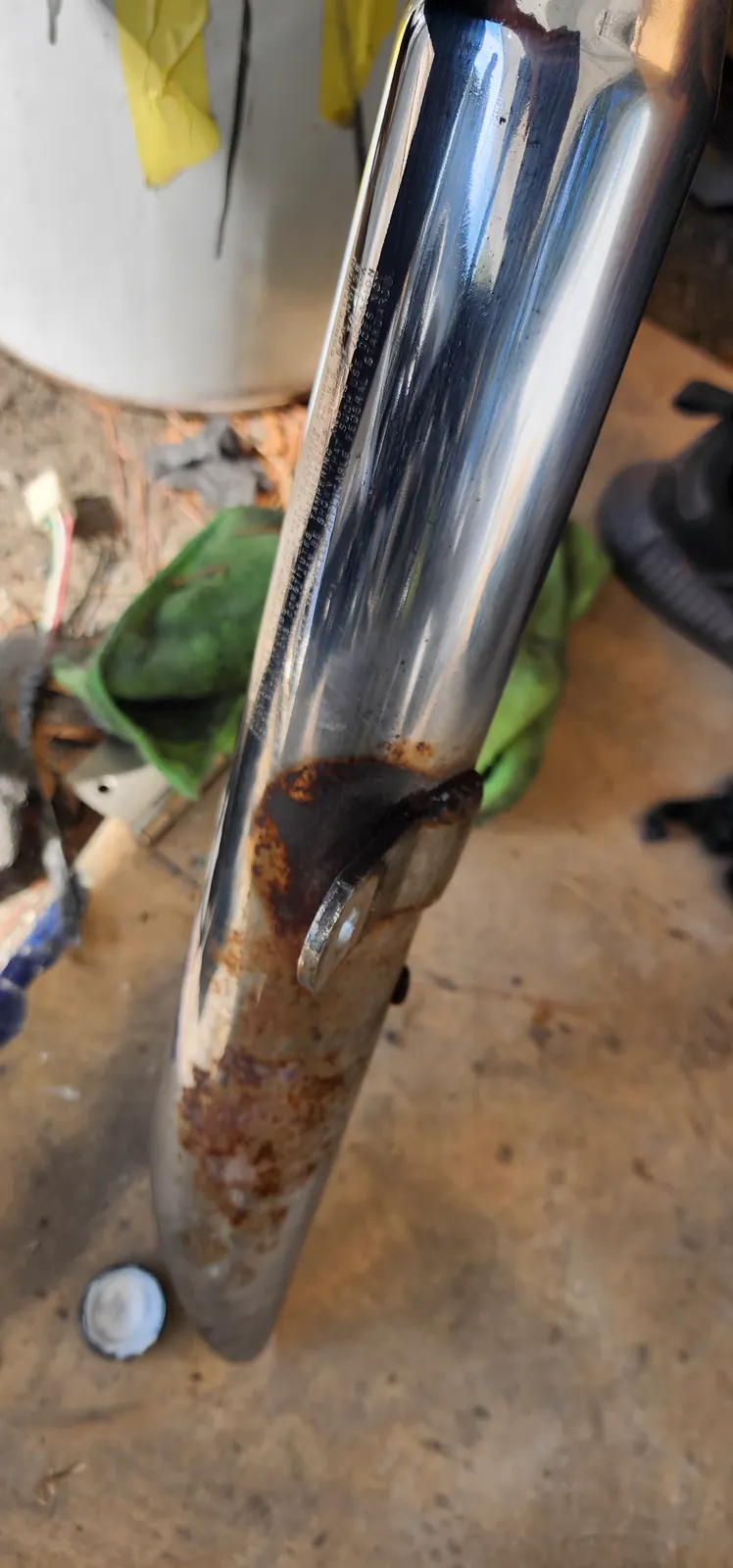
- Rust. Surface rust polishes off; deep pitting on chrome and steel means re-plating or replacing.
- Paint. A wash-and-correct is one price; a full strip and respray in our booth is another.
- Rubber and consumables. Tires, chain, brake lines, cables, and seals almost always get renewed.
- Missing or broken parts. Vintage parts hunting adds both cost and calendar time.
- Electrical gremlins. Cracked wiring and dead batteries are common after long outdoor storage.
Notice that most of that list ties straight back to how the bike was stored. That’s why we lean on the storage conversation so hard for Sandy Springs owners. The good news? Now that you can see the drivers, you can also see where a bike is in decent shape, and a decent-shape bike is a friendlier bill than most people fear walking in.
HEADS UP
The cheapest-looking quote is often the most expensive bike.
Here’s a trap worth naming. A shop that throws out a low number over the phone, sight unseen, is guessing, and that guess almost always grows once the bike is on the lift. We’d rather look first and tell you the truth than lowball you into a project and “discover” the real cost later. If you want to understand the full picture before you commit, our breakdown of what drives a restoration price lays out every line item in one place.
Where your money actually goes
When people picture a restoration bill, they picture parts. In reality, a big chunk is labor, and that’s a feature, not a bug. Restoration is slow, careful, hands-on work. Someone has to strip the bike down, clean forty years of grime out of the engine bay, chase down the right parts, polish the chrome by hand, and put it all back together so it’s safe to ride. That patience is what separates a real restoration from a bike that looks shiny for a month and then quits.
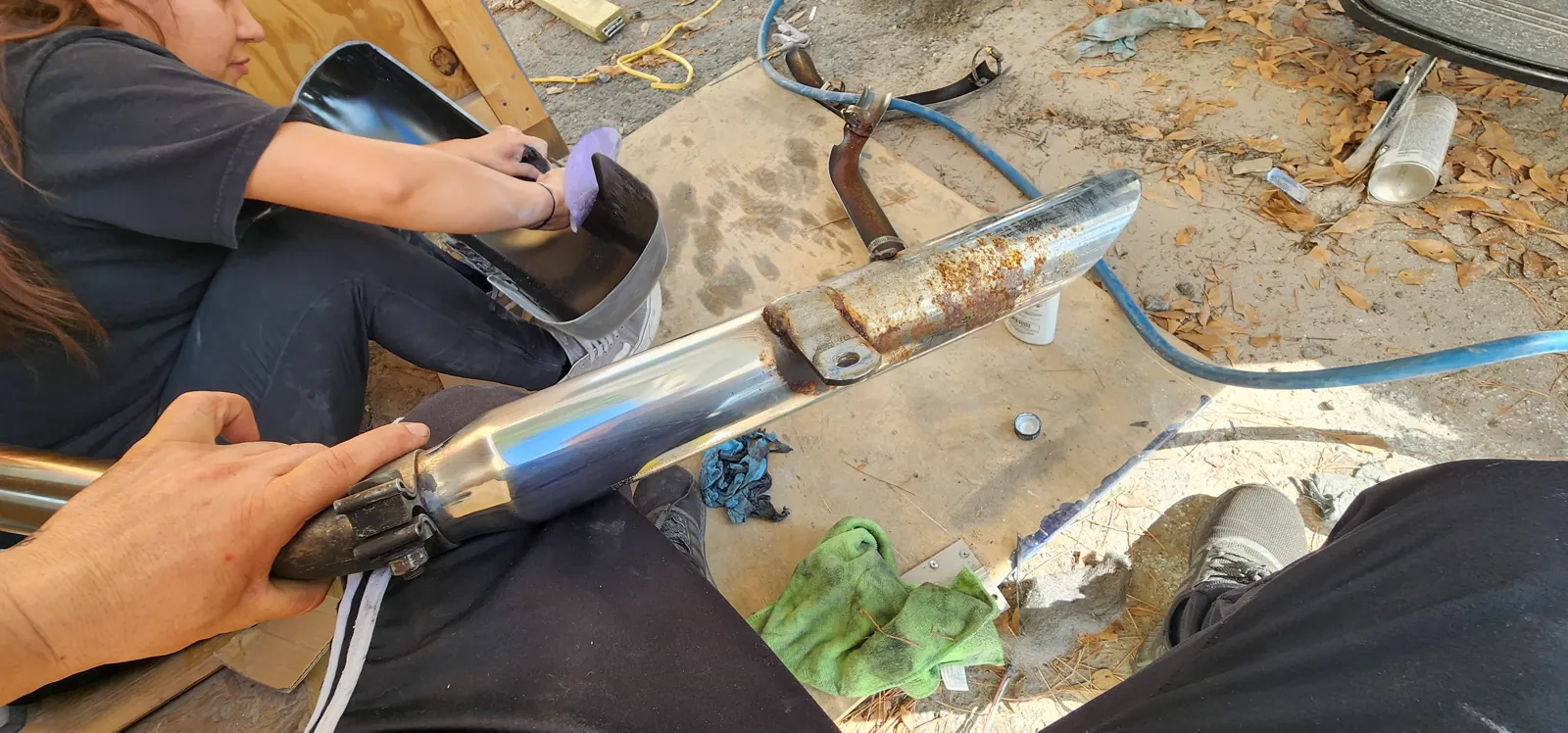
Chrome is the perfect example. Anybody can hit a pipe with a wipe and call it good. Bringing pitted, rusted chrome back to a mirror takes real hours on a buffer, and if it’s too far gone, it needs re-plating. That’s why two bikes with “the same” chrome can cost very different amounts. One got lucky in a dry garage. One didn’t.
The Sandy Springs storage problem raises the stakes
Let’s say the quiet part out loud, because it changes the money more than the bike’s badge does. Sandy Springs is a condo-and-townhome city. Along Roswell Road, near Perimeter Center, and through the Hammond Drive apartment corridor, most riders don’t have a garage. Their bike lives in a shared deck, a carport, or a surface lot, often with no outlet nearby for a battery tender. That means more moisture, more sun, and more of the exact damage that pushes a restoration toward the higher end.
None of that is a lecture. It’s just the reason a Sandy Springs restoration sometimes costs more than the same bike would in a dry Marietta garage. Understanding it up front helps you plan, and it helps you decide whether the smarter move is to fix the bike or move on, which we walk through in our honest look at restoring versus selling.
WISH YOU KNEW
Catching a stored bike early is far cheaper than reviving a neglected one.
Here’s the thing we wish every rider knew a year sooner: a bike caught early is a small bill. A bike left to sit and corrode is a big one. If your bike has been parked for a season or two, right now is the cheap moment. Wait three more years in a humid deck and the same project doubles, because the rust gets deeper and the parts get harder to find. Time is the one cost driver you actually control.
No garage? Pickup and delivery solves it
Here’s the part that makes this easy for a Sandy Springs rider. If your bike won’t start and you have no garage to work in, you might feel stuck, because you literally can’t roll it anywhere. So we come get it. Our pickup and delivery erases the single biggest hurdle for the apartment-and-condo half of the city. You don’t need a truck, a trailer, or a friend with a ramp. We handle the transport both ways.
And getting to us is easy on the map, too. We’re only about eight to eleven miles away, a straight shot down Johnson Ferry Road across the Chattahoochee into East Cobb, and you never have to touch the top end of 285. But honestly, if the bike is dead in a deck, you may never make that drive at all, because we’ll bring it in for you. That’s the whole point.
What you get back for the money
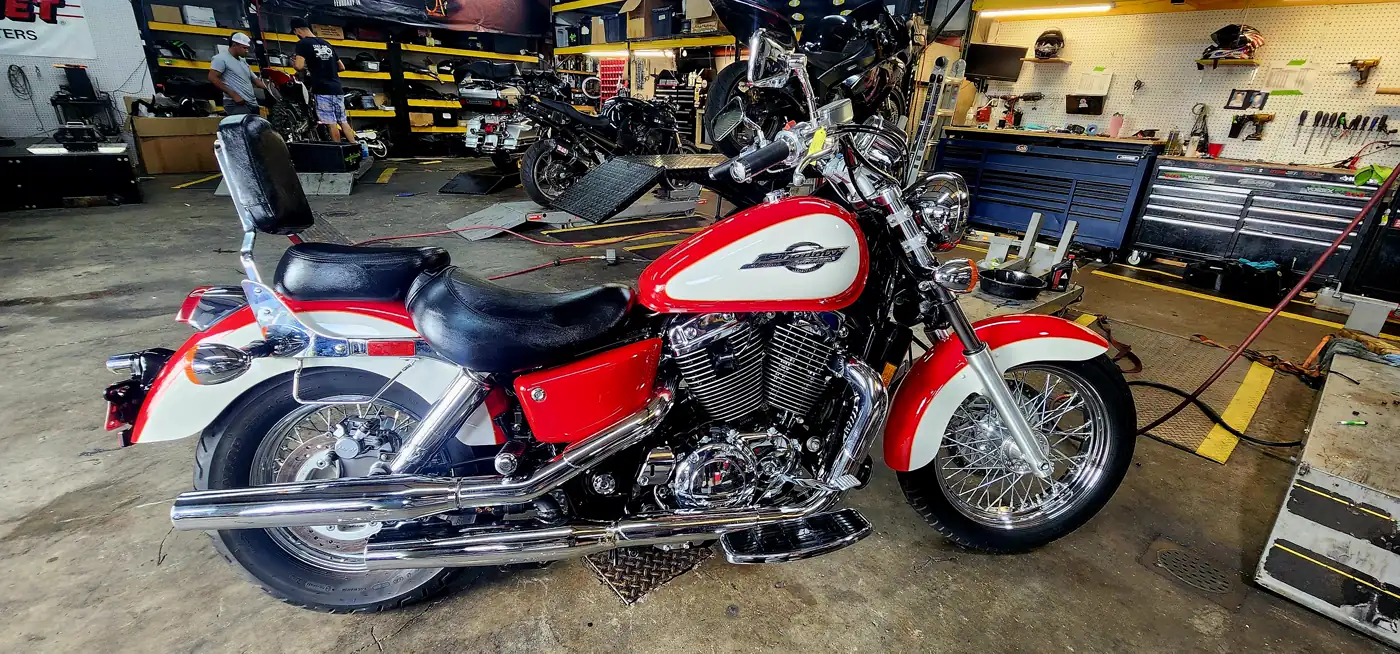
Now the fun part, because the payoff is real. When a restoration is done right, you don’t just get a clean bike. You get a bike that runs the way it did when it was new, stops the way it should, and looks like something people turn their heads at outside City Springs. The chrome throws a mirror. The paint has depth. The engine settles into a steady idle instead of coughing and dying. It’s the difference between a bike you’re nervous about and a bike you can’t wait to ride.
There’s a money side to the payoff, too. A properly restored bike holds its value, because a buyer reads a cared-for machine in about two seconds, and vintage bikes done right often appreciate. So the number you spend isn’t just gone. It’s parked in the bike, and it’s the whole reason our restoration work tends to make owners glad they didn’t sell it off cheap.
A restoration doesn't have one price. It has your bike's price — and the only way to know it is to look.
So here’s the easy first step. Text us a few photos of your bike, tell us how long it’s been sitting and where it’s stored, and we’ll give you an honest read on where it lands, the cheap end or the deep end, before you spend a thing. We’re a short run down Johnson Ferry from anywhere in Sandy Springs, no 285 required, and if the bike can’t move on its own, we’ll come get it. No pressure, no guessing, just a real number.
Questions Sandy Springs riders ask us
Can you give me a price over the phone?
We can give you a rough range once we see photos, but a firm number needs a look. Condition drives everything on a restoration, and the same model can cost very different amounts depending on rust, fuel-system gunk, and how long it sat. We’d rather quote you honestly after we look than guess high or low and be wrong.
My bike has no garage and won't start. How do I get it to you?
You don’t have to. Our pickup and delivery comes to your Sandy Springs address, loads the bike, and brings it to the shop, then delivers it back when it’s done. That’s built exactly for the condo, townhome, and apartment riders here who have no garage to work in and no way to roll a dead bike.
What makes one restoration cost more than another?
How long it sat, how much rust it grew, whether the fuel system varnished, whether the paint needs a full respray, and how many parts have to be replaced instead of saved. Missing vintage parts and electrical problems add cost and time. Most of it traces back to storage, which is why we look before we quote.
Is it cheaper to catch a bike early?
Much cheaper. A bike parked for a season or two is a small revival. The same bike left in a humid deck for years grows deeper rust and harder-to-find problems, so the bill climbs. If your bike has been sitting, right now is almost always the cheapest it will ever be to bring back.
Do you restore my brand of motorcycle?
Yes. We’re an all-makes shop, so vintage Hondas, Triumphs, Suzukis, Harleys, and classic Japanese and European bikes are all welcome. Sandy Springs has no dedicated motorcycle shop of its own, so you don’t need to hunt for a brand specialist — one stop covers whatever’s in your deck.
How long does a restoration take?
It depends on condition and parts availability. A revival can move fairly quickly; a full frame-off with a paint respray and vintage-parts hunting takes longer. Winter is the ideal window, since the bike isn’t being ridden anyway. We’ll give you a realistic timeline once we’ve looked it over.
We restore bikes for riders all across Sandy Springs and the north-metro area, not just the folks a few minutes from the shop. Friends bring us projects from Riverside and the Dunwoody Panhandle, from the estate lots up in Huntcliff near the river, and from the established streets of High Point and Glenridge Close. Just as many come from the newer condo towers around the City Springs district and the apartment corridor along Roswell Road, where a garage is rare and a bike ends up living outside. That storage reality is exactly why so many Sandy Springs restorations start with us. The route in is genuinely easy: Johnson Ferry Road west across the Chattahoochee into East Cobb, roughly eight to eleven miles, and you never touch the top end of 285 or the 400 interchange. From the Riverside and Powers Ferry side of town it can be under fifteen minutes. And if your bike is dead in a deck with no way to move, our pickup and delivery closes the gap for you, so the drive stops mattering at all. We also see restoration projects roll in from Dunwoody and Brookhaven to the east, Roswell up 400, Buckhead just to the south, and of course East Cobb, Vinings, and Marietta on our side of the river. Riders passing Perimeter Mall, Island Ford, or Morgan Falls Overlook Park on their way over are already headed the right direction. We know the two Sandy Springs worlds well: the north-and-river side around Huntcliff, River Shore Estates, and the Panhandle, where garages are common and bikes age slowly, and the inside core along Roswell Road, Mount Vernon Highway, and Abernathy Road, where condos and carports mean bikes live outside and start restorations a notch rougher. Both worlds get the same honest treatment, and both get pickup and delivery when a dead bike can’t be rolled out to the curb. Whether your bike sat in a High Point garage or under a cover in a surface lot near Hammond Drive, whether it’s a barn-find vintage Honda or a cruiser that just needs waking up, we treat it the same way: we look before we quote, we tell you the truth about condition, and we handle the transport so a Sandy Springs address is never the reason a good bike stays parked. If you can get us a few photos and tell us how long it’s been sitting, we can tell you where your project lands — and start it whenever you’re ready.
TEXT US A FEW PHOTOS OF YOUR PROJECT
Want the straight version of what your restoration would cost? Text us a couple of photos, tell us how long it’s been sitting and where it’s stored, and we’ll give you an honest read before you spend a thing. We’re a quick run down Johnson Ferry from anywhere in Sandy Springs, no 285 needed, and if the bike can’t move, we’ll come get it. No pressure, just a real number.
470-460-9883Diaz Motorcycles and Service, LLC · 847 Barnes Mill Road, Marietta, GA 30062