Barn Find in Sandy Springs: Why a Bike That Sits Falls Apart
What really happens to a bike after years of sitting, why humidity here makes it worse, and how to wake it up without hurting it.
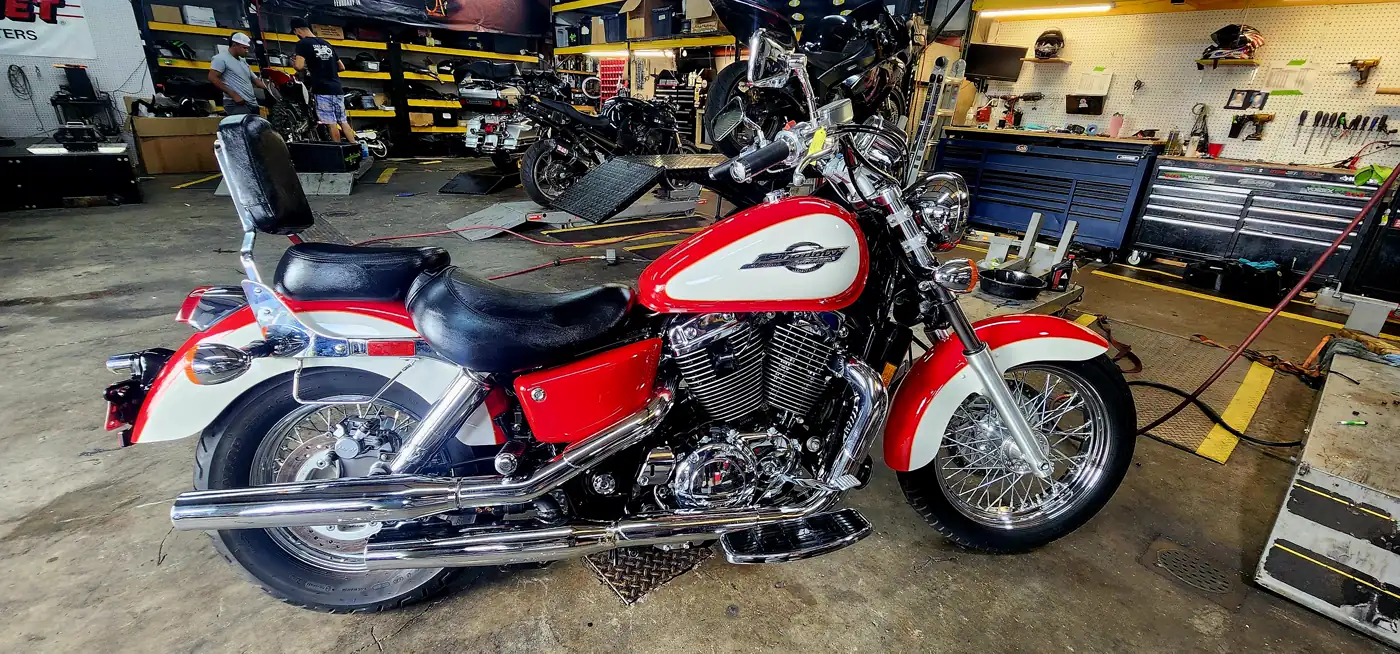
Plus, most people assume a bike that’s been parked for years is basically fine, just dusty. Meanwhile, the truth is that a barn find Sandy Springs riders drag out of a deck or a back corner is usually hiding real trouble underneath the dust. In fact, sitting still is one of the hardest things you can do to a motorcycle. For example, the fuel turns to varnish, the battery dies, the tires flat-spot, and rust quietly eats the chrome and the tank from the inside. The good news is that most of it is fixable. The bad news is that firing it up wrong can turn a fixable bike into a broken one.
We get this call a lot. Someone inherits a bike, or finds one in a shared garage in a townhome community, or finally admits the project in the back of their condo deck isn’t waking up on its own. It looks complete. It even rolls. So the temptation is to throw in a battery, splash in some gas, and hit the button. Please don’t. This is the story of what’s really going on inside that bike, and how to bring it back without doing damage on day one.
Why sitting still wrecks a motorcycle
A motorcycle is built to move. When it runs, oil circulates, fuel stays fresh, the battery stays charged, and seals stay wet and flexible. When it sits, all of that stops. Oil drains off the parts it was protecting. Gas breaks down. Rubber dries out. Moisture creeps in. The longer it sits, the more of these small problems pile up, until the bike that “just needs a battery” actually needs a careful revival.
And here’s the part that catches Sandy Springs owners off guard: it’s not the years alone, it’s the humidity. A bike stored dry in a heated garage ages slowly. A bike stored under a cover in a surface lot or an open carport ages fast, because Georgia’s damp air gets trapped and condenses right onto the metal. So a five-year nap in Sandy Springs can look like a ten-year nap somewhere dry. Your bike didn’t do anything wrong. It just breathed our air.
The fuel system is usually the first casualty
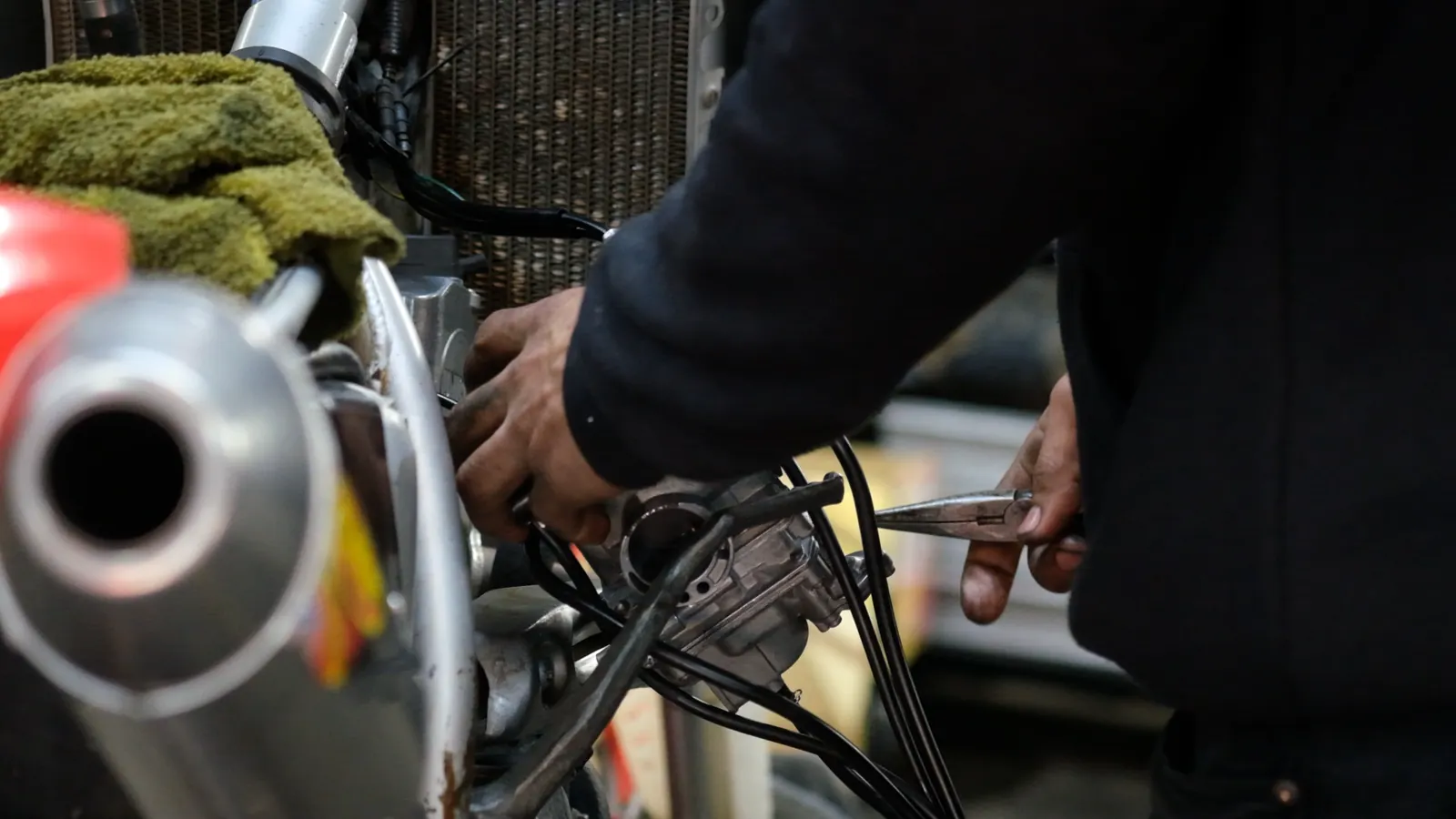
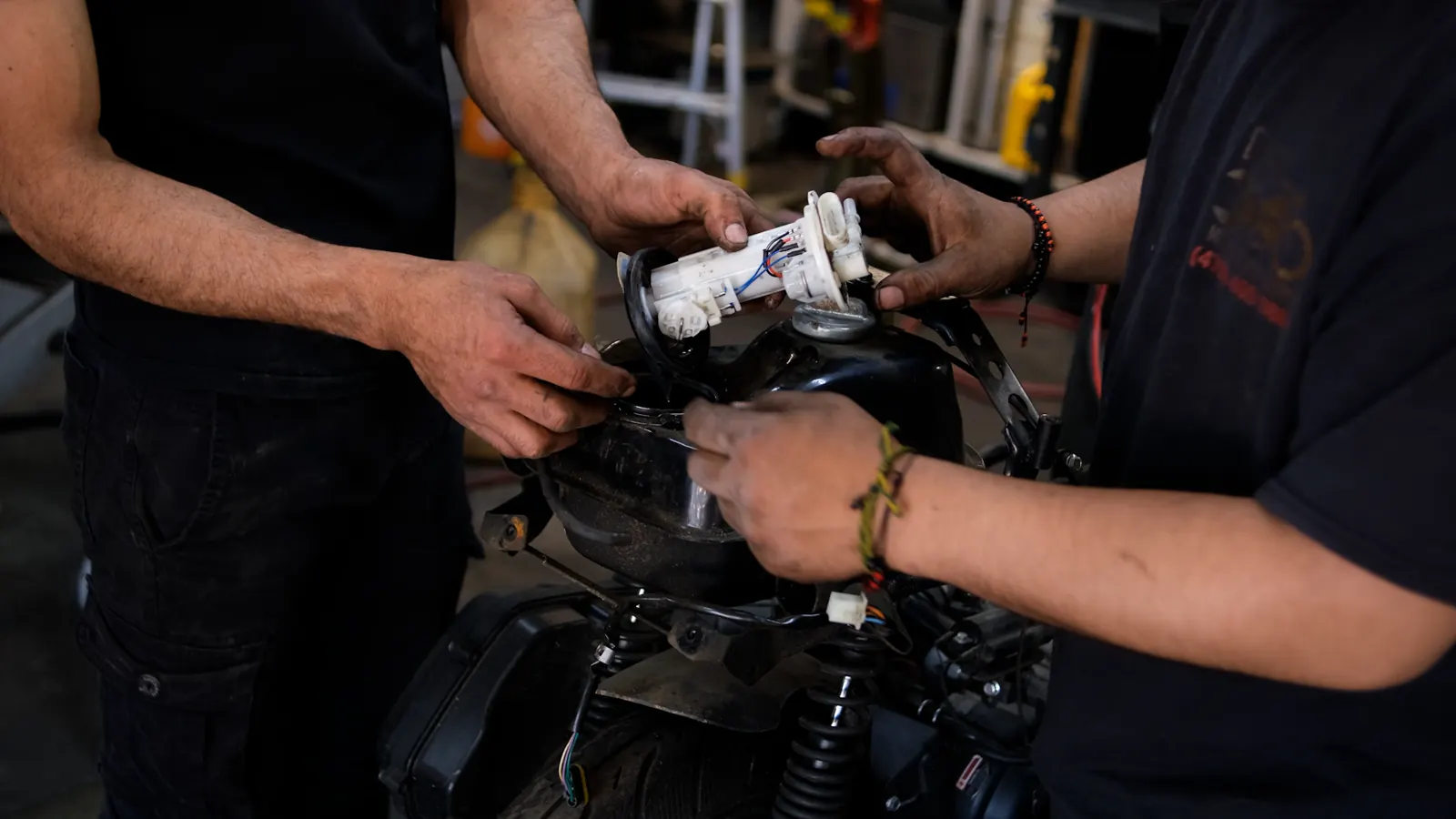
If you remember one thing from this post, make it this: old gas is the enemy. Today’s ethanol fuel starts breaking down in months, not years. It turns into a sticky varnish that gums up carburetor passages and fuel injectors, and it pulls moisture that rusts the inside of the tank. That’s why a bike that sat with a tank full of old gas often won’t run right even after a fresh battery and a spark. The fuel path is clogged.
On a carbureted vintage bike, those tiny passages are smaller than a pencil lead, so it doesn’t take much varnish to choke them. On a modern fuel-injected bike, the gunk goes after the injectors and the pump instead. Either way, the fix is cleaning or replacing the affected parts and getting fresh fuel through a clean system. It’s routine work for us, but it’s the number one reason a barn find won’t start, or won’t stay running, when someone tries to shortcut it.
HEADS UP
Do not put old gas through the engine or fire it up dry. That’s how a fixable bike becomes an expensive one.
Here’s the mistake that turns a good barn find into a heartbreak. Someone gets excited, drops in a battery, and cranks it over with old oil, a dry top end, and varnished fuel. The engine spins with no proper lubrication, the old gas floods what it doesn’t clog, and now you’ve traded a cleanup for real internal damage. Waking a stored bike is a sequence, not a single button. Doing it in the right order is the whole game, and it’s exactly the kind of thing our restoration work is set up to handle.
What else is quietly failing while it sits
The fuel system gets the headlines, but it has company. A stored bike collects a predictable list of problems, and knowing the list helps you understand why a proper revival is more than a jump-start. None of these are exotic. They’re just what happens when a machine sits still in a humid Sandy Springs deck for a few years.
- Dead battery. With no outlet for a tender, batteries here die every single winter.
- Varnished fuel and a rusty tank interior from old ethanol gas.
- Flat-spotted, dry-rotted tires that are unsafe even if they hold air.
- Old brake fluid that absorbed water, plus seized or sticky calipers.
- A rusty chain and stiff, seized cables from trapped moisture.
- Perished rubber — fuel lines, seals, and gaskets that crack and leak.
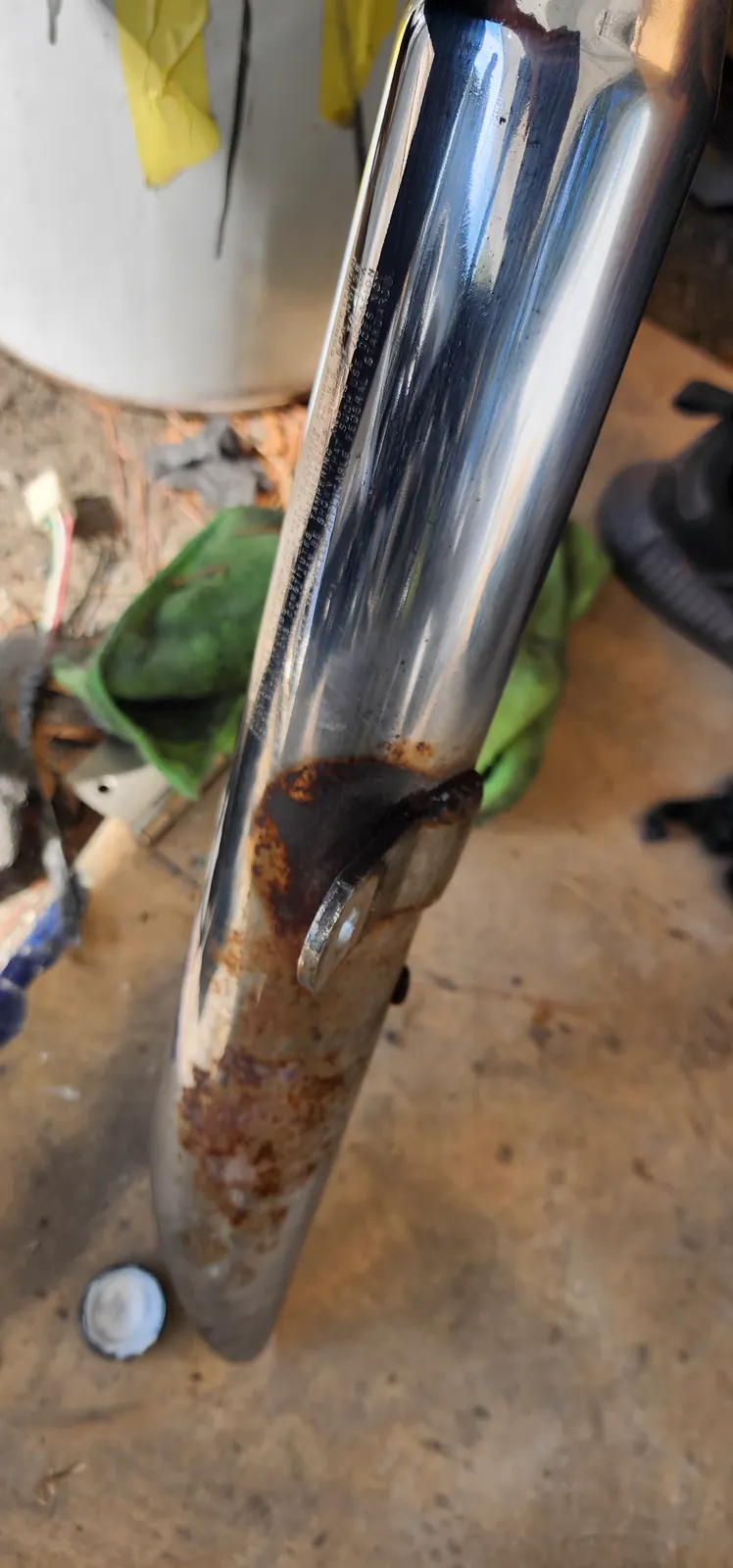
- Rust on rotors, fasteners, and chrome from condensation under a cover.
Read that list again and notice how many items are safety parts. Tires, brakes, and fuel lines aren’t cosmetic. A barn find can look great and still be genuinely dangerous to ride, which is why “it fired up in the driveway” is not the same as “it’s safe to take down Roswell Road.” A real revival checks and renews the parts that keep you alive, not just the parts that make noise.
Why Sandy Springs makes more barn finds than most places
There’s a reason we see so many stored-bike revivals from this side of the river, and it comes straight from how the city is built. Sandy Springs is packed with condos, townhomes, and apartments, especially along the Roswell Road corridor and around Perimeter Center. Roughly half the housing here is rentals, and the mayor has said 60% of the housing stock is rental. That means an enormous share of riders have no garage and no outlet.
So the bike gets parked under a cover in a shared deck or a surface lot, the tender can’t be plugged in, and life gets busy. A season becomes a year. A year becomes three. Nobody meant to create a barn find, but the storage math did it for them. If any of that sounds like your situation, you’re not careless, you’re just a rider in a city that makes garages hard to come by. And it’s fixable.
WISH YOU KNEW
A bike caught after one winter is a tune-up. A bike caught after five years is a project. The clock is the cost.
Here’s the thing we wish every owner knew before the bike sat another season. Deterioration compounds. The rust that’s light today is deep in two years. The varnish that’s soft now is rock-hard later. So if you’ve got a bike sitting, the cheapest, easiest moment to save it is right now, not “someday.” If you’re weighing whether it’s even worth reviving, our honest take on restoring versus selling will help you decide.
Is your barn find even worth saving?
Fair question, and the honest answer is: usually yes, but not always. A bike with a solid engine and a straight frame is almost always worth reviving, because the expensive bones are good and everything else is just wear parts and elbow grease. Sentiment counts too. If it was your dad’s, or your first bike, or a model they stopped making, the spreadsheet isn’t the whole story, and that’s perfectly fine.
Where it gets murkier is a common bike with a cracked frame or a truly blown engine, where buying a clean running example might cost less than the rescue. We’ll tell you honestly which side yours lands on, because we’d rather lose a job than take your money on a bad project. If you’re genuinely torn, our side-by-side on restoring versus selling walks you through it. Either way, a real look settles it.
How to wake it up the safe way
The right way to revive a stored bike is boring, and boring is good. It goes in order: drain the old fuel, inspect and clean the tank and fuel system, fresh oil and filter, check and refresh the brakes, new battery, sort the electrical gremlins, replace perished rubber, and only then coax it to life gently while watching for leaks and overheating. Each step protects the next one. Skip a step and you can undo the work, or worse, hurt the engine.
This is also where an all-makes shop earns its keep. A barn find might be a seventies Honda, a Triumph, a Moto Guzzi, or an old cruiser, and Sandy Springs has no dedicated motorcycle shop of its own to take it to. We work on all of them, and if you want the details on where the money goes once we look, our restoration cost breakdown spells it out line by line.
No garage, no trailer, no problem
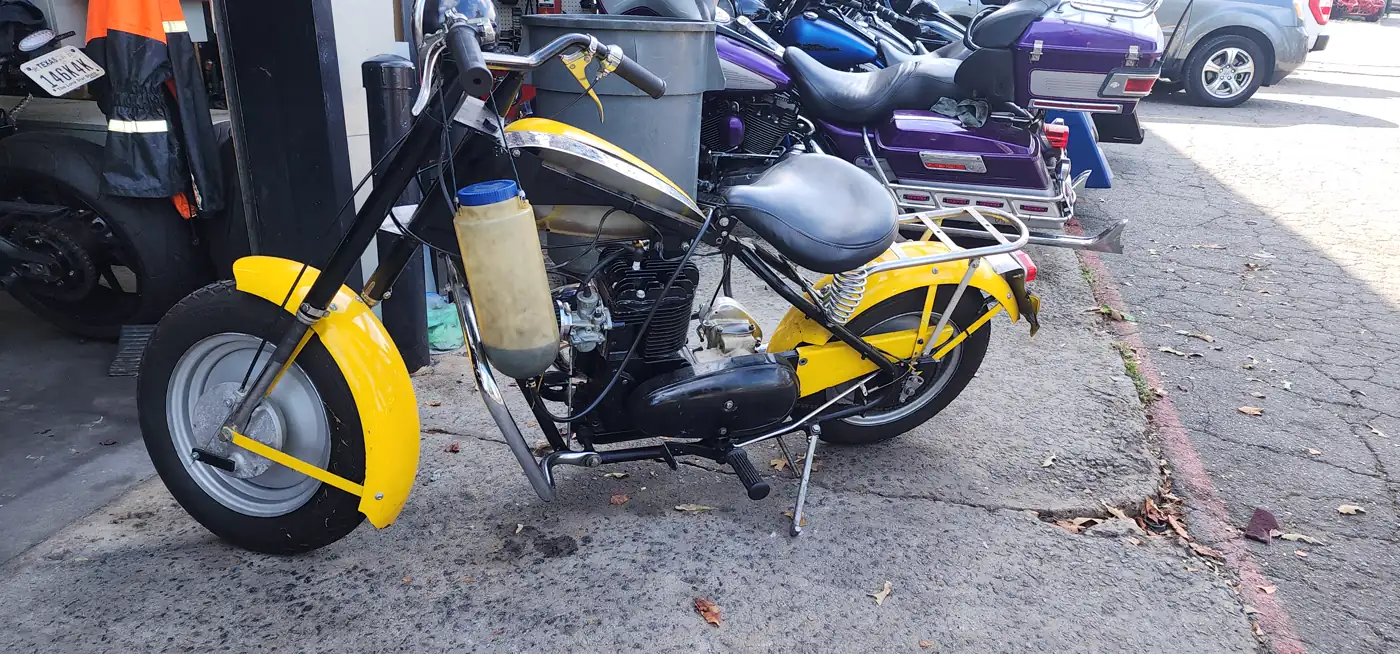
Here’s the part that makes this easy from Sandy Springs. A barn find usually can’t move under its own power, and if you live in a condo or apartment, you probably don’t have a truck and a ramp handy either. So we come to you. Our pickup and delivery loads the bike at your address and brings it to the shop, then returns it running and safe. You don’t have to solve the transport puzzle. That’s ours.
And getting to us is simple even when the bike can roll, because we’re only about eight to eleven miles away, a straight run down Johnson Ferry Road across the Chattahoochee into East Cobb, with no need to touch the top end of 285. But for a dead barn find in a deck near Hammond Drive, the drive is beside the point. We’ll bring it in.
A bike that sits isn't resting. It's slowly rusting. The sooner you wake it up right, the more of it you get to keep.
So if there’s a bike sitting in your deck, garage, or a relative’s shed, don’t drop a battery in and cross your fingers. Text us a few photos, tell us how long it’s been parked and where, and we’ll tell you what it’ll take to bring it back safely. We’re a short run down Johnson Ferry from anywhere in Sandy Springs, no 285 required, and if it can’t move on its own, we’ll come get it. Let’s wake it up the right way.
Questions Sandy Springs riders ask us
My barn find still has old gas in it. Can I just ride it?
Please don’t. Old ethanol fuel turns to varnish that clogs carbs and injectors and rusts the tank, and running it through the engine can cause real damage. The fuel needs to be drained, the system cleaned or replaced, and fresh gas run through a clean path. That’s a routine first step for us on any bike that’s been sitting.
It started in the driveway, so it's fine to ride, right?
Starting and being safe to ride are two different things. Bikes that sit grow flat-spotted tires, water-logged brake fluid, seized calipers, and cracked fuel lines — all safety parts. A bike can fire up and still be dangerous. A proper revival checks the parts that keep you alive before it goes back on the road.
Why do so many bikes end up as barn finds in Sandy Springs?
Storage. Roughly half the housing here is rentals, and huge stretches along Roswell Road and Perimeter Center are apartments and condos with no garage and no outlet for a battery tender. Bikes get parked under covers in decks and surface lots, humidity gets trapped, and a season quietly becomes years.
How bad does humidity really make it?
Bad. Georgia’s damp air gets trapped under covers and condenses on metal, so a bike stored uncovered or under a cover ages much faster than one in a dry, heated garage. Five years sitting here can do the damage of ten years somewhere dry — rust on chrome, rotors, chains, and inside the tank.
How do I get a bike that won't run to your shop?
You don’t have to move it yourself. Our pickup and delivery comes to your Sandy Springs address, loads the bike, and brings it in, then delivers it back once it’s revived. That’s built for the condo and apartment riders here who have no garage, no trailer, and no way to roll a dead bike.
Do you work on old and unusual bikes?
Yes. We’re an all-makes shop, so vintage Hondas, Triumphs, Suzukis, Moto Guzzis, old cruisers, and oddball scooters are all welcome. Sandy Springs has no dedicated motorcycle shop of its own, so there’s no need to hunt for a brand specialist — bring us whatever’s been sitting.
We revive stored and barn-find bikes for riders all over Sandy Springs, wherever the bike has been hiding. Projects come to us from Riverside and the Dunwoody Panhandle, from the wooded lots of Lost Forest and Aberdeen Forest, and from the established streets of High Point and Grogans Bluff. But just as many come from the dense side of the city — the condo towers around the City Springs district, the townhomes off Spalding Drive, and the older apartment communities strung along Roswell Road and Hammond Drive, where there’s no garage and no outlet, and where a bike under a cover slowly turns into a project. That storage reality is the number-one reason Sandy Springs produces so many barn finds, and it’s exactly what our pickup and delivery is built to solve. The trip to the shop is easy: Johnson Ferry Road west across the Chattahoochee into East Cobb, roughly eight to eleven miles, avoiding the top end of 285 and the 400 interchange entirely. From the Riverside and Powers Ferry side it can be under fifteen minutes. And when the bike is dead in a deck with no way to move, none of that matters — we bring the trailer to you. We also take in barn finds from Dunwoody and Brookhaven to the east, Roswell up 400, Buckhead just south, and East Cobb, Vinings, and Marietta on our side of the river. Riders who pass Perimeter Mall, Island Ford, or Morgan Falls Overlook Park on the way over are already pointed in the right direction. We see the pattern repeat block by block, from the wooded lots off Northridge Road to the condo decks around City Springs and the apartment rows along Roswell Road and Abernathy Road: a bike parked with good intentions, a battery with no outlet, and a Georgia summer doing quiet damage. None of it is a lost cause. It’s just a bike waiting for someone to wake it up in the right order, and a shop that will come get it when it can’t roll out on its own. Whether your find is a vintage Honda that sat in a Huntcliff garage, a cruiser parked under a carport near Sandy Springs Circle, or something odd a relative left behind, we treat it the same careful way: drain the old fuel, inspect before we wake it, and refresh the safety parts before it ever goes back on the road. Send us a few photos and tell us how long it’s been sitting, and we’ll tell you exactly what it’ll take to bring it back — and we’ll come get it if it can’t roll.
GOT A BIKE THAT'S BEEN SITTING? TEXT US
Before you drop in a battery and cross your fingers, text us a few photos and tell us how long the bike’s been parked and where it’s stored. We’ll tell you what it takes to wake it up safely, without turning a fixable bike into an expensive one. We’re a short run down Johnson Ferry from anywhere in Sandy Springs, no 285 needed, and if it can’t move, we’ll come get it.
470-460-9883Diaz Motorcycles and Service, LLC · 847 Barnes Mill Road, Marietta, GA 30062