Restore vs Sell in Sandy Springs: How to Decide on That Old Bike
An honest, side-by-side look at fixing the bike versus letting it go — so you make the call with your eyes open.
Plus, most people treat this like a coin flip, when restore vs sell Sandy Springs riders wrestle with is really a question with a clear answer once you gather three facts. Meanwhile, folks either sink money into a bike they should have let go, or dump a keeper for scrap because it “looked rough.” In fact, both mistakes come from guessing instead of checking. For example, a bike that looks hopeless in a dusty deck is often a straightforward revival, and a bike that looks fine can hide a wallet-draining problem. So before you list it or commit to it, let’s line up the honest case for each side.
This isn’t a sales pitch to fix everything. Sometimes selling really is the right move, and we’ll say so. What we want is for you to decide with real information instead of a gut feeling formed by a layer of grime. So here’s the plain version: when restoring wins, when selling wins, and the three questions that actually settle it for a Sandy Springs owner.
The three facts that decide it
Almost every restore-or-sell decision comes down to three things: what the bike is worth to you, what it’ll cost to bring back, and how far gone it actually is. Miss any one of those and you’re guessing. Get all three and the answer usually walks right up and introduces itself. The tricky part is that most people only have the first fact and try to decide on vibes for the other two.
Here’s the catch with condition. You cannot judge it from the driver’s seat of your feelings. A bike that’s been sitting looks worse than it is when it’s just dirty, and looks better than it is when the rust and varnish are hiding inside the tank and engine. That’s why the honest first step, before you list it or fall in love with the project, is a real look. We do that look for exactly this reason.
When restoring is the smart move
Restoring tends to win when the bike means something, when it’s worth more than the work, or when it can’t easily be replaced. If it was your dad’s, or your first bike, or a model they don’t make anymore, the number on a spreadsheet isn’t the whole story, and that’s fine. Sentiment is a real reason. So is scarcity. A clean vintage bike done right often holds or grows its value, so the money isn’t gone, it’s parked in the machine.
Restoring also wins when the bike is in better shape than it looks, which is more common than people expect. A machine that just sat, with a solid engine and honest bones, is usually a revival, not a rebuild, and those bills are friendlier than the dusty picture suggests. If your bike still turns over and the frame is straight, you may be closer to riding than to junking. Our breakdown of what a restoration actually costs helps you weigh that against the bike’s worth.
When selling is the honest answer
Selling can be the right call, and we won’t talk you out of it if it is. If the bike means nothing to you, if a clean running example is cheap and easy to buy, and if this particular one has deep problems, the math can point to letting it go and starting fresh. There’s no shame in that. Throwing good money at a common bike with a bad frame or a blown engine, just because it’s already in your deck, is how people overspend.
But here’s the honest twist most sellers miss: even if you sell, a little work changes what you get. A dead barn find sold as-is brings scrap-adjacent money, because the buyer is pricing in all the unknowns and all the risk. A bike that’s been looked over, sorted, and made to run and stop safely sells for far more, because now the buyer sees a bike instead of a gamble. So even “I’m selling” can be a reason to talk to a shop first.
HEADS UP
Don’t judge condition by how dirty it looks. Dirt and real damage are two completely different things.
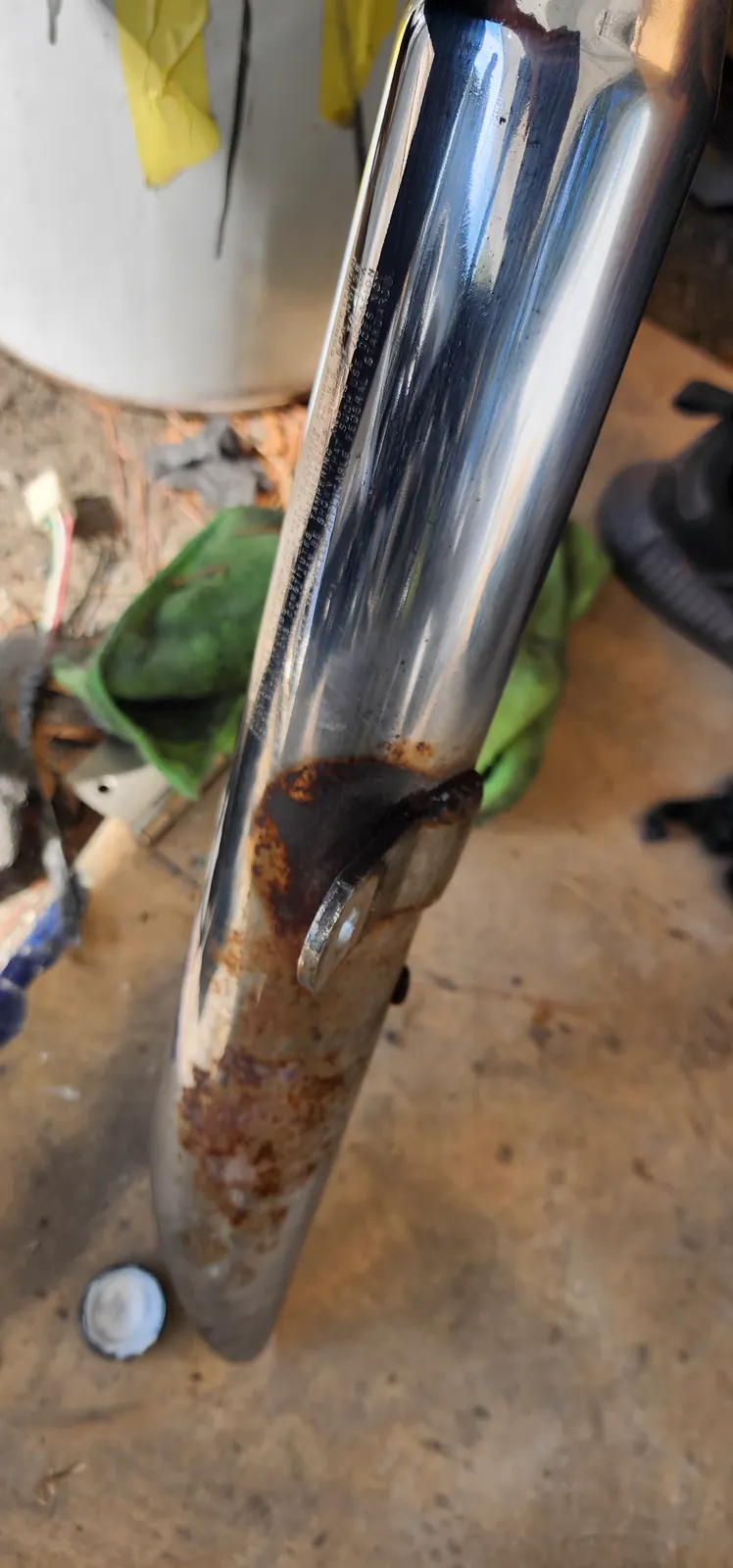
This is the single most common mistake we see on both sides. People sell keepers for pennies because grime made them look doomed, and people commit to money-pits because a shiny tank hid a rusted-out fuel system and a tired engine. A layer of dust is cosmetic and cheap. A cracked frame or a seized engine is structural and expensive. The only way to tell them apart is to have someone who knows bikes actually look. That look is what turns this from a gamble into a decision.
Why this comes up so much in Sandy Springs
There’s a reason we field this question constantly from this side of the river, and it’s baked into the city. Sandy Springs is full of condos, townhomes, and apartments, especially along the Roswell Road corridor and around Perimeter Center, and roughly half the housing here is rentals. That means a lot of riders have no garage and no outlet, so bikes get parked outside under covers and slowly turn into barn finds. Then one day the owner has to decide: fix it or ditch it?
That same storage reality also nudges the numbers, because a bike that lived in a humid surface lot is usually a bit further gone than one kept in a dry garage. It doesn’t mean sell, and it doesn’t mean restore. It just means the condition fact matters even more here, so guessing is even riskier. If your bike has been sitting, understanding what happens to a stored bike helps you read where yours really sits.
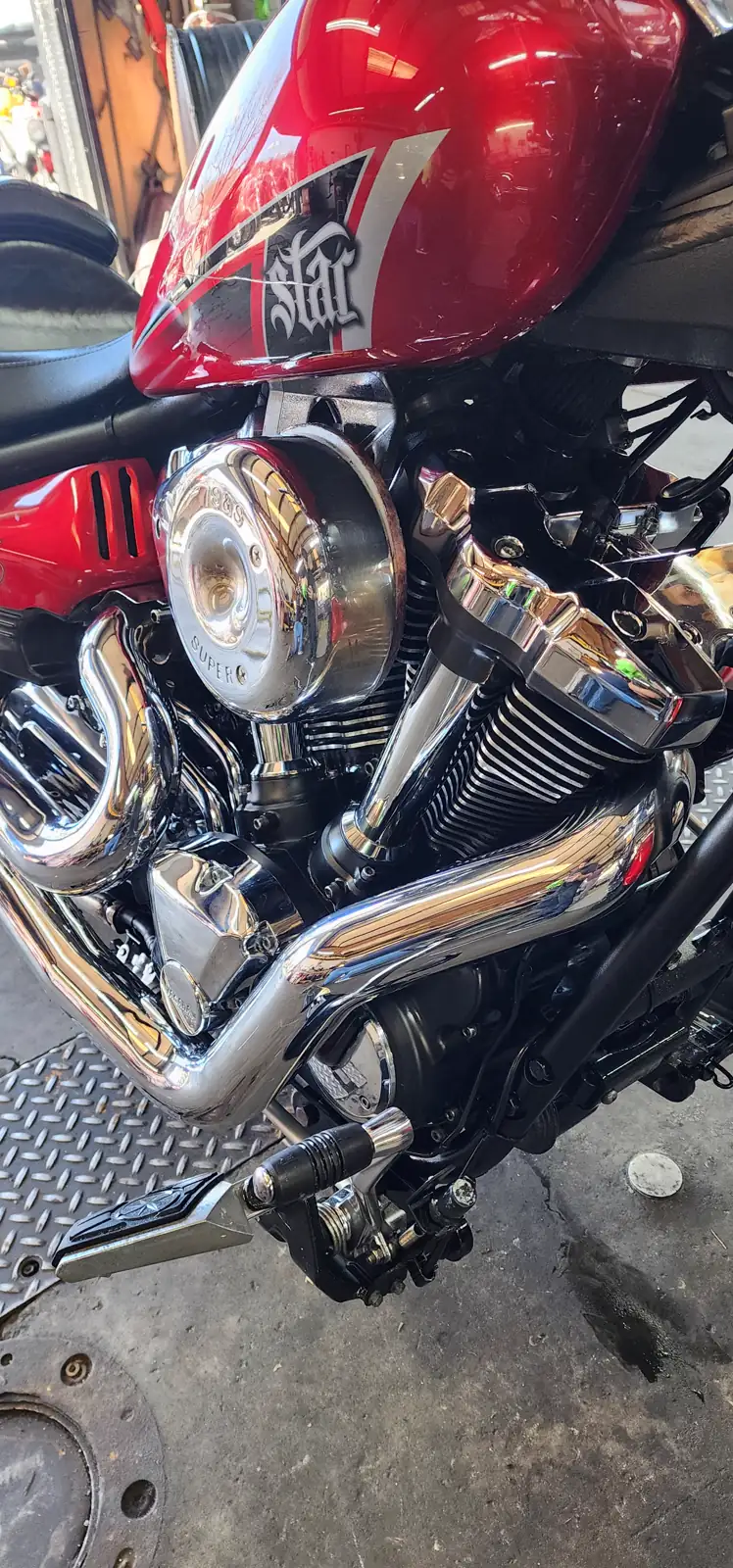
WISH YOU KNEW
Deciding early is cheaper either way. A bike keeps getting worse — and harder to value — the longer it sits.
Whichever way you lean, time is not on your side while the bike sits. Every season in a humid Sandy Springs deck, the rust goes deeper and the fixable list gets longer, which raises the restore cost and lowers the sell price at the same time. So the worst choice is no choice, letting it rot while you “think about it.” Deciding now, in either direction, is the move that saves you money. And you can’t decide well without the condition fact.
Why a quick look beats a slow guess
Here’s the money-saver most people skip: the inspection that answers the two hard facts is small and fast compared to the decision it settles. You’re deciding whether to spend thousands or walk away, and yet folks will make that call off a phone opinion and a dusty photo. A real look costs you almost nothing and takes the guessing out entirely. It’s the cheapest insurance in this whole process.
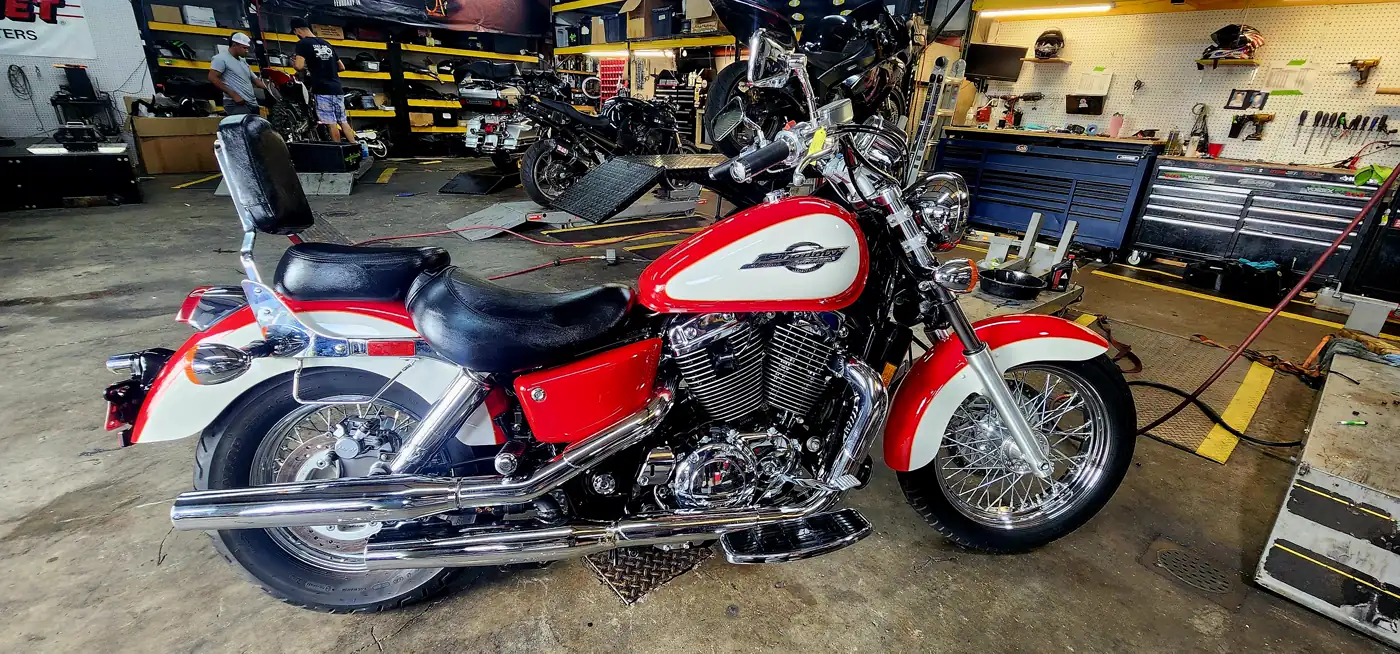
And in Sandy Springs, that look is easy to get even when the bike can’t move. We’re a short run down Johnson Ferry, and if your project is stuck in a condo deck with no garage, our pickup and delivery brings it in for the evaluation and takes it right back if you decide to sell. So there’s no excuse to keep guessing. A finished, sorted bike like the ones we hand back is the whole reason the honest read is worth it.
A quick way to run your own numbers
You don’t need a spreadsheet, just a little honesty with yourself. Line these up and the answer usually shows itself. It’s the same short checklist we walk through with owners before they commit either direction, and it keeps feelings and grime from doing the deciding.
- What’s the bike worth to you — in dollars and in sentiment? Both count.
- What would a clean, running example cost to just go buy instead?
- What’s the real restoration number after a proper look, not a phone guess?
- How far gone is it, really — dirty, or actually damaged in the frame or engine?
- If you’d sell, what does it bring as-is versus sorted and running?
Run those five and the choice stops being a coin flip. If the bike’s worth and the restoration number are close, and the bones are good, restoring usually wins. If a replacement is cheap, the damage is deep, and you feel nothing for it, selling usually wins. And notice that two of the five need a real look to answer, which is exactly the step most people skip.
We'll give you the honest read, then you decide
Here’s our promise, and it’s the whole reason to start with us: we’ll tell you the truth even when it costs us the job. If your bike is a money-pit not worth restoring, we’ll say so, and we’ll tell you what it’s worth as-is or lightly sorted. If it’s a keeper hiding under grime, we’ll tell you that too, and what it’ll take. Either way you walk out with the condition fact you were missing, and a real decision instead of a guess. That kind of straight talk is what our restoration work is built on.
And you don’t have to solve transport to get that read. We’re about eight to eleven miles from Sandy Springs, a straight shot down Johnson Ferry Road across the Chattahoochee into East Cobb, no top end of 285 involved. But if the bike’s dead in a condo deck with no garage, our pickup and delivery comes and gets it. So even “I can’t move it” isn’t a reason to keep putting off the decision.
Don't sell a keeper because it's dirty, and don't rescue a wreck because it's yours. Get the facts, then choose.
So before you list it or commit to it, get the one fact you’re missing. Text us a few photos, tell us how long it’s been sitting and what the bike means to you, and we’ll give you an honest restore-or-sell read, no pressure either way. We’re a short run down Johnson Ferry from anywhere in Sandy Springs, no 285 needed, and if it can’t move, we’ll come get it. Decide with your eyes open.
Questions Sandy Springs riders ask us
How do I decide whether to restore or sell?
Line up three facts: what the bike is worth to you in dollars and sentiment, what a real restoration would cost after a proper look, and how far gone it actually is. If worth and cost are close and the bones are good, restore usually wins. If a replacement is cheap, the damage is deep, and you feel nothing for it, selling usually wins.
Will you tell me honestly if it's not worth restoring?
Yes, even when it costs us the job. If your bike is a money-pit on a common model with a bad frame or blown engine, we’ll say so and tell you what it’s worth as-is. If it’s a keeper hiding under grime, we’ll tell you that too. You leave with the truth, not a sales pitch in either direction.
Can I really not tell the condition by looking at it?
Not reliably. A dirty bike looks doomed when it’s just grimy, and a shiny one can hide a rusted tank, varnished fuel system, and a tired engine. Dirt is cheap and cosmetic; a cracked frame or seized engine is expensive and structural. Telling them apart takes someone who knows bikes actually inspecting it.
If I'm going to sell, is it worth doing any work first?
Often, yes. A dead barn find sold as-is brings scrap-adjacent money because the buyer is pricing in every unknown. A bike that’s been looked over, sorted, and made to run and stop safely sells for far more, because the buyer sees a bike instead of a gamble. Even a plan to sell can be a reason to talk to a shop first.
Why does this question come up so much in Sandy Springs?
Storage. With roughly half the housing here rentals and huge apartment and condo stretches along Roswell Road with no garage or outlet, bikes get parked outside under covers and slowly become barn finds. Eventually the owner has to choose: fix it or let it go. And the humid outdoor storage makes the condition fact matter even more.
How do I get the bike to you if it won't run?
You don’t move it yourself. Our pickup and delivery comes to your Sandy Springs address, loads the bike, and brings it in for the look, then delivers it back. Transport is the piece that stops most condo and apartment riders, so we handle it — even just to get you the honest restore-or-sell read.
We help riders across Sandy Springs make the restore-or-sell call the honest way — with a real look instead of a guess. Owners come to us from Riverside and the Dunwoody Panhandle, from the estate lots up in Huntcliff near the river, and from established streets in High Point, Glenridge Close, and Grogans Bluff. Just as many come from the dense side of the city, where the decision comes up most: the condo towers around the City Springs district, the townhomes off Spalding Drive, and the older apartment communities along Roswell Road and Hammond Drive, where there’s no garage and no outlet, and where a bike under a cover quietly turns into a barn find. That storage reality is exactly why the condition fact matters so much here — a bike stored in a humid surface lot is usually further gone than one kept in a dry garage, so guessing is riskier and a real look is worth more. Getting to the shop is easy: Johnson Ferry Road west across the Chattahoochee into East Cobb, roughly eight to eleven miles, avoiding the top end of 285 and the 400 interchange. From the Riverside and Powers Ferry side it can be under fifteen minutes. And when the bike can’t run, our pickup and delivery brings it in for the read and takes it back either way — so even a dead bike in a deck can get an honest evaluation. We also help owners weighing the same decision in Dunwoody and Brookhaven, Roswell up 400, Buckhead to the south, and East Cobb, Vinings, and Marietta on our side of the river. Riders who pass Perimeter Mall, Island Ford, or Morgan Falls Overlook Park on the way over are already headed the right direction. From the estate garages up near Huntcliff and River Shore Estates to the carports and shared decks off Roswell Road, Abernathy Road, and Mount Vernon Highway, the story is the same: the only way to choose well is to know the bike’s true condition, and the only way to know is a real look. We make that look easy from anywhere in the city, and we’ll come get the bike when it can’t move, so the decision never stalls just because it’s stuck in a deck. Whether your bike is a sentimental keeper hiding under grime or a common model you’re ready to move on from, we give you the same thing: the condition fact you were missing, what it would cost to restore, what it’s worth as-is versus sorted, and zero pressure either way. Send us a few photos and tell us what the bike means to you, and we’ll help you decide with your eyes open.
FIX IT OR SELL IT? TEXT US FIRST
Before you list it or commit to the project, get the one fact you’re missing. Text us a few photos, tell us how long it’s been sitting and what the bike means to you, and we’ll give you an honest restore-or-sell read — no pressure either way. We’re a short run down Johnson Ferry from anywhere in Sandy Springs, no 285 needed, and if it can’t move, we’ll come get it.
470-460-9883Diaz Motorcycles and Service, LLC · 847 Barnes Mill Road, Marietta, GA 30062