Motorcycle Detail Cost in Peachtree City: A Plain-English Price Guide
Exactly what drives the price of a detail — condition, size, chrome, coating, and storage — so you can read any quote like a pro.
If you’ve ever asked a shop what a detail costs and gotten a shrug or a wildly padded number, this guide is for you. The honest answer is that detail cost Peachtree City riders pay isn’t one price — it’s a formula. Once you know the five things that move the number, you can read any quote like a pro and know instantly whether it’s fair. No mystery, no runaround, just how the math actually works.
PTC is a research-first town, so let’s respect that. You’re not looking for a slogan. You want to understand what you’re buying before you spend, the same way you’d read the spec sheet before buying anything else. Good. Detailing rewards a rider who knows what drives the price, because it helps you spot the difference between a real detail and a fancy-sounding wash.
First, the one rule that beats every quote
Here’s the rule that saves the most money and heartache: a good shop diagnoses before it quotes. Any place that fires off a flat price before seeing your bike is guessing, and a guess is either padded high to cover the worst case or lowballed to win the job and then bumped later. Neither one is fair to you. Photos first, price second. That’s the whole trick.
Why does condition matter so much? Because two bikes that look similar in a parking lot can need totally different work. A garaged bike from Interlochen with a little swirling and a project bike that sat outside under a cover for three winters are not the same job, even if they’re the same model. The paint’s condition drives everything, so it has to be seen first.
Driver one: the condition of the paint
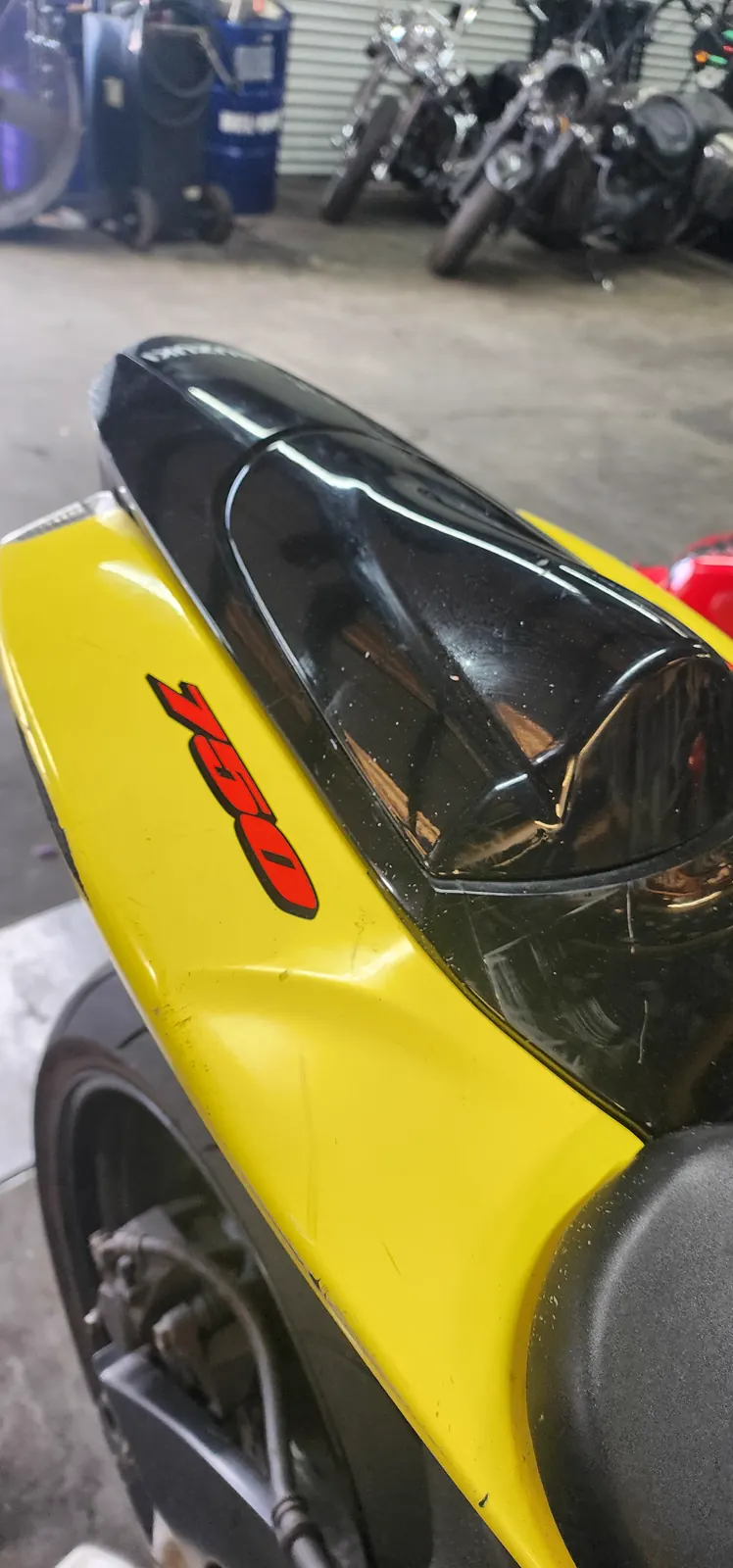
This is the biggest lever by far. Your paint has a clear coat on top, and that clear coat collects tiny scratches from years of washing, riding, and covering. Those swirls scatter light and make the finish look dull even when it’s clean. Removing them takes machine polishing, and the deeper the swirls, the more passes it takes. More passes means more time, and time is what you’re really paying for.
A lightly-swirled, well-kept bike might need a single-stage polish. A neglected finish with deep scratches and etched water spots might need a multi-stage correction. That’s a real difference in labor, and it’s the number-one reason two quotes can look so far apart. It isn’t markup. It’s hours.
Driver two: the size and bodywork of the bike
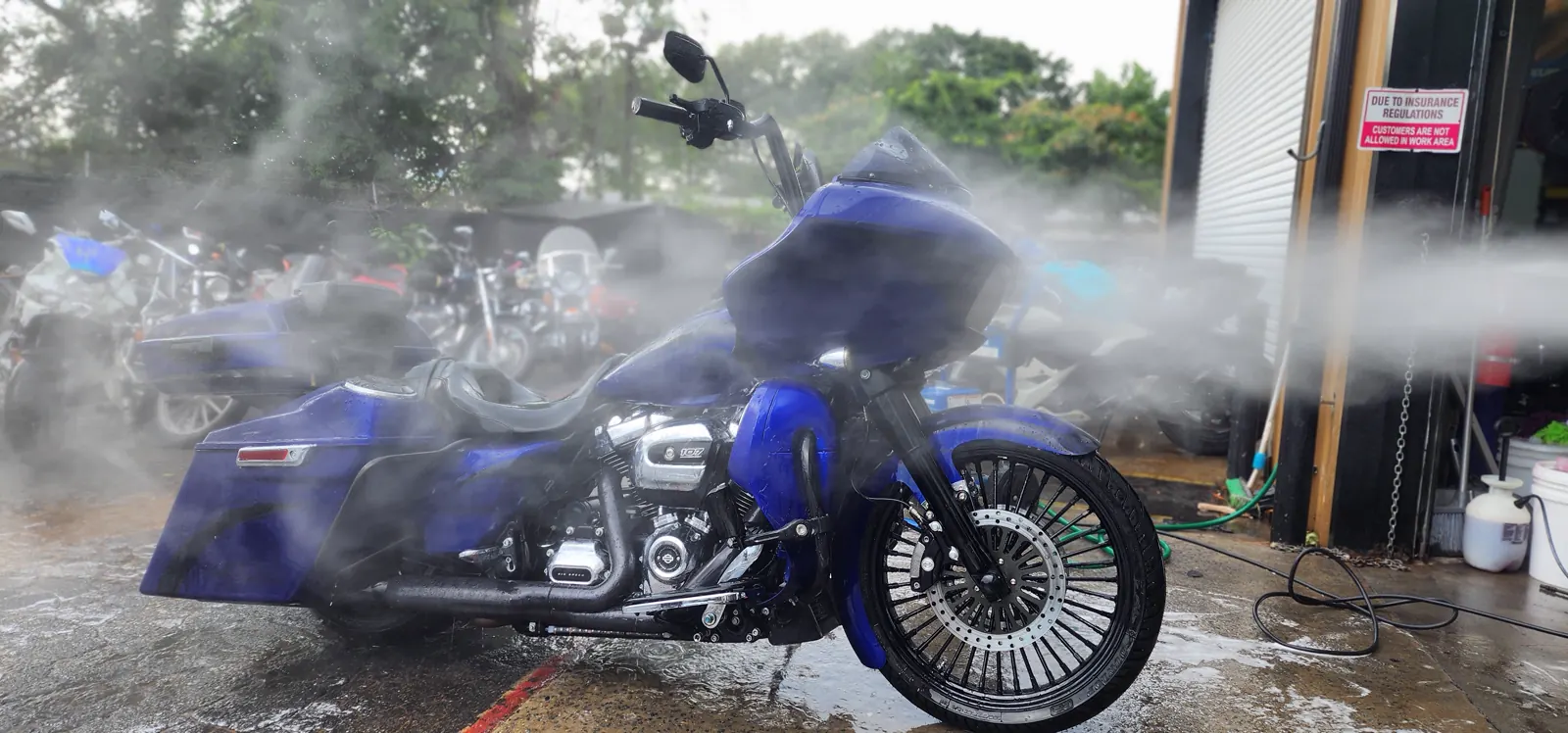
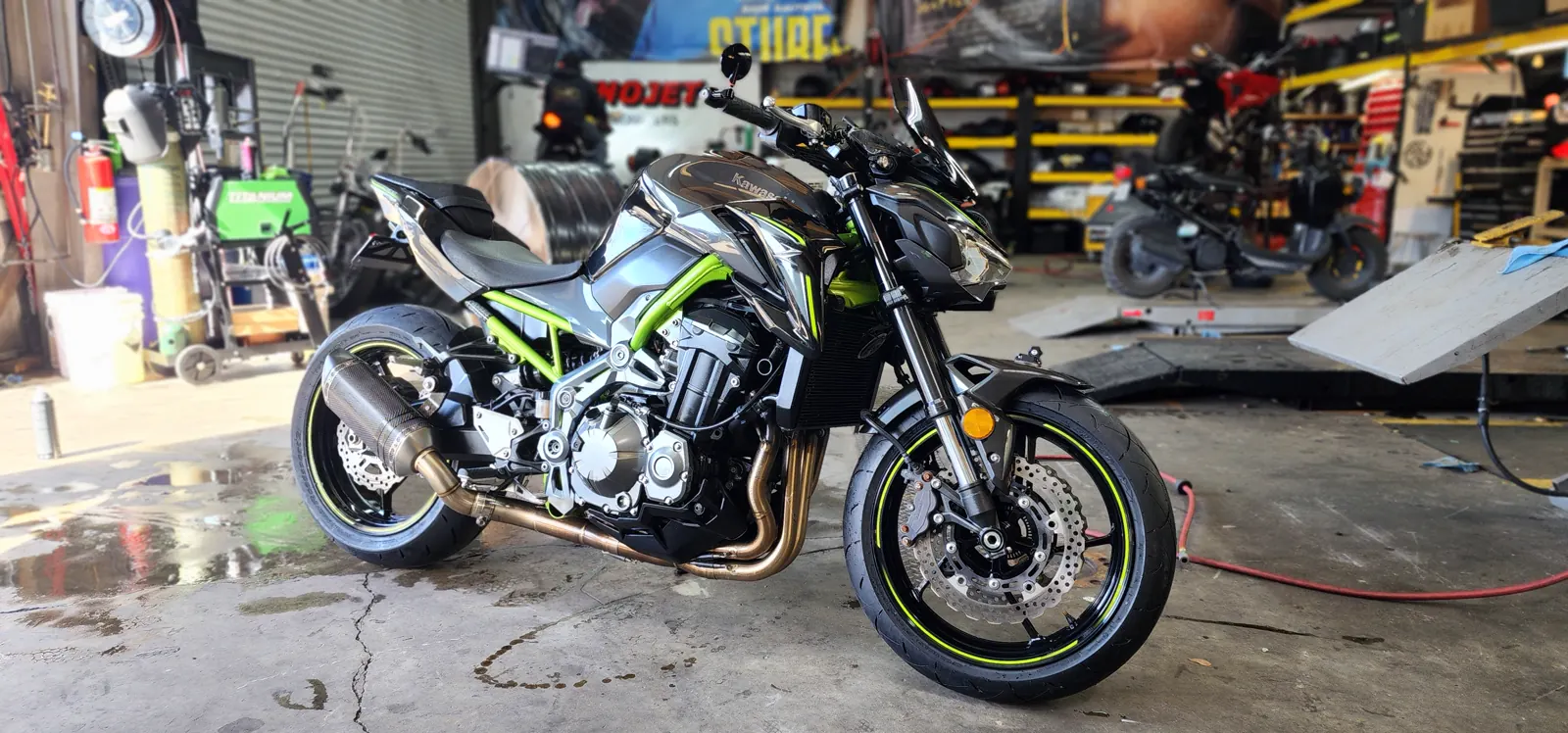
Simple physics here. More surface means more work. A stripped-down naked bike like a Z900 has far less bodywork to correct than a full Harley bagger with a fairing, hard saddlebags, a big fender, and a tour pack. Every panel gets washed, decontaminated, corrected, and protected by hand, so more panels means more time on the clock.
This is why you can’t compare a sportbike quote to a full dresser quote and cry foul. They’re different amounts of bike. When you get a number, picture how much surface area the shop is actually touching, and the price starts to make sense.
Driver three: how much chrome it carries
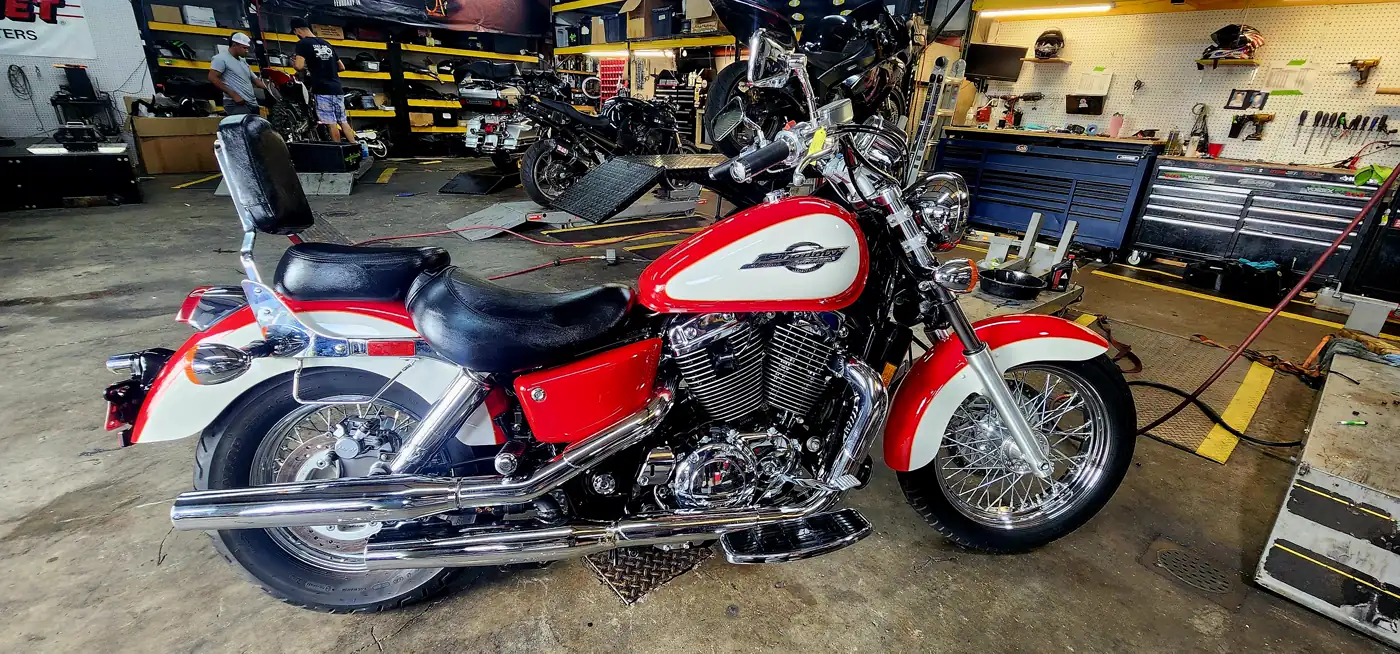
Chrome is beautiful and chrome is work. A heavy cruiser dripping in polished pipes, a chrome engine, spoked wheels, and shiny trim needs a lot of careful hand polishing to get every piece throwing a mirror image. A plastic-clad sportbike has almost none of that. So a chrome-loaded Road King naturally costs more to detail than a fully-faired bike of the same size, just because of the metal.
And in Peachtree City, chrome brings a second cost the climate adds for free: pitting. Georgia’s humidity and hard water leave rust freckles that need extra attention to polish out. If your chrome has started to freckle, that’s more time on the pipes. Here’s the full story on why chrome pits and how we fix it.
CHROME IS HAND WORK
There’s no shortcut for making chrome throw a mirror image — it’s careful hand polishing, piece by piece. That’s why a heavy-chrome cruiser and a plastic sportbike land at different prices even at the same size.
Driver four: whether you add protection
Once the paint is corrected, you protect it, and the level of protection you choose moves the price. A basic sealant is the entry level. A ceramic coating is the premium option — it bonds to the clear coat, cures into a hard slick shell, beads off water, and makes every future wash faster. It costs more because it’s more material and more time, including cure time the coating needs to set up properly.
Is it worth it? For a garage-kept PTC bike you actually care about, usually yes, because it protects the correction work you just paid for and holds a wet-looking gloss for years with care. But it’s a choice, not a requirement. If you’re deciding between sealant and ceramic, here’s the honest comparison so you can pick with clear eyes.
You're never paying for markup. You're paying for hours, materials, and careful hands. Understand those and every quote makes sense.
Driver five: storage history and the climate
The last lever is where the bike has lived. A garage-kept bike from a three-car home in Smokerise comes back faster than one that sat outside under a cover for a few seasons. Outdoor storage means more sun, more moisture, and more of Georgia’s chalky hard-water spots etched into the clear coat, all of which need correcting off, not just washing off.
This is also why timing matters to your wallet. A bike detailed before its first hard summer stays ahead of the damage and stays cheaper to maintain. A bike that goes years unprotected needs deeper correction to bring back, which means a bigger job. Waiting doesn’t save money in Georgia. It quietly raises the bar for the next detail.
The whole formula, in order
Put it all together and here’s the price ladder from top to bottom. Read this once and you’ll understand any detailing quote you ever get, whether it comes from us or anyone else.
- Paint condition — the single biggest driver; deep swirls and etched spots mean more correction passes.
- Size and bodywork — more panels and fairings mean more surface and more hours.
- Chrome load — heavy cruisers need extensive hand polishing that plastic sportbikes don’t.
- Protection level — bare finish, sealant, or full ceramic coating, each a real step up in cost.
- Storage history — a garaged bike is faster to bring back than one stored outdoors for seasons.
- Transport — optional pickup and delivery to your PTC door, priced as the convenience it is.
See how none of it is random? Every dollar traces to real work or real convenience. If a shop can’t explain where its number comes from using something like this list, that’s a yellow flag. A good shop is happy to walk you through it, because the math is honest.
The PTC convenience factor
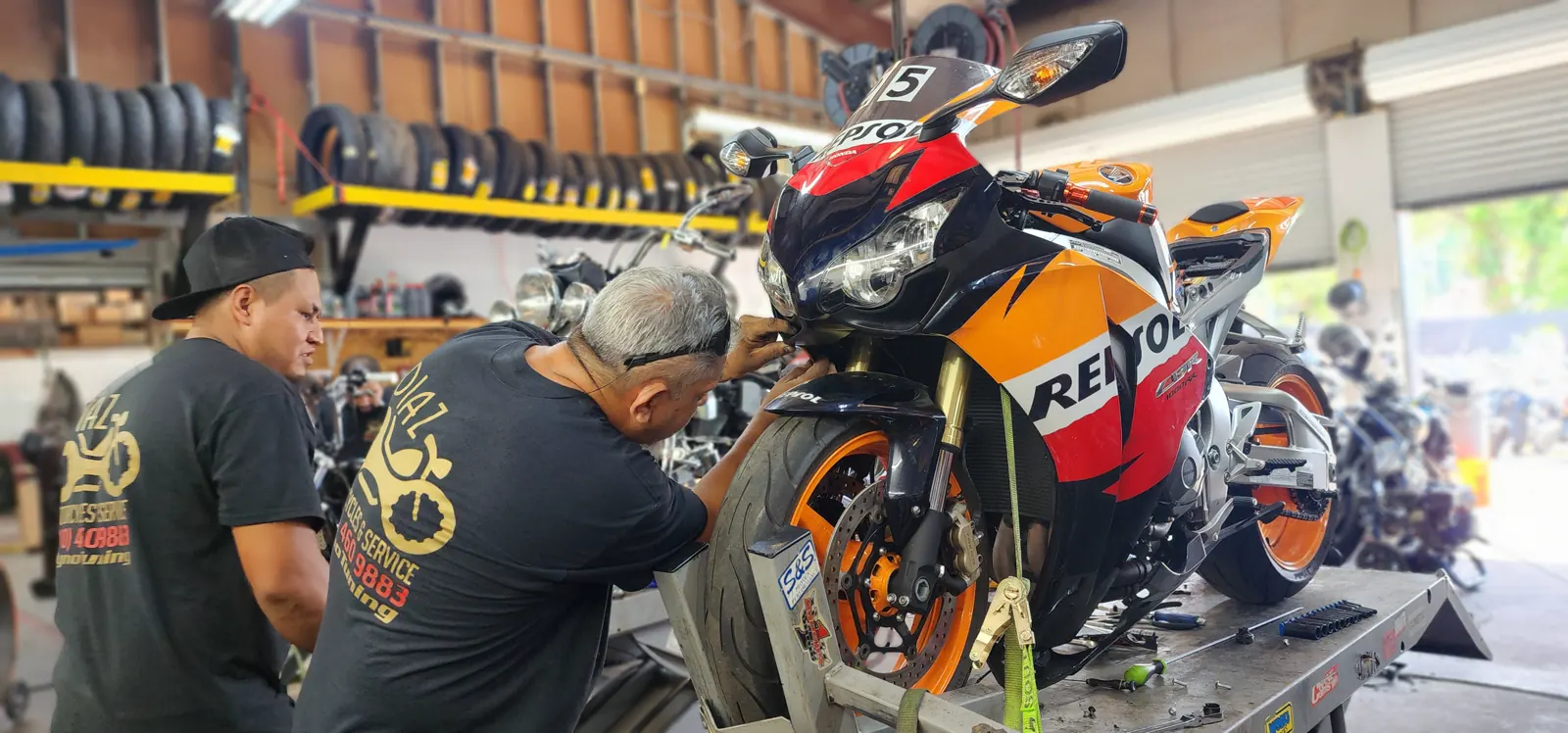
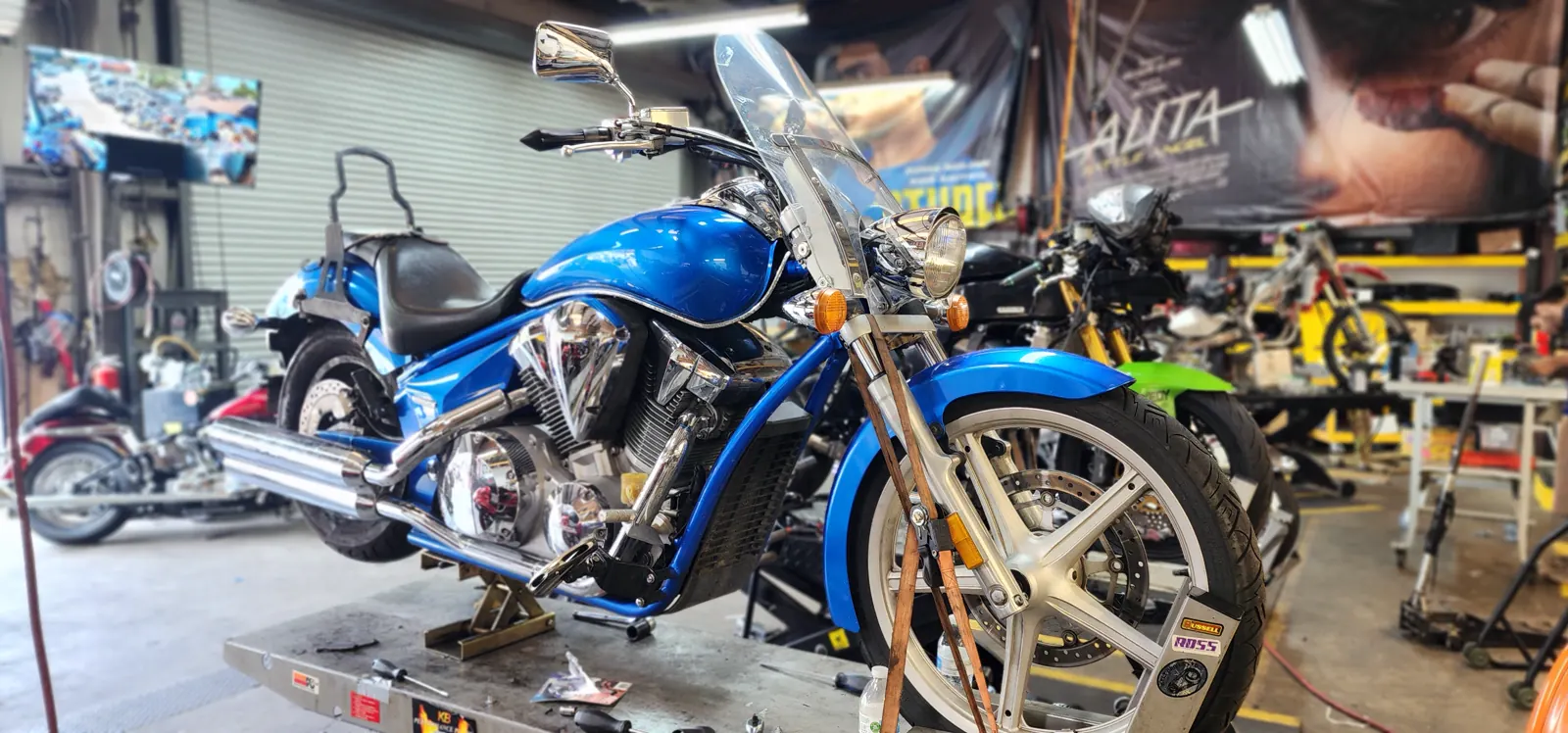
One line on your quote might surprise you in a good way: transport. Our shop sits up in East Cobb, about an hour from PTC via GA-74 and I-85. But Peachtree City has no motorcycle shop of its own, so any detail means leaving town anyway. With us, it can mean leaving nothing at all. We bring a truck to your driveway in Kedron or Braelinn, take the bike, and return it detailed.
In a city that lives at 15 miles per hour and buys convenience without blinking, transport isn’t an apology for distance. It’s a feature worth paying for. No trailer, no lost Saturday on I-285, no hassle. You’ll see it priced honestly as the service it is, and most PTC riders add it gladly. It’s part of what a real detail includes here.
ASK FOR THE BREAKDOWN
A trustworthy quote shows you where the number comes from — correction, chrome, protection, transport. If you can see the pieces, you can trust the total. Always ask, and a good shop will happily explain.
So there’s no mystery left. A detail is a formula, not a dart throw, and now you can read one. Text us a few photos of your bike, tell us how it’s stored and whether you’d like us to come get it, and we’ll build you an honest quote you can actually understand. No padding, no pressure — just the real math, PTC style.
Questions Peachtree City riders ask us
Why can't you just give me one flat price?
Because a detail is a formula, not a fixed number. Paint condition, bike size, chrome load, protection level, and storage history all move the price. A flat quote before seeing the bike is either padded high or lowballed. Send photos and we’ll build you an honest number you can understand.
What's the single biggest thing that drives the price?
The condition of the paint. Deep swirls, scratches, and etched hard-water spots take more machine-polishing passes, and passes mean hours. A well-kept garaged bike might need one stage; a neglected one might need several. That labor difference is why two quotes can look so far apart.
Why does a cruiser cost more than a sportbike to detail?
Two reasons: more surface and more chrome. A full bagger has fairings, saddlebags, and a big fender, plus polished pipes, a chrome engine, and spoked wheels that all need careful hand work. A plastic-clad sportbike has far less metal to polish, so it usually lands lower.
Is a ceramic coating worth the extra cost?
For a garage-kept PTC bike you care about, usually yes. It protects the correction work you paid for, beads off Georgia’s hard water, holds a wet gloss for years with care, and makes future washes faster. It’s a premium choice, not a requirement — a sealant is a solid step down.
Does waiting to detail save me money?
The opposite. A bike detailed before its first hard summer stays ahead of the damage and cheaper to maintain. One that goes years unprotected needs deeper correction to bring back, which is a bigger job. In Georgia’s climate, waiting quietly raises the bar for the next detail.
How does transport affect the price?
It’s an optional line, priced as the convenience it is. We bring a truck to your Peachtree City driveway, take the bike, and return it detailed. Since PTC has no motorcycle shop of its own, you’d travel anyway — this way you don’t. Most riders here add it without hesitation.
We build honest detail quotes for riders throughout Peachtree City, though our bays sit up in East Cobb. We care for bikes in Interlochen, Wynnmeade, and Planterra Ridge, and the price story is the same whether you park near The Avenue, out by Lake McIntosh, or off Kedron Drive. We also reach Tyrone, Fayetteville, Senoia, Sharpsburg, Newnan, and Fairburn, so the whole south-metro side gets a clear, no-mystery quote and shop-grade work.
TEXT US A PHOTO FOR A REAL QUOTE
Want a detail quote you can actually understand? Text us a few photos of your bike, tell us how it’s stored, and let us know if you’d like us to come get it. We’ll break down the number — correction, chrome, protection, transport — so nothing is a mystery. We bring the truck right to your PTC driveway. No padding, just the real math.
470-460-9883Diaz Motorcycles and Service, LLC · 847 Barnes Mill Road, Marietta, GA 30062