Choosing a Restoration Shop in Sandy Springs: What to Look For
There's no motorcycle shop inside the city, so here's how to pick the right one to trust with your bike — and your money.
Plus, here’s the problem nobody warns you about: there’s no motorcycle shop inside Sandy Springs to begin with. Meanwhile, finding a restoration shop Sandy Springs riders can actually trust means looking outside the city and knowing what separates the real deal from a risky one. In fact, restoration is exactly the kind of job where the wrong shop costs you twice, once for the bad work and once to fix it. For example, a good shop shows its work and tells you the truth; a risky one is vague, dodges questions, and disappears for a week. So let’s make picking the right one simple.
This isn’t about talking anyone into anything. It’s about giving you a checklist so you can walk into any shop, ours included, and know within a few minutes whether they’re worth trusting with a project. Restoration is slow, expensive, hands-on work, and you’re handing over a bike you care about. You deserve to know exactly what to look for before you do.
First, the Sandy Springs reality
Let’s start with the fact that shapes everything: Sandy Springs has no motorcycle dealership and no established dedicated motorcycle repair shop inside city limits. Search for one and you mostly get general auto shops that don’t specialize in bikes, let alone restoration. So you’re already going to drive somewhere, or better, have the shop come to you. That changes the question from “who’s closest” to “who’s actually good, and how do they handle a bike I can’t easily move?”
It also means you should be wary of a general repair place that says “sure, we’ll take a crack at it.” Restoration isn’t oil-change work. It needs someone who knows old bikes, has done teardowns before, can hunt vintage parts, and can do paint and chrome the right way. A car shop moonlighting on your motorcycle is how projects go sideways. You want a motorcycle shop, full stop.
The green flags of a real restoration shop
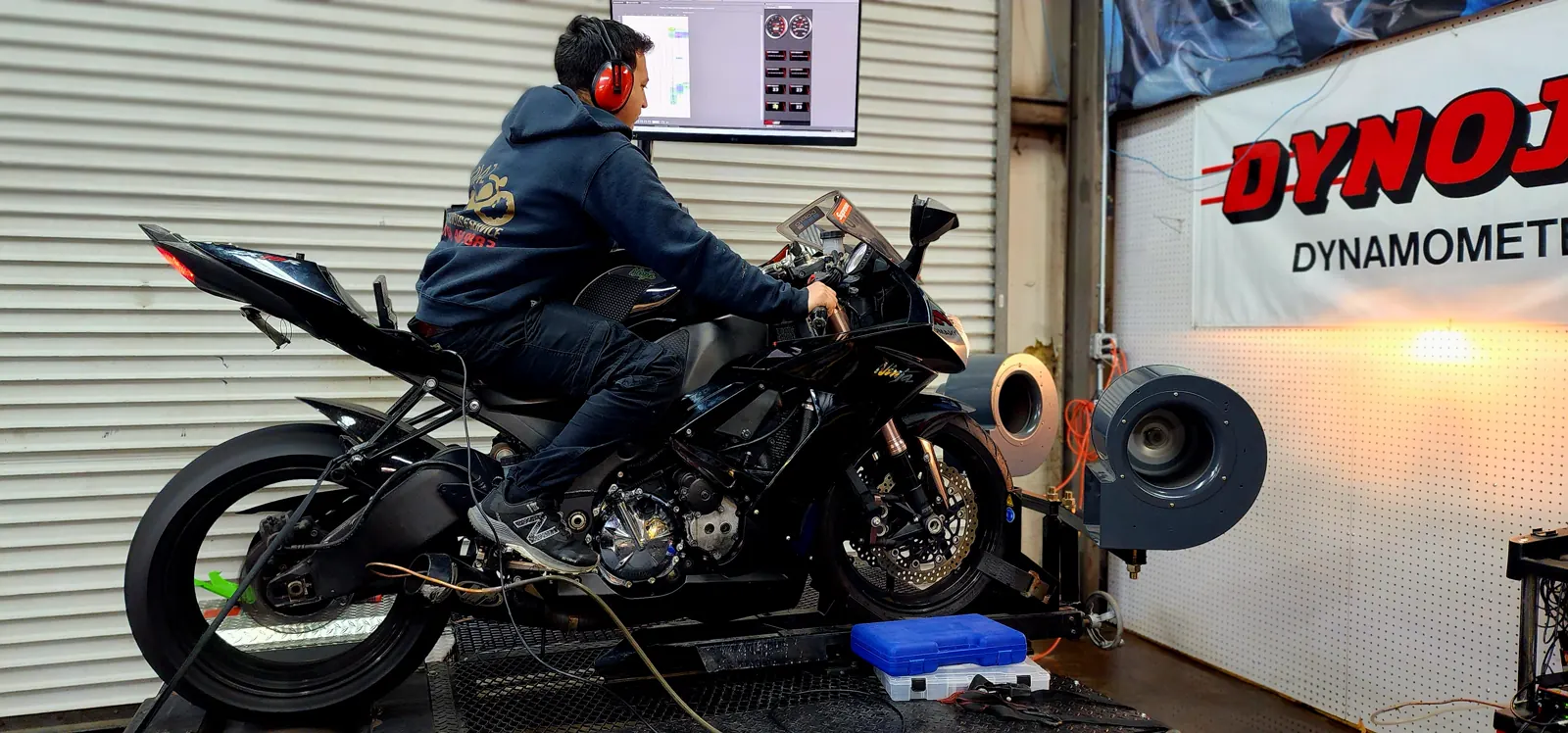
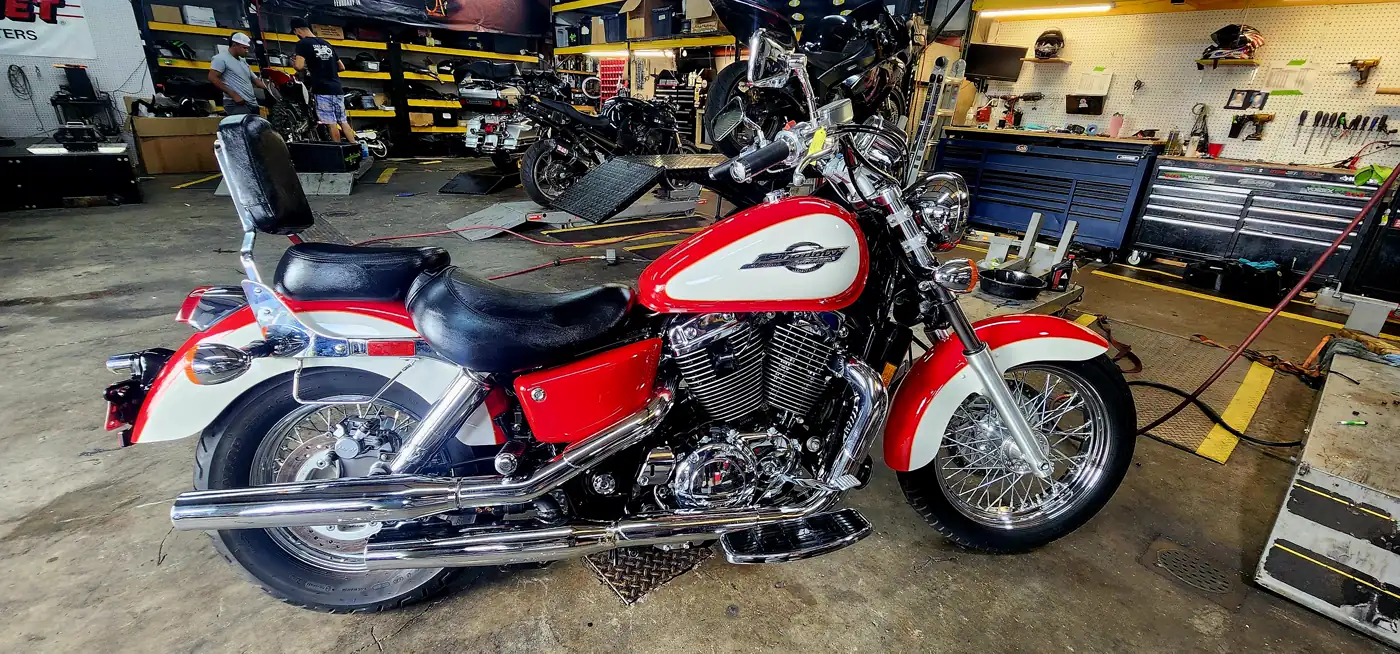
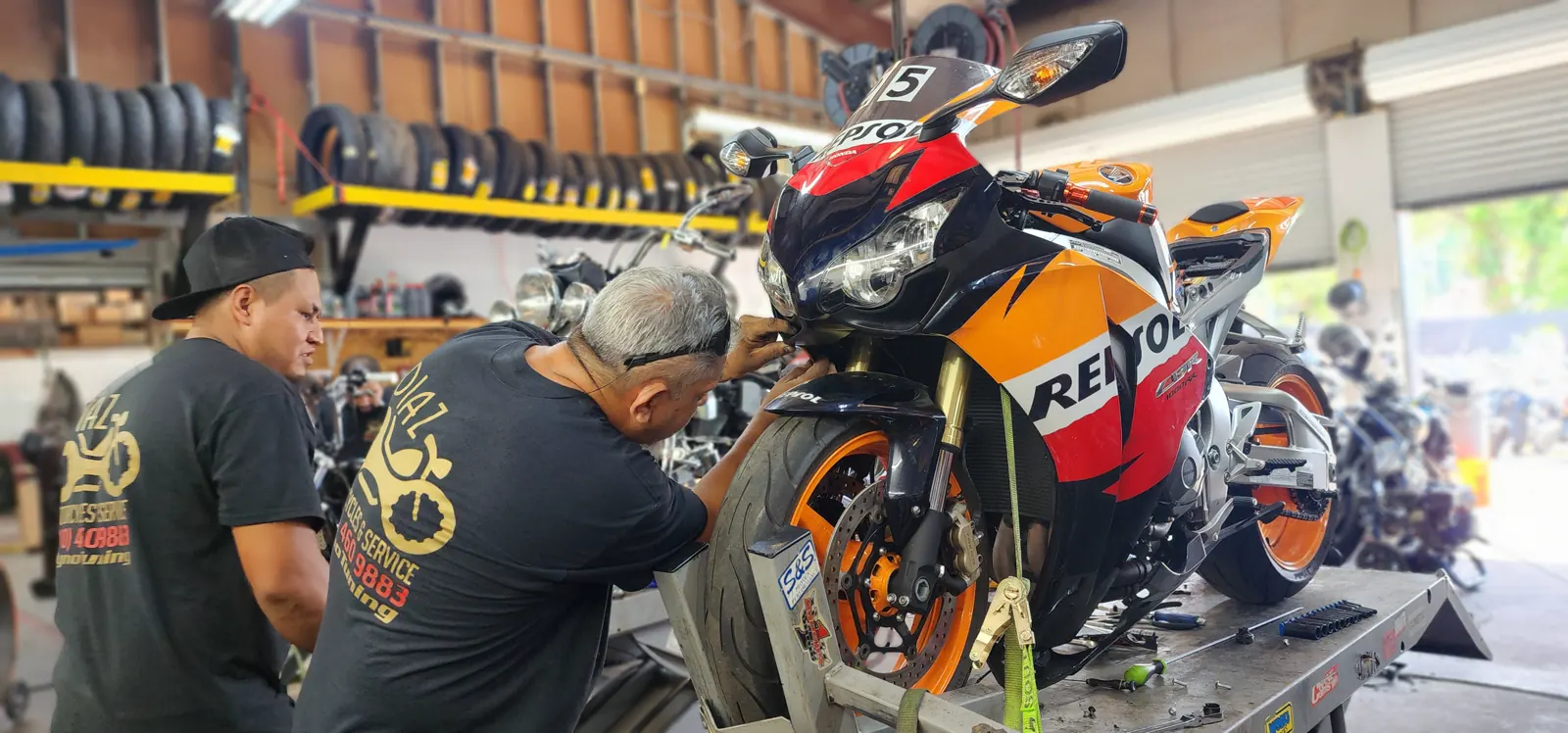
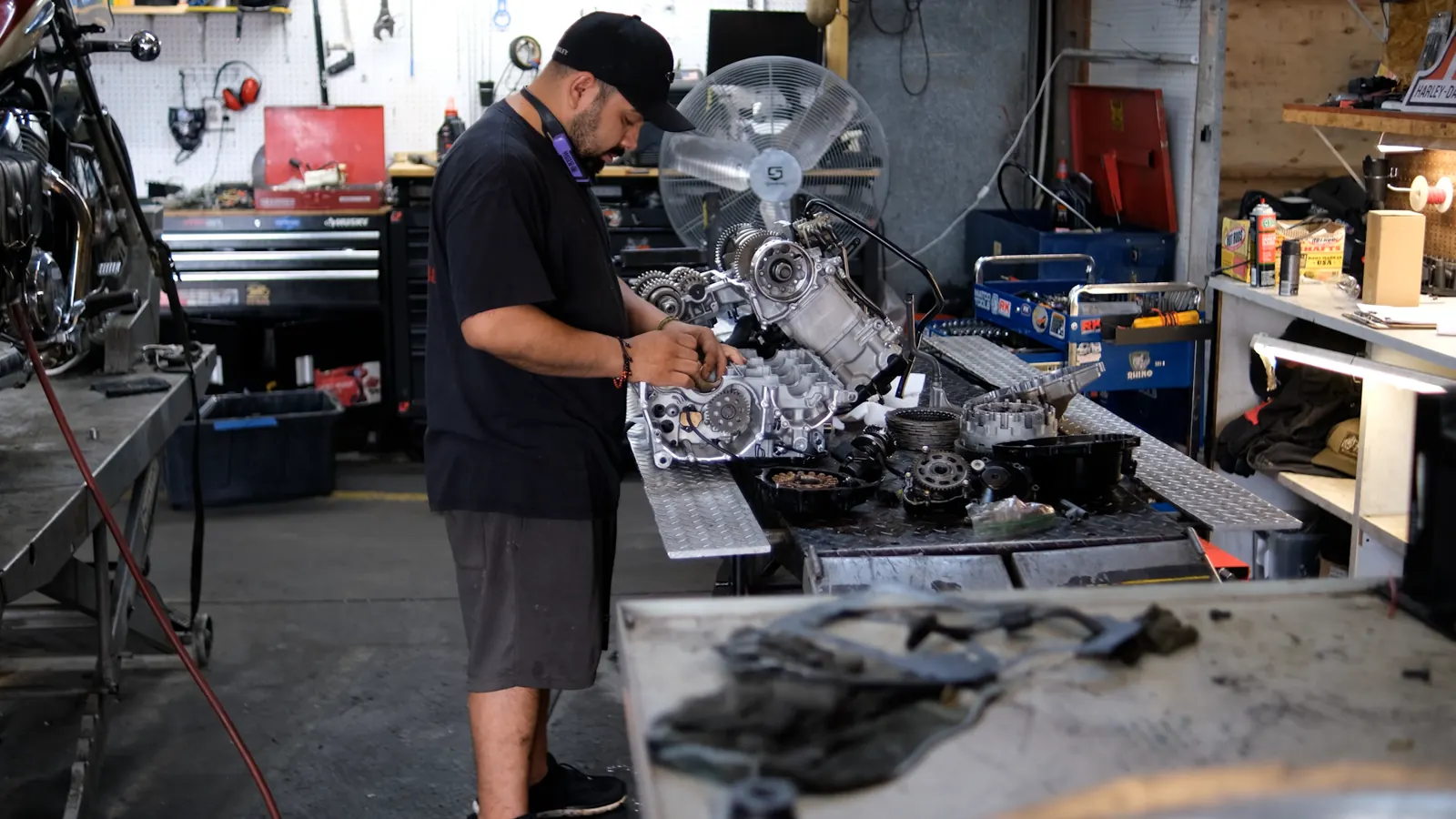
A good restoration shop has a certain feel, and you can read it fast. They look at your bike before they quote it, because they know condition drives everything and a phone number is just a guess. They explain things in plain words instead of hiding behind jargon. They show you their work, past projects, the bay, the bikes on the lifts. And they keep you in the loop with texts and photos instead of going quiet for a week.
They’re also honest about the hard parts. A real shop tells you when a part is going to be tough to find, when a paint job needs a full respray instead of a quick fix, and when your bike might not be worth restoring at all. That last one matters: a shop willing to talk you out of a bad project is a shop you can trust with a good one. Straight talk is the whole tell.
- They look before they quote, and put the number in writing.
- They explain the work in plain English, not a wall of jargon.
- They show you real past projects and let you see the shop floor.
- They text updates and photos instead of going silent for days.
- They work on all makes, so your vintage bike isn’t a foreign object.
- They can do the whole job — mechanical, paint, and chrome — under one roof.
- They’ll honestly tell you if a bike isn’t worth restoring.
Run any shop against that list and the picture gets clear quick. If they hit most of these, you’re in good hands. If they dodge, rush, or can’t show you a single finished bike, keep looking. This is the same list Sandy Springs riders use on us, and we’d rather you hold us to it than take our word for it.
The red flags to walk away from
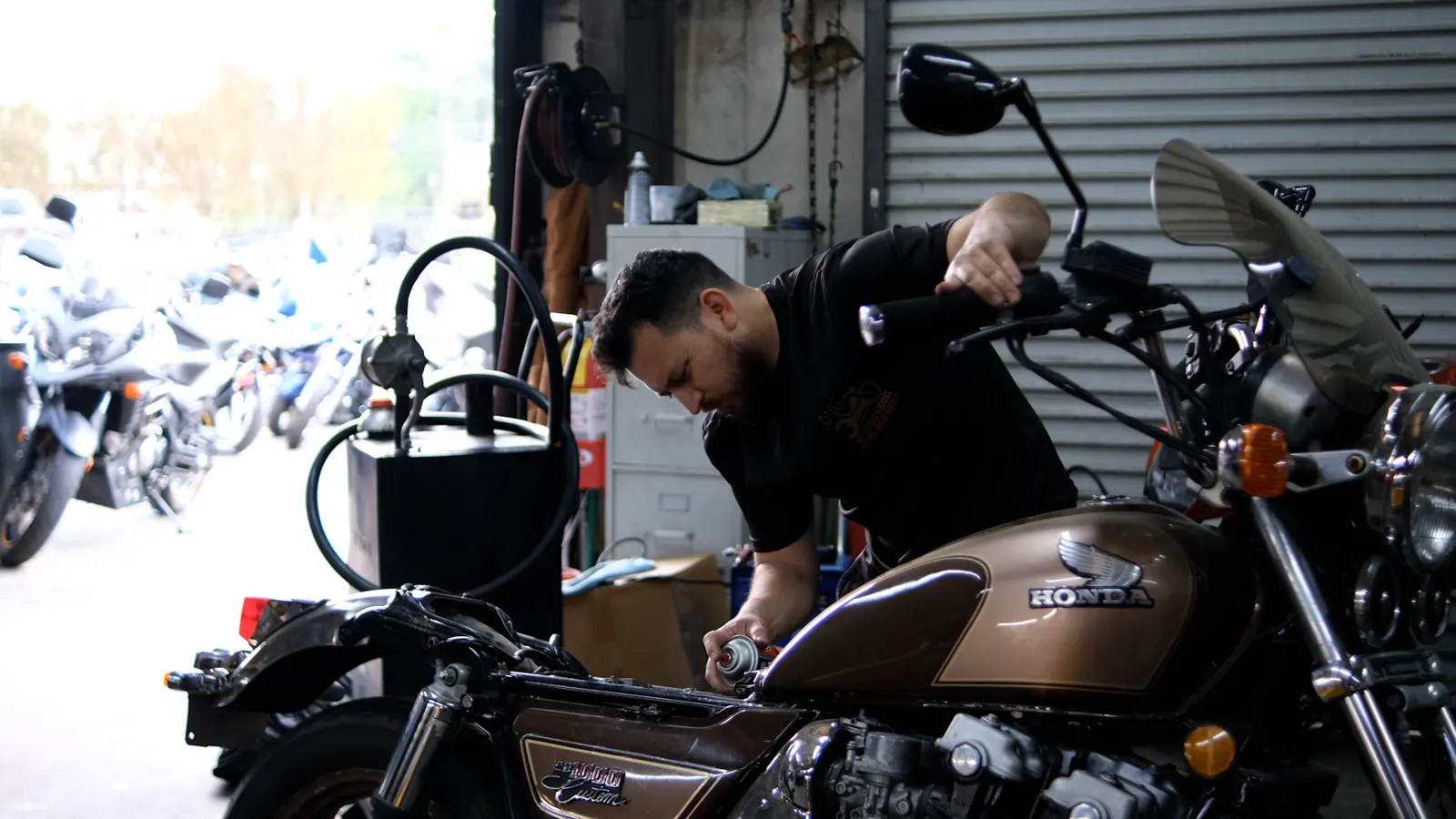
Just as useful is knowing what to run from. The biggest red flag is a firm price over the phone before anyone has seen the bike. On a restoration, that number is fiction, and it almost always grows once the bike is on the lift, usually after you’ve already committed and it’s too late to back out. A confident phone quote isn’t service. It’s bait.
Other warning signs: a shop that won’t let you see past work, one that gets annoyed when you ask questions, one that can’t tell you plainly what a coating or a respray will and won’t do, and one that goes dark for days at a time. Restoration takes weeks, so communication isn’t a nice-to-have, it’s how you keep from lying awake wondering if your bike is a pile of parts in a corner. Vague and quiet is the combo to avoid.
HEADS UP
A firm restoration price over the phone, sight unseen, is the single biggest red flag there is.
We’ll say it twice because it saves people the most money: nobody can honestly quote a restoration without looking at the bike. Condition sets the labor, and labor sets the bill, and you can’t see condition down a phone line. A shop that leads with a firm number is either guessing or planning to “discover” more work later. A shop that says “let us look first” is the one being straight with you. If you want the why behind that, our breakdown of what drives a restoration price shows exactly how condition moves the number.
Why all-makes matters more here than you'd think
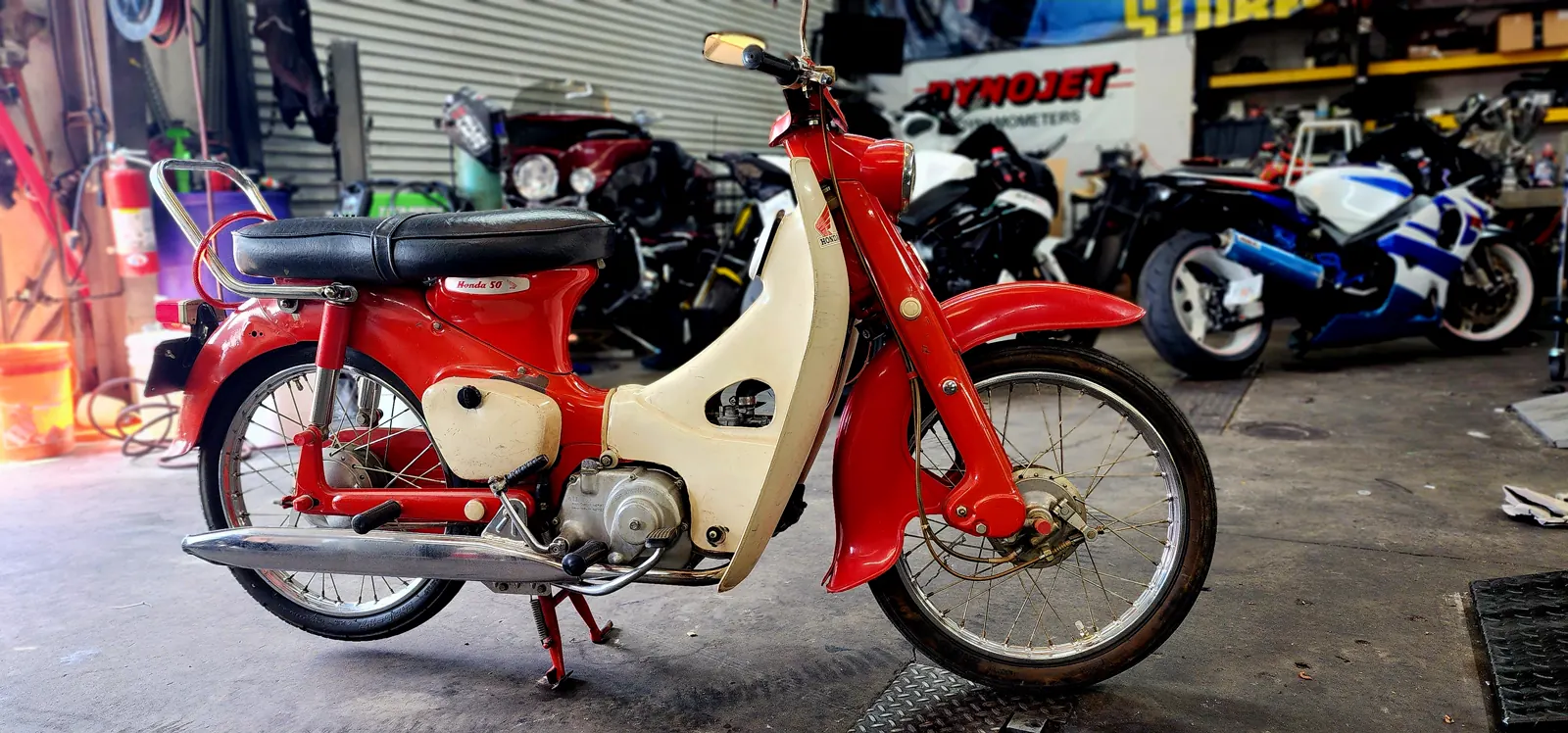
In a city with no dealership of its own, the make of your bike shouldn’t decide whether you can even get it serviced. A brand-locked shop only wants the badge it sells, which is useless if your barn find is a seventies Honda, an old Triumph, a Moto Guzzi, or an oddball cruiser. An all-makes shop takes them all, which means one place can handle whatever’s been sitting in your deck, instead of you chasing a specialist across the metro.
All-makes also matters because restorations love to cross brands. You might have a mixed stable, or a project that needs parts adapted, or a bike nobody else wants to touch. A shop that works on everything has seen more, solved more, and won’t blink at your particular oddball. That range is a feature, and it’s the shape of shop a Sandy Springs owner actually needs, especially for the vintage and barn-find slice the city produces.
One roof for the whole job
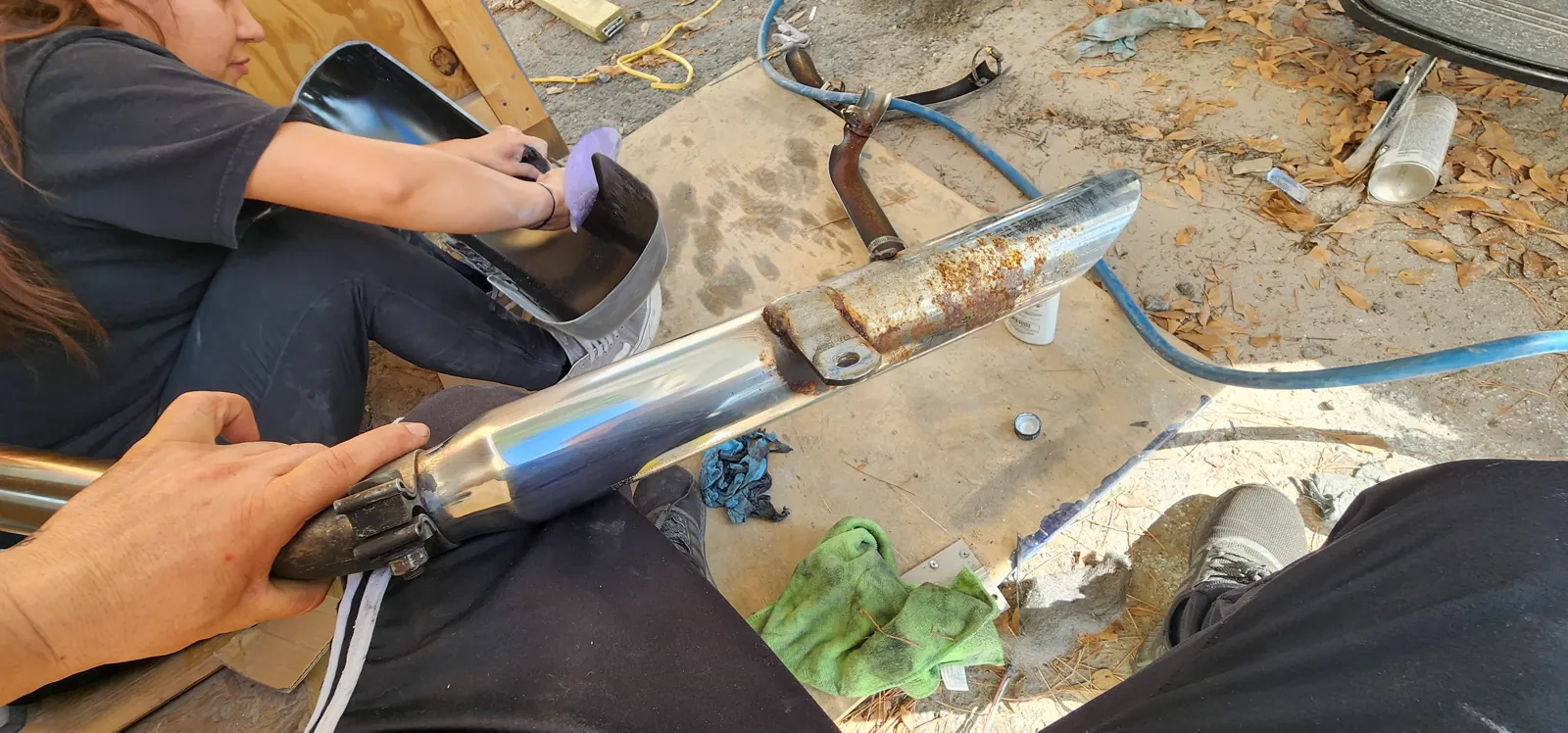
Here’s a green flag worth its own line: a shop that can do the entire restoration in-house. Restoration touches three worlds, mechanical, paint, and chrome, and if a shop only does one, you’re left juggling drop-offs and pickups across the metro, with each hand-off adding time, cost, and a chance for something to slip through the cracks. A shop that handles all three under one roof owns the whole result, so there’s nobody to point fingers at and no bike bouncing between three addresses. For a Sandy Springs owner with no shop in the city to begin with, one honest stop for everything is exactly what you want.
Transport isn't a perk here. It's the product.
This is the piece most “how to choose a shop” advice ignores, and in Sandy Springs it might be the most important one. Roughly half the housing here is rentals, and huge stretches along Roswell Road and around Perimeter Center are condos and apartments with no garage. If your restoration project is a bike that won’t run, you physically can’t roll it anywhere, and you probably don’t own a truck and a ramp. So a shop that offers pickup and delivery isn’t offering a luxury. It’s offering the only way the job happens at all.
So add it to your checklist: can the shop come get the bike? For a dead barn find in a Hammond Drive deck, that single answer decides everything. We built our pickup and delivery around exactly this, because we know the apartment-and-condo half of the city has no other option. If a shop can’t get your bike, it doesn’t matter how good they are on paper.
WISH YOU KNEW
The closest shop isn’t the right question. The right shop that will come get your bike is.
Here’s the reframe that helps every Sandy Springs rider: since there’s no shop in the city anyway, distance stops being the deciding factor. What matters is finding a shop that’s genuinely good and will handle the transport. Once those two boxes are checked, a few miles across the river is nothing, especially since the good route to us skips the worst traffic entirely. Pick for quality and pickup, not for the closest dot on a map.
Where we fit, and how easy we are to reach
We’ll be straight about our own case. We’re an independent, all-makes shop that does the whole restoration under one roof, mechanical, paint, and chrome, and we look before we quote, put it in writing, and text you photos as we go. That’s the same checklist we just handed you, and we want you to hold us to every line of it. If a bike isn’t worth restoring, we’ll tell you, because our reputation is worth more than one job. You can see the range of our restoration work for yourself.
And we’re easy to reach even though we’re not in the city. We’re about eight to eleven miles from Sandy Springs, a straight run down Johnson Ferry Road across the Chattahoochee into East Cobb, and you never have to touch the top end of 285 or the 400 interchange. From the Riverside and Powers Ferry side it can be under fifteen minutes. But if your bike can’t move, don’t worry about the drive at all, because we’ll bring the trailer to you.
In a city with no bike shop, the right choice isn't the nearest one. It's the honest one that will come get your bike.
So take the checklist, use it on everybody, and use it on us. Text us a few photos of your project, tell us how long it’s been sitting and where it’s stored, and we’ll show you exactly how we work before you commit to anything. We’re a short run down Johnson Ferry from anywhere in Sandy Springs, no 285 needed, and if the bike can’t move, we’ll come get it. Trust is earned, so let us earn it.
Questions Sandy Springs riders ask us
Is there a motorcycle restoration shop inside Sandy Springs?
No. Sandy Springs has no motorcycle dealership and no established dedicated motorcycle repair or restoration shop inside city limits — searches mostly turn up general auto shops. So you’re going to drive somewhere or have a shop come to you. That’s why the real question is who’s actually good and how they handle a bike you can’t easily move.
What are the green flags of a good restoration shop?
They look before they quote and put it in writing, explain the work in plain English, show you real past projects and the shop floor, text updates and photos, work on all makes, do mechanical, paint, and chrome under one roof, and will honestly tell you if a bike isn’t worth restoring. Straight talk is the whole tell.
What's the biggest red flag?
A firm restoration price over the phone before anyone has seen the bike. Condition drives the cost, and you can’t judge condition down a phone line, so that number is a guess that almost always grows once the bike is on the lift. A shop that says ‘let us look first’ is the one being honest with you.
Why does all-makes matter for a restoration?
Because Sandy Springs has no dealership of its own, and a brand-locked shop only wants the badge it sells. If your project is a vintage Honda, an old Triumph, a Moto Guzzi, or an oddball cruiser, an all-makes shop takes it, hunts the parts, and handles the whole job — so you’re not chasing a specialist across the metro.
How important is pickup and delivery when choosing a shop?
In Sandy Springs, it can be the deciding factor. With roughly half the housing rentals and no garage for many riders, a dead project bike physically can’t be moved without a truck and ramp. A shop that will come get the bike is the only way the job happens for a lot of condo and apartment owners. Put it on your checklist.
How far is your shop, and how do I get my bike there?
We’re about eight to eleven miles from Sandy Springs, a straight run down Johnson Ferry Road across the Chattahoochee into East Cobb, with no need to touch the top end of 285. From the Riverside and Powers Ferry side it can be under fifteen minutes. And if the bike can’t move, our pickup and delivery comes to your address and brings it in.
We’re the restoration shop just across the river for riders all over Sandy Springs — because there isn’t one inside the city. Owners bring us projects from Riverside and the Dunwoody Panhandle, from the estate lots up in Huntcliff, and from established neighborhoods like High Point, Glenridge Close, and Aberdeen Forest. Just as many come from the dense core, where the no-shop, no-garage problem bites hardest: the condo towers around the City Springs district, the townhomes off Spalding Drive, and the older apartment communities along Roswell Road and Hammond Drive, where a project bike often can’t be moved without help. That’s exactly why we built pickup and delivery into how we work — for the condo and apartment half of the city, transport is the difference between a restoration happening and a bike rotting in a deck. Reaching the shop is genuinely easy when the bike can roll: Johnson Ferry Road west across the Chattahoochee into East Cobb, roughly eight to eleven miles, avoiding the top end of 285 and the 400 interchange entirely. From the Riverside and Powers Ferry side it can be under fifteen minutes. And when it can’t roll, we bring the trailer to you, so distance stops mattering and you can pick us purely on whether we’re good. We also serve riders weighing the same choice in Dunwoody and Brookhaven to the east, Roswell up 400, Buckhead to the south, and East Cobb, Vinings, and Marietta on our side of the river. Anyone who passes Perimeter Mall, Island Ford, or Morgan Falls Overlook Park on the way over is already headed the right direction. It doesn’t matter whether your project sits in a garage up near Huntcliff and Lost Forest or under a carport along Roswell Road, Mount Vernon Highway, or the Northridge Road apartments — the checklist is the same, and so is our answer. We look before we quote, we do the whole job under one roof, we text photos as it goes, and we bring the trailer to your address when the bike can’t roll. In a city with no shop of its own, that combination is what gets a restoration done. Whether your project is a vintage barn find that needs all-makes know-how, a bike that needs paint and chrome done right, or just an honest read on whether it’s worth restoring at all, we want you to hold us to the same checklist you’d use on anyone: look before quoting, plain-English answers, real past work, texted updates, and a shop that will come get your bike. Send us a few photos and tell us how it’s stored, and we’ll show you exactly how we work before you commit to a thing.
HOLD US TO THE CHECKLIST — TEXT US
Use the checklist on every shop, including ours. Text us a few photos of your project, tell us how long it’s been sitting and where it’s stored, and we’ll show you exactly how we work — look before we quote, plain answers, in writing — before you commit to anything. We’re a short run down Johnson Ferry from anywhere in Sandy Springs, no 285 needed, and if the bike can’t move, we’ll come get it.
470-460-9883Diaz Motorcycles and Service, LLC · 847 Barnes Mill Road, Marietta, GA 30062