Motorcycle Not Starting Woodstock — Why It Happens
The honest, plain-words version of why your bike won't fire up, and what actually fixes it.
Here’s an honest admission most shops won’t make out loud: a motorcycle not starting Woodstock riders roll in every spring is usually not a big repair. Most of the time the cause is small, and the fix is quick. But nobody leads with that, because a scary problem sounds more urgent than a simple one. So let’s skip the drama and walk down the list together.
You turn the key. Your lights come on, your gauges sweep, and everything looks normal. Then you hit the button and you get a click, or a slow lazy crank, or a whole lot of nothing. Maybe it spins just fine but never catches. Either way you’re standing in the garage in full gear while the morning slips away. We see this all the time, and honestly, it’s the most common call we get once the weather turns.
What you're really asking
When a rider calls us about a bike that won’t start, the question underneath is almost never “what part is bad.” The real question is simpler than that. You want to know if this is a bad afternoon or a bad month. You want to know if the bike is hurt, or just sulking after sitting too long. That’s a fair thing to want, so we answer it first, before we ever quote work.
Good news? Those two things feel identical from the saddle but look completely different once the bike is on a lift. A dead battery and a dead engine make the same sad noise. So does a loose ground wire, a stale tank of fuel, or a side stand switch that got bumped in the garage. Because the symptoms overlap so much, guessing from the driveway is a coin flip, and that’s exactly why we start with a test instead of a hunch.
Also worth saying plainly: a bike that won’t start is not a bike that’s ruined. In fact, in our shop the no-start pile is one of the friendliest categories of work we do. Most of it goes home the same week, running better than it did before it quit.
The honest answer, in order of how often we see it
Nearly every no-start we handle traces back to one of five things. We list them in real-world order, most common first, because that order almost never changes. Of course your bike could be the exception, but the exception is rare, and we still check the cheap stuff before the expensive stuff.
- Battery, or the connections at either end of it. A battery that reads fine sitting still can still fall on its face under load.
- Old fuel. Gas goes stale faster than riders expect, and a bike that sat through a busy month can gum up its own fuel path.
- Spark, meaning plugs, coils, or caps. Plugs are a wear item, so they quietly get worse before they get bad.
- Safety switches. Side stand, clutch switch, kill switch and neutral sensor all get a vote, and any one of them can veto the starter.
- The starter circuit itself, including the relay, solenoid and grounds. This is the least common of the five, though it does happen.
Notice what’s not on that list: catastrophic engine damage. It exists, but it’s uncommon, and it usually announces itself long before the no-start with noise, smoke or a big loss of power. So when we hear about a motorcycle not starting Woodstock riders parked healthy just last weekend, the odds are strongly on your side.
QUICK TRUTH
A bike that cranks strong but won’t catch is a fuel or spark story. A bike that clicks or cranks slowly is an electrical story. Knowing which camp you’re in already cuts the search in half.
What changes the answer
Two riders can describe the exact same symptom and need two completely different repairs. So we ask about the last few weeks, not just the last few minutes. How long did the bike sit? Was it on a trickle charger? Did anything get worked on recently? Was the last ride a long mountain run or a short hop across town?
How long it sat
Sitting is the number one thing that changes the answer. Batteries self-drain, fuel loses its punch, and small amounts of moisture find their way into places they shouldn’t. Because riding around here tends to come in bursts, bikes often sit longer than their owners realize. Then the first warm Saturday arrives and the bike votes no.
What the last ride looked like
A bike that only ever gets short trips never fully recharges its battery. Meanwhile, a bike that just came off a hard, hot day of mountain miles is stressing different parts entirely. Both can end in a no-start, yet the path there is different, and so is the fix.
What got touched last
Real talk: some of the fastest fixes we find come right after somebody did good work in their own garage. A connector left half-seated, a ground strap not fully torqued, a fuse pulled and forgotten. That’s not a knock on anybody. It happens to professionals too, which is why we retrace recent work first instead of chasing exotic theories.
This is the point where a lot of riders make the wrong call. The bike clicks, so a new battery goes in, and it fires right up. Everybody celebrates. Then three weeks later it clicks again, because the battery was never the villain, it was the victim. Something was draining it or never charging it, and that something is still there. So the smart move is to find out why the battery died, not just replace it and hope.
When it's safe to ride, and when it isn't
Let’s be clear about this part, since it matters more than any other section here. If your bike starts after a jump or a charge and runs normally, you can ride it, but treat it as a countdown, not a cure. Get it looked at before the next long day. Because a charging fault means the bike is running on borrowed voltage, and it will quit again somewhere less convenient than your driveway.
If the bike starts but runs rough, surges, or dies at idle, keep the ride short and local. Rough running on twisty backroads is a bad combination, and the roads north of town do not offer many easy places to coast to a stop.
Now the hard no. Don’t ride it if you smell raw fuel, if you see fuel weeping anywhere, if the starter grinds or whines instead of turning the engine, or if the engine made an unusual mechanical noise right before it quit. Those four get a trailer or a tow, no debate. That’s a small inconvenience today instead of a big one later, and honestly, the trailer ride is the cheapest part of the whole story.
A bike that starts after a jump isn't fixed. It's just being polite.
How we approach it
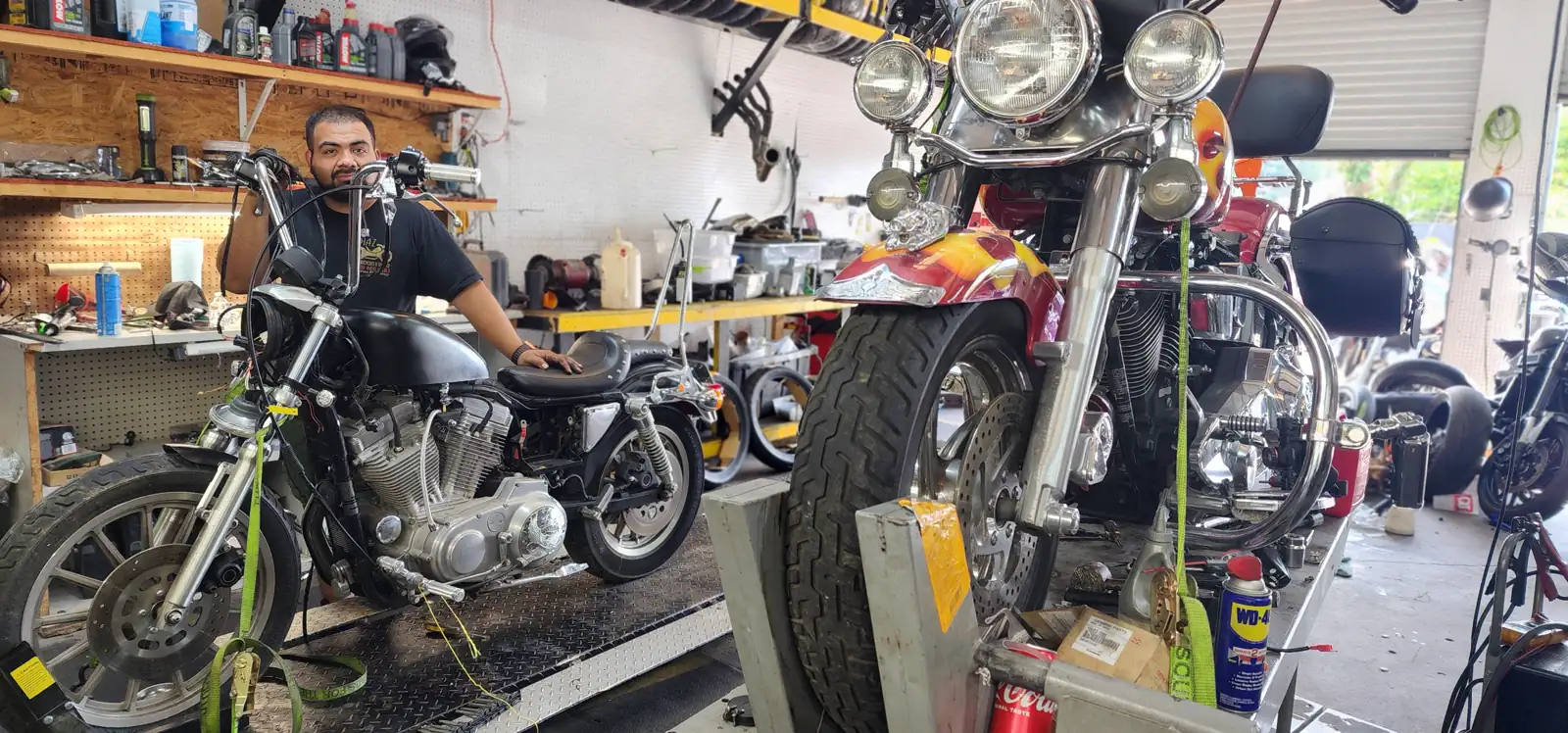
Our approach is boring on purpose. We test, we don’t guess. First the battery gets a real load test, not a quick voltage glance. Then we check the charging output while the engine runs, so we know if the bike can even keep itself alive. After that we confirm spark and confirm fuel delivery, and we check every safety switch in the chain.
Only after all that do we start talking about parts. Since the tests come first, you get told what’s actually wrong instead of a list of maybes. If you want the full picture of what changes the total on a repair like this, we lay it out plainly there too. And if you’re curious how the same symptom shows up in another town, here’s what Peachtree City riders run into.
We work on all brands and all ages. That includes the bikes other shops turn away, whether they’re older, European, or just unusual. You can see what we take care of here, and while a no-start is rarely a cosmetic issue, plenty of riders pair the visit with what the work covers on the cleanup side.
Why this happens the way it does in Woodstock
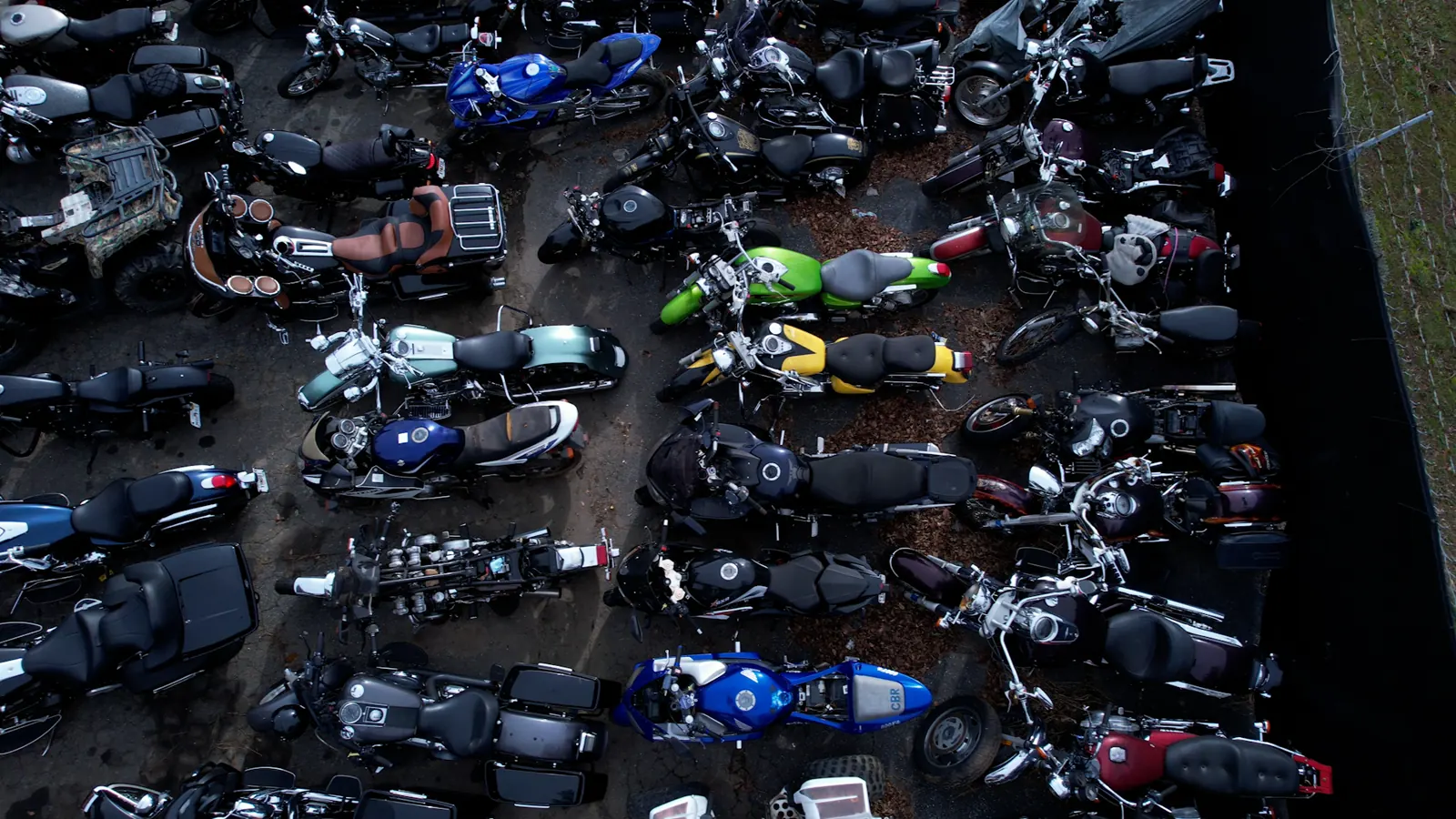
Woodstock is Cherokee County, and it’s one of the most motorcycle-serious towns we serve. I-575 puts the north Georgia mountains inside an easy hour or so, so riding here is destination riding. That means bikes pile on hard miles in concentrated bursts, then sit idle for stretches. Meanwhile Georgia has a universal helmet law, and lane splitting and filtering are both illegal, so commuting by bike into the southbound crawl holds very little appeal. Recreational riding wins, and idle weeks come with it.
Storage here is genuinely good, which helps. Towne Lake, the master-planned umbrella community with nearly 5,700 single-family homes, is one of the largest planned communities in Cherokee County, and garages came standard. Towne Lake Hills adds 875 premium homes west of I-575, built between 1993 and 2002 with golf, swim and tennis. Newer Ridgewalk communities like Glenhaven, Magnolias, Meridian, Montclair and Ridgewalk Landing keep that pattern going along the Ridgewalk corridor. Plenty of those garages have a workbench, a tool chest and a trickle charger already.
Still, a garage isn’t a force field. Pollen season from mid-March through late April coats everything, clogs air filters and marks the unofficial start of riding season, which is also when the no-start calls spike. Growth brings constant construction too, so gravel and mud get tracked onto pavement along Ridgewalk, Towne Lake Parkway and the SR 92 corridor. Then there are the country-geometry roads, and Georgia DOT is a good habit to check before a long run north.
The riding itself is excellent. Bells Ferry, Wiley Bridge, Trickum and Arnold Mill Roads are rolling, wooded and low-traffic, and they start minutes from Downtown Woodstock. That downtown, by the way, is one of metro Atlanta’s most successful revitalizations, a genuinely walkable dining and entertainment district built around the 1912 Woodstock Depot, the old Louisville & Nashville station whose passenger service ended in 1949. It’s a great place to end a ride, assuming your bike agreed to start in the first place.
The gap nobody talks about
Here’s the thing we wish every rider knew a season earlier: Woodstock has plenty of motorcycle businesses, but almost every one of them is narrowly scoped. Some do suspension only. Atlanta Motorcycle Works on Mauldin Drive is an in-city dealer for Moto Morini, Benelli, Benda and Keeway, and its service side covers Japanese motorcycles fifteen years old or newer, weekdays only. Others are Harley and custom work exclusively, or they’re locked to one brand’s dealership network.
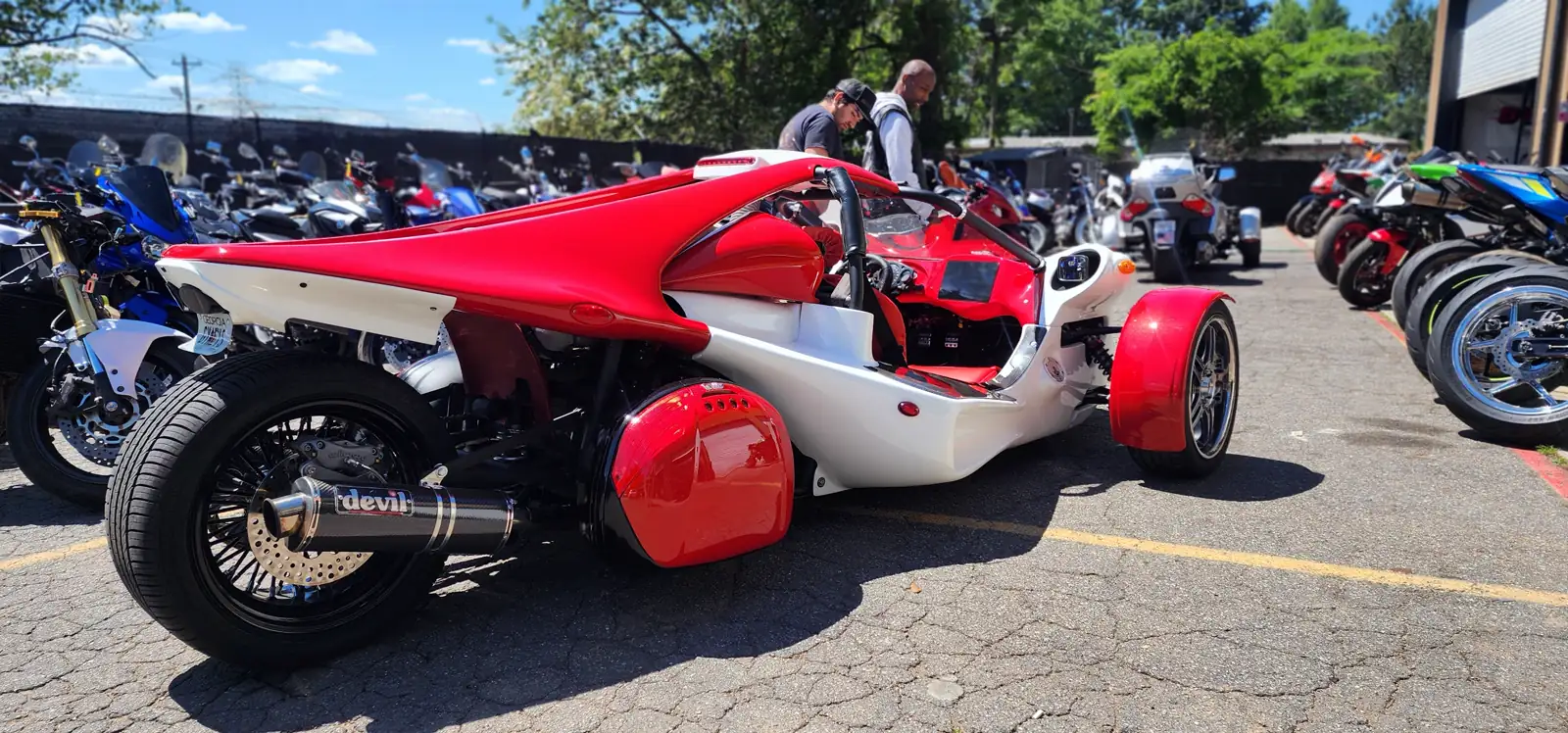
So if your bike is older than fifteen years and isn’t a Harley, the local options thin out fast. That’s not anybody doing wrong, it’s just how each shop chose to specialize. But it does leave a real gap, and that gap is exactly the space we fill: full service, every brand, every age, plus restoration, custom paint and engine tuning under one roof.
Local riders are also sharp. Traxxion Dynamics is headquartered right here, which raises the technical literacy of the whole riding population, so Cherokee County riding culture skews sport-touring, ADV and premium touring. We see BMW GS bikes, Yamaha Teneres, KTM Adventures, Triumph Tigers, Ducati Multistradas and Honda Africa Twins, plus Road Glides, Street Glides, Ultras, Indian Challengers and Roadmasters and Gold Wings. Modern sportbikes and hyper-nakeds round it out. Because those riders research everything, we’d rather show our test results than talk fast.
What the outcome looks like
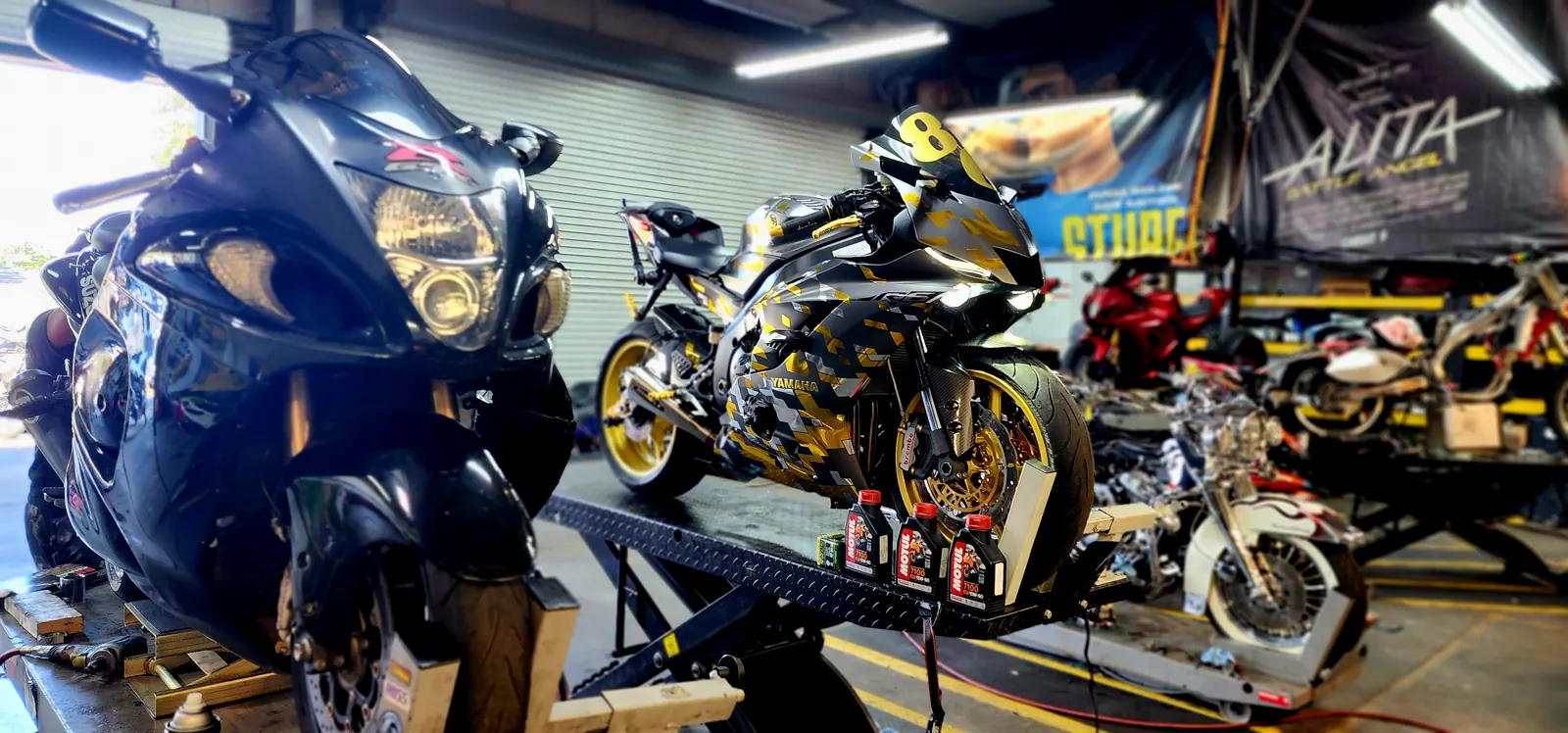
Nearly every motorcycle not starting Woodstock owners drop off gets a call from us the same day or the next, and the news is usually short. A tired battery, a bad ground, a stale tank, a plug set past its prime, or a switch that quietly stopped switching. Then the bike gets fixed, tested, and started cold a few times to prove the fix. That last part matters, since a bike that starts once in a warm shop hasn’t proven much.
After that, we talk about keeping it from coming back. A trickle charger during idle weeks does more good than any other single habit. Fresh fuel before a long sit helps. So does a quick look at tires while the bike is already up on the lift, and Michelin’s motorcycle tire resources are a solid starting point if you’re not sure what you’re looking at. None of it is complicated, though all of it gets skipped when riding season hits.
Getting to us from Woodstock is easy enough. Most riders take I-575 south to I-75 south, then east on Roswell Road to Barnes Mill Road, roughly fifteen to nineteen miles depending on where you start. If you’d rather stay on the surface streets, Bells Ferry Road runs south into north Cobb and gets you here without the interstate. Friends we’ve helped from Towne Lake have made that run plenty of times, usually on a bike that’s running again.
The feeling at the end is the whole point. You hit the button, it catches instantly, and you stop bracing for silence. Then the mountains are an hour away and nothing is standing between you and them. That’s a good morning, and it’s a very reachable one.
Questions Woodstock riders ask us
Could it be something other than the battery?
Absolutely, and often it is. Stale fuel, worn plugs, a bad ground, or a safety switch can all produce the same click or the same endless crank. That’s why we load test and check charging output first, so the battery gets cleared or convicted with actual evidence.
Is it safe to ride if it starts after a jump?
You can ride it, but treat it as temporary. If the charging system isn’t keeping up, the bike is running on stored voltage and will quit again. So keep the ride short and local, and get it tested before your next long day north.
What actually causes a no-start most of the time?
Sitting. Batteries self-drain and fuel goes stale faster than riders expect, and around here bikes often sit between big riding weekends. Because of that, the top causes are almost always battery, connections and fuel, in that order.
Can I fix this myself in the garage?
Plenty of Woodstock riders can, and many do. Cleaning terminals, checking grounds, swapping plugs and adding fresh fuel are all fair game with basic tools. But if it clicks after all that, or if you smell fuel or hear grinding, stop there and let us test it properly.
Will it get worse if I keep riding it?
It can, though not usually in a dramatic way. A weak charging system slowly drags down a healthy battery, and a fouling issue tends to spread across cylinders. So the practical answer is that waiting turns a small job into a slightly bigger one.
Do you work on older or European bikes?
Yes, all brands and all ages. That includes the bikes some shops won’t take because of age or brand, and it includes restoration, custom paint and engine tuning if you want more than a repair.
We take care of riders across Cherokee and Cobb and a good stretch beyond both. That means Woodstock and Towne Lake first, plus Canton, Holly Springs and Ball Ground to the north, and Acworth, Kennesaw and Cartersville out to the west. Marietta and East Cobb are right in our backyard, while Roswell, Alpharetta and Milton send us plenty of riders from the east side too. If you’re somewhere in that ring and your bike won’t wake up, we’re an easy run down I-575 or straight south on Bells Ferry Road.
LET'S GET IT RUNNING
If your bike won’t start in Woodstock, tell us what it’s doing and we’ll tell you what it probably means before you ever load it up. Text or call, describe the click or the crank, and we’ll walk you through what to check in your own garage first. When it needs the lift, we’ll test it properly, fix the real cause, and hand it back ready for the mountains.
470-460-9883Diaz Motorcycles and Service, LLC · 847 Barnes Mill Road, Marietta, GA 30062