Motorcycle Restoration Cost in Canton: A Real Breakdown of Where the Money Goes
Line by line — labor, parts, paint, chrome, and machine work — so you understand your quote instead of just staring at the bottom number.
Plus, a restoration quote can look like one intimidating number until you break it into pieces, and then it suddenly makes sense. Meanwhile that mystery is exactly what keeps a project bike sitting in a Laurel Canyon garage for another year. In fact once you understand the motorcycle restoration cost Canton riders actually pay — labor here, parts there, paint and chrome as their own line items — you can look at your own bike and get a real feel for the number before you ever ask for a quote.
So let’s pull the cost apart the way a mechanic thinks about it, not the way a sticker shock feels. A restoration isn’t one price, it’s a stack of smaller jobs, and each one has its own cost driver. Knowing what each piece is worth means you can make smart choices about where to spend and where to hold back — and it means nobody can pad a quote with fluff you don’t understand.
We’ll go through the big cost buckets one at a time: labor, mechanical parts, paint, chrome and plating, and machine work. Then we’ll cover the sneaky things that swing the total, and how to keep your restoration from ballooning. By the end you’ll read a quote like someone who knows what they’re looking at.
Labor: the biggest line item, and the fairest one
On most restorations, labor is the largest single cost, and it’s also the one that pays for itself. Restoration is patient, careful hand-work. Freeing a seized bolt without snapping it, cleaning varnish out of tiny carburetor passages, and reassembling an engine so it actually seals all take time and skill. You’re not paying for parts spinning off a shelf — you’re paying for the hours it takes to do it right so it doesn’t come back.
Here’s the thing about labor: it’s where a good shop earns your trust and a bad one hides its games. An honest shop tells you its rate up front and tracks the hours a job actually takes. A shady one quotes low, then discovers surprise after surprise once your bike is torn apart and you have no leverage. We’d rather give you a realistic labor picture at the start than a fantasy number that grows every week. Turnaround honesty beats a lowball every time.
Mechanical parts: cheap on common bikes, brutal on rare ones
The parts to make a bike run again — battery, tires, brake components, cables, filters, gaskets, seals, and fluids — are fairly predictable and usually reasonable. On a common bike like a Honda Shadow, a Yamaha cruiser, or an older Japanese standard, these parts are plentiful and affordable, which is a big reason those bikes are such satisfying, budget-friendly projects.
The wild card is rarity. Hunt for a discontinued part on an oddball model and the cost isn’t just the part — it’s the hours spent finding it, and sometimes the price of having something fabricated or refurbished because new old stock simply doesn’t exist. This is why two bikes that look equally rough can restore for very different money. Common and available is cheap. Rare and discontinued is where a budget can run away from you if you’re not careful.
Paint: labor you can see, and it isn't cheap
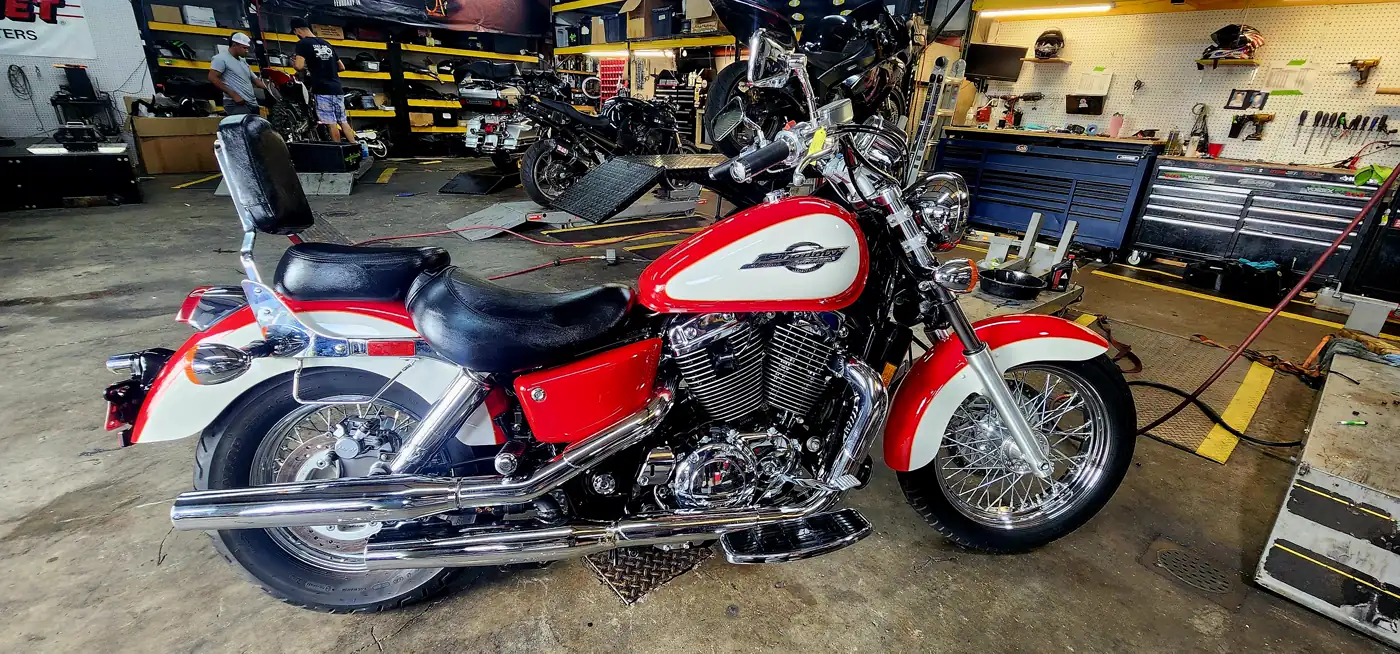
Paint is one of the biggest swing factors in any cosmetic restoration, because good paint is almost all labor. Stripping the old finish, repairing dents and pits, priming, blocking it smooth, laying color and clear, and wet-sanding it to a real shine is days of skilled work, not an afternoon with a rattle can. That’s why a proper paint job costs what it does — you’re paying for the prep nobody sees, which is exactly what makes the finish look deep and correct.
You’ve got choices here that move the number a lot. A clean single color costs less than complex multi-stage metallics, candy colors, or hand-laid pinstripes and graphics. Matching original factory paint on a classic can mean extra research and mixing. The upside is that having paint done in-house, in the same shop doing the mechanical work, saves you the hassle and markup of shipping your parts to an outside painter and back. One roof, one bill, one point of contact.
Chrome and plating: the sleeper cost most people forget
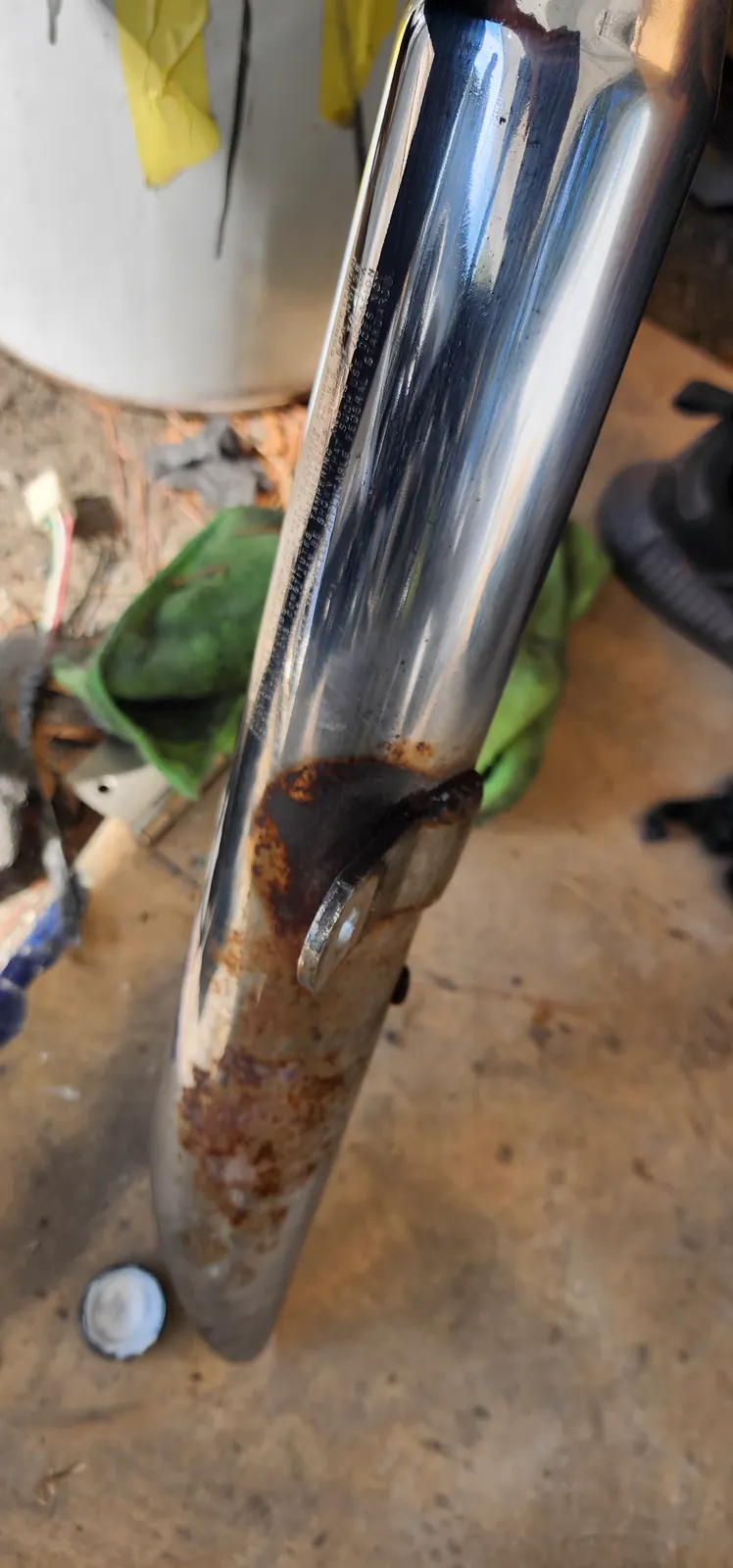
Here’s the line item that catches folks off guard. On a bike with a lot of chrome — think a classic cruiser with chrome pipes, fenders, and covers — the condition of that plating matters enormously. Chrome that’s just dull or lightly tarnished can be polished back by hand and costs you labor. Chrome that’s rusted and pitted through can’t be saved by polishing; it has to be stripped and re-plated, and re-plating is a specialized, materials-heavy process that adds up fast across a whole bike.
This is why that rusty exhaust in your garage is such a good example. If it’s surface tarnish, we buff it and you’re happy. If the rust has eaten pits into the metal, you’re looking at re-plating or replacement, and that’s a real number. The lesson isn’t to panic — it’s to understand that on a chrome-heavy bike, plating condition can quietly be one of the biggest cost drivers, and a good shop tells you honestly which pieces can be saved and which can’t.
Machine work and the deep-engine stuff
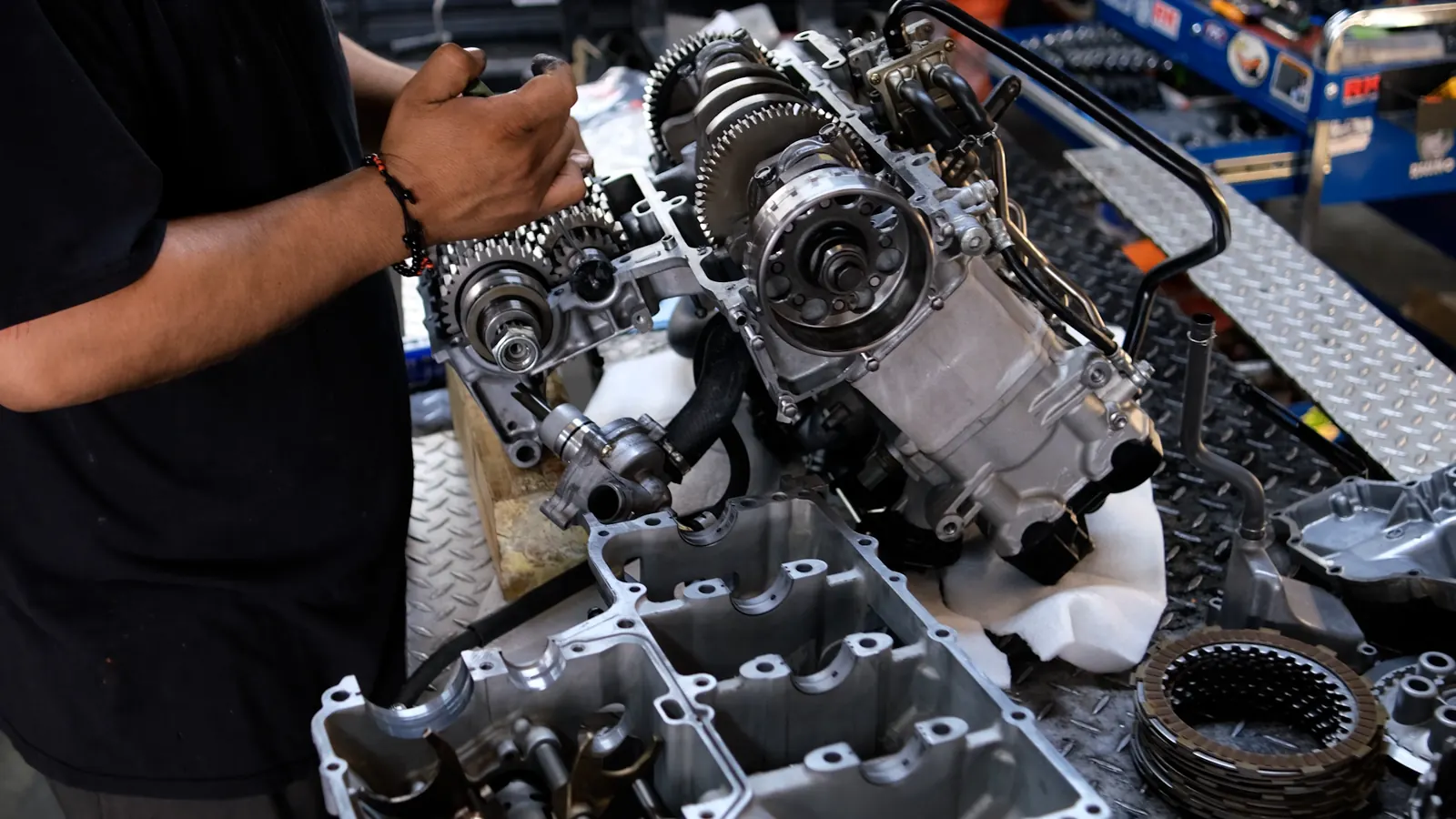
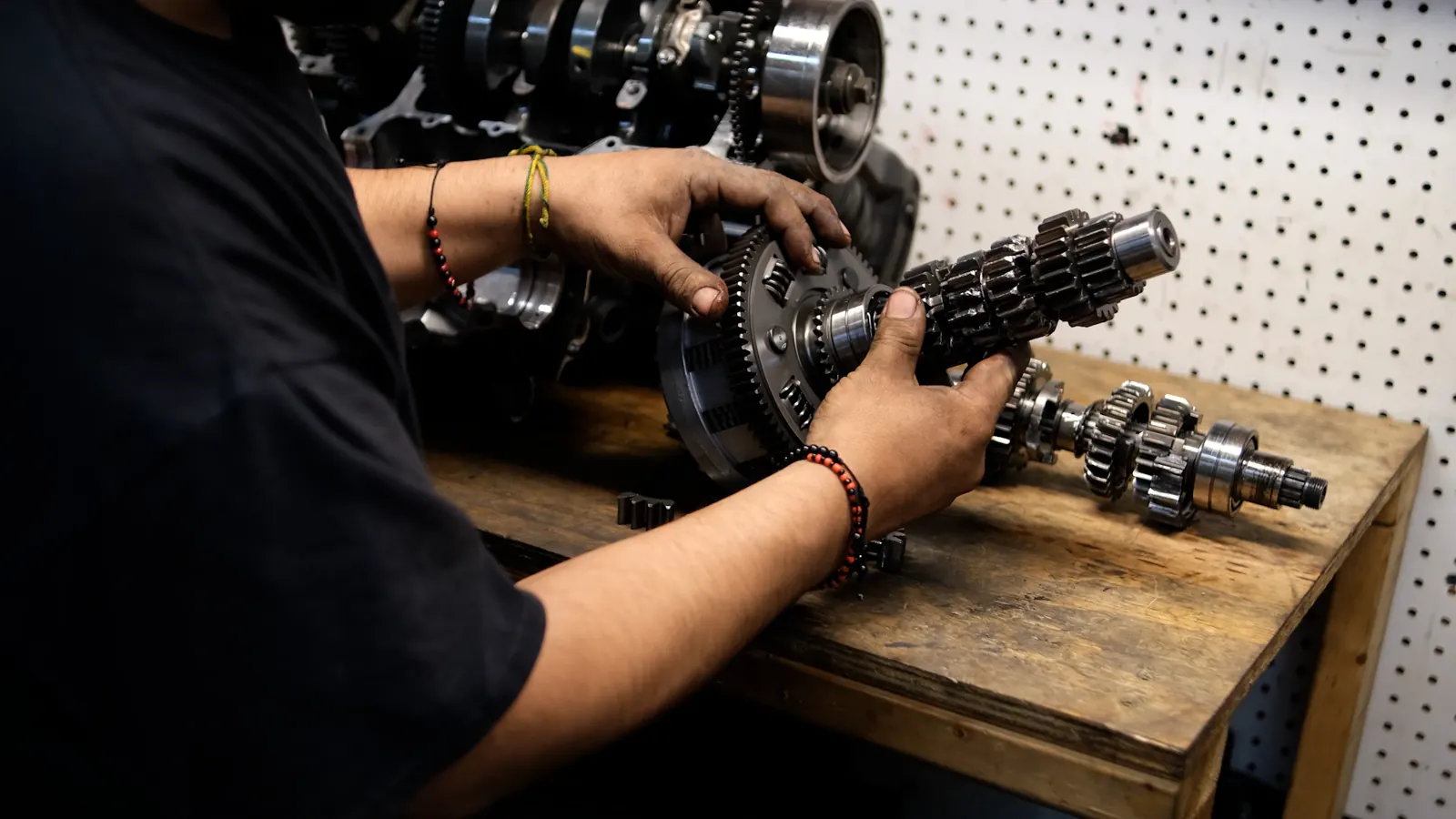
The top end of restoration cost is internal engine and machine work — boring cylinders, new pistons and rings, valve jobs, bearings, and precision measurements. This is real specialist territory and it’s where a full restoration separates itself from a refresh. The important thing to know is that most bikes don’t need this. A bike that sat but wasn’t run hard or run low on oil usually needs cleaning and revival, not a full engine rebuild.
So don’t assume your project needs its engine cracked open. We diagnose before we recommend, and we’ll tell you honestly whether the motor just needs a wake-up or genuinely needs to come apart. Recommending deep engine work a bike doesn’t need is one of the fastest ways a shop pads a bill, and it’s exactly the kind of thing we won’t do. If it needs it, you’ll hear why. If it doesn’t, you’ll hear that too — and keep the money.
WATCH FOR THIS
A shop that recommends internal engine work before it’s even diagnosed the bike is padding the bill.
It’s the single most common way a restoration quote gets inflated, so keep it in your back pocket. Most stored Canton bikes don’t need their motors opened — they need cleaning, fresh fluids, and the safety parts sorted. If someone leads with a full engine rebuild before they’ve really looked, ask them to show you why. An honest answer will point at a real symptom. A vague one is a red flag, and it’s your cue to get a second opinion before you commit.
THE BIG LEVER
Scope is the single biggest thing you control. How far you take it matters more than any one part price.
Every cost bucket we’ve covered scales with how far you decide to go. A mechanical revival touches labor and a handful of parts and stops there. A full frame-off touches all of it — labor, parts, paint, chrome, and machine work — which is why the totals are worlds apart. The single most powerful cost decision you make isn’t shopping part prices; it’s honestly deciding whether you want it running and safe, running and sharp, or truly like-new. We walk through those tiers in our restoration overview if you want to see them side by side.
The sneaky things that swing the total
A few hidden factors move the number more than owners expect. Where the bike was stored is huge — a bike kept dry in a climate-controlled BridgeMill garage costs far less to restore than the same model that sat in a leaky shed soaking up Georgia humidity, because damp storage rusts tanks, seizes brakes, and corrodes electrics. How complete the bike is matters too; missing parts have to be sourced, and sourcing is time. And how original you want it — driver-quality versus concours-correct — can double the paint and parts budget on its own.
- Storage condition: dry and covered is cheap to restore; damp and neglected is expensive.
- Chrome and plating condition: polishable saves money; rusted-through means re-plating.
- Parts availability: common bikes are affordable; rare or discontinued models run up hours and cost.
- Paint complexity: single color is basic; candy, metallics, and graphics add real labor.
- How original you want it: driver-quality is reasonable; concours-correct is the premium path.
- Whether the engine needs internal work: most don’t — but if yours does, it’s the top of the range.
A restoration quote isn't one scary number. It's five smaller decisions — and most of them are yours to make.
That’s the real message here. Once you see the pieces, the cost stops being a mystery and starts being a set of choices you control. You can do a revival now and paint later. You can save the chrome you can and replace only what’s truly gone. You can keep it driver-quality and ride it hard instead of chasing a trophy. Understanding the breakdown is what lets you build the bike you actually want at a price you actually chose.
Get an itemized read, not a mystery number
Canton is full of project bikes because it’s garage country — roomy homes, riders who love the mountains, and plenty of inherited and barn-find machines waiting for their turn. What Cherokee County is short on is independent shops that handle the mechanical, paint, and plating decisions honestly under one roof. That’s the gap we fill down in East Cobb, about 30 to 40 minutes down 575 from Canton, a run you’re probably already making for work.
When you’re ready, text us photos of the bike and tell us how it was stored and how far you want to take it. We’ll give you an itemized read — what the labor looks like, which parts it needs, what the paint and chrome situation is, and whether the engine needs to come apart or just wake up. No mystery bottom line, no padded surprises. Just the real breakdown, so you can decide with your eyes open. See exactly what our restoration work covers before you reach out.
Questions Canton riders ask us
What's the biggest cost in a motorcycle restoration?
On most restorations, labor is the largest single line item, because restoration is careful hand-work — freeing seized parts, cleaning varnished fuel systems, and reassembling things so they seal and last. On a chrome-heavy classic, re-plating can rival it, and if the engine needs internal machine work, that climbs too. We tell you the realistic labor picture up front so nothing sneaks up.
Why does paint cost so much on a restoration?
Good paint is almost all labor — stripping, dent repair, priming, blocking it smooth, laying color and clear, and wet-sanding. The prep nobody sees is what makes the finish look deep and correct. A single color costs less than candy, metallics, or hand-laid graphics. Having it done in-house with the mechanical work saves you the markup and hassle of an outside painter.
Does every restoration need engine work?
No, and most don’t. A bike that sat but wasn’t run hard or run low on oil usually needs cleaning and a revival, not an internal rebuild. Boring cylinders, new pistons, and valve jobs are the top of the cost range and only necessary when the motor genuinely needs it. We diagnose before we recommend and won’t crack open an engine that just needs a wake-up.
Why can two similar bikes cost very different amounts to restore?
Storage condition, chrome condition, parts availability, paint complexity, and how original you want it. A dry-stored common bike with polishable chrome is cheap. The same model that sat in a damp shed with rusted-through plating and rare missing parts is far more. Two bikes that look equally rough can restore for very different money once you see the details.
How can I keep my restoration cost down?
Control the scope. Decide honestly whether you want it running and safe, running and sharp, or truly like-new — that single choice moves the number more than any part price. You can do a revival now and paint later, save the chrome you can, keep it driver-quality, and skip engine work you don’t need. We’ll help you build the bike you want at a price you chose.
Will I get an itemized quote or just one number?
An itemized read, every time. We break out the labor, the parts it needs, the paint and chrome situation, and whether the engine needs to come apart or just wake up. If we find a surprise once it’s apart, we stop and call you before spending a dime. You’ll never get a padded bottom line or work you didn’t approve.
We take restoration projects from across Cherokee County, not just downtown Canton. Bikes come from Laurel Canyon, BridgeMill, and Great Sky, and plenty trailer down from Waleska, Ball Ground, and out past Lake Arrowhead. Riders from Holly Springs, Hickory Flat, and the Sixes and Riverstone corridors make the run too. If you’re anywhere near The Mill on Etowah or the I-575 spine, your project is an easy trip down to our East Cobb shop.
TEXT US FOR AN ITEMIZED READ
Want to see where the money actually goes on your bike? Text us photos and tell us how it was stored and how far you want to take it, and we’ll break out labor, parts, paint, and chrome — no mystery number. We’re about 30 to 40 minutes down 575 from Canton in East Cobb, with an in-house paint booth. Straight numbers, no padded surprises.
470-460-9883Diaz Motorcycles and Service, LLC · 847 Barnes Mill Road, Marietta, GA 30062