Your Motorcycle Sat for Years in Canton — Here's How to Wake It Up Safely
Varnished fuel, a rusty tank, dry-rotted tires, seized brakes, and a dead battery — what really happens to a bike that sits, and how to bring it back without hurting it.
Plus, the single worst thing you can do to a motorcycle sitting for years Canton garages are full of is exactly what most people do first: pour in fresh gas, hit the starter, and hope. Meanwhile that bike has spent every humid Georgia summer quietly falling apart in ways you can’t see. In fact firing it up cold after a long sleep can turn a cheap revival into an expensive repair in about four seconds, so before you touch that button, let’s talk about what’s actually going on inside.
You know the bike we mean. It’s the one under the tarp in the corner of a Great Sky garage, the inherited cruiser, the college project, the bike you swore you’d get back to. Then a season turned into a few years, and now the first warm weekend has you itching to ride it. The good news is bikes that sit are our bread and butter every February. The bad news is they almost never wake up as easily as owners hope.
So here’s the honest map of what a long sit does to a motorcycle, why a careful revival matters, and how we bring a sleeper back to life without wrecking anything in the process. Read this before you buy a battery and a can of gas, because doing it in the wrong order is how good bikes get hurt.
The fuel system is the first casualty
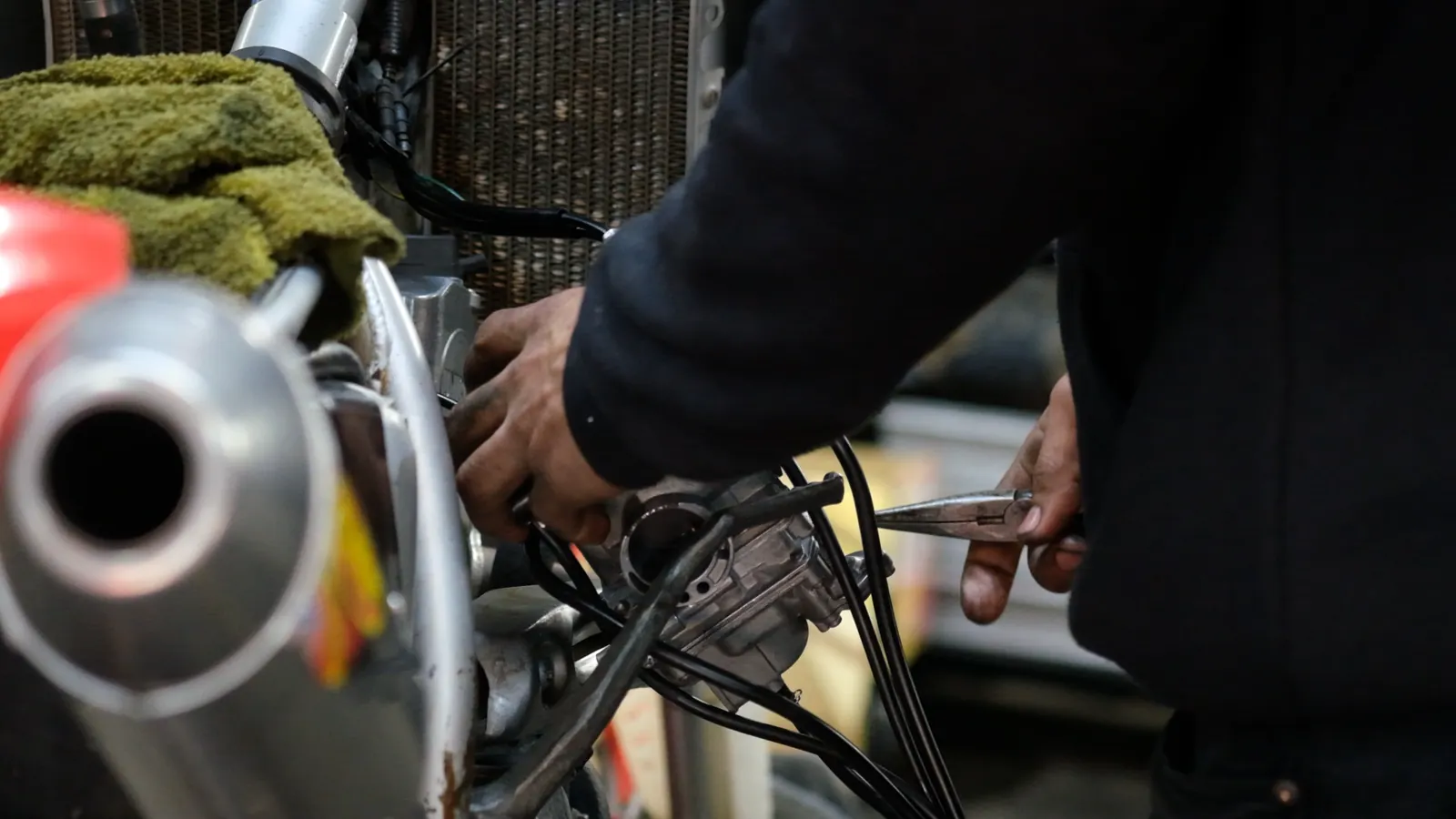
Gasoline doesn’t age like wine. Left sitting for months, it evaporates and leaves behind a sticky varnish, and today’s ethanol-blended fuel makes it worse by pulling moisture out of the humid Georgia air. In a carbureted bike, that varnish glues up the tiny jets and passages the engine needs to run. In a fuel-injected bike, the old fuel gums the injectors and can corrode the pump. Either way, the fuel that’s in there now isn’t fuel anymore — it’s a problem.
Pour fresh gas on top of that gunk and you’re just diluting the mess, not fixing it. The right move is to drain the old fuel, clean the carbs or injectors properly, and start fresh. Skip that step and the bike either won’t run, runs terribly, or floods and dumps raw fuel where it shouldn’t go. We’ve cleaned more varnished carbs than we can count, and the ones that sat through a few Georgia summers are always the crustiest.
Then there's the tank, quietly rusting
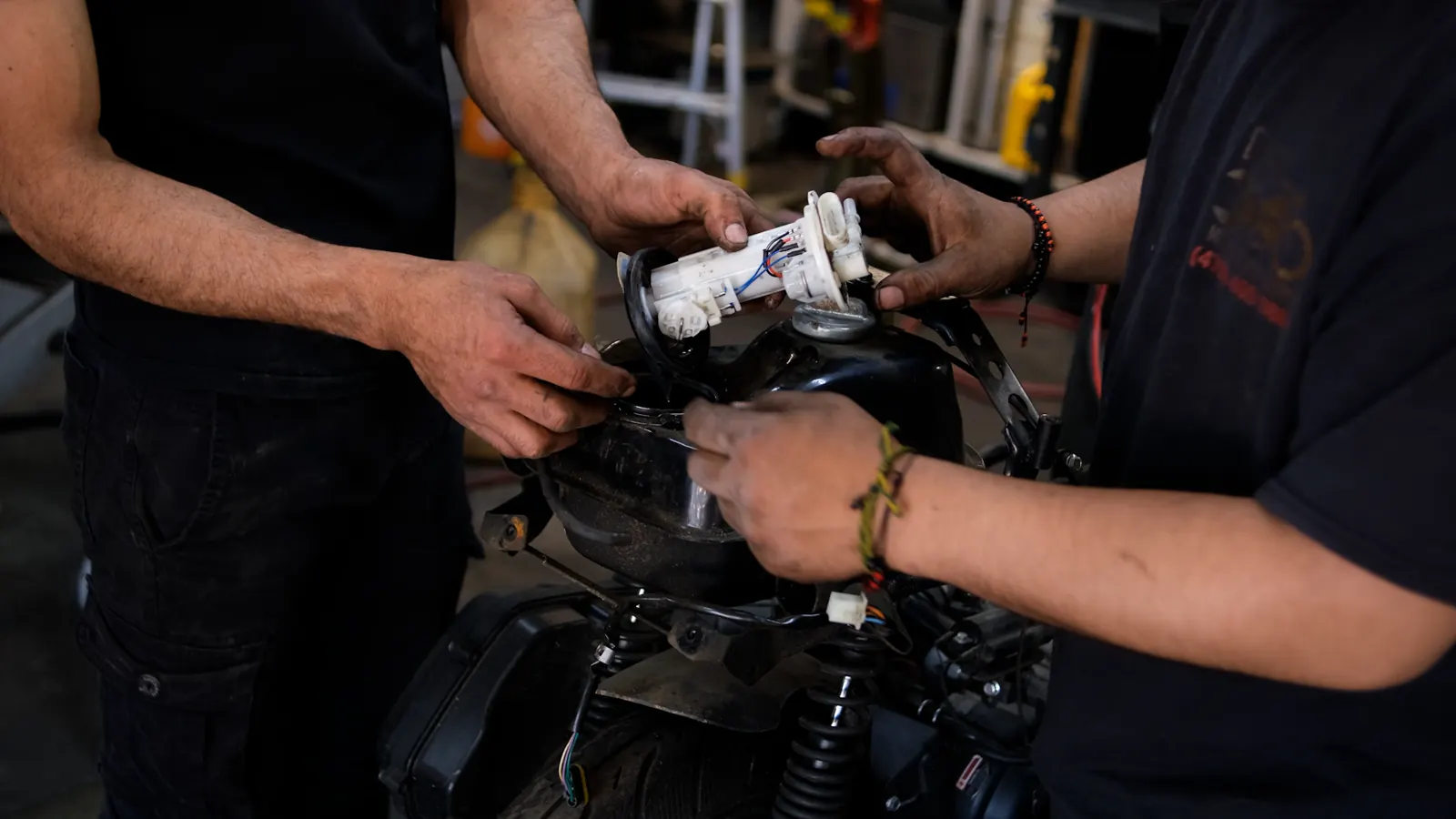
While the fuel is going bad, the tank itself is often rusting from the inside. A tank that’s less than full leaves bare metal exposed to air, and Georgia humidity does the rest. Condensation forms, moisture pools at the bottom, and rust starts flaking off the walls. That rust doesn’t stay put, either — it washes down into the fuel system and clogs everything you just cleaned, which is a maddening way to redo work.
That’s why a proper revival checks the tank interior before it trusts the fuel system. A little surface rust can often be cleaned and sealed. A tank that’s rusted through needs more. Either way, you want to know before you fill it, not after you’ve flushed rust through a fresh set of clean injectors. It’s the kind of thing that separates a careful wake-up from a hopeful one.
Tires, brakes, and battery: the safety trio that fails silently
Now for the parts that don’t just stop you from riding, they stop you from riding safely. Tires that sit go hard and dry-rot, developing cracks in the sidewall and flat spots where they rested on the ground. They might hold air and look fine, but old rubber has no grip, and finding that out on a wet manhole cover in downtown Canton or a gravel-washed curve on GA-140 is a genuinely bad day. Age kills tires even when tread doesn’t.
Brakes are just as sneaky. Brake fluid absorbs water over time, which lowers its boiling point and eats at the system from the inside. Calipers seize, pistons stick, and pads bond to rotors after years of stillness. A bike that sat long enough might roll fine in the garage and then have no real stopping power when you actually need it. And the battery? It’s almost certainly dead — batteries self-discharge and sulfate when they sit, and a bike that’s been parked for years needs a fresh one, not a charge.
DON'T DO THIS
Do not just air up the old tires and ride it. Old rubber and old brake fluid are the two most dangerous things on a bike that sat.
We say it plainly because we’ve seen how it ends. A rider gets the engine running, gets excited, and takes it around the block on tires older than his kid and brakes that haven’t been touched since the last presidency. The engine running is the fun part. The tires and brakes are the part that keeps you alive. On any long-stored bike, those get replaced or rebuilt before the bike sees a real road — no exceptions we’d stake our name on.
The seals and rubber you never think about
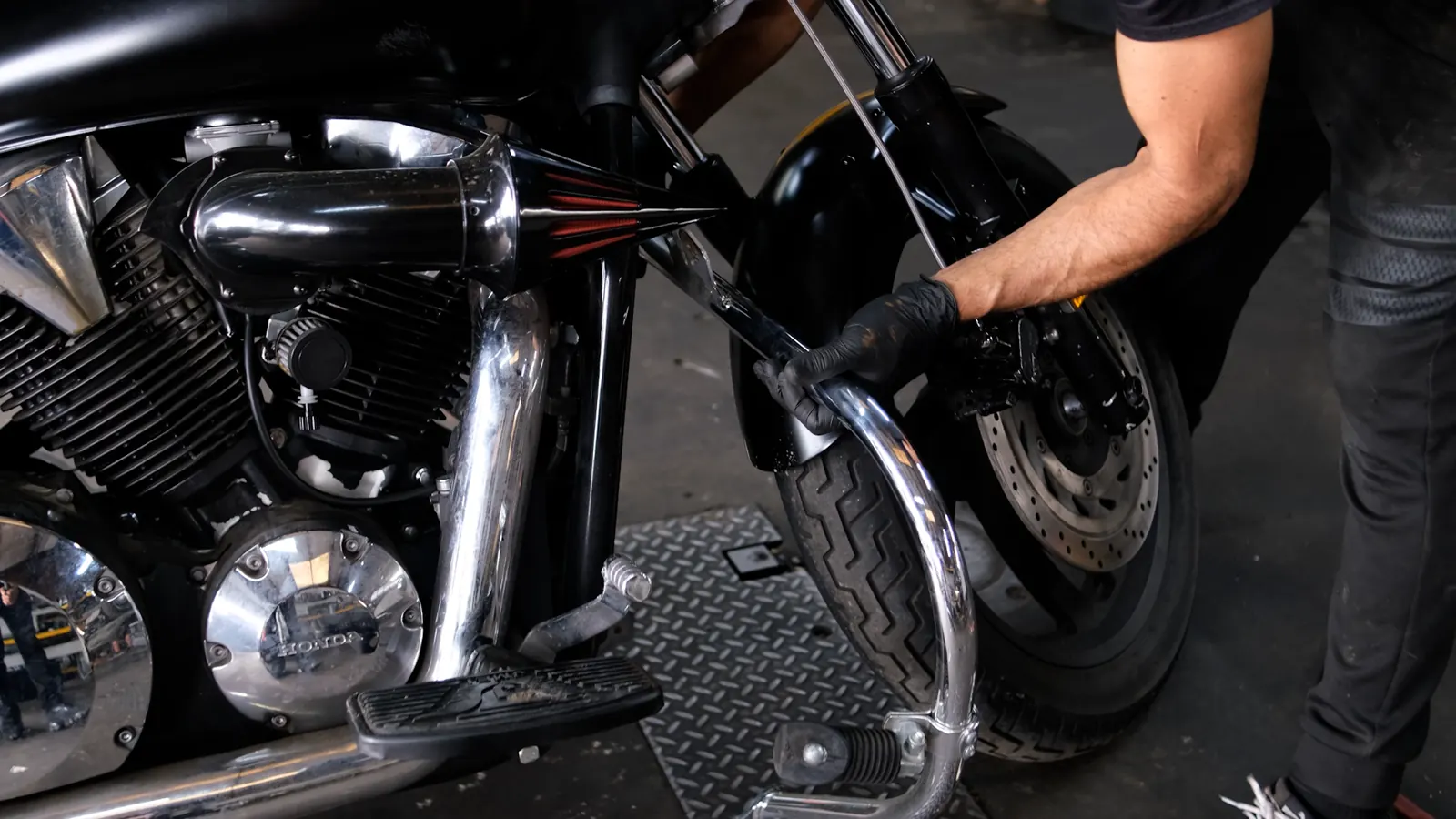
Here’s the sneaky one. Rubber and rubber-like seals need the bike’s own fluids and motion to stay supple. Let a bike sit for years and the fork seals, the gaskets, the fuel lines, and the various O-rings dry out, shrink, and crack. You often don’t find out until the bike is running and suddenly there’s fork oil weeping down a leg, or a fuel line seeping, or a gasket that won’t hold. Time is hard on rubber even when nothing’s moving.
This is why a good revival is an inspection as much as a repair. We’re looking for the perished, dried-out stuff that’s about to fail, because catching a cracked fuel line on the bench is a two-dollar fix and catching it on GA-20 over Allatoona is a fire risk. The whole point of a careful wake-up is to find these little failures before they find you at speed.
The wiring and electrics nobody thinks about
One more quiet troublemaker: the electrical system. Rodents love a stored bike, and a mouse that spends a winter in a Canton garage will happily chew through wiring insulation and nest in the airbox. Even without critters, old connections corrode, grounds go green, and switches get sticky when a bike sits in humidity. You can clean the fuel and charge the battery all day, but if a chewed harness or a corroded ground is fighting you, the bike still won’t run right — and chasing an electrical gremlin after the fact is far more annoying than catching it during a proper wake-up.
How we actually wake a bike up, in order
None of this is guesswork, and none of it is scary once you see the sequence. A safe revival runs in a specific order because each step protects the next. Here’s the honest process we follow on a bike that’s been sleeping, whether it sat two years or twelve.
- Look it over completely and tell you honestly what the years did — no starter button pressed yet.
- Drain the old fuel and clean or rebuild the carbs or injectors so the fuel system is actually clean.
- Check and treat the tank interior for rust before any fresh fuel goes in.
- Replace the dead battery, then check the charging system so the new one stays alive.
- Rebuild or free up the brakes, flush the old fluid, and replace anything seized.
- Replace dry-rotted tires and inspect every seal, gasket, and line for cracks before the first real ride.
- Fresh oil and filter, then a careful first start and a real test to confirm it’s road-safe.
Notice the engine start is near the bottom of that list, not the top. Everybody wants to hear it fire, and we get it — that first cough of life is the best sound in the shop. But firing it before the fuel, oil, and brakes are sorted is how you turn a revival into a repair. Patience up front saves you money and heartbreak on the back end. You can read how this fits the bigger picture in our restoration overview for Canton riders.
GOOD NEWS
A bike that sat is usually neglected, not ruined. Neglected is a lot cheaper to fix than you think.
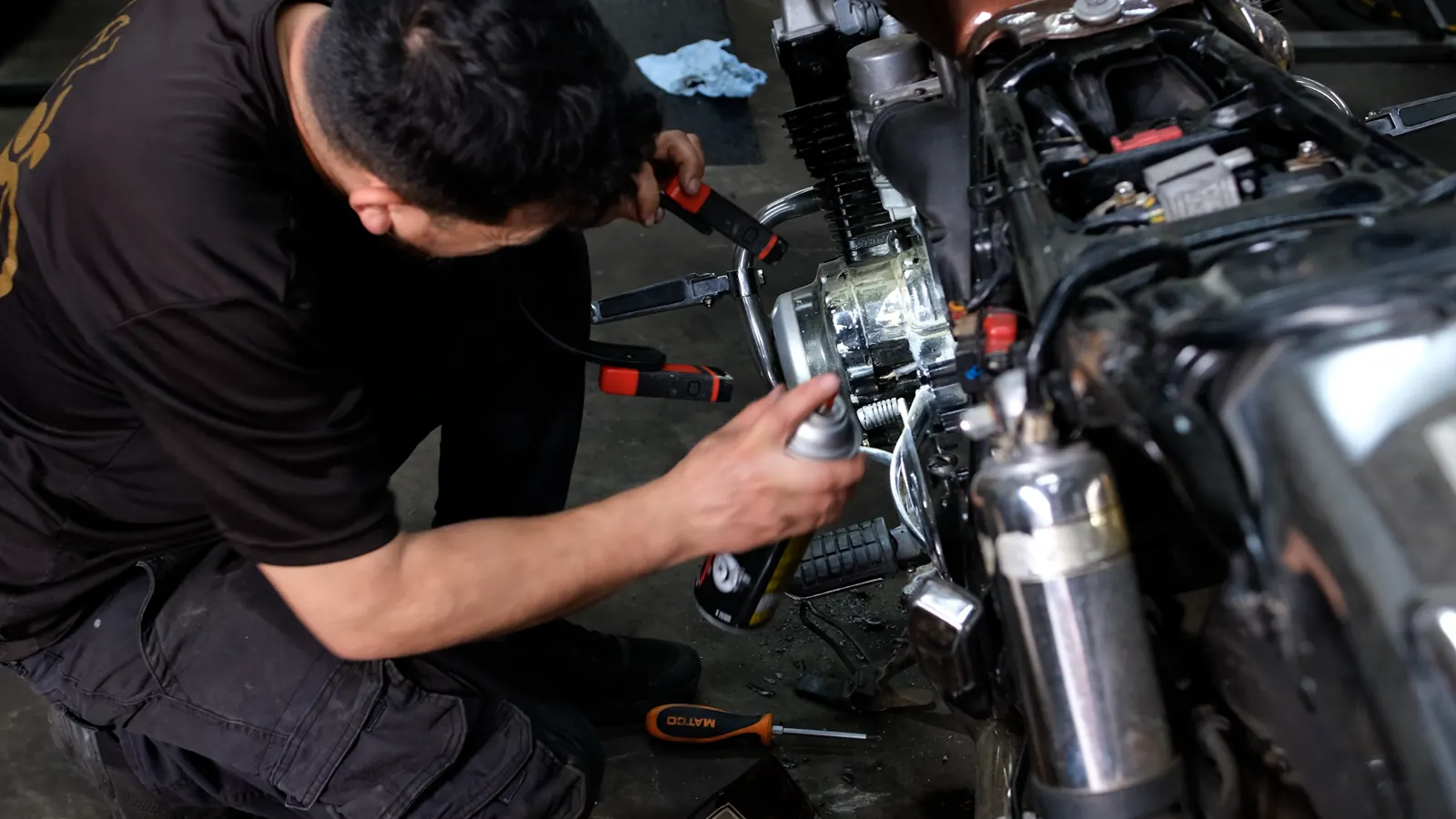
Here’s the encouraging truth after all that doom and gloom. Most of the sleepers we revive aren’t rotted, they’re just gummed up, flat, and dry. Clean the fuel system, put life back in the safety parts, and a huge number of these bikes come right back — often for a lot less than the owner feared. The bikes that get expensive are the ones somebody forced to run before fixing the basics, so the very fact that you’re reading this first puts you ahead.
The engine running is the fun part. The tires, brakes, and fuel are the part that gets you home.
Why Canton bikes sit — and why we're set up for them
Canton is garage country. Big homes out in the master-planned belt, roomy garages, and riders who ride mountain miles when the weather’s good and then park the bike when summer heat and afternoon storms roll in. Add a mild winter that tempts you to think you’ll ride in January, and it’s easy for a bike to sit longer than you meant. That’s not a knock — it’s just how it goes when life gets busy and the mountains are right there when you finally have time.
The trouble is a long sit needs patient, careful work, and a busy dealer service desk isn’t really built for the slow diagnostic of a sleeper. We are. We’re an independent, all-makes shop in East Cobb that revives stored bikes all the time, and we’d rather do it right than fast. It’s about 30 to 40 minutes down 575, a run most Canton folks make for work anyway, so dropping off a sleeper is an easy detour on a weekday morning.
So don’t press that starter yet. Text us a few photos of the bike, tell us how many years it sat and whether it lived somewhere dry or damp, and we’ll give you a straight read on what a safe revival looks like. Bring it back the right way, and you get a bike you can actually trust on GA-515 to Blue Ridge — not a gamble on old rubber and older fuel.
Questions Canton riders ask us
My bike sat for years — can I just put in fresh gas and start it?
Please don’t. The old fuel has turned to varnish that gums the carbs or injectors, and fresh gas on top just hides it. The tank may be rusting, the brakes may be seized, and the tires are likely dry-rotted. Starting it cold before those are sorted can turn a cheap revival into a real repair. Let it get a proper wake-up first.
What actually goes bad when a motorcycle sits for years?
The fuel varnishes and gums the carbs or injectors, the tank rusts from the inside, the battery dies and sulfates, brake fluid absorbs water and calipers seize, tires dry-rot and flat-spot, and seals, gaskets, and fuel lines dry out and crack. Georgia humidity speeds all of it up. Most of it is fixable — but it needs doing in the right order.
Are the old tires really that dangerous if the tread looks fine?
Yes. Rubber ages whether you ride or not. Old tires go hard, dry-rot, and develop flat spots, and they lose grip even with plenty of tread left. Finding that out on a wet road or a gravel-washed mountain curve is genuinely dangerous. On any long-stored bike, we replace the tires before it sees a real road.
How much does it cost to revive a bike that sat for years?
It depends on how long it sat and whether storage was dry or damp. A garage-kept bike usually needs fuel-system cleaning, a battery, tires, brake work, and fresh fluids — real but manageable. A bike that sat somewhere damp with a rusted tank costs more. We look first and give you an honest number before we start any work.
Do I need to trailer it, or can I ride it in?
Please trailer it or let us arrange pickup. A bike that sat for years isn’t road-safe until the brakes, tires, and fuel are sorted, so riding it in defeats the purpose. We handle plenty of stored-bike revivals and can talk through getting it here safely from Canton without you risking a ride on old rubber.
Do you work on older and vintage bikes?
Absolutely. We’re an all-makes shop that genuinely enjoys reviving stored and vintage bikes — Japanese classics, old cruisers, project bikes, and inherited machines all welcome. We’ve got the patience and the in-house paint booth for the ones that need cosmetics too. One stop instead of chasing three specialists around the county.
We revive stored bikes from all over Cherokee County, not just downtown Canton. Sleepers come to us from Great Sky, River Green, and BridgeMill, and we see plenty trailered down from Waleska, Ball Ground, and out toward Lake Arrowhead. Riders from Holly Springs, Hickory Flat, and the Sixes area near Riverstone Parkway make the run too. If you’re anywhere near The Mill on Etowah or I-575, your sleeper is an easy trip down to our East Cobb shop.
DON'T START IT YET — TEXT US FIRST
Got a bike that’s been sitting? Before you buy a battery and a can of gas, text us a few photos and tell us how long it sat and where. We’ll give you a straight read on a safe revival — fuel, tank, brakes, tires, and all. We’re about 30 to 40 minutes down 575 from Canton in East Cobb, and we wake up sleepers all week. No pressure, just honest advice.
470-460-9883Diaz Motorcycles and Service, LLC · 847 Barnes Mill Road, Marietta, GA 30062