Motorcycle Sitting for Years in Woodstock: What Breaks and What It Takes to Bring It Back
What actually goes wrong when a bike sits, why Georgia humidity makes it worse, and the safe way to wake it back up.
Almost every garage in Towne Lake has one. The bike that ran great, then got parked for a season that quietly turned into five years. You keep meaning to deal with it. Meanwhile it sits, and here’s the hard truth: a motorcycle sitting for years in Woodstock isn’t just waiting patiently. It’s slowly falling apart in ways you can’t see. The good news is that most of it is fixable, and none of it should scare you off. You just need to know what’s happening under that dusty cover.
The reason people leave a bike parked isn’t laziness. Life happens. Kids’ sports, a new job, a move, a bad knee, a busy stretch at the office down in Cumberland. The bike becomes a someday project, and someday keeps getting bumped. That’s completely normal. The problem is only that a parked bike doesn’t hold still on the inside. Time keeps working on it whether you do or not.
The fuel system goes first
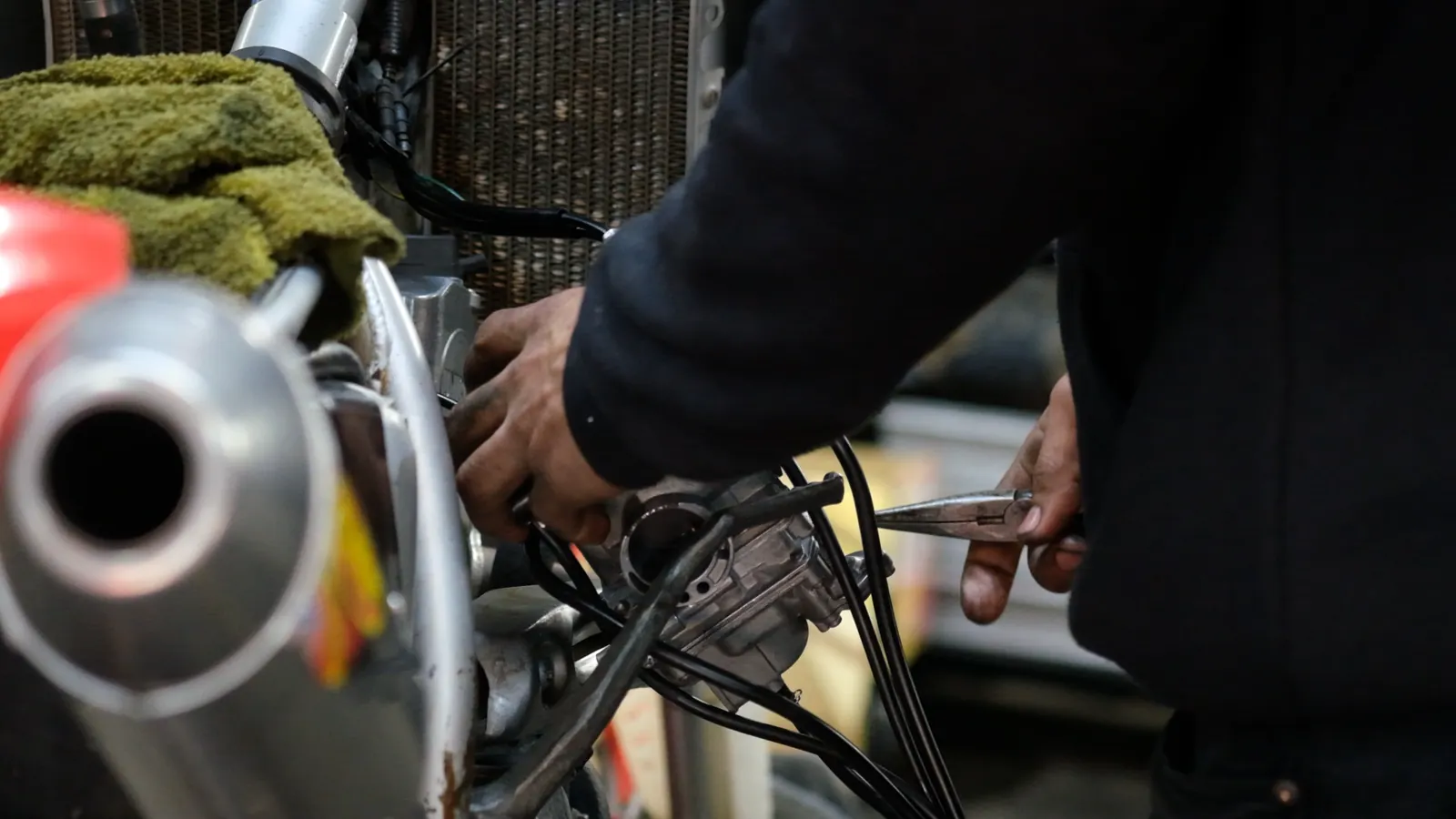
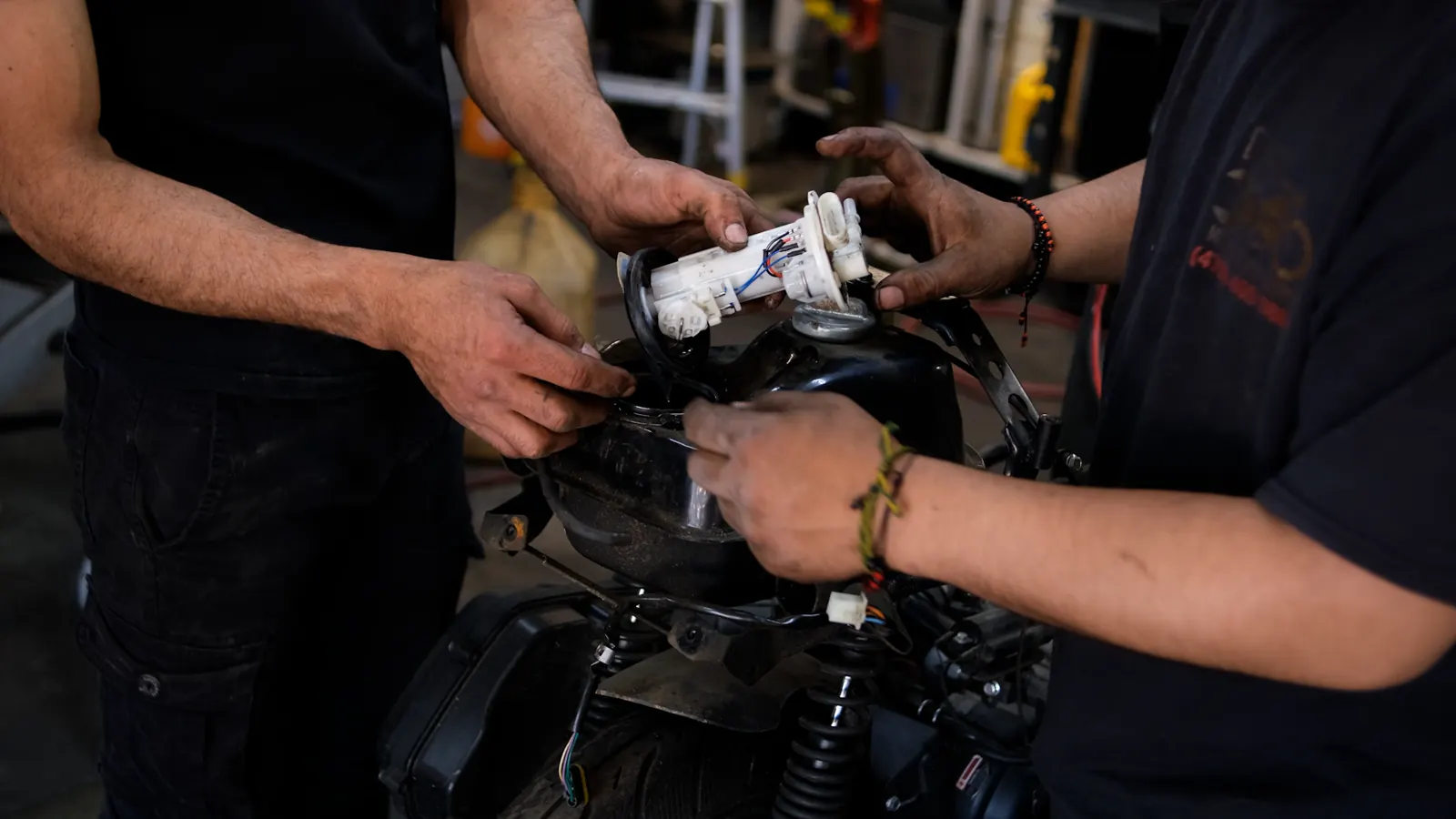
The very first thing to die is the fuel. Modern gas has ethanol in it, and ethanol loves to pull moisture out of Georgia’s humid air. Left to sit, it turns into a sticky, varnish-like gunk that glues up the carburetor jets and coats the inside of the tank. On a fuel-injected bike it clogs the pump and injectors instead. Either way, that once-clean fuel path is now a science experiment, and it’s the number-one reason a stored bike won’t start.
If the tank is steel, it gets worse. That trapped moisture rusts the inside of the tank from the top down, and flakes of that rust travel straight into the fuel system. So a bike that sat with half a tank of old gas often needs the tank cleaned or coated, the carburetor rebuilt, and the fuel lines replaced. It’s not the end of the world. It’s just the tax you pay for old fuel, and it’s the most predictable repair on any revival.
The battery and everything electrical
The battery is a goner, and that’s the easy one. A battery left to sit without a trickle charger discharges, sulfates, and dies for good, usually within a year. That part you expect. What surprises people is the rest of the electrical system. Rodents love a quiet garage, and a stored bike’s wiring harness is a buffet. Chewed wires, nests in the airbox, and corroded connectors are all common on a bike that sat, especially in the wooded Cherokee County subdivisions where the critters have plenty of company.
Rubber and plastic quietly age too. Connector housings get brittle, insulation cracks, and grounds corrode where moisture crept in. None of this is dramatic on its own, but together it’s why a stored bike can start, then act possessed with flickering lights and random cut-outs. Sorting the electrical side is often the fussiest part of a revival, and it’s the part backyard fixes usually miss.
Seals, gaskets, and the parts that dry out
Here’s the sneaky one. Rubber needs to move to stay healthy. When a bike sits, the fork seals, the engine gaskets, the carb boots, and the brake and clutch seals all dry out and shrink. You park a bike with dry forks that don’t leak, and two years later they weep oil the first time you compress them. It feels unfair, because you didn’t ride it. That’s exactly the point. Sitting still is its own kind of wear.
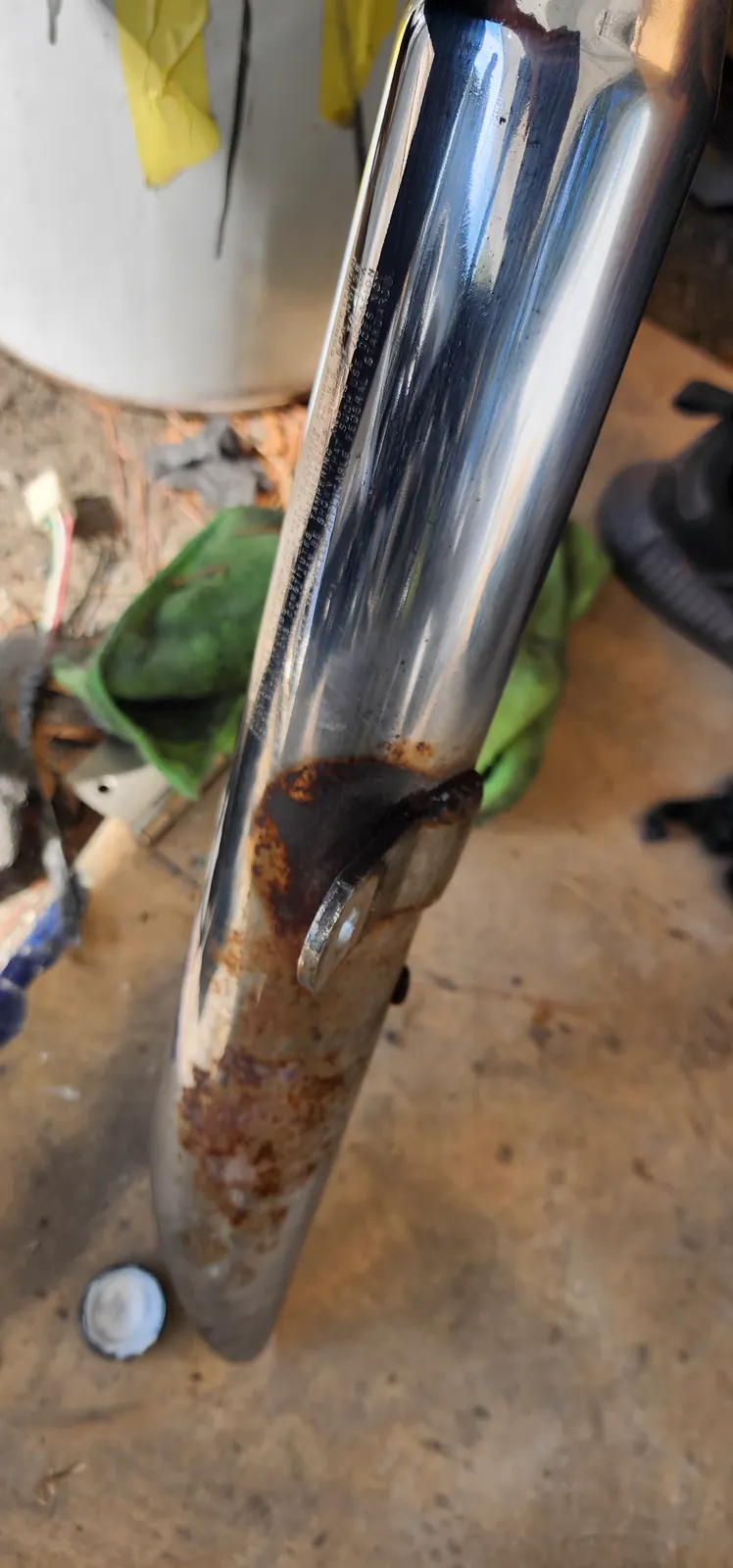
Tires do the same thing. A tire that sits flat-spots where it rests on the concrete, and the rubber hardens and cracks with age even with plenty of tread left. A tire more than five or six years old should be replaced no matter how it looks, because hard, cracked rubber on a mountain road is a genuinely bad day waiting to happen. On a bike that’ll head up 575 toward real curves, tires are not the place to gamble.
The engine, and why you never just crank it
Now the big one, and the reason we beg people not to just jump a battery on it and hit the starter. When an engine sits, the oil drains off the cylinder walls and the rings. Metal that used to be protected by a film of oil is now bare, and if the bike sat somewhere damp, surface rust can form right on the cylinder walls and the piston rings. Crank it dry and you can score those surfaces or snap a stuck ring in the first few seconds. You’d turn a cheap wake-up into an expensive rebuild in one impatient twist of the key.
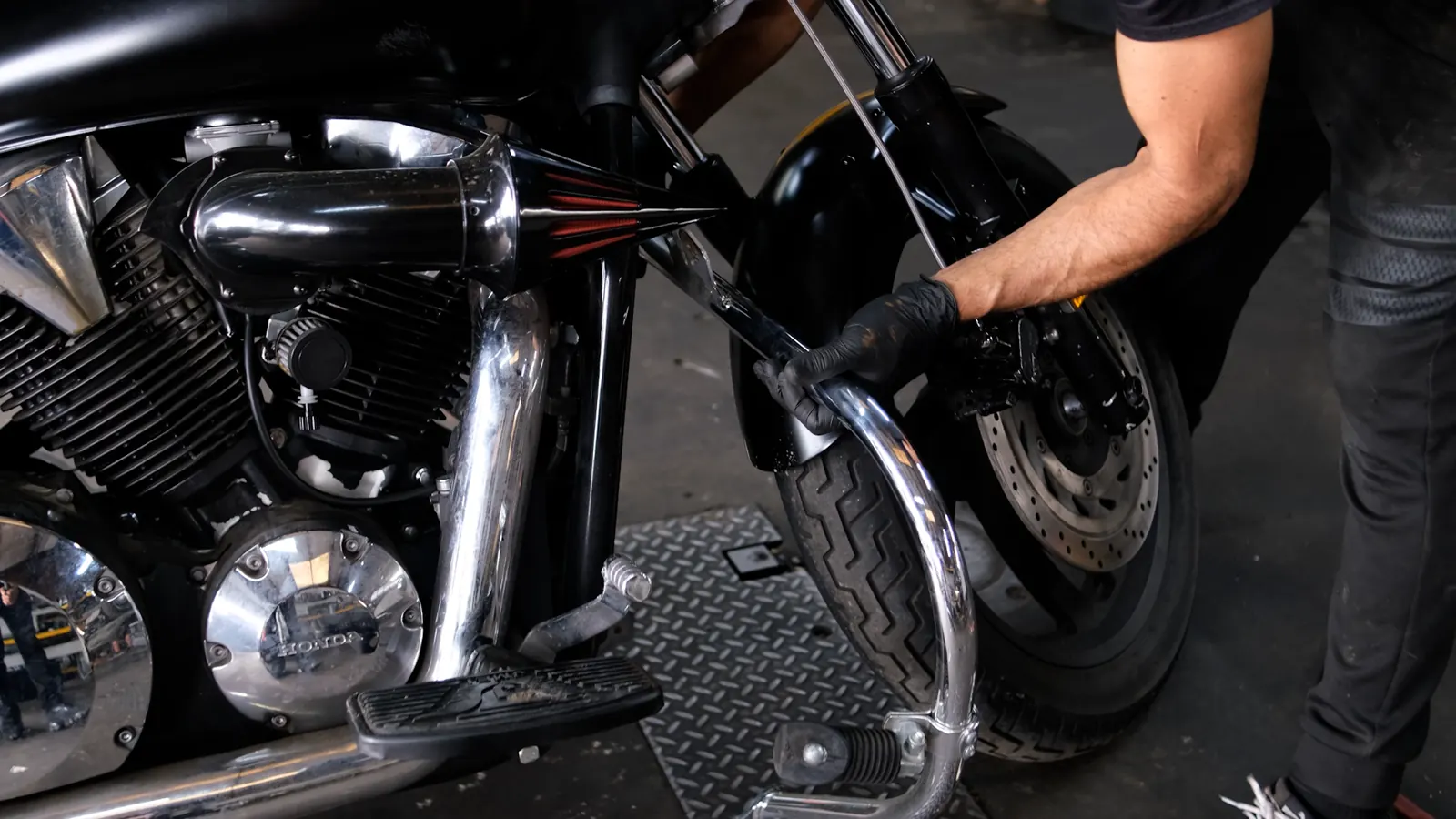
The safe way is boring on purpose. We turn the engine over by hand first to feel for anything seized. We get oil back where it belongs before anything spins fast. We check that the engine actually turns freely before we ever ask it to run. It takes patience, but patience is cheap and pistons are not. This is the single biggest reason a stored bike belongs on a lift, not on a driveway with a jumper pack and a prayer.
DON'T DO THIS
Never jump a battery on a long-parked bike and just crank it. That one shortcut wrecks more engines than time ever does.
We say this because we see the aftermath. A rider gets excited, throws a battery at a bike that sat five years, and cranks and cranks trying to make it fire. What they’re actually doing is grinding dry, possibly rusty metal on metal and washing the cylinders down with raw fuel. A bike that needed a few hundred dollars of revival now needs a few thousand of engine work. Slow is smart here. There’s no prize for the fastest first start.
Why Woodstock storage helps, and where it doesn't
Here’s some genuinely good news for Woodstock riders. Your storage is better than most. Those 1990s master-planned subdivisions, Towne Lake, Deer Run, Bradshaw Farm, were built with two- and three-car garages as standard, so a lot of parked bikes here at least stayed out of the sun and rain. That means less UV damage to paint and less flat-out corrosion than a bike that rusted on an apartment slab. It’s a real head start.
But a garage isn’t a force field, and this is Georgia. Humidity seeps into any space, and a garage that isn’t climate-controlled still swings from swampy summers to damp winters all year. That moisture is what pits chrome, rusts tanks from the inside, and dries out seals even on a bike that never saw a raindrop. So garage-kept helps a lot with the cosmetics, but the internal aging, the fuel, the seals, the fluids, happens regardless. Storage buys you a better starting point, not a free pass.
GOOD TIMING
Winter is the season to hand it over — the bike’s parked anyway, and revival work fits the off-season perfectly.
That off-season timing is a real gift here. Woodstock’s riding calendar is mountain-driven, so once the north Georgia roads ice over from late November into February, your bike is sitting regardless. That’s the ideal window to wake it up properly, without losing a single good riding day. Drop it off when the mountains close, and it’s ready and sorted when the roads come back to life in spring.
The safe revival, step by step
So what does bringing a bike back actually look like when it’s done right? It’s a sequence, and the order is the whole trick. Skip a step and you either miss a hidden problem or, worse, cause a new one. Here’s the honest path we follow to wake up a bike that’s been sleeping for years, from the moment it comes off your trailer.
- Inspect everything first and turn the engine over by hand to check nothing’s seized.
- Drain the old fuel and clean or rebuild the fuel system — tank, carb or injectors, lines.
- Fit a fresh battery and go through the wiring for chewed, corroded, or brittle connections.
- Replace dried-out seals, gaskets, and any leaking fork or brake components.
- Flush every fluid — oil, coolant, brake, clutch — because old fluid protects nothing.
- Sort tires and brakes, then a careful first start and a real shakedown before you ride.
That last step matters more here than almost anywhere. A Woodstock bike doesn’t get an easy life once it’s running, because the good roads are right up 575. It’ll see hard braking, sustained curves, and heat on the way to Suches and Blood Mountain within its first month. So the shakedown isn’t a formality. The bike has to be genuinely ready, not just barely running, before it earns a mountain day. This is the same care that separates a real revival from a jump-and-pray.
A bike doesn't rest while it sits. It quietly comes undone — but almost all of it comes back.
And here’s the part worth holding onto: almost none of this is a dealbreaker. Gummed fuel, dead battery, dried seals, old fluids, cracked tires. These are known, fixable problems with known fixes. The bikes we worry about are the ones somebody cranked dry out of impatience, not the ones that simply sat. If yours just went to sleep, the odds are very good it wakes back up. If you’re weighing the whole project, it helps to know what a revival actually costs before you decide.
Start with a text, not a crank
If your bike’s been parked for years, the best first move isn’t turning the key. It’s grabbing your phone. Text us a few photos of the bike, the tank, and any gas that’s still in it, and tell us honestly how long it sat and where. We’ll give you a straight read on what it likely needs and roughly what that runs, before you touch a thing. And whatever you do, resist the urge to crank it just to see. Let us wake it up the safe way.
There’s no restoration or revival shop in Woodstock that takes all makes and all ages, which is why so many long-parked bikes end up on our lift down in Marietta. We’re 25 to 35 minutes south, 575 to 75, and we offer pickup so a non-running bike is no problem at all. That shape under the cover has been waiting a long time. Let’s find out what it really needs to ride again.
Questions Woodstock riders ask us
My bike sat for years. Can I just put a battery in and start it?
Please don’t. When an engine sits, oil drains off the cylinders and rings, and cranking it dry can score the walls or snap a stuck ring in seconds. It turns a cheap revival into an expensive rebuild. The safe way is to turn it over by hand first, confirm nothing’s seized, and get oil where it belongs before it ever runs fast.
What's the first thing to fail on a bike that's been parked?
The fuel. Ethanol gas pulls moisture from Georgia’s humid air and turns to varnish that gums the carburetor or clogs the injectors, and a steel tank rusts from the inside. It’s the number-one reason a stored bike won’t start. The battery’s usually dead too, but that’s the easy, expected part.
It was garage-kept the whole time. Doesn't that mean it's fine?
It helps a lot, and Woodstock’s garage-heavy subdivisions give bikes a real head start on cosmetics. But a garage isn’t climate-controlled, and Georgia humidity still pits chrome, rusts tanks inside, and dries out seals. Storage buys you a better starting point, not a free pass on the fuel, seals, and fluids.
Why do the fork seals leak now if I never rode it?
Because rubber needs to move to stay healthy. When a bike sits, the fork seals, gaskets, and boots dry out and shrink, so they weep the first time you use them. It feels unfair since you didn’t ride it, but sitting still is its own kind of wear. Replacing dried seals is a normal part of any revival.
Is a long-parked bike usually worth reviving?
Most of the time, yes. Gummed fuel, a dead battery, dried seals, and old fluids are known, fixable problems. The bikes we worry about are the ones someone cranked dry out of impatience. If yours simply went to sleep, the odds it wakes back up are very good. We’ll give you an honest read before you commit.
Do I have to trailer it to you if it doesn't run?
No. We offer pickup and delivery, so a non-running bike is no problem. We’re 15 to 19 miles south of Woodstock, about 25 to 35 minutes down 575 to 75. Text us photos first and we’ll plan the pickup around what the bike needs. You never have to force a dead bike onto a trailer alone.
We revive long-parked bikes from all over Cherokee County, not just downtown Woodstock. They roll in from Towne Lake, Deer Run, and Bradshaw Farm, plus the newer townhomes near Elm Street Event Green. We pull bikes out of garages near Olde Rope Mill Park and along Bells Ferry Road, Trickum, and Wiley Bridge. If you’re near I-575 or The Outlet Shoppes, we’re an easy run south, and we’ll come get a bike that won’t start.
TEXT US BEFORE YOU CRANK IT
Been parked for years? Don’t turn the key yet. Text us a few photos of the bike, the tank, and any old gas still in it, and tell us how long it sat and where. We’ll give you a straight read on what it needs before you touch a thing. We’re 25 to 35 minutes south down 575, and we offer pickup, so a non-running bike is no problem at all.
470-460-9883Diaz Motorcycles and Service, LLC · 847 Barnes Mill Road, Marietta, GA 30062